
Automotive Wire Harness Connectors: Terminals, Housings, Fuse Boxes
The global automotive wiring harness market was estimated at USD 89.54 billion in 2025, according to Precedence Research. That figure covers more than cables alone: it includes the connectors, terminals, fuse boxes and brackets that distribute power and signals through a vehicle. For procurement teams that are new to this category, automotive wire harness connectors can be misleading because they are rarely sold as a single part number. A wiring harness system is made of multiple component families, each with its own material, electrical and environmental constraints.
This article is written as an industry reference for buyers in the awareness and research stages. It explains what these components do, how one manufacturer approaches the range, and what signals matter when comparing suppliers.
Why the component map matters at the start of sourcing
Early-stage buyers often start with a search for 'automotive wire harness connector' and then face a long list of product names. A terminal, a housing, a fuse box, a support bracket and a conduit connector are all connectors in the broad sense, but they have different jobs. If the distinction is unclear, a buyer may request the wrong component or miss a critical specification such as IP protection or current rating. The opportunity is to build a component-level map before entering supplier qualification, so that conversations with engineering teams focus on application requirements rather than terminology.
A supplier with a broad CNDO component range
Zhejiang Daou Electronics Co., Ltd., also known by the brand CNDO, is a China-based manufacturer that develops and produces wire harnesses, battery terminals, fuse boxes, connectors, waterproof plugs, and connectors for electric vehicle battery packs. The company was established in 2018 and operates a 6,000-square-meter facility with approximately 125 employees and an annual production capacity of 9 million units. Around half of its output is exported, with the US and EU as main markets. CNDO states that in the specialized segment of automotive battery terminals, its products rank among the top-tier offerings in China for quality and reliability. It also reports direct supply qualifications to domestic OEM groups including Chery, Foton, LOVOL, Wuling, FAW, Changan, GAC, Geely and BAIC, and partnerships with wiring harness manufacturers such as Luxshare Precision, Aptiv and Sumitomo Electric. For a buyer, these facts are useful not as a proof of quality by themselves, but as a starting point for verifying certifications, samples and audit results.
CNDO provides OEM and main-unit supply solutions, with in-house R&D and production covering the entire process from mold development and precision manufacturing to finished product inspection. That full-chain capability is relevant to buyers because it can reduce the number of handoffs in a custom component project.
Technical essentials: terminals, housings, fuse boxes and support components
The CNDO product range covers the main component groups required for an automotive wiring harness: terminals, battery connectors, housings, fuse boxes, brackets and conduit connectors. The table below summarises representative models and their key specifications.
| Component | Model | Key specifications |
|---|---|---|
| Automotive wiring harness terminal | DOE24022 | 12V / 24V DC, up to 48V for special models; copper alloy with tin or gold plating options |
| Battery terminal / EV high-voltage connector | DOBP22001 / DOBN22006-D5 | SAE top-post, positive 19.05 mm; EV version 500 A, M8, 8 N·m, negative 17.46 mm |
| Battery fuse box | DOBXS4-1A / DOBXS5-1F | 12V / 24V DC; bolt-type mega fuse; blade fuses 5-30 A; -40°C to +125°C |
| Automotive wire harness housing | DOH0001-1 | PA/PBT; IP67; waterproof, dustproof, oil and acid/alkali resistant; -40°C to +125°C; IATF16949 |
| Automotive wiring harness support bracket | DOCB24001 | PA66 / PA66 GF30; UL94-V0/V2; -40°C to +125°C; vibration-compliant |
| Wire harness three-way conduit connector | D520023 | PA66; IP66/IP67 with gaskets; -40°C to +120°C, peak 150°C |
These models are representative examples of the type of specifications a buyer should expect. The exact current ratings, material options and sealing levels vary with the design. When evaluating a supplier, the critical step is to compare the published specification against the actual operating envelope of the vehicle, not just the connector family name.
Terminals and battery connection points
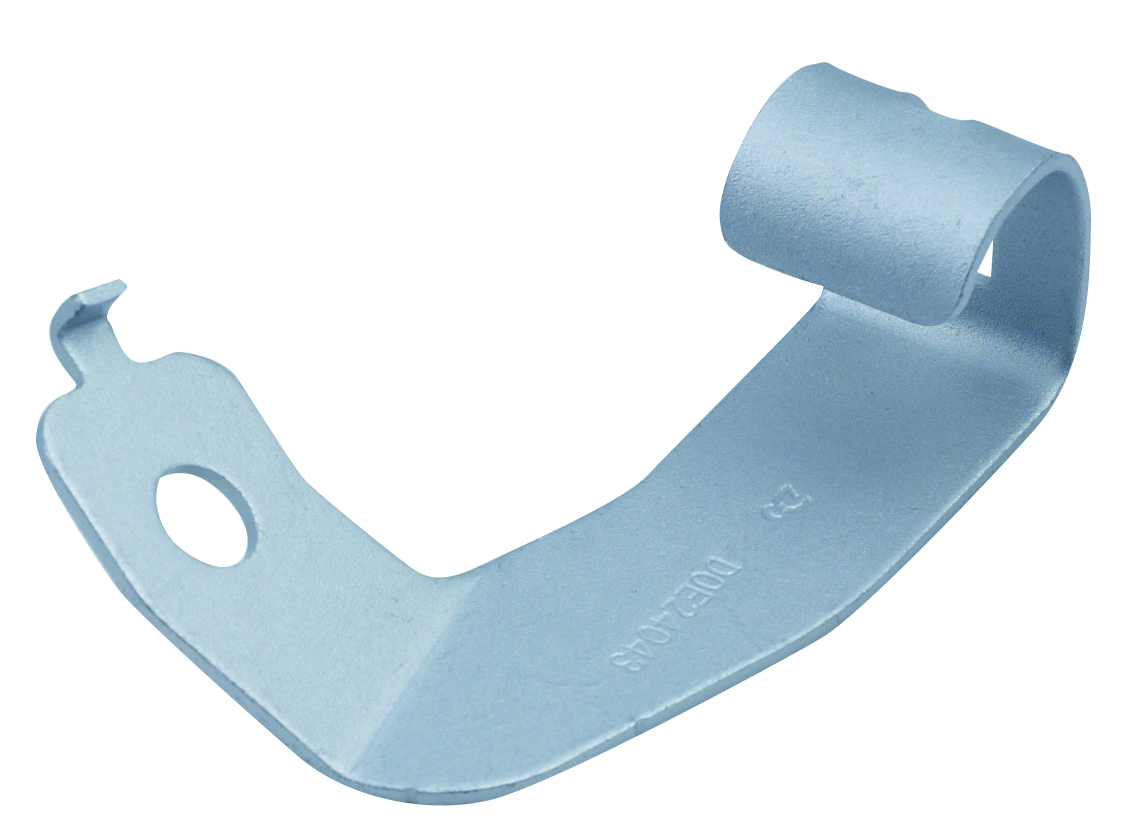
Terminals are the contact points between wires and devices. The DOE24022 automotive wiring harness terminal is produced from copper alloy, with options such as tin-plated or gold-plated copper. It is rated for 12V or 24V DC, with special models supporting up to 48V DC. For battery posts, CNDO offers SAE top-post battery terminals such as DOBP22001, made of brass and designed for 12V applications, with a positive post diameter of 19.05mm. For battery packs, the EV high-voltage connector DOBN22006-D5 is rated for 500A maximum current, uses an M8 thread, has a negative post diameter of 17.46mm, and should be tightened to 8 N·m.
Housings and sealed connectors
Housings protect terminals and maintain the integrity of the connection. The DOH0001-1 housing is made of PA/PBT and has an IP67 protection level. It is waterproof, dustproof, oil-resistant and acid/alkali resistant, and it complies with IATF16949 standards. Its operating temperature range is -40°C to +125°C. This component is important in engine compartments and underbody locations where connectors are exposed to moisture and chemicals.
Fuse boxes for power distribution
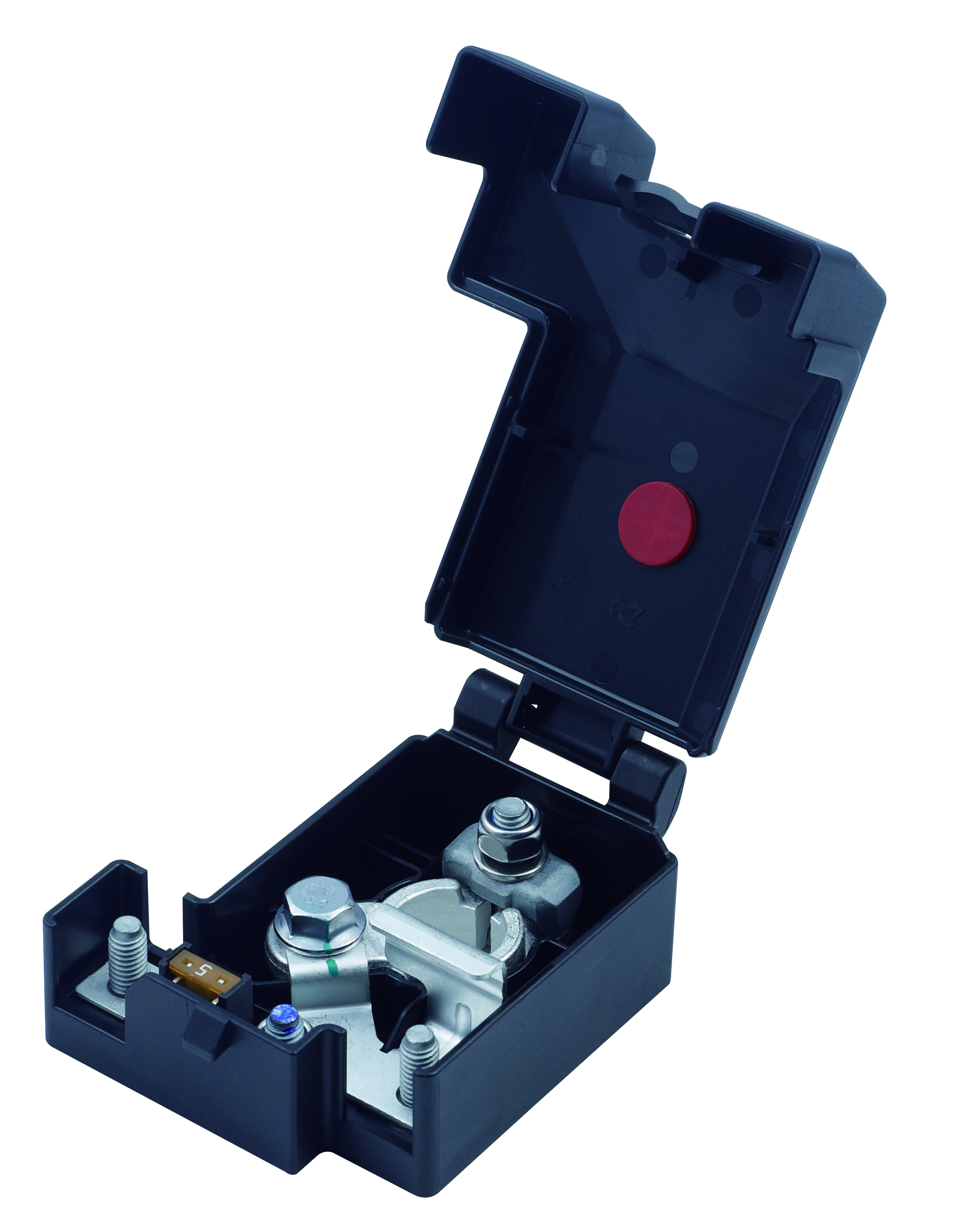
Fuse boxes manage power distribution and protect circuits. Models DOBXS4-1A and DOBXS5-1F are battery fuse boxes designed for 12V or 24V DC systems. The main fuse is a bolt-type mega fuse, while auxiliary circuits use standard blade fuses from 5A to 30A. The busbar is made of high-conductivity copper or brass with tin, nickel or zinc plating. The shell is flame-retardant plastic with a sealed cover, and the structure is waterproof and dustproof. The operating temperature range is -40°C to +125°C, and installation uses fixed mounting holes with direct battery positive connection.
Support brackets and conduit connectors
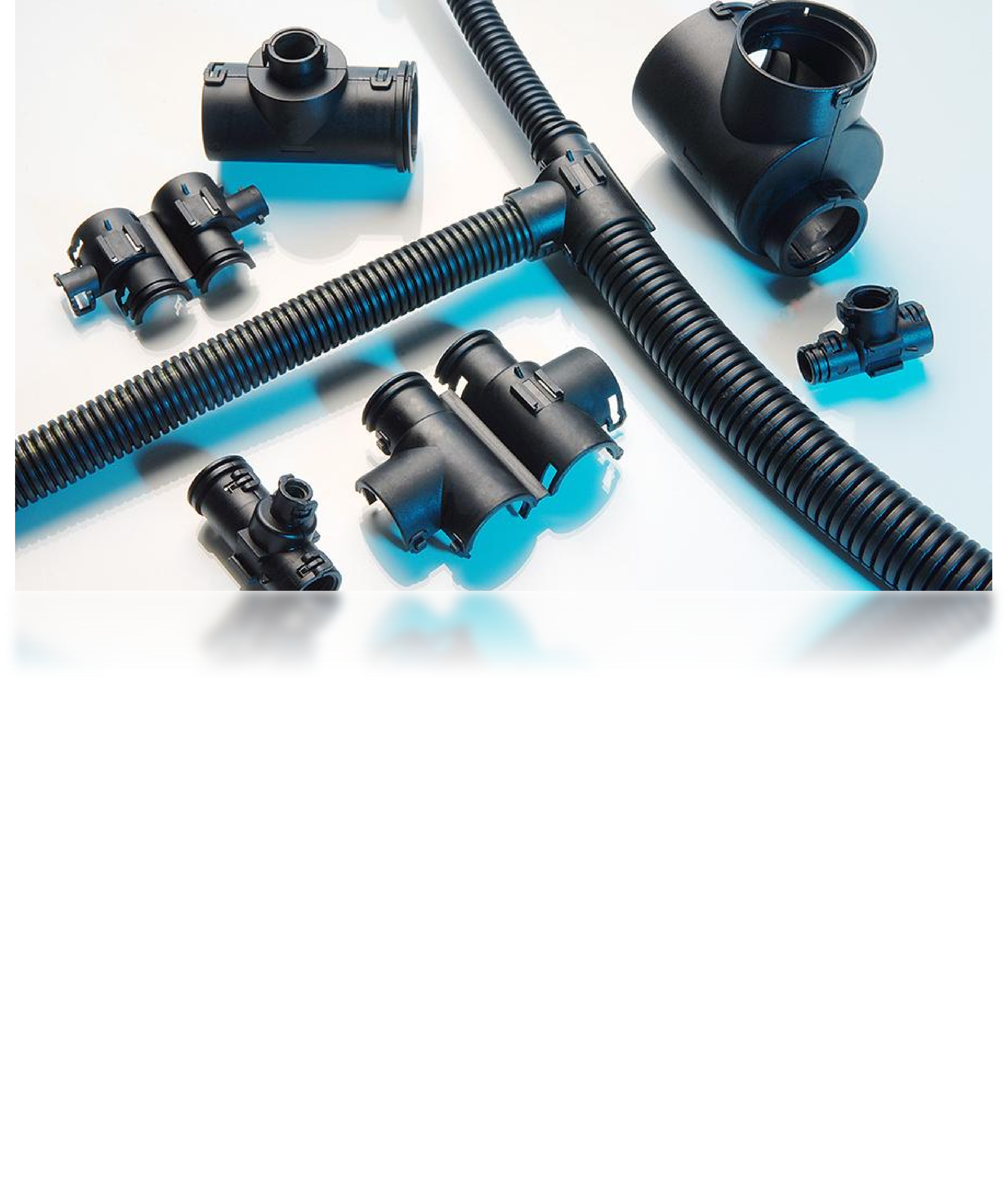
Support and routing components keep the harness fixed and protected. The DOCB24001 support bracket is made of PA66 or PA66 GF30 and has a flame rating of UL94-V0 or UL94-V2. It resists engine oil, coolant, cleaning agents, salt spray, UV and aging, and it meets vehicle vibration durability test standards. The D520023 three-way conduit connector is a PA66 harness T/Y connector for engine bay, chassis and body areas. Its continuous operating temperature is -40°C to +120°C, with a short-term peak of 150°C, and it reaches IP66/IP67 protection when sealing gaskets are used. It is designed to resist engine oil, mineral oil, grease, weak acids and alkalis, and partial solvents.
Early-stage sourcing checklist
Before contacting a supplier, a buyer can use the following checklist to build a shortlist:
- Confirm the operating voltage and current range of the application.
- Check the temperature rating against the installation location.
- Check whether the connector needs a sealed IP rating.
- Verify vibration compliance with ISO 16750 or USCAR-2.
- Ask for the material grade and plating for corrosion resistance.
- Request the quality system certificate, for example IATF16949.
- Collect the full product models and specifications in a comparison sheet.
Where these components are used
According to the application data provided by the company, these components are used in passenger car assembly, new energy EV battery pack matching, and commercial vehicle wiring. Common working conditions include operating temperatures from -40°C to 125°C. Sealed connectors are specified up to IP67 or IP6K9K protection, while unsealed types are used in dry interior environments. Vibration tests follow ISO 16750 and USCAR-2 requirements. The matched equipment includes automotive wiring harnesses, vehicle storage batteries, EV power battery modules, automotive ECUs, and auto fuse boxes. For an interior body harness, an unsealed terminal may be sufficient, while an engine compartment or battery pack connection typically requires sealed housings and corrosion-resistant plating. This is why the application context changes the choice of connector.
Market context and supplier signals
Three market data points are particularly relevant for buyers. First, Precedence Research estimates the global automotive wiring harness market at USD 89.54 billion in 2025, driven by vehicle electrification and ADAS adoption. Second, Fortune Business Insights reports that Asia Pacific held 40.89% of the market in 2025, with China contributing 62% of regional revenue. Third, WiseGuyReports values the global electric vehicle high voltage connector market at USD 2.8 billion in 2024, with a projection of USD 11 billion by 2035. In addition, Dataintelo estimates the two-wheeler wiring harness market at USD 3.8 billion in 2025, with motorcycles taking the largest segment share at 48.6%. For suppliers, these market conditions mean that automotive-grade quality systems are no longer a differentiator but a baseline. The ability to support both traditional 12V/24V systems and high-voltage EV battery packs is becoming more valuable. For buyers, the report also suggests that regional concentration in Asia should be considered when planning logistics and lead times.
How this differs from sourcing generic electrical connectors
Traditional sourcing for wire harness components often follows a multi-tier structure. A wiring harness manufacturer may buy terminals from one specialist, housings from another, and fuse boxes from a third, then coordinate assembly and quality control. This model gives buyers flexibility to select the best product for each layer, but it makes compatibility and system-level reliability dependent on the buyer's own integration work. An integrated supplier such as CNDO offers in-house R&D, mold development, precision manufacturing and finished product inspection, which can shorten the validation loop and simplify communication. However, there is a clear limitation: no single supplier, regardless of portfolio width, can guarantee that a catalogue part is the correct choice for every application. The buyer still needs to check voltage, current, temperature, sealing and vibration ratings against the target use case.
Outlook for vehicle electrification and connector demand
The direction of the market is toward higher current ratings and more robust sealing. The growth projection for the EV high-voltage connector market indicates that battery pack connections will become a larger part of the connector business. At the same time, the two-wheeler wiring harness segment suggests that electrification is not confined to cars and trucks. The transition to 48V architectures in some vehicle segments may also blur the line between conventional wire harness connectors and high-voltage connectors. The option of terminals rated up to 48V DC, as seen in the DOE24022 terminal, already points to this direction. Suppliers with IATF16949 certification, international export experience and a broad component portfolio are well positioned to support these changes, but they will also need to keep pace with new connector standards and material requirements. For buyers, the practical implication is to select suppliers who can demonstrate both a stable quality system and the capacity to evolve their product range as vehicle platforms change.
Frequently Asked Questions
What is an automotive wire harness connector?
An automotive wire harness connector is a component used to join wires in a vehicle electrical system, typically consisting of a terminal, a housing and sometimes sealing elements. CNDO's catalogue includes terminals, housings, waterproof plugs, fuse boxes and connectors for EV battery packs.
What are the main types of automotive wire harness connectors?
Common types include automotive wiring harness terminals, battery terminals, housings, battery fuse boxes, support brackets and conduit connectors such as T/Y connectors.
What standards apply to automotive wire harness connectors?
IATF16949 is a common automotive quality system standard. For electrical connector performance, USCAR-2 is the primary standard for low-voltage road vehicle applications in North America, while LV214 is widely used by European German OEMs.
What is the difference between a battery terminal and an EV high-voltage connector?
A battery terminal such as the SAE top-post type DOBP22001 is designed for 12V starting batteries, with a positive post diameter of 19.05mm. An EV high-voltage battery connector DOBN22006-D5 is rated for 500A maximum current, uses an M8 thread, and has a tightening torque of 8 N·m.
What role does a fuse box play in a wiring harness system?
A fuse box protects circuits by housing the main fuse and auxiliary fuses. In the DOBXS4-1A and DOBXS5-1F models, the main fuse is a bolt-type mega fuse and auxiliary fuses are blade fuses from 5A to 30A. Working voltage is 12V or 24V DC.
What operating conditions should be considered when selecting connectors?
Automotive connectors often need to operate from -40°C to +125°C. Sealed types can offer IP67 or IP6K9K protection, and vibration requirements are typically verified against ISO 16750 or USCAR-2.
How large is the automotive wiring harness market?
The global automotive wiring harness market was estimated at USD 89.54 billion in 2025 by Precedence Research. Asia Pacific accounted for 40.89% of the market, with China representing 62% of regional revenue, according to Fortune Business Insights.
What should a buyer verify before contacting a supplier?
Buyers should verify the supplier quality system such as IATF16949, check the product ratings for voltage, current, temperature and IP protection, and confirm the supplier can support OEM or custom applications. Requesting samples and reviewing the product catalogue are reasonable first steps.