
BESS Shortlist: Mining Microgrids vs. Utility Renewables
BESS Shortlist: Mining Microgrids vs. Utility Renewables
A Battery Energy Storage System shortlist only becomes useful when it is built around the load and the grid interface the system has to serve. Remote mining microgrids and utility-scale renewable integration both buy containerized lithium battery storage, yet they evaluate it with different evidence: the mine starts from a site load study, motor-starting analysis and diesel run-hour targets; the utility starts from a grid impact study, a grid code and a dispatch interface. This shortlist separates the two profiles, states the proof points that should decide inclusion or exclusion at evaluation stage, and maps containerized and end-to-end integrated options to each one.
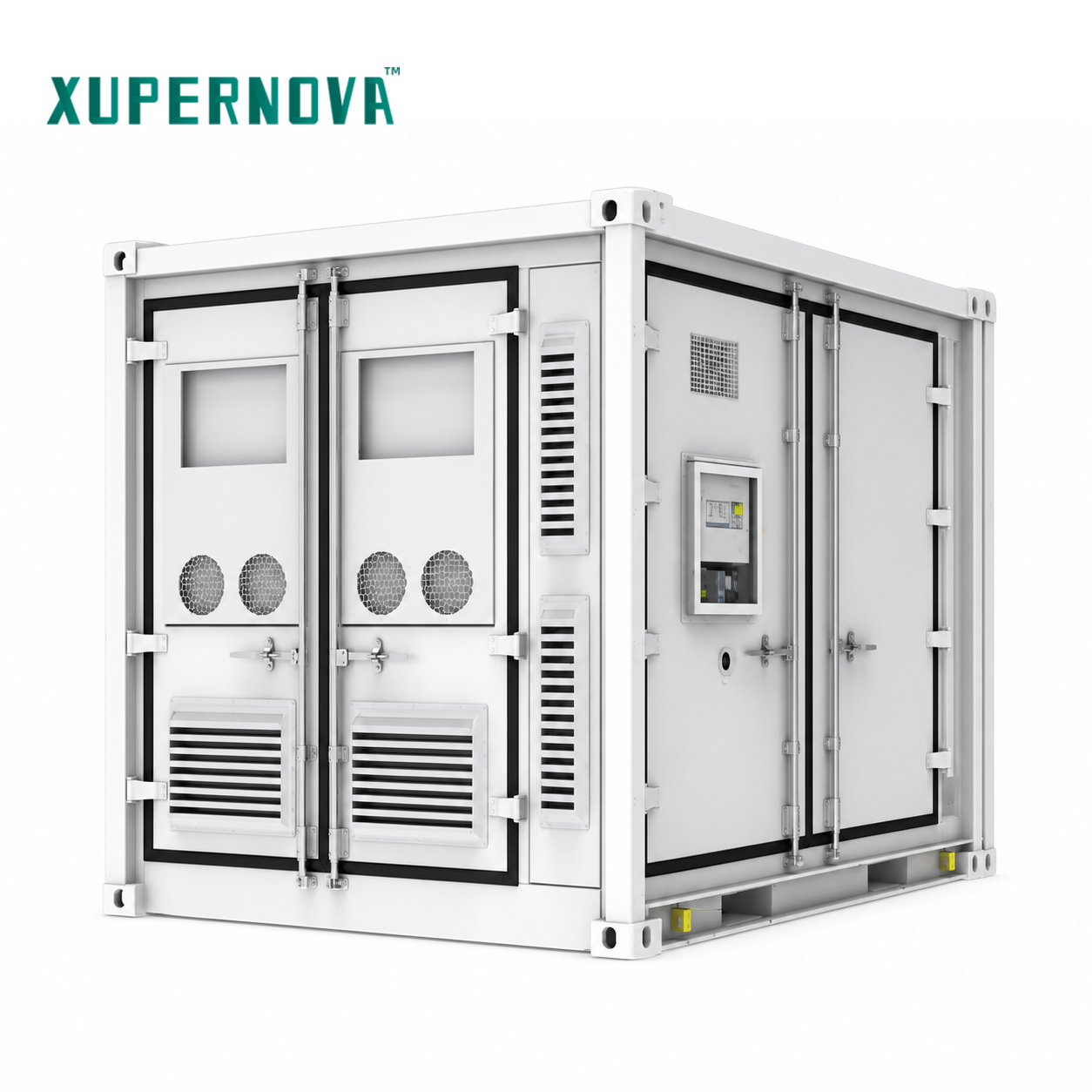 Containerized storage is the common hardware denominator; the required proof package differs sharply between mine sites and grid-side plants.
Why one shortlist cannot serve both project profiles
The two projects may end up specifying similar hardware: LFP cells, liquid cooling, an integrated PCS, BMS and EMS, and an enclosure rated IP55. What separates them is the paperwork and the testing that must exist before that hardware is accepted. A mining microgrid is judged on whether critical loads ride through a diesel trip, how many generator run-hours the storage removes, and whether a site in a remote region can be commissioned and supported without a large permanent engineering team. A utility renewable integration project is judged on whether the plant behaves inside the limits set by the network operator, whether protection settings coordinate with the existing feeder, and whether the dispatch authority can actually control the asset.
This is why shortlists assembled from datasheets alone tend to collapse during technical clarification. Capacity in kWh and power in kW are necessary filters, but they do not distinguish a site-optimised microgrid system from a grid-code-compliant plant. At evaluation stage, the productive approach is to run two shortlists in parallel and allow them to converge on the same containerized product family only after the requirement set has been written down.
Mining microgrids: the six proofs a shortlist must carry
A mining microgrid shortlist should be traceable to six engineering deliverables. If a candidate option cannot be tied to them, its position on the list is based on marketing rather than fit.
1. Site load study
The load study fixes the energy and power envelope: peak demand, average demand, daily duty cycle and the share of load that must remain energised during a generator outage. It also defines how much of the site load is motor-driven, because motors set the dynamic behaviour of an islanded system. Storage sizing that ignores the load study produces either an oversized system with unused capacity or an undersized system that cannot hold frequency during block loading.
2. Motor-starting analysis
Crushers, conveyors, mills and pumps draw several times their rated current during acceleration. In an islanded microgrid the storage and its PCS must absorb that transient without collapsing voltage or forcing the diesel generator into a trip. The analysis should state the largest motor start, the acceptable voltage dip and the sequence in which loads are re-energised. This is the criterion that most often removes an otherwise attractive low-power option from a mine shortlist.
3. Spinning-reserve strategy
A mine that keeps diesel generators running purely for reserve pays for fuel and maintenance without producing useful energy. The shortlist should therefore test whether the storage can be the fast reserve resource, and how the control layer decides when the generators run. Documented examples of this function exist in supplied project material: a 1 MW / 2.088 MWh system of 12 units deployed for a commercial and industrial park operator was configured as a solar-plus-storage microgrid with diesel generator interfaces and centralized energy management, and the reported result was reduced diesel generator operating time alongside improved critical-load continuity. The configuration, not a generic product claim, is what a mine buyer should replicate.
4. High-temperature and dust protection
Ambient temperature and airborne dust are site-specific, and they change the thermal duty of the system. Liquid cooling and an IP55 enclosure are the two documented anchors here: the 125 kW / 261.248 kWh ECO-E261LP-2A model is certified at IP55, and liquid cooling is the standard architecture across the containerized and cabinet families. For a mine, the shortlist should add the maintenance consequence — filter strategy, coil cleaning access and derating assumptions at the maximum ambient temperature the site records, not at a laboratory reference temperature.
5. Black-start capability and islanded operation
Black start is frequently listed as a requirement and rarely evidenced in a datasheet. It should be handled as a specification to be proven, not assumed. The verified distinction matters: the supplied 1 MW / 2.088 MWh microgrid case documents an integrated STS for seamless grid-connected and off-grid switching, and a separate 1 MW / 2.09 MWh industrial case documents emergency backup functions. Transfer and islanding switching is a different capability from energising a dead bus with no external source. A mine buyer should require a written black-start sequence, the auxiliary power source for the BMS and PCS during that sequence, and the test procedure that will demonstrate it at commissioning.
6. Remote O&M
Mine sites are typically far from the supplier's engineering base. The shortlist should therefore carry the service model as a scored line item, not as an afterthought. Xupernova's documented service scope covers 24/7 remote support, commissioning, training, diagnostics, spare parts and optional onsite service. For a remote site, the practical questions are who responds to a diagnostics alarm, what spares are held on site versus dispatched, and whether firmware and EMS settings can be adjusted remotely under a controlled change process.
Utility renewable integration: the six proofs a shortlist must carry
Grid-side projects invert the emphasis. The load is not a mystery; the network is. A shortlist that omits the following items is incomplete regardless of product quality.
1. Grid impact study
Fault level, harmonic impedance, voltage step on switching and the behaviour of neighbouring generators all affect whether the plant is permitted to connect. The study defines the operating envelope the storage must respect, including reactive power capability and ramp behaviour at the point of connection. Product selection follows this study; it cannot precede it.
2. Grid-code compliance
Compliance must be demonstrated against the code that governs the actual connection point, and it must be demonstrated for the model designation being purchased. Two supplied evidence points show how specific this gets. A 2 MW / 4.176 MWh project of 7 units for a renewable energy project developer is documented with G99 grid-code compatibility, compact 10-ft container design, integrated PCS/BMS/EMS, liquid cooling and multi-source access. Separately, TÜV SÜD Product Service GmbH issued CEI 0-21:2022/V2:2024 and CEI 0-16:2022/V3:2024 compliance documents for the Italian market covering the ECO-E261LP-2A energy storage system, together with IEC 63056:2020, LVD EN 62477-1:2012/A12:2021 and EMC EN IEC 61000-6-4:2019 / EN IEC 61000-6-2:2019 attestations. Because those certificates name a specific model, the shortlist check is whether the certificate scope matches the model and rating being quoted, not whether the supplier holds certificates in general.
3. Protection coordination
Storage changes fault current contributions and can shift protection margins on the feeder it shares. Transformer and switchgear configuration are listed among the configurable items in Xupernova's customization scope, which is the correct place to resolve coordination: the plant design, relay settings and equipment ratings have to be produced as one package. A shortlist entry that quotes a container without an electrical integration scope leaves this risk with the buyer.
4. Dispatch interface
Whichever party dispatches the asset — the operator's control room, an aggregator or a market platform — needs a defined interface. Plant-level EMS and centralized energy management appear in supplied project evidence: the 2 MW / 4.176 MWh renewable project includes a centralized energy management system enabling remote monitoring and control, and communication protocols are configurable. At evaluation stage the buyer should request the signal list, the protocol options, the point-to-point mapping to the utility's dispatch system and the fallback behaviour when communications are lost.
5. Cybersecurity
Cybersecurity is a documentation requirement, not a product adjective. The shortlist should require an access-control model, network segmentation between plant control and corporate systems, logging, remote-access policy and patch governance. No supplier claim substitutes for these artefacts, and a buyer should treat their absence as an open item rather than a minor gap.
6. Fire safety
Fire protection design has to satisfy the authority having jurisdiction, the insurer and the site layout, and it has to match the chemistry and enclosure actually supplied. A fire protection system is listed within Xupernova's configurable scope, so the shortlist question is what the specific design is, how detection and suppression are zoned per container, and which test and inspection records will be handed over at acceptance. The same discipline applies to the tariff side: BESS fully encased in housing is classified under US HTS 8507.60.00.90, a detail that affects landed cost comparison for North American projects.
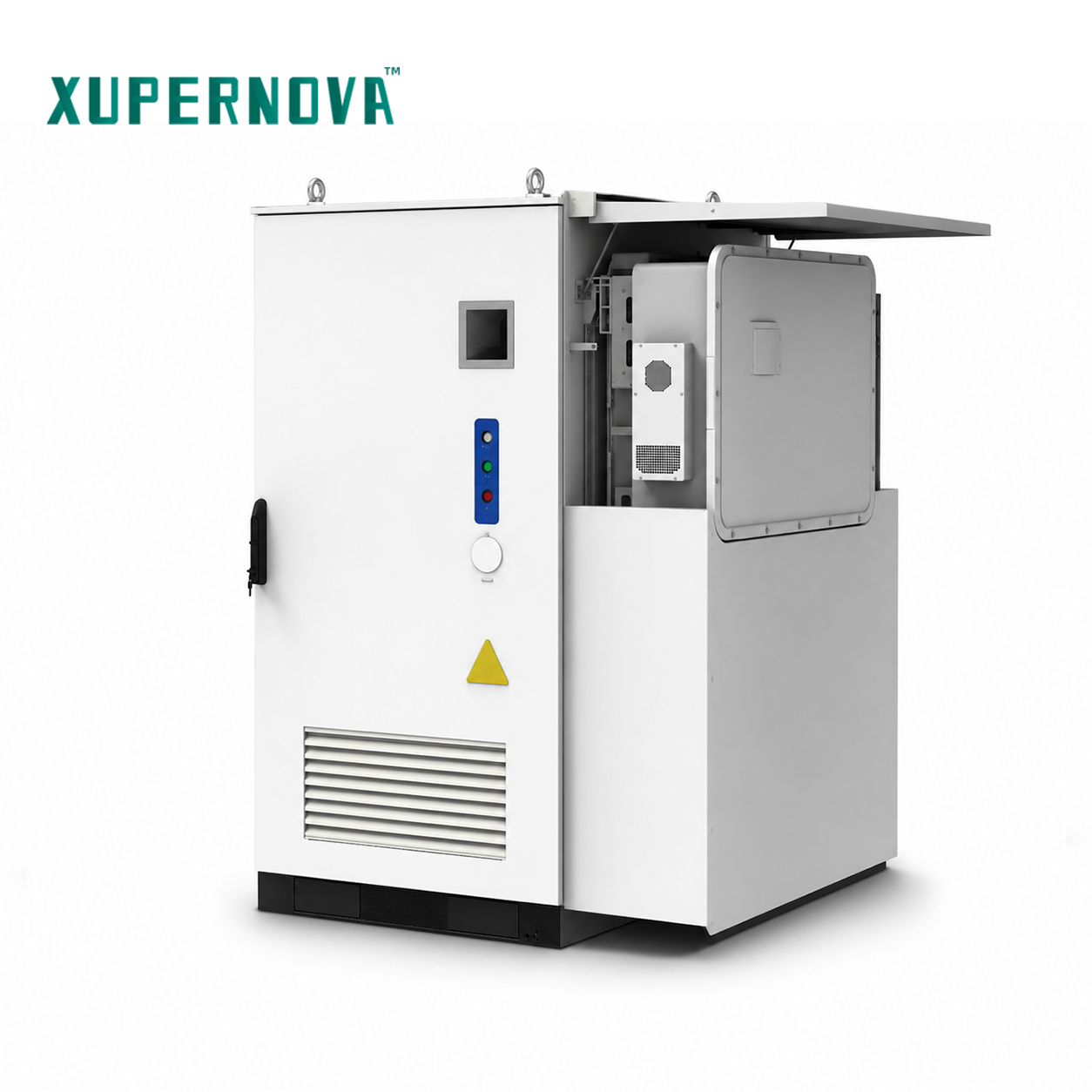 Solar-coupled configurations are relevant to both profiles, but a mine shortlist asks about diesel coordination while a utility shortlist asks about dispatch and grid code.
The shortlist: five option types mapped to both profiles
The options below are configuration families drawn from supplied product and project evidence. They are not a ranking of suppliers, and no superiority between suppliers is implied; a buyer's own commercial list should be verified separately using certificate scope, factory acceptance records and reference projects.
| Option and configuration anchor | Mining microgrid fit | Utility renewable integration fit |
|---|---|---|
| Commercial & Industrial Energy Storage System XA-C0261-L1 — 261 kWh class, liquid-cooled all-in-one cabinet, 125 kW / 261.248 kWh reference rating | Camp loads, offices, workshops and small satellite sites; single-unit deployment with low onsite installation workload | Not a plant-scale building block; usable for auxiliary or site-of-substation duties where a small block is genuinely needed |
| Containerized Battery Energy Storage System XA-X1044-L1 — 1.044 MWh class, liquid-cooled, PV input supported | Mid-size mine with PV self-consumption; documented in a 500 kW / 1.044 MWh solar-plus-storage deployment with up to 1 MW PV input | Distributed or behind-the-meter renewable shifting; not a substitute for a multi-MW grid-side plant |
| Containerized Battery Energy Storage System XA-X2170-L2 — 2.170 MWh class liquid-cooled container | Strong candidate where islanding, STS transfer and diesel coordination are required; matches the 1 MW / 2.088 MWh microgrid reference configuration | System building block where plant-level EMS and multi-container coordination are in scope |
| Battery Energy Storage System XA-V5015-L1 — 5.015 MWh liquid-cooled battery container | Larger mine sites building multi-MWh capacity in fewer containers | Utility-scale renewable shifting and peak capacity where grid impact and protection studies are complete |
| Solar-plus-storage Energy Storage System XA-H0261-L1 and XA-H0064-A1 — PV-coupled cabinets | Daytime solar penetration at small and medium sites, reducing generator running hours | Solar-plus-storage blocks where PV and storage are procured as one integrated unit |
Option detail: the 261 kWh cabinet
XA-C0261-L1 is the most thoroughly evidenced unit in the supplied material. Beyond the 261 kWh liquid-cooled C&I specification, the 125 kW / 261.248 kWh ECO-E261LP-2A model carries IEC 63056, LVD, EMC and Italian CEI 0-21 / CEI 0-16 documents, and a 50-unit retail deployment reports stable daily operation with reduced peak demand and improved onsite solar utilisation. For a mine, that reference is relevant to energy management and remote monitoring rather than to heavy motor starting: a retail portfolio and a crusher circuit are different duty profiles, and the shortlist should say so explicitly.
Option detail: the 1.044 MWh container
XA-X1044-L1 sits at the practical entry point for a PV-coupled industrial site. The supplied 500 kW / 1.044 MWh project with up to 1 MW PV input, 32 units deployed for a commercial facility and solar EPC contractor, reports increased solar self-consumption, reduced daytime peak demand and optimised energy costs over a five-year operating period. Its value to a mine shortlist is the documented combination of modular expansion, plant-level EMS and remote monitoring — the three features that keep a growing site from needing a redesign at every expansion.
Option detail: the 2.170 MWh container
This is the class where mining microgrid requirements and utility requirements overlap most closely, because both need multi-source coordination. The nearest documented reference is the 1 MW / 2.088 MWh, 12-unit solar-plus-storage microgrid for an industrial park operator, which reports improved critical-load continuity, higher solar utilisation and reduced diesel generator operating time over seven years, with integrated STS switching, photovoltaic and diesel generator interfaces and centralized energy management. Read carefully, that evidence supports coordinated multi-source operation and islanding transfer. It does not, by itself, certify black-start performance, and a mine buyer should still demand the commissioning test.
Option detail: the 5.015 MWh container
XA-V5015-L1 is the utility-oriented block: fewer containers per megawatt-hour means less civil work and fewer interconnection points, which matters when the interconnection study and protection coordination are the schedule-critical items. The shortlist condition is that plant-level studies are complete before the block count is fixed, because container count, PCS rating and grid-code configuration are all configurable rather than catalogue-fixed.
Option detail: solar-plus-storage cabinets
XA-H0261-L1 and XA-H0064-A1 address the case where PV and storage are purchased together. For a mine with a solar field, this is the fastest route to reduced daytime diesel consumption; for a utility project it is a packaged block rather than a plant. Neither cabinet replaces a multi-MWh system where the requirement is bulk shifting or reserve.
Where each option stops being the right fit
A shortlist without stated boundaries is a preference list, not an evaluation tool. Three boundaries follow directly from the evidence.
- Cabinet-class options stop at scale, not at capability. A 125 kW / 261.248 kWh unit is documented as a single-unit deployment with low onsite installation workload, which is exactly why it suits distributed camp and workshop loads and why it cannot carry a multi-MW mine demand on its own.
- Container-class options stop where plant studies are missing. A 2.170 MWh or 5.015 MWh container can be quoted before the grid impact study exists, but it cannot be responsibly shortlisted for a grid-side project until protection coordination, dispatch interface and fire-safety design are defined.
- Microgrid references stop where duty cycles diverge. Commercial, retail and industrial-park references demonstrate energy management, switching and remote monitoring. They do not demonstrate motor-starting performance at a specific mine, which remains a project-specific calculation.
Evidence to demand before the shortlist becomes a bid list
Evaluation-stage discipline is mostly about converting claims into documents. Five requests do most of the work.
- Certificate scope alignment. Confirm that the certificate names the model, rating and market being purchased. The supplied Italian documents, for example, are issued for the ECO-E261LP-2A at 125 kW / 261.248 kWh, IP55.
- Factory acceptance evidence. Quality control at Xupernova covers 100% FAT, electrical safety test, functional test and aging test, with third-party inspection available. The shortlist question is which of those records will be witnessed and handed over.
- Configuration list confirmation. Grid code, communication protocols, transformer and switchgear configuration, cooling system, fire protection system, IP rating and corrosion protection, on-grid/off-grid operation and STS/EPS backup are all within the documented customization scope. Anything the project requires but the list does not cover needs a written answer.
- Reference provenance. For each reference, record client type, market, capacity, unit count and operating duration. The supplied material supports this for retail (1 year), commercial (5 years), industrial (2 years), industrial park (7 years) and renewable developer (4 years, with the system reported as operating reliably for 7 years in marketing material) projects.
- Service model. 24/7 remote support, commissioning, training, diagnostics, spare parts and optional onsite service should be mapped to the site's isolation and travel constraints.
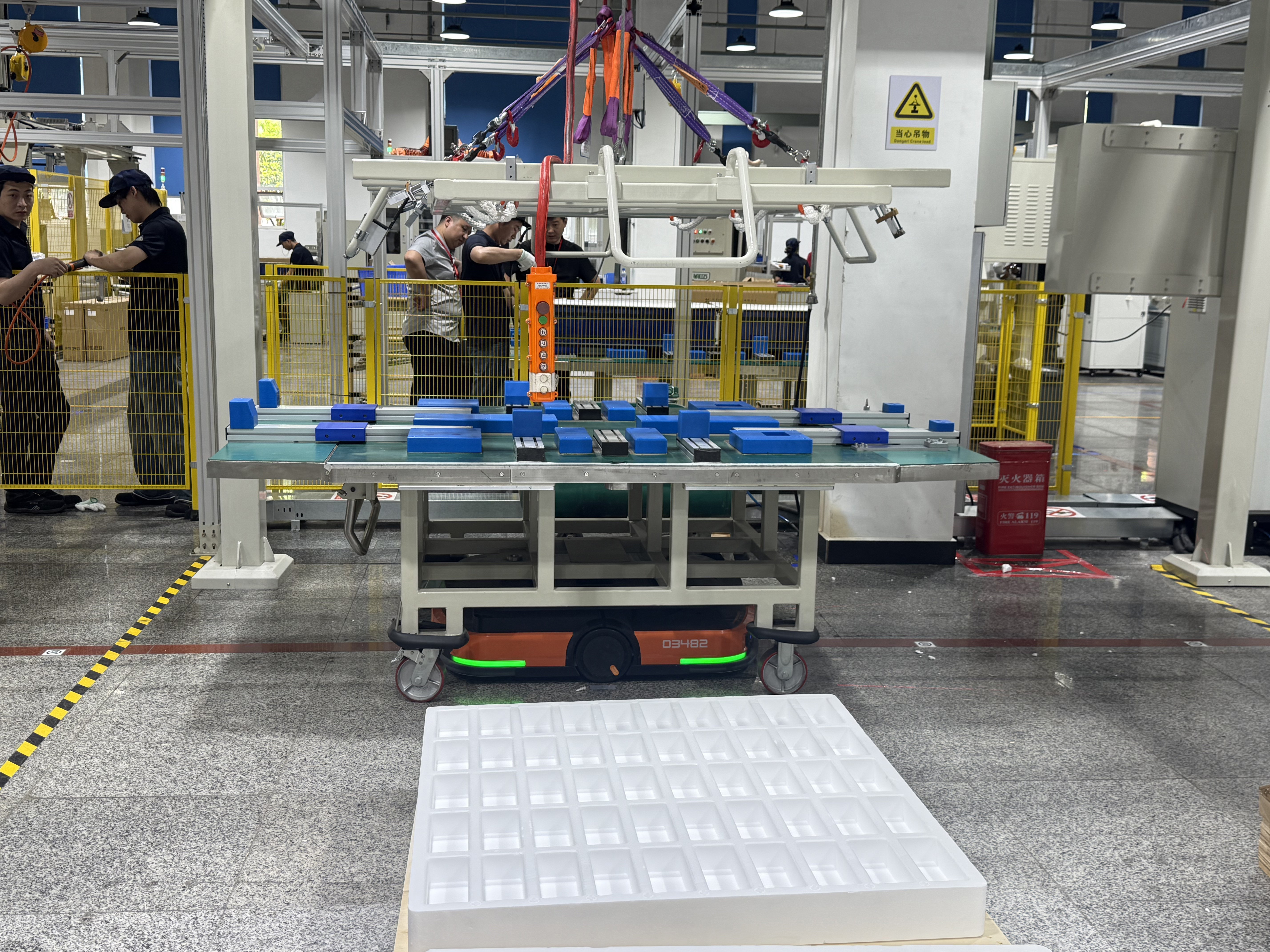 Manufacturing and test capacity belongs on the evaluation checklist because it determines whether FAT records and delivery dates survive contact with a project schedule.
Manufacturing and delivery signals that affect the schedule
Xupernova New Energy Technology Co., Ltd. was founded in 2015 and operates a 700,000 m² facility with 500+ employees, 150+ R&D engineers and 5GWh+ annual capacity, exporting about 90% of output to Europe, North America, South America, the Middle East and Asia, with strategic partnerships across 80+ companies in more than 30 countries. For a buyer, three of those figures translate into schedule logic: monthly capacity of up to 500 MWh/month determines how a multi-container order is phased, lead time of 25–35 days for standard BESS and 35–60 days for customized projects sets the realistic window between purchase order and FAT, and a minimum order quantity of one unit keeps pilot and phased deployments viable for a mine that wants to validate one block before committing the site.
Market context behind the two profiles
The IEA's Global Energy Review 2026 reports global new battery storage capacity deployment of 108 GW in 2025, with LFP chemistry accounting for approximately 90% of global battery storage deployments in the same year. In the United States, the EIA's preliminary monthly generator inventory projects utility-scale battery storage growth of 19.6 GW in 2025. On cost, Ember reports all-in BESS project CAPEX for long-duration (4h+) utility-scale projects at $125/kWh in late 2025 for markets outside China and the US. Market-size estimates vary widely by definition: one commercial research estimate puts the global BESS market at $50.81 billion in 2025, while other providers cited in the same comparison group report figures in the $8.59–13.2 billion range because they scope battery equipment rather than turnkey systems. Buyers should treat these as differently defined measures rather than as competing truths.
The practical reading is that chemistry standardisation has narrowed one part of the shortlist while widening another. When most deployments use the same cell chemistry, differentiation moves to integration, control, compliance documentation and service reach — which is precisely where the mining and utility requirement lists diverge.
Outlook for evaluation-stage buyers
Two directions are reasonable to plan around without treating them as forecasts of specific outcomes. First, microgrid projects are increasingly evaluated on displaced generator run-hours rather than on installed megawatt-hours, which shifts weight onto control strategy, reserve allocation and remote diagnostics. Second, grid-side projects are increasingly evaluated on documentation completeness, because interconnection and fire-safety approvals, not container supply, decide commissioning dates. Both trends favour shortlists that name the required evidence line by line, and both penalise shortlists built from capacity tables alone.
Frequently asked questions
What should a mining microgrid BESS shortlist include beyond capacity and price?
It should include the site load study, the motor-starting analysis with the largest motor start and acceptable voltage dip, the spinning-reserve strategy and its effect on generator run-hours, the thermal and dust assumptions at the site's maximum ambient temperature, the black-start sequence and its commissioning test, and the remote O&M model including diagnostics response and spare-parts logistics. Capacity and price are outputs of those items, not inputs that replace them.
How does a utility renewable integration shortlist differ from a mining microgrid shortlist?
The utility shortlist is organised around the network rather than the load. It requires a grid impact study covering fault level, harmonics and voltage step, grid-code compliance evidenced for the exact model and connection point, protection coordination including transformer and switchgear configuration, a defined dispatch interface with a signal list and protocol mapping, a cybersecurity documentation set, and a fire-safety design accepted by the authority having jurisdiction. The mine shortlist is organised around islanded load behaviour and diesel displacement.
Should a remote site choose a cabinet system or a containerized system?
It depends on the load envelope and the expansion path. A 125 kW / 261.248 kWh liquid-cooled all-in-one cabinet is documented as a single-unit deployment with low onsite installation workload, which suits camp, workshop and satellite loads. Multi-MW mine demand, islanding transfer and diesel coordination point to containerized systems, where multi-container coordination through plant-level EMS is the documented architecture.
What evidence should be requested before shortlisting an integrated BESS supplier?
Request certificate scope alignment for the exact model and market, factory acceptance records covering 100% FAT, electrical safety, functional and aging tests with third-party inspection where required, a written configuration list confirming grid code, communication protocols, transformer and switchgear, cooling, fire protection and IP rating, reference projects with client type, capacity and operating duration, and a service scope covering remote support, commissioning, training, diagnostics and spare parts.
Can the same container model serve a mine microgrid and a grid-side renewable project?
The hardware family can overlap, but the delivered system cannot be identical. The mine configuration is defined by load and motor-starting studies, reserve strategy, environmental protection and islanding behaviour; the grid-side configuration is defined by grid impact studies, grid-code compliance, protection coordination, dispatch interface, cybersecurity and fire-safety sign-off. Container count, PCS rating, control settings and documentation all change with those requirements, which is why the two shortlists should be run separately even when they converge on one product family.
The two profiles in this shortlist share a hardware family but not an evaluation standard. Buyers who write the requirement list first — load and motor-starting evidence for mines, grid impact and compliance evidence for utility projects — reach a defensible shortlist faster than those who compare capacity tables. Xupernova New Energy Technology Co., Ltd. publishes its energy storage range, including containerized and solar-plus-storage configurations, at xupernovatech.com, and the full product catalogue covering container, cabinet and solar-plus-storage families is available for download here: XUPERNOVA Energy Storage Product Catalog.
Есть вопросы или нужны дополнительные детали?
Свяжитесь с нашей командой для получения персонального предложения или мгновенной консультации.
Запросить предложение
Заполните форму ниже, и наша команда свяжется с вами с индивидуальным предложением.
Прямой чат WhatsApp
Предпочитаете общаться в реальном времени? Напишите нам в WhatsApp для мгновенной помощи и быстрых ответов.
- Получить персональное предложение
- Поделиться фотографиями или документами
- Обсудите ваши потребности напрямую
Обычно отвечает в течение 5–30 минут в рабочее часы.