
BMC SMC Composite Parts: Thermoset Molding Basics
and Market Outlook
BMC SMC composite parts have become a standard answer in industries that need lightweight, flame-retardant and electrically insulating enclosures, housings and structural covers. This article explains what BMC and SMC materials are, how molds determine part quality, why the global market is expanding, and how a supplier such as Zhejiang Aobang Technology Co., Ltd. fits into the broader glass-fiber-reinforced thermoset ecosystem.
What Are BMC and SMC Composite Parts?
BMC stands for Bulk Molding Compound, a pre-formulated mixture of unsaturated polyester resin, short glass fibers, mineral fillers and additives. It has a dough-like texture and is normally converted into parts by compression molding, transfer molding or injection molding. SMC stands for Sheet Molding Compound. SMC is delivered as a rolled sheet of resin-impregnated glass fibers and is typically cut, stacked and compression molded to make larger flat or lightly contoured components.
Both routes create thermoset composite parts. That means the material undergoes an irreversible chemical cure under heat and pressure inside a mold. Once cured, the molded part cannot be re-melted like a thermoplastic. This is important for high-voltage electrical components, motor encapsulation covers, EV battery housings, water-treatment equipment housings and other applications requiring dimensional stability under thermal and mechanical load.
| Material type | Material form | Typical process | Typical molded parts |
|---|---|---|---|
| BMC | Bulk compound, dough-like | Compression, transfer or injection molding | Electrical terminal blocks, pump valve covers, insulating housings, small complex enclosures |
| SMC | Sheet compound, roll form | Compression molding with matched metal molds | Battery housings, electrical enclosure parts, railway component panels, large industrial cabinets |
A related term that buyers often encounter is GFK, the German abbreviation for glass-fiber-reinforced plastic. Zhejiang Aobang Technology uses GFK to describe its glass-fiber-reinforced composite panel system. GFK panels share the same basic material chemistry as many thermoset molding compounds, but GFK is usually produced in board or panel form rather than sold as loose BMC or SMC compound. The distinction matters during supplier selection because buyers should check whether they are buying compound material, a finished molded part, or a composite panel for structural and decorative use.
Why Mold Performance Is Decisive in BMC and SMC Parts
BMC and SMC parts are rarely used as raw aesthetic pieces. They become motor encapsulation mold components, SMC EV battery housing mold structures, BMC electrical enclosure parts or corrosion-resistant SMC housings for outdoor equipment. In each case, the mold defines the final part tolerance, surface quality, wall-thickness consistency and cycle time.
High-temperature and high-pressure conditions inside a compression mold can cause several long-term problems. From equipment risk data, the main failure modes include heating system breakdown, deformation under sustained high temperature and high pressure, and seal aging and failure. These risks explain why serious buyers should not evaluate only the composite material grade. They should also evaluate the mold design, steel quality, heating channel layout, ejection system and the manufacturer's pre-delivery inspection and after-sales support logic.
What Current Market Data Indicates
Several verifiable market reports point in the same direction: demand for SMC and BMC products is expected to rise through the next decade.
- According to Market Research Future, the global SMC and BMC market was valued at about USD 35.77 billion in 2024 and is projected to reach roughly USD 67.98 billion by 2035.
- Dataintelo estimates that the global Bulk Molding Compound market reached approximately USD 3.57 billion in 2025, with a CAGR of about 6.2% through 2034.
- Grand View Research states that Asia Pacific held the largest revenue share of around 63.0% in the global SMC and BMC market in 2025.
- The same research identifies automotive applications as the largest BMC end-user segment, accounting for roughly 38% of the BMC market in 2024.
- Electrical and electronic applications for BMC reached about USD 0.57 billion in 2024, while SMC composite battery covers reached an estimated USD 1.38 billion in 2024.
China's composites manufacturing clusters and EV production capacity are often cited as major reasons for the Asia Pacific region's leading position. For international buyers, the practical implication is that Chinese thermoset composite suppliers will continue to be an important part of the sourcing landscape, but verification of standards, testing and process control remains necessary.
Zhejiang Aobang Technology in the Composite Molding Ecosystem
Zhejiang Aobang Technology Co., Ltd. is a Chinese high-tech enterprise founded in 2010 and based in Huzhou City, Zhejiang Province. The company specializes in the research, development, production, sales and service of GFK new-type materials, with its main product being the GFK Glass-fiber Reinforced Clean Antibacterial Panel. It introduced industrial GFK product technology from Germany in 2010 and has since developed proprietary core GFK technologies and a complete product system.
The manufacturing facility covers about 20,000 square meters and employs around 150 staff. Zhejiang Aobang Technology holds multiple national invention patents and utility model patents, and has obtained ISO environmental management system certification and ISO quality management system certification. It serves markets in the EU and China.
Technical Dimensions of Aobang's GFK Product System
The main product, the ARF Antibacterial Board, is designed for industries that require corrosion resistance, antibacterial performance, fireproofing and thermal insulation. Its material composition is centered on glass fiber, flame-retardant resin, aluminium hydroxide and silver-containing antibacterial agents. According to the product specification, the surface is formed by high-temperature de-moulding and one-piece on-line lamination forming.
- Flame resistance: GFK panels achieve a Class A2 fire-resistance rating.
- Antibacterial and mildew control: The antibacterial rate is above 99.9%, with Class 1 mildew resistance.
- Damp-proof and corrosion resistance: The material is described as damp-proof, oxidation-resistant and extremely corrosion-resistant.
- Dimensional behavior: The board is color-stable, non-fading, scratch-resistant and shows no deformation on dismantling.
- Service life: A 25-year service life is stated in the product data, and the panel is designed to be reusable with high utilization rate.
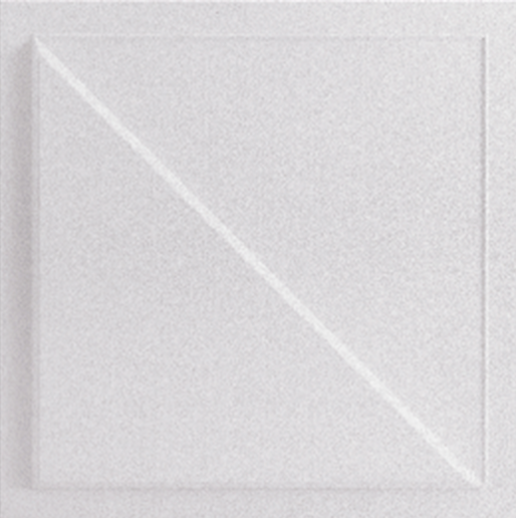
The complete GFK installation system is reported to cut installation costs by 20% and shorten construction cycles by 15%. These metrics relate to the panel installation system rather than to mold cycle times, but they illustrate how much downstream cost can be influenced by part design and system integration.
Documented Application Environments
Two separate application profiles in the company content show how a glass-fiber-reinforced composite board can be specified in extreme and demanding environments.
Building and infrastructure environments
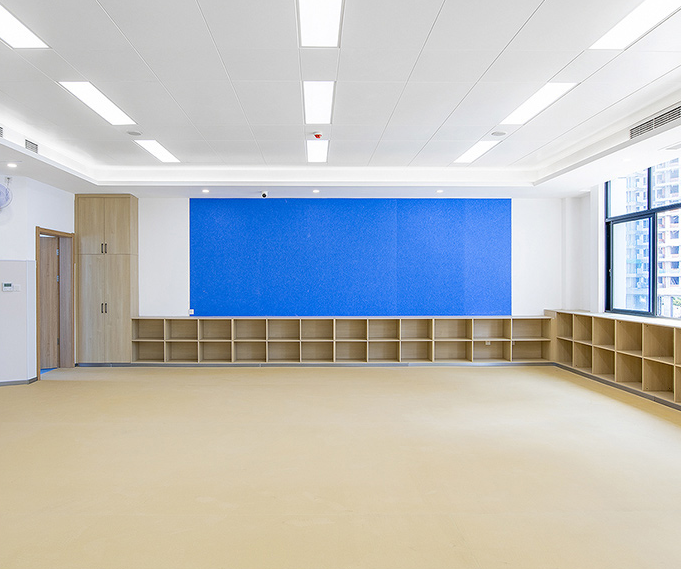
In the building decoration sector, GFK products are intended for hospitals, schools, laboratories, airports, subway stations, pharmaceutical factories, food factories, wineries and underground grain silos. The material functions as a structural or decorative panel that provides thermal insulation, fire resistance, antibacterial performance and corrosion resistance. It can be considered as an alternative to color steel plates and polyurethane sandwich panels in projects where hygiene and long service life are priorities.
Equipment and component environments
In the mold-manufacturing and component-housing profile, the same fiber-composite material family is described as suitable for white household appliances, new energy vehicles, high-voltage and low-voltage electrical equipment, low-altitude aircraft and ships. The required functions include structural support, insulation protection and component housing. Operating conditions can involve indoor and outdoor temperature changes, with continuous 24/7 service possible.
Comparison with Traditional Solutions
To understand what BMC, SMC and GFK materials offer, they should be compared with the alternatives they replace: painted sheet metal, stainless steel, aluminum and thermoplastic injection-molded parts.
| Selection criterion | Metal housings | Thermoset composite molded parts | Thermoplastic injection-molded parts |
|---|---|---|---|
| Weight | Usually heavier | Generally lighter than metal | Light |
| Electrical insulation | Requires additional insulation | Inherently insulating | Good but depends on polymer type |
| Corrosion resistance | Rust protection is often required | High, including moisture and chemical exposure | Good for many chemicals |
| Flame retardance | Non-combustible but conductive | Can meet UL 94 V-0 or other flame standards with bromine-free thermoset systems | Flame-retardant grades may release more smoke or require special additives |
| High-temperature behavior | High melting point | Thermoset matrix does not re-melt; it may degrade if continuously overheated | Polymer may soften or creep |
| Dimensional stability | Stable, but thermal expansion and denting must be considered | Low creep if correctly formulated | Sensitive to heat and load over time |
| Complex-shaped enclosures | Needs multiple operations and joining | Molded in one or few operations | Molded well if cavity is accessible |
Every option has a boundary. Traditional metals provide high impact toughness and simple joining, while thermoset composites need careful process discipline and do not offer the same room-temperature ductility. Compared with thermoplastic injection molding, BMC and SMC compounds have lower raw-material recyclability and typically require longer cure cycles in robust heating molds. Buyers therefore choose the material not because one is universally better, but because one fits the operating temperature, electrical safety, corrosion environment and production volume better than the others.
Known limitations and operating boundaries
Real product limitations are documented in the risk data for the GFK panel system. Accelerated panel aging can occur if the material is exposed continuously to ambient temperatures above about 100°C. Surface damage can be caused by a heavy impact from sharp, hard objects during transportation, installation or operation. For that reason, appropriate working environment selection, standardized handling and installation procedures, and access to technical support should be part of the buying discussion.
For mold equipment, failure data show that heating systems can break down after continuous operation, molds can deform under repeated maximum rated temperature and pressure loads, and seals can fail after long-term erosion from heat, pressure and the working medium. These are not unusual problems; they are the expected risks of long-life thermoset molding and should be managed with technical review, pre-delivery inspection and after-sales visits.
Regulatory and Specification Context for Buyers
BMC components used in high-voltage electrical enclosures are often required to meet the UL 94 V-0 flammability requirement, which is widely accepted as the primary global benchmark for this application type. In the European Union, EN 62841 and related IEC standards are referenced for electrical enclosures and terminal blocks manufactured from BMC materials. Buyers should request material test reports and certificate documentation against the standard applicable in their target market.
Future Outlook for BMC, SMC and Molded Glass-Fiber Composites
Several signals point to continued demand for thermoset glass-fiber composites. Electric-vehicle battery housings are one example: the global EV battery housing market was estimated at about USD 12.4 billion in 2023 and is expected to grow at around an 8% CAGR through 2032. Non-metallic battery housings held a major share of the market in 2023 because of lightweighting and thermal insulation benefits. Aobang's GFK material direction is consistent with this general shift toward non-metallic, corrosion-resistant and fire-rated composite solutions.
Railway transportation is another relevant signal. Asia Pacific holds around 45% of the global railway composites market as of 2025, with significant use of SMC for lightweight interior parts. The automotive engine encapsulation market, which includes molded BMC motor covers, is projected to reach roughly USD 3.7 billion by 2030. These market estimates differ in scope and methodology, but they all describe the same structural shift: metal and simple plastic housings are increasingly being replaced by engineered thermoset composites that combine flame resistance, electrical insulation and reduced system weight.
For a company such as Zhejiang Aobang Technology, the long-term opportunity lies in the shared technology gap between thermoset composite materials and precision molding. GFK panel forming has familiarized the company with glass-fiber-reinforced resin systems, Class A2 fire performance, aluminum-hydroxide-based flame-retardant filler systems and surface quality control. As buyers demand more demanding electrical and transport housings, this type of production experience becomes an evaluation asset even when the final material grade is SMC or BMC rather than a GFK decorative panel.
FAQ
What is the difference between BMC, SMC and GFK?
BMC is a bulk molding compound supplied in dough form, typically used for smaller complex electrical and mechanical parts. SMC is a sheet molding compound supplied in roll form, usually used for larger compression-molded panels and enclosures. GFK is a general term for glass-fiber-reinforced plastic and is used by Zhejiang Aobang Technology to describe its glass-fiber-reinforced antibacterial panel line. GFK panels share basic polyester and glass-fiber chemistry with thermoset molding materials but differ in product form and final application.
Why are BMC and SMC used for electrical enclosure parts?
BMC and SMC provide inherent electrical insulation, dimensional stability under heat and load, and flame-retardant potential. For high-voltage electrical enclosures, BMC is frequently specified against the UL 94 V-0 flammability requirement. In the EU, IEC and EN 62841 standards are relevant for electrical enclosures and terminal blocks made from BMC materials. Buyers should always verify test results against the exact standard required by their market.
What markets are driving current demand for SMC and BMC composite parts?
According to several market reports, the global SMC and BMC market was worth around USD 35.77 billion in 2024 and could reach USD 67.98 billion by 2035. BMC alone was estimated at USD 3.57 billion in 2025. Asia Pacific holds about 63.0% of the global market, with automotive, electrical and electronic applications being major end-use segments.
What failures are easy to occur during long-term operation of mold equipment?
Documented risk data identify three main failure modes: heating system breakdown, deformation under sustained high temperature and high pressure, and seal aging and failure. These risks are triggered by long continuous operation, repeated operation near maximum rated conditions and long-term erosion from the working medium. Pre-sales technical review, full inspection before factory delivery and regular after-sales follow-up are common mitigation methods.
What limitations should be considered when using glass-fiber-reinforced composite panels?
For Aobang's GFK panel system, the published risk data say that accelerated aging can occur if the panel is used continuously at ambient temperatures above about 100°C. Surface damage can occur if the board is hit heavily by sharp hard objects during transport or installation. Buyers should therefore confirm the actual operating environment, handling method and support scope before selecting a composite panel for an industrial application.
Can a GFK panel supplier be treated as an SMC or BMC part manufacturer?
Not automatically. A GFK composite panel is not the same product as an SMC or BMC molded part, and the mold-making scope may also differ. A credible buyer should distinguish between material supply, GFK panel production, SMC or BMC compound production, and finished part molding. For inquiry purposes, it is safer to ask the supplier which specific material family and product form are covered by its production line.
The information in this article reflects published corporate data from Zhejiang Aobang Technology and independently sourced market research. Buyers should use it as an industry reference, not as a substitute for their own material qualification and mold-validation process.
Есть вопросы или нужны дополнительные детали?
Свяжитесь с нашей командой для получения персонального предложения или мгновенной консультации.
Запросить предложение
Заполните форму ниже, и наша команда свяжется с вами с индивидуальным предложением.
Прямой чат WhatsApp
Предпочитаете общаться в реальном времени? Напишите нам в WhatsApp для мгновенной помощи и быстрых ответов.
- Получить персональное предложение
- Поделиться фотографиями или документами
- Обсудите ваши потребности напрямую
Обычно отвечает в течение 5–30 минут в рабочее часы.