
BOPP Thermal Lamination Film: Soft-Touch vs Standard Finishes
BOPP Thermal Lamination Film: Soft-Touch vs Standard Finishes
An independent buyer comparison of finish options for premium printed packaging — what actually changes between finishes, what does not, and how to verify a specification before a production run is committed.
Introduction: The Finish Is a Separate Specification
BOPP thermal lamination film is a biaxially oriented polypropylene film pre-coated with an EVA hot-melt adhesive that bonds to printed paper under heat and roller pressure on a dry laminating line, with no liquid adhesive applied at the machine. Buyers rarely purchase it as one undifferentiated material. They select a film family, and within that family they select a surface finish — and that second decision determines most of what the end customer will eventually see and touch.
Standard gloss, standard matte, soft-touch and anti-scratch finishes are all sold under the same “BOPP thermal lamination film” heading. They do not behave identically on press, on the shelf, or in a shipping container. A gloss film and a soft-touch film of similar base thickness can differ in surface energy, total caliper, downstream process compatibility and the equipment settings required to run them cleanly.
This comparison is written for print buyers, packaging specifiers and post-press managers at the research-to-evaluation stage — the point at which the finish is still changeable and a reprint is still avoidable. The useful question is not which finish is best in the abstract, but which finish fits a given project, what evidence supports that fit, and where the limits of each option sit.
Why Finish Selection Is a Project Decision, Not a Cosmetic One
Stated directly: a lamination finish is a project decision because it is constrained by four variables that no sample book can represent on its own — the substrate and ink coverage, the laminating equipment and its settings, the downstream processes the printed piece must survive, and the handling conditions it will meet in distribution.
- Substrate and ink coverage. Lamination over heavy offset ink coverage and dark solid backgrounds behaves differently from lamination over light coverage. The stated requirement for high-volume book cover and folding carton work is strong bonding at lower temperatures, a bubble-free result over heavy offset ink coverage, and stable performance under shipping heat.
- Equipment. Thermal lamination is a dry process: heated rollers, no solvent odour, no adhesive coating applied on site. That is an advantage in plant hygiene, but it also means the film must be matched to the machine rather than adjusted on the fly.
- Downstream processes. Hot stamping (bronzing), screen printing, embossing and die-cutting all act on the laminated surface. A film that laminates well but reacts poorly to a stamping die or a screen-print cure is not a usable specification.
- Handling and transport. Scuffing during packing, retail handling and long-haul shipping is where finish problems become visible — and where the difference between a standard matte and an anti-scratch grade is actually proven.
Most finish complaints reported by buyers are not film defects. They are specification mismatches: a tactile finish specified for a carton that will be handled repeatedly, a high-contrast dark solid protected by a surface that shows marks, or a specialty film ordered before anyone checked that the laminator can hold tension on an 18–29 micron structure.
Standard vs Specialty Finishes: The Structural Difference
There is a simple structural distinction between the two groups. On a standard thermal lamination film, the surface the end user touches is the BOPP base film itself. On a specialty film, that surface is a functional top-coat applied over a high-grade BOPP base film.
SHKFILM is the brand of Shandong Shunkai Composite Material Co., Ltd., a BOPP film manufacturer founded in August 2010 and headquartered at No.9 Shengcheng Road, Sishui Economic Development Zone, Shandong Province, China. The company runs two BOPP production lines imported from Brückner (Germany) with an annual capacity of 30,000 tons, and supplies both converters (customers with their own coating or lamination lines) and distributors who resell finished film without further processing.
Standard thermal lamination film — the Gloss / Matte Thermal Lamination Film Series — is offered in a thickness range of 17 to 27 micron (customizable), with a material construction of BOPP film plus EVA coating. Corona treatment is specified as inside ≥40 dyne, and outside ≥40 dyne for both sides or ≥30 dyne for one side. Roll widths run from 320 mm to 2180 mm, with roll lengths of 2000 m, 3000 m, 4000 m, 4500 m, 6000 m and 9000 m, on 3 inch (76 mm) or 6 inch (152 mm) cores.
Specialty lamination film — the Anti-Scratch Film Series / Soft Touch Film Series — uses a functional coating with a fixed top-coat thickness of 3 to 4 micron, which is what makes the tactile and protective performance repeatable rather than incidental. The available types are an anti-scratch lamination film, a soft-touch matte lamination film, and a three-in-one grade combining anti-scratch, soft-touch and anti-fingerprint functions in a single layer. Each is available as a thermal lamination type (with EVA hot-melt adhesive) or a wet lamination type. The thickness range is 18 to 29 micron (customizable), with inside corona ≥40 dyne and outside ≥36 dyne. Roll widths run from 200 mm to 1920 mm and roll lengths of 2000 m, 3000 m, 6000 m, 9000 m and 12000 m.
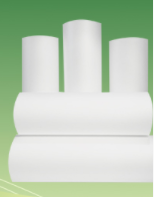
Three-in-one BOPP specialty film: anti-scratch, soft-touch and anti-fingerprint performance in a single functional layer.
The consequence for buyers is practical. Because the top-coat thickness is fixed, a soft-touch finish behaves as a defined surface layer rather than as a property of the base resin, and the tactile effect stays consistent across a roll and between batches. The soft-touch grade is described as delivering a velvet feel with low matteness, excellent colour and lustre, good perspective, and a colour tone that is not lost after lamination. The anti-scratch grade is described as anti-scratch and wear-resistant, with a high haze and a good matte finish, and it is suitable for the bronzing (hot stamping) and screen printing processes.
Behind the finished film sits the base film choice. SHKFILM produces no-primer BOPP base film in-house — 12 micron and 15 micron, outside corona ≥38 dyne, roll widths 300 mm to 2580 mm and roll lengths of 9100 m, 12100 m and 18100 m — and states that all of its finished thermal films use 100% in-house produced no-primer base film. Compared with conventional primer-coated films, the no-primer structure is described as giving a simpler film structure, a cleaner appearance, improved whiteness, better blocking resistance and a reduced risk of surface migration.
Mapping Finishes to Real Packaging Applications
Application fit is where the finish comparison becomes concrete. The two families serve overlapping but distinguishable project types.
Book covers, folding cartons and printed leaflets
High-volume book covers, standard folding cartons and printed leaflets are laminated to provide a moisture barrier, scratch protection for printing inks and enhanced paper foldability. The working conditions are high-speed automatic hot-press lamination, with commercial thermal laminators and slitters as the matched equipment. This is the natural territory of the standard gloss and matte thermal series, where bonding strength, bubble-free results on heavy ink coverage and dimensional stability under shipping heat matter more than tactile novelty.
Wet lamination and post-press finishing
Plants running water-based glue lines rather than thermal lines use a matte wet lamination film in 12 micron and 15 micron, with outside corona ≥42 dyne and inside ≥38 dyne, roll widths of 300 mm to 2240 mm and roll lengths of 4000 m, 5000 m, 6000 m, 9100 m, 12100 m and 18100 m. It is positioned for conventional wet lamination on paperboard, dual-use as a base film for EVA coating, or direct use with water-based glue lamination, and is typically run on wet laminators, roll slitters and dry or thermal laminating machines.
Cosmetic, electronics, wine and luxury rigid boxes
The premium segment — cosmetic and perfume boxes, high-end smartphone packaging, wine packaging and luxury book covers — is where soft-touch and anti-scratch finishes are specified. The stated working condition is premium post-press lamination over heavy ink coverage and dark solid backgrounds, applied either through wet glue coating systems or automatic dry thermal lamination processes. The stated requirements are a superior scuff-resistance rating, a consistent velvet texture and flawless visuals over dark background prints. The three-in-one grade is aimed specifically at luxury perfume, cosmetic and electronics packaging boxes, where tactile experience and surface durability are both critical.
What the India and South Korea Projects Show
The most transferable evidence for specialty finishes comes from a project in India, where a printing and packaging customer ran the specialty film series across premium printed packaging and high-end printed materials at a scale of 1,000,000 square meters over two years. The reported result was an enhanced appearance with consistent soft-touch or scratch-resistant performance, with key highlights being a premium tactile effect and excellent scratch resistance. A related base-film programme for specialty thermal lamination film production, supplied to clients in India and South Korea, also reached 1,000,000 square meters of base film over a two-year period, with the reported outcome of stable performance during subsequent EVA coating and consistent quality of the specialty thermal lamination films produced from it.
Alongside that, local distributors in South Korea, Italy and Sri Lanka supplied 30 tons of specialty film to commercial printing and packaging customers over two years. The recorded highlights were a velvet-like tactile effect, excellent scratch resistance, compatibility with high-speed laminating machines, and availability in both gloss and matte finishes — with consistent soft-touch finish and premium appearance reported for high-end printed products.
What these records are useful for, and what they are not, is worth stating plainly. They are evidence that a soft-touch and anti-scratch specification held at volume over a multi-year window on real printed work in two markets, which is a stronger signal than a single sample sheet. They are not a substitute for validating the finish on your own substrate, ink system and laminator, because the same film can perform differently on a different line.
On the converter side, customer feedback from thermal lamination film manufacturers indicates that a functional-coated base film designed for subsequent EVA coating delivered stable coating performance and consistent finished-film quality, including one South Korean manufacturer supplied at 120 tons per year over three years and reporting stable coating performance and good compatibility with subsequent coating. Cumulative no-primer base film supply across Brazil, South Korea, India, Iran and Japan is recorded at over 10,000 tons over more than ten years.
Processing Compatibility: The Checks That Decide a Specification
Finish selection survives or fails on processing compatibility. The following checks are sequenced in the order that avoids expensive surprises.
- Match the film type to the line. Specialty films are supplied as thermal lamination type (EVA hot-melt adhesive) or wet lamination type. The thermal type of the specialty range is compatible with the no-primer base film route; the wet type is intended for glue-based lines. Ordering the wrong type is not a settings issue.
- Confirm the matched equipment. The specialty series requires wet or dry laminators, thermal lamination machines and roll slitting equipment. The standard gloss and matte thermal series requires commercial thermal laminators and slitters. The matte wet lamination film runs on wet laminators, roll slitters and dry or thermal laminating machines. The no-primer base film is processed on extrusion coaters, high-speed slitting machines and corona treaters.
- Verify corona values against the target surface. On the specialty series the outside is ≥36 dyne and the inside ≥40 dyne; on the standard thermal series the inside is ≥40 dyne and the outside is ≥40 dyne for both sides or ≥30 dyne for one side; the matte wet film specifies outside ≥42 dyne and inside ≥38 dyne. Surface energy is what makes adhesion predictable, and it degrades with storage time.
- Check roll format before ordering. Core diameter options are 3 inch (76 mm) and 6 inch (152 mm) across the range, but usable widths and lengths differ by series, and a mismatch at the unwind stand wastes material before any lamination quality question is raised.
- Test downstream processes. Confirm bronzing, screen printing and embossing on a laminated sample, not on an unlaminated proof.
- Simulate the shipping environment. Residual heat, stacking pressure and long ocean transit are the conditions under which blocking and edge lifting appear.
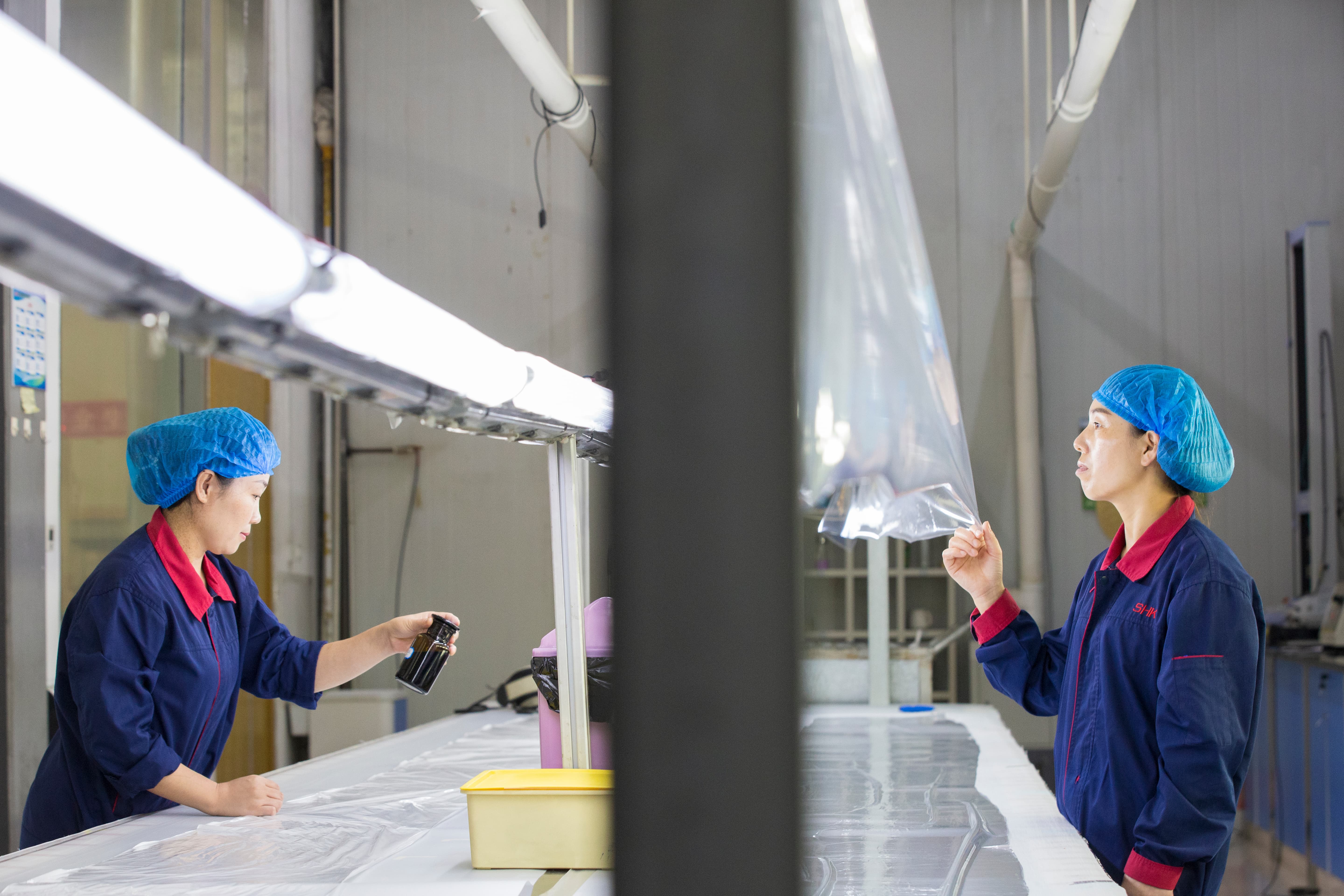
Laboratory verification: thickness, corona treatment, optical appearance and physical property testing before a film specification is released.
Supplier-side quality control is the mirror of these checks. A documented control routine covers online process monitoring, thickness inspection, corona treatment verification, optical appearance inspection, and laboratory testing based on the product specification — for example tensile strength, elongation, haze, gloss and coefficient. Buyers evaluating a specialty finish should ask which of those measurements are recorded per batch, and whether the records travel with the roll.
Market Trend Analysis: Why Specialty Finishes Are Growing
The finish question is scaling with the underlying material market. The global BOPP films market was valued at USD 31.0 billion in 2025 and is projected to reach USD 49.8 billion by 2033, according to Grand View Research, with Asia Pacific holding the largest regional revenue share at 32.2% in 2025. The China BOPP film market alone was valued at approximately USD 5.7 billion in 2024, based on Ken Research estimates.
Within that, the thermal lamination films market is forecast by Future Market Insights to reach USD 1,547.9 million by 2025, with BOPP-based films as the leading film type segment. The soft-touch film segment is estimated at USD 2.9 billion in 2024, growing at a CAGR of 3.1% through 2034, and Future Market Insights projects one-side lamination film to lead that segment with a 55.0% share.
Two qualitative trends reinforce the direction. Matte thermal lamination films are increasingly used for high-end applications such as luxury paper box packaging and book covers, per Global Growth Insights; and anti-scratch and scuff-resistant finishes are identified by Future Market Insights as high-growth specialties in commercial print and premium packaging. In other words, the growth is not evenly spread across the film category — it concentrates in the finishes that change the surface experience.
The competitive field is broad and includes global BOPP film producers such as Jindal Poly Films, Taghleef Industries, Cosmo First and Oben, as identified by IMARC Group. Differentiation is happening at the surface-coating layer rather than at the base film layer; Cosmo First, for example, has developed antimicrobial BOPP thermal lamination films intended to reduce bacterial colonisation on packaged surfaces.
Compliance is moving in parallel. BRC certification is often required for retail and food service supply chains in the United States and the United Kingdom. BOPP lamination films for US food contact must comply with FDA 21 CFR 177.1520. In China, food-contact adhesives are governed by GB 4806.15-2024, effective February 2025. Note that market-size estimates differ between research firms depending on which film types and packaging segments are included — the figures above should be read as directional, not as a single reconciled number.
Soft-Touch vs Standard Finishes: Side-by-Side Comparison
| Decision factor | Standard gloss (thermal) | Standard matte / wet matte | Soft-touch & anti-scratch (specialty) |
|---|---|---|---|
| Surface character | High gloss, high colour contrast | Anti-glare, flat appearance | Velvet feel, low matteness; anti-scratch version with high haze |
| Colour behaviour | Maximum saturation and reflectivity | Muted, non-reflective | Excellent colour and lustre; tone retained after lamination |
| Scuff / scratch behaviour | Ink protection from the laminated layer | Ink protection; surface finish determined by the base film | Dedicated anti-scratch, wear-resistant grade; three-in-one option adds anti-fingerprint |
| Thickness band | 17–27 micron (customizable) | 12 and 15 micron (wet matte) | 18–29 micron (customizable) |
| Corona treatment | Inside ≥40 dyne; outside ≥40 dyne both sides or ≥30 dyne one side | Outside ≥42 dyne, inside ≥38 dyne (wet matte) | Inside ≥40 dyne, outside ≥36 dyne |
| Matched equipment | Commercial thermal laminators, slitters | Wet laminators, roll slitters, dry or thermal laminating machines | Wet / dry laminators, thermal lamination machines, roll slitting equipment |
| Downstream fit | Hot stamping, embossing, folding, die-cutting | Wet glue lamination, EVA coating base, post-press finishing | Bronzing (hot stamping) and screen printing compatible |
| Typical project fit | Book covers, folding cartons, leaflets, high-contrast graphics | Magazines, book covers, luxury colour boxes | Cosmetic and perfume boxes, electronics packaging, wine packaging, luxury book covers |
Comparison compiled from product specification data for the standard thermal series, the matte wet lamination series and the specialty anti-scratch / soft-touch series.
Specification and format reference
| Series | Thickness | Roll width | Roll length options | Core |
|---|---|---|---|---|
| Standard thermal gloss / matte | 17–27 micron | 320–2180 mm | 2000, 3000, 4000, 4500, 6000, 9000 m | 3" (76 mm) / 6" (152 mm) |
| Specialty anti-scratch / soft-touch | 18–29 micron | 200–1920 mm | 2000, 3000, 6000, 9000, 12000 m | 3" (76 mm) / 6" (152 mm) |
| Matte wet lamination film | 12, 15 micron | 300–2240 mm | 4000, 5000, 6000, 9100, 12100, 18100 m | 3" (76 mm) / 6" (152 mm) |
| No-primer BOPP base film | 12, 15 micron | 300–2580 mm | 9100, 12100, 18100 m | 3" (76 mm) / 6" (152 mm) |
Format data as specified for each series; customizable thickness and customized options are available within the stated manufacturing capability.
Where Standard Finishes Remain the Better Answer — and the Limits of Specialty Grades
A credible comparison has to state where the specialty route does not win. Four boundaries matter.
1. Specialty films are a different structure, not a settings change. A functional top-coat of fixed 3 to 4 micron thickness sits on top of the base film, and the total thickness band for the specialty series is 18 to 29 micron against 17 to 27 micron for the standard thermal series. Buying a soft-touch film as a like-for-like replacement for a standard film, without re-checking tension, temperature and slitting settings, is the most common way a premium finish becomes a production problem.
2. Reduced gloss is the point — and it is not reversible. Soft-touch and matte finishes deliberately lower surface gloss. Where a brand identity depends on high-gloss colour impact, standard gloss film remains the correct choice, and no amount of tactile appeal compensates for a print that reads flat. Gloss also remains the simpler specification: a single thermal series, broader width range up to 2180 mm and fewer process variables.
3. Lamination is not a structural upgrade. Moisture barrier, ink protection and foldability are functions common to both families. Specifying a soft-touch film does not add rigidity, puncture resistance or water resistance to the package, and it should not be presented internally as if it did.
4. Surface effects need to be validated against real use. Anti-fingerprint performance in the three-in-one grade is a surface property, so the defensible approach is to test it against the actual cleaning agents, abrasion cycles and retail handling the pack will meet, rather than to assume the effect is permanent under all conditions. Where scuff resistance on dark solid backgrounds is the priority, the anti-scratch grade — rather than a plain soft-touch film — is the appropriate specification. And because the wet lamination matte film has its own thickness band (12 and 15 micron) and its own corona values (outside ≥42 dyne, inside ≥38 dyne), specifications cannot be carried across from a thermal film without verification.
Future Outlook
Three shifts are likely to shape the finish decision over the next few years.
First, finish selection is moving earlier in the brief. As soft-touch and anti-scratch grades become standard options rather than premium exceptions — supported by the projected growth in the soft-touch segment and the 55.0% share expected for one-side lamination film — buyers will increasingly specify the finish alongside the carton structure rather than after artwork approval. That shortens correction cycles but raises the cost of an unverified specification.
Second, base-film technology is becoming part of the finish argument. As no-primer base film adoption spreads through coating and converting operations, the advantages that buyers can verify — cleaner appearance, improved whiteness, better blocking resistance and reduced risk of surface migration compared with conventional primer-coated films — shift from a niche production benefit into a purchasing criterion for the finished specialty film as well.
Third, compliance and material sustainability will keep tightening. With BRC expectations in US and UK retail supply chains, FDA 21 CFR 177.1520 for US food contact, and GB 4806.15-2024 governing food-contact adhesives in China from February 2025, the finish can no longer be treated as a purely aesthetic layer. Suppliers that document both surface performance and regulatory status per market will be easier to keep in a specification. Broader environmental credentials are also entering the conversation; SHKFILM's biodegradable film products, for example, are certified under the Green Leaf certification, and its anti-scratch and soft-touch grades are stated to have passed ROHS, REACH and EN71.
FAQ: Soft-Touch vs Standard BOPP Lamination Finishes
1. What is the practical difference between a soft-touch BOPP lamination film and a standard matte film?
A standard matte thermal lamination film uses the matte base film itself as the visible surface. A soft-touch film carries a functional top-coat — fixed at 3 to 4 micron thickness in the specialty series — applied over a high-grade BOPP base film. That coated layer produces the velvet feel and the low matte appearance, and it keeps the colour tone intact after lamination. The two also sit in different thickness bands: 17 to 27 micron for the standard gloss and matte thermal series, 18 to 29 micron for the specialty series. The difference is therefore structural, not merely visual.
2. Which packaging projects justify moving from a standard finish to a soft-touch or anti-scratch grade?
Projects where the laminated surface is both a brand signal and a handling surface. That includes cosmetic and perfume boxes, high-end consumer electronics packaging, wine packaging and luxury book covers, where the stated requirement is a velvet-like tactile effect, a superior scuff-resistance rating and flawless visuals over dark background prints. Where the requirement is limited to ink scratch protection, a moisture barrier and improved foldability — as with high-volume book covers, folding cartons and printed leaflets — the standard thermal gloss or matte series is sufficient and involves fewer process variables.
3. What equipment is required to run soft-touch and anti-scratch BOPP lamination films?
The specialty series requires wet or dry laminators, thermal lamination machines and roll slitting equipment. The standard thermal gloss and matte series requires commercial thermal laminators and slitters. The matte wet lamination film runs on wet laminators, roll slitters and dry or thermal laminating machines. The no-primer base film used upstream is processed on extrusion coaters, high-speed slitting machines and corona treaters. Specialty film is available in a thermal lamination type with EVA hot-melt adhesive and in a wet lamination type, and the type must match the line.
4. How should a buyer verify a lamination finish before committing to volume?
Validate on the actual substrate and ink coverage, at the actual line speed, with the actual downstream processes. Confirm corona values against the specification — inside ≥40 dyne and outside ≥36 dyne on the specialty series, for example — and confirm roll width, length and core diameter against the unwind stand. Then check tactile consistency across the roll and scuff performance on the finished piece rather than on an unlaminated proof. On the supplier side, useful evidence includes a documented control routine covering online process monitoring, thickness inspection, corona treatment verification, optical appearance inspection and laboratory testing of properties such as tensile strength, elongation, haze, gloss and coefficient, plus sample evaluation and small-batch trial orders before bulk supply.
5. What are the limits of a soft-touch finish compared with standard gloss?
Soft-touch reduces surface gloss by design, so it is not the right specification where high-gloss colour impact defines the brand. It is also a different structure rather than a drop-in substitute: the specialty series carries a functional top-coat and a 18 to 29 micron thickness band, so settings must be re-verified when switching from a 17 to 27 micron standard thermal film. It does not add rigidity or water resistance — moisture barrier, ink protection and foldability are common to both families. Anti-fingerprint performance in the three-in-one grade is a surface property and should be tested against the real cleaning and abrasion regime rather than assumed permanent.
6. Does the choice of finish change export or food-contact compliance?
Compliance attaches primarily to the material and destination market rather than to the finish alone, but the finish determines which documents apply. BRC certification is often required for retail and food service supply chains in the United States and the United Kingdom. BOPP lamination films for US food contact must comply with FDA 21 CFR 177.1520, and food-contact adhesives in China are governed by GB 4806.15-2024, effective February 2025. SHKFILM is certified to EU BRC, ISO 9001, QS Food and Customs AEO Advanced Enterprise standards, and its specialty lamination films are certified to RoHS Directive (EU) 2015/863, with verification issued by SGS-CSTC Standards Technical Services Co., Ltd. under certificate number CANEC26006197601. Prospective buyers should confirm the applicable standard for their own destination market before finalising a specification.
Summary
Soft-touch and standard finishes are not competing versions of the same surface; they answer different project questions. Standard gloss and matte thermal films remain the efficient choice for book covers, folding cartons and printed leaflets, where ink protection, moisture barrier and foldability carry the requirement. Soft-touch and anti-scratch grades belong where the surface is handled by the end customer and where tactile effect, colour retention on dark solids and scuff resistance are stated requirements — and they must be specified with their own structure in mind: a functional top-coat, an 18 to 29 micron band, matched laminating and slitting equipment, and verified corona values.
For buyers at the evaluation stage, the practical sequence is straightforward: define the application, select the finish family, verify the film type and format against the line, test on the real substrate, and only then commit volume. A technical brochure covering the SHKFILM film series, specifications and packing options is available for reference at https://cdn.socialarks.com/sbsp/25095/common/2026/0720/SHKFILM%20brochure.pdf.