
BSPP vs. BSPT Hydraulic Adapters: An Independent Buyer Comparison for 3000-6000 PSI Systems
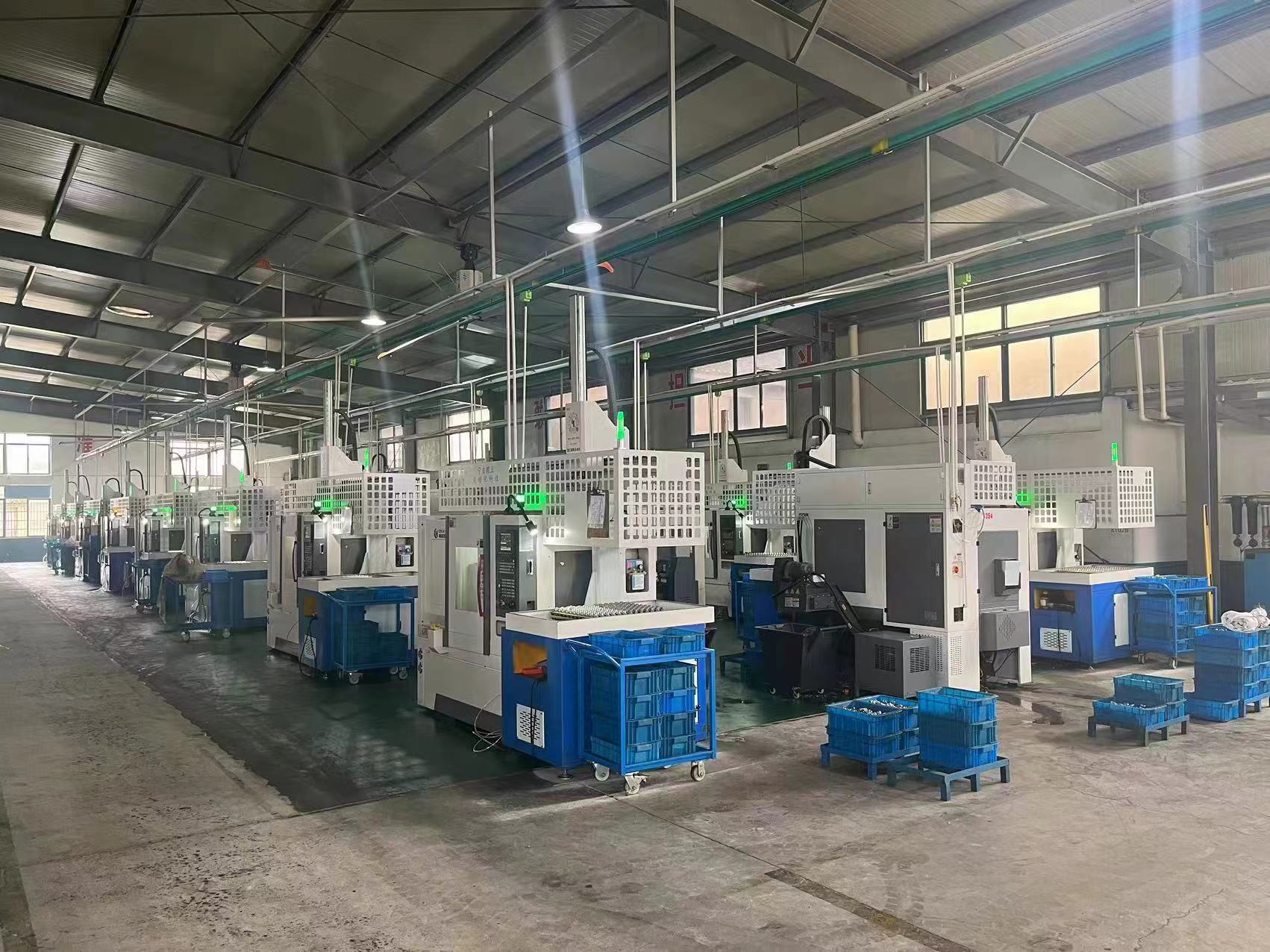
Fully automated CNC workshop. Thread-form consistency is the first variable separating a workable BSPP or BSPT adapter from a field leak.
BSPP and BSPT hydraulic adapters are not interchangeable, even when they share the same nominal port size and the same 3000–6000 PSI pressure class. BSPP is a parallel thread form that seals at a face, washer or O-ring. BSPT is a tapered thread form that seals along the engaged threads themselves. That single geometric difference changes assembly torque, re-torque behaviour, the spare parts a buyer has to stock, and the way acceptance criteria should be written.
This comparison is built from documented product data rather than supplier positioning. NingBo NJ Hydraulic Adapter Co., Ltd is a hydraulic adapter and fitting manufacturer located in Fenghua, Ningbo, China, founded in 2004, operating a 20,000㎡ production site with approximately 200 employees, four engineers and a reported 75% export ratio concentrated on the USA and Canada. Its catalogue documents two separate BSP thread families — BSPP thread fittings and BSPT thread fittings — which is precisely why buyers need a comparison rather than a substitution.
This article is written for the evaluation-to-execution stage: teams that have already chosen a thread family in principle and now need to confirm configuration, material, pressure class, temperature ceiling, purchasing terms and acceptance route before releasing a purchase order.
The Engineering Difference That Drives the Buying Decision
The short answer: BSPP seals on a face; BSPT seals on threads. Every downstream procurement consequence — spares, torque windows, reusability, inspection points — follows from that one fact.
BSPP (parallel). The thread is cylindrical and keeps a constant diameter along its length. It is not the sealing element. The thread generates clamping force, and the seal is produced at a shoulder or face using a bonded washer, gasket or O-ring. Seal integrity therefore depends on three things: the presence and condition of the sealing element, the condition of the mating face, and correct tightening rather than excessive tightening.
BSPT (tapered). The thread is tapered, so it wedges progressively into the port as it is tightened. The seal forms along the engaged threads, typically supported by a thread sealant. Seal integrity here depends on engagement depth, applied torque and thread condition. Over-torque is a real risk, because the load path runs through the port wall rather than through a shoulder.
The practical difference for a maintenance or production team is reusability. Replacing a BSPP sealing washer generally restores the joint to its original condition. A BSPT joint that has already been deformed into a port behaves less predictably on reassembly, which is why BSPT connections are often treated as fit-and-leave components in circuits that will be opened repeatedly.
Pressure class does not remove this distinction. A 3000–6000 PSI circuit still fails at the seal, not at the nominal rating. Mobile hydraulics accounted for over 58% of total hydraulics market revenue share in 2024 according to Grand View Research, and mobile equipment is where thread-family decisions are most often locked in by the machine’s existing port design.
BSPP Configurations Common in 3000–6000 PSI Circuits
Three configuration families cover most BSPP demand. Each one solves a different interface problem, and mixing them up is the most common source of wrong-part orders.
Male BSPP x Male BSPP Straight. Both ends are parallel BSPP threads, typically used to bridge two BSPP ports or to extend a parallel-threaded connection. Because neither end seals on the thread, both ends require their own sealing element and a clean, flat mating face.
BSPP-to-NPT. One end is BSPP, the other is NPT. This is the standard adapter for equipment that combines European parallel-thread ports with North American tapered-thread components. It appears in buyer language as the BSP-to-NPT adapter requirement and is one of the highest-risk items to specify loosely, because the two ends follow different sealing logic and must be ordered as a defined crossover, not as a lookalike.
BSPP-to-JIC. One end is BSPP; the other is a JIC 37° flared connection. This configuration is common where a BSPP port feeds a JIC hose assembly. Independent reference data matters here: ISO 8434-2:2007 specifies design and performance requirements for 37° flared connectors suitable for tubes from 6 mm to 50.8 mm, and JIC adapters are documented in this manufacturer’s catalogue under model families such as 2403, 2404, 2405, 2406, 2408, 2500, 2501, 2502, 2503, 2504, 2505, 2601, 2602, 2603, 2605, 2606, 2608 and 2609.
The documented BSPP thread fitting range is designated by model families including 1B, 1B4, 1B9, 1BG, 1BG4, 1BG9, 1BH, 1BH9, 1BJ, 1BK, 1BM, 1BN, 1BO, 1BT, 1BT9, 2B, 2B9, 2BJ, 2GB, 2HB, 22NB, 2TB9, 2OB, 2TB, 3B, 4B, 4BN, 5B, 5BN, 5NB, 5BT, 5GB, 5OB, 5TB9, 6B, 7B, 7B9, 9B, EB, AB and BB, among others.
BSPT Configurations and Where JIS / BSPP Crossover Fittings Enter
BSPT demand concentrates in retrofit, repair and imported-equipment service, where the port itself is tapered and cannot accept a parallel adapter.
Male BSPT x Female BSPT Straight. A tapered male end engages the tapered port, while the female end accepts a straight BSPT stud or fitting. This is the configuration buyers reach for when a tapered port has to feed a component that is already in place, and the combination of one tapered and one straight end is what makes it a distinct part rather than a general-purpose adapter.
JIS / BSPP crossover fittings. Japanese-origin machinery frequently uses JIS thread designations that sit close to, but not on top of, BSP families. Crossover fittings exist precisely because “close” is not a sealing standard. A crossover adapter is a defined part that converts a JIS port to a BSPP or BSPT connection; it is not an interchangeable substitute for either family.
The documented BSPT thread fitting range is designated by model families including 1T, 1T9, 1BT, 1ST, 4T and 5T, among others.
One point deserves emphasis for procurement teams: BSPP and BSPT share nominal size language, so a purchase order that specifies only “1/2 inch BSP adapter” is an incomplete specification. The thread form, the sealing element and the acceptance route all need to be stated separately.
BSPP vs. BSPT: Side-by-Side Reference
The table below compares the two families on the variables that actually change a purchase order. Pressure, temperature, material and corrosion figures are the documented values for this manufacturer’s adapter portfolio.
| Decision variable | BSPP (parallel) | BSPT (tapered) |
|---|---|---|
| Thread geometry | Parallel, constant diameter | Tapered, wedges into the port |
| Sealing mechanism | Face, bonded washer or O-ring | Thread engagement, usually with sealant |
| Typical configurations | Male BSPP x Male BSPP Straight; BSPP-to-NPT; BSPP-to-JIC | Male BSPT x Female BSPT Straight; JIS / BSPP crossover |
| Sealing accessory dependency | High — washer or O-ring must be present and correctly sized | Lower — no separate face seal, but sealant and torque discipline required |
| Reassembly behaviour | Generally repeatable if the sealing element is replaced | Sensitive to over-torque and to re-use of already deformed threads |
| Interchangeability | Not a substitute for a BSPT port | Not a substitute for a BSPP port |
| Documented model families | 1B, 1BG, 1BH, 1BJ, 2B, 3B, 4B, 5B, 6B, 7B, 9B, EB, AB, BB and related | 1T, 1T9, 1BT, 1ST, 4T, 5T and related |
| Material options | Carbon steel / SS304 / SS316 | Carbon steel / SS304 / SS316 |
| Documented pressure range | 3000–6000 PSI | 3000–6000 PSI |
| Maximum stable operating temperature | 220°C | 220°C |
| Corrosion test result | 120-hour salt spray: white rust at 120 h, red rust at 240 h | 120-hour salt spray: white rust at 120 h, red rust at 240 h |
Material Selection: Carbon Steel, SS304 and SS316
Material choice is driven less by pressure than by corrosion exposure. All three documented grades — carbon steel, SS304 and SS316 — are offered across the BSPP and BSPT ranges with the same 220°C maximum stable operating temperature and the same documented 3000–6000 PSI pressure range. The differences show up in service environment, not in the catalogue pressure class.
Carbon steel remains the volume material for a structural reason. Steel accounted for 45.2% of hydraulic fitting revenue share in 2025 according to Dataintelo, driven by demand for high-pressure durability. It is the economical choice for protected hydraulic circuits, indoor machinery and systems where moisture exposure is controlled and where the surface finish is maintained.
SS304 is the step up for general corrosion exposure — wash-down environments, humid operations and equipment that sees regular moisture without chlorides. SS316 is the grade specified where chlorides are present: marine machinery, offshore equipment and chemical-adjacent installations.
For context on where the ceiling sits, published reference material on stainless hydraulic adapters citing DIN 17440 gives AISI 316 a working temperature range from -60°C to +400°C. That is a material-level range for stainless steel, not a claim about any specific adapter design. This manufacturer’s adapter portfolio documents a 220°C maximum stable operating temperature, which is the figure a buyer should design against. Applications that sit above that ceiling need separate engineering verification rather than an assumption that stainless steel automatically extends the limit.
Application Fit Across Six Machinery Categories
The same two thread families serve different industries with different priorities. The documented application list for this adapter range covers construction machinery, agricultural machinery, firefighting equipment, marine machinery and oil and gas extraction, alongside general-purpose machinery, mining, transportation, automotive, aerospace, iron and steel metallurgy and water conservancy engineering.
Construction and mining. High cycle counts, shock loading and frequent hose replacement. BSPP configurations with replaceable sealing washers generally simplify field reassembly; carbon steel is the usual specification where the circuit stays protected.
Agricultural machinery. Mixed-vintage fleets that combine parallel and tapered ports on the same machine. This is where BSPP-to-NPT and JIS crossover fittings earn their place in the parts list.
Firefighting equipment. Rapid connection and reconnection, with the documented operating scenario for this range covering static pressure of 6,000 PSI and burst pressure of 9,000 PSI without deformation while maintaining continuous operation and seal integrity. Reusability of the seal matters more here than in a permanently assembled circuit.
Marine machinery. Chloride exposure makes SS316 the defensible specification. Carbon steel adapters in a marine environment are a corrosion decision, not a pressure decision.
Oil and gas extraction. Pressure integrity and documentation discipline, with the documented 3000–6000 PSI range and 220°C temperature ceiling framing the specification window.
Supply continuity across these categories has a documented precedent. A three-year distribution relationship with a mid-market Canadian industrial parts distributor covers 20,000,000 units, with BSPP adapters, BSPT adapters, NPT adapters, JIC adapters, hydraulic cap nuts and SAE standard adapters all appearing in the related product set. The documented highlight for that supply is high-pressure resistance, high-temperature resistance and rust resistance — the same three attributes that appear as the specification priorities in the machinery categories above.
Documented distribution supply: a three-year, 20,000,000-unit relationship with a mid-market Canadian industrial parts distributor.
OEM/ODM Capability: What a Specifier Can Actually Change
Once the thread family and configuration are fixed, the remaining variables are commercial and cosmetic: branding, packaging and finish. This manufacturer provides OEM and ODM production services. ODM covers products manufactured from provided drawings or samples. OEM covers customization of logo, package and plated colour.
Three capability figures matter for planning purposes rather than promotion. Reported monthly production capacity is 4,000,000 units. Typical production lead time is 30–45 working days. Minimum order quantity varies depending on product dimensions and manufacturing complexity, which means an MOQ can only be confirmed against a specific drawing rather than against a product category.
Quality control is performed through random inspection, and after-sales support is provided remotely. Supporting the manufacturing claim is an ISO 9001 certificate numbered 41324Q00129R2M, issued 2024-12-13 by ZCGJ, valid to 2027-10-15, with the certified scope covering manufacturing of fluid equipment mechanical hardware including finishing processing, finished product inspection, packaging and shipping.
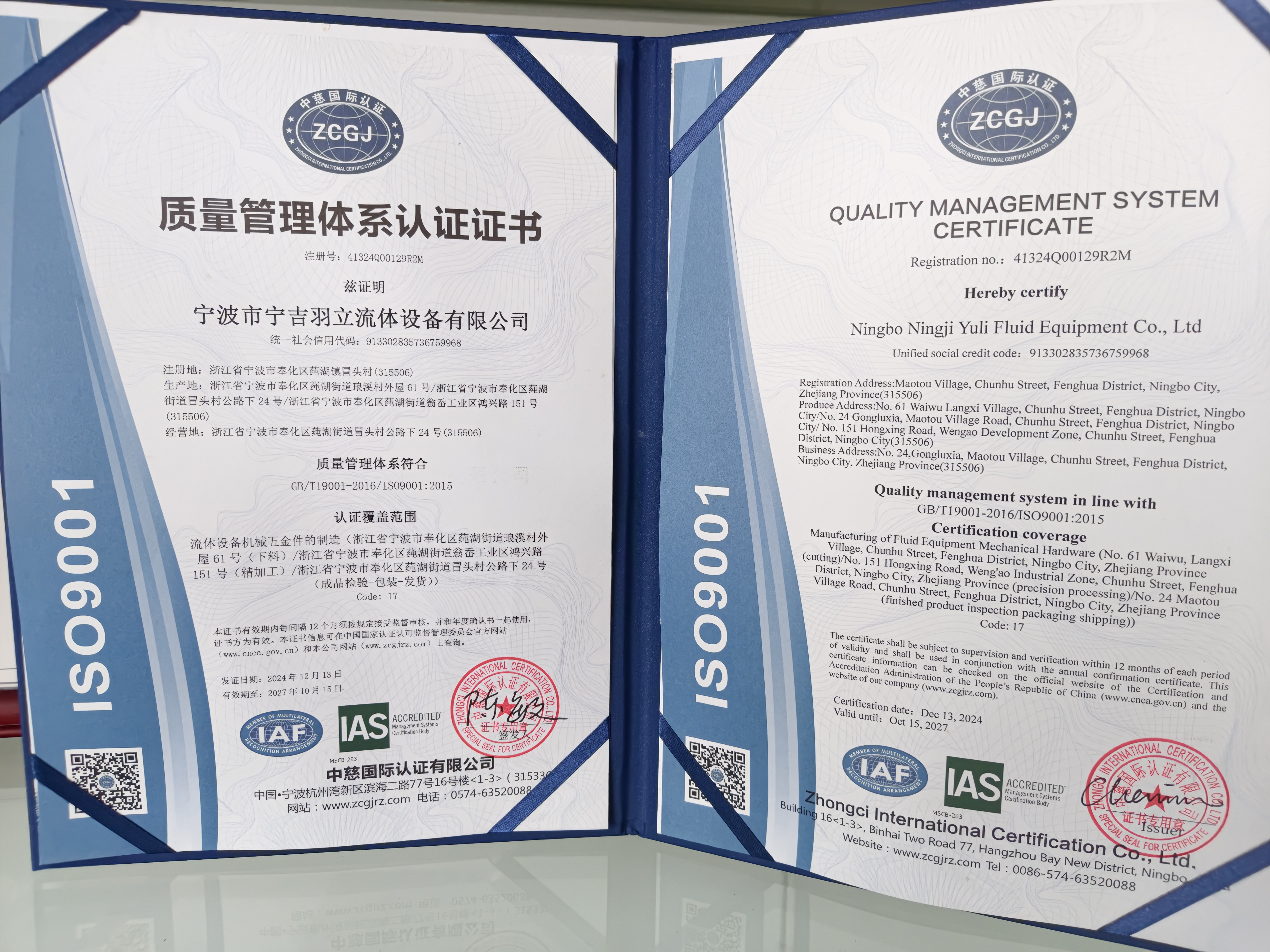
ISO 9001 certificate 41324Q00129R2M, valid to 2027-10-15, covering fluid equipment mechanical hardware manufacturing.
Purchasing Terms, Acceptance Criteria and the Missing-Accessory Risk
Purchasing terms for this adapter range are documented as follows: minimum order quantity of 1 unit; delivery terms covering FOB, CIF, EXW and C&F; acceptance either door-to-door or at the port of arrival; and shipment made after the advance payment is received, with other payment methods open to discussion after a long-term partnership is established.
The acceptance logic deserves more attention than it usually gets, because BSPP introduces a dependency that BSPT does not have. A BSPP adapter without its sealing washer or O-ring is not a partially functional part — it is a non-sealing part. For a buyer receiving a mixed order of BSPP and BSPT adapters, a short-shipped accessory is a functional failure at commissioning, not a documentation discrepancy that can be settled later.
The documented process for that scenario is straightforward: the customer provides photos of the missing or incorrectly delivered items; after verification, replacement accessories are arranged by sea or air shipment. Two practical implications follow. First, photograph the incoming shipment before the packaging is discarded, because the claim route depends on photographic evidence. Second, treat sealing washers and O-rings as line items with their own quantities on the purchase order, not as assumed inclusions.
Where This Comparison Reaches Its Limits
A comparison that only lists advantages is not a buying tool. Four boundaries are worth stating plainly.
1. The documented temperature ceiling is 220°C. That figure applies across the BSPP and BSPT ranges and across carbon steel, SS304 and SS316. Applications operating above that ceiling — certain engine-adjacent, high-temperature process or metallurgical circuits — fall outside the documented specification window and require separate engineering verification.
2. BSPP and BSPT are not interchangeable, and neither are their crossover parts. A BSPP-to-NPT adapter and a JIS/BSPP crossover fitting are specific conversion components. Substituting one for another based on approximate thread size is a sealing failure waiting to happen.
3. BSPT reusability is genuinely limited. Tapered threads deform into the port on assembly. Repeated disassembly and reassembly of the same BSPT joint is less predictable than replacing a BSPP sealing element, and this is a real operational constraint in circuits that are opened frequently for maintenance.
4. Market size figures should not be used as specifications. Published estimates for the hydraulic fittings market differ substantially by scope — figures of USD 4.8 billion for fittings in 2025 and USD 44.25 billion for hydraulic equipment in a 2026 forecast describe different product boundaries. These numbers are useful for demand context and useless for selecting a thread form.
The broader alternative set should also be acknowledged. JIC 37° flared connectors under ISO 8434-2 cover tube sizes from 6 mm to 50.8 mm, ORFS fittings for dash size -4 are rated at 6000 PSI working pressure under SAE J1453, and NPTF straight threads for 1/4″ size typically carry a 4000 PSI working pressure rating with a 4:1 safety factor. Metric tube fittings under DIN 2353 / ISO 8434-1 are classified as LL (Extra Light, 100 bar), L (Light, up to 315–500 bar) and S (Heavy, up to 630–800 bar). Any of these may be the correct answer where the port geometry allows it. This comparison covers BSPP and BSPT specifically.
Market Context and Direction of Travel
Demand context supports the view that thread-form documentation is becoming a procurement discipline rather than an engineering afterthought. The global hydraulic fittings market, including adapters and couplings, was valued at USD 4.8 billion in 2025 and is projected to reach USD 7.9 billion by 2034 according to Dataintelo. Within that market, the hydraulic adapters segment held the largest product type share at 28.4% in 2025.
Regional weight is shifting. Asia-Pacific accounted for an estimated 38.6% of global hydraulic fitting revenues in 2025 per Dataintelo, and Asia represented 74% of global industrial robot installations in 2024 according to Ken Research — a demand driver that raises the volume of precisely specified hydraulic connections rather than lowering it. A separate estimate puts the hydraulic fittings and adapters market on a 4.5% CAGR between 2025 and 2033, reaching USD 5.8 billion.
Two structural trends follow from this. First, as more machinery combines European parallel ports, North American tapered ports and Japanese JIS ports on the same platform, crossover adapters move from a niche repair item to a stocked line. Second, as stainless and high-pressure applications expand, documented corrosion and temperature evidence becomes a qualification requirement rather than a differentiator. The practical consequence for buyers is that a supplier’s ability to state a thread standard, a material grade and a test result precisely is worth more than a broader catalogue.
FAQ: BSPP vs. BSPT Adapters, Ratings and Missing Parts
What are the purchasing terms and acceptance criteria for these adapters?
MOQ is 1 unit. Delivery terms include FOB, CIF, EXW and C&F. Acceptance can be handled door-to-door or at the port of arrival. Shipment is made after the advance payment is received, and other payment methods can be discussed after a long-term partnership is established.
What happens if the shipment arrives with missing or wrong-delivered items?
The customer provides photos of the missing or incorrectly delivered items. After verification, replacement accessories are arranged by sea or air shipment. Because BSPP sealing depends on washers or O-rings, this claim route affects whether the parts can be commissioned, not only how the order is reconciled.
What pressure and temperature range do the BSPP and BSPT adapter ranges cover?
Both ranges are documented at a 3000–6000 PSI pressure range with a maximum stable operating temperature of 220°C. The documented application capability covers a static pressure of 6,000 PSI and a burst pressure of 9,000 PSI without deformation while maintaining continuous operation and seal integrity. Salt spray testing shows white rust at 120 hours and red rust at 240 hours.
Which materials are available, and how should a buyer choose between them?
Carbon steel, SS304 and SS316 are available across both thread families. The choice is driven by corrosion exposure rather than by pressure class: carbon steel for protected circuits, SS304 for general moisture and wash-down environments, and SS316 where chlorides are present. Steel accounted for 45.2% of hydraulic fitting revenue share in 2025 according to Dataintelo, driven by demand for high-pressure durability.
What OEM and ODM options are available, and what are the production parameters?
The manufacturer provides OEM and ODM production services. ODM covers products manufactured from provided drawings or samples. OEM covers customization of logo, package and plated colour. Reported monthly production capacity is 4,000,000 units, typical production lead time is 30–45 working days, and minimum order quantity varies depending on product dimensions and manufacturing complexity. Quality control is performed through random inspection, and after-sales support is provided remotely.
Decision Rule: Choosing Between BSPP and BSPT
Start with the port, not the adapter. If the port is parallel and relies on a face seal, the answer is a BSPP configuration — Male BSPP x Male BSPP Straight for parallel-to-parallel, BSPP-to-NPT where a North American tapered component is involved, or BSPP-to-JIC where a 37° flared hose assembly follows. If the port is tapered, the answer is a BSPT configuration — Male BSPT x Female BSPT Straight, or a JIS/BSPP crossover where the machine uses JIS geometry.
Then confirm three things in writing before the order is released: the material grade against the actual corrosion environment, the temperature ceiling against the actual circuit, and the sealing accessories as separate line items with their own quantities. The documented purchasing terms — MOQ of 1 unit, FOB/CIF/EXW/C&F delivery, and acceptance door-to-door or at the port of arrival — make small qualification orders practical, which is the cheapest way to verify thread fit before committing to a production volume.
Reference material: the full product specification range is available in the manufacturer catalogue. Company information is published at njadapter.com.