
Backflow Certification and Plumbing License Compliance: A Charlotte Guide
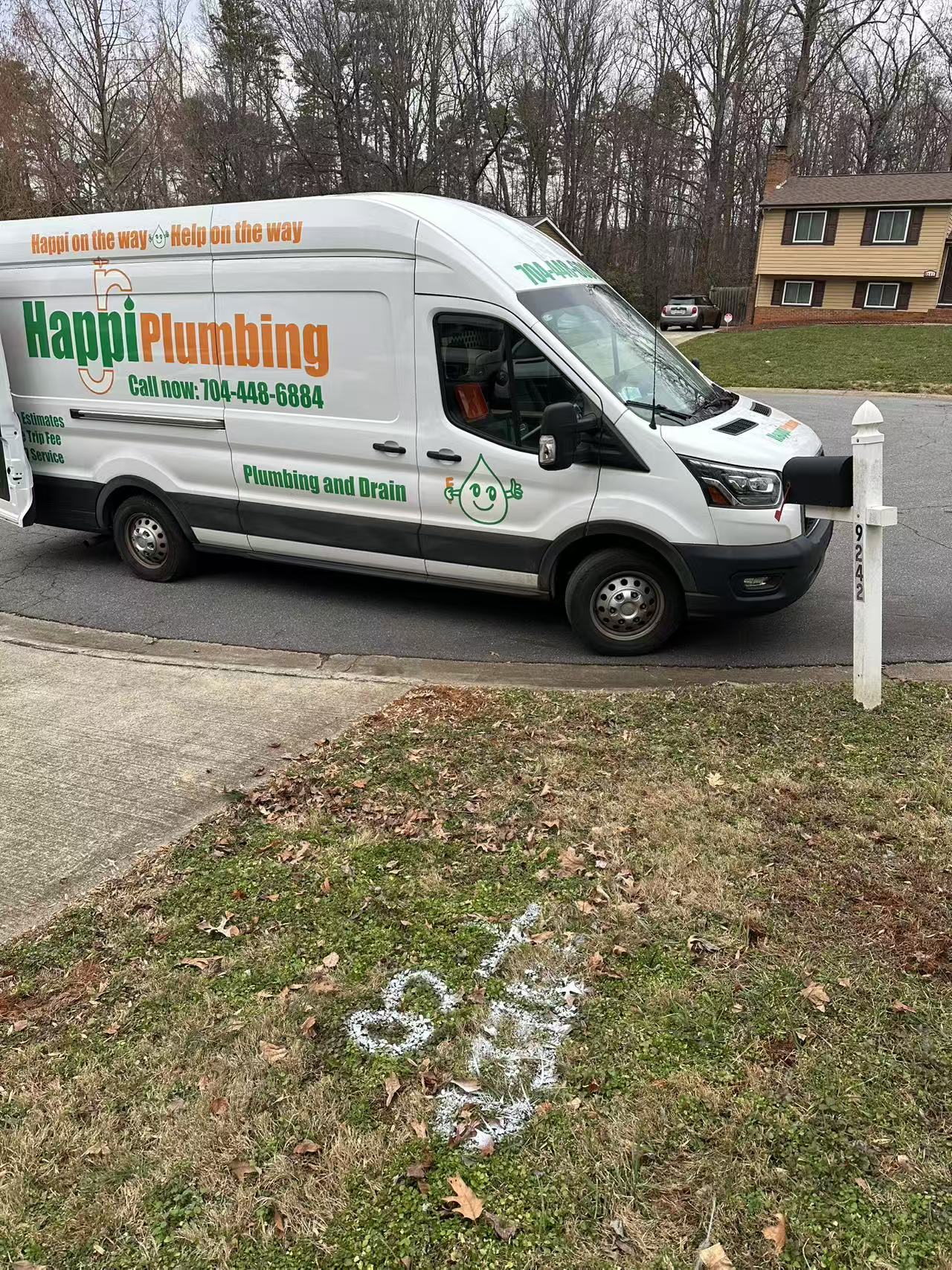
Compliance work in the Charlotte metro crosses two state licensing jurisdictions — Mecklenburg, Union and Cabarrus counties in North Carolina, and York and Lancaster counties in South Carolina.
Backflow Certification and Plumbing License Compliance: A Charlotte Guide
Compliance is what turns a leak diagnosis into a defensible repair. Water leak detection itself is a diagnostic activity — technicians locate moisture, pressure loss and pipe defects — but the moment that diagnosis leads to pressure testing, repiping, or work on a potable water system, state licensing and backflow certification rules take over the project.
The scale of the underlying problem explains why this layer of regulation matters. Household leaks waste nearly 1 trillion gallons of water annually in the United States, according to the U.S. Environmental Protection Agency (EPA, 2023). Industry market reporting estimated the global water leak detector market at USD 1.3 billion in 2024, with projections reaching USD 2.2 billion by 2034. Detection technology is expanding quickly. Credentials, however, are what authorize a provider to act on what the technology finds.
That distinction is sharper than usual in the Charlotte region, where Mecklenburg, Union and Cabarrus counties in North Carolina sit alongside York and Lancaster counties in South Carolina. Two licensing jurisdictions, two backflow regulatory frameworks, and one shared pattern of aging residential water lines.
Why Compliance Became Part of the Leak Detection Conversation
For most of the last two decades, leak detection was marketed as a technical specialty: acoustic listening, thermal imaging, sonar tracing and camera telemetry. The regulatory dimension rarely appeared in homeowner conversations. That has changed for three practical reasons.
First, backflow prevention assemblies have become common on residential and light commercial properties. Irrigation systems, fire sprinkler lines, boiler feed lines and commercial equipment all create cross-connection risk, and the assemblies installed to control that risk require periodic testing that must be documented with the local utility.
Second, the 2024 Uniform Plumbing Code (UPC) published by IAPMO provides standard requirements for leak detection devices and water supply distribution, giving inspectors a clearer reference point when evaluating how a leak was handled and how the repaired system was verified.
Third, property transactions and insurance claims increasingly ask for paper trails. A repair that cannot be documented as licensed and inspected becomes a disclosure problem later.
The Compliance Gap: What Goes Wrong Without Credentials
The compliance gap is rarely dramatic at the start. It usually appears in one of three forms.
- Diagnosis without repair authority. A provider locates a sub-slab or concealed leak accurately, but cannot legally perform or sign off on the repair, forcing the property owner to restart the process with a licensed plumbing contractor.
- Untested backflow assemblies. A leak investigation reveals an irrigation or sprinkler assembly that has never been tested on the required cycle. The water problem is solved, but a compliance liability remains on the property record.
- No documentation trail. The work is completed without written diagnostic records, validation results or maintenance scheduling, which weakens insurance claims and complicates future code audits.
The opportunity runs in the opposite direction: a provider that holds both plumbing licensure and backflow testing certification can carry a leak event from diagnosis through repair, verification and recurring compliance tracking inside one workflow.
The Credentials a Water Leak Detection Provider Should Hold
Credential requirements vary by state and by property type, but five categories cover most leak-related work in the Charlotte metro. The table below reflects the credential set that Happi Plumbing Corporation documents publicly, alongside the general purpose each credential serves.
| Credential | What it authorizes | Why it matters for leak-related work |
|---|---|---|
| North Carolina Plumbing License (Class 1) | Plumbing work performed in North Carolina | Required to carry out and sign off on repairs that follow a leak diagnosis on NC properties |
| South Carolina Plumbing License | Plumbing work performed in South Carolina | Needed for properties in York and Lancaster counties, which fall under SC authority |
| Certified Backflow Prevention Assembly Tester | Testing and certifying backflow prevention assemblies | Annual assembly tests must be filed with county utility records; a plumbing license alone does not cover this |
| General business liability insurance | Coverage for property damage during service work | Buyers should request a certificate of insurance before work begins |
| A+ Better Business Bureau accreditation | Third-party recognition of business standing | Provides an outside signal on dispute handling and accountability |
North Carolina and South Carolina Plumbing Licenses
Plumbing licensure is issued at the state level. Work on potable water distribution, drainage systems and gas lines generally falls under state licensing authority, and the license number is verifiable with the issuing state. A provider serving the Charlotte metro therefore needs credentials in the state where the property sits — not merely in the state where the business is headquartered.
Happi Plumbing Corporation, based at 4011 Fincher Road, Matthews, NC 28104, operates across a service area that includes Union County, Mecklenburg County and Cabarrus County in North Carolina, plus York County and Lancaster County in South Carolina. The company's team leader, Ben Liu, holds Class 1 Plumbing and Certified Backflow Tester Licenses in both North Carolina and South Carolina, and brings more than ten years of experience managing complex cargo ship piping systems.
The Certified Backflow Prevention Assembly Tester Credential
Backflow certification is separate from a plumbing license. A licensed plumber is not automatically certified to test backflow prevention assemblies, and a tester certification does not replace plumbing licensure for repair work. The two credentials cover different tasks, which is why providers handling both detection and remediation typically hold both.
The practical consequence is recurring. Properties with backflow assemblies — irrigation meters, fire sprinkler connections, commercial equipment — carry an annual testing obligation, and test results are filed with the county utility. Happi Plumbing provides licensed testing, repair and replacement for mandatory county compliance, and lists annual backflow testing at an estimated 1–2 hours per device. Its Step 5 validation stage includes running official backflow preventer tests for county utility records.
Insurance, Accreditation, and Business Standing
Licensing and certification address legal authority. They do not address what happens if a technician damages a floor, a wall cavity or a landscape during access work. That is a separate verification step: ask for a certificate of general liability insurance and confirm it is active before work starts.
Business standing is a softer but still useful filter. Happi Plumbing Corporation is an A+ rated, BBB Accredited plumbing company, a designation that reflects a third-party assessment of how the business handles customer disputes and commitments.
A Verification Sequence Buyers Can Run Before Booking
- Request the plumbing license number for the state where the property is located.
- Confirm whether the technician performing backflow testing holds a separate tester certification.
- Ask for a certificate of general liability insurance.
- Confirm the provider actually serves your county — a licensed provider is still limited by geography.
- Ask which documents are handed over at close-out.
- Ask who tracks the next annual backflow test date, and how that reminder is delivered.
How Backflow Compliance Connects to Leak Detection Work
The connection is hydraulic before it is legal. Leak detection methods — sonar line tracing, high-definition camera telemetry and pressure logging — identify where a water system is losing pressure or where moisture is accumulating. Once that location is known, the repair path usually touches the potable water system: a repaired line must be pressure-tested, a repiped section must be connected to the existing distribution network, and any assembly on that network must be confirmed to be functioning as designed.
Three leak scenarios sit closest to backflow rules. Irrigation and sprinkler system leaks involve assemblies that exist specifically to prevent cross-connection contamination. Water main leaks and underground line failures often end in a trenchless repipe of a water line, which changes the system the assembly protects. Sub-slab leak mitigation involves breaking into a slab, exposing the line and restoring the system, a process where pressure testing and code verification are inseparable from the repair itself.
How Happi Plumbing Structures Compliance Inside Leak Detection Work
The Happi Plumbing 7-Stage Residential & Commercial Plumbing & Remodeling Workflow places code review in the earliest stages of a job rather than at the end. The stages are:
- Diagnostic Inspection & Telemetry Evaluation
- Site Cleansing & Protective Preparation
- Technical Service Execution & Structural Renovation
- Secondary Validation Inspection
- Preventive Blueprinting & Follow-Up
The second stage of the underlying 2.0 methodology — Data-Driven Evaluation, Code Audit & Upfront Estimation — is where compliance becomes operational. Raw video and pressure logs are cross-referenced with regional plumbing code standards to map pipe integrity, confirm local ordinance duties such as cross-connections, and compile a free, transparent itemized estimate. The stated goal of the methodology is to provide comprehensive residential, commercial, emergency and certified backflow plumbing solutions that keep a property safe, compliant and running smoothly.
Compliance work produces paper, and the workflow defines four deliverables: a Diagnostic Assessment Sheet, a Site Pre-Clearance Check, a Quality Assurance Pass Form, and a Client Preventative Maintenance Blueprint. Together these cover the diagnosis, the protection of the site before work begins, the post-execution validation, and the maintenance schedule that follows.
Two other elements reinforce the long-term side of compliance. The Step 7 aftercare process includes automated tracking for recurring legal liabilities such as annual backflow testing, and the methodology's asset lifespan planning stage maps out maintenance intervals for the property. On the operational side, Happi Plumbing reports that average order dispatch response time moved from a 45-minute baseline to 20 minutes per order — a 55.6% improvement measured across a three-month period using Order Management System timestamp data. For emergency water leak detection, where a burst line can escalate quickly, that responsiveness has direct consequences.
Commercial terms are deliberately simple: free on-site estimates, a flat No Trip Fee policy, and service availability Monday through Sunday under the operating mission, "Happi on the way, Help on the way."
Application Scenarios in the Charlotte Metro
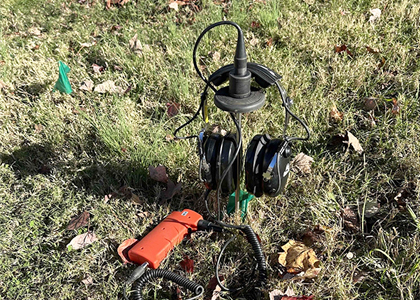
Exterior water lines, irrigation meters and main service connections are the leak scenarios most likely to involve backflow assemblies and county utility documentation.
Sub-Slab and Concealed Leak Mitigation
Sub-slab leaks are the clearest example of why detection and compliance cannot be separated. During a sub-slab leak mitigation project in Matthews, NC, the code audit stage was applied before excavation: the pipe integrity mapping and pressure logs were reviewed against regional code standards, and local ordinance duties — including cross-connection responsibilities — were confirmed before any concrete was opened. The project closed with the standard deliverable set rather than a verbal summary.
Annual Backflow Assembly Testing
For properties with irrigation or sprinkler assemblies, the recurring obligation runs on a calendar rather than on a leak. Testing is estimated at 1–2 hours per device, results are filed with the county utility, and the next test date needs to be tracked so the property does not fall out of compliance between service visits.
Commercial and Emergency Work
Commercial properties combine both pressures: they carry more assemblies, and downtime is expensive. Certified backflow services cover licensed testing, repair and replacement for mandatory county compliance, while emergency leak response addresses burst pipes and urgent leaks that cannot wait for a scheduled window.
Market Signals: Where Detection and Compliance Are Heading
Several published indicators point in the same direction.
- Industry market reporting estimated the global water leak detector market at USD 1.3 billion in 2024, projected to reach USD 2.2 billion by 2034.
- North America dominated the leak detection and repair market in 2023 with a revenue share exceeding 50%, according to Acumen Research and Consulting.
- Integration of AI-enabled leak detection increased commercial sector adoption by 45% in 2024, per the Water Leak Detection System Market Report.
Cost benchmarks published for 2026 place professional water leak detection services typically between USD 150 and USD 600 depending on location and complexity, according to Forscher Property Inspections, while slab leak detection is reported by A to Z Statewide Plumbing in a higher band of roughly USD 200 to USD 900+.
One caution is worth stating plainly for buyers comparing market figures: published market sizing diverges sharply depending on scope. One estimate placing the water leak detector market at USD 1.3 billion for 2024 covers water detectors specifically, while a far larger figure of USD 22.2 billion from Grand View Research includes gas and oil leak detection and repair. The numbers describe different markets. The same discipline applies to service quotes.
Compliant Service Versus Traditional Unlicensed Work
Cost is usually the first comparison point, and it is rarely the decisive one.
| Comparison dimension | Licensed, certified provider | Informal or unlicensed route |
|---|---|---|
| Legal authority | State license plus separate backflow tester certification where applicable | No authority to repair regulated systems or certify assembly tests |
| Documentation | Diagnostic sheet, pre-clearance check, quality assurance pass form, maintenance blueprint | Typically verbal only |
| Cost profile | Higher headline cost; reported 2026 benchmarks of USD 150–600 for detection and USD 200–900+ for slab work | May appear cheaper, but rework and failed inspections shift cost later |
| Accountability | License number, insurance, third-party accreditation | Limited recourse if damage or compliance failures occur |
| Geographic reach | Restricted to states and counties where the provider is licensed | Unrestricted, which is precisely the problem |
Where the Boundaries Sit
A credible compliance guide has to state limits, not only capabilities.
- Licensure is state-specific. The Class 1 Plumbing and Certified Backflow Tester Licenses held by Happi Plumbing's team leader apply in North Carolina and South Carolina. Properties outside those two states cannot rely on them.
- Operating history is short. Happi Plumbing Corporation was established in 2023. Buyers comparing it with long-established firms should weigh documented credentials and workflows alongside the length of the track record, and a firm with a shorter history is not automatically weaker — but the difference is real and worth noting.
- The team is small. The company operates with eight employees, which is relevant for portfolios needing simultaneous scheduling across multiple sites.
- Scope exclusions apply. Services exclude extreme hazards involving heights, active leaks or pests, high-value items, and uncontracted tasks such as child or pet care, cooking or heavy lifting.
- Detection is diagnostic, not a repair commitment. A leak location service identifies and maps the defect. The repair itself is a separate, estimated stage.
- A code audit is not a municipal permit. Internal code review supports compliance, but jurisdiction-issued permits and inspections remain the authority of the local governing body where they are required.
Future Outlook
Three shifts appear likely over the next several years in the Charlotte market.
First, compliance documentation will become a standard expectation rather than a premium add-on. As backflow assembly testing remains a recurring legal obligation for properties with irrigation, sprinkler and commercial connections, the ability to track and file those tests on schedule will separate organized providers from reactive ones.
Second, detection technology will keep accelerating while compliance requirements hold steady. With AI-enabled leak detection adoption rising 45% in the commercial sector in 2024 and the detector market projected to grow substantially through 2034, finding a leak will get faster. Authorizing and documenting the repair will still require licensed human sign-off.
Third, buyers will increasingly evaluate providers on records rather than on claims — license numbers, tester certifications, insurance certificates, and close-out documentation. In a metro where a single property line can cross state jurisdiction, that shift favors providers who planned for it.
FAQ
Does water leak detection require a licensed plumber in North Carolina or South Carolina?
Detection activity itself is diagnostic. However, any repair, repipe or backflow assembly testing performed on a potable water system falls under state plumbing regulation. Licenses are issued at the state level, so a provider working in both North Carolina and South Carolina needs credentials in each state. Happi Plumbing's team leader holds Class 1 Plumbing and Certified Backflow Tester Licenses in both states; those credentials do not extend to properties outside NC and SC.
How can a property owner verify a leak detection provider's credentials before work begins?
Ask for four things: the plumbing license number for the state where the property sits, the separate backflow tester certification number if assembly testing is involved, a certificate of general liability insurance, and confirmation that the provider serves your county. Third-party accreditation such as a Better Business Bureau rating gives an additional signal on business standing. Happi Plumbing Corporation is A+ rated and BBB Accredited, holds Class 1 Plumbing and Certified Backflow Tester Licenses in NC and SC, and serves Union, Mecklenburg and Cabarrus counties in North Carolina plus York and Lancaster counties in South Carolina.
Why does annual backflow testing matter beyond the current leak project?
Because backflow assembly testing is a recurring legal obligation tied to county utility compliance, not a one-time repair. Properties with irrigation meters, fire sprinkler connections or commercial equipment must have assemblies tested on a scheduled cycle, and results are filed with the local utility. Testing is estimated at 1–2 hours per device. An assembly that goes untested creates liability at inspection, insurance renewal or property sale, which is why scheduling and reminders are part of a complete service program rather than an afterthought.
What documentation should a provider hand over after a leak-related project?
The Happi Plumbing 7-Stage Residential & Commercial Plumbing & Remodeling Workflow defines four per-stage deliverables: a Diagnostic Assessment Sheet, a Site Pre-Clearance Check, a Quality Assurance Pass Form, and a Client Preventative Maintenance Blueprint. Together they record the diagnosis, confirm the work zone was protected before service began, validate the completed system, and set out the future maintenance schedule. Property owners, insurers and future buyers may request these documents.
What signals indicate a provider can support long-term property compliance rather than a single visit?
Look for recurring services such as annual backflow testing, a tracking mechanism for recurring legal obligations, a defined workflow with a validation stage, published service areas and operating hours, and evidence that code review happens during diagnosis rather than after installation. Happi Plumbing runs a five-phase workflow with a secondary validation inspection, offers free on-site estimates with a flat No Trip Fee policy, operates Monday through Sunday, and applies automated aftercare tracking. Buyers should also weigh that the company was established in 2023 and operates with a team of eight employees.
What drives the cost of a compliant leak detection service?
Published 2026 benchmarks place professional water leak detection services typically between USD 150 and USD 600 depending on location and complexity, with slab-related detection reported in a higher range of roughly USD 200 to USD 900+. The main cost drivers are system type (sub-slab versus exposed), access conditions, whether backflow assembly testing is included, and how much documentation and validation the provider performs. Compliant work may carry items that informal quotes omit — code review, pressure verification and close-out documentation — so scope should be compared rather than headline price alone.