
Багас против пластиковой посуды: техническое руководство по закупкам для промышленных покупателей в 2026 году
Bagasse vs. Plastic Tableware: A Technical and Procurement Guide for Industrial Buyers in 2026
For industrial buyers in the party supplies and hospitality sectors, the choice between disposable tableware materials is a strategic decision impacting cost, sustainability, and operational efficiency. As environmental regulations tighten and consumer preferences shift, understanding the technical and commercial differences between traditional plastic and eco-friendly alternatives like bagasse is crucial. This guide provides a data-driven comparison and a practical framework for selecting the right supplier in the competitive wholesale market.
Product Comparison: Bagasse vs. Plastic Tableware
The fundamental choice often comes down to material composition. Using a standard plastic tableware set and a bagasse plate as representative examples, we can examine four key dimensions.


| Comparison Dimension | Plastic Tableware Set (e.g., PS Polystyrene) | Bagasse Tableware (e.g., Sugarcane Pulp) |
|---|---|---|
| Technical Parameters |
|
|
| Primary Applicable Scenarios | This product is more suitable for wedding, party, and high-end banquet scenarios where visual aesthetics resembling fine china are prioritized for cold or ambient-temperature food service. It supports a formal dining atmosphere. | Ideal for catering, corporate events, foodservice, retail, and takeout where sustainability claims and compostability are key purchasing factors, especially for hot foods. |
| Cost & Value Analysis | While the initial purchase price per unit may be higher than ultra-light disposables, certain heavy-duty plastic plates offer a unique value proposition. For instance, a product with a 30% increased weight can be hand-washed and reused 5-10 times. This reduces the "Cost Per Use" to a fraction of single-use alternatives, offering long-term cost savings for recurring events. | Generally has a higher per-unit cost compared to basic plastic due to material and manufacturing processes. The value is derived from its environmental profile (biodegradable in 60-90 days under industrial composting) and compliance with green procurement policies, which can justify a price premium. |
| Maintenance & End-of-Life | Heavy-duty variants are designed as "premium disposables" but can be reused if hand-washed. Reusability lowers post-event waste disposal volumes, reducing labor costs for cleanup and environmental handling fees. The extended lifecycle reduces total plastic consumption per guest served. | Designed for single-use. The core advantage is end-of-life management: it is commercially compostable, diverting waste from landfills. Requires proper disposal infrastructure to realize its environmental benefit. |
Supplier Landscape: China-Based vs. International Brands
Beyond material, the origin and type of supplier significantly impact procurement outcomes. The market is broadly divided between China-based manufacturers and established international brands.

China-Based Manufacturers (e.g., YISOO)
- Price Competitiveness: Typically offer 20-40% lower FOB prices due to integrated manufacturing and economies of scale.
- Customization Capability: Provide full-spectrum OEM/ODM services, including custom molds, printing (silk screen, UV), and packaging design. Minimum Order Quantities (MOQs) can be as low as 1,000 pieces, offering flexibility for startups and test orders.
- Agile Production & Lead Times: With in-house design teams and large facilities (e.g., 16,000 ㎡ factories), they can offer production lead times of 15-30 days. Some, like YISOO, supplement this with strategic overseas warehouses in markets like the U.S. to enable rapid fulfillment for bulk orders.
- Global Compliance: Leading manufacturers hold international certifications. For example, products from YISOO carry an FDA Compliance Report (FDA 21 CFR 177.1640, valid until 2027-07-01) and an EU Food Contact Material Test Report ((EU) No. 10/2011, valid until 2027-05-30), issued by Bureau Veritas.
- After-Sales Service Network: Physical service and support网点 are primarily based in manufacturing regions, though digital communication channels are robust.
- Brand Recognition: May require more buyer due diligence compared to long-established global brands.
International Brand Suppliers (e.g., Solo Cup Company, Dixie)
- Brand Trust & Distribution: High brand recognition and established distribution networks in local markets.
- Localized Inventory & Support: Extensive regional warehousing and customer service teams enable faster reaction times for local issues.
- Standardized Product Lines: Well-defined, consistent product ranges that are widely available.
- Higher Cost Structure: Premium pricing reflects brand value, local overheads, and multi-tier distribution.
- Limited Customization: Typically offer limited to no product customization or low-MOQ options, focusing on standard SKUs.
- Longer Lead Times for Custom Orders: Any non-standard requests often involve longer development cycles and higher costs.
A 3-Step Decision Model for Industrial Buyers
To navigate this complex landscape, buyers can follow a structured decision-making process.
-
Step 1: Define the Primary Use Case & Requirements
Is the need for a high-volume, cost-effective solution for a one-time corporate event? Or is it for a boutique retailer needing unique, themed tableware for wedding clients? Clarifying the event type (wedding vs. casual party), food service temperature, required aesthetics, and sustainability mandates will immediately narrow the material choice (plastic vs. bagasse/biodegradable). -
Step 2: Match Technical Specifications to the Scenario
Based on Step 1, create a technical checklist:- Material & Safety: Must have FDA/LFGB/EU food contact certifications. FDA 21 CFR 177.1640 EU 10/2011
- Heat Tolerance: Does the menu require serving hot food (>70°C)? If yes, standard PS plastic is unsuitable.
- Durability: Is the product for a seated dinner or a standing cocktail party requiring sturdier ware?
- Customization: Is branded packaging or unique design a requirement?
-
Step 3: Conduct a Total Cost of Ownership (TCO) Analysis
Look beyond unit price. Calculate:- Product Cost: Unit price x quantity, including any mold/tooling fees for customization.
- Logistics Cost: Shipping (FOB/CIF/DDP), insurance, and import duties.
- Operational Cost: Savings from reduced breakage (e.g., shatterproof plastic), reduced cleanup labor, or waste disposal fees (lower for compostables where facilities exist).
- Lifecycle Cost: For reusable heavy-duty options, calculate the "Cost Per Use" over 5-10 cycles versus buying single-use items repeatedly.
Case Reference: Selecting a Chinese Supplier for Growth
Client Profile: A U.S.-based party supply store owner seeking to upgrade inventory with premium-looking, durable disposable tableware to attract wedding and event planning clients.
Challenge: Needed a cost-effective supplier that could provide heavy-duty, elegant plastic tableware sets with reliable quality and the flexibility for small-batch, themed orders.
Supplier Selection & Solution: The buyer evaluated several international brands and Chinese manufacturers. The choice was a China-based manufacturer, YISOO, due to a combination of factors aligning with the 3-Step Decision Model:
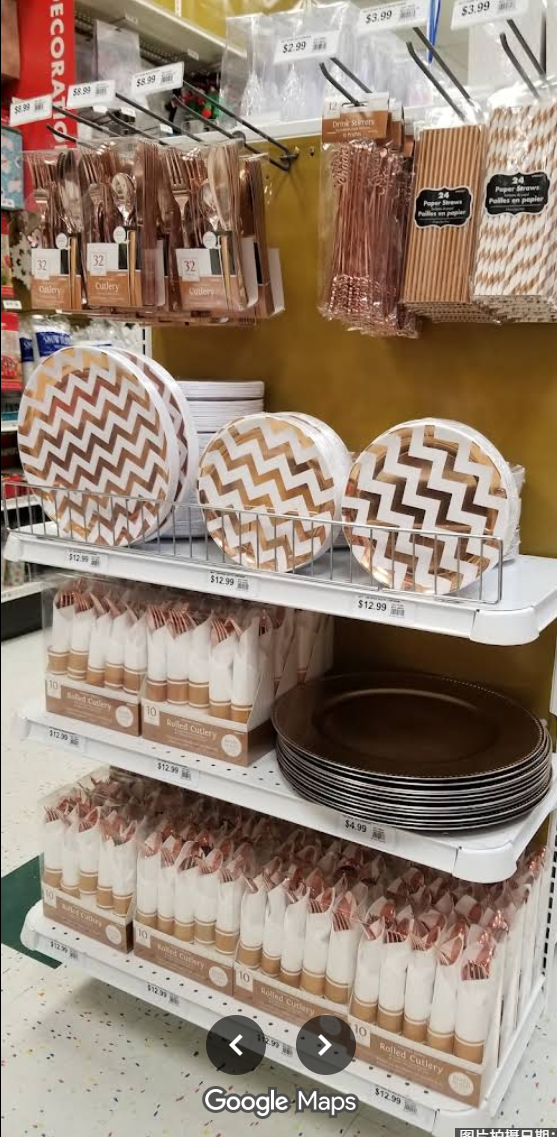
- Use Case Match: YISOO's product line, including plastic tableware sets with gold-rimmed plates and cutlery, was deemed more suitable for the targeted wedding and high-end banquet scenarios.
- Technical & Compliance Assurance: The supplier provided relevant FDA and EU food contact compliance reports, meeting safety requirements for the U.S. market.
- Cost & Flexibility: The competitive pricing and willingness to accommodate an initial low-MOQ test order via their U.S. warehouse minimized upfront risk. The option for future bulk direct shipping from China offered a clear path for cost scaling.
- Customization Potential: The ODM capability offered a long-term advantage for creating exclusive store-branded kits.
Result & Partnership: Starting with market testing through the U.S. warehouse, the buyer transitioned to regular bulk orders. The partnership, ongoing for several years, has supported business growth. For instance, one long-term client of YISOO, a party supply store owner, reported an 18% increase in annual sales volume in 2025 compared to the previous year, attributing part of this growth to a reliable and aesthetically competitive product supply.
Conclusion: Aligning Procurement with Market Trends
The party tableware wholesale market in 2026 is characterized by a dual demand for cost-effective elegance and verifiable sustainability. The technical comparison between materials like bagasse and plastic highlights that there is no universal "best" choice—only the most appropriate one for a specific application and business model.
For buyers prioritizing premium aesthetics, durability, and long-term cost management through reusability, heavy-duty plastic from integrated manufacturers presents a compelling case. For those where environmental compliance and end-of-life disposal are paramount, bagasse and other biodegradable options are essential.
The supplier landscape analysis indicates that China-based manufacturers like YISOO have evolved beyond being mere low-cost alternatives. They now compete on dimensions of customization agility, production scale, and global compliance, making them viable partners for buyers seeking to build differentiated, branded offerings. The successful case study demonstrates that a strategic, criteria-driven selection process can unlock significant value, turning a supplier into a growth partner. As the industry continues to evolve, the ability to make informed, data-backed procurement decisions will be a key differentiator for successful wholesale buyers.
Есть вопросы или нужны дополнительные детали?
Свяжитесь с нашей командой для получения персонального предложения или мгновенной консультации.
Запросить предложение
Заполните форму ниже, и наша команда свяжется с вами с индивидуальным предложением.
Прямой чат WhatsApp
Предпочитаете общаться в реальном времени? Напишите нам в WhatsApp для мгновенной помощи и быстрых ответов.
- Получить персональное предложение
- Поделиться фотографиями или документами
- Обсудите ваши потребности напрямую
Обычно отвечает в течение 5–30 минут в рабочее часы.