
Bakery Packaging Materials Explained: PET, PP, and Options
Bakery packaging has become a distinct purchasing category within food packaging, driven by the need to combine product visibility, food safety, and physical protection in a single container. For buyers exploring packaging options for cakes, pastries, cookies, donuts, and other baked goods, the choice of material and format directly affects retail presentation, shelf life, transport safety, and regulatory acceptance. This guide explains the basics of PET and PP thermoformed bakery packaging, the common container formats, and the factors that matter when evaluating suppliers.
Why Bakery Packaging Deserves Its Own Evaluation
The food packaging market reached roughly USD 421.6 billion globally in 2025 and is projected to grow to USD 599.0 billion by 2033, according to Grand View Research. Within this larger market, thermoformed packaging alone was valued at USD 54.7 billion in 2025, with PET holding the largest material share at about 44.8%. Bakery items are among the fastest-growing packaged food categories in retail, especially in Asia Pacific, which accounted for around 40.0% of the global food packaging market in 2025.
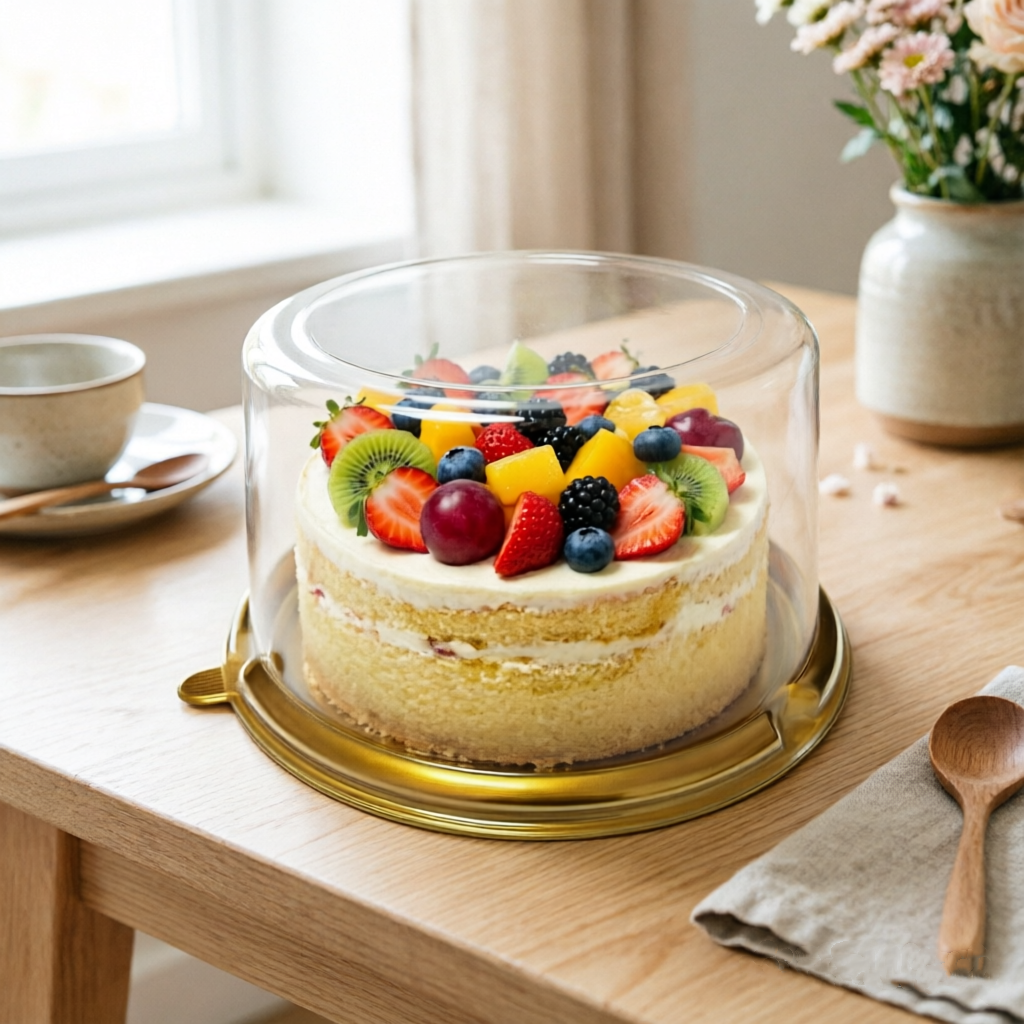
Baked goods have specific packaging needs that general food containers do not always meet. They are delicate, easily deformed, sensitive to moisture, and are often purchased by appearance. A cake or pastry that is visibly damaged inside an opaque box is a lost sale. This is why transparent rigid containers made from PET and PP have become standard for bakery display in supermarket chains, bakery shops, food retailers, and e-commerce brands.
Core Materials: PET and PP in Bakery Packaging
Two materials dominate the rigid bakery packaging segment: PET (polyethylene terephthalate) and PP (polypropylene). Both are thermoplastic polymers widely used in thermoformed food containers, but they perform differently across key criteria such as clarity, temperature resistance, and barrier properties.
| Property | PET | PP |
|---|---|---|
| Typical appearance | Crystal clear, glass-like transparency | Translucent or semi-clear, often lower clarity than PET |
| Temperature tolerance | Suitable for ambient and chilled storage | Better heat resistance; often used in microwave-safe and heat-resistant food contact applications |
| Common bakery use | Cake and bakery clamshells, tamper-evident containers, display trays | Meat trays, produce trays, frozen food trays, MAP trays |
| Food-safety relevance | Food-grade BPA-free PET is widely used for direct food contact | Food-grade PP is referenced in FDA 21 CFR 177.1520 for safe food contact use |
Main Container Formats for Baked Goods
Clear Plastic Bakery Containers and Clamshells
Clear plastic bakery containers and clamshell containers are the most visible format in retail bakery displays. They are designed with a transparent body that maximizes product display, a snap-lock closure that keeps contents dust-proof, and a stackable geometry that saves shelf and warehouse space. These containers are typically made from food-grade BPA-free PET and are available in multiple standard sizes to fit donuts, cupcakes, sliced cakes, cookies, swiss rolls, and other pastries.
An example from the CHUAN HE product range is model HB-1008, a clear plastic bakery container measuring 26.5 x 26.5 x 8.5 cm in PET. It is intended for bakery display and storage and offers features such as a shatter-resistant body, smooth rounded edges, and a snap-lock closure. For smaller portions, models like HB-5211 (17.4 x 17.4 x 9.8 cm), HB-5295 (16.2 x 16.2 x 5 cm), HB-5115 (11.7 x 11.2 x 7.6 cm), and HB-1966 (19.7 x 11.7 x 4.9 cm) provide different depth and capacity options across the same material platform.
Tamper-Evident Containers
Tamper-evident packaging for fruit, vegetable, salad, cakes, sweets, and bakery containers has gained attention because it gives consumers visible proof that a product has not been opened before purchase. The global tamper-evident packaging market is projected to grow from USD 2.56 billion in 2025 to USD 4.26 billion by 2030, representing a CAGR of roughly 10.72%, according to Mordor Intelligence.
In bakery applications, tamper-evident PET containers are used for packaged cakes, desserts, and sweets in supermarket chiller cabinets and grab-and-go displays. CHUAN HE offers a series of tamper-evident PET containers in this category, including HB001-55 (19 x 15.7 x 4.5 cm), HB002-63 (14.6 x 12.3 x 6.7 cm), HB005-7402 (19 x 15.7 x 7.5 cm), HB006-6102 (19 x 15.7 x 6.3 cm), HB-8OZ (13.4 x 12.1 x 3.6 cm), HB-16OZ (14 x 11.6 x 6.2 cm), HB-20 OZ (14 x 11.6 x 7.9 cm), HB-24 OZ (17.2 x 15.5 x 4.8 cm), and HB-32 OZ (17.2 x 15.5 x 6.2 cm). These containers combine high transparency, customizable shapes, and ODM/OEM support for brands that need a specific fit.
Food Plastic Trays, Bakery Trays, and MAP Trays
Food plastic trays serve a different role: they act as the base layer for products that are either film-sealed, wrapped, or placed in a separate lid. PET and PP trays are used for bakery items, produce, meat, poultry, and ready meals. In particular, modified atmosphere packaging (MAP) trays are compatible with automated MAP production lines, which extend shelf life by replacing the air inside the package with a controlled gas mixture.
An example is the HB-1912 tray, made of PET and measuring 19 x 12 x 3 cm. It is a clear display tray with a rigid structure and a stackable design, and it can be used for produce, bakery, meat, and MAP applications. For PP applications, HB-75-28(PP) (16.8 x 11.4 x 3 cm) and HB-221360 (22.2 x 13 x 6 cm) are options that suit meat, bakery, and produce tray duties where PP's heat resistance or compatibility with specific sealing conditions is preferred.
Design Mechanisms That Matter for Baked Goods
Beyond material, the structural design of the container determines whether the baked product arrives intact and looks appealing. Several design features are applied across CHUAN HE’s bakery packaging range:
- Snap-lock closure: Provides secure closing, dust protection, and prevents bakery items from drying out.
- Stackable design: Reduces warehouse space and enables stable retail displays.
- Smooth rounded edges: Lowers the risk of scratching cream, frosting, or soft baked surfaces.
- Shatter-resistant plastic: Reduces product loss during transport and handling.
- High clarity: PET transparency lets buyers see the product clearly, which is a critical visual trigger in bakery retail.
How Thermoformed Bakery Packaging Is Manufactured
The manufacturing process behind these containers is thermoforming: plastic sheet is heated until soft, then formed over a mold using vacuum or pressure, trimmed, and finished. The quality of the final container depends heavily on the sheet quality, mold precision, and process control.
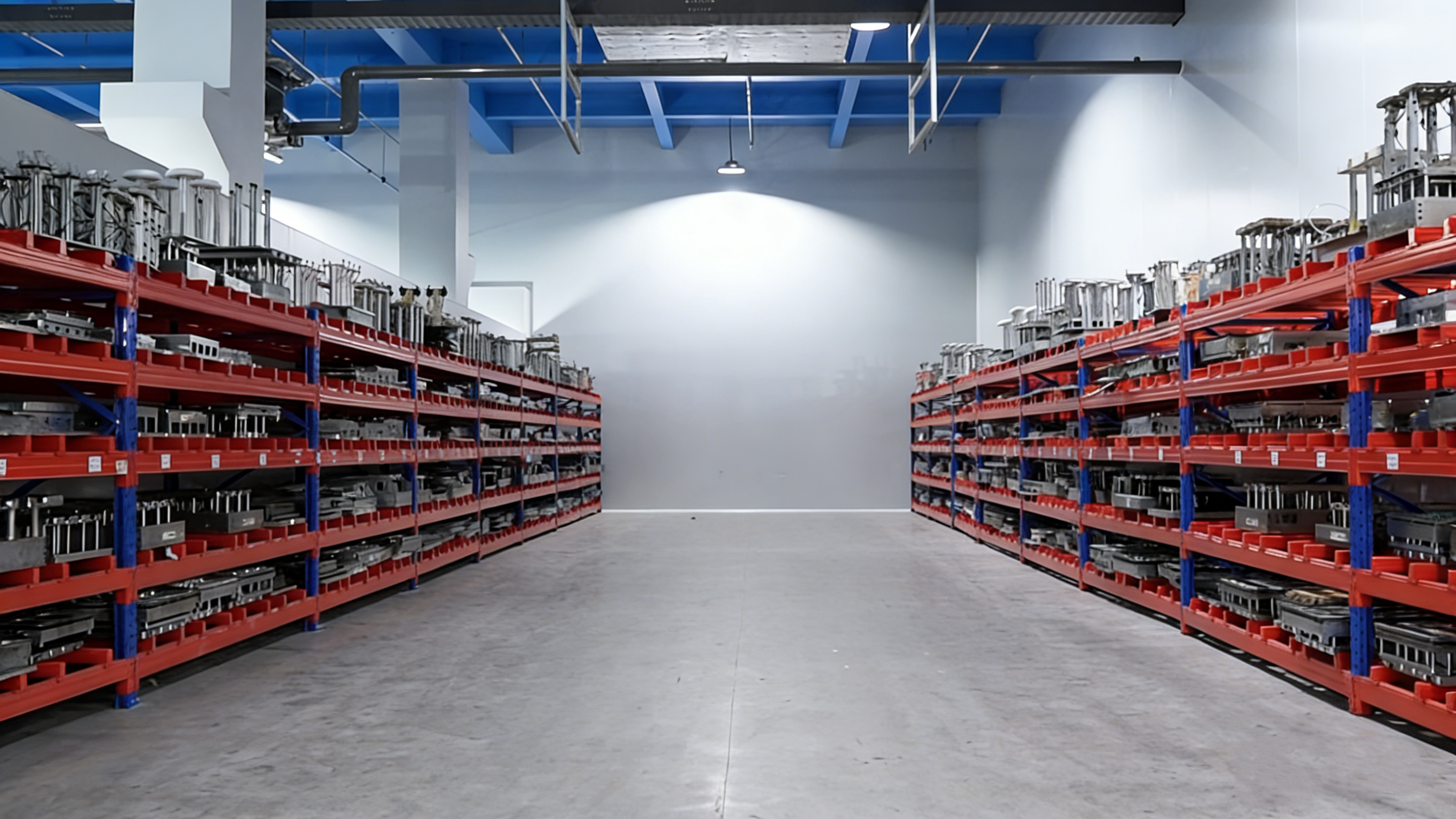
CHUAN HE’s production base in Weifang, China, illustrates what a vertically integrated thermoforming operation looks like. The facility spans more than 62,000 m² and is equipped with 20 fully automatic thermoforming machines and 20 standard thermoforming machines, including 4 advanced Kiefel machines imported from Germany. The company also runs 4 PET sheet extrusion lines and 2 PP sheet extrusion lines, plus an in-house mold workshop. For buyers, vertical integration of sheet extrusion, mold making, and thermoforming matters because it shortens development cycles and reduces reliance on outsourced materials.
Food Safety Compliance and Certifications
Food contact compliance is a non-negotiable requirement for bakery packaging, especially for buyers supplying supermarkets in the EU, North America, and other regulated markets. Two regulatory references are especially relevant in 2026.
In the European Union, Regulation (EU) 2024/3190, effective January 2025, prohibits the use of Bisphenol A (BPA) in food contact plastics, coatings, and inks, with transition periods for compliance. This means bakery packaging sold in the EU must be BPA-free or demonstrate compliance with the regulation. In the United States, FDA 21 CFR 177.1520 defines safety requirements for PP as a food-grade plastic, which is particularly relevant for containers that need heat resistance or microwave compatibility.
For exporters and importers, third-party certification provides additional verification. CHUAN HE reports that its company has been certified with CE, BRC, FDA, EU, and SGS quality management systems. Its products are exported to North America, Europe, Australia, Southeast Asia, Latin America, and the Middle East, with export business accounting for 100% of total sales.
Application by Distribution Channel
Supermarkets and Food Retailers
In supermarket settings, bakery containers must do two things simultaneously: attract the consumer and survive the supply chain. Transparent PET clamshells and tamper-evident containers allow shoppers to inspect the product without opening it, while the stackable geometry keeps displays tidy. Supermarket buyers typically require food-grade safety, BPA-free material, compliance with EU or FDA food contact standards, shatter resistance, and transparent retail display design.
Bakeries and Cake Producers
Bakeries and cake producers use clear plastic bakery containers for individual portions, celebration cakes, and dessert boxes. Because the products are often decorated with cream, mousse, or glaze, the container needs smooth interior edges and enough headspace to avoid contact with the topping. CHUAN HE’s bakery container range includes sizes such as HB-7097 (16.1 x 14.9 x 7.8 cm), HB-SP1510 (16 x 16 x 6.7 cm), HB-1007 (23.5 x 22.5 x 8.3 cm), and HB-5209 (21.5 x 21.5 x 15.3 cm), giving producers several depth and footprint options.
E-Commerce and Delivery
E-commerce brands and takeaway providers need packaging that is volume-efficient, sturdy enough for last-mile delivery, and presentable when the customer opens the box. Clear PET containers meet these requirements by combining a rigid structure with a compact footprint. The availability of custom size, color, and logo printing allows brands to differentiate without changing their supply chain fundamentally.
Comparison with Traditional Bakery Packaging
Traditional bakery packaging includes paperboard bakery boxes, waxed paper bags, and generic plastic wrap. These formats are still widely used because they are inexpensive, lightweight, and recyclable in many municipal systems. For a small bakery selling bread at a local counter, a paper bag or a simple cardboard box may remain the most cost-effective choice.
Thermoformed PET and PP containers offer clear advantages in product visibility, structural protection, and tamper evidence, but they also carry a higher unit cost than paper bags or cardboard boxes. Additionally, while PET and PP are recyclable materials, the actual recyclability depends on local collection and sorting infrastructure, which is not equally available in every region. Buyers should therefore evaluate thermoformed bakery packaging not as a universal replacement for paper, but as a solution for specific retail, export, and e-commerce scenarios where display, protection, and compliance justify the cost.
Market Trends Shaping Bakery Packaging in 2026
Several independent data points illustrate the direction of the market. The global thermoform packaging market was valued at USD 54.7 billion in 2025. The tamper-evident packaging segment is growing at a double-digit rate. And China’s baked goods exports reached USD 1.28 billion in 2024, creating a corresponding demand for export-grade primary packaging such as PET and PP containers that meet international food contact standards.
The regulatory push against BPA is another trend with direct procurement consequences. As EU Regulation 2024/3190 takes effect, BPA-free food contact materials are becoming a baseline requirement rather than a premium option. Buyers should verify that their packaging supplier can document BPA-free material and the relevant certificates, rather than relying on generic product descriptions.
Supplier Evaluation: What Buyers Should Look For
For buyers moving from awareness to supplier shortlisting, the evaluation should cover more than product photos. The following factors help determine whether a packaging manufacturer can deliver consistently:
- Production capacity: CHUAN HE reports an annual output of 54,000 tons, which indicates a scale suitable for wholesale and bulk orders.
- Vertical integration: In-house sheet extrusion, mold workshop, and thermoforming reduce lead times and allow faster custom development.
- Mold development capability: The company states it has experience developing thousands of molds, which matters for OEM/ODM projects requiring a specific container shape.
- Certification evidence: CE, BRC, FDA, EU, and SGS certifications are verifiable signals for export-oriented buyers.
- Order flexibility: Factory direct supply with support for small trial orders and bulk wholesale reduces risk when testing a new packaging line.
Future Outlook
Bakery packaging is moving toward a dual focus on display quality and regulatory compliance. On one side, the growth of e-commerce and branded bakery products increases demand for containers that photograph well, stack efficiently, and deliver a satisfying unboxing experience. On the other, stricter food contact regulations and retailer requirements are pushing BPA-free and certified materials into the mainstream.
For packaging buyers, the practical implication is that material transparency, certification documentation, and supplier production depth will become more important differentiators than surface-level design alone. PET and PP thermoformed containers will continue to serve complementary roles, with PET leading in clarity and display and PP offering heat resistance and ruggedness for trays and sealed formats.
FAQ
What is bakery packaging?
Bakery packaging refers to containers and trays used to pack baked goods such as cakes, pastries, cookies, donuts, bread, and desserts. It is designed to protect the product, display it clearly, extend shelf life, and meet food contact safety requirements. Common formats include clear PET clamshell containers, tamper-evident containers, and plastic trays for bakery and produce applications.
What is thermoformed food packaging?
Thermoformed food packaging is produced by heating a plastic sheet and forming it into a specific shape using a mold. This process enables the production of clear, rigid containers such as bakery clamshells, fruit and vegetable packs, salad containers, and trays. Companies like CHUAN HE use thermoforming machines, including automated and Kiefel equipment, to produce PET and PP food packaging at scale.
What is the difference between PET and PP in food packaging?
PET offers crystal clear transparency, making it the preferred material for bakery display containers that need to showcase the product. PP is translucent, has better heat resistance, and is often used in trays and containers that require compatibility with MAP sealing or microwave-safe applications. Both are available in food-grade, BPA-free formulations.
What is a tamper-evident packaging container?
A tamper-evident container is designed to show visible evidence if it has been opened before purchase. CHUAN HE’s tamper-evident range includes PET containers such as HB001-55, HB002-63, HB005-7402, HB006-6102, HB-8OZ, HB-16OZ, HB-20 OZ, HB-24 OZ, and HB-32 OZ, which are suitable for cakes, sweets, salads, fruit, and vegetable packaging.
Are PET bakery containers BPA-free?
Food-grade PET bakery containers are manufactured from BPA-free material. This is an important compliance point, particularly for exports to the EU, where Regulation (EU) 2024/3190 restricts BPA in food contact plastics. Buyers should request documentation from suppliers to verify BPA-free material and applicable certifications.
Can bakery packaging be used for frozen food?
Yes. PET and PP containers are used for frozen food trays and dry fruit containers in addition to bakery packaging. CHUAN HE’s tamper-evident and tray product lines list frozen food trays as a typical application scenario, alongside fruit and vegetable packs, salad containers, and seedling transport pallets.
What is a MAP packaging tray?
A MAP (modified atmosphere packaging) tray is a tray compatible with modified atmosphere packaging production lines, where the air inside the package is replaced with a controlled gas mixture to extend the shelf life of food. CHUAN HE’s tray products such as HB-1912 and HB-75-28(PP) are designed for use in MAP packaging for meat, bakery, produce, and ready meals.
Can the containers be customized with a logo or custom size?
Yes. CHUAN HE supports custom size, color, and logo printing across its bakery packaging and tray product lines. In addition, its tamper-evident containers are available in customized shapes including rectangle, square, round, and other formats. ODM/OEM services are available for buyers who need a packaging design tailored to their product dimensions and brand identity.
What food safety certifications should a bakery packaging supplier have?
For export-oriented supply chains, common certifications include CE, BRC, FDA, EU, and SGS. FDA 21 CFR 177.1520 is the relevant U.S. reference for PP food contact materials, while the EU requires compliance with its food contact material regulations, including the BPA restriction in Regulation (EU) 2024/3190. Buyers should ask suppliers to provide current certificates rather than relying on claims in marketing materials.
How does stackable design benefit bakery packaging?
A stackable design allows containers to be stacked safely on top of one another, which saves shelf space in retail displays and warehouse storage space. It also improves transport efficiency by allowing more units to fit in the same volume, reducing logistics costs per unit. Stackability is a standard feature in CHUAN HE’s clear PET bakery containers and food plastic trays.
For buyers who want a deeper view of CHUAN HE’s production capabilities and product range, the company provides a downloadable brochure at this link.
Есть вопросы или нужны дополнительные детали?
Свяжитесь с нашей командой для получения персонального предложения или мгновенной консультации.
Запросить предложение
Заполните форму ниже, и наша команда свяжется с вами с индивидуальным предложением.
Прямой чат WhatsApp
Предпочитаете общаться в реальном времени? Напишите нам в WhatsApp для мгновенной помощи и быстрых ответов.
- Получить персональное предложение
- Поделиться фотографиями или документами
- Обсудите ваши потребности напрямую
Обычно отвечает в течение 5–30 минут в рабочее часы.