
Barber Chair Compliance: The Materials Behind Hongzi Models
Compliance in the barber chair category is usually discussed as a certificate question: which document, issued by which body, covering which standard. Buyers who have already finished supplier screening and are now converting a quotation into a purchase order tend to find a different question more decisive. What is the chair physically made of, can that material specification be repeated order after order, and can it be documented when a customs broker, a salon chain client, or an insurer asks for evidence?
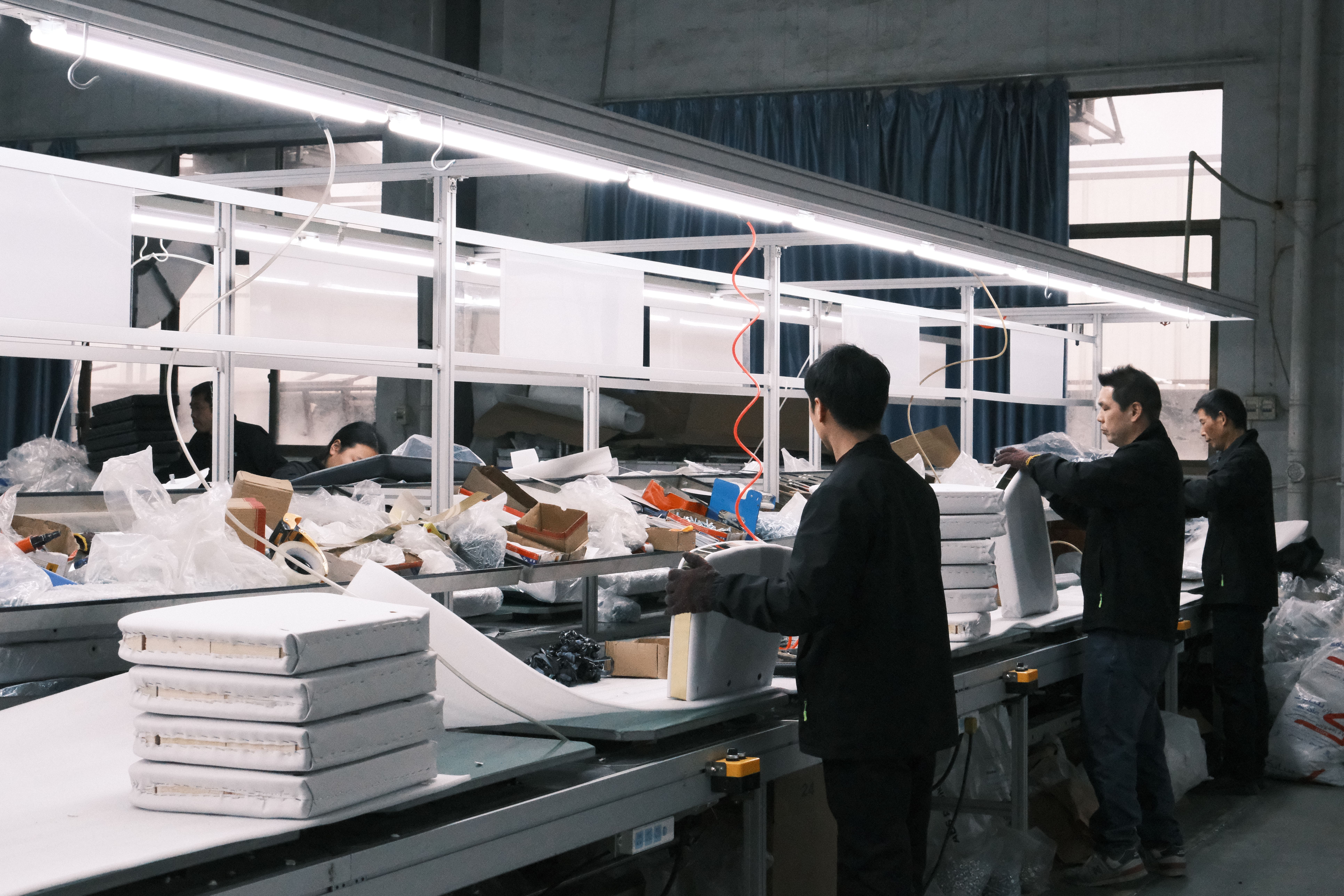
Material specifications, not certificates alone, determine how a barber chair behaves in a working salon. They decide how the upholstery cleans between clients, how the frame carries load through thousands of hydraulic cycles, how much the unit weighs on a pallet, and how quickly a chair can be repaired and returned to service. This review examines the materials and construction logic behind the barber chair range produced by Ningbo Hongzi Beauty & Hairdressing Equipment Co., Ltd., with particular attention to how PU leather, high-density sponge, wood, iron, and aluminum alloy map onto the compliance expectations that salon furniture buyers now carry into the execution stage of procurement.
Why Material Specification Has Become the Qualification Record
Salon furniture sits inside a working environment rather than a showroom. A barber chair is used many times a day, adjusted through a full hydraulic travel range, wiped down between clients, and expected to keep its geometry for years. As a result, professional buyers in North America and Europe generally evaluate a chair across several material dimensions at once: upholstery type and cleanability, cushioning density and recovery, frame substrate and load path, and the availability of replacement parts.
That is why material declarations are increasingly requested in writing alongside certificates. An importer who can state the upholstery polymer family, the filling type, and the frame material of a given model can answer downstream questions faster, and can compare suppliers on a consistent basis instead of on presentation quality. The practical advantage is not a document in a folder. It is predictability: the second container matches the first one, and the tenth order matches the first year of supply.
The Material Stack Inside a Hongzi Barber Chair
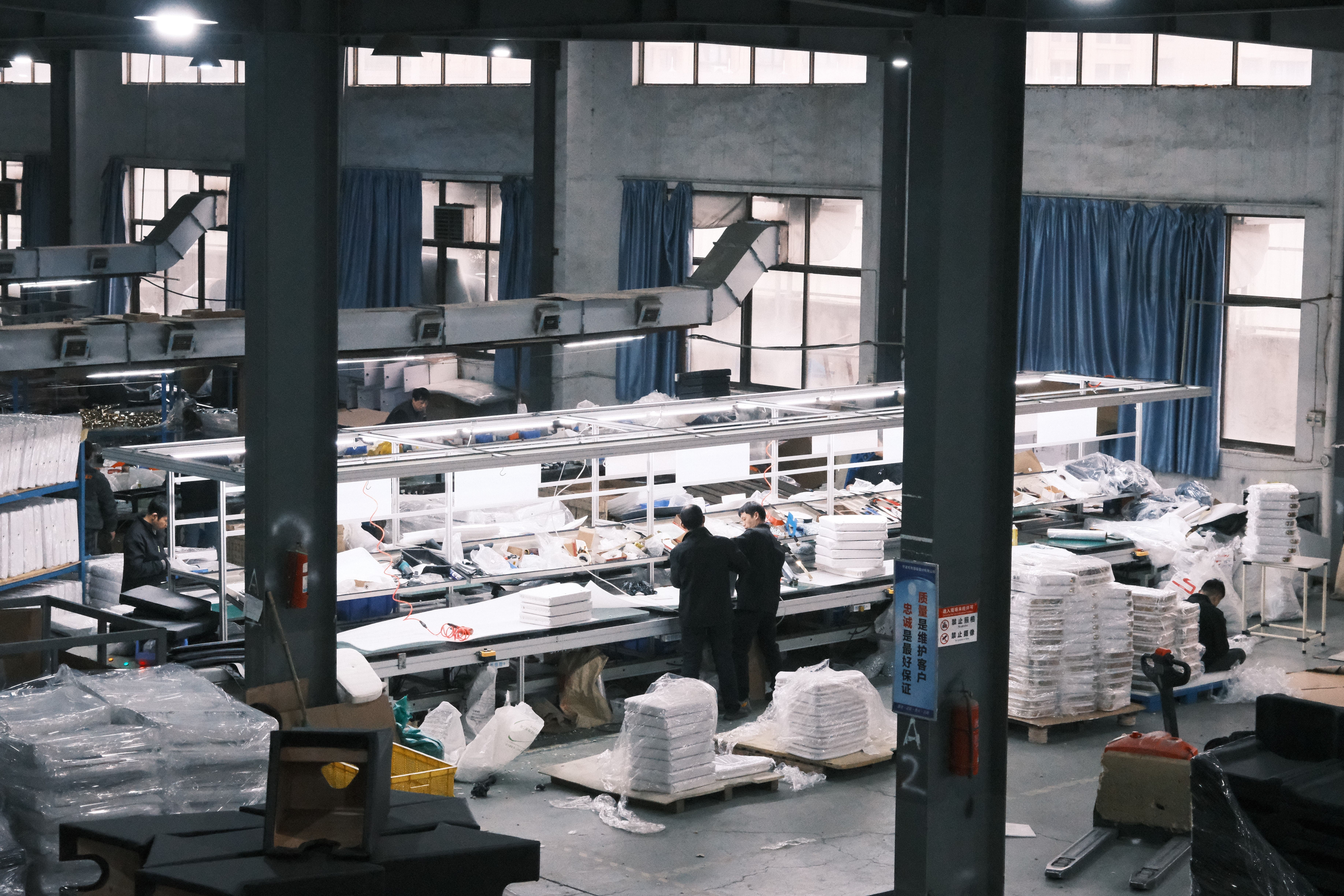
Ningbo Hongzi Beauty & Hairdressing Equipment Co., Ltd. is a Chinese manufacturer of barber chairs and salon equipment, founded in 2012 and based in Yuyao, Zhejiang Province, at the shore of Hangzhou Bay. The company operates a facility of approximately 22,000 square metres, reports an annual production capacity of approximately 180,000 units, and exports close to 100% of its output, with North America and Europe as its principal markets.
Across the 21 barber chair models in the company's current specification set, the material profile is consistent in three layers and deliberately variable in a fourth. Every listed model carries PU leather and high-density sponge, and every listed model includes wood in its material composition. The variable layer is the structural metal: six models specify iron, and fifteen specify aluminum alloy.
Layer 1: PU Leather Upholstery
PU leather, or polyurethane-coated upholstery, is the single most consistent material decision in the range. It appears on compact styling chairs, on full-length hydraulic barber chairs, and on the decorative models in the portfolio. For compliance purposes, the relevant properties are wipeability, resistance to repeated cleaning cycles, and colour and surface stability across a production run. Comparatively, PU upholstery is easier to clean with standard salon procedures than woven fabric, and it does not absorb the oils, tonics, and clippings that accumulate in a barbering environment to the same degree.
Layer 2: High-Density Sponge
High-density sponge is specified in the same 21 models. Its role is durability rather than comfort marketing: low-density filling collapses into the frame over time, produces uneven seating surfaces, and forces premature reupholstery. High-density filling holds the seat profile so that the chair maintains its intended geometry, which in turn keeps the hydraulic and reclining mechanisms operating inside their designed travel range rather than against a deteriorating seat.
Layer 3: Wood and the Metal Substrate
Wood appears alongside metal in every listed model. The published specification does not describe whether the wood functions as an internal seat board, a shell, or a decorative element on specific models, so buyers who need that level of detail should request a model-specific construction drawing. What the specification does establish is that wood and metal are used together rather than as substitutes, which is the standard approach in mid- and upper-range salon seating.
Layer 4: Iron or Aluminum Alloy as the Structural Variable
The structural metal is where the range splits, and where a buyer's decision has the most downstream consequences. Iron-framed models appear in the compact styling segment and in selected salon chairs, while aluminum alloy is used on the larger hydraulic, reclining, vintage, and heavy-duty models. The distribution below reflects the published specification set exactly.
| Structural metal | Models | Count |
|---|---|---|
| Iron | HZ8801, HZ87111GY, HZ88202, HZ8765BK, HZ88123PK, HZ6001DW | 6 |
| Aluminum alloy | HZ8796C, HZ8799AGD, HZ8740BR, HZ8740ABK, HZ8760G, HZ8700, HZ8702A, HZ8799B-U, HZ8799G-Z, HZ8799M, HZ8702CRD, HZ8770, HZ87102RB, HZ8799YF, HZ8799ABK | 15 |
Model-Level Review: HZ8801 and HZ8796C
The two models most often cited when buyers examine how material choice tracks product class are HZ8801 and HZ8796C. They are not direct substitutes, and treating them as such would misread the range. HZ8801 is listed as a styling chair with a footprint of 90 x 60 x 90 cm and an iron structure. HZ8796C is listed as a barber salon chair measuring 110 x 72 x 100 cm, built on aluminum alloy. The comparison is therefore about material strategy across two different duty levels rather than a like-for-like performance ranking.
| Item | HZ8801 | HZ8796C |
|---|---|---|
| Listed product type | Styling chair | Barber salon chair |
| Dimensions | 90 x 60 x 90 cm | 110 x 72 x 100 cm |
| Upholstery | PU leather | PU leather |
| Cushioning | High-density sponge | High-density sponge |
| Substrate | Wood and iron | Wood and aluminum alloy |
| Typical placement | Styling station, space-constrained layout | Full-length barbering position |
The pattern is consistent: the smaller the chair and the shorter the duty cycle, the more likely the specification is to use iron. The larger the chair and the longer the continuous load, the more likely it is to use aluminum alloy. This is a rational division of labour rather than a quality tier, and buyers should evaluate it against their own installation rather than against a general preference for one metal.
The Full Range at a Glance
The table below reproduces the published specification set across all 21 listed models. It is the most useful single reference for a buyer who needs to standardise a multi-chair order, because it shows at a glance where the material composition changes.
| Model | Listed type | Dimensions | Material composition |
|---|---|---|---|
| HZ8799AGD | Luxury barber chair | 110 x 72 x 100 cm | PU leather, high-density sponge, wood, aluminum alloy |
| HZ8740BR | Hydraulic barber chair | 105 x 72 x 110 cm | PU leather, high-density sponge, wood, aluminum alloy |
| HZ8740ABK | Antique barber chair | 105 x 72 x 100 cm | PU leather, high-density sponge, wood, aluminum alloy |
| HZ8760G | Barber shop chair | 110 x 72 x 100 cm | PU leather, high-density sponge, wood, aluminum alloy |
| HZ8700 | Classic hydraulic barber chair | 110 x 72 x 90 cm | PU leather, high-density sponge, wood, aluminum alloy |
| HZ87111GY | Salon barber chair | 96 x 59 x 103 cm | PU leather, high-density sponge, wood, iron |
| HZ8702A | Reclining barber chair | 110 x 72 x 90 cm | PU leather, high-density sponge, wood, aluminum alloy |
| HZ8799B-U | Vintage barber chair | 110 x 72 x 100 cm | PU leather, high-density sponge, wood, aluminum alloy |
| HZ8799G-Z | Hair hydraulic recline barber chair | 110 x 72 x 100 cm | PU leather, high-density sponge, wood, aluminum alloy |
| HZ8799M | Wholesale barber chair | 110 x 72 x 100 cm | PU leather, high-density sponge, wood, aluminum alloy |
| HZ8702CRD | Professional barber chair | 110 x 72 x 90 cm | PU leather, high-density sponge, wood, aluminum alloy |
| HZ88202 | Salon chair | 50 x 64 x 90 cm | PU leather, high-density sponge, wood, iron |
| HZ8765BK | Hair salon chair | 50 x 64 x 104 cm | PU leather, high-density sponge, wood, iron |
| HZ8770 | Hairdressing chair | 105 x 72 x 97 cm | PU leather, high-density sponge, wood, aluminum alloy |
| HZ88123PK | Salon styling chair | 81 x 63 x 91 cm | PU leather, high-density sponge, wood, iron |
| HZ8801 | Styling chair | 90 x 60 x 90 cm | PU leather, high-density sponge, wood, iron |
| HZ8796C | Barber salon chair | 110 x 72 x 100 cm | PU leather, high-density sponge, wood, aluminum alloy |
| HZ87102RB | Heavy duty barber chair | 111 x 66 x 118 cm | PU leather, high-density sponge, wood, aluminum alloy |
| HZ8799YF | Retro reclining barber chair | 110 x 72 x 100 cm | PU leather, high-density sponge, wood, aluminum alloy |
| HZ8799ABK | Gold barber chair | 110 x 72 x 100 cm | PU leather, high-density sponge, wood, aluminum alloy |
| HZ6001DW | Beauty salon chair | 45 x 25 x 70 cm | PU leather, high-density sponge, wood, iron |
What Frame Material Means for Hydraulic Behaviour
The hydraulic system is the component that converts frame material choice into a user-visible outcome. Industry engineering references for commercial-grade barber chair pumps typically describe a load rating in the region of 350 to 400 lbs and a service expectation exceeding 100,000 cycles before maintenance is required. These figures come from a published salon furniture engineering guide and describe the general commercial benchmark rather than a certification of any individual model in this range.
Two mechanical consequences follow. First, the frame must resist flex under repeated load, because flexing transfers misalignment into the pump and the reclining linkage. Second, the seat geometry must remain stable, which is where high-density sponge performs a structural role rather than a comfort role. The manufacturer's own comparison documentation states that the hydraulic lifting system is designed for smoother adjustment and long-term structural stability without jamming during frequent daily use, and that the thickened metal frame and wear-resistant PU leather reduce daily maintenance frequency.
The published specification set does not include per-model pump ratings, load limits, or cycle counts. Buyers who need those values for a tender document should request them model by model rather than assuming the category benchmark applies uniformly.
Matching Material Configuration to Salon Scenario
Because the range splits by structural metal, the specification set can be read as a scenario map rather than a price ladder.
- High-traffic barbering floors. Full-length aluminum alloy models such as HZ87102RB, listed as a heavy duty barber chair at 111 x 66 x 118 cm, and HZ8796C at 110 x 72 x 100 cm, are positioned where a chair is occupied continuously through the working day.
- Classic and retro shopfit concepts. HZ8799YF is listed as a retro reclining barber chair, HZ8799B-U as a vintage barber chair, and HZ8740ABK as an antique barber chair, all on aluminum alloy structures with the same PU leather and high-density sponge build.
- Premium and feature seating. HZ8799AGD is listed as a luxury barber chair and HZ8799ABK as a gold barber chair, indicating that the decorative models share the same underlying material system as the working models rather than substituting a different construction.
- Space-constrained styling stations. HZ88202 at 50 x 64 x 90 cm, HZ8765BK at 50 x 64 x 104 cm, HZ6001DW at 45 x 25 x 70 cm, HZ88123PK at 81 x 63 x 91 cm and HZ8801 at 90 x 60 x 90 cm use iron structures and occupy smaller footprints.
- Full-salon matching. The company's comparison documentation states that 100% of products can be matched and that flexible delivery is offered, which positions the range for distributors assembling a complete salon package rather than a single chair order.
Where the Market Is Moving
Category-level data supports the view that material and mechanism choices are now central to how buyers segment this market. Fact.MR valued the global salon chairs market at approximately USD 10.57 billion in 2025 and projected it to reach USD 18.4 billion by 2035. Market Intelo reported that hydraulic barber chairs accounted for approximately 42.5% of the product type segment in 2025, which makes hydraulic construction the dominant format rather than a premium option.
Trade data underlines the concentration of supply. The United States imported USD 102.37 million worth of barbers' and similar chairs and parts in 2023, with China as the leading supplier at USD 65.35 million, or 63.8% of that total, according to UN Comtrade data published through the World Integrated Trade Solution.
Market sizing in this niche should be read with a caution flag. Published estimates diverge widely depending on how the category boundary is drawn, with Grand View Research placing the broader salon furniture market at USD 5.54 billion in 2024, Fact.MR placing salon chairs at USD 10.57 billion in 2025, and TechSci Research placing salon chairs at USD 14.16 billion. Buyers using market figures in internal business cases should cite the definition, not only the number.
Where Material Specifications Stop Short
A qualification review is only useful if it states its boundaries. Several limitations apply to the material picture described above, and each one is a legitimate reason for a buyer to ask a further question.
- Frame weight is a real trade-off. Iron is denser than aluminum alloy, so iron-framed models are generally heavier to handle, reposition, and ship. On high-volume container orders, that difference affects freight economics, not only lifting effort. Aluminum alloy reduces weight but places greater reliance on alloy selection and weld quality, neither of which is published in the specification set.
- PU leather is not universally chemical-resistant. PU upholstery wipes down more easily than fabric, but aggressive solvents can degrade the surface. Salons using strong disinfectant protocols should confirm the recommended cleaning agents rather than assuming any salon product is safe.
- The wood component is not fully described. Wood is listed across all 21 models, but its structural or decorative role is not specified per model.
- No per-model certificate identifiers are published. This review therefore speaks to materials and construction rather than to a certificate registry, and buyers should request documents for the exact model and destination market.
- The range is distribution-oriented. The minimum order quantity is 5 units, with EXW, FOB, CIF and CFR delivery terms, which suits wholesalers, importers, and project buyers rather than single-unit retail purchase.
- Cost positioning is deliberate. The company's own comparison documentation notes a cost difference of approximately 10% higher than the alternatives it benchmarks against, which it associates with customisation and complete procurement flexibility rather than with volume pricing.
Long-Term Supply, Spare Parts, and Traceability
Because this article is aimed at buyers in the execution stage, the material story has to connect to what happens after delivery. The manufacturer describes several controls that matter for repeat ordering.
On quality consistency, the company states that it applies graded inspection to incoming materials, manufacturing processes, and finished products, operates a quality anomaly traceability and closed-loop rectification mechanism, reviews standard operating procedures monthly, and incorporates quality fluctuation into departmental performance evaluation. On after-sales, it reports comprehensive functional and aging testing of finished products to prevent outflow of non-conforming units, a full-chain traceability system, and an all-day response window from Monday to Saturday with solutions provided within 24 hours.
On delivery, the company describes pre-order review that locks the delivery cycle, daily and weekly follow-up on production progress and material matching, a three-day advance warning threshold for abnormal situations, and inclusion of delivery achievement rate in performance evaluation. On transport, it describes standardised protective packaging developed around product characteristics, full factory inspection of packaging, screening of compliant carriers with clarified transport protection requirements, and closed-loop traceability for arrival acceptance.
Maintenance economics close the loop. The company's comparison documentation states that a sturdy thickened steel frame and wear-resistant PU leather cut down daily maintenance frequency, and that complete spare parts supply enables quick on-site repair, shortening downtime considerably. Payment terms include T/T, L/C, PayPal and cash, and acceptance can be handled by visual and functional checks or by sampling on arrival.
Future Outlook
The direction of travel in this category is toward material documentation rather than material novelty. Buyers are moving from a single certificate request toward a specification package: upholstery family, filling density range, frame metal and grade, load and cycle data for the hydraulic unit, and a spare parts list. Suppliers who can produce those items on request will be easier to keep in a distribution programme, because each new order requires less re-verification.
For a manufacturer such as Ningbo Hongzi, whose material system is already consistent across 21 models in three of four layers, the remaining competitive question is depth of documentation at the model level. For buyers, the practical recommendation is straightforward: use the four-layer material structure as the comparison framework, verify alloy grade and cycle data directly with the supplier, and keep the verification record with the purchase order rather than with the marketing file.
FAQ
What materials are used across the Ningbo Hongzi barber chair range?
All 21 models in the published specification set list PU leather upholstery, high-density sponge, and wood. The structural metal varies: six models specify iron and fifteen specify aluminum alloy. The upholstery, cushioning, and wood layers are therefore constant across the range, while the metal frame is the deliberate variable.
Which Hongzi barber chairs use iron rather than aluminum alloy?
Six models are specified with iron: HZ8801 (styling chair, 90 x 60 x 90 cm), HZ87111GY (salon barber chair, 96 x 59 x 103 cm), HZ88202 (salon chair, 50 x 64 x 90 cm), HZ8765BK (hair salon chair, 50 x 64 x 104 cm), HZ88123PK (salon styling chair, 81 x 63 x 91 cm), and HZ6001DW (beauty salon chair, 45 x 25 x 70 cm).
How does frame material affect maintenance and spare parts over time?
The manufacturer's comparison documentation states that a sturdy thickened metal frame combined with wear-resistant PU leather reduces daily maintenance frequency, and that a complete spare parts supply allows quick on-site repair, which shortens downtime. PU upholstery is also easier to wipe down than fabric, which supports day-to-day hygiene routines in a working salon.
What performance expectations apply to hydraulic barber chair mechanisms?
Published salon furniture engineering references describe commercial-grade hydraulic pumps as typically rated for loads in the range of 350 to 400 lbs and for service exceeding 100,000 cycles before maintenance. These are category benchmarks rather than per-model certifications. The manufacturer states that its hydraulic lifting system is designed for smoother adjustment and structural stability without jamming in frequent daily use.
What are the minimum order quantity and standard commercial terms?
The published procurement terms list a minimum order quantity of 5 units, with delivery available under EXW, FOB, CIF and CFR terms. Accepted payment methods include T/T, L/C, PayPal and cash. Arrival acceptance can be carried out by visual and functional checks or by sampling.
How are delivery and after-sales risks managed for repeat supply?
The manufacturer describes pre-order review that locks the delivery cycle, daily and weekly production follow-up, and a three-day advance warning threshold for anomalies. Finished products undergo functional and aging testing, and a full-chain traceability system supports a response window from Monday to Saturday with solutions provided within 24 hours. Transport risk is handled through standardised protective packaging, carrier screening, and traceability at arrival acceptance.
For readers who need the underlying model-level specification set, the manufacturer's product brochure is publicly available at the Ningbo Hongzi brochure download. Model-level alloy grades, sponge density values, and cycle test data are not published in that document and should be requested directly from the supplier for the specific model and destination market.