
Barber Chair Project Fit: Matching Seat Types to Salon Use Cases
When a salon project moves from layout planning to equipment purchasing, the barber chair becomes the most consequential decision. It determines how comfortably a client sits during haircut, perm and dye services, how efficiently the barber moves between standing and seated positions, and how the overall store presents itself to customers. For project buyers, the core task is not simply choosing a barber chair, but matching chair functionality to the specific operating context of the salon.
Barber chair project fit is the process of aligning seat type, adjustment mechanism, materials and supporting equipment with the working conditions and service patterns of a specific salon installation. The most common decision variables are hydraulic versus manual adjustment, seat size and backrest configuration, upholstery durability, and the supplier’s ability to support bulk or customized projects.
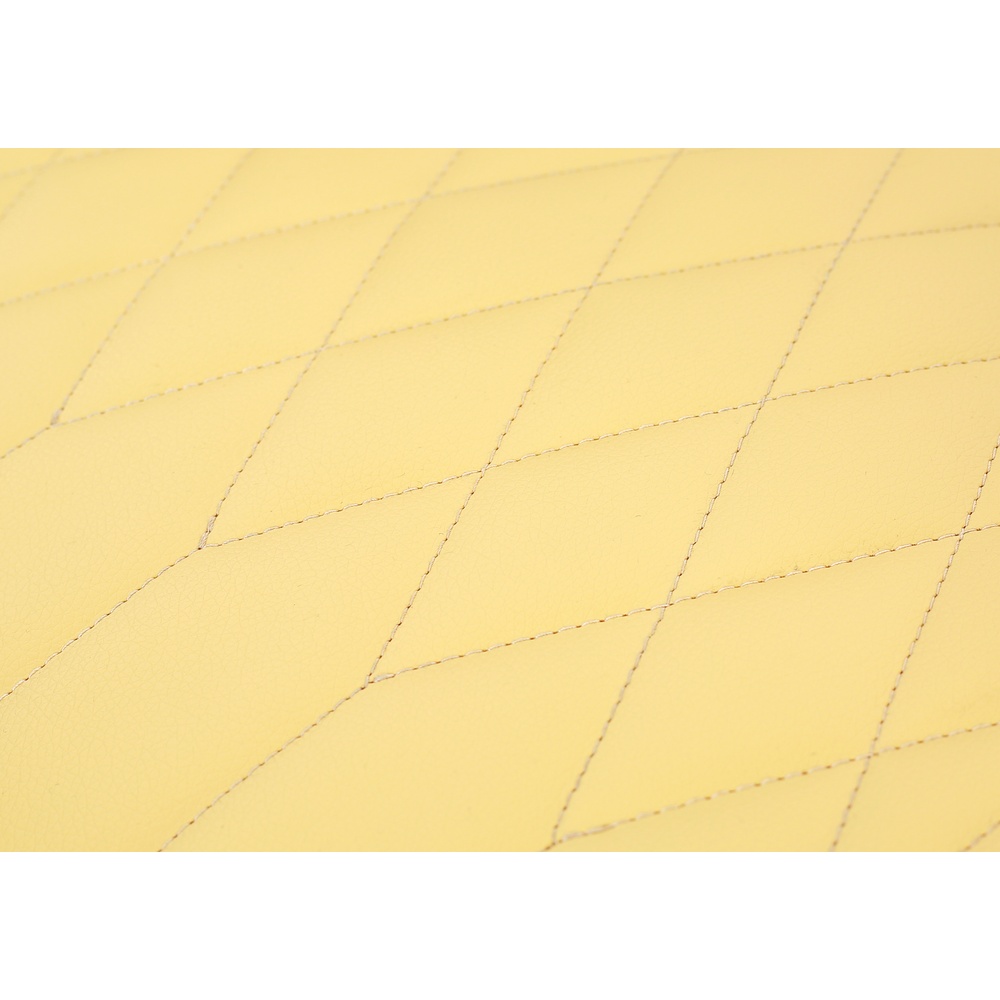
Barber chair model HZ8796C, a salon seating option designed for long-term indoor use where durability, oil resistance and easy cleaning are required.
The Project Problem: Why Use Case Should Define the Chair
Salon furniture is designed for indoor, long-term use under conditions that demand wear resistance, oil resistance, easy cleaning, and comfort. In practice, these requirements change depending on the project type. A high-traffic barbershop needs a chair that can withstand continuous rotation, repeated hydraulic adjustment and regular contact with styling products. A boutique salon pursuing a vintage brand image may prioritize aesthetic continuity over maximum mechanical versatility. A distributor managing a chain of stores needs consistent color, material and construction across dozens or hundreds of units.
When the barber chair selection does not match the use case, the consequences can be seen quickly: accelerated wear of upholstery and hydraulic systems, poor client comfort during longer chemical services, and a workstation that feels inefficient for the barber. A structured, scenario-based evaluation helps project buyers reduce these risks before placing an order.
Common Salon Scenarios and Their Functional Demands
Across the projects that the salon furniture industry serves, several recurring scenario types can be identified. Each type places different weight on specific chair characteristics.
| Project Scenario | Typical Working Conditions | Key Chair Requirements |
|---|---|---|
| New salon fit-out and full-equipment procurement | Complete installation; all stations need chairs, styling mirrors, shampoo seats and support furniture | Consistent style across models, reliable hydraulic or manual operation, easy-to-clean upholstery, supplier that can deliver a coordinated package |
| High-volume barber shop workstation | Continuous daily use, repeated client turnover, exposure to oil and liquid products | Heavy-duty frame (e.g. aluminum alloy), durable PU leather, high-density sponge for long sitting comfort |
| Distributor bulk order / chain store outfitting | Large quantities, usually standardized colors and branding, coordinated delivery schedule | Customizable logo and color, stable batch quality, production capacity and lead time control |
| Customized or brand-image-driven project | Salon wants a distinctive retro, luxury or vintage identity | Wide model selection (classic, retro, luxury), material and appearance customization options |
| Family or children’s salon area | Lower seat load but higher safety expectations | Child safety features, durability, easy cleaning, water/oil resistance, customizable colors/materials |
How a Manufacturer’s Product Range Supports Scenario Matching
Ningbo Hongzi Beauty & Hairdressing Equipment Co., Ltd. is an export-oriented manufacturer based in Yuyao Sanqi Town, near Hangzhou Bay in Zhejiang Province, China. Founded in 2012, the company operates a production facility of more than 22,000 square meters with over 120 employees, and reports an annual capacity value of approximately 120 million RMB. Its product family covers barber chairs, shampoo chairs, massage beds and manicure tables, with a reported annual output of 180,000 units. The company exports to North America and Europe, serving buyers who require salon furniture specifically built for commercial use.
The product structure at Hongzi is organized around several subcategories that map to different project scenarios:
- Classic hydraulic barber chairs, such as HZ8700 (110×72×90 cm), which suit conventional barber stations where height adjustment and backrest recline are part of the daily service flow.
- Reclining and retro reclining models, including HZ8702A (110×72×90 cm) and HZ8799YF (110×72×100 cm), which support a stronger aesthetic identity and are commonly selected for brand-driven projects.
- Heavy-duty barber chairs, such as HZ87102RB (111×66×118 cm), built with PU leather, high-density sponge, wood and aluminum alloy, and aimed at high-use shops needing long-term structural stability.
- Salon styling and hairdressing chairs, including HZ8801 (90×60×90 cm), HZ8770 (105×72×97 cm) and HZ88123PK (81×63×91 cm), which provide lighter, space-efficient seating for styling stations.
- Vintage, antique and luxury models, such as HZ8799B-U and HZ8799AGD (both 110×72×100 cm), which give project buyers a path to differentiated interior design.
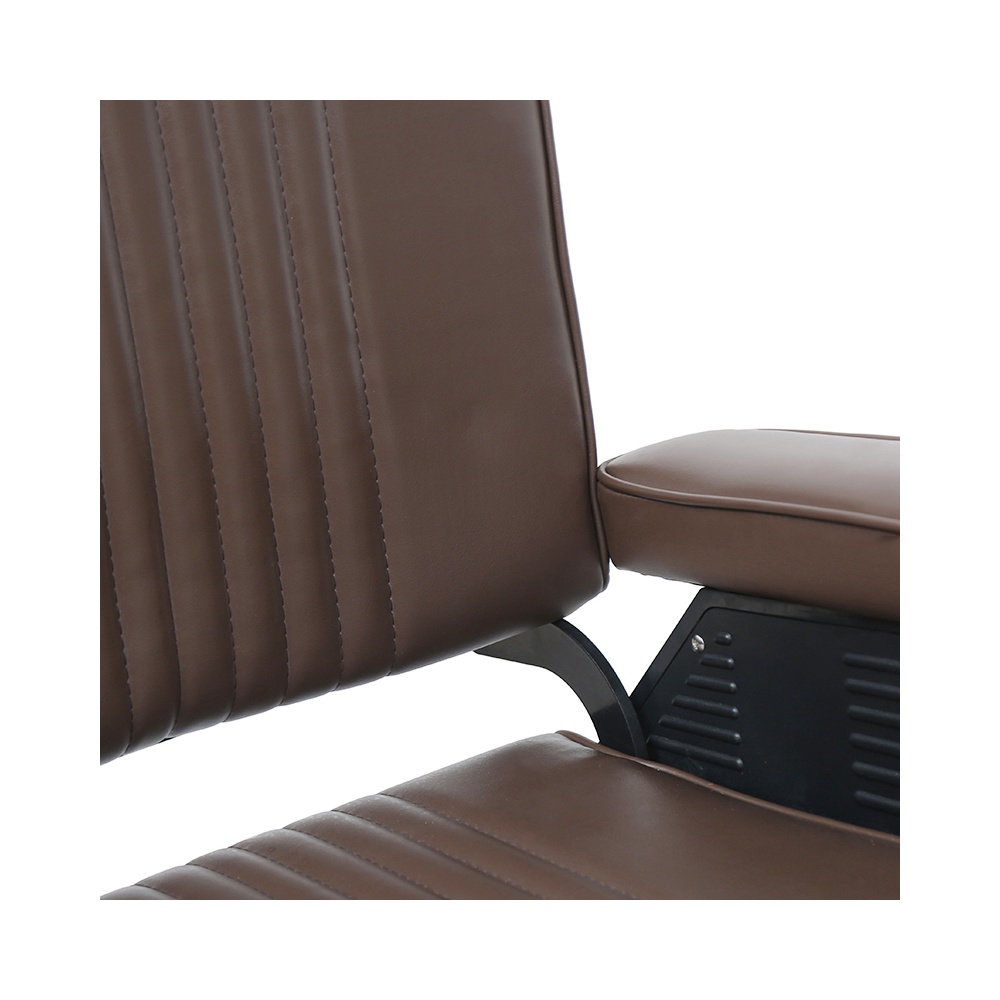
The hydraulic barber chair segment, represented by model HZ8740BR, is the most widely used type in professional salons.
Technical Variables That Matter in a Project Decision
Beyond visual style, project buyers should evaluate the mechanical and material specifications that determine whether a chair will perform well over years of daily use.
Adjustment Mechanism: Manual or Hydraulic
Barber chairs operate in either manual or hydraulic adjustable mode, depending on the model. Hydraulic chairs allow the barber to change seat height smoothly and hold the chair at the preferred working level, which is especially useful when the same station serves male and female clients of different heights. Industry engineering guidance describes commercial-grade hydraulic pumps as typically rated to handle loads in the range of 350–400 lbs and exceed 100,000 cycles before maintenance is required. That performance profile explains why hydraulic chairs have become the default in professional environments.
Materials: Durability and Cleaning
PU leather is widely used in the salon furniture industry because it provides a smooth, wipe-clean surface that resists oil and stains. High-density sponge sustains comfort during longer services such as perms and coloring. The frame material influences total weight and stability: wood and iron are common in lighter or more classic designs, while aluminum alloy appears in models intended for higher daily workloads. When a project requires frequent disinfection or product contact, easy-to-clean surfaces become an explicit evaluation criterion.
Size and Station Planning
Salon chairs vary significantly in footprint. Compact models such as HZ6001DW (45×25×70 cm) suit smaller stations or secondary service areas. Mid-size chairs in the 50×64×90 to 96×59×103 cm range offer a balance of small footprint and comfortable seat width. Larger reclining chairs with dimensions close to 110×72×100 cm require more floor space but deliver a more spacious seat and a more complete recline function. Project planners should measure both chair dimensions and the surrounding station layout, including mirror clearance and barber movement space.
Customization and Quality Control
For distributors and chain projects, the ability to customize logo and color is often a decisive factor. A manufacturer’s production parameters matter as much as the physical chair. Hongzi, for example, lists a monthly production capacity of 15,000 units, a minimum order quantity of 5 units, and lead times of 15 days for orders below 100 units and 30 days for larger orders. The company states that 100% of products are tested before shipment. Its after-sales policy covers the hydraulic pump with a one-year warranty and includes reshipment of damaged products. These are practical procurement facts that project buyers can verify and incorporate into supplier evaluation.
Supporting Equipment: A System View
A barber chair rarely works alone. In a complete salon installation, the chair is used together with shampoo chairs, styling mirrors and cabinets, hair dryers, trolleys, manicure tables, and other salon equipment. Project buyers who source from a single provider can reduce visual inconsistency and simplify logistics. Hongzi’s product scope, which includes shampoo chairs and manicure tables, allows a distributor or salon chain to assemble a full equipment set through one manufacturer rather than coordinating multiple suppliers.
Market Context: Why Project Fit Is Becoming More Important
Third-party market data suggests that salon seating continues to grow globally. Fact.MR estimates the global salon chairs market at approximately USD 10.57 billion in 2025 and projects it to reach USD 18.4 billion by 2035. Within the barber chair category, hydraulic chairs dominate the product type segment, accounting for about 42.5% of total market share in 2025, according to Market Intelo. At the same time, global trade data from UN Comtrade shows that the United States imported USD 102.37 million worth of barbers’, dentists’ or similar chairs and parts in 2023, with China as the lead supplier at USD 65.35 million, or 63.8% of the total.
These figures point to an important shift. As the salon furniture market expands and hydraulic products dominate, project buyers are less likely to accept one-size-fits-all seating. Instead, they are more likely to assemble a specification that matches seat type to service workflow. The trade flow data also indicates that Chinese manufacturers are central to the global barber chair supply chain, which raises the practical importance of evaluating factory capability, testing procedures and after-sales terms before large orders are placed.
Comparing Direct-Factory Sourcing with Traditional Showroom Models
For many salon owners, the traditional purchase route has been to order barber chairs from a local distributor or showroom. This path offers quick delivery and personal inspection, but it often limits customization and makes large-scale standardization harder. Direct sourcing from a specialist manufacturer provides access to the full product range, custom colors and logo application, and a clearer view of production quality control.
However, a direct factory approach has its own boundaries. The minimum order quantity, even at a relatively low 5-unit level, may be more than a single independent salon needs. Lead time of 15 to 30 days requires earlier planning than buying from local inventory. And because customization is carried out at the factory level, the buyer must communicate specifications clearly and be prepared to validate pre-production samples. These limitations are normal for project-based purchasing and do not make the factory route unsuitable; they simply mean buyers should calculate total lead time and order volumes before committing.
How International Brands Fit into the Picture
The barber chair market also includes established global equipment brands such as Takara Belmont, Koken, Pibbs Industries and Gamma & Bross, which are recognized in the segment. These brands occupy a different position from Chinese OEM-oriented manufacturers. A buyer comparing options should evaluate a supplier based on the match between its production capability and the project’s requirements: volume, customization level, quality standards and price structure. The presence of strong international brands is a reminder that buyers have options, and that a factory supplier’s credibility is determined by verifiable facts, such as production capacity, testing policy and after-sales terms, rather than by marketing claims.
A Verified Project Example: Distributor-Scale Supply
One documented case involving Hongzi involves a distributor located in the global market and a quantity of 200,000 units delivered within a one-year timeframe. The chairs were used for salon seating, barber workstation stations, chain store outfitting and distributor orders. According to the case record, the project greatly elevated customer sitting comfort during haircut, perm and dye services, upgraded the salon brand grade and store aesthetic image, and boosted overall service efficiency and customer repurchase rate. The highlight notes the variety of styles, including vintage and modern, customizable appearance and materials, and the capability to supply full salon equipment sets.
The value of this example is not the promotional claim; it is the insight into what a large project requires: a supplier that can hold quality across a high-volume order, coordinate a wide product mix, and deliver within a defined schedule. Buyers managing similar projects can use these criteria as a checklist when approaching any manufacturer.
Future Outlook for Salon Seating Projects
Looking ahead, four developments are likely to influence how barber chairs are procured. First, hydraulic adjustment will remain the expected baseline for professional stations, with manual models remaining relevant for budget-oriented or secondary workstations. Second, project buyers will continue to seek aesthetic differentiation through vintage, luxury and custom-color models, which expands the importance of a manufacturer’s design range and customization flexibility. Third, full-equipment sourcing will gain more traction as chains and distributors look for visual consistency and logistics efficiency. Fourth, as import data confirms China’s supply role, overseas buyers will place greater emphasis on verifiable factory facts such as testing rates, production capacity and after-sales commitments.
Barber Chair Project Fit: Frequently Asked Questions
Which barber chair models are suitable for high-traffic barber shops?
For high-traffic barber shops, heavy-duty models such as HZ87102RB (111×66×118 cm) are a practical fit because they are constructed with PU leather, high-density sponge, wood and aluminum alloy, which combine lasting support with durable framing. The working condition of a busy shop—continuous use, repeated adjustment and frequent cleaning—points to models with stronger frames and easy-to-wipe upholstery rather than lightweight decorative seats.
How do hydraulic barber chairs differ from manual chairs in a salon project?
Hydraulic barber chairs give the barber smooth height adjustment, which supports a natural working posture when moving between clients of different heights. Manual chairs operate at a fixed or limited adjustment level and are generally used where height variation is not a priority. The product range includes both modes, and the decision should be based on the service workflow of the station. For most professional salons, hydraulic adjustment is the preferred mode because it reduces strain and increases flexibility.
What materials should buyers prioritize for long-term salon use?
Buyers should look for PU leather upholstery for oil and water resistance, high-density sponge for sustained comfort, and a frame material that matches the load level: wood and iron are common in classic and lighter models, while aluminum alloy is used when higher daily durability is needed. In all cases, easy cleaning is a core requirement because salon conditions include regular contact with liquids, oils and styling products.
What customization options do project buyers typically receive from a manufacturer?
Customization options include logo placement and color selection. If the buyer source is a factory such as Ningbo Hongzi, the order can also include adjustable appearance details and material choices within the confirmed product range. The MOQ is 5 units, monthly production capacity is 15,000 units, and lead time is 15 days for orders under 100 units and 30 days for larger orders. These terms define how much customization is realistic for a given project schedule.
What supporting equipment should be planned alongside a barber chair order?
A barber chair installation typically requires shampoo chairs, styling mirrors and cabinets, hair dryers, trolleys, manicure tables, and other salon equipment. For project buyers, ordering the full equipment set from one manufacturer reduces style inconsistency and simplifies delivery. Hongzi’s product scope includes barber chairs, shampoo chairs, massage beds and manicure tables, which allows buyers to coordinate a complete salon package.
Are there special requirements for children’s salon areas?
Yes. For children’s chairs, the standard requirements of durability, easy cleaning and water/oil resistance remain important, but child safety becomes the additional priority. Colors and materials can be customized to suit a children’s area. Buyers planning a family-oriented salon should confirm that the chair design has no sharp exposed edges and that the seat surface can be cleaned quickly after each child client.
Image references: product photography supplied by the manufacturer. Market data sources include Fact.MR (salon chairs market size), Market Intelo (hydraulic segment share), UN Comtrade / World Integrated Trade Solution (US import value), and the Salon Furniture Engineering Guide (hydraulic pump performance thresholds). Company and product facts are based on information provided by Ningbo Hongzi Beauty & Hairdressing Equipment Co., Ltd. A complete product overview is available in the company brochure: Download Hongzi brochure (PDF).