
Battery Energy Storage for Mining Microgrids vs Critical Facilities
Battery Energy Storage for Mining Microgrids vs Critical Facilities
Two battery energy storage projects can carry almost identical nameplate capacity and still require different selection logic. A remote mine on a weak or islanded grid is usually constrained by the largest motor start on site and by how much diesel generation must stay spinning to cover it. A hospital, data center or emergency-services facility is constrained by how quickly and completely a critical load transfers to islanded backup — and by what happens in the seconds around that transfer. Both are increasingly described as microgrid battery energy storage projects, but the decision criteria are not interchangeable.
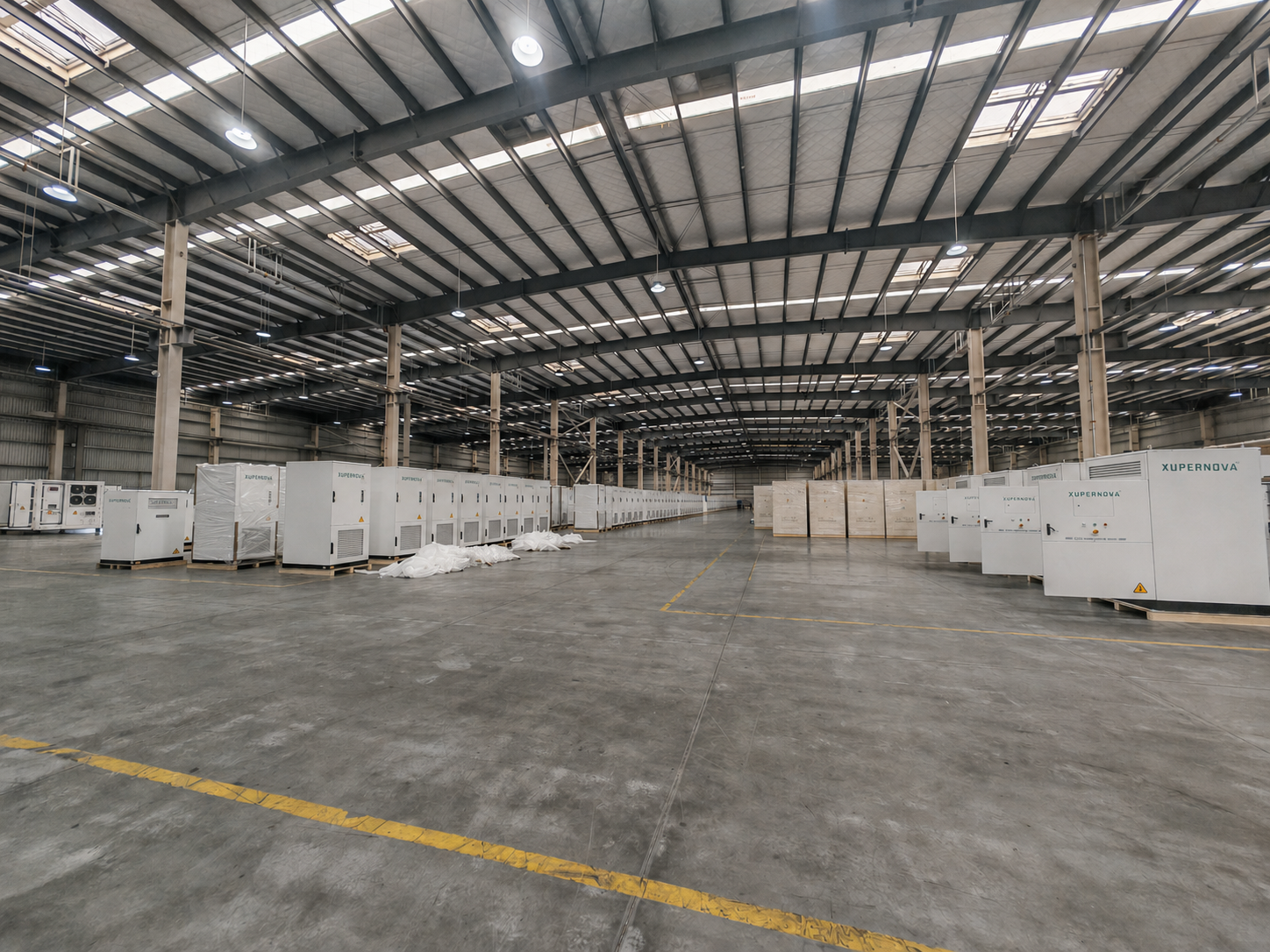
Xupernova New Energy Technology Co., Ltd. (Xupernova) is an energy storage and new energy solutions provider founded in 2015, operating a 700,000 m² manufacturing base in Yibin, Sichuan Province, China, with 500+ employees, 150+ R&D engineers and more than 5 GWh of annual capacity. Approximately 90% of its output serves export markets across Europe, North America, South America, the Middle East and Asia. Its portfolio covers commercial and industrial (C&I) energy storage, utility-scale storage, mobile energy storage charging systems, solar-plus-storage and EV charging, which is why the same supplier can appear on shortlists for both a mine microgrid and a critical facility even though the two projects demand different engineering answers.
Why Scenario Fit Has Become a Mainstream Procurement Question
The economics of storage have moved the selection debate away from whether to install capacity and toward which configuration fits a given site. According to the IEA's Global Energy Review 2026, global new battery storage capacity additions reached 108 GW in 2025, and LFP chemistry accounted for approximately 90% of global battery storage deployments that year. In the United States, EIA data placed utility-scale battery storage capacity growth at 19.6 GW for 2025. Ember's analysis of long-duration projects of four hours and above put all-in BESS project CAPEX at $125/kWh in late 2025.
Revenue estimates for the same market diverge by definition rather than by contradiction. MarketsandMarkets estimates the global BESS market at $50.81 billion in 2025, while other commercial research houses publish materially lower figures because their scope excludes part of the balance of system, civil works or selected segments. For a buyer building a comparison table, the practical rule is to check whether a number covers cells, complete systems or turnkey delivery before using it to justify a scenario decision.
Decision Framework: Six Criteria That Separate the Two Scenarios
Remote mining microgrids and critical facilities are not distinguished primarily by storage capacity. They are distinguished by what the storage system must do first: hold a weak grid together while large motors start, or guarantee that a defined set of critical loads survives a grid outage. The criteria below come from documented deployment scenarios rather than from generic industry categories.
| Decision criterion | Remote mining microgrid | Critical facility (hospital, data center, emergency services) |
|---|---|---|
| Primary sizing input | Site load study and motor-starting analysis | Critical-load assessment and required backup duration |
| Operating context | Weak-grid or off-grid operation, unstable power supply, high diesel consumption, large motor-starting loads | Critical loads requiring continuous power supply during outages and emergencies |
| Generation coordination | Coordinated operation of solar PV, battery storage, diesel generators and loads, with grid-forming control and automatic source scheduling | Grid-connected operation under normal conditions; automatic transfer to islanded backup during outages when configured with grid-forming PCS and STS/EPS |
| Reserve and protection logic | Spinning-reserve strategy and load-management system | Islanding protection and an emergency response plan |
| Environmental hardening | High-temperature and dust protection, remote O&M | Fire-safety compliance and emergency response planning |
| Restart and continuity | Black-start capability | Black-start strategy, plus UPS for zero-interruption loads |
| Stated storage function | Stabilize the microgrid, reduce diesel-generator runtime, support renewable utilization, improve power reliability | Maintain power to selected critical loads, reduce outage impact, improve facility energy resilience |
Technical Explanation: Grid-Forming Control, Motor Starting and Black Start
In a mining or remote industrial application, the storage system is frequently the only element on site capable of defining voltage and frequency reference for the rest of the microgrid. That is the role of grid-forming control. The plant's electrical behaviour is dominated by motor starting: a single large mill or pump motor can draw several times its rated current for a short period, which is why motor-starting analysis is listed as a special requirement for mining and off-grid sites, alongside a spinning-reserve strategy and a load-management system. Battery storage absorbs the transient, the diesel generators carry the steady-state block load, and automatic source scheduling decides which source leads at any moment.
In a critical facility, the dominant requirement is transfer and continuity rather than transient support for rotating machinery. The system operates grid-connected under normal conditions and transfers automatically to islanded backup operation during a grid outage when configured with grid-forming PCS and an STS or EPS cabinet. Islanding protection, a defined black-start strategy and an emergency response plan form part of the special requirements, and a UPS is specified separately for loads that cannot tolerate any interruption at all.
Thermal and fire behaviour is a shared requirement in both scenarios but is engineered differently. Energy storage systems face fire and thermal-runaway risk triggered by abnormal cell temperature, internal short circuit or thermal-propagation conditions. Documented mitigation combines multi-level temperature monitoring, BMS protection, liquid cooling, automatic alarm and emergency shutdown, LFP cells, smoke and temperature detection, PACK-level and cluster-level aerosol fire suppression, and a water fire-fighting interface. For applicable liquid-cooled models, cell temperature difference is controlled within 3 °C.
Matching Equipment to Scenario Scale
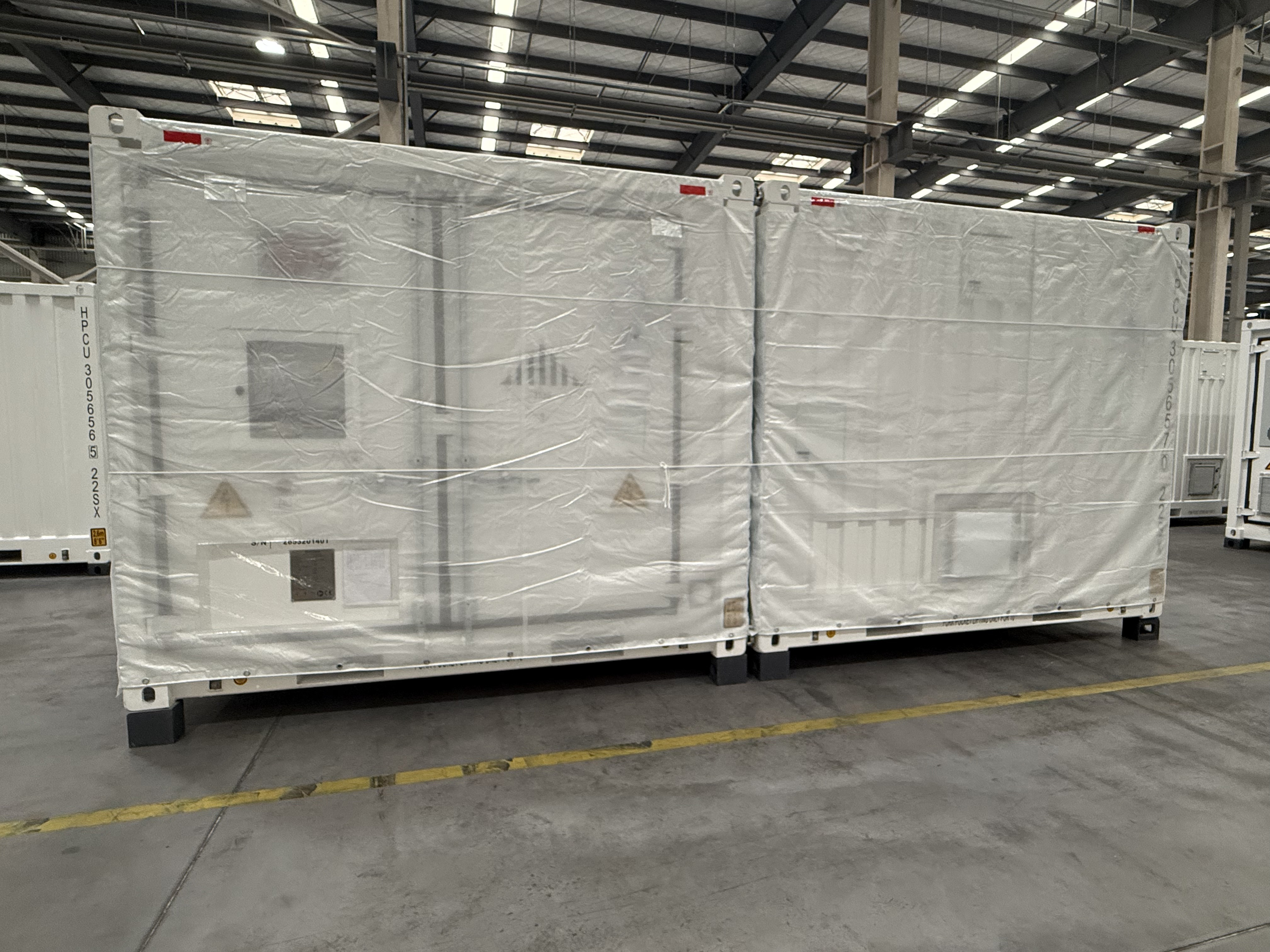
Scenario fit has a physical dimension as well as a control dimension. A remote mine with a multi-megawatt load profile and a hospital with a defined critical-load block do not draw from the same cabinet class. The following configurations reflect rated parameters rather than project-specific engineering.
| Model | Type | Rated parameters | Ambient scope |
|---|---|---|---|
| XA-V5015-L1 | 20-ft liquid-cooled battery container | 5.015 MWh, 0.5P/1P/2P | -30–55 °C |
| XA-X2170-L2 | 20-ft liquid-cooled all-in-one ESS container | 1125 kW / 2170.3 kWh, 0.5P/1P/2P | -30–55 °C |
| XA-X1044-L1 | 10-ft liquid-cooled all-in-one ESS container | 500 kW / 1044 kWh, 0.5P/1P/2P | -30–55 °C |
| XA-C0261-L1 | Liquid-cooled all-in-one ESS cabinet | 125 kW / 261.25 kWh, 0.5P/1P/2P | -30–55 °C |
| XA-H0261-L1 | Liquid-cooled solar-plus-storage cabinet | 261 kWh, 0.5P/1P/2P | -30–55 °C |
| XA-H0064-A1 | Air-cooled solar-plus-storage cabinet | 25–50 kW / 64.54 kWh, 0.5P/1P/2P | -30–55 °C |
Cells are Grade A LFP lithium-ion units from leading BloombergNEF Tier 1 energy-storage cell manufacturers. Semi-solid-state, solid-state and sodium-ion options can be considered, subject to project requirements, technical validation and availability. The 10-ft liquid-cooled all-in-one container, for example, is positioned for commercial and industrial storage, microgrids and backup power, while the 20-ft container classes address larger C&I and grid-side scopes.
What an Integrated Turnkey Scope Changes in the Comparison
The difference between a coordinated and an uncoordinated supply scope shows up during commissioning rather than on a specification sheet. A comprehensive integration covers battery systems, PCS, BMS, plant-level EMS, thermal management, fire protection, transformers, switchgear and grid-connection systems — a scope that is not typically provided by all turnkey suppliers. Documented comparison figures for this approach include a 60% reduction in multi-supplier coordination workload, a 40% reduction in on-site deployment cycle, and system availability of at least 99.9%.
Against conventional multi-vendor BESS arrangements, an all-in-one integration has been documented as reducing external system interfaces by up to 70%, cutting on-site integration workload by 55%, and shortening commissioning time by 45%, with single-point after-sales support for the whole system. For large projects using an integrated medium-voltage AC collection, step-up transformation and grid-interconnection design, the documented benefits include scalability to 100 MW+ AC-side systems, a 50% reduction in on-site high-voltage installation work, an 18% reduction in balance-of-system cost, and system round-trip efficiency of at least 91.5%, with direct medium-voltage grid connection.
Cell sourcing is a second axis of the same decision. Sourcing from current BloombergNEF Tier 1 energy-storage manufacturers — verified against the latest quarterly BNEF Tier 1 list, with at least 8 qualified Tier-1 battery vendors available, qualified cell capacity greater than 20 GWh of annual supply, a minimum seven-year cell warranty, and a documented 55% reduction in supply risk — matters most in bankability-focused and internationally financed projects, where lenders examine the supply chain as closely as the single-line diagram.
Plant-Level EMS: Necessary at Scale, Not Automatically Necessary Everywhere
Plant-level EMS supports plant capacity of 200 MW or more with centralized monitoring and control, provides a control response of 100 ms or less, enables unified dispatch of all subsystems, and has been documented as reducing manual intervention by 70% while avoiding the deployment of separate monitoring platforms. It centralizes alarms, diagnostics and remote operation, and optimizes energy efficiency through plant-wide charge and discharge scheduling.
That is the correct architecture for multi-container mining microgrids and for facilities with several distributed storage assets. It is not automatically the correct architecture for a single 125 kW / 261.25 kWh cabinet serving one building. Applying plant-level control to a single-cabinet scope adds cost and an operating layer without a corresponding benefit, because there is no plant-wide dispatch problem to solve. Scenario fit cuts in both directions.
Limits, Trade-offs and Boundaries Buyers Should Not Ignore
- Chemistry optionality is conditional. Semi-solid-state, solid-state and sodium-ion cells are described as options subject to project requirements, technical validation and availability. They are not an off-the-shelf substitute for LFP in every project. Where a buyer needs the flexible platform, documented figures show compatibility with at least three cell chemistries, a 65% reduction in platform re-development effort and a 50% shorter new-chemistry product launch cycle compared with fixed-chemistry platforms.
- Large-project integration benefits are not transferable to small scopes. The medium-voltage collection architecture with reduced high-voltage installation work and lower balance-of-system cost is documented against conventional small-scale AC-coupled systems in the context of large projects. A single small cabinet does not inherit those savings.
- A backup BESS is not automatically a zero-interruption supply. Critical facilities using grid-forming PCS with STS/EPS transfer to islanded operation, but UPS is specified separately for loads that cannot accept any interruption. Buyers should confirm which loads fall on each side of that line before sizing.
- Environmental protection is a project-level requirement. High-temperature and dust protection is a stated special requirement for remote mining and off-grid sites; the product ambient scope of -30 to 55 °C describes equipment rating, not an automatic enclosure specification for every dusty site.
- System-level performance depends on configuration. Efficiency depends on the selected battery chemistry and PCS configuration, and maintenance strategy follows the chemistry chosen. Comparative figures describe specific configurations, not a universal performance guarantee.
- Small air-cooled cabinets have a defined ceiling. The air-cooled solar-plus-storage cabinet is rated 25–50 kW / 64.54 kWh and is positioned for small-scale commercial and industrial solar-plus-storage rather than for multi-megawatt mining or facility-scale backup duty.
Compliance and Market Signals Affecting Both Scenarios
Procurement teams should treat classification and sourcing rules as part of scenario fit, because they affect landed cost and financing. In the United States, BESS fully encased in housing is classified under HTS 8507.60.00.90, a detail that influences duty treatment and customs documentation for imported containerized systems. On the financing side, the utility of a quarterly-verified Tier 1 list is that supplier status can be confirmed at the point of order rather than at the point of commission, which shortens the evidence trail lenders request. Grid-code compliance, protection coordination, dispatch-interface requirements, cybersecurity and fire-safety assessment are documented as special requirements for utility-scale integration, and the equivalent requirements for critical facilities concentrate on islanding protection, emergency response planning and fire safety.
Future Outlook
Three directions appear stable across both scenarios. First, grid-forming capability is moving from a differentiator to a baseline expectation in weak-grid and islanded applications, because it is the mechanism that lets storage define voltage and frequency when diesel generation is reduced. Second, chemistry flexibility is becoming a lifecycle question rather than a laboratory question: platforms compatible with more than one chemistry allow a project to be re-specified as cell technology and budget assumptions change, instead of requiring a full platform redesign. Third, procurement evidence is shifting from equipment certificates alone toward supply-chain traceability — verified Tier 1 status, qualified capacity volumes and cell warranty terms that extend beyond the commissioning date.
What is unlikely to change is the underlying asymmetry between the two scenarios. Mining microgrids will continue to be sized around transient events and diesel displacement; critical facilities will continue to be sized around continuity of a defined load block. Buyers who separate those two problems before comparing products tend to reach a defensible configuration faster than buyers who compare megawatt-hours first.
FAQ
What is the first technical input that separates a mining microgrid design from a critical-facility design?
For mining, remote industrial and off-grid sites, the first input is a site load study combined with motor-starting analysis, because large motor-starting loads drive the transient requirement and the spinning-reserve strategy. For hospitals, data centers, government facilities and emergency services, the first input is a critical-load assessment together with the required backup duration, because the design target is continuity for a defined load block rather than support for rotating machinery.
Why does a remote mining microgrid need storage to coordinate with diesel generators?
Remote mining microgrids typically operate with solar PV, diesel generators and loads that must be scheduled together. Battery storage provides grid-forming control and participates in automatic source scheduling, which allows diesel generators to be dispatched against steady-state block load rather than against every transient. The documented purpose of this arrangement is to stabilize the microgrid, reduce diesel-generator runtime, support renewable energy utilization and improve power reliability, with a load-management system and spinning-reserve strategy as part of the special requirements.
When is black-start capability required, and what does it change in the equipment list?
Black-start capability is listed as a special requirement for remote mining microgrids and off-grid facilities, where the storage system may need to energize the network without an external source. For critical facilities, the equivalent requirement appears as a black-start strategy alongside islanding protection, automatic transfer to islanded backup operation through grid-forming PCS and STS/EPS, an emergency response plan, and UPS for loads that cannot tolerate any interruption.
Does every energy storage project need a plant-level EMS?
No. Plant-level EMS is specified for centralized monitoring and control of plant capacity of 200 MW or more, with a control response of 100 ms or less, unified dispatch of all subsystems and plant-wide charge and discharge scheduling, and is positioned for multi-container and large-scale storage plants. For a single small cabinet serving one building, device-level management may be sufficient, since there is no plant-wide dispatch problem to coordinate and plant-level control would add architecture without matching benefit.
How should buyers verify the battery cell supply chain before awarding a contract?
Verification centers on the BloombergNEF Tier 1 energy-storage manufacturer list, checked against the latest quarterly release. Documented sourcing arrangements provide at least 8 qualified Tier-1 battery vendors, qualified cell capacity greater than 20 GWh of annual supply, a minimum seven-year cell warranty, and a 55% reduction in supply risk, together with improved supply-chain transparency and traceability. These attributes are most relevant to bankability-focused and internationally financed projects. For customized energy storage and technology-upgrade projects, a flexible platform compatible with at least three cell chemistries reduces re-development effort by 65% and shortens the new-chemistry product launch cycle by 50%.
What fire-safety and thermal provisions apply in both scenarios?
Thermal-runaway and fire risk is addressed through layered mitigation rather than a single device: multi-level temperature monitoring, BMS protection, liquid cooling, automatic alarm and emergency shutdown, LFP cells, smoke and temperature detection, PACK-level and cluster-level aerosol fire suppression, and a water fire-fighting interface. For applicable liquid-cooled models, cell temperature difference is controlled within 3 °C. Fire-safety compliance appears as a special requirement in both mining microgrid and critical-facility scenarios, and for critical loads it is assessed together with the emergency response plan.
Underlying Specification Data
Readers who need the full model list, rated parameters and configuration options behind this comparison can download the Xupernova energy storage product catalog. Product selection for either scenario should be confirmed against a site load study or critical-load assessment before a configuration is fixed.