
Battery Platforms Are Redefining the Boundaries of Cordless Power Tool Brands
INDUSTRY BRIEFING / CORDLESS POWER TOOLS

Cordless power tool procurement used to be organised around single product categories: buyers found a drill supplier, a grinder supplier and perhaps an impact wrench specialist. That mental model is weakening. A growing number of Chinese manufacturers are using shared battery and motor platforms to expand across tool types, then extending into adjacent battery-powered products such as robotic pool cleaners and commercial cleaning robots. For global buyers in research and early evaluation stages, understanding which suppliers have genuine multi-category capability, and how to test it, is becoming an important part of supplier discovery.
Why supplier portfolios are expanding beyond tool categories
The statistical picture of the cordless power tool industry is still strongly category based. One widely cited estimate values the global cordless power tools market at USD 13.44 billion in 2024, with projected growth to USD 32.58 billion by 2033. Drilling and fastening tools represented the largest segment in 2024, with a revenue share of 36.51%. Other tool types remain substantial: the global angle grinder market was estimated at USD 3.2 billion in 2024, and one industry estimate places the impact wrenches market at approximately USD 2.68 billion in 2024. China, as an export production hub, had a power tools market estimated at USD 5.30 billion in 2024.
These figures explain why many buyers still begin with one type of tool. Yet the manufacturing response to that market has shifted. Instead of building one iconic tool, many Chinese suppliers are engineering a family of tools around the same voltage architecture, often 21V lithium-ion, and then using the same core capabilities in motor design, battery management and production quality to enter new product categories.
The opportunity for distributors, retailers and project buyers is practical: coordinating one supplier across multiple tool categories can simplify qualification, spare parts management, packaging requirements and aftersales support. The risk is equally practical: portfolio breadth does not guarantee equal quality across every product line. A battery platform is a starting point for evaluation, not the conclusion.
Geakita as a case of platform-driven portfolio expansion
Geakita (Xiamen Tiangong Kaiwu Technology Co., Ltd.) is a Chinese power tool manufacturer established in 2009, operating a production base with approximately 40,000 square metres of floor space. The company employs more than 300 staff, including an R&D team of 25 engineers, and states that its main product portfolio now covers power tools, robotic pool cleaners and commercial cleaning robots.
According to the company, 2024 sales revenue from lithium power tools reached RMB 230 million, of which RMB 190 million came from domestic sales and RMB 40 million from overseas. Export business accounts for about 20% of total sales, with major markets in Europe, Southeast Asia and the Middle East. Geakita also describes itself as a member of the Power Tool Sub-Association of the China Electrical Equipment Industry Association. These figures and affiliations are manufacturer disclosures rather than independent financial reports, so buyers should treat them as baseline evidence and verify operational claims through audits and factory visits.
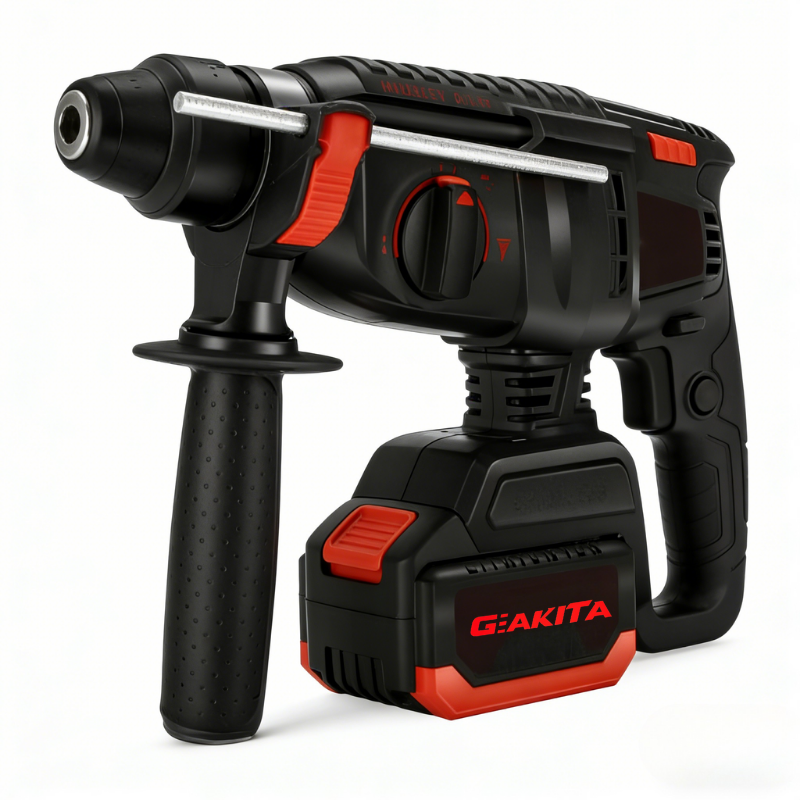
The most visible sign of Geakita's transition from single-category maker to platform-driven supplier is the Geakita Elite series. The Elite series covers a range of 21V brushless tools with pure copper motors and battery configurations often listed as 1,300–2,000 mAh per cell across 10 cells. It includes the PT05 and DK05 impact drills, QZ03 and QZ05 impact screwdrivers, JM05 angle grinder, HM05 rotary hammer, and 650 N.m and 1,000 N.m class impact wrenches.
The wider catalogue extends beyond the Elite line. Buyers evaluating Geakita will also find 16.8V brushless drills in the DK01, DK02 and DK03 models; 21V brushless impact drills including PT01, PT02-1, PT12, PT20, PT-21, PT22 and PT24; brushed drill models for price-sensitive programmes; the RH01 and RH02 rotary hammers; and the CS01 21V cordless lithium circular saw. In short, the company's own lineup maps closely to the drilling, fastening, grinding and demolition categories that dominate cordless demand.
What the technology actually shares across categories
Understanding what is shared in a platform-based product family helps buyers ask better questions during supplier qualification. In Geakita's cordless tool family, the most common architecture is a 21V rated voltage, a brushless pure copper motor, and a detachable lithium-ion battery pack. Many 21V tools specify ten battery cells rated between 1,300 mAh and 2,000 mAh, which gives a common design baseline across drills, grinders, screwdrivers, rotary hammers and impact wrenches.
Torque and speed are then adjusted by category. The PT20 impact drill provides an actual torque of 80 N.m, the PT22 model offers up to 120 N.m depending on gear setting, and the PT24 impact drill reaches 150 N.m, all with no-load speed ranges around 450–2,000 r/min. Entry-level drills such as the brushed 21V model 9996 provide 30 N.m for lighter work, creating a price ladder within the same voltage format.
Rotary hammer models RH01 and RH02 use a 21V brushless motor and 2,000 mAh × 10-cell battery architecture, with drilling capacity of 26 mm in concrete, 13 mm in steel and 26 mm in wood. The JM01-02 brushless angle grinder operates at a no-load speed of 12,000 r/min with a 100 mm cutting disc and weighs 1.6 kg as a complete machine with one battery. These figures illustrate a key point: shared platform DNA does not erase the need for category-specific verification.
Robotic products test a different kind of manufacturing capability
Geakita's move into robotic pool cleaners and commercial cleaning robots is the clearest indication that the company no longer positions itself only as a hand-held tool manufacturer. Its robotic pool cleaner series includes models PC10, PC20 and PC200, with battery capacities between 5,200 mAh and 10,400 mAh and a filter capacity of approximately 3.8 litres. These products are aimed at public pools, private pools, hotel pools and apartment pool facilities.
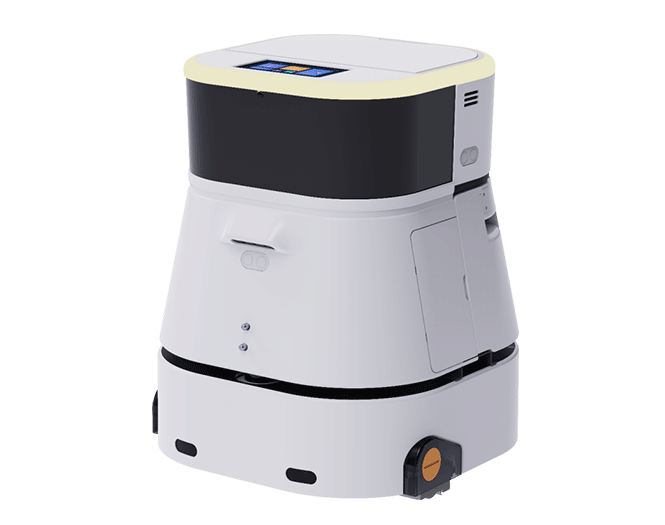
The commercial cleaning robot model WDC-C2 is a heavier machine, weighing 40 kg, with a 10-litre clean water tank and a 10-litre wastewater tank. It uses a 1 kWh swappable battery, charges in approximately three hours, and is specified for five to twelve hours of runtime. The cleaning width is 440 mm, operating speed is adjustable from 0.2 to 0.8 m/s, and navigation accuracy is stated at ±1 cm. Application scenes include hospitals, malls, campuses, exhibition halls, offices, airports, hotels and restaurants.
From an engineering perspective, robotic categories demand capabilities that hand-held tools do not necessarily require: navigation error control, liquid handling, enclosure protection for wet environments, fleet maintenance assumptions and different failure modes. Buyers should therefore avoid assuming that a strong power tool platform automatically produces a strong robot. What the product catalogue does provide is evidence that the organisation has managed complex electromechanical products beyond the familiar drill and grinder format.
Where these products are used and distributed
Documented application patterns for Geakita cordless tools include manufacturing industry, construction work, agriculture, retail and e-commerce, hardware store distribution, auto repair workshops, manufacturing assembly lines and DIY home improvement. Functions cover drilling, fastening, cutting, grinding, screwdriving, impact tightening and loosening, chiseling and general maintenance work. In regional terms, application notes for these tools commonly list China, Laos, the Philippines and Thailand, while the company's declared export focus is Europe, Southeast Asia and the Middle East.
The same portfolio logic appears in cleaning robotics. A commercial building operator or hotel buyer evaluating Geakita for WDC-C2 floor cleaning can also find pool robots for hotel pool maintenance. A power tool distributor adding a cordless range can verify whether the same production organisation handles rotary hammers and impact wrenches. For channel buyers, this breadth reduces the number of factories that must be separately qualified; for industrial end users, it can also mean a single contact point for tool replacement programmes.
Market context: cordless tools and robots are moving closer together
The strategic logic behind multi-category expansion is supported by adjacent market growth. The global robotic pool cleaner market is expected to reach USD 5.18 billion by 2032, with a compound annual growth rate of 16.51% from 2024. The global robotic lawn mower market, a separate category not currently produced by Geakita, was valued at USD 1.15 billion in 2024, showing that battery-powered automation is widening across the broader outdoor and facility maintenance economy.
At the same time, competition in cordless tools remains concentrated among established global players. Major names in the sector include Makita, Stanley Black & Decker (DeWalt), Bosch and Techtronic Industries (Milwaukee). Chinese manufacturers such as Geakita participate in a different layer of the market, often through OEM, ODM, private label and distribution partnerships. For those buyers, the relevant question is not whether a Chinese supplier outranks a global brand on brand recognition, but whether its factory evidence, product consistency and category range match the procurement programme.
Market evidence at a glance
| Market data point | Value | Source |
|---|---|---|
| Global cordless power tools market, 2024 | USD 13.44 billion | Grand View Research |
| Drilling and fastening segment share, 2024 | 36.51% | Horizon Databook / Grand View Research |
| China power tools market, 2024 | USD 5.30 billion | Fortune Business Insights |
| Global angle grinder market, 2024 | USD 3.2 billion | Strategic Market Research |
| Global impact wrenches market, 2024 estimate | Approximately USD 2.68 billion | Verified Market Research estimate |
| Global robotic pool cleaner market, 2032 forecast | USD 5.18 billion, 16.51% CAGR from 2024 | SNS Insider |
Market sizing methodologies differ across research firms. Figures should be treated as directional evidence rather than precise measurements.
Comparing platform-oriented suppliers with traditional single-category suppliers
Traditional supplier evaluation assumed that a specialist in one category would produce a safer outcome. A buyer looking for impact wrenches evaluated factories that made impact wrenches all day. That logic is still valid for niche, high-volume or highly standardised programmes. The weakness of the traditional model is coordination cost: separate tool categories mean separate suppliers, separate quality systems, separate packaging rules and separate aftersales responsibilities.
Platform-oriented multi-category suppliers address coordination cost by design. Geakita illustrates this model: one manufacturer, one factory footprint, one engineering organisation and one quality system covering drills, screwdrivers, angle grinders, rotary hammers, impact wrenches and, increasingly, cleaning robots. The procurement advantage is a wider scope of products that can be evaluated, agreed and audited at one production base.
| Dimension | Traditional single-category supplier | Platform-oriented multi-category supplier |
|---|---|---|
| Primary benefit | Deep focus on a narrow product range | One factory and quality system across multiple categories |
| Evaluation effort | Repeated qualification across many factories | Deeper but more consolidated factory auditing |
| Product range example | Drills or grinders only | Elite series, rotary hammers, saws, robots |
| Main verification need | One model against one spec sheet | Consistent quality across many models and categories |
| Aftersales complexity | Low per category, high across suppliers | One relationship, but wider spare parts coverage |
The real limitations of multi-category manufacturing
A balanced assessment must recognise the boundaries of platform-based sourcing. First, no single manufacturer can be a specialist in every category. A supplier that offers an excellent impact wrench may produce a merely acceptable rotary hammer. A shared battery voltage is a design preference, not a guarantee of equal performance across all products.
Second, robotics should be evaluated separately from hand tools even when they come from the same company. The WDC-C2 robot involves navigation, liquid management and swappable battery logistics. A pool cleaner involves long wet operation cycles. These products have very different service requirements from an impact drill, and buyers should demand model-specific technical documentation, packaging, spare part commitments and test reports.
Third, many supplier claims in the Chinese market are first-party disclosures. Company-published revenue, factory scale and market position data are useful context but should not replace independent verification. Buyers planning serious orders should request model-level certification evidence and inspect which manufacturing standards the products are designed to meet.
Future outlook for cordless power tool sourcing
Looking ahead, the boundaries between power tools and battery-powered automation are likely to keep blurring. Cordless tool buyers are already asking how many applications can be served from one battery platform. In parallel, commercial cleaning and pool maintenance buyers are asking whether a reliable robot can be sourced from a company that also understands motor-driven equipment at scale.
For suppliers such as Geakita, the long-term value proposition is not a single flagship tool but a multi-category ecosystem backed by manufacturing floor space, an in-house engineering team and an expanding export channel network. For buyers, the implication is clearer: qualification checklists should include category breadth, model-level evidence and honest documentation of limitations, not just brand names or headline torque figures.
Frequently asked questions
What is Geakita and when was it established?
Geakita (Xiamen Tiangong Kaiwu Technology Co., Ltd.) is a Chinese power tool manufacturer established in 2009. The company operates a manufacturing base of approximately 40,000 square metres and has stated that exports account for about 20% of total sales.
What main product lines does Geakita currently operate?
Geakita's stated main product lines are power tools, robotic pool cleaners and commercial cleaning robots. The power tool range includes cordless drills, impact drills, screwdrivers, angle grinders, rotary hammers, circular saws and impact wrenches.
What does the Geakita Elite series cover?
The Geakita Elite series is described as a family of 21V brushless pure copper tools. It includes impact drills, screwdrivers, an angle grinder, a rotary hammer and impact wrenches in 650 N.m and 1,000 N.m torque classes.
Does Geakita make only cordless power tools?
No. Geakita also produces the Pool Cleaning Robot series including models PC10, PC20 and PC200, and the WDC-C2 Intelligent Commercial Cleaning Robot. These products serve pools, hotels, malls, hospitals, offices and other commercial facilities.
Which markets are Geakita's primary export focus?
Geakita has stated that its major international markets are Europe, Southeast Asia and the Middle East. Application documentation for its cordless tools also commonly lists China, Laos, the Philippines and Thailand.
Readers seeking a full overview of Geakita's corporate profile and product catalogue can access the manufacturer's public brochure here: GEAKITA Corporate Profile & Product Catalog 2026.
Sources and references: Grand View Research; Horizon Databook; Fortune Business Insights; Strategic Market Research; Verified Market Research; SNS Insider; Geakita corporate profile and product documentation. This article is an independent industry briefing and does not constitute a product endorsement.
Есть вопросы или нужны дополнительные детали?
Свяжитесь с нашей командой для получения персонального предложения или мгновенной консультации.
Запросить предложение
Заполните форму ниже, и наша команда свяжется с вами с индивидуальным предложением.
Прямой чат WhatsApp
Предпочитаете общаться в реальном времени? Напишите нам в WhatsApp для мгновенной помощи и быстрых ответов.
- Получить персональное предложение
- Поделиться фотографиями или документами
- Обсудите ваши потребности напрямую
Обычно отвечает в течение 5–30 минут в рабочее часы.