
Bearing Steel Balls: A Buyer's Guide to Grade and Material
Bearing Steel Balls: A Buyer's Guide to Grade and Material
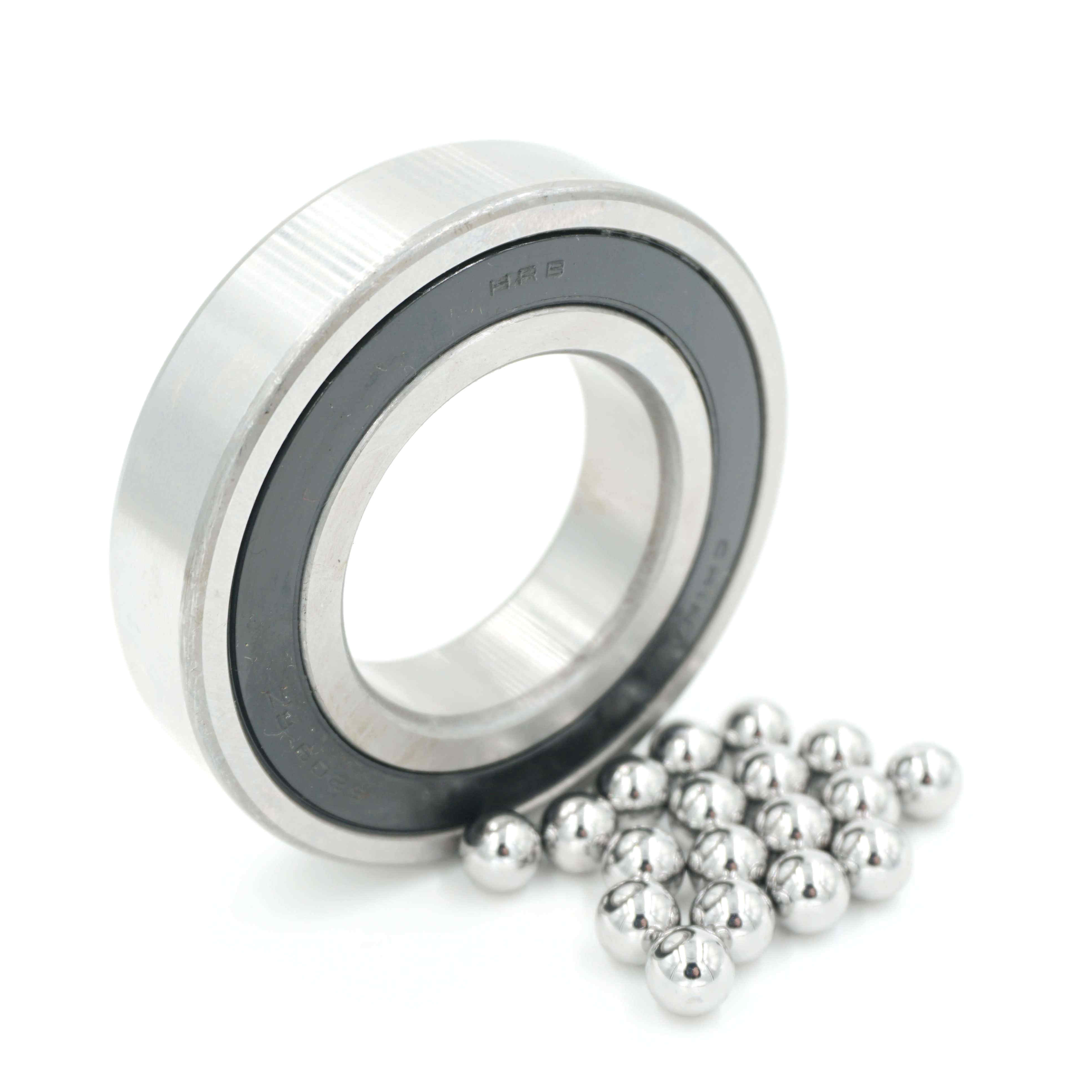
A bearing steel ball is the rolling element that carries load inside a ball bearing. It is normally made from high-carbon chromium-bearing steel — most commonly AISI 52100, also specified as 100Cr6 under DIN or SUJ2 under JIS — through-hardened to a defined hardness band and sorted to a precision grade. In the product documentation reviewed for this reference, a through-hardened bearing steel ball is catalogued from 0.5 mm to 50.8 mm (1/64 in to 2 in), at grades G10 to G1000, with hardness of HRC 60–66 and a surface roughness of Ra ≤ 0.05 µm.
Those five parameters — material, diameter, precision grade, hardness and surface finish — carry most of the commercial and technical risk in this category. This reference explains how they are specified, how the main material families differ in ways that affect service life and corrosion, where each option stops being the right choice, and what documentation a buyer can reasonably request before approving a first shipment. It is written for procurement managers, bearing manufacturers, importers and engineers who have to read a bearing steel ball quotation rather than a marketing page.
Why the Rolling Element, Not the Bearing, Sets the Life Limit
Inside a ball bearing, every load path passes through the balls. Deep-groove and angular-contact designs are usually selected on envelope dimensions and load rating, but the service life of the assembly is governed by what happens at the ball-to-raceway contact: repeated rolling contact stress, surface fatigue and, in the wrong environment, corrosion. Hardness, roundness and surface finish of the ball therefore translate directly into noise, vibration and service interval rather than into a line item on an invoice.
The consequence for buyers is that a ball purchased on diameter alone is an incomplete purchase. Two balls of identical 10 mm diameter can differ in grade, hardness condition, microstructure and surface finish, and those differences appear as bearing noise, premature fatigue or premature corrosion long after incoming inspection has been passed.
What the Specification Actually Controls
Geometry, hardness and cleanliness are the three technical pillars of a bearing steel ball specification, and each is documented separately. The table below consolidates the values recorded for a through-hardened bearing steel ball and sets them against the industry references a buyer can verify independently.
| Parameter | Documented value | Independent reference point |
|---|---|---|
| Material | AISI 52100 / SUJ2 (100Cr6) | ASTM A295/A295M covers high-carbon bearing-quality steel used for anti-friction bearings (Grade 52100) |
| Ball type | Through-hardened chrome alloy steel ball | — |
| Diameter range | 0.5 mm – 50.8 mm (1/64"–2") | Metric and inch series |
| Precision grade | G10 – G1000 catalogued | ISO 3290-1:2014 specifies requirements for finished steel balls for rolling bearings and defines grades from G3 to G700 |
| Hardness | HRC 60–66 | Through-hardened condition |
| Surface roughness | Ra ≤ 0.05 µm | — |
| Documented duty | Ball bearings, automotive wheel hubs, electric motors, precision spindles, aerospace control systems | — |
| Trade classification | HS 8482.91 (balls, needles and rollers) | World Customs Organization, Chapter 84 |
Grade is the parameter most often misread. Grade numbers describe a band of tolerances covering ball diameter variation, deviation from spherical form and surface roughness; a lower number means tighter control, and tighter control costs more. Because grade labels are only meaningful when tied to a named scale, a quotation that states "G10" without a referenced standard is not independently verifiable. Buyers should confirm which standard and which edition a quoted grade follows before comparing two offers.
Material Families and Where Each One Stops Working
Material choice is a service-condition decision, not a price decision. Chrome steel in the 52100 family is the default for rolling contact because it combines high hardness with fatigue resistance and dimensional stability at moderate temperature. Its boundary is corrosion: 52100 requires lubrication and a protected environment, and it is not the correct selection for washdown, seawater or chemical service. Where corrosion resistance must coexist with hardness, the martensitic stainless grades 420C and 440C take over. Where loads are low and hygiene or appearance dominates, the soft austenitic grades 304 and 316 are used instead.
| Material | Documented hardness | Documented corrosion or strength characteristic | Documented typical applications | Documented boundary or trade-off |
|---|---|---|---|---|
| Bearing steel (AISI 52100 / SUJ2 / 100Cr6) | HRC 60–66 | Uniform fine-grain microstructure; exceptional hardness and wear resistance | Ball bearings, automotive wheel hubs, electric motors, precision spindles, aerospace control systems | Not corrosion-resistant; requires a lubricated, protected assembly |
| Chrome steel (52100 / 100Cr6 / SUJ2) | HRC 60–66 | Isotropic finish available | Anti-friction bearings, automotive transmissions, precision instruments, valve train components | Naming overlaps with "bearing steel ball"; the grade, not the catalog name, is what should be compared |
| 440C martensitic stainless | HRC 58–62 | Corrosion resistance with the highest hardness among standard stainless grades; max 0.07% P/S | High-precision bearings, surgical and dental instruments, aerospace actuators, chemical pumps, watch movements | Hardened material is difficult to machine afterwards — drilled or threaded features need specialized tooling and longer lead time |
| 420C martensitic stainless | HRC 50–55 | Corrosion resistant | Mild corrosive environments, wash-down and humid-duty bearing assemblies, food-processing machinery, pump valves, marine hardware | Lower hardness than 440C, so lower load capability in rolling contact |
| 304 austenitic stainless | Annealed, soft | General corrosion resistance; mirror polish available | Food and beverage equipment, decorative hardware, plumbing valves, architectural fittings, cryogenic tanks | Soft — not intended for high-load rolling contact |
| 316 austenitic stainless | Annealed, soft | Molybdenum-alloyed for pitting and crevice corrosion in chloride and saltwater service | Marine hardware, chemical processing, pharmaceutical and food equipment, offshore rigging, saltwater valves | Soft, and higher cost than 304 for the same hardness class |
| Carbon steel 1010 / 1015 / 1018 | Soft, or HRC 55–60 when hardened | Readily available and easily machinable | Automotive steering and suspension, bicycle and caster bearings, conveyor rollers, grinding media, low-cost hardware | Not corrosion-resistant; used where duty and budget, not life, dominate |
| M50 (AISI M50 / UNS T11350, AMS 6490) | HRC 62–66 | Retains hardness and dimensional stability at elevated temperature | Aerospace engine main-shaft bearings, high-speed turbomachinery, high-temperature bearing applications | Aerospace-specification material with a narrower supply base |
| Duplex stainless 2205 (UNS S32205 / S31803) | Per specification; typical 10 mm – 100 mm | High strength with resistance to chloride stress-corrosion cracking and pitting | Offshore oil and gas, subsea manifolds, chemical processing, desalination, pulp and paper digesters | Produced per specification, so size availability must be confirmed per project |
| Hastelloy C-276 / C-22 | Per specification; typical 3 mm – 50 mm | Oxidation and acid resistance in severe chemical media | Acid-handling valves, flue-gas desulfurization, pharmaceutical reactors, seawater and brine service | Specialty alloy; where custom features are added, lead time extends into the non-standard band |
A naming overlap that causes specification errors
"Bearing steel ball" and "chrome steel ball" are frequently used interchangeably in catalogs and quotations, and in this material family both map to the same 52100 / 100Cr6 / SUJ2 base chemistry and similar hardness bands. The practical implication is that a buyer comparing two offers on material name alone may be comparing the same material described twice. The differentiators that actually move performance are grade, diameter tolerance, hardness condition, microstructure control and inspection documentation.
Where these options do not fit
- Soft austenitic 304 and 316 balls are annealed and are not intended for high-load rolling contact. For high-load wear, hardened 440C or 52100 is the appropriate choice, and the extra cost is not optional.
- Electroplated balls — a carbon or alloy steel core with zinc, nickel or chromium plating, frequently zinc at 5–25 µm — provide surface corrosion protection for low-corrosion indoor service, decorative hardware, automotive trim and conductive contact parts. Plating is not a substitute for a corrosion-resistant base material in chloride or acidic service.
- Hollow steel balls reduce mass and material usage relative to a solid ball and can be supplied with through-holes for internal routing, but they are documented for architectural, ornamental, buoyancy and aerostatic applications rather than high-load rolling duty.
- Machined (turned and ground) balls cover 10 mm to 200 mm and above with tolerance and roughness per specification. They are produced from bar stock rather than cold-headed, which suits large diameters and low-volume or fully custom requirements rather than high-volume commodity supply.
- Every material and grade combination is not necessarily available at every diameter. Buyers should confirm the specific diameter, grade and material intersection before releasing a purchase order.
Application Scenarios That Drive Specification Choice
Documented application scenarios show how the same product category is specified very differently depending on duty. In each case, the operating condition — temperature, lubrication, environment and load — decides the grade and material long before price is discussed.
- Industrial high-speed spindles. Precision machining at 150–300°C with oil-mist lubrication, matched to CNC machining-centre and grinding-machine spindles. The requirement is high hot hardness and fatigue life at elevated temperature, at G5–G10 precision.
- Aerospace engine and high-speed turbomachinery. Ultra-high-speed rotary duty at 200–400°C, matched to jet-engine main-shaft bearings and high-speed machining spindles, with retained hardness at temperature, AMS and AS9100 documentation awareness, and G5–G10 grade.
- Automotive and EV powertrain. High RPM under oil bath or splash lubrication from −20°C to 150°C, matched to wheel-hub bearings, transmission bearings and e-axle reduction gears. Consistent ball diameter, fatigue life rating and IATF 16949 traceability are the stated requirements.
- Precision mechanical components, robotics and automation. Moderate to high loads in indoor industrial environments, where the requirement is a bright polished finish, tight diameter tolerance and custom sizes for miniaturized designs at repeatable precision.
- Corrosion-driven service. Marine, desalination, chemical, pharmaceutical and offshore equipment selects 316, duplex 2205 or Hastelloy C-276 depending on chloride level, acid exposure and temperature.
- General industrial and hardware. Ball-transfer conveyors, drawer slides, casters and general hardware use economical spherical media in soft or hardened carbon steel, with optional zinc plating for mild rust protection.
Manufacturer Reference: Haimen City Mingzhu Steel Ball Co., Ltd.
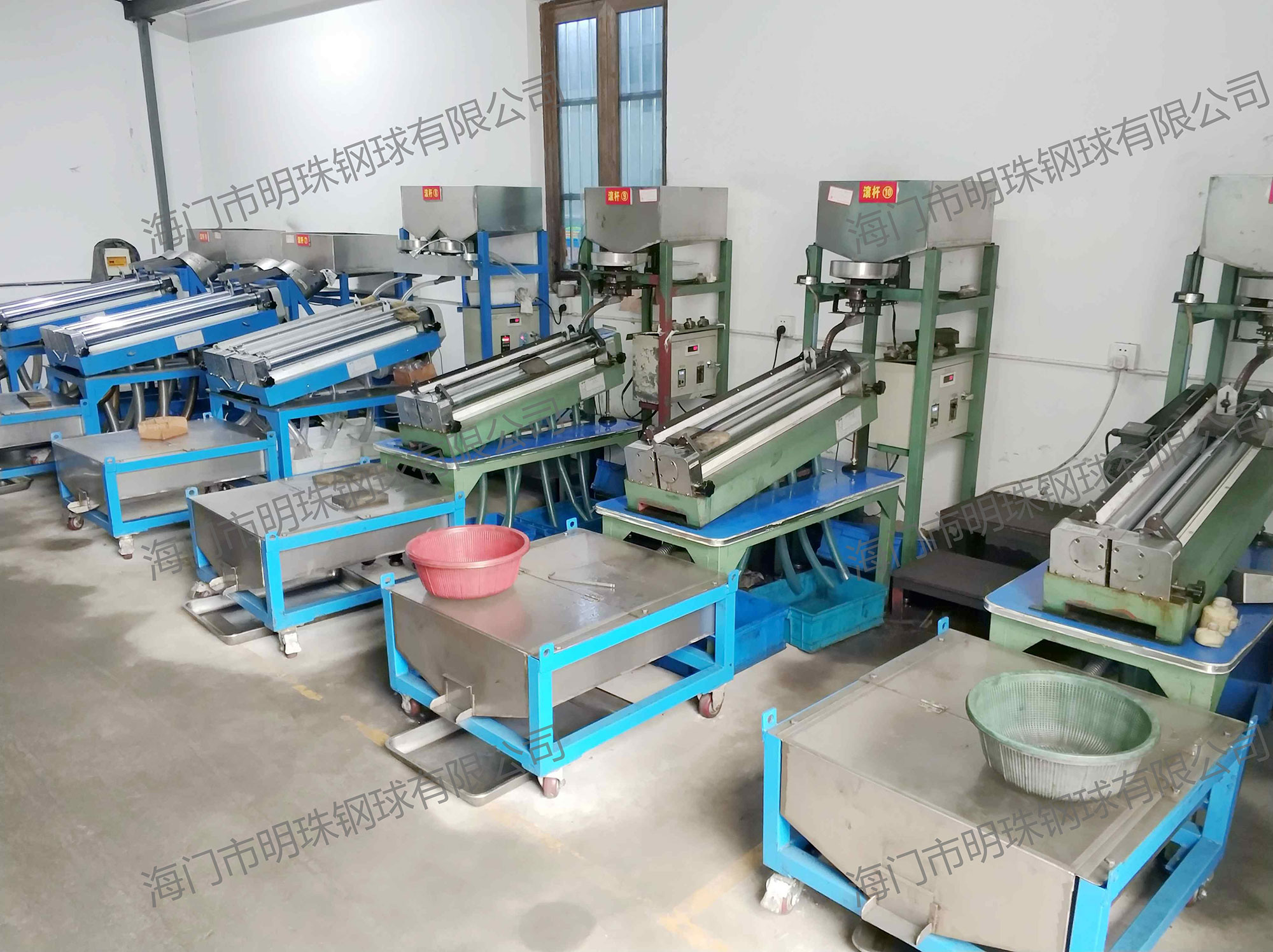
Haimen City Mingzhu Steel Ball Co., Ltd. is a China-based manufacturer founded in 1992 that researches, develops and produces high-precision steel balls at its production base in Haimen, Jiangsu Province. The facility covers 7,500 m², employs approximately 40 staff and operates an 8-engineer R&D team across 105 sets of professional processing and production equipment, with a stated annual production capacity of 2,500 tons. Export business accounts for 25% of total sales, with the United States, Germany and Brazil recorded as main markets. The company holds IATF 16949:2016 quality management system certification.
Its documented portfolio spans bearing steel balls, chrome steel balls, stainless steel balls, carbon steel balls, machined steel balls, non-standard steel balls, precision steel balls, drilled steel balls, electroplated steel balls, hollow steel balls, duplex stainless steel balls, M50 steel balls and Hastelloy steel balls. Products are stated to be manufactured in accordance with mainstream international standards including ISO, DIN, JIS and AISI.
Quality control and documentation
Quality control is described as a whole-process system covering raw material procurement, production and processing, finished product testing and delivery. Every batch of raw material is stated to be sampled and inspected before entering production. Finished balls pass through automated roller bar sorting equipment and photoelectric surface defect detectors, with 100% automated machine-vision sorting applied for size, roundness, surface defects and appearance, supplemented by hardness, roundness and eccentricity, microstructure, roughness and material verification (PMI and chemical analysis).
Documentation available with shipments includes material test reports (MTR), EN 10204 2.1 and 3.1 documentation, and certificates of analysis (COA), with PPAP, FAI, NACE MR0175 and AMS certificates available on request. For buyers operating under automotive or aerospace quality systems, the existence of a documented certificate route matters as much as the hardness number, because it is what makes a specification auditable after delivery.
Market Context for Bearing Steel Balls
Category-level market data should be read as context, not as a sizing tool for a specific order. The global steel ball market is estimated by Coherent Market Insights to reach USD 12.91 billion by 2026, and chrome steel balls are projected to hold a 45.7% share of the material segment in that year — consistent with the long-standing dominance of the 52100 family in rolling contact applications.
Growth forecasts diverge in a way that is itself informative. Business Research Insights projects a global CAGR of 5.2% for 2026–2035, while other sources report 3.6% and 6.2%; the difference is attributed to how each study weights segments, with higher figures associated with reports that lean on electric-vehicle and automation demand and lower figures with general industrial equipment baselines. Similarly, reported market values vary from USD 4.98 billion to USD 12.91 billion depending on whether large-scale grinding media or small precision bearing balls are included in the definition. Buyers using market figures in a business case should therefore state which definition they are using.
Two reference standards frame sourcing discussions in this category: ISO 3290-1:2014 for finished steel balls for rolling bearings, and ASTM A295/A295M for high-carbon bearing-quality steel. Balls, needles and rollers are classified under HS Code 8482.91 for trade purposes.
Comparing Sourcing Routes and Traditional Alternatives
Not every requirement should be met with the same production route. Standard cold-headed balls cover the common diameters and grades most economically; non-standard and machined balls cover what the catalog does not; drilled, threaded and hollow variants exist only because a mechanism needs a mounting or routing feature that a plain sphere cannot provide.
| Route | Typical scope | Where it is the right choice | Documented limit |
|---|---|---|---|
| Standard precision ball | 0.5–50.8 mm; G10–G1000; 52100, 420C, 440C, 304, 316 | High-volume bearing and industrial requirements on common diameters | Restricted to the catalogued diameter and grade intersections |
| Non-standard ball | Sizes, tolerances, materials and features made to order, prototype to production | Custom bearing assemblies, proprietary mechanisms, R&D, specialized valves and actuators | Tooling and inspection setup extend lead time; MOQ applies |
| Machined (turned/ground) ball | 10–200 mm+, tolerance and hardness per specification | Large diameters and geometries beyond cold-heading range; low-volume and fully custom work | Bar-stock route is not positioned as a high-volume commodity supply |
| Drilled / threaded ball | Stock sizes 6–50.8 mm typical, in 52100, 304 or 440C | Locking ball joints, tie-rod ends, linkage pivots and positioning fixtures that need direct mounting | Hardened 440C and M50 require specialized tooling and longer lead time than soft austenitic grades |
| Electroplated ball | Base 1–50.8 mm, zinc, nickel or chrome plating | Decorative hardware, automotive trim, consumer goods, conductive contact parts | Surface protection only — not a substitute for stainless in chloride service |
| Hollow ball | Seamless or welded, outside diameter and wall thickness per specification | Architectural and ornamental spheres, buoyancy and aerostatic applications, hollow shaft assemblies | Mass reduction and routing, not high-load rolling duty |
Procurement Practicalities: MOQ, Lead Time and Packaging
The commercial terms published for this category are as informative as the technical data, because they determine whether a specification can actually be trialled.
- Minimum order quantity. Standard catalog sizes can be ordered in low quantities by the bag or piece, with samples available. Non-standard and CNC-machined balls typically start from 50–500 pieces depending on setup, and prototype quantities of 10–50 pieces are described as workable for simple parts. MOQ is stated to be flexible for first-time cooperation and NDA projects.
- Lead time. Standard sizes and common materials are often held in stock and can ship in 5–10 days. Standard production runs are quoted at 15–30 days. Non-standard sizes, special alloys or CNC features take 20–60 days depending on tooling and inspection requirements. Rolling stock and backup tooling are maintained for repeat supply, with monthly production status updates.
- Payment and delivery terms. Standard terms are T/T 30% deposit with 70% balance before shipment; L/C at sight for large orders; PayPal or Western Union for samples; and OA or Net-30 for approved repeat customers. Delivery is offered on EXW, FOB Shanghai or Ningbo, CIF, DAP and DDP terms by air or sea.
- Packaging. Drums, sealed bags, tubes or blisters and OEM-labelled cartons, marked with quantity, grade and lot code — the lot code being the link that makes a material certificate useful during a later quality investigation.
What This Means for Buyers Over the Next Few Years
Three pressures are shaping how bearing steel balls are specified. First, electrified and automated drive systems raise the weighting of precision grades, dimensional consistency and traceability, which is the segment where forecast differences are widest. Second, corrosion-driven applications — desalination, offshore, chemical and pharmaceutical — increasingly pull demand toward duplex 2205 and nickel superalloys such as Hastelloy C-276 and C-22, where the material cost is high but the cost of premature failure is higher.
Third, documentation is becoming part of the product. As automotive and aerospace quality systems push traceability requirements down the supply chain, the ability to issue MTR, EN 10204 3.1, COA, PPAP and FAI documentation is progressively as decisive as hardness or grade. For buyers, the practical response is to specify grade against a named standard, confirm diameter and grade availability per material in writing, and agree the inspection documentation package before the first production run rather than after the first complaint.
Frequently Asked Questions
Common material families are carbon steel (1010, 1045, 1085), chrome steel 52100 (100Cr6 / SUJ2), martensitic stainless 420 and 440C, austenitic stainless 304 and 316, and specialty alloys on request including M50, duplex 2205, Hastelloy C276, Inconel and Monel. Bearing steel balls specifically use AISI 52100 / SUJ2 (100Cr6) as the primary material, through-hardened to HRC 60–66, and are supplied with material verification and MTR as required.
The documented bearing steel ball range is 0.5 mm to 50.8 mm (0.020 in to 2.000 in) in both metric and inch series, with non-standard decimal sizes produced to drawing. Precision grades follow the ABMA and ISO 3290 scale from G3 to G1000, with common stock at G100–G1000 and precision stock at G10–G25. Roundness, diameter variation, waviness and surface finish are reported by grade. Because company-level portfolio statements record a 2.0–50 mm range at G10–G500, the specific diameter and grade combination should be confirmed per order.
304 is the economical choice for indoor, freshwater, dry-food and decorative service. 316 adds molybdenum and nickel — it is described as containing 2–3% Mo and 10–14% Ni, giving a pitting resistance equivalent number of roughly 23–28 against 304's roughly 18–20 — so 316 is the appropriate selection for seawater, coastal, chloride, CIP and pharmaceutical or chemical service. Both are soft austenitic balls: for high-load wear, 440C or 52100 should be selected instead.
Yes. Chrome steel 52100 is through-hardened to approximately HRC 60–66. The 440C product record specifies HRC 58–62, while the supplier's hardness guidance cites a band up to HRC 58–65 depending on heat-treatment condition. M50 reaches HRC 62–66 with high-temperature stability. Hardness, heat-treatment condition and microstructure are controlled by batch and reported on the material test report.
Yes. Documented capability covers non-standard diameters to decimal size, drilled (through or blind), threaded (metric and UNC/UNF), stepped, half-spherical and hollow balls, with features controlled for diameter, depth, concentricity and thread class. Tolerance and concentricity are quoted per drawing. Soft materials are easier to machine, while hardened 440C and M50 require specialized tooling and longer lead time.
Every batch is described as passing through 100% automated machine-vision sorting for size, roundness, surface defects and appearance, supplemented by hardness, roundness and eccentricity, microstructure, roughness and material verification through PMI or chemical analysis. Issued documents include material test reports, EN 10204 2.1 or 3.1 documentation and certificates of analysis, with PPAP, FAI, NACE MR0175 and AMS certificates available on request.
Standard catalog sizes have a low minimum order quantity and can be ordered by the bag or piece, with samples available. Non-standard and CNC-machined balls usually start from 50–500 pieces depending on setup, while prototype quantities of 10–50 pieces are workable for simple parts. MOQ is stated to be flexible for first-time cooperation and NDA projects.
Standard sizes and common materials are often held in stock and can ship in 5–10 days. Standard production is quoted at 15–30 days. Non-standard sizes, special alloys or CNC features take 20–60 days depending on tooling and inspection. Rolling stock and backup tooling are maintained for stable repeat supply, supported by monthly production status updates.
Reference Material
The manufacturer's full product and capability documentation, including material and grade listings, is available in the company brochure: Haimen Mingzhu Steel Ball brochure (PDF). Additional product records are published at www.hmmzsteelball.com.