
Before You Order Silicone Sealant: Cartridge, Capacity and Range Checks
A silicone sealant order is normally priced per cartridge and approved on a sample. Neither step tests the two factors that most often decide whether a construction or decoration programme stays on schedule: whether the supplier manufactures the cartridge the sealant is filled into, and whether the plant behind the quotation converts material at a scale that can still serve a repeat order six months later.
Supplier capability in this category is measurable, but only against evidence that a buyer actually requests. The reference below sets out what can be checked before ordering silicone sealant — cartridge manufacture, filled output, grade range and documentation — using Shandong Sanzeng New Materials Co., Ltd. as a worked example, and it marks the point where an integrated supply model stops being an advantage.
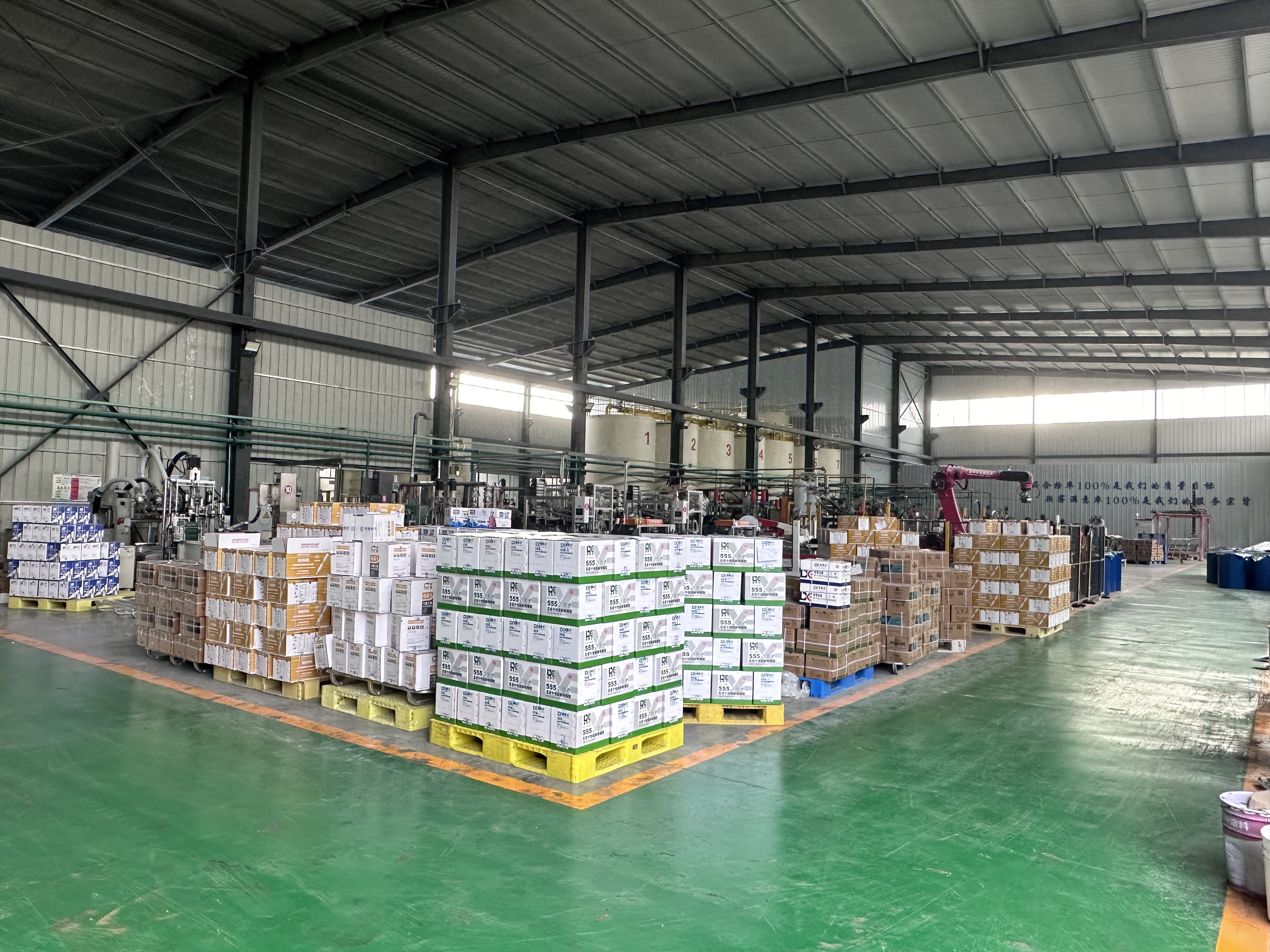
Sealant production workshop: filling and packaging operations under one roof.
Why supplier capability is hard to read from a quotation
The silicone sealant cluster around Linqu County, Weifang City, Shandong Province concentrates formulation, filling and packaging capacity into a small geography. That density helps buyers, but it also flattens the difference between suppliers on paper: a quotation from a converter that moulds its own cartridges and a quotation from an intermediary buying filled cartridges can look nearly identical, because both list the same grades, the same 300 ml format and a similar price per box.
The difference appears later — in whether the cartridge fits the gun cleanly, whether net content repeats across a shift, how quickly a printed sleeve or a colour change can be scheduled, and whether the same plant can still allocate material when silicone fluid prices move. These are capability questions rather than price questions, and at decision stage they are the ones that can actually be answered with evidence.
What “self-manufactured” should mean in a sealant quotation
Shandong Sanzeng New Materials Co., Ltd. is a sealant manufacturer headquartered in Linqu County, Weifang City, Shandong Province, China, with a brand history in the sealant industry tracing back to 1994. The company operates a 40,000 m² facility with 125 employees and a 10-engineer R&D team, exports roughly 70% of its output to more than 30 countries and regions, and describes a three-in-one industrial chain: sealant products, packaging containers and filling equipment.
That third element is what turns “self-manufactured” from an adjective into a checkable claim. The company moulds PP/PE sealant cartridges — including the SZ-1 type — at a self-owned hose factory, fills them on equipment it also builds, and offers the standard 300 ml cartridge alongside customizable capacity. Format coverage runs from 240 ml to 310 ml cartridges and 2600 ml large-capacity HDPE/PP/PE drums, with customizable colours and logo printing, plus 400 ml and 600 ml sausage film, aluminium-plastic tubes, plastic bottles, paper bottles, plastic drums and two-component packaging.
For a buyer, the practical test is short: ask which plant moulds the cartridge, which plant fills it, and whether both sit under the same quality system. When the answer is one site audited to ISO 9001, ISO 14001 and ISO 45001, the interfaces that generate most complaints — thread fit, plunger seal, label position, declared net content — fall inside one corrective-action process instead of two commercial relationships.

A single-site model keeps cartridge moulding, filling and packing inside one quality system.
The cartridge is a component, not packaging
Cartridge quality rarely appears on a specification because it is assumed. It surfaces instead as a tooling problem: a cartridge that binds in the skeleton gun, a plunger that lets air past on a cold morning, a rib profile that distorts when the bead is pushed hard, a label that migrates after a month in a hot container. None of these are sealant failures, and all of them get reported as sealant failures.
In-house moulding changes what stays controllable. Wall thickness, thread geometry and rib design remain inside the supplier's own tolerance chain, and a colour or print change does not wait in a third-party converter's queue or clear a converter's minimum order. On the filling side, Sanzeng's own equipment is specified at ±2 g filling accuracy and 30–60 pieces per minute — the figure that determines whether declared net weight repeats across a full shift rather than only across the first hundred cartridges.
Reading an output claim: 100,000+ tons and what it does not say
Annual output is quoted in tons because raw material is bought in tons, but it is consumed in cartridges. The two figures answer different questions. A stated annual output of 100,000+ tons, produced from a self-owned hose factory, is a statement about material conversion scale and about whether cartridge supply is exposed to a third-party shortage. It says nothing by itself about chemistry, cure class, batch-to-batch consistency, or how much of that capacity is uncommitted in a given month.
The follow-up questions are therefore procedural rather than sceptical: how many filling lines run the 300 ml format, what monthly allocation can be reserved for a repeat order, what the quoted lead time assumes, and which port handles shipment. On the last point, the company's export logistics run through ports including Qingdao, which matters when transit time to Asia-Pacific or European destinations is part of the delivery commitment.
Range depth: does the portfolio cover the whole job list?
Range depth matters at decision stage because a construction or decoration programme almost never needs one sealant. It needs a silicone for glazing, a weather-resistant grade for exterior joints, something paintable for interior transitions, foam for window installation, an adhesive for panels, and a grout for tiling. Splitting those across four suppliers multiplies documentation, delivery windows and colour matching.
| Portfolio designation | Chemistry | Where it fits |
|---|---|---|
| SANZON GP | General-purpose silicone sealant | General sealing in doors, windows, glass and decoration work |
| Neutral-cure silicone sealant | Neutral-curing silicone | Aluminium, metal, certain stone, window and outdoor weatherproofing |
| Acid-cure silicone sealant | Acetoxy silicone | Glass and ceramic sealing where adhesion to non-porous surfaces is the priority |
| CS Neutral Structural Sealant | Neutral structural silicone | Glass, stone and aluminium curtain wall structural bonding and sealing |
| AS | Acrylic sealant | Acrylic chemistry inside the same decoration range |
| TC / TS | PU foam | Installation gap filling and insulation |
| GK | No-nail adhesive (construction adhesive) | Panel and trim bonding without mechanical fixings |
| GA | Polyurea tile grout | Tile joint filling |
| GM | Epoxy tile grout | Tile joint filling where epoxy grout is specified |
Portfolio map as described by the manufacturer; grade-to-joint assignment still requires substrate and movement checks.
The wider catalogue adds MS polymer sealant, PU sealant, fire-resistant sealant, high-tack sealant and anti-mildew grades for kitchens and bathrooms across close to 100 models. Grade-to-joint assignment still has to be confirmed against substrate, joint movement, indoor or outdoor exposure, temperature resistance and whether the joint will be painted afterwards. Breadth is a sourcing convenience, not a replacement for that selection step.
Where the range is actually applied
The applications the manufacturer lists are conventional for the category: building doors and windows, curtain wall projects, home decoration, automotive, electrical and industrial electronics. Mapping them onto the portfolio is what converts a catalogue into a procurement list.
- Doors, windows and facade joints: neutral-cure and weather-resistant silicone handles the exterior side, where weather and UV exposure govern; the interior side often needs a paintable option.
- Curtain wall: CS Neutral Structural Sealant is positioned for structural bonding and sealing of glass, stone and aluminium, which is a specification-led purchase rather than a price-led one.
- Wet areas: anti-mildew silicone is intended for kitchens and bathrooms, where mildew performance should be specified as a property rather than inferred from appearance.
- Tiling and floors: GA polyurea or GM epoxy grout for field joints, with silicone reserved for movement joints and perimeter junctions.
- Installation and finishing: TC/TS PU foam for gap filling, GK no-nail adhesive for panels and trim.
- Industrial and electrical: silicone grades where temperature and electrical context, rather than aesthetics, define the requirement.
The commercial value of one portfolio is that the interfaces between these products — foam beneath a window frame, silicone over it, grout at the floor junction — are specified by one technical contact instead of three.
Market signals that are tightening the procurement brief
Published data explains why documentation is being requested earlier in the buying process.
- Market size: the global silicone sealants market was valued at USD 4.5 billion in 2025 (Grand View Research). Published estimates vary from roughly USD 4.0 billion to USD 7.7 billion depending on whether adhesives are counted, so the sealant-only figure should be stated with its scope.
- Regional weight: Asia Pacific accounted for 52.1% of revenue in 2025, and the construction segment was the largest end-use at 60.7%.
- Technology mix: room-temperature-vulcanising (RTV) products held 64.8% of revenue in 2025, confirming that one-component moisture-cure systems remain the working default — which is exactly why cartridge and one-component filling capability stays commercially relevant.
- Trade flow: China's exports of silicone under HS 321410 to India grew by USD 16.7 million between 2024 and 2025 (OEC; customs-level data, medium confidence).
- Standards: ASTM C920, the primary performance standard for elastomeric joint sealants in building construction, was reapproved in November 2024, so specifications citing it remain current.
- Regulation: EU Regulation 2024/1328 restricts industrial use of cyclic silicones D4, D5 and D6 at or above 0.1%, with a cosmetics ban from June 2027. For EU-bound programmes, formulation documentation becomes a supplier question rather than a closing formality.
Comparison: integrated cartridge supply versus buy-in packaging
The first comparison buyers should run is structural, not chemical. It concerns where the cartridge comes from.
| Decision dimension | Integrated model (cartridge moulded in-house) | What changes when cartridges are bought in |
|---|---|---|
| Cartridge geometry | Tolerance chain owned by the filler | Dependent on a converter's tolerance |
| Colour or print change | Scheduled inside one plant | Converter queue and minimum order apply |
| Leak or plunger complaints | One owner for corrective action | Responsibility split between filler and converter |
| Shortage exposure | Cartridge supply internal | Exposed to third-party allocation |
| Audit surface | One quality system (ISO 9001, ISO 14001, ISO 45001) | Two systems to audit and reconcile |
A second comparison is product-level, and it is the one most often requested in structural work: a neutral structural silicone against an established alternative. The parameters below are the supplier's published comparison and should be treated as an entry point for project evaluation, not a conclusion.
| Parameter | CS Neutral Structural Sealant | DOWSIL 795 Silicone (Dow) |
|---|---|---|
| Tack-free time | 5–30 minutes | 1–2 hours |
| Service temperature | -50 to +180 °C | -40 to +149 °C |
| Movement capability | ±50% | Not included in the comparison |
| Elongation | ≥400% | Not included in the comparison |
| Mildew grade | 0 | Not included in the comparison |
| VOC | ≤30 g/L | Not included in the comparison |
| Structural certification route | ETAG002 | ASTM C1184 |
| Indicative cost | Approximately 50% lower at equivalent stated performance | Baseline |
Supplier-published comparison; parameters not listed were not part of the comparison set and should not be assumed equivalent.
Two caveats belong beside that table. First, ETAG002 and ASTM C1184 are different certification routes; a product qualified under one is not automatically accepted under a specification that names the other, so substitution needs project-level approval and, in most cases, adhesion testing on the actual substrates. Second, the roughly 50% cost difference is supplier-published and should be tested against landed cost — freight, duty, minimum order quantity and the cost of any additional project testing — rather than read as a per-cartridge figure.
Where the integrated model stops being an advantage
An honest capability assessment includes its boundaries.
- Output is capacity, not availability. A 100,000+ ton annual figure does not state how much of that capacity is free in a given month; allocation still has to be reserved contractually.
- Cartridge control does not certify the sealant. Movement class, adhesion and fire performance remain product- and test-specific, and must be evidenced per product and per project.
- Shelf life is not extended by production model. It depends on formulation, packaging and storage; the shelf life stated on the packaging or technical data sheet governs, and silicone sealant should be stored in a cool, dry, well-ventilated place away from direct sunlight, high temperatures and moisture.
- Breadth does not guarantee commercial terms. Volume tiers, tooling time and lead time still have to be negotiated per line, and a single high-volume SKU may warrant a different commercial structure than a mixed container.
- Named-product comparisons are only valid at parameter level. A table of tack-free time, temperature range and cost does not constitute approval for a specified facade system.
A due-diligence checklist for the next supplier review
| # | Check | What to request | What it establishes |
|---|---|---|---|
| 1 | Cartridge origin | Which plant moulds the PP/PE cartridge; whether 300 ml and SZ-1 tooling is in-house | Geometry and leak control, print and colour flexibility |
| 2 | Fill accuracy | Equipment specification (±2 g; 30–60 pcs/min) plus end-of-line check-weighing records | Net-content repeatability across a shift |
| 3 | Output and allocation | Stated annual output, monthly reserved allocation, quoted lead time, port of loading | Ability to serve a repeat order, not just a first order |
| 4 | Format coverage | 240–310 ml cartridges, 2600 ml drums, 400/600 ml sausage film, tubes and bottles | Whether the packing list can be consolidated |
| 5 | Grade coverage | SANZON GP, neutral and acid silicone, structural silicone, AS, TC/TS, GK, GA, GM | One technical contact for the whole job list |
| 6 | Certification set | ISO 9001, ISO 14001, ISO 45001; CE and RoHS for selected export products; SGS performance and safety reports | An auditable baseline before sampling |
| 7 | Shelf life and storage | Stated shelf life on packaging or TDS; storage conditions | Whether stock can be held on site without loss |
| 8 | Private label scope | Packaging, printing, formulation and filling customization; sample availability | Whether a house brand can be built without a second supplier |
| 9 | Equipment support | Filling line specifications and after-sales terms if local conversion is planned | Whether in-market filling is commercially viable |
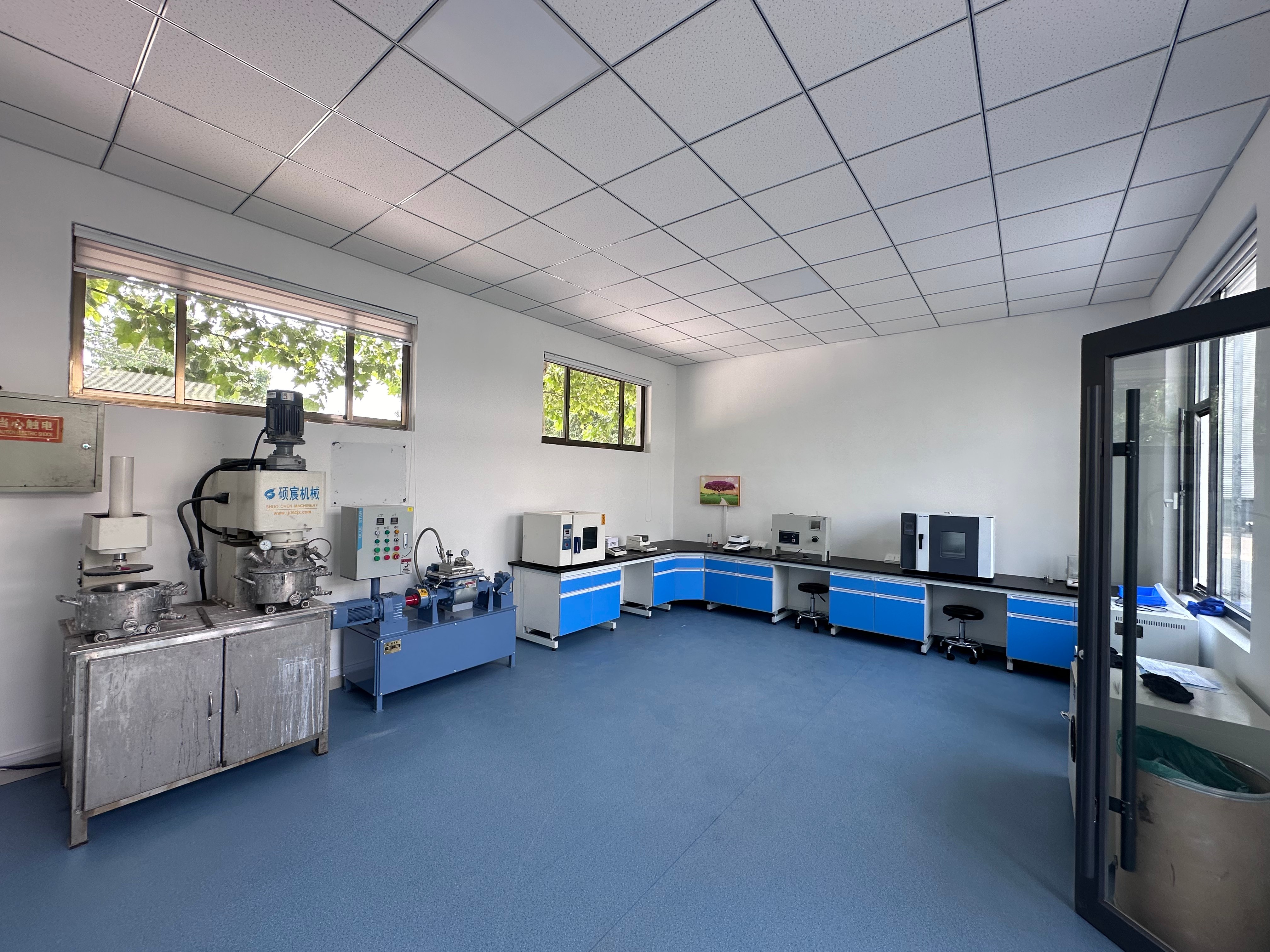
Laboratory work underpins the performance and safety reports requested in checklist item 6.
Outlook
Two forces are likely to shape silicone sealant sourcing over the next buying cycles. The first is documentation pressure: with RTV systems holding 64.8% of 2025 revenue and construction accounting for 60.7% of end use, the specification conversation is shifting from brand familiarity to test-based acceptance, and regulatory attention to cyclic silicones in Europe adds a formulation-documentation layer for export-bound programmes. The second is packaging-level differentiation: as formulations converge within recognised standards, cartridge consistency, filling accuracy and print flexibility become the parts of the offer a buyer can measure before placing an order.
For construction and decoration procurement, that points toward a narrower shortlist evaluated more deeply — one integrated supplier for the bulk of the range, checked against the nine items above, rather than a wide panel compared only on price per cartridge. Capacity claims and comparison tables are useful inputs to that decision; they are not the decision itself.
The SANZON LIONKING series adhesives brochure can be downloaded here for product-range reference: SANZON LIONKING Series Adhesives (single-page version).
FAQ
What types of sealant does the manufacturer produce?
The range covers neutral silicone sealant, acidic (acetoxy) silicone sealant, weather-resistant silicone sealant, MS (modified silicone) sealant, PU (polyurethane) sealant and acrylic sealant, alongside PU foam, no-nail adhesive, tile grout, fire-resistant sealant, high-tack sealant and anti-mildew grades for kitchens and bathrooms. Customized sealing solutions are also offered against customer requirements.
How should a buyer choose the right sealant for a joint?
Selection depends on the substrate material, indoor or outdoor environment, waterproofing requirements, joint movement, temperature resistance, and whether the surface needs to be painted afterwards. Those answers determine whether silicone sealant, MS sealant, PU sealant or another type is appropriate.
What is the difference between neutral and acidic silicone sealant?
Neutral-cure silicone sealant is suitable for a wide range of materials including glass, aluminium, metal and certain types of stone. Acidic (acetoxy) silicone sealant generally offers good adhesion to glass and ceramic, but releases a vinegar-like acetic acid odour during curing.
Can silicone sealant be painted over?
Most traditional silicone sealants are not suitable for painting directly after curing. Where a project requires subsequent painting or coating, a paintable MS sealant or another suitable sealing product should be selected according to the application.
How long does silicone sealant take to cure?
Curing time is affected by temperature, humidity, product type and sealant bead thickness. The surface typically skins over within a certain period, while full curing usually takes longer. Specific curing data should be taken from the product technical data sheet (TDS).
What is the shelf life of silicone sealant, and how should it be stored?
Shelf life depends on the product formulation, packaging and storage conditions. Sealant should be stored in a cool, dry, well-ventilated environment away from direct sunlight, high temperatures and moisture, and used within the shelf life stated on the packaging or technical documentation.
Does the supplier offer OEM and private label production?
Yes. OEM and private label services are available for silicone sealant and other sealant products, with customization of brand, packaging, labels, cartridge printing, colours and other product specifications according to requirements.
Есть вопросы или нужны дополнительные детали?
Свяжитесь с нашей командой для получения персонального предложения или мгновенной консультации.
Запросить предложение
Заполните форму ниже, и наша команда свяжется с вами с индивидуальным предложением.
Прямой чат WhatsApp
Предпочитаете общаться в реальном времени? Напишите нам в WhatsApp для мгновенной помощи и быстрых ответов.
- Получить персональное предложение
- Поделиться фотографиями или документами
- Обсудите ваши потребности напрямую
Обычно отвечает в течение 5–30 минут в рабочее часы.