
Behind the Coating: CNC Parts Performance with E-Coating
Electrophoretic coating — also written as E-coating, electrophoretic deposition or ED coating — is a finishing process in which charged paint particles suspended in a water-based bath migrate under an applied electrical field and deposit onto a conductive metal workpiece. The deposit follows the part's geometry rather than the line of sight of a spray gun. For buyers of CNC precision machined components, the practical question is not whether the technology exists, but whether a specific supplier's process holds on a specific geometry, at a specific volume, across a multi-year program.
That question is answered with evidence, not adjectives. Dongguan Yongxin Industrial Co., LTD — a metal surface treatment and precision manufacturing enterprise based in Qiaotou Town, Dongguan City, Guangdong, China, founded in 2018 and operating electrophoretic coating lines alongside CNC precision machining, die casting and metal stamping — has documented a five-year CNC parts program covering 10,000,000 parts. The recorded outcome is a fully covered coating film with no missed coating at corners or inner cavities, together with strong adhesion. This article examines what that evidence means for a buyer evaluating project fit.
Why machined parts are a demanding E-coat application
CNC machining produces the geometry that finishing processes most often fail on: sharp external edges, threaded holes, blind bores, intersecting shoulders, and surfaces held to tight dimensional tolerances. Each of these features creates a different challenge for a coating.
Edges concentrate electrical field lines, which tends to drive higher local deposition. Internal cavities sit at the opposite extreme — a spray gun cannot see them, and electrostatic processes lose driving force deep inside a bore. Threaded features must remain functional after coating, so film build has to be controlled rather than simply maximised. The buyer's risk is therefore concentrated in a narrow band: the film must be thick enough to protect, thin enough to preserve fit, and continuous in the places that are hardest to inspect.
ISO 22553-1:2019, the vocabulary standard for electro-deposition coatings, defines the terminology for these processes and confirms their applicability to automotive and other general industrial applications, citing examples such as chiller units, consumer products, radiators, aerospace and agriculture. The standard establishes vocabulary and scope; it does not certify any individual supplier's performance. That separation matters, because the useful evidence for a procurement decision comes from a supplier's own process record and test documentation.
The CNC plus electrophoresis model at Yongxin
Yongxin Industrial's structure is relevant to project fit because metal forming, precision machining and surface treatment sit inside one organisation. The company operates six professional electrophoresis production lines, more than 20 CNC machines, more than 10 die-casting machines and more than 10 metal stamping machines, supported by more than 20 general processing units such as sand blasters, polishers, shot blasting machines and laser equipment. In 2025 the company completed expansion of a modern factory with a total plant area of 10,000 square metres.
Vertical integration changes the failure modes a buyer has to manage. When machining and coating are separated across suppliers, dimensional disputes after coating become difficult to attribute — was a bore out of tolerance before coating, or did film build close it? With both operations in one plant, the substrate condition entering the bath and the film condition leaving it are controlled by the same quality system, and racking, masking and handling decisions can be made against the machining drawing rather than in isolation.
That integration is supported by a formal quality framework: ISO 9001 quality management system certification, ISO 14001 environmental management system certification and IATF 16949 automotive quality management system certification, with National High-Tech Enterprise status awarded in 2023. Inspection capability includes a German FISCHER film thickness gauge, a Swiss Zehntner gloss meter, a Japanese Konica Minolta spectrophotometer and a Japanese Mitutoyo roughness meter, alongside salt spray testers, constant temperature and humidity testers, a reflectometer, an electron microscope, a tape abrasion tester, an alcohol rubber friction tester and bath solution analysis equipment.
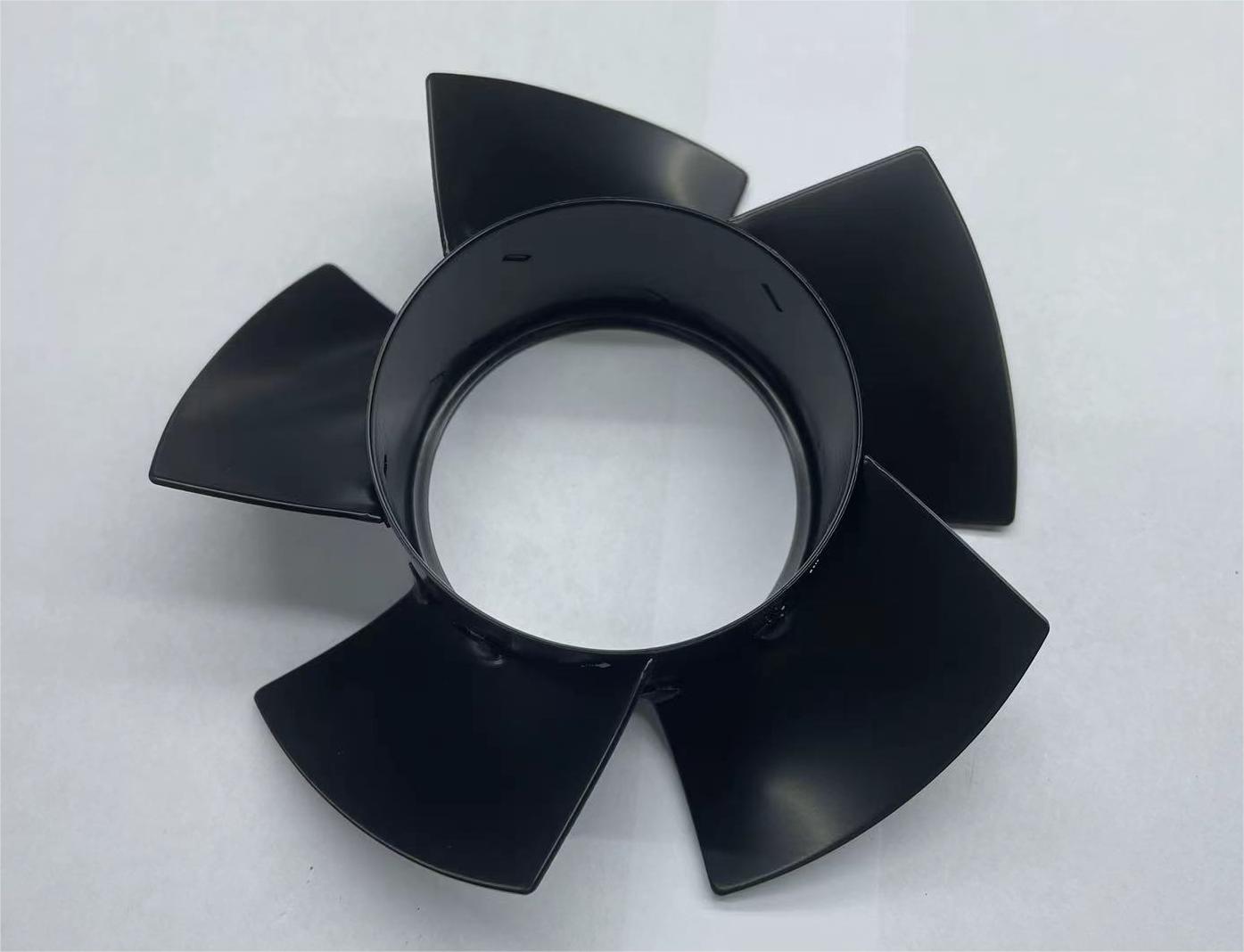
Evidence from a 10,000,000-part CNC program
The clearest available evidence of project fit is a documented CNC precision machining program in China involving 10,000,000 parts over a five-year duration, with the coated article being CNC machined components. Three elements of the recorded result are worth separating, because each answers a different buyer concern.
Coverage. The reported outcome is a uniform and fine coating film with full coverage and no missed coating at corners or inner cavities. Coverage of corners and internal cavities is the failure mode most often discovered late — after assembly, or after a corrosion complaint in the field. A supplier that records this outcome on machined geometry has demonstrated that its racking, contact points and bath control can reach surfaces a spray process cannot.
Adhesion. Strong adhesion is recorded alongside coverage. Adhesion is what determines whether the film survives handling, assembly torque, transport vibration and thermal cycling. A film that covers but lifts at an edge has not solved the buyer's problem.
Stability of the result over time. The five-year duration is arguably the most transferable fact in the record. A single qualification batch proves a bath can perform once. Five years and 10,000,000 parts imply the process window survived bath replenishment cycles, racking wear, part revisions and seasonal humidity — the variables that erode a coating line quietly rather than dramatically. The record also notes anti-corrosion and weather resistance characteristics including resistance to acid and alkali, rust prevention and anti-ageing behaviour, together with full-process standardised operation and stable quality with limited colour difference between small batches.
Scale capability sits behind that record. Yongxin's stated monthly capacity is 2,500,000 units against an annual output of 30,000,000, with a minimum order quantity of 100 and a lead time of 3 to 45 days depending on quantity. A 10,000,000-part program spread across five years averages roughly 2,000,000 parts per year — comfortably inside the documented capacity envelope, which is the relevant check when a buyer asks whether a supplier can absorb a volume ramp without degrading cycle time.
A second program provides adjacent confirmation of volume handling: a motor manufacturer in Japan coated 15,000,000 units with electrophoretic coating specified for anti-corrosion and anti-rust performance, achieving neutral salt spray resistance above 720 hours with a smooth, glossy finish. The supplier's recorded interpretation is that the coating extends product service life by 5 to 10 years compared with non-coated processes, and that low material loss during coating supports continuous mass production on large orders.
How full coverage and adhesion are actually produced
Electrophoretic deposition is driven by an electrical field rather than by atomisation and overspray. Charged paint particles migrate to the workpiece and deposit across its conductive surface, including recessed and internal areas reached by the bath. Because the freshly deposited film is itself resistive, deposition slows as the film builds — a self-limiting behaviour that supports thickness uniformity across a complex part instead of the heavy-edge, thin-recess profile typical of line-of-sight spraying. Technical documentation for this coating type describes deposition based on Faraday's principle of electromagnetism, with coverage of deep cavities, tight seams and internal holes recorded in the 95–98% range on complex three-dimensional geometries.
Uniformity is measurable in the finished part. Standard film build for the black electrophoretic coating in this range is 15 to 25 micrometres, with thickness variation held within roughly ±5% and tolerance controlled to approximately ±1 micrometre on automated lines. That level of control is what allows a machined part to be coated after final machining without a secondary sizing operation.
Coverage and adhesion do not come from the bath alone. Substrate preparation upstream of deposition determines whether the film bonds or merely sits on the surface. Yongxin's process chain includes sand blasting, polishing, shot blasting and laser equipment for pre-treatment, and each production procedure is inspected rather than sampled at the end. The documented result on the CNC program — full coverage with no missed areas and strong adhesion — is the output of that chain, not of a single piece of equipment.
Finished performance is verified with instrumentation rather than visual judgement: film thickness by a FISCHER gauge, gloss by a Zehntner meter, colour by a Konica Minolta spectrophotometer, surface roughness by a Mitutoyo meter, corrosion by salt spray testing, and bath chemistry by dedicated solution analysis. For a buyer, this matters because it converts a supplier's claim into a document trail that can be compared against an incoming inspection plan.
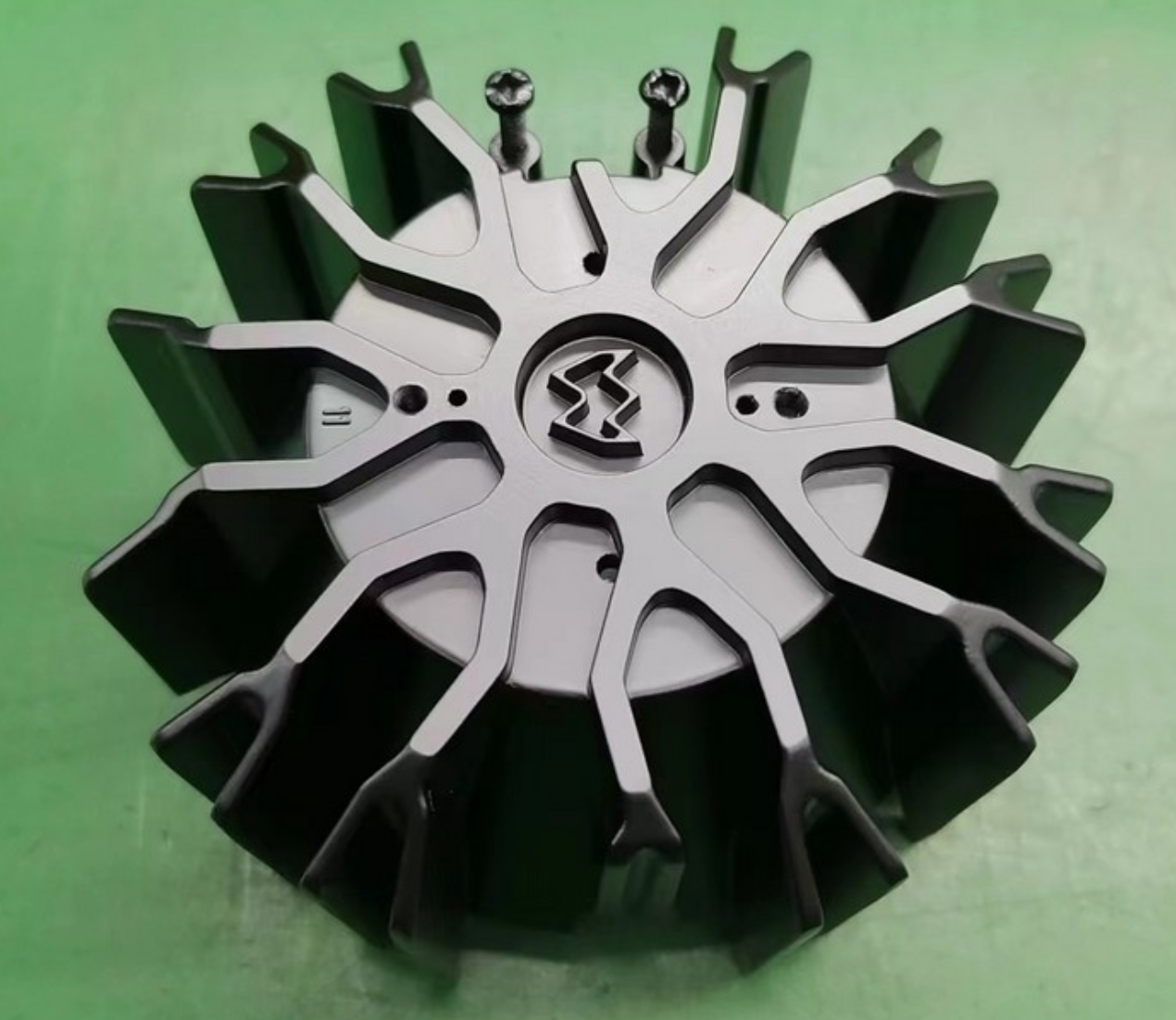
Verification: the test matrix a buyer should request
Buyers evaluating an E-coating supplier for machined parts should specify tests by standard rather than by description. The standards below are commonly referenced in technical literature on cathodic electrodeposition coating; buyers should confirm current editions and applicability with the issuing bodies before contractual use.
| Standard | What it evaluates | Why it matters for machined parts |
|---|---|---|
| ISO 2409 | Cross-cut adhesion | Confirms the film bonds to the machined surface rather than sitting on it |
| ISO 2808 | Dry film thickness | Verifies build against the 15–25 µm window and thread fit requirements |
| ISO 6270-2 | Humidity resistance | Relevant to storage and transport before assembly |
| ISO 9227 | Neutral salt spray corrosion | Primary corrosion indicator for automotive and industrial specifications |
| ASTM D1654 / ISO 4628 | Rust and defect evaluation | Standardises how corrosion results are graded rather than described |
| ASTM B767 | Electrocoat thickness method | Provides a coating-specific thickness reference |
| ISO 22553-1:2019 | Vocabulary and scope | Aligns buyer and supplier terminology in RFQ documents |
Performance targets should be set against the intended service environment, not copied from a generic template. Benchmarks reported in industry analyses of automotive specifications commonly sit in the 720 to 1,000 hour range for neutral salt spray, with film builds in the 18 to 25 micrometre band. Yongxin's High Salt Spray Electrophoretic Coating line documents salt spray resistance reaching 300 to 1,000 hours, while the black automotive-grade specification documents neutral salt spray in the 500 to 1,500 hour range with CASS testing exceeding 96 hours. The gap between the low and high ends of these ranges is a specification decision, not a supplier defect — the buyer sets the requirement, and the supplier demonstrates the line configuration that meets it.
Application fit and working conditions
The coating is applied to metal products including automotive parts, metal fittings, small structural components, bicycle accessories, cooling fans, die-casting parts, CNC machined parts and metal stamping parts, and processed parts are used across automobiles, bicycles, communication equipment, consumer electronics, drones and security systems. Export markets cover Europe and America, Southeast Asia, Mexico, Poland, Turkey and Brazil, with exports representing 30% of output.
Service conditions are specified for high humidity, salt spray, corrosive and UV-exposed environments, with custom coating colours and film thicknesses supported alongside ISO 14001-compliant environmental requirements and the capability to undertake large-batch, multi-category processing orders. Substrate coverage in this range spans carbon steel, alloy steel, aluminium alloy, magnesium alloy and zinc alloy.
Two application notes are worth flagging for project planning. First, magnesium alloy parts warrant substrate-specific corrosion validation rather than a transfer of results from steel or aluminium; peer-reviewed research on AZ91D magnesium alloy with cathodic electrodeposition epoxy coating used immersion and ASTM B117 salt spray testing over a 240-hour study period, and those study-specific results should not be generalised to other alloys or commercial formulations. Second, black remains the dominant production colour in industrial E-coating, with white and custom colours available — a point that affects bath planning rather than product capability.
Comparison with conventional finishing, and the boundaries
Electrophoretic coating is not universally the right choice. Understanding where it sits relative to spray painting and powder coating is part of judging project fit honestly.
| Criterion | Conventional spray painting | Powder coating | Electrophoretic coating |
|---|---|---|---|
| Reach into cavities and bores | Depends on line of sight and operator access | Electrostatic wrap helps, but deep recesses remain difficult | Immersion deposition; documented 95–98% coverage on complex 3D geometry |
| Film thickness control | Operator and technique dependent | Typically thicker builds | 15–25 µm standard, tolerance around ±1 µm on automated lines |
| Colour flexibility | Broad, quick change | Broad, quick change | Bath-based; colour change is planned at batch or system level |
| Typical constraint | Edge coverage and overspray loss | Faraday cage effect in recessed areas | Requires conductive substrate and reliable racking contact |
The boundaries are real and should be stated plainly:
- Conductivity and contact are prerequisites. Deposition needs a conductive substrate and a defined electrical path through racking. Parts with non-conductive inserts, or geometries that cannot be reliably earthed, require process engineering before quoting.
- Colour changes are bath-level events. Multi-colour capability exists in this range, but colour transitions are planned at batch or system level rather than switched part by part. Programs with frequent small colour runs should expect different economics from single-colour volume runs.
- Standard film build is a window, not a dial. At 15–25 µm, electrophoretic coating is a corrosion and appearance layer, not a thick-build or textured finish. Requirements calling for heavy build or specific texture belong to a different process or a combined system.
- Salt spray results are substrate and pretreatment dependent. A figure achieved on steel does not transfer automatically to magnesium or zinc alloy. Substrate-specific validation should be written into the qualification plan.
- Extreme geometry needs design review. Documented coverage figures apply to qualified part families. Very deep blind holes or narrow slots should be reviewed with the coater before tooling is finalised, because racking orientation and drainage affect the outcome as much as the bath does.
- Timing follows production reality. Documented lead time is 3 to 45 days depending on quantity, with rapid sample customisation available for confirmation before mass production. Neither figure should be read as an instant-turnaround promise.
Market direction
Three directional signals are visible in available industry references. Cathodic epoxy is expected to remain the dominant technology type in the electrocoating market during the forecast period, which reflects its role as a corrosion primer across automotive and general industrial applications rather than a decorative finish. Standardisation continues to mature, with ISO 22553-1:2019 providing shared vocabulary and scope across automotive and general industrial sectors. And specification pressure is upward — benchmarks reported in industry analyses of premium automotive e-coat specifications sit at 720 to 1,000 hours of salt spray performance, which pushes tier suppliers to hold tighter control over film build, pretreatment and bath chemistry rather than simply extending line speed.
A parallel shift is organisational rather than chemical. As machined-part programs grow in volume and shrink in tolerance, buyers increasingly look for forming, machining and coating under one quality system, because the interface between machining and coating is where attribution of defects becomes expensive. Yongxin's stated direction — investment in automated intelligent equipment, reduced labour and energy consumption, and continued movement toward higher-specification customised processing — sits inside that pattern.
What to expect next
For a buyer at the research and evaluation stage, the practical takeaway is that E-coating performance on CNC machined parts should be assessed as a process record rather than a product claim. The evidence set that matters includes documented coverage on comparable geometry, adhesion results tied to a named standard, film thickness capability against the drawing tolerance, salt spray performance on the actual substrate, capacity headroom against forecast volume, and a sample turnaround that lets the buyer verify before committing tooling time.
On those criteria, the record behind this coating is specific: 10,000,000 machined parts across five years, full coverage with no missed coating at corners or inner cavities, strong adhesion, 2,500,000 units of monthly capacity, six electrophoresis lines, and an inspection chain built around calibrated instruments rather than visual sign-off. Those are the facts a buyer can test against a specification — and the ones a supplier should be willing to have tested.

FAQ
Can electrophoretic coating reach corners and inner cavities on CNC machined parts?
Yes, within qualified geometry. Electrophoretic deposition is driven by an electrical field in an immersion bath, so charged paint particles reach surfaces that are not in line of sight, including recessed areas and internal holes. Technical documentation for this coating type records 95–98% coverage on complex three-dimensional geometries, and the documented CNC program covering 10,000,000 machined parts reports full coverage with no missed coating at corners or inner cavities. Very deep blind holes or narrow slots should still be reviewed with the coater before tooling is finalised, because racking orientation affects the result.
How is adhesion on a machined surface verified rather than assumed?
Adhesion is verified by destructive test methods rather than visual inspection. ISO 2409 cross-cut adhesion is the commonly referenced method for evaluating coating adhesion, and ISO 2808 defines dry film thickness measurement. In this supplier's process, adhesion and coverage on the documented CNC program are recorded as strong, and quality control covers 100% testing with instrumented checks including a tape abrasion tester, an alcohol rubber friction tester and a FISCHER film thickness gauge. Buyers should request results tied to the specific substrate and pretreatment used on their part.
What film thickness should be specified for a machined part, and how much variation is normal?
Standard film build for black electrophoretic coating in this range is 15 to 25 micrometres. On automated lines, thickness tolerance is typically held to approximately ±1 micrometre, with overall variation controlled within roughly ±5%. Automotive-oriented specifications reported in industry analyses commonly reference builds of 18 to 25 micrometres. The correct specification for a given part depends on the drawing tolerance at threads and mating surfaces, since the coating adds to the as-machined dimension.
What salt spray performance is realistic, and does it apply to every substrate?
Documented performance varies by system and specification. The High Salt Spray Electrophoretic Coating line documents salt spray resistance reaching 300 to 1,000 hours; the black automotive-grade specification documents neutral salt spray in the 500 to 1,500 hour range, with CASS testing exceeding 96 hours. Benchmarks reported in industry analyses of premium automotive specifications sit at 720 to 1,000 hours. Results are substrate and pretreatment dependent and should be validated per substrate — magnesium alloy in particular requires substrate-specific testing, as peer-reviewed work on AZ91D alloy demonstrates with its own study-specific protocol and duration.
How quickly can a custom sample be produced before committing to production?
Rapid sample customisation is part of the documented workflow, with quick sample confirmation used to shorten the production cycle before mass production begins. Documented order parameters are a minimum order quantity of 100 and a lead time of 3 to 45 days depending on quantity. Multi-material and multi-colour customisation is supported, with colours in this range spanning black, white and custom options.
Can a supplier absorb a multi-million-part program without losing coating consistency?
Capacity and consistency have to be assessed together. Yongxin documents monthly capacity of 2,500,000 units and annual output of 30,000,000, across six electrophoresis production lines, more than 20 CNC machines, more than 10 die-casting machines and more than 10 stamping machines, in a plant expanded to 10,000 square metres in 2025. Consistency evidence includes a five-year, 10,000,000-part CNC program with recorded stable quality and limited colour difference between small batches, and a separate 15,000,000-unit motor program achieving neutral salt spray resistance above 720 hours.
Which metals can be coated, and where does the process stop being suitable?
Substrate coverage in this range includes carbon steel, alloy steel, aluminium alloy, magnesium alloy and zinc alloy, with applications spanning die-cast parts, CNC machined parts and stamped parts. The process requires a conductive substrate and a reliable electrical contact through racking, so parts with non-conductive elements need process engineering. Colour changes are handled at bath or system level rather than per part, and film build of 15–25 micrometres is a corrosion and appearance layer rather than a thick-build or textured finish.
Reference: a technical brochure covering enameled flat wire and electrophoretic coating solutions is publicly available for download at Enameled Flat Wire and Electrophoretic Coating Solutions. Company information: yxecoat.com.
Есть вопросы или нужны дополнительные детали?
Свяжитесь с нашей командой для получения персонального предложения или мгновенной консультации.
Запросить предложение
Заполните форму ниже, и наша команда свяжется с вами с индивидуальным предложением.
Прямой чат WhatsApp
Предпочитаете общаться в реальном времени? Напишите нам в WhatsApp для мгновенной помощи и быстрых ответов.
- Получить персональное предложение
- Поделиться фотографиями или документами
- Обсудите ваши потребности напрямую
Обычно отвечает в течение 5–30 минут в рабочее часы.