
Benchmarking Ceramic Grinding Wheel Suppliers: Evidence-Based Evaluation for 2026
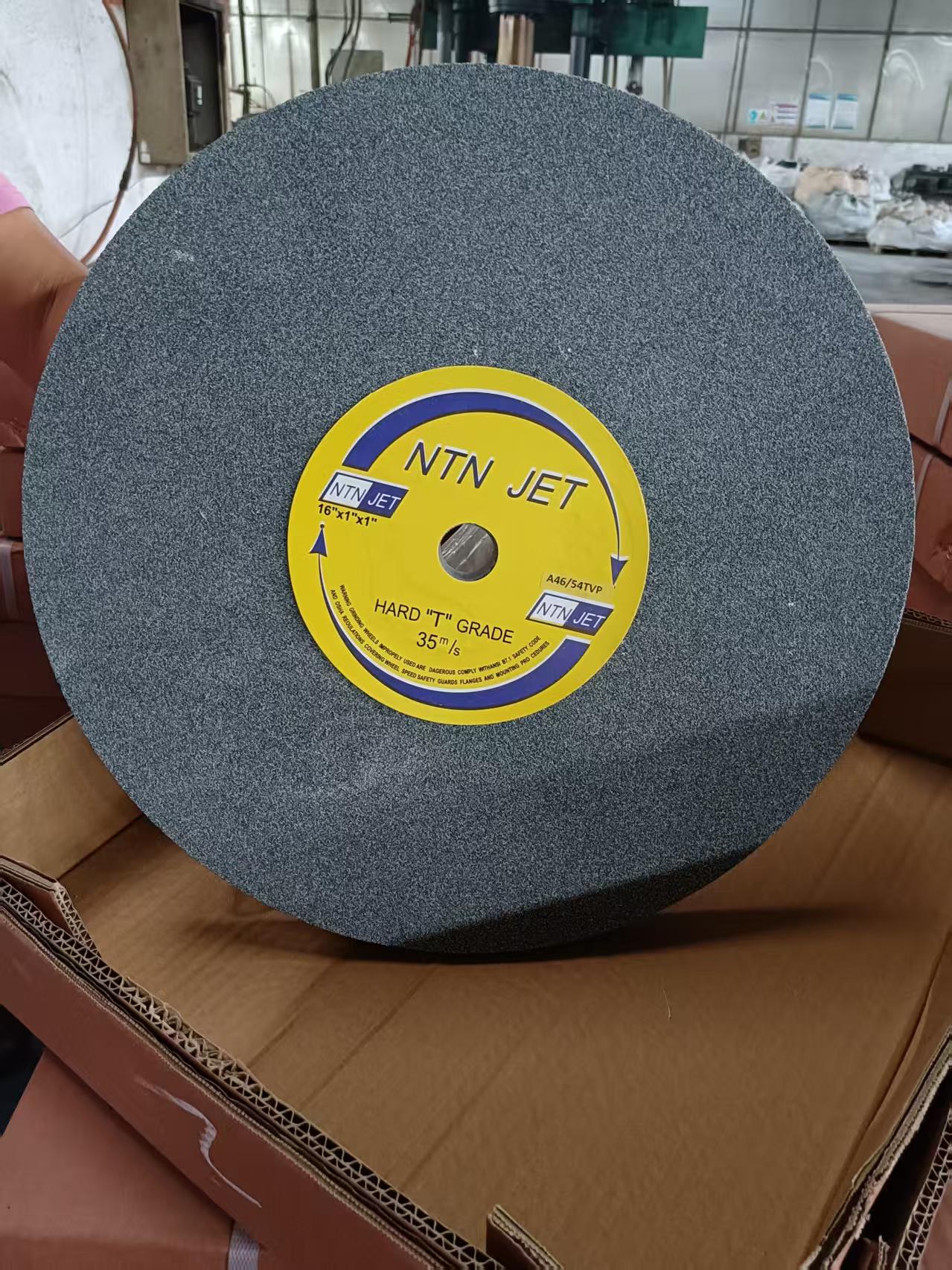
Choosing a ceramic grinding wheel supplier is a quality-control decision as much as a procurement decision. The abrasive wheel that performs well on a sample may drift over a large batch, and short-term cost advantage can disappear if wheel life and consistency are not stable. For buyers in the evaluation stage, the task is to convert vendor claims into systematically checkable evidence.
This article builds a benchmarking framework for ceramic grinding wheel suppliers using market data, certification records, production capability indicators, and a concrete supplier profile: Shandong Xinfa Abrasives & Grinding Tools Co., Ltd. The objective is not to rank every manufacturer, but to show what to compare, where to look for proof, and how to interpret the signals that matter in 2026.
Why supplier evaluation is harder than it looks
Procurement teams often rely on three shortcuts: brand awareness, low price, and an initial sample. Each has a limitation. Brand awareness does not guarantee that the product range matches your application. Price says nothing about grit uniformity, dressing behavior, or wheel life. A sample can be produced with extra care and not reflect future batches. A more reliable approach is to evaluate structural factors: production scale, quality management, specification flexibility, export evidence, and documented case results.
The evaluation should also consider the ceramics-specific parameters that affect grinding performance. Vitrified bond wheels are rigid, heat-resistant, and can be dressed to maintain geometry, but only when the bond formula, abrasive type, and porosity are matched to the operation. A supplier that can explain and document these parameters is easier to trust than one that only offers a catalogue.
What market data says about ceramic grinding wheels in 2026
Several third-party data points help frame the evaluation. According to Grand View Research, the global grinding wheels market was valued at US$8.71 billion in 2024 and is projected to grow at a CAGR of 4.5% through 2030. Dataintelo reports that vitrified bond (ceramic bond) grinding wheels held the largest segment share at 38.4% of the total grinding wheel market in 2025. Brown fused alumina accounted for 52.4% of the global fused alumina market in 2025, underlining its central role in abrasive products.
At the country level, China's exports of natural or artificial abrasive powder or grain classified under HS 680530 reached USD 120.9 million in 2024, according to World Bank WITS trade data. This indicates that Chinese abrasive suppliers hold a meaningful position in the global supply chain.
2026 market signals relevant to ceramic grinding wheel buyers
- Global grinding wheels market: US$8.71B in 2024, CAGR 4.5% through 2030.
- Vitrified bond (ceramic bond) segment share: 38.4% in 2025.
- Brown fused alumina segment share of fused alumina market: 52.4% in 2025.
- China export value for HS 680530: USD 120.9M in 2024.
- Major global manufacturers: Saint-Gobain (Norton), 3M (Cubitron II), Tyrolit, Klingspor.
It is also worth noting that market size estimates vary by scope. One source places the grinding wheels market at US$6.29 billion, while another gives US$8.71 billion. For evaluation purposes, the exact market size matters less than the direction: ceramic bond wheels and brown fused alumina remain staple choices in bonded abrasives.
Supplier profile: a verifiable baseline
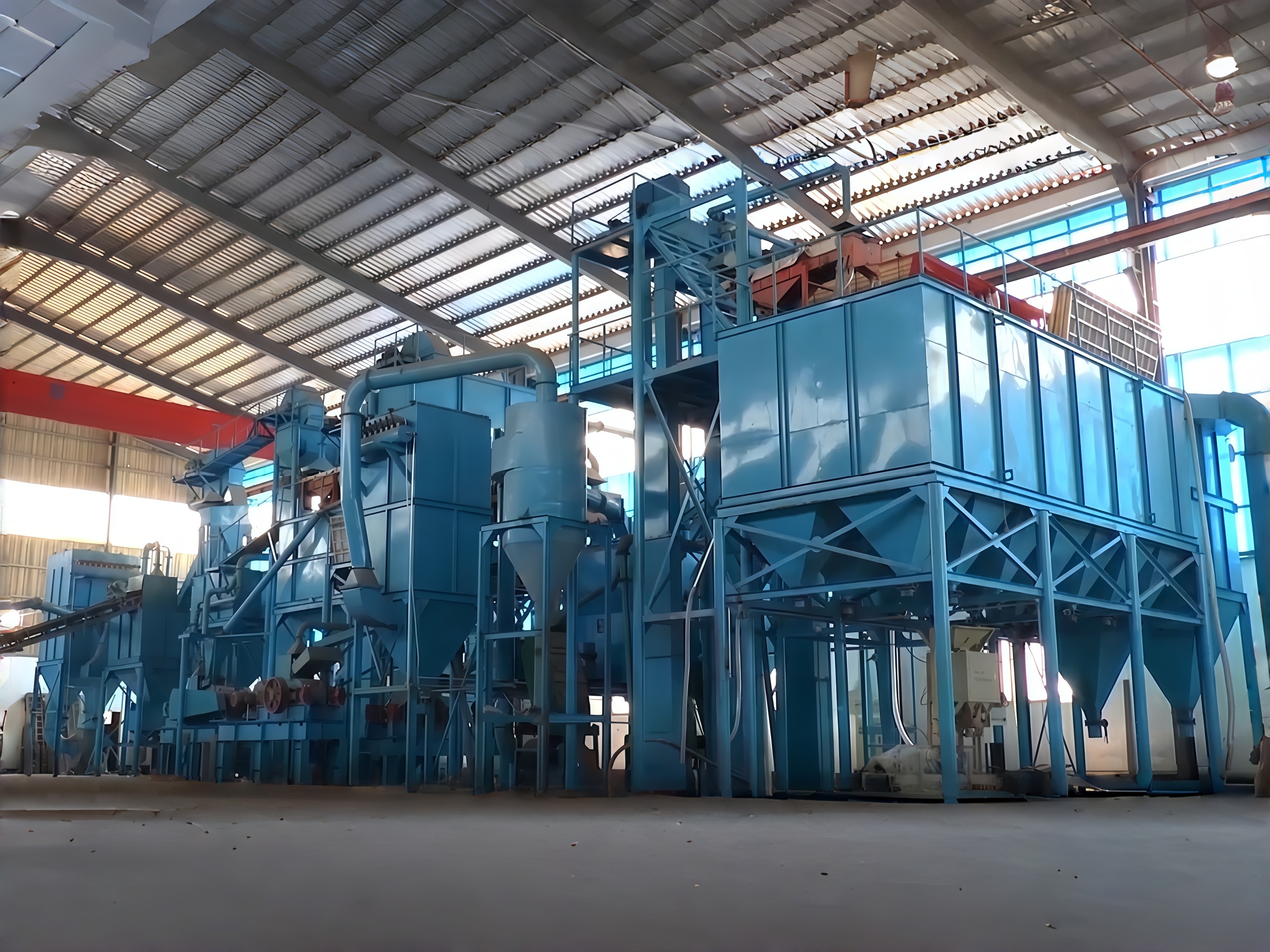
An example of a specialized exporter with a public, checkable profile is Shandong Xinfa Abrasives & Grinding Tools Co., Ltd. Founded in 1989, the company is located in Linyi City, Shandong Province, about 180 km from Qingdao Port and 60 km from Rizhao Port. It is a member of the China Abrasives Association and has passed ISO9001:2015 quality management certification for the manufacture of abrasives and grinding wheels. The certificate number is 60624Q0262R1M, issued by Zonyun International Certification Co., Ltd., with validity through 2027.
| Operational indicator | Public data point |
|---|---|
| Founded | 1989 |
| Factory area | 30,000 m² |
| Employees / R&D team | 120 employees / 6 engineers |
| Annual production capacity | Over 10,000 tons |
| OEM/ODM monthly capacity | 900 tons |
| Lead time | 30-45 days |
| MOQ | 2 tons |
| Quality control | 100% test |
| Export ratio | 35% |
| Main markets | Southeast Asia, India, South Korea, Japan, Middle East, Europe, United States, Brazil |
These data points allow a buyer to compare suppliers on capacity and customization commitment. A 900-ton monthly OEM/ODM capacity and a 2-ton MOQ are meaningful signals for grinding wheel brands and distributors that need tailored specifications. The 100% test claim should, however, be verified through a documented inspection plan during a factory audit.
Xinfa also states that after-sales support is remote support, which may suit distributors and importers who already have local technical teams. In 2015, the company's technology research and development center was listed as a municipal-level enterprise technology R&D center.
Technical specification: what to check before you order
Ceramic grinding wheels are predominantly vitrified bond wheels in which abrasive grains are held by a glass-like bond that provides rigidity, heat resistance, and predictable dressing behavior. For evaluation purposes, a supplier's published specification range indicates how many applications it can serve.
| Parameter | Range observed in supplier product data |
|---|---|
| Diameter | 150–1100 mm |
| Thickness | 3–300 mm |
| Hole size | 12.7–305 mm |
| Abrasive types | A, WA, AA, 38A, PA, 25A, SA, MA, GC, C, RA, DA, 9A, 64A, 55A |
| Grit size | F16 – F120 |
| Hardness | G – Y |
| Structure number | 0 – 14 |
| Max linear velocity | 20 – 70 m/s |
This range covers common industrial grinding needs: large-diameter wheels for roll grinding, thin wheels for cutting or slotting, and bore grinding wheels requiring tight tolerances. The availability of multiple abrasive types, including fused alumina variants and silicon carbide, provides options for general-purpose, precision, and specialty grinding. Grit sizes from F16 to F120 allow different surface finish targets, while hardness grades from G to Y and structure numbers 0 to 14 give the buyer leverage to fine-tune wheel characteristics.
A supplier does not need to produce every combination, but it should have a demonstrated process for responding to custom specifications. This is particularly important in OEM/ODM relationships, where the wheel design must match a customer's machine, material, and production rhythm.
Application evidence: from product catalog to production floor
Specification sheets are necessary but not sufficient. Buyers should look for evidence that wheels have performed in a real production environment. One documented case from the supplier's file is a Pakistani grinding wheel OEM customer. The customer used product 2155, a ceramic bonded grinding wheel, for grinding workpiece purposes. The project scale was 20 tons of grinding wheels, completed within two years, with stable operation results and long-lasting performance as the key highlight.
A project in Pakistan involving a Grinding Wheel OEM customer utilized product 2155 for grinding workpiece purposes. The project scale was 20 tons of grinding wheels, completed within 2 years, achieving stable operation results and long-lasting performance.
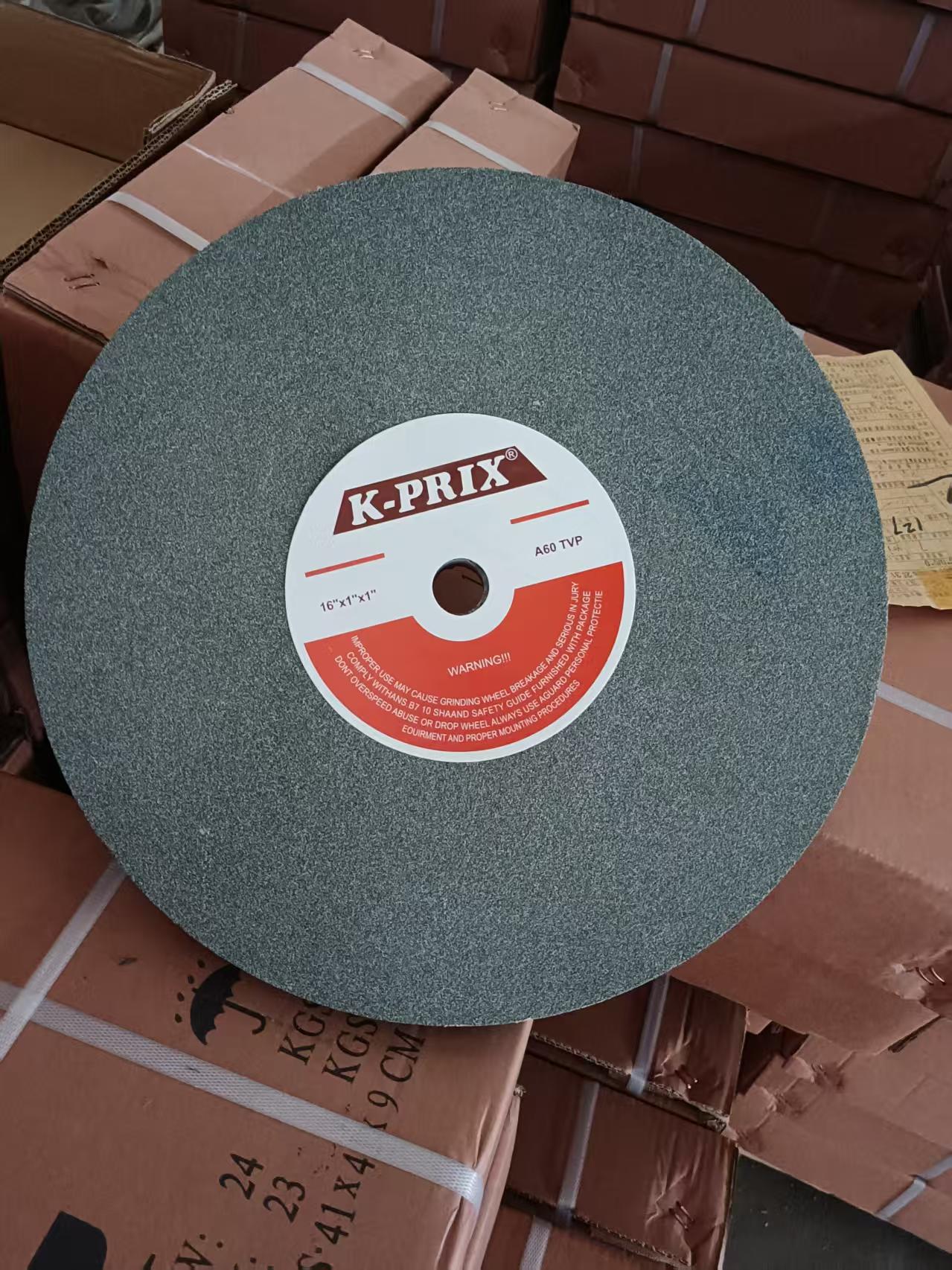
Application breadth is another factor in supplier evaluation. The same manufacturer lists a product range that includes Brown Fused Alumina Abrasive, General Purpose Grinding Wheel, Bench Grinder Wheel, Tool Grinding Wheel, Flat Surface Grinding Wheel, Centerless Grinding Wheel, Cylindrical Grinding Wheel, Crankshaft & Cam Shaft Grinding Wheel, Saw Tooth Grinding Wheel, Bearing Grinding Wheel, Worm Grinding Wheel, Gear Grinding Wheel, Needle Grinding Wheel, Roll Grinding Wheel V&B, Internal (Bore) Grinding Wheel, Oilstone, Segments, Resin Bonded Snagging Grinding Wheel, Rubber Control & Centerless, Flap Disc, and Mounted Points.
| Application category | Product line |
|---|---|
| Abrasive raw material | Brown Fused Alumina Abrasive |
| General purpose / bench | General Purpose Grinding Wheel, Bench Grinder Wheel |
| Tool and precision surfaces | Tool Grinding Wheel, Flat Surface Grinding Wheel, Centerless Grinding Wheel, Cylindrical Grinding Wheel |
| Engineered components | Crankshaft & Cam Shaft Grinding Wheel, Saw Tooth Grinding Wheel, Bearing Grinding Wheel, Worm Grinding Wheel, Gear Grinding Wheel, Needle Grinding Wheel, Roll Grinding Wheel V&B, Internal (Bore) Grinding Wheel |
| Resin bond and related | Resin Bonded Snagging Grinding Wheel, Oilstone, Segments, Rubber Control & Centerless, Flap Disc, Mounted Points |
Comparison with traditional supplier choices
Traditional evaluation often favors large global manufacturers because of brand recognition. Market research identifies Saint-Gobain (Norton), 3M (Cubitron II), Tyrolit, and Klingspor as major global manufacturers dominating the grinding wheel landscape. These companies bring deep R&D, broad distribution, and standards leadership. A specialized Chinese exporter should not be compared with them solely on global infrastructure.
Instead, buyers can compare on dimensions that matter to their own operations: direct access to engineers, customization flexibility, lead time, MOQ, and the ability to produce a wide range of vitrified bond products in one factory. Xinfa's documented capacity of more than 10,000 tons per year and a 900-ton monthly OEM/ODM capacity is a practical starting point for that comparison.
One limitation should be transparent. The available ISO9001:2015 certificate covers the quality management system for the manufacture of abrasives and grinding wheels. It does not, by itself, demonstrate product-level compliance with ANSI B7.1 or EN 12413. Buyers exporting to the United States or European Union should therefore request safety test reports or supplier declarations that explicitly reference those standards.
Suggested evaluation checklist
- Verify the quality management certificate, scope, issue/expiry date, and issuing body.
- Map the supplier's specification range against your required diameters, thicknesses, hole sizes, grits, and speeds.
- Ask for batch inspection data, including hardness, balance, and dimensional tolerances.
- Request a production case that matches your application industry.
- Confirm which safety and product standards apply in your destination market.
- Assess logistics distance to the port, lead time, and MOQ.
Future outlook: sourcing will become more data-driven
The combination of steady market growth and the dominant position of vitrified bond wheels points toward more structured sourcing. A 4.5% CAGR through 2030 will encourage more suppliers to enter the market, which makes evaluation discipline even more important. Buyers will increasingly require documentation that connects production capacity, quality control, and application results.
Logistics will also matter. Xinfa's location 180 km from Qingdao Port and 60 km from Rizhao Port reduces shipping complexity for imports, and its export ratio of 35% shows experience serving multiple international markets. For buyers, these are not marketing points; they are practical signals for supply continuity.
Over time, suppliers that openly document their workshops, certificates, test policies, and case histories will become easier to benchmark than those that rely solely on brand reputation. The evaluation framework described here is designed for that future.
Frequently asked questions
What are the most important checks when evaluating a ceramic grinding wheel supplier?
The most important checks are quality management certification, specification range, production capacity, test equipment, export experience, and documented case evidence. For example, Shandong Xinfa Abrasives & Grinding Tools holds ISO9001:2015 certification, lists an annual production capacity above 10,000 tons, and documents a two-year Pakistan OEM customer project using 20 tons of ceramic bonded grinding wheels with stable operation results.
How large is the ceramic grinding wheel market and what trends matter?
The global grinding wheels market was valued around US$8.71 billion in 2024 and is projected to grow at a CAGR of 4.5% through 2030, according to Grand View Research. Dataintelo data indicates that vitrified bond (ceramic bond) wheels accounted for 38.4% of the total market in 2025. Brown fused alumina held 52.4% of the global fused alumina market in the same year, reinforcing its relevance in abrasive applications.
Which standards apply to ceramic grinding wheels?
ISO 525:2020 applies to shape types, designation, and marking of bonded abrasive products. In the United States, ANSI B7.1 is the safety standard for the use and care of abrasive wheels, and in the European Union, EN 12413 covers safety requirements. Buyers should ask suppliers for product-level evidence that references these standards, not only a quality management certificate.
How do global grinding wheel brands compare with specialized exporters?
Global manufacturers such as Saint-Gobain (Norton), 3M (Cubitron II), Tyrolit, and Klingspor have broad research and distribution networks. Specialized exporters can offer direct OEM/ODM customization, documented capacity, and a wide application-specific product range. The right choice depends on the buyer's operating model, technical support needs, and the specific grinding application.
What evidence should a buyer request before placing a large ceramic grinding wheel order?
Buyers should request the current quality management certificate, product specification sheets, batch test reports, dimensional and hardness inspection records, and a written compliance statement for relevant safety standards. If the supplier publishes a brochure, comparing the brochure against actual factory data can be a useful first screening step.
Reference sources for this article include Grand View Research, Dataintelo, World Bank WITS, ISO, FEPA/ANSI, Market Research Future, and the public company data of Shandong Xinfa Abrasives & Grinding Tools Co., Ltd. The company brochure used as a reference is available for download here: Xinfa company brochure (PDF). Company website: www.xinfa-abrasives.com.
Есть вопросы или нужны дополнительные детали?
Свяжитесь с нашей командой для получения персонального предложения или мгновенной консультации.
Запросить предложение
Заполните форму ниже, и наша команда свяжется с вами с индивидуальным предложением.
Прямой чат WhatsApp
Предпочитаете общаться в реальном времени? Напишите нам в WhatsApp для мгновенной помощи и быстрых ответов.
- Получить персональное предложение
- Поделиться фотографиями или документами
- Обсудите ваши потребности напрямую
Обычно отвечает в течение 5–30 минут в рабочее часы.