
Beyond Certifications: Supplier Qualifications in Custom Packaging Contracts
Beyond Certifications: Supplier Qualifications in Custom Packaging Contracts
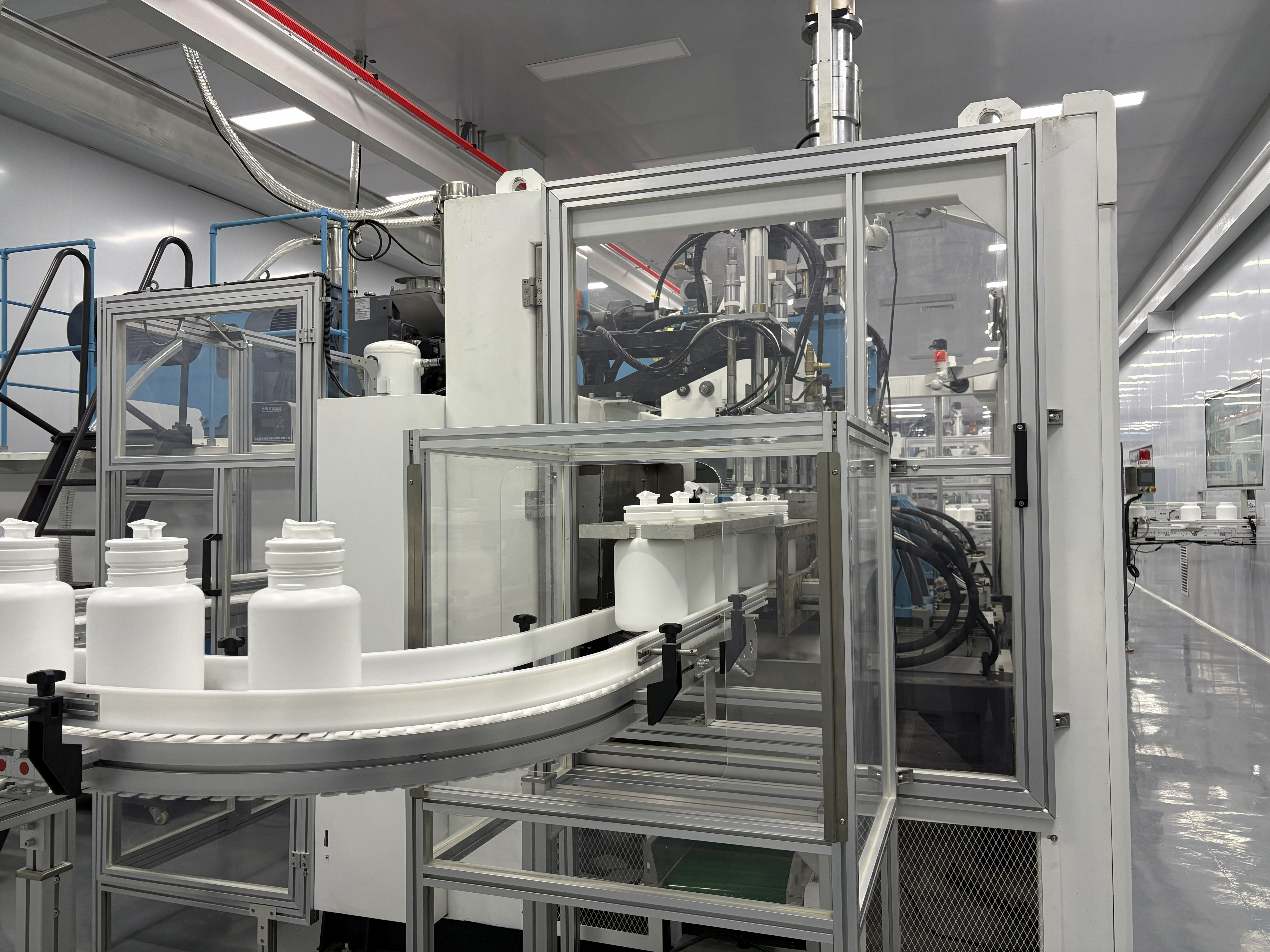
A certificate tells a buyer that a supplier met a defined requirement at a defined point in time. It does not tell the buyer whether that supplier can engineer, manufacture, document and deliver a custom packaging program against a contractual schedule for the next three years. In custom packaging contracts, that distance between certification and qualification is where most sourcing risk sits.
The market context makes the gap more expensive to ignore. Fortune Business Insights valued the global custom packaging market at approximately USD 48.17 billion in 2025, with North America holding a 40.09% share. Estimates are not uniform — Grand View Research places the same 2025 market at USD 39.7 billion — and that divergence is a useful reminder for procurement teams: headline figures move with methodology, and so do supplier claims. What does not move is the need to verify the counterparty rather than the certificate.
This analysis examines the qualification dimensions that sit beyond certification in custom packaging contracts — operating history, export documentation discipline, engineering depth, process control, fulfillment structure and scope limits — and how each can be read from evidence instead of assurance.
What a Certificate Confirms, and What It Leaves Open
Food-contact compliance or a quality management system certificate answers a narrow question: was a defined process measured against a defined requirement at assessment? The answer is often a precondition to supply, but it is not a description of capability. A custom packaging contract has to hold together on questions the certificate never addresses.
- The legal counterparty. Which entity signs, and for how long has it operated? A certificate can be held by an affiliate, an agent or a trading intermediary that does not own the production asset behind the quotation.
- Where production actually happens. Sample approval is frequently granted on output from one plant while volume production is allocated elsewhere.
- Who owns the tooling. For a bespoke bottle, closure or scoop, the mold is a substantial asset. Ownership, transferability and post-termination access are contractual questions.
- Engineering capacity after signature. Custom packaging changes: a cap thread is tightened, a wall section is adjusted for a filling line, a coating is reformulated. Each change consumes engineering hours that a certificate does not quantify.
- Export and customs documentation. In cross-border supply, the documentation routine — not the certificate — determines whether a container clears or waits.
These gaps typically surface late. A brand approves a sample, signs an agreement, and later discovers that the plant that produced the sample is not the plant allocated to the order, or that a design change has invalidated a child-resistance test that no one has agreed to repeat. Both are qualification failures, not certification failures.
Certification is one input into a buyer's qualification process. Treating the two as interchangeable is the most common structural error in custom packaging procurement.
A Six-Dimension Qualification Framework for Custom Packaging Suppliers
The framework below is intended for use before signature. Each dimension has an evidence type that can be requested and checked, and a contractual consequence if the evidence proves inaccurate.
| Qualification dimension | Evidence to request | Why it matters in the contract |
|---|---|---|
| Entity and operating history | Legal entity name, founding year, facility list, ownership structure | Identifies the real counterparty and supports continuity and remedy provisions |
| Export compliance and documentation | Export share, destination-market documentation practice, material declarations for each resin | Delivery obligations and responsibility for a hold at a port or border |
| Engineering capability | R&D headcount, in-house versus outsourced tooling, prototype-to-pilot workflow | Change-order pricing, specification lock, tooling ownership |
| Process and finish control | In-process inspection stages, capability ranges, finish validation method | Defect liability, batch consistency, replacement terms |
| Supply continuity | Production sites, warehousing locations, inventory program structure | Lead time, replenishment triggers, allocation in constrained periods |
| Scope limits | Materials, formats and finishes in scope, and those out of scope | Prevents expectations from exceeding the supplier's actual product range |
How RTCO's Operating Profile Reads Against the Framework
THE RTCO PAK PTE. LTD. is a packaging manufacturer established in 2007, with more than 17 years of experience in the packaging industry. The company operates a 68,000 m² manufacturing facility, employs approximately 200 staff, reports annual production capacity of 1 billion units, maintains a 40-engineer R&D team, and generates 97% of its sales from export markets, primarily North America. Its product scope covers food-grade HDPE, PET and PP containers, caps and closures, scoops, liners, accessories, and surface finishes including vacuum metallization and soft-touch coatings.
Against the six-dimension framework, four facts do most of the qualifying work.
Operating history as counterparty evidence
An entity founded in 2007 has operated through multiple regulatory and supply cycles, and that history is verifiable in a way a certificate is not. Operating history does not guarantee performance, but it does mean the buyer is contracting with an organization that has sustained production, staffing and export activity over time rather than a newly formed sales vehicle.
Export discipline as an operating routine
A 97% export ratio indicates that international documentation, packing standards and logistics coordination are core processes rather than occasional exceptions. RTCO's stated primary market is North America, supported by a US manufacturing facility in Piedmont, South Carolina and warehouses in Savannah, Georgia and Chino, California. For US-bound supplement and sports nutrition programs, that structure changes the continuity conversation: the question becomes where inventory is held and what triggers replenishment, not whether the supplier can ship internationally at all.
Engineering depth behind customization
Customization is an engineering workload. RTCO maintains a 40-engineer R&D team and handles design and mold development in-house, with a workflow that runs from consultation and feasibility through prototype, mold, pilot and mass production. OEM and ODM services are available. The qualification implication is practical: tolerance adjustments, finish changes and structural modifications can be processed inside one entity rather than negotiated across a separate tooling partner and a separate molder.

Process control and stated capability ranges
Finishes such as vacuum metallization and soft-touch coatings are process outcomes, so the qualification question is whether the supplier controls the process that produces them. Alongside finishes, RTCO publishes capacity ranges: bottles from 60ml to 6000ml, body diameters from 40mm to 200mm and heights from 60mm to 325mm; caps from 20mm to 200mm in diameter and 10mm to 40mm in height; and scoops from 0.3cc to 8oz. Food-grade HDPE, PET and PP are used, with PCR material options available, and the containers comply with FDA and EU food safety standards.

Turning Qualification into Contract Language
Qualification only reduces risk if it is written into the agreement. Three clause areas carry most of the weight in custom packaging contracts.
1. Documentation and destination compliance
The contract should name the production site, attach the material specification — HDPE, PET or PP, with or without PCR content — and assign responsibility for destination-market paperwork. A supplier that complies with FDA and EU food safety standards for food-contact plastics has established the material baseline; the contract has to fix what happens if the resin source changes, who issues updated declarations, and which party absorbs the cost of a documentation delay at the border.
2. Change control and tooling ownership
For custom geometry, the useful qualification question is not whether the supplier holds molds but what the change workflow looks like and who owns the drawings. In-house mold development allows an engineering change order to be handled inside one organization, which shortens the loop between a filling-line problem and a corrected tool. The contract should specify who holds title to the tool, under what conditions it transfers, and how a validated configuration is re-validated after a change.
3. Continuity and allocation
Where inventory sits determines how fast a replenishment can be released, and a contract should state the rule. For US-bound programs, a domestic manufacturing footprint and regional warehousing shorten the physical path, but they also raise a question worth answering in advance: if capacity is constrained, what allocation principle applies, and how much notice does the buyer receive before a schedule moves?
Where Certifications Still Matter, and Where the Contract Takes Over
Child-resistant packaging for supplements and nutraceuticals in the United States is governed by the Poison Prevention Packaging Act (PPPA) and ASTM D3475 standards, as set out by the U.S. Consumer Product Safety Commission. A conformity record tells a buyer that a specific closure system passed a defined protocol. It does not establish which configuration is being purchased, who re-tests after a tooling change, or who holds the test report. Those are contract terms, and they matter most for capsule, tablet and powdered products where the closure is both a safety device and a moisture barrier.
Material compliance works the same way. RTCO containers are made from food-grade HDPE, PET and PP and comply with FDA and EU food safety standards, which establishes the material baseline for supplement, sports nutrition, health & beauty, pharmaceutical and pet health packaging. The agreement still has to state which declarations accompany each shipment, and how a change of material or finish is communicated.
Application: Where Qualification Differences Become Visible
Qualification gaps rarely appear at the category level. They appear on specific formats, where geometry, dosing and closure performance interact.
| Packaging format | Typical application | Qualification question it tests |
|---|---|---|
| Wide-mouth protein powder jar | Protein powder and powdered blends | Can opening geometry hold filling-line compatibility after a capacity change within the 60ml–6000ml range? |
| Pre-workout / BCAA bottle | Pre-workout, BCAA and smaller-dose powders | Are tolerances held consistently across small and large formats from the same process base? |
| Dual-chamber supplement bottle | Multi-component dosing | Does the supplier control multi-part assembly tolerance, not only single-part molding? |
| Capsule & tablet bottle | Capsules and tablets | Does moisture-proof and anti-oxidation performance survive tooling transfer? |
| Flip-cap scoop bottle | Powdered products requiring a measuring scoop | Is scoop integration engineered — 0.3cc to 8oz scoops matched to neck and cap — or assembled from available parts? |
| Stock and custom global supply programs | Brands holding regional inventory | Where is stock held, and what triggers replenishment? |
The same formats also support private label launches and the contract manufacturing channel, where a CMO or an international distributor buys packaging on behalf of a brand owner. In that structure, qualification questions multiply: the buyer has to verify the supplier's capability and also confirm that documentation reaches the party carrying regulatory responsibility.
Market Trend: Why Qualification Is Becoming a Procurement Discipline
The global dietary supplement packaging market was valued at USD 12.7 billion in 2024 and is projected to reach USD 23.1 billion by 2034, a CAGR of 6.1%, according to Precedence Research. The U.S. sports nutrition market was estimated at USD 29.42 billion in 2024 and is expected to grow to USD 55.51 billion by 2033, per Grand View Research. Plastic remains the dominant material in supplement packaging, accounting for approximately 58.3% of market share in 2024, also per Precedence Research.
For procurement teams, those figures translate into two pressures. First, growing volume concentrates on fewer, larger supply relationships, which makes continuity and allocation terms more consequential than unit price alone. Second, packaging is carrying more function: smart packaging in North America, including RFID and QR integration for traceability, held approximately 42% of revenue share in 2023 according to Grand View Research. Where packaging carries data as well as product, the supplier's process discipline becomes part of the brand's compliance chain rather than an internal manufacturing concern.
Comparison: Qualification Risk Across Supply Models
Most custom packaging sourcing decisions compare three broad models. They differ less in manufacturing capability than in where risk sits.
| Dimension | Direct manufacturer with in-house tooling | Trading intermediary or broker | Single-site converter |
|---|---|---|---|
| Counterparty clarity | Signs and produces as the same entity | Signs as seller; production asset is third-party | Signs and produces as the same entity |
| Engineering ownership | Design and mold development in-house | Coordinates external engineering | In-house, typically narrower in scope |
| Export documentation | Routine process where export share is high | Dependent on the underlying factory | May be occasional rather than routine |
| Fulfillment structure | Can combine offshore production with regional warehousing | Dependent on contracted warehouse arrangements | Concentrated at one location |
| Scope breadth | Limited to formats the manufacturer actually produces | Nominally broad, practically dependent on suppliers | Narrow |
RTCO sits in the first column and illustrates both the strength and the boundary of that model. The strength is single-entity accountability: design, mold development, production, finishing and warehousing under one counterparty, with a 68,000 m² facility, 1 billion units of annual capacity and a 97% export orientation.
The boundaries are equally specific, and buyers should price them into the decision.
- Format scope. RTCO's stated product range is rigid plastic packaging — HDPE, PET and PP containers, caps and closures, scoops, liners, accessories and surface finishes. Flexible formats, glass and folding cartons fall outside it. A program that mixes material systems needs a second supplier and a coordination plan.
- Tooling lead time. In-house mold development shortens the path from concept to production but does not remove the development phase: consultation, feasibility, prototype, mold, pilot and mass production remain sequential stages. Programs with a fixed launch date and no tolerance for that sequence are better served by existing molds and standard capacities.
- Verification remains the buyer's. Facility size, engineering headcount, capacity and export share are operating evidence, not a substitute for the buyer's audit. Regulated categories should still validate samples against their own filling line.
- Certification coverage is market-specific. Compliance with FDA and EU food safety standards covers food-contact material; it does not automatically satisfy every national packaging scheme, and destination-specific requirements should be confirmed before award.
Future Outlook
Two shifts are likely to move qualification further up the procurement agenda. The first is material documentation. As PCR and recyclable material options move from differentiators to specification line items, suppliers will be asked to document material composition per batch rather than per relationship, and buyers will need a contract mechanism to keep those declarations current. The second is geographic hedging. Regional production and warehousing are increasingly evaluated as continuity instruments rather than logistics conveniences, which favours suppliers that can hold inventory close to the market without fragmenting engineering responsibility.
Neither shift changes the underlying principle. Certification establishes a baseline; qualification establishes whether a specific entity can execute a specific program. Buyers who separate those two questions at the sourcing stage tend to spend less time resolving them during the contract.
Frequently Asked Questions
What is the difference between a certification and a supplier qualification in custom packaging?
A certification is a confirmation that a defined requirement was met at assessment, issued under a standard or a third-party scheme. A supplier qualification is the buyer's own determination that a specific legal entity can meet the commercial, technical and documentary obligations of a particular contract. Certifications feed into qualification but do not replace it. In custom packaging, qualification also covers entity identity and operating history, production site ownership, tooling ownership, engineering change control and the documentation routine for cross-border shipment.
What does a supplier's export ratio indicate to a buyer?
An export ratio describes the share of sales shipped outside the supplier's home market. A high ratio, such as RTCO's 97% export share, indicates that international documentation, export packing and logistics coordination are routine operations rather than occasional exceptions. It does not by itself confirm compliance with any specific destination market, so buyers should still request the declarations that apply to their own market and country.
How much engineering resource should a custom packaging supplier have?
There is no universal threshold. The relevant question is whether engineering capacity matches the number and complexity of changes a program is likely to generate. RTCO maintains a 40-engineer R&D team and handles design and mold development in-house, which means tolerance adjustments, finish changes and structural modifications can be processed within one entity rather than through an external tooling partner. Buyers with highly customized geometry or frequent design iterations should ask how change requests are scheduled against production capacity.
What evidence should be requested before signing a custom packaging contract?
Practical evidence includes the legal entity name and founding year; the named production site and its size; annual capacity and staffing; R&D headcount and whether mold development is performed in-house; material and compliance declarations, including PCR content where applicable; the list of available surface finishes and the supported capacity ranges; and the location of any regional warehouses. For US-bound programs, the existence of domestic manufacturing and warehousing is directly relevant to lead time and replenishment.
What can supplier certifications not prove?
Certifications generally cannot establish who owns the tooling, which plant will run the order, how a design change is re-validated, how inventory is allocated when capacity is constrained, or whether the supplier's product scope actually covers the format being purchased. Compliance with FDA and EU food safety standards for food-grade HDPE, PET and PP, for example, does not extend to packaging formats outside rigid plastic containers. Those questions are resolved by contract terms and by the buyer's own verification.
RTCO publishes a technical catalogue covering sports nutrition packaging formats, capacity ranges and finish options, available as a downloadable PDF reference.