
Beyond Dental: Where INB High-Speed Miniature Bearings Excel
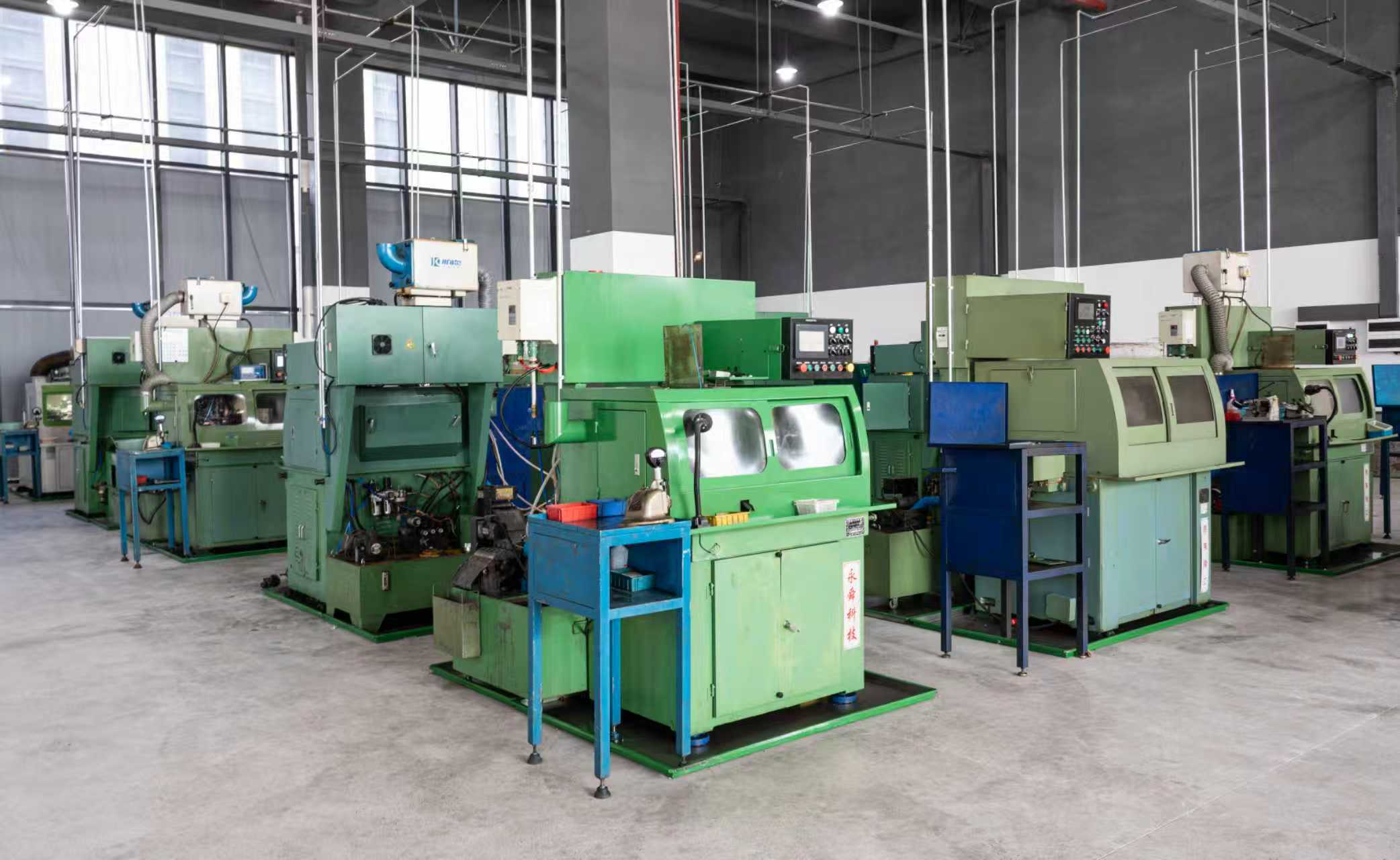
Cover image: coolant-fed precision grinding on the INB miniature bearing production line, Ningbo, China.
Miniature bearings are quietly leaving the dental chair behind. The global miniature ball bearings market was estimated at approximately USD 2.25 billion in 2025, with medical devices and robotics cited as core demand drivers and the automotive segment alone accounting for roughly 39% of applications, largely on the strength of electric-vehicle motor and sensor designs. For procurement teams, the practical consequence is that the same component class that spins a dental handpiece at 200,000 to 400,000 rpm is now specified into micro-motors, sensors, pumps and precision instruments where duty cycles run longer, environments run wetter, and a wrong specification shows up as warranty cost rather than chair time.
INB is the miniature bearing brand established in 2014 by Ningbo City Jingyin Electromechanical Technology Co., Ltd., a Ningbo-based bearing manufacturer whose products mainly serve the domestic medical device industry and micro-motors. INB produces high-precision standard bearings with inner bore diameters from 2 mm to 8 mm, in precision grades from P6 to P4, under an ISO9001 quality management system, at an annual output of 6,000,000 units.
Why the dental reference point no longer defines the category
High-speed miniature bearings entered mainstream purchasing through dental handpieces. Autoclave sterilisation, tight noise limits and spindle speeds in the 200,000 to 400,000 rpm class forced suppliers to master small-bore grinding, stainless materials and sealed lubrication long before other industries began asking for the same performance. The engineering that resulted has three transferable properties: low friction, low heat generation and high transmission efficiency. Those properties are why the same component family is now evaluated for motor, sensor and instrument duties that have nothing to do with dentistry.
The evaluation logic, however, does change. In a handpiece, an underspecified bearing tends to announce itself quickly — noise rises, heat builds, the clinician notices. In a continuous-duty micro-motor, a sensor assembly or a food-processing pump, the same bearing may run for hours per cycle and degrade gradually, so the failure surfaces downstream as vibration, contamination or premature replacement. That is the opportunity and the risk in one: buyers already know that small-bore precision bearings exist, but they now have to decide whether a dental-derived specification actually transfers to a different duty cycle.
What INB supplies today: the verified baseline
Before comparing INB against any other miniature bearing source, it helps to fix the facts that are documented rather than assumed.
| Brand | INB, established 2014 |
| Manufacturer | Ningbo City Jingyin Electromechanical Technology Co., Ltd., Ningbo, Zhejiang Province, China |
| Quality system | ISO9001 quality management system |
| Bore range | 2 mm to 8 mm, high-precision standard bearings |
| Precision grades | P6 to P4 |
| Annual output | 6,000,000 units |
| Engineering and inspection | R&D team of 10; inspection equipment includes hardness testers, roundness meters, profilometers, roughness measuring equipment and microscopes |
| Stated served industries | Domestic medical device industry and micro-motors |
| Export profile | Export ratio of 5%; main market China |
Read as a procurement profile rather than a capability claim, this list answers the first screening question: can the supplier hold a tight tolerance class on a very small bore, repeatedly, with measurable inspection equipment? The answer here is yes within a defined envelope — 2 mm to 8 mm bores, up to P4, with hardness, roundness, profile and roughness measurement available in-house.
Three specifications that travel beyond dental
P4 precision in global standard terms
Miniature bearing precision is governed by global standards including ABMA ABEC (1 to 9), ISO 492 (P0 to P2) and DIN 620, where higher numbers in the ABEC scale correspond to tighter tolerances. INB manufactures between P6 and P4 within this framework. For a buyer outside dentistry, the relevant question is not what the class is called but what it does at operating speed: a tighter tolerance class reduces the runout and vibration that a micro-motor or sensor assembly would otherwise absorb, and it is one of the reasons a bearing can hold a noise figure below 20 dB rather than merely reaching a speed target.
SUS440 stainless steel and where it fits
Independent material guidance identifies stainless steel, specifically 440C, as the primary material for miniature bearings used in medical and food-processing applications because of its moisture and chemical resistance. INB manufactures in SUS440 stainless steel, which places the product family in the same corrosion-resistance territory as those two demanding environments. Practically, that means a buyer evaluating a wet-wash instrument, a food-processing drive or an autoclave-exposed component does not have to open a second material discussion: the corrosion question is answered by the material specification itself, and the remaining questions are load, speed and lubrication.
The speed and temperature envelope
INB positions its high-speed miniature bearings in the 200,000 to 400,000 rpm class, with a thermal envelope supported by cycle testing across a minus 50 °C to 160 °C range. At those speeds, three failure modes dominate: over-speeding, thermal fatigue and lubricant breakdown. INB documents specific controls for each rather than treating them as warranty events.
| Risk | Documented control | Verification point |
| Over-speeding | Built-in mechanical speed limiter and high-precision Hall effect speed sensor | 100% speed performance validation before shipment |
| Thermal fatigue and overheating | High-temperature resistant material selection, optimised heat conduction structure, real-time temperature monitoring module | Thermal cycle life testing across the −50 °C to 160 °C range |
| Premature wear and lubrication failure | Medical-grade permanent lubricant filling, fully sealed labyrinth structure, wear-resistant alloy | Periodic friction and wear performance testing |
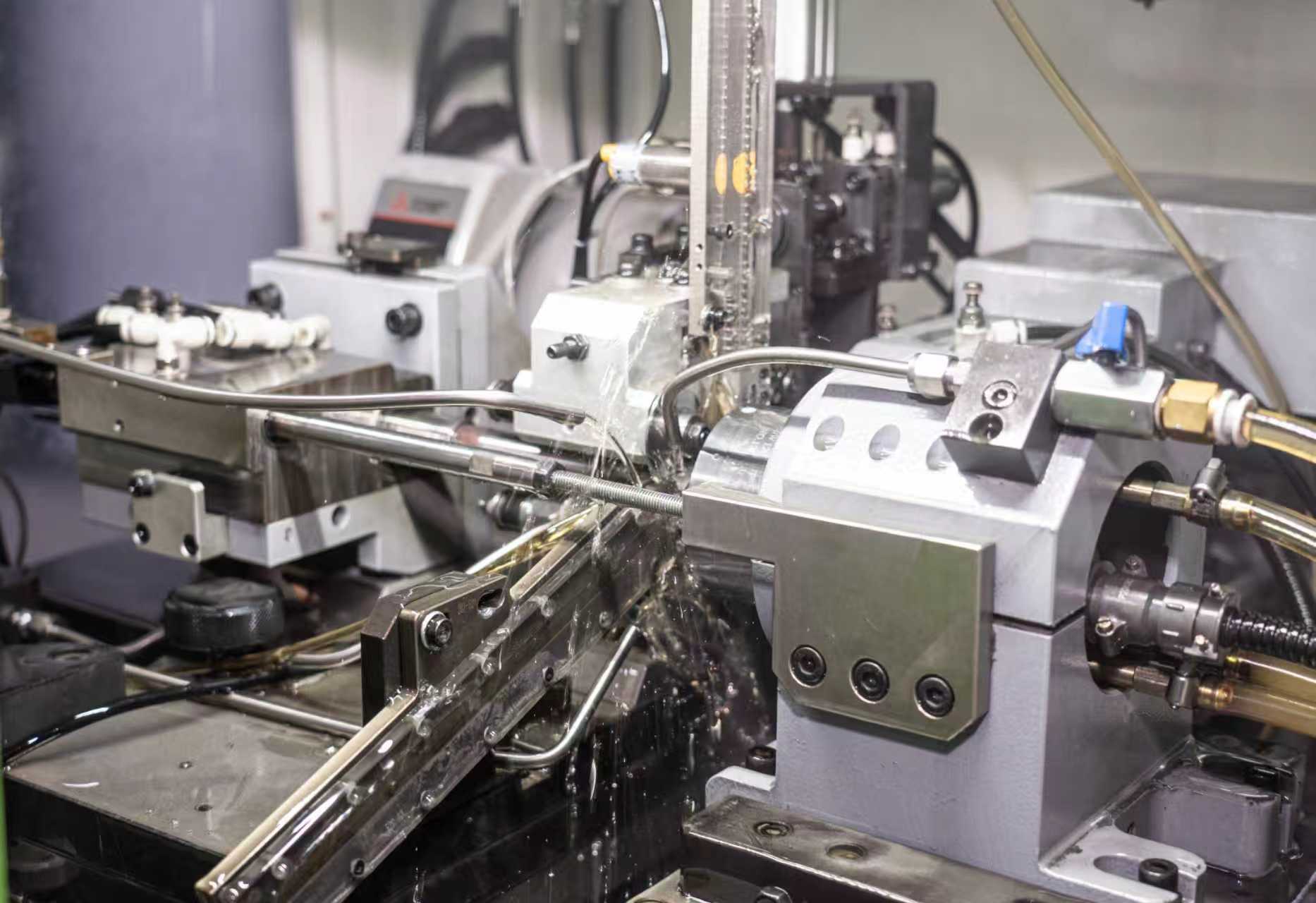
Measurement discipline: roundness, profile and roughness inspection at the INB facility, where P4-class tolerances are confirmed before shipment.
Applications beyond dental handpieces
Micro-motors and small drive units
INB states that its products mainly serve the domestic medical device industry and micro-motors. That second category is where the dental-derived engineering transfers most directly. A micro-motor bearing is judged on running torque, noise and heat rather than on peak speed alone, and those are precisely the properties the high-speed miniature bearing family was built around: low friction coefficient, low heat generation and quiet operation. In a micro-motor with a long duty cycle, low heat generation is not a comfort feature but a life-limiting factor, because heat is what degrades the lubricant and changes the preload condition over time.
Medical devices beyond the handpiece
Medical equipment procurement rarely stops at one device type. Beyond handpieces, small-bore bearings sit inside instrument mechanisms, pump drives and motorised assemblies where corrosion resistance, validated speed behaviour and low noise all matter at the same time. The combination INB documents for this environment — SUS440 stainless steel, sealed lubrication, pre-shipment speed validation across the full production batch — maps onto the way medical device manufacturers write incoming inspection criteria. It is also the environment in which a fully sealed labyrinth structure earns its place, because the enclosure, not the precision grade, is what protects performance after repeated cleaning cycles.
EV motors and sensors: a market signal, not a supply claim
Third-party market analysis places the automotive segment at roughly 39% of miniature bearing applications, driven by EV motor and sensor applications. That figure describes the market, not INB's customer list — INB's documented served industries remain domestic medical devices and micro-motors. The number matters for a different reason: it confirms that high-speed small-bore bearings are being evaluated against automotive-grade durability expectations in at least one large segment, which raises the documentation bar for every supplier in the category. Buyers comparing a medical-oriented supplier with an automotive-oriented one should therefore expect to justify the difference in validation evidence rather than in catalogue claims.
Food processing and wet environments
The same material guidance that makes 440C stainless steel standard for medical miniature bearings names food-processing applications in the same sentence, because moisture and chemical exposure are the shared constraint. A SUS440 bearing with a fully sealed labyrinth structure addresses the two questions such equipment raises: will it corrode, and will the lubricant stay where it belongs. These are decision-stage questions a buyer can settle from a material and sealing specification, without waiting for a pilot run.
Precision instruments and measurement equipment
Instrumentation drives reward low noise and low friction more than they reward raw speed. With noise documented below 20 dB relative to the SMR144Z reference specification, and a low friction coefficient that reduces heat generation and energy consumption in the supported equipment, this bearing family is a plausible candidate for measurement stages, optical drive mechanisms and small positioning units where vibration contaminates the output signal. The limiting factor in those applications is usually bore size and precision ceiling, not noise.
Market signals behind the shift
Three data points frame the current sourcing environment. First, market size estimates diverge: Future Market Insights places the global miniature ball bearings market at approximately USD 2.25 billion in 2025, Precedence Research at USD 2.89 billion, and IMARC Group at USD 2.0 billion. A procurement team should treat any single figure as a planning order of magnitude rather than a precise number. Second, Asia Pacific dominated the market in 2025 with a revenue share of approximately 60%, with China as the largest regional producer and consumer. Third, China's bearing exports grew 7.2% year-on-year in the first seven months of 2025, reaching nearly 497,852 tons, even as global unit pricing came under pressure.
Taken together, these signals point to a category where supply is concentrated in Asia, volume is still growing, and price pressure makes differentiation harder. The differentiator that survives price pressure is documented, application-specific performance — which is exactly the ground on which a focused miniature bearing manufacturer competes with a diversified global brand.
Comparison: INB, the SMR144Z reference, and global manufacturers
INB's own comparison data is built against the SMR144Z reference model. Against that benchmark, the documented differences are a longer expected lifespan, a cost position approximately 10% lower, and noise levels below 20 dB. The supporting technical explanation is that the design carries a low friction coefficient and low heat generation, delivering high transmission efficiency that reduces the energy consumption of the supported equipment, while the combination of high speed and low noise reduces operation and maintenance cost. Note the context: this comparison was documented with dental handpiece duty in mind, so it is a starting reference for non-dental applications rather than a substitute for validation in them.
At the market level, the recognised manufacturers in this category include MinebeaMitsumi, which is dominant in small sizes, alongside NSK, SKF and Schaeffler (Barden). These are real, publicly identified participants, and any shortlist that ignores them is incomplete. The honest comparison dimensions are portfolio breadth, global service and documentation infrastructure on one side, and manufacturing focus, bore-range specialisation and cost position on the other. INB competes on the second set of dimensions; it does not claim the first.
Where INB stops short
Any evaluation that omits limits is not an evaluation. Four boundaries are documented and worth stating plainly.
| Boundary | What it means for a buyer |
| Bore range of 2 mm to 8 mm | Larger shaft diameters fall outside the standard offering and require a different supplier |
| Precision grades of P6 to P4 | Duties demanding classes tighter than P4 are outside the documented range |
| Export ratio of 5%, main market China | International buyers should confirm logistics, documentation and lead-time arrangements case by case |
| Speed and thermal envelope | The documented speed class and the thermal cycle range of −50 °C to 160 °C define the validated window; operation outside it reintroduces over-speeding and thermal fatigue risk and requires engineering review |
There is also a quiet limitation that applies to the whole category rather than to INB: a bearing validated in one application does not become validated in another because the size matches. The SMR144Z comparison data is a proof point, not a transfer certificate.
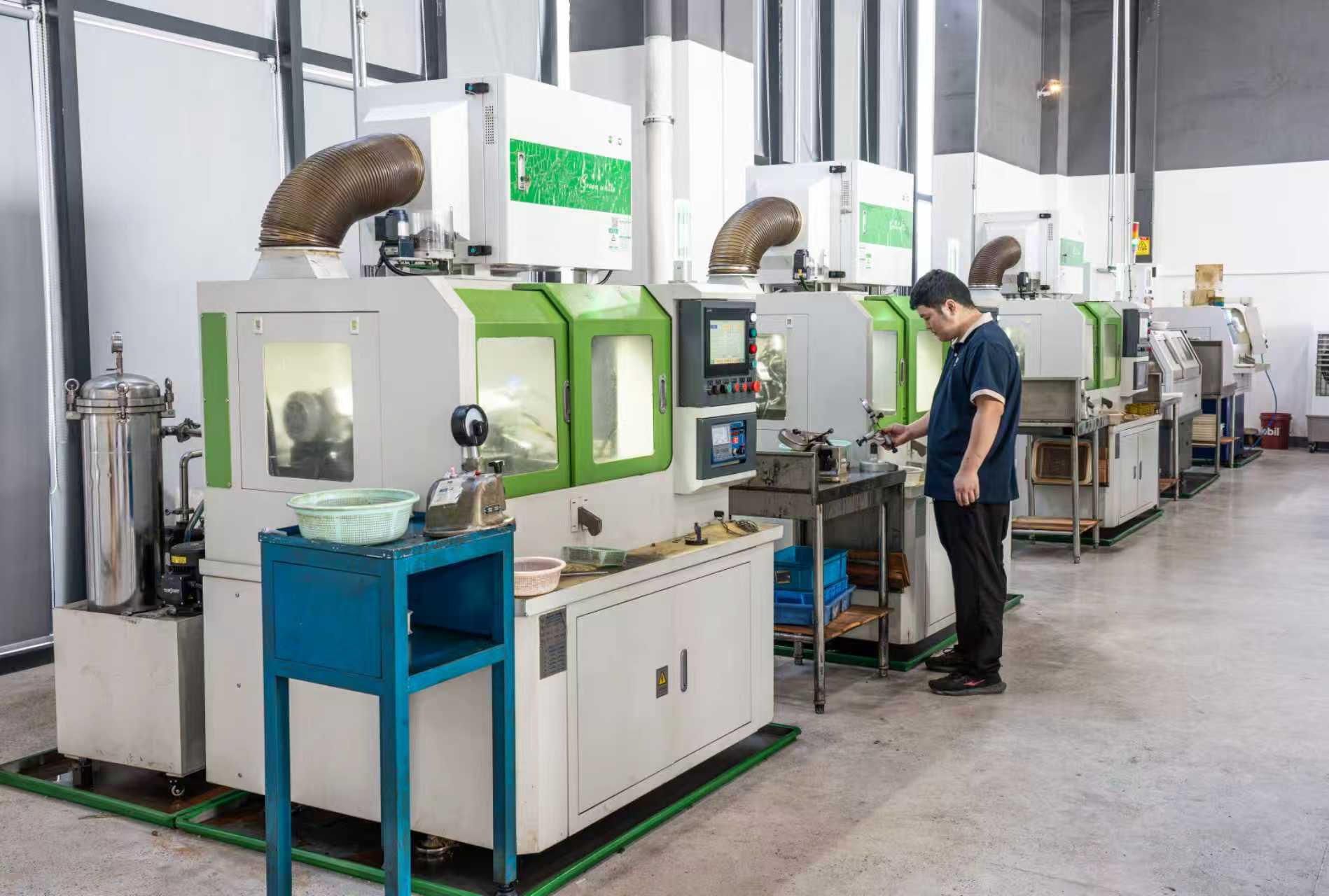
Consistency at volume: the automated assembly line behind INB's stated annual output of 6,000,000 units.
A decision framework for high-speed miniature bearing selection
| Selection criterion | Question to answer | Evidence to request |
| Bore and envelope | Does the shaft diameter fall inside 2 mm to 8 mm? | Dimensional drawing and grade designation |
| Precision class | Is P4 sufficient for the vibration budget? | Roundness and profile measurement records |
| Material and corrosion | Will the part see moisture, chemicals or wash cycles? | SUS440 material confirmation and sealing specification |
| Speed | Does the duty cycle sit inside 200,000 to 400,000 rpm? | Pre-shipment speed validation and speed-limiting design |
| Temperature | Does the application stay inside −50 °C to 160 °C? | Thermal cycle life test data |
| Noise and friction | Is audible or vibrational noise a product requirement? | Noise level relative to the SMR144Z reference |
| Supply and documentation | Is export support and documentation adequate for the destination? | ISO9001 status, export terms and lead-time commitment |
Future outlook
Two forces are likely to shape the next procurement cycle for miniature bearings. The first is continued miniaturisation in motors, sensors and robotics, which pushes demand toward the smallest end of the bore range where production capability is concentrated among a limited number of manufacturers. The second is a shift in how buyers evaluate suppliers: away from brand default and toward application-specific evidence — speed validation records, thermal cycle data, material confirmation and in-house metrology. Suppliers that can produce a P4 part and document how it was measured will be better positioned than suppliers that can only produce it.
For INB specifically, the realistic path beyond dental runs through the industries already listed in its served-market profile — medical devices and micro-motors — before it runs through automotive-grade or aerospace-grade segments, where the documentation and qualification burden is materially higher. Buyers in those higher-barrier segments should expect a longer qualification conversation, not a shorter one.
FAQ: high-speed miniature bearings beyond dental
What does P4 precision mean compared with ABEC and ISO grades?
Miniature bearing precision is defined by global standards including ABMA ABEC (1 to 9), ISO 492 (P0 to P2) and DIN 620, and in the ABEC scale a higher number corresponds to a tighter tolerance. P4 is one of the tighter classes within the ISO 492 family used in miniature bearings, and INB manufactures across a range from P6 to P4. The practical effect of moving to a tighter class is reduced runout and vibration at operating speed, which is what makes low-noise performance and stable behaviour in high-speed micro-motors achievable.
Is SUS440 stainless steel suitable for wet, medical or food-processing environments?
Independent material guidance identifies stainless steel, specifically 440C, as the primary material for miniature bearings in medical and food-processing applications because of moisture and chemical resistance. INB manufactures in SUS440 stainless steel, and the bearing family includes a fully sealed labyrinth structure with medical-grade permanent lubricant filling. The material addresses corrosion; the sealed structure addresses lubricant retention and contamination. Both matter in wash-down and sterilisation environments.
What temperature range do INB high-speed miniature bearings tolerate?
INB documents thermal cycle life testing across a minus 50 °C to 160 °C range, supported by high-temperature resistant material selection, an optimised heat conduction structure and a real-time temperature monitoring module. That range defines the tested envelope. Operation outside it is not covered by the same evidence and reintroduces thermal fatigue risk, so an application that exceeds either end of the range should be reviewed against its own thermal profile before specification.
Can a bearing validated for dental handpieces be used in a non-dental high-speed motor?
The engineering properties transfer; the validation does not transfer automatically. INB's comparison against the SMR144Z reference — approximately 10% lower cost, noise below 20 dB, longer expected lifespan, low friction and low heat generation with high transmission efficiency — was documented with dental handpiece duty in mind. A non-dental motor may run a longer duty cycle, a different ambient temperature or a different load direction. The correct approach is to carry the design properties over and re-validate the specific duty cycle, rather than assume the original result applies unchanged.
How can a buyer verify speed claims before placing a volume order?
Speed claims in this category should be supported by three things: the documented speed class, the physical design that prevents over-speeding, and the test regime applied to production. INB's documented position includes a 200,000 to 400,000 rpm speed class, a built-in mechanical speed limiter, a high-precision Hall effect speed sensor, and 100% speed performance validation before shipment. A buyer can reasonably ask for the batch-level validation record rather than a catalogue figure, and can compare it against the intended duty cycle.
What are the main limits of INB's miniature bearing range compared with global manufacturers?
INB produces high-precision standard bearings from 2 mm to 8 mm bore in grades P6 to P4, with an annual output of 6,000,000 units and an export ratio of 5% concentrated in the Chinese market. Global manufacturers such as MinebeaMitsumi, NSK, SKF and Schaeffler offer broader portfolios and larger international service and documentation footprints. In practical terms, INB is a focused small-bore, high-speed supplier; applications requiring bores outside 2 mm to 8 mm, precision tighter than P4, or extensive multi-region supply infrastructure sit outside its documented scope.
INB publishes its miniature bearing specifications, model documentation and factory information at www.lnb-brg.com.