
Beyond First Shipment: Vetting Long-Term 4D Massage Chair Suppliers
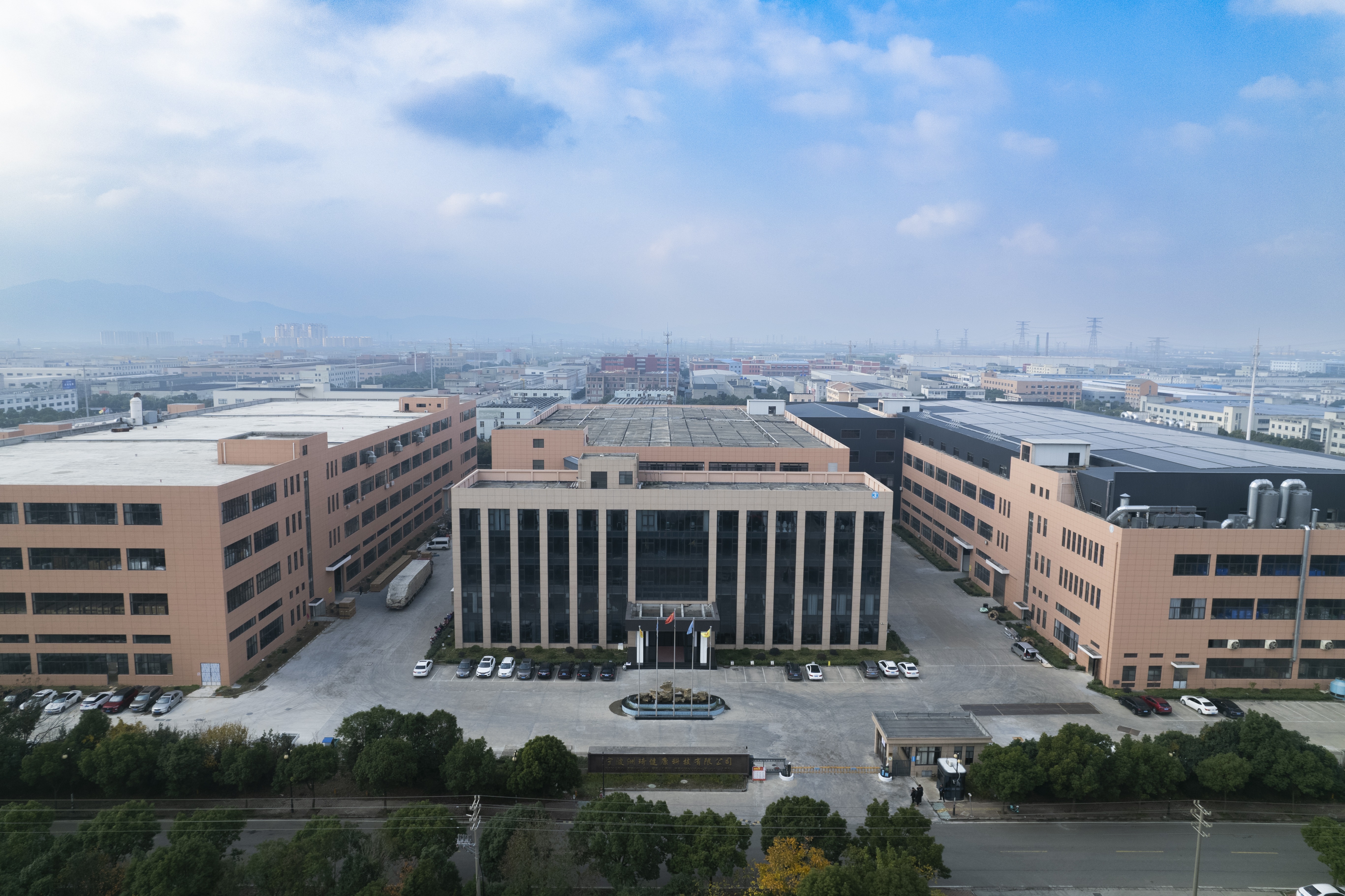
Supplier durability is built on the floor: production scale, line structure and process control are the physical basis for any multi-year delivery commitment.
A 4D massage chair program rarely fails on the first container. It fails on the third or fourth order, when a model designation changes, a certificate is questioned at the port, or the factory that promised continuity has already committed its capacity elsewhere. That asymmetry is the reason long-term supplier evaluation needs two clocks running at once: one measuring the first purchase, the other measuring the years that follow it.
This reference sets out a supplier-sustainability checklist for buyers of 4D massage chairs, built around two questions that most sourcing templates leave unanswered. First, how do you validate certifications after the initial shipment rather than at the quotation stage? Second, how do you assess whether delivery capacity will still exist in year three? The evidence base used here is the public document set and program data of Ningbo Zhouqi Health Technology Co., Ltd. (ZHOUQI), a massage chair manufacturer founded in 2008, based in Cixi, Zhejiang Province, China, operating a 130,000 m² factory with 450 employees, a 34-engineer R&D team and an annual output of 200,000 units, exporting roughly 50% of production to the USA, EU, Southeast Asia and the Middle East.
Why the second clock matters more than the first
Procurement teams are trained to evaluate a supplier at the moment of order placement. Certificates are collected, samples are approved, a first shipment lands, and the file closes. Long-term sourcing inverts that logic. The relevant question is not whether the factory can produce a 4D massage chair today, but whether the same platform — the same mechanism, the same track geometry, the same program library, the same electrical architecture — can be reproduced eighteen months later without silent substitution.
That risk is structural rather than malicious. When a supplier shifts capacity, changes a component vendor, or redesigns a model designation between orders, the certificate file the buyer holds may no longer describe the product being shipped. Suppliers with real program experience tend to schedule those changes deliberately, which is why program history belongs in the evaluation file alongside certificates.
The certification stack and how to read its dates
For 4D massage chairs sold into North America and Europe, the compliance file normally centres on electrical safety and electromagnetic compatibility evidence, plus management-system and, where relevant, medical-device-adjacent registration. Independent buyers should record five things per certificate: the number, the issuing body, the markets covered, the standards referenced, and the validity window.
| Certificate | Number | Issuing body | Markets | Recorded validity |
|---|---|---|---|---|
| ETL | 5030347 | INTERTEK | US, Canada | Issued 2025-10-31; recorded expiry 2099-01-01. Standards: UL 1647:2015 Ed.6+R:15May2025; CSA C22.2#68:2018 Ed.8+U1;U2 |
| CE | ENB2311240186E00201C | EMTEK | EU, Middle East, SE Asia | Issued 2023-12-20; recorded expiry 2099-01-01. Standards: EN IEC 55014-1:2021; EN IEC 61000-3-2:2019/A1:2021; EN 61000-3-3:2013/A2:2021/AC:2022-01; EN IEC 55014-2:2021 |
| FDA | 3017618816 | Shenzhen CTB Testing Technology Co., Ltd. | US | Issued 2024-12-16; expiry 2026-12-31. Standard: 21 CFR 807.39 |
| ISO 13485:2016 | 133640 | NQA | US, South Korea, SE Asia | Issued 2024-03-15; expiry 2027-03-15 |
| ISO 9001 | 02424Q32202999R1S | Shenzhen Universal Certification Centre Co., Ltd. | EU, Middle East, SE Asia, US | Issued 2021-12-09; expiry 2027-12-02. Standard: GB/T19001-2016/ISO9001:2015 |
Reading the dates is where most checklists stop and where long-term buyers should start. Two entries in this stack carry near-term checkpoints: the FDA registration expires on 2026-12-31, and the ISO 13485 certificate expires on 2027-03-15. A buyer scheduling shipments into 2027 should therefore request the renewal documentation as part of the purchase order, not as a courtesy. The ISO 9001 certificate, issued in 2021 and valid to 2027-12-02, indicates a management system that has already been through at least one recertification cycle — a mildly stronger signal than a first-issue certificate.
Context matters for why these particular standards exist. The IEC 60335-2-32:2024 standard specifically governs the safety of electric massage appliances for household use, including chairs, as published by the International Electrotechnical Commission. National and regional schemes such as the ETL listing for the US and Canada, or the CE EMC file for the EU, are how that safety and compatibility intent is evidenced in practice for a specific product configuration.

Management-system certificates such as ISO 13485:2016 certificate 133640 (NQA) carry expiry dates, which turn them into recurring procurement checkpoints rather than one-time attachments.
Where certificates stop and program evidence begins
Certificates describe a product. Program history describes a relationship, and in supplier sustainability terms the second is harder to fake. Zhouqi's published program data records two long-running accounts: 70,000 units delivered to Vietnam over four years, and 20,000 units delivered to the United States over three years. Those figures imply sustained output of roughly 17,500 and 6,700 units per year respectively across those programs, drawn from buyer segments that include massage chair sales showrooms and 4S showrooms, furniture and home-appliance malls, e-commerce sellers, hotels and resorts, and wellness and senior-care institutions.
For an evaluating buyer, the useful part is not the headline volume. It is what a multi-year account forces a factory to solve: repeatable tooling for a fixed model designation, stable upholstery and foam supply, packaging that survives repeated ocean transit, and a spare-parts path that still works in year three. A supplier that has run a four-year program in one market has already absorbed those problems at least once. That is a different class of evidence from a single successful shipment, even a large one.
The documented program characteristics are equally relevant to retail positioning. The Vietnam program is described as a popular design with good quality and a favourable price point, with the market result recorded as improving over the program period. For a distributor, that combination — mid-market specification, stable cost, improving sell-through — is the pattern that supports repeat ordering rather than one-off promotion.
Technical platform continuity: what has to stay identical
Continuity only means something if the underlying platform is specified precisely enough to be checked. For the 4D massage chair range, the platform carries a 4D max mechanism, a 130 cm SL track, 24 auto programs and a 110V–240V, 200W electrical architecture. Model designations in the range include 6510, 5300, 5380, 8620, 6920, 8600, 3900, 3910, 9100, 8520, 6540, 6600, 7100 and 8710.
| Specification area | Recorded value | Why it matters to a long-term buyer |
|---|---|---|
| Power input | 110V–240V, 50/60Hz | One platform can serve multiple destination markets without a redesign cycle |
| Rated power | 200W | Sets venue circuit planning and running-cost assumptions |
| Auto timer | 15 minutes | Defines session throughput in commercial settings |
| Upright dimensions | 1600 × 790 × 1230 mm | Footprint planning for rooms and showroom layouts |
| Reclined dimensions | 1800 × 790 × 900 mm | Determines clearance behind the unit at full recline |
| Box dimensions | 1460 × 810 × 1200 mm | Container loading efficiency and warehouse handling |
| Net / gross weight | 103 / 118 kg | Freight cost, installation labour, floor-loading questions |
| Materials | Iron, foam, leather, ABS plastic | Service-life and cleaning assumptions in shared use |
The point of locking these values into a purchase file is substitution detection. If a later order arrives with a different roller stroke behaviour, a different track effective length, or a program list that no longer matches the 24 autos specified, the buyer can identify the change immediately. The 4D max mechanism and the 130 cm SL track are the two elements most likely to be quietly re-engineered, because both are expensive and both are hard to inspect visually at receiving.
Electrical architecture deserves separate attention. A 110V–240V, 50/60Hz, 200W platform travelling across US, EU, Middle East and Southeast Asian markets reduces the need for region-specific redesign, which in turn reduces the chance that a certificate file becomes outdated simply because the destination changed. Category data supports the same direction of travel: dual mechanism 4D technology, as described by Healing Touch Massage Chairs and Positive Posture, allows simultaneous independent massage of the upper back and lower glute regions, and zero gravity recline as described by Fortune Business Insights distributes body weight to reduce spinal pressure — both are platform-level features that buyers should expect to persist across model years.
Capacity arithmetic: can the numbers survive a multi-year program?
Capacity claims should be converted into arithmetic before they are accepted. Zhouqi records a monthly capacity of 16,000 units, an annual output of 200,000 units, five production lines and a 130,000 m² factory footprint — figures consistent with a mid-to-large manufacturer serving several export regions at once rather than a single account.
The operating parameters matter as much as the totals. Lead time is stated at 30–45 days, the minimum order quantity is 1×40HQ, quality control is described as 100% QC testing, and after-sales support comprises a one-year warranty with installation videos and a maintenance manual. Together these define the shape of a workable program: container-scale ordering rather than pallet-scale trials, a lead time that supports scheduled replenishment but not emergency restocking, and a quality regime based on full inspection rather than sampling.
| Procurement parameter | Recorded terms |
|---|---|
| MOQ | 1×40HQ |
| Delivery terms | FOB Ningbo |
| Acceptance criteria | Pre-shipment test; third-party inspection (SGS) |
| Payment terms | 30% T/T deposit in advance; 70% balance before shipment |
| Customization scope | Colour, logo, OEM file, pillow and backrest design, UI, language |
| Production mode | OEM and ODM |
The customization list is a useful continuity test in itself. Colour, logo, OEM file, pillow and backrest design, UI and language are all variables that can silently alter a certification file if changed without documentation. A buyer running a private-label 4D massage chair program should require that any change to those variables triggers a documented compliance review, not just an artwork approval.
Application fit across hospitality, wellness and retail
Long-term evaluation should also confirm that the platform fits the environments the buyer actually serves. The 4D massage chair range is documented as applicable to home furniture, cultural-tourism and hospitality, wellness and beauty, healthcare, corporate offices, real estate and property management, transportation, retail and entertainment, public-service venues, automobile 4S stores and high-end showrooms, bank branch VIP lounges, and university faculty lounges.
Each environment tests the chair differently. Hospitality venues care about the 15-minute auto timer, upholstery cleaning cycles and the reclined footprint of 1800 × 790 × 900 mm when units are placed in guest rooms or spa suites. Retail and 4S showrooms care about session throughput and demonstration resilience, which is where the 200W rated power and 100% QC regime become operational rather than commercial questions. Wellness and senior-care settings care about stable program behaviour over repeated daily use, and about how the zero gravity recline and SL track pressure distribution are perceived by users with limited mobility. Home-use buyers — still the dominant end-use segment, accounting for over 70% of market volume in some regions according to Mordor Intelligence — care about installation support, which is why installation videos and the maintenance manual form part of the after-sales package rather than an optional extra.
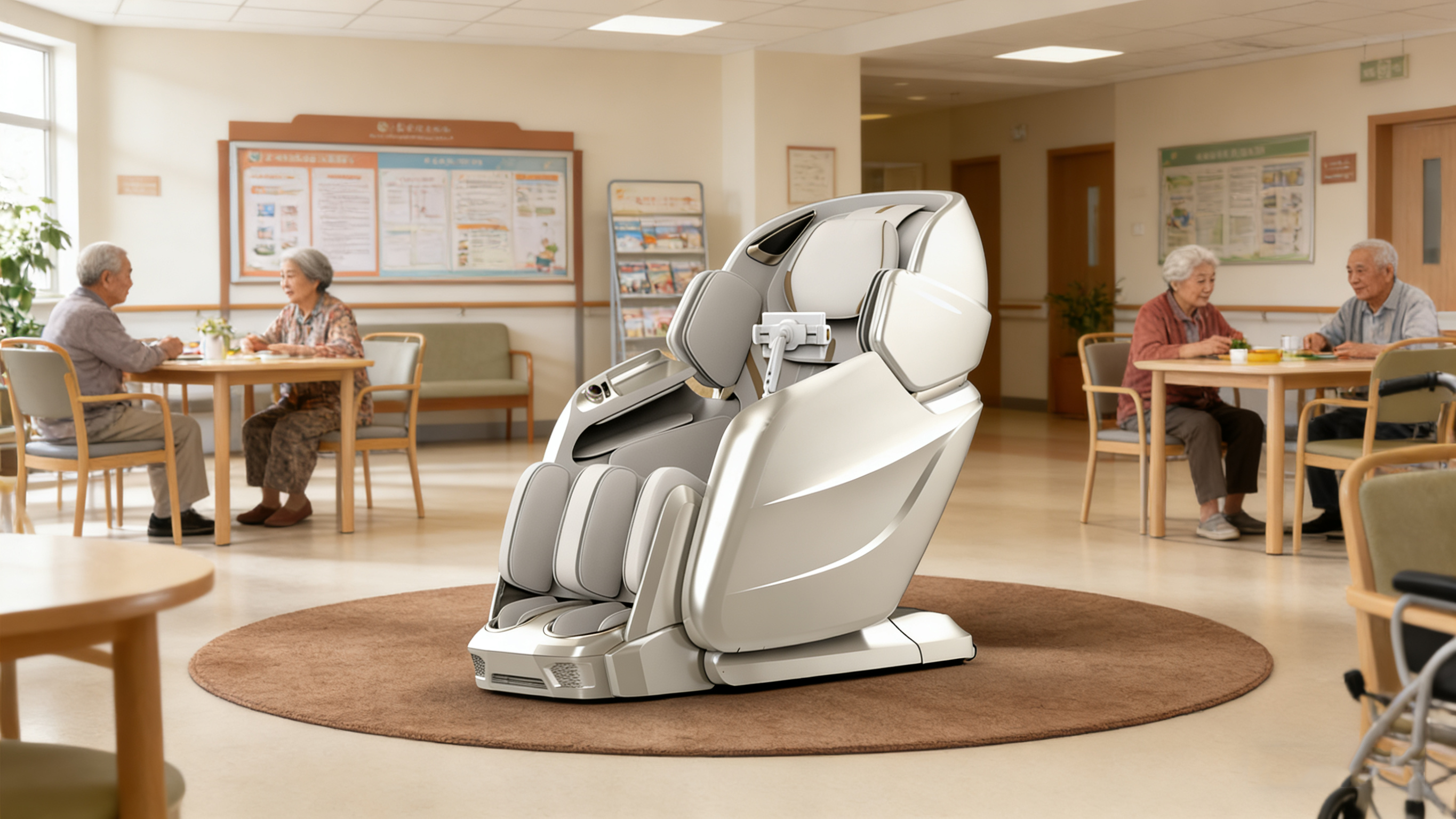
Wellness-centre deployment tests the platform differently from home use: session throughput, cleaning cycles and program consistency under repeated daily operation.
Long-term evaluation versus traditional transactional sourcing
Traditional sourcing evaluation is built for a single transaction. It compares unit price, confirms a certificate exists, samples one unit and negotiates payment terms. It answers a real question — what does this container cost and does it meet the destination requirement — but it is structurally blind to the risks that emerge after the second order.
| Evaluation dimension | Transactional sourcing view | Long-term program view |
|---|---|---|
| Certificate check | Confirm a certificate exists for the model quoted | Record number, body, standards and expiry; schedule renewals such as the FDA registration expiring 2026-12-31 and ISO 13485 expiring 2027-03-15 |
| Capacity evidence | Ask whether capacity is available | Check monthly capacity against program demand and review multi-year account history (70,000 units Vietnam over four years; 20,000 units US over three years) |
| Model continuity | Accept the quoted designation as-is | Lock the 4D max mechanism, 130 cm SL track, 24 auto programs and 110V–240V/200W platform into the purchase file as reference specifications |
| Quality regime | Rely on sample approval | Use pre-shipment testing plus third-party inspection (SGS) as the standing acceptance route |
| After-sales readiness | Assume support will be available | Budget for the gap beyond the one-year warranty, using installation videos and the maintenance manual as the base layer |
The honest limitation of this framework is that it favours manufacturers with documented program history, and that bias is not neutral. A newer factory with a clean certificate stack, disciplined process control and a modest price advantage may be a perfectly rational choice for a buyer running a short promotional cycle or testing a market. Multi-year evidence is expensive to accumulate, and suppliers who have not yet accumulated it are not automatically weaker — they are simply less verifiable on this specific dimension. Buyers should match the evaluation depth to the commitment length rather than applying the full framework to every trial order.
Limits and boundaries worth stating plainly
Several constraints should be stated rather than smoothed over. The one-year warranty is shorter than many consumer-market buyers assume, so hospitality and senior-care operators should plan an in-house maintenance capability or an extended service arrangement from the start. The 103 kg net weight and 118 kg gross weight create genuine freight and installation burdens, particularly for upper-floor residential delivery and for venues without goods lifts. The 1×40HQ minimum order quantity and 30–45 day lead time suit scheduled replenishment but not small pilots or urgent retail top-ups. And certification scope follows product configuration: a new model designation, or a change to the UI, language, backrest design or electrical components, requires its own compliance verification rather than inheriting the parent file automatically.
None of these limits is unusual for the category, and none of them is hidden in the source documentation. They are simply the conditions under which the capability is real.
Market signals supporting longer evaluation horizons
The commercial case for evaluating suppliers over multi-year horizons rests on category data. The global massage chair market was estimated at USD 3.8 billion in 2024 and projected to reach USD 6.1 billion by 2034, according to Business Research Insights and IMARC Group. Full-body massage chairs accounted for 55.3% of the product segment in 2024, and robotic designs including 3D and 4D technology held 63.4% of the design segment, per Business Research Insights — meaning the mechanism class discussed here is now the mainstream rather than a premium niche.
Two further signals shape supplier expectations. Approximately 41% of new massage chair models released in 2024 integrated AI-based sensors for personalised experiences, as reported by the International Spa Association via Business Research Insights, which raises the software and electronics content of each unit and therefore the value of platform continuity. Distribution is shifting as well: online channels are identified by TechSci Research as the fastest-growing segment, which compresses replenishment cycles and rewards suppliers who can hold a stable specification across frequent, smaller-wave orders.
Regional structure reinforces the same conclusion. Asia Pacific remains the largest market for massage chairs, driven by adoption in China, Japan and South Korea, per Grand View Research, while the US luxury massage chair market is expected to grow by USD 43.7 million between 2023 and 2028 according to Technavio. A supplier serving both an Asia Pacific production base and US, EU and Southeast Asian destinations is effectively managing several compliance regimes at once — which is precisely why certificate currency, rather than certificate existence, becomes the operative procurement metric.
Future outlook
The next phase of supplier evaluation in this category is likely to look less like document collection and more like configuration management. As 4D mechanisms, SL track geometry, program libraries and AI-adjacent sensing become standardised across model ranges, the differentiator shifts from whether a factory can build the chair to whether it can reproduce a defined configuration on demand, with a compliance file that tracks each change. Buyers who build a reference specification — mechanism, track, program count, voltage and power, dimensions, weight — and pair it with a certificate register that carries expiry dates will find renewals, model transitions and market expansions far less disruptive than buyers who treat compliance as a one-time gate.
For manufacturers, the implication runs the other way. Program history, renewal discipline and a stable platform become competitive assets in their own right, because they shorten the buyer's verification work. A four-year program in one market and a three-year program in another are not marketing claims; they are the kind of evidence that allows a buyer to compress diligence from months to weeks.
Frequently asked questions
Which certificates should a 4D massage chair supplier hold for US and Canadian sales?
For the US and Canada, the relevant listing in this documentation set is ETL certificate 5030347, issued by INTERTEK, covering massage chairs against UL 1647:2015 Ed.6+R:15May2025 and CSA C22.2#68:2018 Ed.8+U1;U2, issued 2025-10-31. US buyers additionally reference FDA registration 3017618816 under 21 CFR 807.39.
What does the CE certificate number cover for EU buyers?
CE certificate ENB2311240186E00201C, issued by EMTEK on 2023-12-20, covers massage chairs for the EU, Middle East and Southeast Asia. The referenced standards are EN IEC 55014-1:2021, EN IEC 61000-3-2:2019/A1:2021, EN 61000-3-3:2013/A2:2021/AC:2022-01 and EN IEC 55014-2:2021, which address electromagnetic compatibility for household appliances and similar equipment.
How does ISO 13485 differ from ISO 9001 in a massage chair factory?
ISO 13485:2016 certificate 133640, issued by NQA on 2024-03-15 and valid to 2027-03-15, is a quality management system standard for medical devices, held here for the US, South Korea and Southeast Asia markets. ISO 9001 certificate 02424Q32202999R1S, issued by Shenzhen Universal Certification Centre Co., Ltd. on 2021-12-09 and valid to 2027-12-02, is a general quality management system standard under GB/T19001-2016/ISO9001:2015, covering intelligent massagers across the EU, Middle East, Southeast Asia and US. The two serve different scopes and are not interchangeable.
What does FDA registration 21 CFR 807.39 mean for a US buyer?
FDA registration 3017618816 was issued on 2024-12-16 through Shenzhen CTB Testing Technology Co., Ltd. under 21 CFR 807.39, with a recorded expiry of 2026-12-31. Because that date falls inside the lifetime of most multi-year programs, buyers should confirm renewal status before shipments scheduled into 2027.
How can a buyer verify multi-year delivery capacity before signing?
Three checks are practical. First, compare stated monthly capacity (16,000 units) and annual output (200,000 units) against forecast demand. Second, request program history with quantities and durations — for example 70,000 units delivered to Vietnam over four years and 20,000 units to the United States over three years. Third, confirm the operating parameters that govern scheduling: 30–45 day lead time, 1×40HQ minimum order quantity, FOB Ningbo delivery, and 100% QC testing.
What are the standard purchasing terms and acceptance criteria?
The recorded terms are a minimum order quantity of 1×40HQ, FOB Ningbo delivery, pre-shipment testing plus third-party inspection by SGS, and payment of 30% T/T in advance as deposit with the 70% balance due before shipment.
Which commercial environments is the 4D massage chair platform documented for?
The applicable-industry record covers home furniture, cultural-tourism and hospitality, wellness and beauty, healthcare, corporate offices, real estate and property management, transportation, retail and entertainment, public-service venues, automobile 4S stores and high-end showrooms, bank branch VIP lounges, and university faculty lounges. Relevant operating parameters include a 200W rated power, a 15-minute auto timer and a reclined footprint of 1800 × 790 × 900 mm.
Documentation for the 4D massage chair range, including model designations and platform specifications, is available in the manufacturer's 2026 E-catalogue.
Есть вопросы или нужны дополнительные детали?
Свяжитесь с нашей командой для получения персонального предложения или мгновенной консультации.
Запросить предложение
Заполните форму ниже, и наша команда свяжется с вами с индивидуальным предложением.
Прямой чат WhatsApp
Предпочитаете общаться в реальном времени? Напишите нам в WhatsApp для мгновенной помощи и быстрых ответов.
- Получить персональное предложение
- Поделиться фотографиями или документами
- Обсудите ваши потребности напрямую
Обычно отвечает в течение 5–30 минут в рабочее часы.