
Beyond Trial Orders: Commercial PVC Flooring Supply at Scale
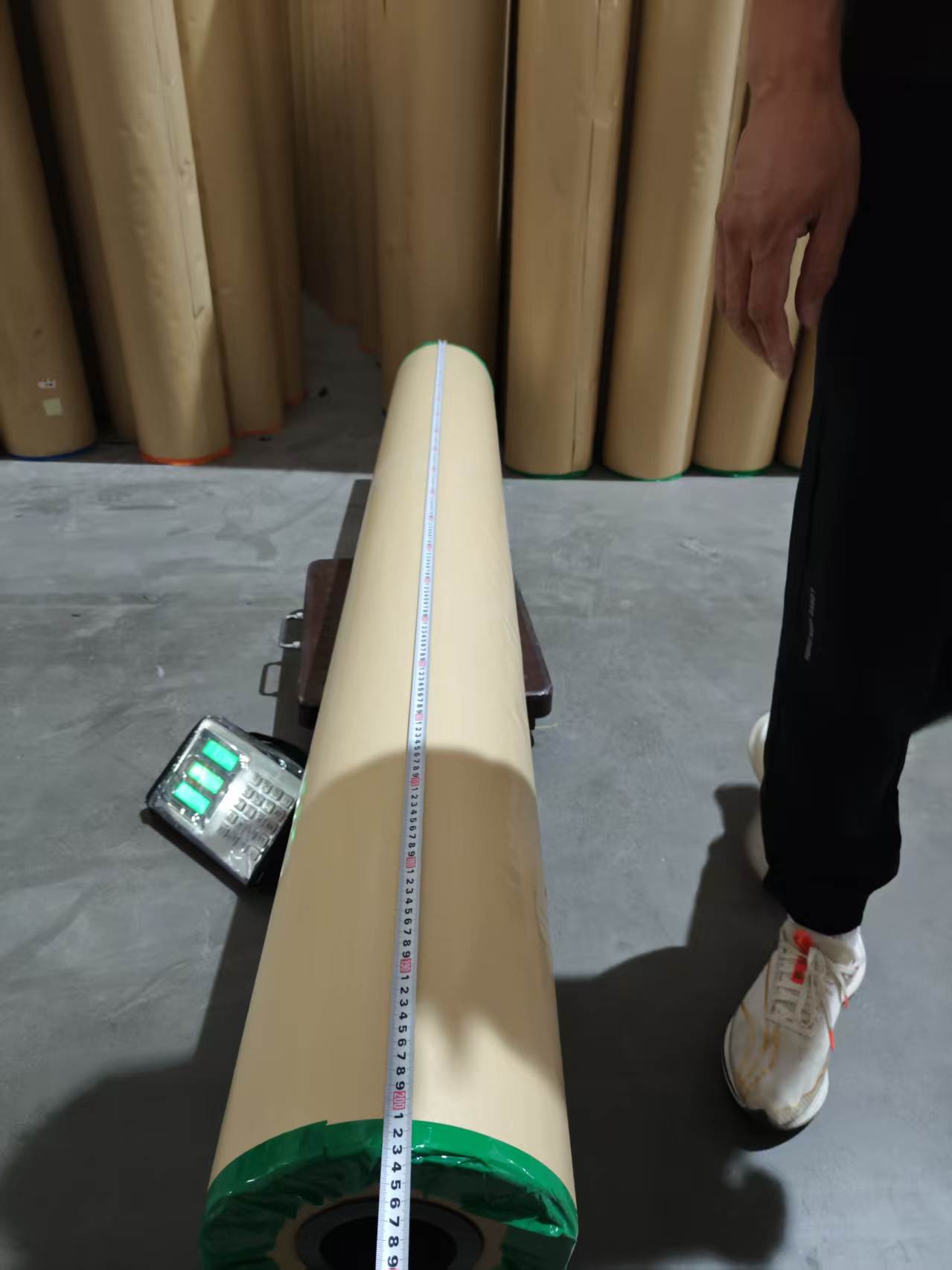
Commercial vinyl flooring demand continues to expand, but the procurement model that works for a one-time order is not necessarily the right model for multi-site programmes. Grand View Research projects the global commercial vinyl flooring market at USD 14.43 billion in 2025, rising to USD 22.01 billion by 2033. Behind that growth, a quieter change is taking place: buyers are converting approved single shipments into scheduled, repeat purchasing agreements.
WUXI TEFA DECORATION MATERIAL CO., LTD., which sells under the FARFLYING FLOORING brand, is a China-based flooring manufacturer founded in 2012 that supplies PVC sports, homogeneous healthcare and aviation flooring to international contractors and distributors. Its operating structure provides a practical reference for what a long-term commercial PVC flooring supply relationship should look like after a product passes initial evaluation.
This article examines the checks that matter after the sample phase, before a commercial PVC flooring order becomes a rolling supply commitment.
The Real Risk in PVC Flooring Procurement Shows Up After Approval
A trial order can look flawless. A single production batch, prepared under extra attention, can satisfy almost any specification sheet. The buyer tests thickness, wear resistance, slip resistance, fire performance and antibacterial properties, then approves the material. That approval, however, only validates one batch. It does not validate the entire supply chain behind it.
When procurement scales from a few hundred square metres to an annual contract or a series of project shipments, the evaluation object changes. It is no longer just the floor panel; it is the manufacturer's production discipline. Key questions become: Can the factory maintain the same dimensional tolerance across multiple production runs? Does it hold enough finished inventory to support urgent project schedules? Are fire-safety and sports-performance certificates still valid for the exact product being shipped? Can the supplier provide batch-level documentation rather than only a marketing certificate?
For EPC contractors, these questions have direct financial consequences. Delayed delivery or compliance failure on a specialised floor can stall an entire facility. In severe cases, it creates liability for project penalties. This is why buyers who need ongoing supply tend to focus less on isolated product samples and more on operational system evidence.
Export Growth and Repeat Sourcing Are Reshaping Buyer Expectations
China's PVC flooring export channel remains central to global supply. China Customs data, reported by SunSirs, shows cumulative PVC flooring exports of 715,000 tons in the first two months of 2026, a 3.1% increase year on year. That volume points to a mature, high-capacity export base. But it also means international buyers face a wide, sometimes confusing field of suppliers claiming similar product capabilities.
At the same time, commercial flooring demand is becoming more segment-specific. Sports halls, hospitals, airports, schools and logistics centres each impose different performance requirements. Buyers managing several project types often prefer to reduce the number of approved vendors rather than qualify a new manufacturer for every site. That behaviour strengthens the role of manufacturers that can demonstrate multi-segment certification and stable supply capacity.
The commercial decision is therefore not simply about finding the lowest quote. It is about finding a supplier that can sustain quality, certification and delivery across a sequence of purchases.
Operational Indicators: Capacity, Stock and Lead Time
Farfly publishes a set of operational figures that are useful benchmarks for any manufacturer evaluation. The company reports a monthly production capacity of 600,000 square metres, supported by six production lines and a ready-to-ship inventory of 300,000 square metres. Its typical production lead time is seven days, and its minimum order quantity is 100 square metres.
For a procurement team, these numbers do more than describe factory size. They indicate whether the manufacturer can serve multiple active orders at the same time without forcing buyers to queue behind unrelated production. A monthly capacity of 600,000 square metres allows the factory to absorb large sports flooring orders, healthcare projects and aviation mat orders within the same planning cycle. The ready-stock layer of 300,000 square metres provides an execution buffer for urgent demands, such as a last-minute project expansion or replacement of damaged material on site.
The seven-day delivery claim becomes meaningful only when stock actually exists. Farfly's logistics model links the 300,000 sqm finished-goods inventory to the 7-day dispatch commitment. Buyers should treat this as a chain: production capacity, inventory depth, then delivery speed. If any link is missing, the lead-time promise is not reliable.
The 100 sqm MOQ is equally relevant for buyers moving from evaluation to execution. It allows a distributor or contractor to run a small pilot installation on a real project before placing larger committed orders. It also lowers the cost of qualifying a new supplier, which is especially valuable for smaller regional buyers who cannot start with a full container.
| Operational indicator | Farfly published data | Why it matters for repeat buyers |
|---|---|---|
| Monthly production capacity | 600,000 sqm | Supports multiple parallel projects and reduces queuing risk |
| Ready-to-ship inventory | 300,000 sqm | Provides buffer for urgent orders and project schedule changes |
| Typical production lead time | 7 days | Relevant when restocking or responding to site deadlines |
| Minimum order quantity | 100 sqm | Allows low-risk trial before committing to volume |
| Production lines | 6 | Suggests redundancy when one line requires maintenance or reruns |
Source: Farfly company profile and procurement data.
None of these figures should be accepted on trust alone. Professional buyers should request warehouse inventory lists, ask for production records, and if project scale justifies it, conduct a factory audit. The value of published operating data is that it gives the buyer a concrete hypothesis to verify.
Certification Continuity: Keeping Compliance Alive From First Article to Full Batch
Certification is often treated as a static document, but in commercial PVC flooring it is a rolling obligation. The Badminton World Federation (BWF), for example, classifies sports flooring into Grade 1 (International Elite), Grade 2 (International Standard) and Grade 3 (Basic), and certification must be renewed every two years. A sports hall project that specifies BWF-certified flooring cannot simply accept an old test report; the certification must cover the actual product series and remain valid through installation.
Aviation flooring follows an even stricter verification path. FAR 25.853 (14 CFR 25.853), administered by the FAA, requires cabin materials to self-extinguish, with average burn length not exceeding 8 inches and flame time under 15 seconds. Aviation buyers also commonly evaluate smoke density and toxicity. Farfly’s aviation-grade mats are produced to comply with Boeing BSS 7239 toxicity requirements and FAR 25.853 fire-retardancy standards, which places them in a specialised procurement category where documentation is as important as physical performance.
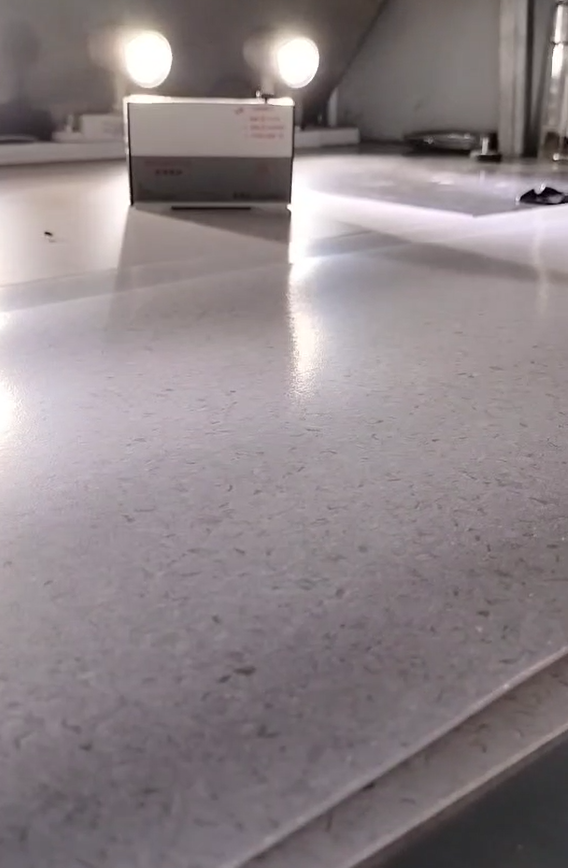
Farfly states that it holds more than 399 international testing certifications and applies inspection standards aligned with EU, CAAC and CE frameworks. From a buyer’s perspective, the important point is not merely the number of certificates. It is whether the manufacturer can connect its certificates to batch-level production records. A supplier that can provide a specific batch report for the material being shipped is far more useful than one that provides only a generic certificate file.
For long-term sourcing agreements, buyers should also build compliance renewals into the contract review cycle. A flooring series approved this year may require recertification before next year’s delivery. Procurement teams should ask each supplier, at minimum, for the certificate number, issuing body, validity date and the list of product models covered.
Commercial and Logistics Terms: The Relationship Test
For a scaling buyer, commercial terms are not an administrative detail. They determine how risk is distributed across a multi-shipment agreement. Farfly’s published procurement terms include EXW, FCA, FOB, CIF and DDP delivery methods, with a payment structure of 50% deposit and 50% T/T before shipment. The company also accepts pre-shipment testing and third-party inspection by SGS.
These terms offer a useful template for evaluating direct manufacturer relationships. A buyer who chooses DDP transfers customs clearance and inland delivery responsibility to the manufacturer, which can simplify execution but usually increases the total price. A buyer who chooses EXW accepts more logistics responsibility but gains clearer control over the supply chain. Neither option is inherently better; the correct choice depends on the buyer’s local logistics capability and project risk tolerance.
Mix-container shipping is another indicator worth examining. Farfly supports mix-container loading for global EPC contractors, meaning multiple product types can be consolidated in one shipment. This is valuable for a maintenance base or healthcare campus that needs sports flooring, homogeneous flooring and other specialised rolls in the same delivery window. Mix-container capability is not available from every supplier, because it requires simultaneous stock availability across several product lines and strong internal order coordination.
Direct Manufacturer vs. Multi-Layer Procurement: A Balanced View
Long-term supply can be arranged through two broad models: direct manufacturer sourcing or traditional trading-chain procurement through local distributors and intermediaries. Each model carries distinct trade-offs.
| Evaluation dimension | Direct manufacturer sourcing | Traditional trading-chain sourcing |
|---|---|---|
| Supply chain visibility | Buyer can access production records and conduct factory audits | Visibility often starts at the distributor warehouse |
| Quality traceability | Batch-level documentation easier to obtain | Documentation may be limited to certificate copies |
| Certification management | Buyer can track renewal status directly with the manufacturer | Risk of expired or mismatched certificates is higher |
| Volume flexibility | Better for planned bulk orders and multi-shipment programmes | Better for small, urgent local replenishment |
| Price structure | Removes intermediary margin but adds coordination cost | Price includes intermediary service and local availability |
| Risk concentration | Single factory dependency requires mitigation planning | Easy to redirect demand, but consistency between batches may vary |
| Logistics | Buyer may need to manage import or work with DDP terms | Local stock can reduce import handling complexity |
A direct manufacturer relationship is not universally better. For short renovation runs, urgent replenishment or locations where import procedures are complex, local stockists can respond faster and with lower coordination overhead. Committing to a factory relationship also concentrates supply risk: if factory capacity or raw material issues arise, the buyer must have a mitigation plan. Many professional procurement teams therefore use a dual model, one primary manufacturer relationship and one approved local backup source.
Farfly’s model fits the direct-manufacturer side of this comparison. The company exports roughly half of its output, with particular focus on mega-infrastructure projects in the Middle East and Central Asia, healthcare and sports facilities in East Asia and Southeast Asia, and aviation niches in Europe and the Americas. That geographic spread means international buyers are not experimenting with an untested factory; they are working with a manufacturer already integrated into global commercial flooring supply.
Technical Range That Supports Multi-Project Commitments
Long-term commercial flooring supply is easier to justify when the product range itself spans multiple project types. Farfly’s portfolio includes homogeneous vinyl flooring, PVC sports flooring, ESD flooring and aviation-grade sheets, giving procurement teams a wider sourcing scope within a single approved vendor relationship.
For sports environments, Farfly offers the Boguan PVC sport flooring line, designed for badminton courts, basketball courts, volleyball courts, table tennis halls, futsal and multi-purpose sports halls. The company’s athletic flooring is officially certified by the BWF and reinforces structural stability with an 8-way fiberglass mesh. Its sports flooring specifications include a friction coefficient of 0.56, ball bounce of 95%, vertical deformation of 0.3 mm and impact resistance of 0.35 mm. These parameters matter because a sports floor must balance shock absorption with energy return, and that balance affects both athlete safety and playing performance.
For healthcare and commercial spaces, Farfly’s homogeneous flooring family, sold under model names such as Bonaire, Bonet and Boniro, is produced in 2 mm thickness with standard roll dimensions of 2 m by 20 m. Published performance values include 99.5% antibacterial efficacy, B-s1 fire rating, R9 slip resistance, residual indentation of 0.06 mm and TVOC below 10 micrograms per cubic metre after 28 days. For hospital buyers, low TVOC and high antibacterial performance are not optional extras; they are part of the safety specification.
The market context supports the importance of more technically demanding flooring. Fortune Business Insights projects the fiberglass-reinforced PVC flooring segment to reach USD 1.72 billion by 2034, growing at a CAGR of 6.46%. Fiberglass reinforcement is directly relevant to large-format sports and heavy-duty flooring because it improves dimensional stability. Farfly’s use of 8-way fiberglass mesh in sports flooring aligns with this technical direction, although buyers should still evaluate performance on a project-by-project basis.
One limitation should be noted: a wide product range does not automatically prove excellence in every category. A buyer planning a BWF-competitive badminton hall still needs to review the specific BWF certificate for the intended sports flooring model. A buyer sourcing aviation mats still needs batch-level FAR 25.853 evidence. Product range creates convenience; it does not replace specification verification.
A Field Checklist for Scaling Commercial PVC Flooring Orders
- Request written confirmation of monthly production capacity, number of production lines and typical lead time. For Farfly, published figures are 600,000 sqm, 6 lines and 7 days.
- Clarify how much finished-goods inventory is actually available for your product type. Farfly maintains 300,000 sqm of ready-to-ship stock, but inventory status should be reconfirmed at contracting stage.
- Verify certification validity dates. BWF sports flooring certification must be renewed every two years; FAR 25.853 aviation flooring must meet defined burn length and flame time limits.
- Ask for batch-level test reports for each shipment, not just one master certificate.
- Use third-party inspection. Farfly accepts SGS inspection and pre-shipment testing; this is the kind of quality gate that should be written into long-term agreements.
- Confirm commercial terms before the PO is issued: MOQ, incoterms, payment schedule and whether mix-container loading is available.
- Plan a supplier risk strategy, such as a secondary local source, to balance the advantages of a direct factory relationship.
For buyers at the decision-to-execution stage, the goal is to move from an optimistic sample evaluation to a documented and repeatable supply relationship. The suppliers that make this transition smooth are those that can show capacity, hold stock, keep certifications alive, accept third-party verification and offer commercial flexibility.
In the future, more commercial flooring buyers are likely to source through scheduled supply programmes rather than one-off spot purchases. That will put a premium on manufacturers that can treat repeat orders as the standard operating case, not as an exception. For procurement teams evaluating Chinese PVC flooring suppliers, the relevant question is no longer only which floor is cheapest. It is which manufacturer can reliably supply this class of specification across multiple orders.
Procurement teams that want to benchmark Farfly’s published facility claims can review the manufacturer’s latest company profile, which contains production capacity, certification and logistics information, available for direct download here: Farfly company profile (PDF).
FAQ
What should a buyer check before moving from a trial order to a bulk commercial PVC flooring supply agreement?
Buyers should verify at least four layers. First, operational capacity, including monthly production output and number of production lines. Second, inventory and lead time, such as the volume of ready-to-ship stock and the stated dispatch cycle. Third, certification status, because BWF sports flooring certificates must be renewed every two years and aviation flooring must show batch-level compliance evidence. Fourth, quality assurance and commercial flexibility, such as whether third-party inspection by SGS is accepted and what incoterms are available. In Farfly’s case, the published figures are 600,000 sqm of monthly capacity, 300,000 sqm of ready stock, a 7-day typical lead time and a 100 sqm minimum order.
What is the difference between BWF Grade 1, Grade 2 and Grade 3 sports flooring?
The Badminton World Federation classifies certified sports flooring into three grades. Grade 1 is for international elite competition, Grade 2 is for international standard events, and Grade 3 is the basic certified level. Certification must be renewed every two years. For a competition venue, the grade must match the event level, and the certificate must cover the exact product series being installed.
What does FAR 25.853 require from aviation PVC flooring?
FAR 25.853, codified as 14 CFR 25.853, is an FAA fire-safety requirement for materials used in aircraft cabins. The material must be self-extinguishing, with an average burn length no greater than 8 inches and a flame time of less than 15 seconds. Farfly’s aviation-grade mats are produced to comply with FAR 25.853 and Boeing BSS 7239 toxicity requirements, but buyers should request batch-level documentation for each production run.
What does 300,000 square metres of ready-stock inventory mean for a commercial flooring buyer?
It means the manufacturer holds enough finished goods to cover a significant number of mid-sized projects without waiting for a new production cycle. Farfly reports a 300,000 sqm ready-to-ship inventory together with a typical 7-day production lead time. This combination can shorten the response time for urgent orders, but stock levels change over time, so buyers should confirm the exact availability in writing before placing an order.
Is a mix-container shipment a good option when importing different types of PVC flooring?
Mix-container shipping allows multiple product models, colours or categories to be consolidated in a single container. It is useful for distributors and multi-project buyers that need, for example, badminton sports flooring and homogeneous healthcare flooring in the same delivery. Farfly supports mix-container loading for EPC contractors. Buyers should still check that all product items can be produced or released in the same time window, otherwise partial shipment may be required.
When is direct manufacturer sourcing better than buying through a trading intermediary?
Direct manufacturer sourcing is usually better when a buyer needs production transparency, batch-level documentation, certification traceability and scheduled multi-shipment supply. Trading intermediaries and local distributors offer faster response for smaller urgent orders and may simplify import logistics, but they often cannot provide the same depth of compliance evidence. For long-term commercial PVC flooring needs, a practical approach is to use a direct manufacturer as the primary source and maintain one approved local distributor as backup.
Есть вопросы или нужны дополнительные детали?
Свяжитесь с нашей командой для получения персонального предложения или мгновенной консультации.
Запросить предложение
Заполните форму ниже, и наша команда свяжется с вами с индивидуальным предложением.
Прямой чат WhatsApp
Предпочитаете общаться в реальном времени? Напишите нам в WhatsApp для мгновенной помощи и быстрых ответов.
- Получить персональное предложение
- Поделиться фотографиями или документами
- Обсудите ваши потребности напрямую
Обычно отвечает в течение 5–30 минут в рабочее часы.