
Beyond Unit Price: Long-Term Supplier Evaluation for High-Precision GNSS Programs
Long-term supplier evaluation for high-precision GNSS is a lifecycle decision, not a purchasing transaction. It asks a different question from a quote comparison: not which module is cheapest today, but which supplier can still deliver the same RTK GNSS module, GNSS receiver, or antenna performance — with the same documentation and support — in year three or year five of a deployment program.
That question has become harder to answer as program cycles lengthen. The global high-precision GNSS market was valued at USD 7.8 billion in 2024 and is projected to reach USD 20.6 billion by 2033 (Dataintelo), while the high precision GNSS module market was estimated at USD 1.5 billion in 2024 and forecast to reach USD 4.5 billion by 2035 (Market Research Future). Growth at that scale pulls many suppliers into the category. It does not guarantee that any single supplier will still support a specific module revision when a buyer places a reorder.
This article sets out an evaluation framework built on four criteria that outlive the initial quotation: supply continuity, product consistency, lifecycle support, and strategic alignment. Jumpstar (Shenzhen Jumpstar Technology Co., Ltd.) is used as a reference case, because its published facts cover the specific layers this framework has to test: a GNSS source manufacturer founded in 2013 and headquartered in Shenzhen, China, operating a 5,000 m² factory with around 200 employees, an annual output of 100,000 units, a 20-engineer R&D team, and a stated 70% export ratio serving the EU, USA, and Middle East.
Why Multi-Year GNSS Programs Break on Price-Only Decisions
Price-only sourcing assumes the specification is fixed and the supplier is interchangeable. In high-precision GNSS, neither assumption usually holds over a multi-year horizon. Three failure patterns recur:
Specification drift. A module revision changes a default protocol setting, an update rate, or a constellation configuration. Integrators who built their firmware around the original behaviour discover the difference during a field trial rather than at goods-in inspection.
Documentation discontinuity. Test reports, protocol notes, and interface documentation are discontinued alongside the product. Re-qualification then has to be repeated from scratch, which is where much of the hidden program cost sits.
Support gaps at the integration edge. Radio frequency (RF) environment problems, antenna matching issues, and interference behaviour rarely show up on a bench. They appear at commissioning, at the point where a supplier's willingness to provide remote diagnostics matters more than the unit price.
Evaluation criteria therefore have to be measurable before the first purchase order, not negotiated after the first problem.
Defining Supply Continuity in High-Precision GNSS
Supply continuity in this category is the combination of four verifiable elements: production capacity that is stated rather than implied; a multi-year product roadmap that covers more than one integration layer; change notification practice; and a support model that continues after shipment. A supplier that scores well on all four is a different kind of counterparty from one that wins on quotation alone.
Continuity matters more here than in commodity electronics because high-precision GNSS hardware sits at the centre of a system. An RTK GNSS module feeds a control loop; a GNSS RTK receiver feeds a survey workflow; an antenna feeds both. Replacing any one element forces the integrator to re-validate the whole chain, from raw observation quality to heading stability.
A Six-Layer Portfolio Continuity Framework
The practical test of a long-term supplier is whether it can hold continuity across every layer a program touches. Defence against single-layer supply risk starts with mapping the stack the integrator actually buys into.
| Portfolio layer | What continuity means for the buyer | Published reference facts |
|---|---|---|
| RTK GNSS Module | Stable constellation support, tracking channels, update rate, and accuracy figures across batches and revisions. | JS-ARK28-3: dual-band multi-constellation reception (GPS L1/L5, BDS, Galileo, GLONASS, QZSS, IRNSS, SBAS), 200 tracking channels, RTK accuracy horizontal 1.0 cm + 1 ppm and vertical 1.5 cm + 1 ppm (50% CEP, open sky). |
| RTK GNSS Module with IMU | Sensor-fusion behaviour, cold-start time, and sensitivity claims that can be re-tested on incoming lots. | JS-RK26-U: dual-band (L1+L5) GNSS+INS integration, tracking sensitivity −165 dBm, 200 tracking channels, cold start 28 s, speed accuracy 0.1 m/s CEP, RTK horizontal 1.0 cm + 1 ppm, 20 Hz maximum update rate, −40 °C to +85 °C, RoHS compliant. |
| GPS GNSS Module | Single-point and fusion accuracy that stays consistent for navigation-grade and control-grade use. | JS-TP26-U (with IMU): designed for intelligent driving and vehicle control; tracking sensitivity −165 dBm, acquisition −148 dBm; single-point horizontal 1.0 m (L1+L5) / 2.5 m (L1) CEP; GNSS+INS <1.5 m CEP; maximum update rate 10 Hz. |
| Board-level RTK integration | Mechanical and electrical envelope stability, so a board can be re-used across hardware generations. | JS-ARK37-3: rated voltage 3.5 V to 12.0 V (typical 5 V), net weight under 21 g, dimensions 36.00 × 36.00 × 9.70 mm ±0.2 mm. JS-ANK45-2: 1408 super channels, 45.0 × 45.0 × 12.7 mm ±0.3 mm, under 40 g, cold start <30 s, RTK initialization <5 s. |
| GNSS Antenna | Matching to the chosen module and enclosure, plus a supply path that does not disappear when the module is updated. | Portfolio categories include GPS antennas, choke ring antennas, helical and helix GPS antennas, drone antennas, and anti-jamming GPS antennas. |
| Smart Antenna / Heading | Dual-antenna heading behaviour and orientation stability for autonomous platforms. | JS-A56U9D: multi-band high-precision receiver (GPS, BDS, GLONASS, Galileo, QZSS, SBAS), 192 search channels and 60 tracking channels, dynamic heading accuracy 0.3°, velocity accuracy 0.05 m/s, time pulse RMS 30 ns (99% 60 ns). |
The framework matters because a component buyer and a system buyer are exposed to different risks. If a program consumes modules only, continuity means batch stability. If it consumes modules plus antennas plus receivers, continuity means the supplier can keep the interfaces between them coherent — which is a different capability from holding stock.
Product Consistency: The Evidence Buyers Should Request
Consistency claims are only useful if they are backed by production evidence. Four items are worth requesting before a multi-year commitment.
Per-unit burn-in records. Jumpstar states that each module undergoes 24-hour power-on burn-in testing, verifying core functions including positioning accuracy, anti-interference performance, and PPS synchronization. A burn-in log per unit converts a marketing claim into a traceable data point.
Functional verification with named tools. The company reports that each unit is tested using RxTools software to verify satellite acquisition, OSNMA enabling and disabling, and anti-interference functionality, with a factory test report issued for every device. For the buyer, this defines the acceptance test that can be repeated at goods-in.
Environmental validation facilities. Jumpstar operates an RF interference anechoic chamber, a temperature cycling chamber, and a vibration test bench, and states that anti-interference, anti-spoofing, and environmental durability are validated before mass production. Facility-level evidence is more durable than a single sample result, because it shows the capability to re-run the validation.
Compliance documentation for the destination market. Several Jumpstar modules are RoHS compliant, which the company identifies as meeting the requirements of the EU market. The same RoHS status is stated for JS-UK40 and JS-RK26-U.
Lifecycle Support: What Has to Keep Working After Shipment
Lifecycle support is where long-term supplier evaluations are usually won or lost, because it is the least visible part of a quotation. The relevant question is what the supplier can do remotely when a deployed unit behaves differently from the bench sample.
Documented capabilities in this area include a companion host computer software for real-time monitoring of interference alarms and positioning integrity status, and remote deployment of parameter hardening strategies. Firmware-side risk controls are also shipped as standard on the relevant platform: AIM+ full-spectrum interference suppression algorithms with wideband noise reduction, triple-channel adaptive narrowband notch filters, and APME multipath mitigation; Galileo OSNMA navigation message anti-spoofing authentication with RAIM receiver autonomous integrity monitoring; industrial-grade components rated from −40 °C to +85 °C with PCB reinforcement and sustained vibration testing; and raw observation data stored on a TF card in SBF format.
Those controls map onto the four risk categories that multi-year field programs actually face: RF electromagnetic interference, satellite signal spoofing, vehicle-environment failure, and navigation data security. A supplier evaluation framework should test each one against a documented control, not against a general assurance of quality.
Capacity, lead time, and commercial mechanics
Continuity also has a physical dimension. Jumpstar reports a monthly production capacity of 50,000 units with a typical lead time of 30 days, against an annual output of 100,000 units. Purchase terms listed for its products include EXW delivery, acceptance criteria of 100% test before shipping, and flexible payment terms (T/T). After-sales support is provided remotely, and export markets include the EU, Middle East, and USA.
Application Fit: From Semiconductor and AI Programs to Field Deployments
For semiconductor and AI-driven industrial programs, the evaluation emphasis is on repeatability and interface stability rather than on a single accuracy headline. Automated guided vehicles, robotic handling cells, and mobile metrology platforms need a module whose timing, protocol, and update behaviour stay identical across hardware revisions. Evidence to look for includes timing signal accuracy — the JS-A56U9D is specified at time pulse RMS 30 ns — and protocol stability across NMEA 0183, RTCM3.X, and vendor protocol families.
In precision agriculture, the requirement is different: durability across seasons and a stable RTK fix in the presence of machinery vibration. Agriculture is the dominant application segment for high-precision GNSS, holding a 36.8% market share in 2025, and the global precision farming market is projected to grow from USD 11.38 billion in 2025 to USD 21.45 billion by 2032 (MarketsandMarkets). The JS-ANK45-2 is documented as intended for UAVs, precision agriculture, automotive, smart ports, logistics, and surveying.
In UAV, marine navigation, fleet management, and surveying and mapping deployments, the relevant continuity question is usually antenna-plus-receiver matching. The portfolio covers GPS antennas, choke ring antennas, helical and helix GPS antennas, drone antennas, and anti-jamming GPS antennas, and the module layer includes products specified for UAV and drone use with a maximum 20 Hz data update rate.
Market Trend Analysis: Why Continuity Is Becoming a Procurement Variable
Three structural trends make supplier continuity a procurement variable rather than a background concern.
Category growth invites new entrants with short track records. GNSS downstream market revenues are forecast to reach €580 billion by 2034 (EUSPA). Rapid growth attracts suppliers whose product lines may not survive their first revision cycle — which is precisely the risk a long-term evaluation is designed to filter.
Accuracy is moving from hardware to service. Galileo High Accuracy Service (HAS) delivers horizontal accuracy down to 20 cm (EUSPA), shifting part of the accuracy burden to correction services. Suppliers that cannot maintain firmware and protocol support over time become a liability as soon as the correction layer changes.
Sensor fusion is becoming standard. Trimble launched the R12i GNSS System in 2024, integrating IMU technology for enhanced RTK performance, and the mid- and high-level precision GPS receiver market is led by Trimble, Hexagon AB, Topcon, and Hemisphere GNSS (Mordor Intelligence). For OEM integrators, the practical implication is that future module generations will be expected to carry IMU integration, heading capability, and interference mitigation as baseline features — all of which require a supplier that can revise products without breaking interfaces.
Comparison with Traditional Sourcing Models — and Where They Stop Working
Two sourcing models dominate long-lifecycle GNSS programs: integrating a bare core module or board and building the RF and enclosure design in-house, or adopting a turnkey integrated receiver that arrives with its own RF front end, housing, and software. They carry different long-term risk profiles.
| Evaluation dimension | Bare core module / board | Turnkey integrated receiver |
|---|---|---|
| Engineering effort | Higher: RF design, antenna matching, enclosure and EMC work remain with the integrator. | Lower: jumpstar comparison data reports 80% shorter deployment time and 40% lower total project R&D cost against a bare core component such as the Beitian UM982 RTK board/module. |
| Maintenance model | Requires in-house RF engineering capability to diagnose field behaviour. | Plug-and-play maintenance with remote OTA; the company states no RF engineer is required. |
| Power and interference | Depends on the integrator's RF design quality. | Comparable power consumption (<3 W) is reported, with better anti-interference stability claimed in harsh RF environments. |
| Best-fit applications | High-volume designs with in-house RF resources and full control of the bill of materials. | Port logistics, precision agriculture, heavy-duty vehicle retrofitting, and similar programs where time-to-deployment dominates. |
Where the comparison stops being valid. The figures above compare an integrated receiver against a bare core module, so they are not a like-for-like cost comparison: they price in the engineering work one model removes rather than the component cost the other adds. A turnkey receiver increases unit bill-of-materials cost and reduces design freedom, and integrators who need to control their own RF front end, antenna geometry, or enclosure may find it structurally unsuitable regardless of deployment speed. Documented compliance also has a boundary — RoHS compliance is stated for EU market requirements, and programs targeting other regional approvals should verify those separately rather than assume they are covered. Finally, antenna performance depends on the enclosure and ground plane of the final system, so antenna selection must be validated within the actual mechanical design, not on a datasheet alone. No single-source strategy removes every continuity risk; dual sourcing or a documented second-source plan remains a reasonable hedge even with a long-term partner.
Future Outlook
Over the next several years, long-lifecycle GNSS programs are likely to be evaluated against three evolving expectations. First, sensor fusion will be assumed rather than optional: IMU-integrated modules such as the Jumpstar JS-RK26-U, JS-RP26-U, and JS-TP26-U, and market movements such as the 2024 Trimble R12i launch, point in the same direction. Second, anti-spoofing and integrity monitoring will move from differentiator to baseline, driven by the availability of services such as Galileo OSNMA and by accuracy services like Galileo HAS at 20 cm. Third, standardised test procedures — ISO 12188 parts 1 and 2 define test procedures for positioning and guidance systems in agriculture and forestry — will give buyers a common language for re-qualifying a module against the same benchmark it was originally approved against.
For procurement teams, the practical consequence is that the supplier relationship will increasingly be assessed on how well it survives revision cycles: whether the same module family, antenna category, and support channel remain available when a program is extended. That is a different question from whether the first shipment performed well.
FAQ
What does "supply sustainability" mean when evaluating a high-precision GNSS supplier?
In this context it means the supplier's ability to keep delivering the same specification over the length of a program, rather than an environmental attribute. Verifiable indicators include stated production capacity, documented lead times, change notification practice, and a portfolio that covers more than one integration layer. Jumpstar, for example, reports a monthly production capacity of 50,000 units with a typical lead time of 30 days, and supplies RTK modules, GNSS receivers, and antenna categories including GPS, choke ring, helical/helix, drone, and anti-jamming GPS antennas from a single source.
Which production evidence should be requested before a multi-year commitment?
Ask for evidence that can be repeated at incoming inspection: per-unit burn-in records, functional test records produced with a named tool, and a test report attached to each device. Jumpstar states that each module undergoes 24-hour power-on burn-in testing verifying positioning accuracy, anti-interference performance, and PPS synchronization; that each unit is tested using RxTools software to verify satellite acquisition, OSNMA enabling and disabling, and anti-interference functionality; and that a factory test report is issued for every device. Production is described as running on a fully automated SMT line, with validation supported by an RF interference anechoic chamber, a temperature cycling chamber, and a vibration test bench.
How is batch-to-batch product consistency verified for RTK GNSS modules?
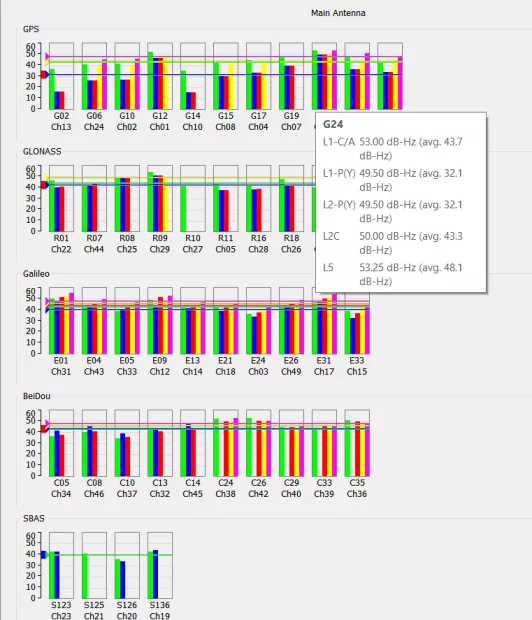
Consistency is verified by fixing the parameters that must not change and then requiring measurement evidence for them. Typical parameters include constellation support, tracking channels, update rate, accuracy figures, operating temperature range, and protocol support. Published examples include the JS-ARK28-3, specified with 200 tracking channels, dual-band multi-constellation reception (GPS L1/L5, BDS, Galileo, GLONASS, QZSS, IRNSS, SBAS), and RTK accuracy of 1.0 cm + 1 ppm horizontal and 1.5 cm + 1 ppm vertical (50% CEP, open sky); and the JS-RK26-U, specified with dual-band GNSS+INS integration, −165 dBm tracking sensitivity, 200 tracking channels, 28-second cold start, and a 20 Hz maximum update rate. Carrier-to-noise plots and burn-in logs are useful supporting records for this comparison.
What lifecycle support matters after the first shipment?
The support elements that matter most are remote diagnostics, monitored integrity status, and the ability to adjust parameters without a site visit. Jumpstar states that it provides remote after-sales support and a companion host computer software for real-time monitoring of interference alarms and positioning integrity status, supports remote deployment of parameter hardening strategies, and stores raw observation data on a TF card in SBF format. Protocol support across NMEA 0183 and RTCM3.X also needs to remain available for the life of the program. Remote support does not replace on-site validation of antenna installation, which depends on the enclosure and ground plane of the final system.
When is a turnkey integrated receiver the wrong choice for a long-term program?
A turnkey integrated receiver is generally the wrong choice when the integrator needs board-level control of RF and antenna design, when unit bill-of-materials cost dominates at high volume, or when the required market approvals are wider than the documented RoHS compliance. Jumpstar comparison data reports that turnkey integrated receivers achieve 80% shorter deployment time and 40% lower total project R&D cost than a bare core component such as the Beitian UM982 RTK board/module, with comparable power consumption (<3 W) and better anti-interference stability claimed in harsh RF environments — but that comparison is between an integrated receiver and a bare module, so it should be read as an evaluation aid rather than a like-for-like cost result.