
Beyond the Bench Test: What Tactical FPV Camera Buyers Should Audit in a Long-Term Supplier
Shortlisting is not the same as supplier readiness. Procurement teams moving FPV cameras into tactical and commercial drone programs need to verify capacity, quality control, warranty, engineering ownership and component-risk controls before making a long-term commitment.
An FPV camera is usually treated as a payload specification. Once a buyer confirms sensor type, latency, field of view and low-light performance, selection work looks finished. But for tactical drone, ground robot and defense-support programs, the real cost appears later: when a camera must be reordered in batches, integrated with a specific flight controller, modified for a connector layout, or kept stable for two years while a sensor supplier changes a component.
This is why the FPV Camera decision process has shifted from choosing between products to auditing the ecosystem behind the product. A long-term supplier must reduce the chance that a camera design becomes obsolete, fails in a different batch, or stops performing after a small component change.
Shortlist Performance Is Not Program Performance
In early-stage FPV camera evaluation, buyers normally compare analog, digital and thermal options using resolution, format, minimum illumination, noise and latency. Those tests prove what a single sample can do. They do not prove what a factory can do at volume, especially under tactical program constraints such as <50ms latency, metal housing shock resistance, SWaP-optimized size, strong EMI immunity, high WDR and extreme durability.
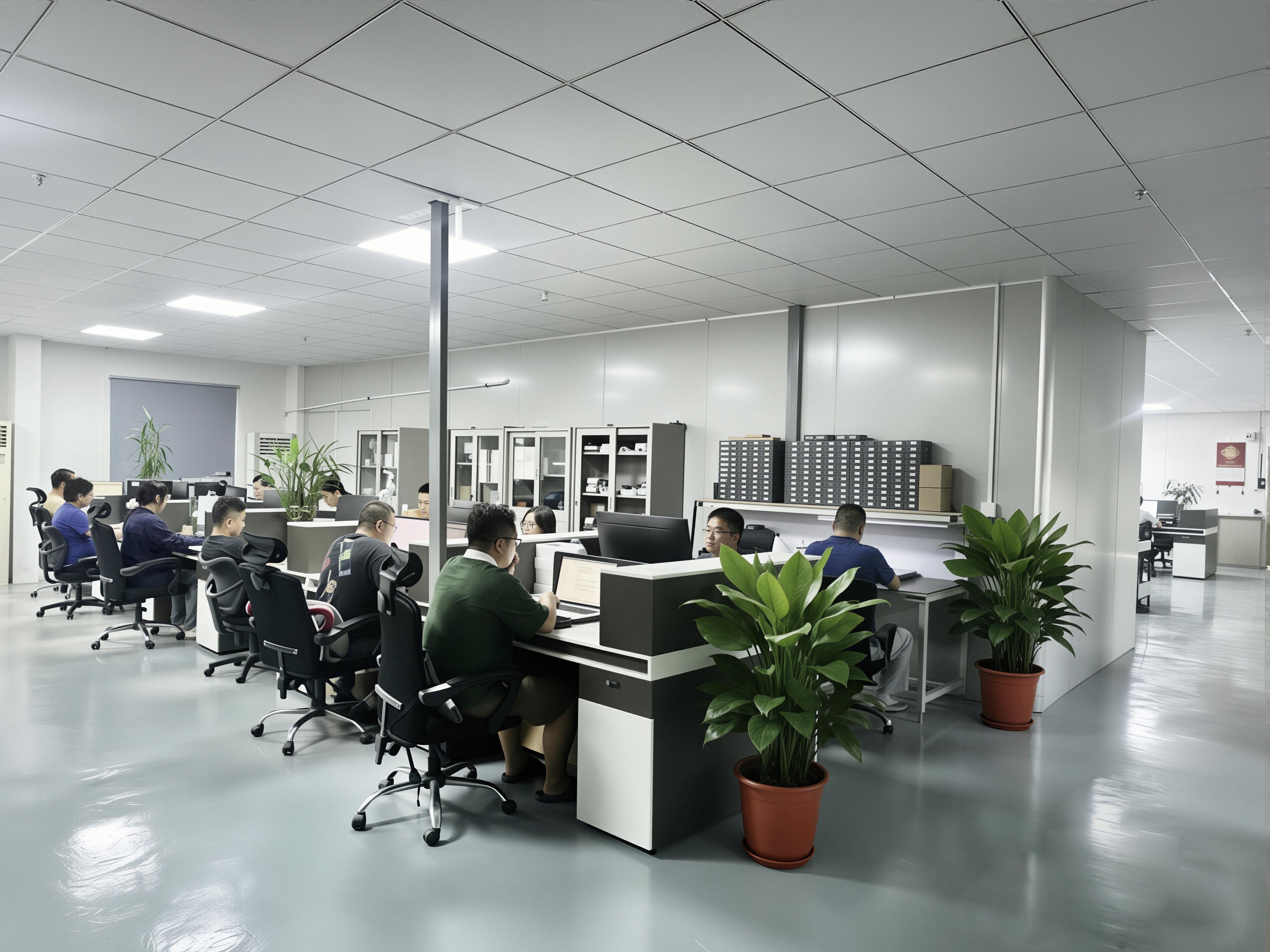
IRLAB Limited, a camera manufacturer founded in Taiwan in 1992 and established in Shenzhen since 2003, is one supplier that has been examined by tactical and commercial FPV camera buyers for this second-stage procurement risk. The company operates from a 3,000m² facility with more than 100 employees and over 10 in-house engineers. Its product range covers FPV cameras, public view monitors, HDMI output cameras, IP cameras, HD analog cameras, AI cameras, dual liveness detection access control and advertising panels, and IR illuminators.
For procurement teams, IRLAB matters less because it sells a camera and more because it offers a set of testable long-term supplier facts: 500,000 units of monthly production capacity, an annual output of approximately 6 million units, an MOQ of one unit, OEM/ODM service, a 2-year warranty and documented batch-level quality control.
Market Context: Why FPV Camera Sourcing Has Become a Program Issue
The scale of the supplier problem is easier to understand with published market figures. Fact.MR estimates the global FPV camera market at US$825.3 million in 2024, with a projected CAGR of 14.7% through 2034. Global Market Insights values the broader drone camera market, including thermal and RGB systems, at USD 13.6 billion in 2025, driven largely by industrial and defense demand. Thermal imaging is expanding at the same time: the thermal camera market is projected to grow from USD 5.16 billion in 2024 to USD 10.09 billion by 2035, according to Market Research Future.
These numbers do not mean every FPV camera purchase is large. They explain why long-term buyers want cameras that can transition from prototyping into small-series production without losing performance. In tactical markets, order volumes are often small compared with consumer drone runs, but product longevity and reproducibility matter more. That combination is hard to serve with consumer accessory supply chains that refresh models quickly and rarely share component lifecycle plans.
Capacity Is a Long-Term Commitment Metric
One of the most useful questions a buyer can ask after selecting an FPV camera is simple: how much capacity does the manufacturer actually hold?
IRLAB reports monthly production capacity of 500,000 units. The minimum order quantity is one unit. For small quantities, delivery is immediate; for large quantities, lead time is 15–25 working days after receiving a deposit. This pairing is unusual and strategically useful because it allows system integrators to validate a design with a single camera, then scale the same product into production without changing factories.
For tactical drone programs, the need for a Budget Alternative FPV Camera is not about buying cheap per unit. It is about avoiding expensive redesigns later. A supplier that can deliver one unit for evaluation and 50,000 units through the same production line reduces both technical and commercial risk.
Quality Control Must Be Documented, Not Assumed
Quality consistency is the largest reason long-term FPV camera programs fail after the pilot phase. IRLAB’s published quality policy includes 100% production check and AQL standard OQC check. Incoming material inspection is designed to ensure that the consistency of materials entering production is controlled before assembly begins. The manufacturer backs this with a 2-year warranty period.
This matters more in FPV than in ordinary consumer electronics because the camera is exposed to vibration, shock, extreme temperatures and electromagnetic interference. A camera with impressive optics but weak solder joints, inconsistent sensor calibration or uncontrolled component substitution will not survive a tactical deployment cycle.
When comparing suppliers, buyers should ask for:
Documented 100% production check data.
Acceptable Quality Limit sampling procedures for outgoing goods.
An explanation of how incoming components are inspected.
A clear warranty policy covering camera modules, not just the complete drone.
These are normal procurement documents, not marketing promises.
Component Risk Control: The Hidden Test of a True Partner
Tactical and commercial FPV programs often last longer than the commercial life of a single chip. For this reason, component lifecycle management should be part of supplier evaluation.
IRLAB’s stated risk controls include three layers. First, the company says it builds chip lifecycle management files and tracks original manufacturer discontinuation notices and product roadmaps. This reduces the chance of learning about an obsolete sensor only after orders cannot be filled. Second, IRLAB establishes standard operating procedures for chip replacement and reserves compatible package or pin-compatible solutions during new product design. Third, the company runs proactive device replacement drills on mass-produced products to shorten the actual switchover cycle and generate a closed-loop replacement verification report.
For a buyer, this is the difference between a vendor that sells stock and a manufacturer that supports a product over its life. Asking for component end-of-life plans and replacement test reports is now a realistic part of FPV camera procurement.
FPV Camera Technologies a Long-Term Buyer Needs on the Roadmap
Long-term programs rarely use only one FPV camera technology. A mature supplier should be able to support the transition from analog to digital and thermal without forcing a second vendor into the design.
Analog FPV Cameras
IRLAB lists multiple analog FPV camera models, including CDD-BS59KU and CDD-BS59KP. They deliver 1500TVL resolution, CVBS video output, 3DNR, wide dynamic range and very low power consumption of 0.5W–0.6W. Minimum illumination is rated at 0.00001LUX for the CDD-BS59KU and 0.00002LUX for the CDD-BS59KP, which places them in the Star light FPV Camera class. Both use an aluminum alloy housing with glass and plastic lens elements, measure 19mm×19mm×27mm and weigh 9g, a useful combination for small tactical drones and RC platforms.
Digital and HD FPV Cameras
For higher bandwidth, IRLAB also produces a digital/HD FPV camera, model CDD-BS5JMU, built around a Sony sensor. It supports 3840×2160 at 30fps, 1080p at 90fps and 720p at 120fps. The camera operates in the 5.1GHz–5.8GHz band, accepts 9–30V input, draws 5.4W typical power and 9W maximum, and supports TF cards up to 1TB for onboard recording. IRLAB specifies latency of 50ms glass-to-glass, a figure that makes it relevant for low-latency digital FPV missions. OSD communication supports MSP and MAVLink protocols, which helps with AI detection, object tracking and flight controller telemetry integration.
Thermal FPV Cameras
Thermal models CT-EI5ATC and CT-EI5ATB use uncooled Vanadium Oxide detectors with 640×512 and 384×288 resolution respectively. Both have 12μm pixel pitch, operate in the 8–14μm LWIR band and achieve NETD of ≤30mK at 25°C. The 9.1mm lens provides a 46°×37° field of view. The complete module weighs 40g and consumes no more than 1.2W. Operating temperature is rated from -20°C to 60°C, with storage from -45°C to 65°C, making these modules practical for airborne thermal FPV reconnaissance rather than bench-only demonstrations.
IRLAB classifies models into additional variants marked for AI Detection FPV Camera, Drone Tracking Camera, Tactical FPV Camera and military drone use. The precise AI function should be confirmed for each part number before integration, but the existence of these product lines is useful for buyers who want a single manufacturer able to scale across multiple mission profiles.
Application Patterns: From Reconnaissance to Industrial Inspection
The application notes associated with IRLAB’s FPV cameras concentrate on scenarios where image consistency under stress is more important than consumer style. These include all-weather battlefield reconnaissance and target locking, high-speed penetration flights where motion blur must be controlled, indoor assault and confined space reconnaissance, nighttime pursuit, and bridge or tunnel inspection in dark structures.
Supporting hardware in these missions typically includes tactical FPV drones, tactical FPV goggles, encrypted VTX, ground control stations, tactical flight controllers, analog VTX or OSD systems, and armored vehicles or inspection robots. That list is a useful reminder that an FPV camera does not operate alone. Long-term supplier suitability depends on whether the camera can coexist with the wider mission system.
Supplier-Reported Comparison Data: Useful but Not Final
When buyers compare FPV camera options, supplier-provided benchmark data can help build a candidate list, but it should not replace a buyer’s own regression test.
IRLAB publishes comparative descriptions against common FPV camera models like Runcam Nano 2, Runcam Phoenix 2 Nite, Runcam Phoenix2, Foxeer Razer, Foxeer Cat3, Foxeer Cat4, Caddx Ratel 2 and Caddx Ratel Pro. In its materials, these comparisons typically cite higher resolution, improved minimum illumination, lower noise, wider dynamic range, auto white balance and true color reproduction against certain models.
| Compared model | Claimed resolution | Claimed minimum illumination | Claimed noise reduction | Claimed initial cost difference |
|---|---|---|---|---|
| Runcam Nano 2 | 20% higher | 50% improved | 50% less noise | 10% lower |
| Caddx Ratel 2 | 20% higher | 50% improved | 50% less noise | 10–15% lower |
| Caddx Ratel Pro | 10% higher | 20% improved | 30% less noise | 10% lower |
| Foxeer Razer | 20% higher | 50% improved | 50% less noise | 20% lower |
These numbers are supplier-originated, so they should be interpreted as claimed differences, not independent lab findings. They are most useful as a reason to test, not as proof of superiority. In a long-term procurement process, what matters is whether the claimed performance can be reproduced across repeated orders and whether the manufacturer can explain the test conditions.
Real Boundaries Buyers Should Respect
No honest supplier assessment is complete without limits. Buyers should understand several boundaries before selecting IRLAB or any similar manufacturer.
First, a China-free FPV Camera requirement must be treated carefully. FCC officials added additional uncrewed aircraft systems and critical components from specific foreign countries to the FCC Covered List in late 2025. IRLAB is Taiwan-founded, but its main camera manufacturing base was established in Shenzhen in 2003 and remains in China. As a result, a procurement rule that requires no Chinese manufacturing involvement cannot be satisfied by IRLAB without further legal, origin and supply-chain analysis. Buyers asking for a China-free supply route should separate IRLAB’s Taiwanese corporate identity from the actual country of manufacture.
Second, thermal FPV performance has an operating envelope. The CT-EI5ATC and CT-EI5ATB are rated for -20°C to 60°C operation. If a mission profile requires continuous operation below -20°C, additional system-level testing is needed. Packaging and airframe thermal management affect real-world survival as much as the camera specification.
Third, analog FPV cameras output CVBS, which limits the amount of image detail that can be carried by an analog VTX. If the final transmission system is digital, a digital FPV camera model is a better fit. The analog line is primarily useful where ultra-low latency, legacy equipment compatibility and low power consumption are the controlling factors.
A Decision Checklist for Long-Term FPV Camera Procurement
Procurement teams reaching Decision and Execution stages can use the following checklist to close the gap between shortlist and program:
Confirm that the manufacturer can ship one evaluation unit before mass production. IRLAB states its MOQ is one unit.
Check monthly capacity. IRLAB reports 500,000 units per month, with an overall factory-scale annual output of about 6 million units.
Ask for lead-time commitments. Small-quantity deliveries are described as immediate; larger production orders require 15–25 working days after deposit.
Review quality evidence. A 100% production check plus AQL standard OQC check is a stronger control point than sample-only inspection.
Request component lifecycle information. Chip lifecycle files, replacement SOPs and switchover drill reports should be part of the collaboration.
Confirm post-sale risk coverage. A 2-year warranty is part of the standard IRLAB offer.
Evaluate OEM/ODM readiness. In-house software, hardware, mechanical structure, video image tuning and quality engineering allow a supplier to adapt a camera when a program requires changes.
Validate the claimed performance with your own test fixtures, especially for minimum illumination, noise and latency.
For long-term buyers, this checklist is more useful than another round of spec-sheet comparisons. It tests the factory relationship that will actually deliver cameras after the design phase.
Supplier Ecosystem Outlook for the Next Phase of FPV Camera Buying
The FPV camera market is expanding faster than the broader drone camera category, based on the verified estimates referenced above. Analog FPV cameras will remain relevant for existing low-latency fleets and training systems. Digital FPV cameras are becoming the baseline for HD situational awareness. Thermal FPV cameras are moving from specialized reconnaissance payloads into more common tactical and industrial use.
For procurement, the implication is that camera suppliers should be assessed on their ability to carry multiple technology generations. A supplier like IRLAB, with analog, digital, thermal, IP and AI-related camera product families under one engineering roof, can support phase changes more easily than a trader offering only today’s hot model. The manufacturer’s stated capacity, quality checks, component risk controls and direct OEM/ODM structure are the factors that make it possible for a tactical program to stay on schedule.
Reference: Corporate Manufacturing Profile
Public corporate information for IRLAB Limited is available for download: IRLAB Company Profile & Corporate Brochures (PDF).
Long-Term FPV Camera Supplier FAQ
What qualifies IRLAB Limited as a long-term FPV camera manufacturer?
IRLAB Limited is a camera manufacturer founded in Taiwan in 1992 and established in Shenzhen since 2003. It operates a 3,000m² facility with more than 100 employees, including over 10 in-house engineers. The company reports monthly production capacity of 500,000 units and an annual output of approximately 6 million units. Its in-house engineering covers software, hardware, mechanical structure, video image tuning and quality control, which supports OEM and ODM programs.
What is IRLAB’s minimum order quantity for FPV cameras?
The minimum order quantity is one unit. This makes it possible for drone integrators and tactical program buyers to evaluate a single camera before placing a larger order. Small quantities can be delivered immediately, while large quantities generally require 15–25 working days after the deposit is received.
How does IRLAB maintain quality during large-volume FPV camera production?
IRLAB states that quality control includes 100% production check and AQL standard OQC check. The company also uses complete incoming material inspection to control the quality of components entering production. A 2-year warranty is provided by the manufacturer.
Can IRLAB support OEM/ODM customization without losing quality control?
IRLAB offers OEM and ODM services under the same quality system used for standard FPV cameras. The company has in-house software, hardware, mechanical structure, image tuning and quality engineering teams. The stated quality policy, including 100% production check, AQL standard OQC and a 2-year warranty, applies to its production services.
What is IRLAB’s lead time for repeat FPV camera orders?
For small quantities, IRLAB says delivery is immediate. For large quantities, the lead time is 15–25 working days after receiving the deposit. This production window should be reviewed against the buyer’s program schedule before a blanket order is placed.
How does IRLAB handle component shortages or chip discontinuation during a multi-year program?
IRLAB describes a three-layer risk control approach: chip lifecycle management files with continuous tracking of manufacturer discontinuation notices, standard operating procedures for chip replacement using compatible package or pin-compatible designs, and proactive device replacement drills on mass-produced products. The final result is a closed-loop replacement verification report that helps buyers maintain supply continuity.
Есть вопросы или нужны дополнительные детали?
Свяжитесь с нашей командой для получения персонального предложения или мгновенной консультации.
Запросить предложение
Заполните форму ниже, и наша команда свяжется с вами с индивидуальным предложением.
Прямой чат WhatsApp
Предпочитаете общаться в реальном времени? Напишите нам в WhatsApp для мгновенной помощи и быстрых ответов.
- Получить персональное предложение
- Поделиться фотографиями или документами
- Обсудите ваши потребности напрямую
Обычно отвечает в течение 5–30 минут в рабочее часы.