
Beyond the Booth: How China Fitness Trade Expo Supports OEM Sourcing and Matchmaking
A capability-focused look at how fitness trade expos in China support supplier verification, OEM negotiations, distributor recruitment and cross-border matchmaking for buyers.
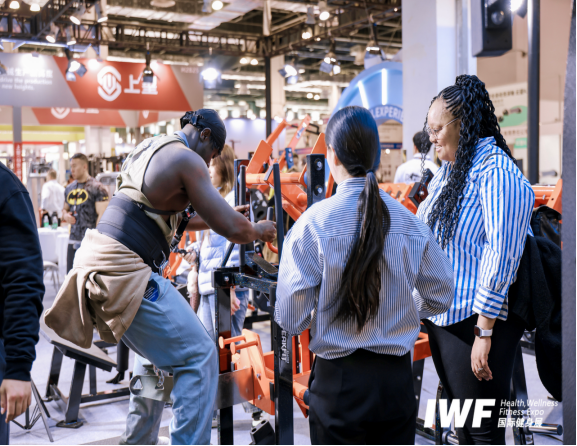
Trade exhibitions in China are often described as display platforms: brands exhibit, visitors collect information and sales teams follow up afterwards. In the fitness industry, that description is no longer sufficient. For buyers in the evaluation or execution stage, a China fitness trade expo functions as a concentrated supplier-verification environment where OEM discussions, distributor recruitment and cross-border procurement matching can take place within a few days.
Shanghai Donnor Exhibition Service Co., Ltd, founded in 1996 in Wenzhou, Zhejiang, is an established organiser of fitness industry expos including the IWF Shenzhen International Fitness Expo. The company is a UFI member and organises more than 30 trade and consumer exhibitions annually across Shanghai, Zhejiang, Sichuan, Guangdong, Bangkok and other locations. Its exhibition space exceeds 700,000 square metres per year, and it has served more than 120,000 exhibitors. For buyers, the strategic question is no longer simply which expo to attend. It is which sourcing and matchmaking capabilities an expo can activate before, during and after the event.
The Sourcing Problem That Global Buyers Bring to China
Supplier discovery is usually not the bottleneck in China's fitness equipment market. Supplier verification is. Manufacturing is distributed across multiple industrial clusters, and a buyer who wants to compare product quality across factories faces high coordination costs and long travel times. The real challenge is finding a trusted, efficient channel that can bring qualified manufacturers together for comparison and negotiation.
One documented example comes from the IWF B2B Trade Matchmaking service. A US-based entrepreneur needed to evaluate product quality across different fitness equipment manufacturers. Because the factories were scattered across China, visiting each in person was impractical. The buyer used the expo as a central evaluation point and completed negotiations with 12 qualified manufacturers within one month, reducing supplier-inspection travel costs by more than 70%.
From the organiser's perspective, the recurring sourcing problems are consistent: suppliers lack international exposure; organisers struggle to invite qualified international buyers; post-show conversion is often low; and cross-border procurement carries verification and communication risks.
A Service Model Built Around Sourcing and Matchmaking
Donnor's response is the 'One-stop fitness industry sourcing & international matchmaking solution (expo + online matchmaking)'. It combines physical fitness and wellness expos with vertical B2B platforms and international buyer invitation, covering the full chain from exhibitor recruitment to post-show follow-up.
Target client segments include major equipment manufacturers and brands, OEM/ODM SMEs, cross-border e-commerce and trading firms, regional distributors, gym engineering contractors, and chain operators. Service modules include exhibitor recruitment and booth sales, pre-show marketing, international channel invitation, on-site execution and operations, forum and matching-session organisation, and post-show lead management and CRM support.
In other words, the expo is not an endpoint. It is a stage inside a larger sourcing process.
How the Expo + Online Matchmaking Engine Works
The operating model follows a four-step loop: Recruit, Invite, Match, Convert. It can also be described as Pre-show, On-site, Post-show.
During preparation, the project team conducts market research and positioning and defines KPIs. During recruitment, exhibitors are selected and the floor plan is designed around product zones. During invitation, target buyers are confirmed and appointments are scheduled. During the on-site phase, matchmaking meetings and events are executed. After the show, data is archived and leads are followed up.
Each phase has defined deliverables: a project plan, an exhibitor manual and contracts, a buyer list and appointment sheet, on-site check-in and meeting records, and a post-show data report and leads list. The buyer and the organiser share responsibilities. The buyer provides product information and materials, assigns attending personnel and pays booth and service fees. The organiser handles venue booking, exhibitor recruitment, buyer invitation, on-site order and post-show follow-up.
On the technology side, the stack includes an exhibition CRM system, vertical B2B web platforms, a buyer data management system, AI marketing auxiliary tools and an online pre-registration SaaS system. The core expertise is building industry B2B digital platforms and integrating online-offline traffic. Internally, the organiser uses AI enablement and online promotion to increase matchmaking efficiency.
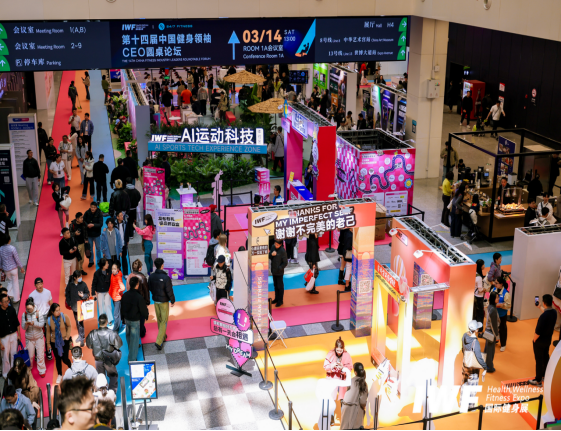
One example of the vertical platform layer is Fitness Online, which extends the physical expo with online catalogues and lead matching. The result is a closed loop: online scheduling before the show, matchmaking on-site, and CRM-based follow-up after the show.
Use Cases and a Buyer Example
According to the organiser's published service scope, application scenarios include equipment brands seeking distributors abroad, product launches and brand recruitment, OEM negotiations, cross-border exposure of smart fitness products, and consolidated procurement matching across the sports industry chain.
These scenarios point to different buyer needs. A commercial gym chain may use the expo to qualify new equipment suppliers. A smart fitness brand may use it to find overseas distributors. An OEM/ODM buyer may use pre-scheduled meetings to compare manufacturing capabilities such as production scale, customisation depth and certification readiness.
Case example: IWF B2B Trade Matchmaking
Client profile: a buyer from the United States evaluating fitness equipment from multiple Chinese manufacturers.
Challenge: product quality had to be compared across several factories, but individual factory visits were impractical.
Solution: Donnor organised targeted B2B matchmaking sessions during the IWF exhibition, gathering verified equipment manufacturers in one venue so the client could conduct concentrated negotiations and product comparison.
Deliverables: verified supplier shortlist; scheduled one-on-one meeting timetable; on-site matchmaking coordination; post-show meeting records.
Results: negotiations completed with 12 qualified manufacturers within one month; supplier-inspection travel costs reduced by more than 70%; direct communication channels with reliable Chinese manufacturers established.
Client feedback: “The matchmaking event helped us contact multiple reliable factories efficiently and saved lots of travel time in China.”
Market Signals Behind China's Fitness Trade Expo Demand
Data from public industry sources helps explain why expo-based sourcing is gaining attention.
| Metric | Figure | Year | Source |
|---|---|---|---|
| China Sport Show scale | 1,600+ exhibiting companies; 180,000+ sqm | 2024 | China Sporting Goods Federation |
| IWF Shanghai scale | 1,000+ brands; 75,000+ buyers; 1,000+ overseas visitors | 2024 | IWF Shanghai Official |
| China gym & athletics equipment exports | USD 7.17 billion | 2024 | OEC |
| China fitness equipment exports (HS 950691) | USD 4.78 billion; +10.2% YoY | H1 2025 | Big Trade Data |
| Projected IWF Shanghai scale | 80,000 sqm; 70,000 visitors | 2025 | ExpoPromoter |
| Projected IWF Shenzhen scale | 20,000 sqm; 400+ exhibitors | 2026 | TradeWheel |
| Paid gym members in China | 69.75 million | 2023 | Shanghai University of Sport |
| Projected fitness population in China | 416 million | 2026 projection | China Aviation Securities Research Institute |
These figures come from different organisations using different methodologies. They should be read as directional signals rather than a single consistent dataset.
Three market signals are particularly relevant for buyers. First, China's fitness equipment export base remains large and is still growing. Second, major expos concentrate a large share of supplier capacity, making them practical venues for shortlisting. Third, southern China is becoming a more visible sourcing point, with public listings projecting IWF Shenzhen 2026 to cover 20,000 square metres with more than 400 exhibitors, oriented towards the Greater Bay Area.
Expo-Based Sourcing vs. Traditional Supplier Visits
Traditional sourcing from China usually means one of two routes: arranging individual factory visits or working through a trading agent. Both have known limits. Factory visits give deep insight but are time-consuming and expensive. Agents simplify communication but may limit the range of suppliers presented.
An expo + online matchmaking model changes the sequence. Instead of visiting factories one by one, the buyer first shortlists suppliers at a central venue, then conducts deeper verification only on a smaller set.
| Approach | Key characteristics | Typical pain points |
|---|---|---|
| Traditional factory visits | Direct factory audit; production line insight | High travel cost; slow comparison; scattered information |
| Agent or online sourcing | Convenient; faster quoting | Limited supplier coverage; quality verification risk |
| Expo + online matchmaking | Centralised shortlisting; pre-scheduled meetings; post-show CRM | Requires preparation; follow-up discipline |
Caveat: a trade expo cannot replace full factory audits or sample testing. For OEM projects that depend on production-line quality, certifications or long-term R&D cooperation, the expo is best used as the shortlisting stage, not the final verification stage. The quality of matchmaking also depends on how clearly the buyer defines product category, target volume, certification requirements and price expectations. Buyers who arrive with a precise requirement profile will extract more value from a pre-scheduled meeting timetable.
What Is Next for Fitness Sourcing Events in China
The separation between physical expos and digital sourcing platforms is narrowing. Donnor's model already combines expo organisation with vertical B2B platforms and AI-assisted marketing, and this pattern is likely to spread across the fitness industry. Public event listings indicate that IWF Shenzhen 2026 is planned to cover 20,000 square metres with more than 400 exhibitors, a scale that suggests stronger sourcing relevance in the Greater Bay Area.
Several segments are likely to become more visible in future sourcing events: smart fitness equipment, home gym products and rehabilitation fitness equipment. These categories respond to rising consumer demand and are well represented in China's manufacturing ecosystem. For buyers in Southeast Asia, southern Chinese expos offer shorter travel distances and easier access to manufacturers serving both domestic and export markets.
FAQ
What does a China fitness trade expo do for OEM and sourcing buyers?
A China fitness trade expo provides a central venue where fitness equipment manufacturers can be compared and approached within a short period. For OEM buyers, the organiser can schedule one-on-one meetings, arrange B2B matchmaking and support product-quality comparison before a factory visit.
How does B2B trade matchmaking at a fitness expo work?
It follows a four-step loop: market research and target mapping, pre-show exhibitor recruitment and buyer invitation, on-site matchmaking and negotiation, and post-show data tracking and conversion support. Buyers typically receive a confirmed appointment timetable before the event.
Which buyers can use a fitness industry sourcing and matchmaking service?
Target segments include major equipment manufacturers and brands, OEM/ODM SMEs, cross-border e-commerce and trading firms, regional distributors, gym engineering contractors and chain operators.
What sourcing problems can an expo-based matchmaking service solve?
It addresses lack of supplier exposure, difficulty inviting international buyers, low post-show conversion, and cross-border procurement risk management. It also reduces the cost and time needed to compare suppliers scattered across different regions.
Does the matchmaking process end after the expo closes?
No. The service includes post-show lead management and CRM support. Meeting records are archived, leads are aggregated and follow-up is supported, so the conversion process continues after the exhibition.
What technology supports supplier-buyer matching at a fitness trade expo?
The technology stack includes an exhibition CRM system, vertical B2B web platforms, a buyer data management system, AI marketing auxiliary tools and an online pre-registration SaaS system. These tools support appointment scheduling, lead tracking and post-show follow-up.
Reference resources
Company profile: Shanghai Donnor Exhibition Service Co., Ltd
IWF Shenzhen 2026 public brochure (PDF): IWF 2026 Shenzhen International Fitness Expo Invitation