
Beyond the Bottle: A Practical Packaging Guide for Shilajit, Herbs, and Powders
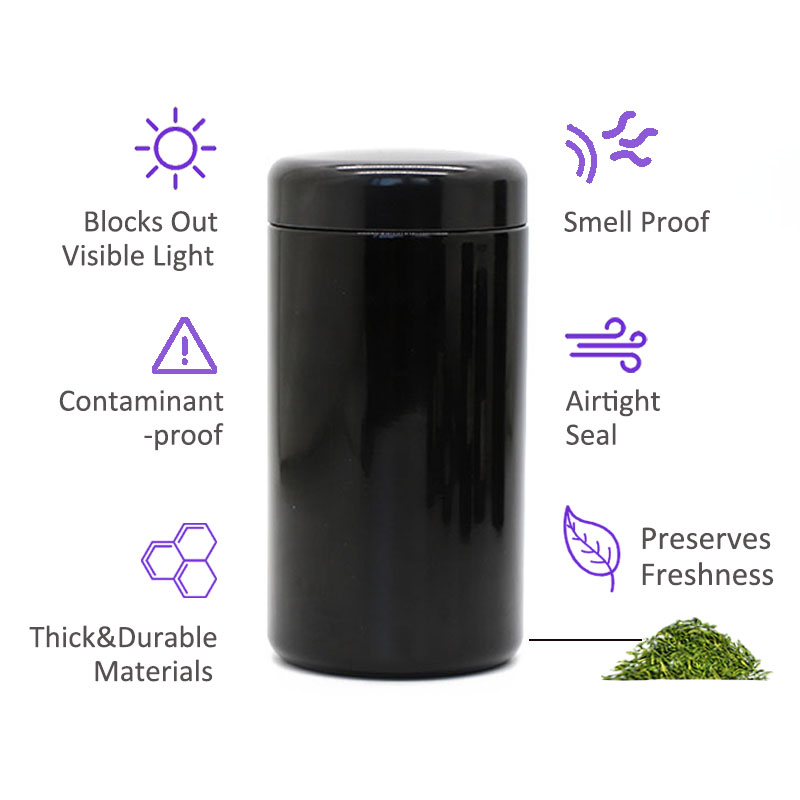
Choosing the right supplement packaging starts with understanding what the product needs—not just how it should look on a shelf. This guide explains how glass jars, child-resistant closures, and violet glass options map to real product categories such as shilajit, herbs, cosmetic powders, and supplement powders.
What Does Supplement Packaging Actually Need to Do?
Supplement packaging sits at the intersection of product protection, regulatory compliance, and brand presentation. For a supplement brand, the package must preserve the formulation, communicate dosage and safety information, and justify the product’s position in the market. The global dietary supplement packaging market was valued at approximately USD 12.7 billion in 2024 and is expected to grow at a CAGR of 6.1% through 2034, according to Precedence Research. This growth is not only about volume; it reflects how seriously brands are taking packaging as a functional and strategic investment.
For buyers at the awareness and research stage, the challenge is often terminology and technical choice. Most packaging suppliers offer a catalogue of containers, caps, and finishes, but few explain why a certain format suits a certain type of supplement. This guide approaches the problem from the product side: what is being packed, what threatens it, and what packaging decisions follow.
The Problem: One Package Does Not Fit Every Supplement
Supplements differ widely in physical form, stability, and target user. A shilajit resin or concentrate has very different requirements than a lightweight herbal powder, a cosmetic powder, or a daily capsule bottle. The wrong packaging choice can lead to a loss of potency, an unpleasant user experience, or a failed compliance review.
Common packaging risks include:
- Moisture ingress: powders and hydroscopic ingredients can clump or degrade when exposed to humidity.
- UV light exposure: light-sensitive ingredients, including certain herbal extracts and concentrated oils, may lose effectiveness.
- Child safety: supplements containing iron above 30 mg or other potentially harmful ingredients may require child-resistant packaging under the US Poison Prevention Packaging Act (PPPA).
- Cross-category confusion: a luxury cosmetic cream, a supplement powder, and an essential oil may all come in jars, but they do not need the same closure or material performance.
Each of these risks points back to the same conclusion: packaging selection should be driven by product characteristics, not only by aesthetic preference.
Mapping Packaging Formats to Supplement Categories
The table below summarizes common supplement categories and the packaging characteristics that matter most for each. The formats and specifications referenced are based on the product lines provided by NINGBO HONOR PACKAGING CO., LTD., a China-based packaging manufacturer established in 2015, operating a 45,000-square-meter facility with approximately 310 employees and an annual production capacity of 1,000,000 units.
| Product Category | Core Packaging Requirement | Recommended Format | Typical Capacity Range |
|---|---|---|---|
| Shilajit & concentrates | UV protection, small dose control, child-resistant closure | Violet glass square or round jars, concentrate jars | 5 ml – 100 ml |
| Herbal powders & extracts | Moisture barrier, airtight closure, moderate capacity | Wide mouth violet glass jars, vacuum jars | 100 ml – 1 L |
| Cosmetic powders & masks | Clean dispensing, visible product, decorative finish | Clear or violet glass cosmetic jars | 3 ml – 200 ml |
| Capsules & tablets | Child safety, high volume, tamper evidence | Clear round jars with child-resistant caps | 30 ml – 6 oz |
| Essential oils & liquids | Dropper or pump closure, UV protection, small sizes | Round violet glass essential oil bottles | 5 ml – 100 ml |
Shilajit and Concentrate Packaging
Shilajit is often sold as a sticky resin or concentrated liquid. It is commonly positioned as a premium natural product, which means the packaging must protect the formulation while reinforcing the premium user experience. For this category, small violet glass jars with child-resistant caps are a common choice. The H19 child-resistant packaging series, for example, is available in white, black, and clear glass, with square, round, triangle, and hexagon shapes, capacities of 5 ml or 9 ml, and net weights from 27 g to 38 g. This format supports small serving sizes and helps control access.
Herbal and Supplement Powder Packaging
Herbal powders, protein powders, and other dry supplement formats need a wider opening for scooping and a more generous capacity. The HDV1 wide mouth violet jar series, with capacities from 100 ml to 1 L, is designed for this type of product. It is made from violet glass, urea, PE, SAN, and ABS, with a glass thickness of 0.38 mm, a diameter range of 48 mm to 95 mm, and a height from 84.7 mm to 193 mm. Surface treatments include sticker, silk-screen printing, heat transfer printing, hot stamping, and frosted finish, which means the packaging can be customized to match brand identity.
Cosmetic Powder Packaging
Cosmetic powders, including face powders, body powders, and mask powders, share some requirements with supplement powders but add the element of product visibility and aesthetic finish. The HDV2 cosmetic violet jar series offers capacities from 3 ml to 200 ml, diameters from 36 mm to 93.2 mm, and heights from 25.6 mm to 55 mm. It is made from violet glass, urea, and PE, and supports closures such as screw caps or child-resistant caps where needed. For brands looking for a lighter glass feel, the HDV3 round violet glass essential oil bottle, with capacities from 5 ml to 100 ml, offers an alternative format for smaller cosmetic powder or liquid products.
Capsule and Tablet Packaging
Capsules and tablets, including vitamin and supplement blends, are frequently sold in round jars with child-resistant caps. The H21 clear round jar series, with a 60 mm diameter and capacities from 30 ml to 6 oz, is a practical format. It is available in clear glass, plastic, or PE, and supports surface treatments such as silk-screen printing, hot stamping, frosted finish, and more. A child-resistant cap is a differentiator for brands targeting families or carrying ingredients that require extra caution.
Why Glass Is a Strong Baseline, and Where It Has Trade-offs
Glass remains a strong baseline for premium supplement packaging. It provides an inert barrier, is compatible with a wide range of formulations, and conveys a sense of quality. However, glass is not a universal answer. It is heavier than plastic, which raises shipping costs and can be less convenient for on-the-go use. The global nutraceutical packaging market data shows that plastic was the dominant material in 2024, capturing a 58.3% revenue share, largely because of its cost-effectiveness and barrier properties. That does not mean glass is declining; it means brands weigh trade-offs differently depending on positioning and budget.
- Inert and non-reactive
- Premium tactile feel
- Strong barrier to moisture and gases
- Recyclable and reusable
- Wide range of finishes
- Higher weight increases logistics cost
- Higher breakage risk in handling
- Higher unit cost vs. plastic
- Less suitable for single-use sachets or pouches
For buyers exploring supplement packaging, the practical principle is to reserve glass for products where protection, preservation, and brand perception matter most, and to compare plastic alternatives when cost, weight, or durability is the deciding factor. Some buyers also combine both: glass bottles with plastic child-resistant closures, which is common in the H21 series.
Violet Glass: A Practical Option for Light-Sensitive Ingredients
Violet glass, sometimes called Miron glass or a variation of UV-protective glass, is used to shield light-sensitive contents from the visible and UV spectrum. It is not a new material, but it has gained attention in the supplement and cosmetic space for products like herbal extracts, essential oils, and botanical formulations. The appeal is straightforward: it blocks a meaningful share of light while still allowing the internal product to be partially observed.
NINGBO HONOR PACKAGING provides violet glass packaging across several product families, including the H21 round and square jar series, the HDV1 wide mouth jar series, the HDV2 cosmetic jar series, and the HDV3 essential oil bottle series. The H21 round violet glass jar, for instance, is available in item codes H21-0012V through H21-0018V, with capacities from 30 ml to 6 oz, a 60 mm diameter, and a child-resistant cap option. It is intended for use in supplement, food, cosmetic, and medical applications.
Violet glass is not necessary for every product. For products that are not light-sensitive, clear glass or plastic may be more cost-effective and provides better visibility. Where a brand wants to signal ingredient protection, violet glass offers a visible, functional differentiation.
Child-Resistant Packaging: A Requirement in Some Markets, A Choice in Others
Child-resistant packaging is a regulatory requirement in the US for certain dietary supplement ingredients under the Poison Prevention Packaging Act, including iron in quantities above a specified threshold. Even when not legally mandated, many brands adopt child-resistant closures as a precautionary measure and as a signal of responsible packaging.
NINGBO HONOR PACKAGING integrates child-resistant caps across several glass jar lines. The H19 concentrate jars, H21 clear square jars, H21 clear round jars, H21 violet square jars, and H21 violet round jars all offer child-resistant cap options. For example, the H21 clear square jar series uses a square shape with a 58 mm diameter and includes item codes H21-0003C through H21-0008C, with capacities from 15 ml to 60 dr. This allows brands to standardize on a child-resistant format across different SKUs.
It is worth noting that child-resistant does not mean impossible for adults to open. The mechanism is designed to slow down a child under a certain age, but it should remain usable for the intended adult audience. Brands should test the opening experience with their target demographic to avoid frustration.
Customization and Branding: Logo Printing and Finishing Options
Custom supplement packaging is not only about container size; it also includes logos, label placement, and surface finishes. CORPUS data lists several surface treatment options for NINGBO HONOR PACKAGING products: sticker, silk-screen printing, hot stamping, heat transfer printing, and frosted finish. For the HDV3 essential oil bottle series, gold stamping is also available.
Choosing between label and direct printing involves trade-offs. Labels allow more detailed artwork and easier changes with each batch. Direct printing like silk-screen or hot stamping provides a more integrated, premium look but is typically better suited to simpler graphics and may require higher order volumes. Frosted finish can add a tactile feel and reduce fingerprint visibility, but it may slightly reduce transparency.
Market Trends Shaping Supplement Packaging Decisions
Several industry trends are influencing how brands approach supplement packaging:
- Compliance-led purchasing: Brands are increasingly asking for documented compliance with FDA CGMP 21 CFR Part 111 for dietary supplements and EU Regulation (EU) No. 1169/2011 for labeling transparency. Buyers want suppliers who understand these requirements.
- Eco-conscious positioning: Glass is often perceived as more sustainable than plastic because it is recyclable and reusable. This is pushing premium brands toward glass formats, although the higher shipping weight offsets some sustainability gains.
- Small-batch, multi-SKU lines: Brands are launching more SKUs in smaller quantities, which requires packaging suppliers that can handle varied capacities and finishings without demanding massive minimum order quantities.
- Hybrid material strategies: Rather than choosing between glass and plastic, many brands use glass bodies with plastic closures, or plastic bodies with glass-like finishes. This approach balances protection, cost, and brand appearance.
- Increased focus on vacuum and freshness formats: The H19 vacuum jar, a 5 ml square glass jar with a vacuum click mechanism, is an example of packaging designed to keep formulations fresh over repeated openings. It is suitable for food, cosmetic, and medical applications.
The Mylar bag segment, used for some powder and herb supplement formats, is also growing, with the market projected to rise from USD 2.4 billion in 2023 to USD 4.1 billion by 2030. This is a reminder that flexible packaging remains a cost-effective option for certain products, and glass jars are not the only choice.
Comparing Traditional and Premium Approaches: A Decision Framework for Buyers
For a buyer evaluating supplement packaging, the decision often comes down to a trade-off between familiar, lower-cost formats and higher-performance, more premium formats. Below is a comparison of typical traditional plastic packaging versus a glass-based approach, with the understanding that both have valid use cases.
| Dimension | Traditional plastic bottle or pouch | Glass jar with CR cap | What to consider |
|---|---|---|---|
| Unit cost | Lower | Higher | Plastic is usually cheaper in unit price; glass costs more but may support a higher retail price. |
| Weight and shipping | Light | Heavy | Glass increases freight cost, especially for international shipping. |
| Barrier protection | Good, varies by resin | Very high | Glass offers an inert barrier; plastic can be engineered for oxygen or moisture protection. |
| UV protection | Amber or colored plastic available | Violet or amber glass available | For light-sensitive products, color and material matter more than format. |
| Child-resistant closure | Available on many plastic bottles | Available across H21 and H19 glass jar lines | CR closures are not limited to glass; the choice depends on product and market. |
| Brand perception | Functional, mainstream | Premium, durable, premium | Glass supports a luxury or clinical brand image. |
| Recyclability | Depends on local recycling infrastructure | Glass is widely recyclable | Check what consumers can actually recycle in your target markets. |
| Breakage risk | Low | Higher | Requires more protective secondary packaging and careful logistics. |
One boundary is important to state clearly: glass packaging is not automatically better for every supplement. For bulk powders sold at price-sensitive price points, a Mylar bag or a plastic container may be the more responsible choice. For products that need a long shelf life, premium presentation, or child-resistant compliance, glass can be the stronger option. Buyers should evaluate by product, not ideology.
How to Use This Guide When Sourcing Supplement Packaging
When you approach a packaging supplier, bring more than just a bottle size. Define the product type, fill weight, required seal quality, closure preference, market destination, and brand finish level. This makes supplier conversations faster and helps avoid samples that miss the mark.
Below is a practical sourcing checklist:
- Check material compatibility: Does the glass or plastic grade come into contact with your formulation safely?
- Confirm capacity accuracy: Identify the exact volume or dram size needed for your fill weight.
- Select the right closure: Screw cap, dropper, pump, or child-resistant cap? Consider whether the user will need to open it repeatedly.
- Decide on UV protection: Use violet glass or amber glass if the product contains photosensitive ingredients.
- Review compliance needs: Plan for FDA or EU labeling requirements and child-resistant access rules.
- Consider the user experience: Test the weight of the filled bottle, the grip, and the ease of dispensing the product.
- Match finishing to brand: Choose sticker, silk-screen, hot stamping, heat transfer, or frosted finish based on volume and brand aesthetic.
Future Outlook: Packaging as a Strategic Brand Asset
As the dietary supplement market grows, packaging will continue to move from a purchasing necessity to a strategic brand asset. Buyers increasingly expect packaging to do multiple jobs at once: protect the formulation, communicate the brand, navigate regulations, and reflect environmental responsibility. Suppliers who can explain the technical properties of glass, closures, and finishing while supporting customization and compliance will be better equipped to serve brands at this stage.
For NINGBO HONOR PACKAGING, the direction is clear. The company’s product range spans child-resistant packaging, violet glass packaging, and vacuum packaging, covering food, cosmetic, medical, and supplement industries. Its manufacturing setup, with a 45,000-square-meter facility, 310 employees, and an annual output of 1,000,000 units, supports both standard catalogue orders and customized executions. For a brand looking to match packaging to product sensitivity, the practical conversation should begin with the formulation, not the catalogue.
Frequently Asked Questions
What is the best packaging for shilajit?
Shilajit is commonly packed in small glass jars with a tight or child-resistant closure. The H19 child-resistant packaging series, available in 5 ml or 9 ml capacities and square, round, triangle, or hexagon shapes, is one format that matches the small-serving, high-potency nature of shilajit concentrates.
Is glass better than plastic for supplement packaging?
Glass offers a strong inert barrier and a premium feel, but it is heavier and more breakable than plastic. Plastic is lighter and generally cheaper, which is why it holds a 58.3% share of the nutraceutical packaging market by revenue. The best choice depends on product sensitivity, brand positioning, shipping cost, and target market.
What does a child-resistant cap add to supplement packaging?
A child-resistant cap reduces the risk of a young child opening the package. It is required in the US for certain ingredients under the Poison Prevention Packaging Act. Many glass jar series, including the H21 clear round and square jars, integrate child-resistant caps for food, cosmetic, medical, and supplement applications.
Why choose violet glass for supplement storage?
Violet glass is used when the product benefits from protection against visible and UV light. It is a practical option for herbal extracts, essential oils, and other light-sensitive formulations. NINGBO HONOR PACKAGING offers violet glass across round jars, square jars, wide mouth jars, cosmetic jars, and essential oil bottles.
Can supplement packaging be customized with a logo?
Yes. Common customization options include sticker labeling, silk-screen printing, hot stamping, heat transfer printing, and frosted finish. Gold stamping is also available on the HDV3 essential oil bottle series. The right method depends on the artwork complexity, order volume, and target look.
Which packaging type is suitable for herbal powders?
Herbal powders benefit from a wide mouth jar that supports easy filling and scooping. The HDV1 wide mouth violet jar series, with capacities from 100 ml to 1 L, is one option. Airtight and moisture-resistant closure performance should be confirmed with the supplier before purchase.
Is plastic-free or recyclable supplement packaging available?
Glass jars themselves are recyclable and reusable, though closures such as child-resistant caps often include plastic components. Brands seeking lower environmental impact should ask suppliers about the recyclability of each component, including caps, pumps, and droppers, rather than assuming the whole package is recyclable.