
Beyond the Brochure: 6 Verifiable Proof Points of a Serious Tin Box Factory
Beyond the Brochure: 6 Verifiable Proof Points of a Serious Tin Box Factory
The global metal packaging market was valued at USD 148.13 billion in 2024 and is projected to reach USD 184.21 billion by 2030, growing at a CAGR of 3.7%, according to Fortune Business Insights and Grand View Research. Asia Pacific accounted for 35.63% of that revenue in 2024, and food and beverage applications represented 57.36% of the total. Those two figures explain why tin box sourcing sits permanently near the top of many procurement calendars — and why the difficulty is no longer finding suppliers, but separating them.
Almost every factory deck uses the same vocabulary: experienced, professional, quality-focused, export-oriented. Those words cost nothing to print. What costs something is a date that can be traced, a headcount that can be named, a ratio that can be audited, or a certificate that can be verified against an issuing body. This article sets out six proof points that a sourcing team can request, date-stamp and cross-check before committing tooling budget or opening a first purchase order. Each point is illustrated with the publicly disclosed profile of Dongguan City Jingli Can Co., Ltd, which trades as JINGLI CAN — a custom tin packaging manufacturer established in 1999 that produces metal cans and tins for food, tea and coffee, cosmetics, gifts and pharmaceutical applications, with the majority of its output shipped to Europe, America and Asia.
Why Supplier Claims and Supplier Evidence Rarely Match
The gap between a capability claim and a verifiable capability is usually invisible until scale-up. A buyer evaluates a supplier, approves a sample, places a trial order, and only then discovers that the pilot line and the mass-production line behave differently, that the artwork tolerance assumed in the sample was never reproducible at volume, or that the certification quoted in the presentation covers a different facility than the one producing the order.
This is not primarily a fraud problem. It is a documentation problem. Capability claims are typically written by sales teams describing intent, while capability evidence is written by operations teams describing output. When a buyer evaluates only the first category, the risk is not that the supplier lied — it is that the buyer never asked for the second category in a form that could be checked.
The opportunity runs the other way too. Factories that can produce dated, attributable evidence on demand are materially easier to onboard, easier to audit and easier to defend internally when a sourcing decision is challenged. In practice, the difference between a serious tin box factory and a merely presentable one comes down to roughly six categories of checkable facts.
Six Proof Points, Checked One by One
Proof Point 1 — A Founding Date That Can Be Traced (1999)
Longevity is the least glamorous and most useful proof point, because it is the hardest to fake and the easiest to verify. A company registration date, a tax record, or a continuous trading history can be checked against public registries and against the supplier's own banking and export records. A factory that has operated continuously since 1999 has survived at least three full commodity cycles in tinplate pricing, multiple rounds of food-contact regulation revision, and the normal attrition that removes undercapitalised producers from the market.
JINGLI CAN was established in 1999, which places the company in a category of producers that have operated continuously for more than a quarter of a century. For a buyer, the practical question attached to this fact is not sentimental. It is: what has this continuity produced? The answer should be visible in fixed assets, in retained engineering staff, and in whether the company's process documentation reflects current standards rather than legacy practices.
Proof Point 2 — A Named Engineering Headcount, Not a Vague "R&D Department"
Nearly every custom packaging supplier claims a design and development capability. Very few will state how many people are actually employed in it. The number matters because custom tin packaging is a tooling-driven business: structural drawings, die design, punch and forming parameters, print registration and assembly jigs all have to be engineered before a single unit is produced.
JINGLI CAN discloses a dedicated R&D team of 50 engineers. Fifty engineers is a specific, checkable number, and it implies a specific operating model: the ability to run multiple concurrent custom projects — separate structural designs, separate dies and separate print setups — rather than serialising them through one or two technical staff. For a buyer with a multi-SKU programme, that distinction frequently determines whether a launch date is met.
The verification step here is straightforward. A buyer should ask for the organisational structure of the engineering function, the split between structural design, tooling and print preparation, and the name of the engineer who will own their project. If the answer is a job title rather than a person, the claim has not been evidenced.
Proof Point 3 — An Export Ratio That Maps to Demanding Markets (70%)
Export ratio is one of the most revealing numbers in a supplier profile, provided it is paired with a destination list. A high ratio concentrated in markets with mature packaging regulation implies something specific: the supplier's quality system is routinely exposed to external scrutiny. Food-contact rules in the European Union, requirements administered by the U.S. Food and Drug Administration, and retailer-driven social compliance programmes all impose documentation burdens that domestic-only producers are rarely asked to carry.
JINGLI CAN reports an export ratio of 70%, with main markets in Europe, America and Asia. Two cautions are worth attaching to this figure. First, an export ratio describes revenue distribution, not compliance quality; the two should be evidenced separately. Second, EU food-contact metal packaging requirements for electrolytic tinplate are governed by standards such as EN 10202:2022, and the FDA expects food-grade tin boxes to use certified materials with food-safe lacquers such as epoxy resins to prevent metal migration. Compliance with these requirements is demonstrated by test reports and material declarations, not by an export percentage. The export ratio tells a buyer that the supplier has a reason to hold those documents; it does not replace them.
Proof Point 4 — Scale Expressed in Units, Not Adjectives
"Large-scale production" means nothing. "150,000 m² of factory space, 2,000 employees and an annual output of 1,800,000,000 units" can be checked, compared against a purchase order, and used to model whether a buyer's forecast is a rounding error or a material share of the supplier's capacity.
This is the set of figures JINGLI CAN discloses. For sourcing purposes, the important interpretation is not the raw size but the ratio between committed capacity and available capacity. A supplier producing 1.8 billion units a year has the equipment base to absorb a large programme, but it also plans capacity in blocks. Buyers running pilot volumes should confirm how their order will be scheduled relative to established export programmes, and should expect the answer in weeks rather than in general assurances.

Figure 1. Production scale is a checkable fact when it is expressed as floor area, headcount and annual unit output rather than as a marketing adjective.
Proof Point 5 — A Certification Portfolio With Overlapping Scopes
A single certificate proves a single thing. A portfolio with overlapping scopes tells a buyer that quality, environment, food safety and labour practices are each governed by a separate external system. The distinction matters during supplier qualification, because each scheme answers a different question a procurement team is likely to be asked internally.
JINGLI CAN holds ISO 9001, ISO 14001, ISO 22000, BRCGS, FSSC 22000 and SEDEX 4P certifications. Read as a group, they cover quality management, environmental management, food safety management, recognised food safety scheme requirements under BRCGS and FSSC 22000, and ethical labour practice under SEDEX 4P. That combination is relevant to buyers packing food, tea and coffee, pharmaceutical or health care products, where food-contact and hygiene documentation is typically a prerequisite for listing rather than a differentiator.
The verification step is to check scope, site and validity date on each certificate. A certificate issued to a different legal entity, a different production site, or an expired scheme tells a buyer nothing about the order in question. Certification is evidence of a management system; it is not evidence that a specific lacquer, coating or barrier requirement has been met. That has to be confirmed through material specifications and sample testing.
Proof Point 6 — Material and Capacity Buffers (30,000 Tons, 600,000 Pieces per Day)
The final proof point concerns resilience rather than capability. Tinplate is a traded commodity, and price and availability both move. A factory that holds substantial raw material stock is less exposed to short-term supply disruption, and more able to hold a quoted lead time when the material market tightens.
JINGLI CAN maintains a regular stock of 30,000 tons of tinplate, and operates a production site in Vinh Phuc Province, Vietnam, covering 17,500 square meters with a daily production capacity of 600,000 pieces. For buyers, the two figures answer two different questions: material stock addresses input-side continuity, while daily capacity at a defined site addresses output-side throughput. Both should be verified on site or through documented inventory and production records rather than accepted as stated totals.
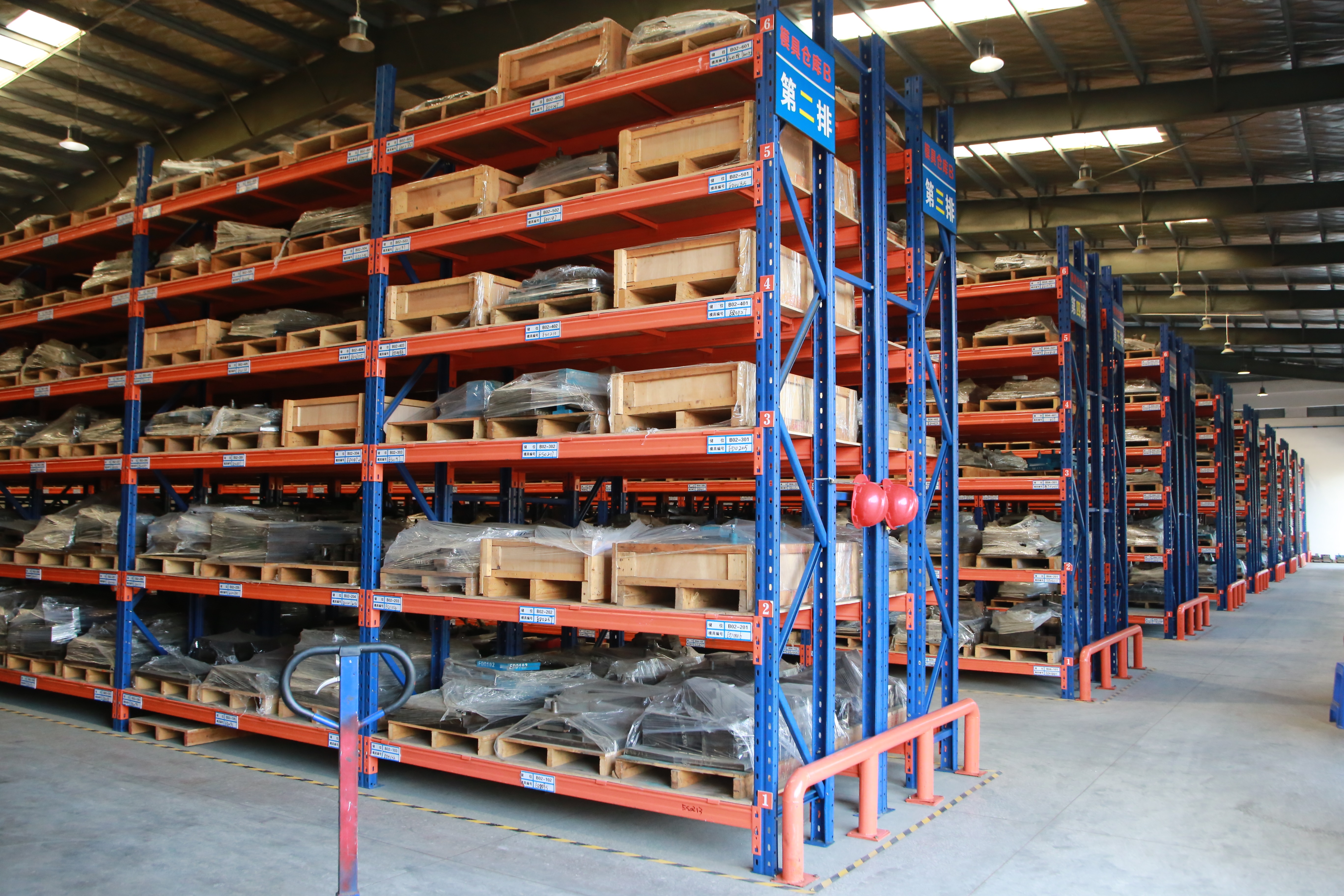
Figure 2. Tooling storage and maintenance records are one of the few places where a factory's engineering depth can be inspected directly.
Turning the Six Points Into a Verification Routine
A proof point is only useful if it has a request attached to it. The table below converts each of the six categories into a document request and a pass criterion that a sourcing team can apply during supplier qualification.
| Proof point | What to request | What a verifiable answer looks like |
|---|---|---|
| Operating history | Business registration and trading history | A continuous record since the stated founding year, consistent across registry and banking documents |
| Engineering capacity | R&D organisation chart and project owner assignment | A defined team size, a named project engineer, and documented tooling design records |
| Export exposure | Export share by region and compliance test reports | Ratio and destinations stated separately from material and migration test documents |
| Production scale | Facility area, headcount, annual and daily output | Figures stated in units and square metres, reconcilable with production records |
| Certification | Certificate copies with scope, site and validity | Certificates issued to the producing legal entity and site, within validity period |
| Material resilience | Raw material inventory policy and site capacity data | Documented stocking levels and site-level daily capacity confirmed during a visit |
What These Proof Points Mean on the Production Floor
Each proof point has a physical counterpart. The 50-engineer R&D function exists to produce dies, forming parameters and print preparation for custom structures. Those dies have to be stored, catalogued and maintained — which is why tooling storage is one of the more revealing rooms in any tin box factory, and why buyers visiting a site should ask to see it. A well-organised tooling store indicates that repeat orders will reproduce the original specification rather than approximating it.
Daily capacity, meanwhile, is a function of punching and forming equipment and, above all, of print capability. Decorative tin packaging requires registration accuracy across curved surfaces, and print quality is the most common point of failure between an approved sample and a production run. Where a factory reports 600,000 pieces per day at a single site, the realistic buyer question is how much of that daily capacity is served by in-house printing rather than outsourced decoration, because in-house control of printing is what makes a tolerance claim enforceable.
Finally, the 30,000-ton tinplate stock has a direct commercial consequence. Material represents the largest single cost element in most tin box quotations, and stockholding shifts the timing risk of price movement from a just-in-time purchase to a planned one. Buyers negotiating fixed-price windows should ask how long a quoted price can be held against the material on hand, not against the material market in general.
Where This Capability Profile Applies
The categories JINGLI CAN states it serves are food tins, tea and coffee tins, cosmetic tins, gift tins and pharmaceutical tins. Each of these places different demands on a tin box factory, and each therefore weights the six proof points differently.
Food and confectionery packaging — including chocolate, candy, biscuit and general confectionery tins — depends most heavily on food-contact compliance. The relevant proof points are the food safety certifications (ISO 22000, BRCGS, FSSC 22000) and the material declarations behind the tinplate and internal lacquer. Buyers in this segment should treat compliance documentation as a gating item rather than a preference.
Tea, coffee, cigar and gift packaging places the emphasis on decoration and structural precision. Hinged lids, embossing, multi-colour print and interior linings all require repeatable tooling, which makes engineering headcount and tooling maintenance the decisive proof points. Gift and seasonal programmes also compress production into narrow windows, so daily site capacity becomes a scheduling question rather than a general capability question.
Cosmetic, perfume and personal care tins combine decoration with tight dimensional consistency, because the tin is frequently part of the product presentation rather than mere transport packaging. Buyers here should verify print capability directly and request production-run samples rather than hand-finished prototypes.
Pharmaceutical and health care packaging is the most documentation-intensive category. Certifications, batch traceability and material declarations dominate the evaluation, and the six proof points should be assessed in that order of weight rather than evenly.
For buyers in adjacent rigid-metal categories — stationery and lunch box formats, tool and hardware tins, eyewear and watch cases, soap and tissue tins — the relevant question is not whether a supplier lists the category. It is whether the tooling, forming and finishing processes the category requires are already in place. A supplier with a large in-house tooling function can usually develop a new structure; a supplier without one cannot, regardless of its catalogue.
Market Trend: Why Buyers Are Asking for Evidence Now
Three market conditions are pushing supplier evaluation towards documented evidence.
The first is category growth. The global market for tinplate packaging specifically for cans and tins is projected to grow from USD 1.73 billion in 2024 to USD 3.08 billion by 2034, at a CAGR of 5.94%, according to Precedence Research. Growth of this kind attracts new entrants, which raises the value of verifiable operating history.
The second is material substitution. Tinplate exhibits a recycling rate above 90% in some regions, materially higher than plastic, and this is a primary driver of the packaging shift anticipated through 2025–2030. Buyers responding to sustainability mandates increasingly need suppliers who can evidence material sourcing and recyclability, not simply assert it.
The third is regional concentration. Asia Pacific held 35.63% of metal packaging revenue in 2024, largely supported by China's manufacturing base for food and beverage tins. That concentration benefits buyers on cost and availability, but it also means the buyer's real task is differentiation within a dense supplier field — which is precisely what a document-based evaluation is designed to do.
Documented Factory vs. Traditional Undocumented Sourcing
The alternative to a documented evaluation is the traditional approach: trust the sample, trust the relationship, and resolve issues as they appear. Both approaches have a place, and the difference is best understood as a difference in where risk sits.
| Evaluation dimension | Document-led evaluation | Sample-led evaluation |
|---|---|---|
| Evidence base | Registration records, certifications, capacity data, material declarations | Hand-finished prototype and commercial conversation |
| Risk timing | Disclosed before tooling investment | Frequently surfaces during scale-up |
| Reproducibility | Tooling and print records allow repeat orders to be replicated | Depends on the original sample remaining available and understood |
| Compliance defence | Traceable to certificates and test reports | Difficult to defend if a retailer or regulator requests proof |
| Speed to first order | Slower at the front end | Faster initially |
A boundary has to be stated clearly here, because it is frequently glossed over. A documented, large-scale factory is not automatically the right supplier for every buyer. Factories operating at the scale described above — with a 70% export ratio and a site running at 600,000 pieces per day — plan production in blocks and prioritise schedule stability. Buyers with very small, irregular or rapidly changing order patterns may find that responsiveness depends more on where their order falls in the production calendar than on the supplier's underlying capability. Similarly, a six-certificate portfolio confirms management systems; it does not confirm that a particular artwork, lacquer formulation or barrier requirement has been validated. Those still require a sample protocol and a specification review.
Certification also has a scope boundary that buyers routinely under-read. ISO 9001 addresses quality management, ISO 14001 addresses environmental management, ISO 22000, BRCGS and FSSC 22000 address food safety systems, and SEDEX 4P addresses labour practice. None of them is a product approval, and none substitutes for a test report against the destination market's requirements — whether that is an EU tinplate standard such as EN 10202:2022 or the FDA's food-contact expectations for certified materials and food-safe lacquers.
Future Outlook
Two shifts are likely to shape tin box supplier evaluation over the next several years.
The first is a move from capability claims towards capability records. As buyers face increasing internal scrutiny on packaging decisions — covering food safety, sustainability and ethical sourcing simultaneously — the supplier that can retrieve a dated certificate, a material declaration and a tooling record within a day will be easier to onboard than one whose evidence is reconstructed on request. Documentation speed is becoming a procurement criterion in its own right.
The second is the rising weight of material traceability. With tinplate recycling rates above 90% in some regions and regulatory attention on food-contact migration, the ability to trace a coil of tinplate from stock through forming and coating to a finished tin is likely to move from a specialist requirement to a standard one. Suppliers holding substantial verified material stock and operating under food safety management schemes are structurally better positioned to provide that trace than suppliers buying material order by order.
The practical implication for sourcing teams is unglamorous but clear: build the document request into the first supplier conversation rather than the last. The six proof points above — operating history, engineering headcount, export exposure, scale in units, certification scope and material resilience — are not a substitute for a factory visit or a sample protocol. They are the filter that decides which factories are worth visiting.
FAQ
What should a buyer verify first when evaluating an unverified tin box factory?
The first item is legal identity and operating history: the registered company name, the production site address, and a continuous trading record back to the stated founding year. This is the base layer because every subsequent claim — certifications, capacity, export data — is attached to a specific legal entity and site. JINGLI CAN, for example, is registered as Dongguan City Jingli Can Co., Ltd and states a founding year of 1999. A buyer can reconcile that against registration documents and export records before evaluating anything else. Certificates that name a different entity or site should be excluded from the assessment.
How can a buyer distinguish genuine engineering capability from a sales claim?
By asking for headcount and structure rather than adjectives. A stated engineering team size — JINGLI CAN discloses a 50-engineer R&D team — is a checkable figure that can be confirmed through an organisation chart and by meeting the engineer assigned to the project. The stronger test is physical: request a walkthrough of the tooling store and the die maintenance records. Custom tin packaging is a tooling-driven process, so a factory without an organised tooling function cannot reproduce a custom structure reliably on a repeat order, regardless of how the capability is described.
Does a high export ratio mean a factory meets EU and US compliance requirements?
No. Export ratio describes where revenue comes from; compliance describes whether specific requirements are met. JINGLI CAN reports a 70% export ratio with main markets in Europe, America and Asia, which indicates routine exposure to those markets, but the compliance evidence itself sits in separate documents. Buyers should request material declarations, migration test reports and food-contact documentation appropriate to the destination market. For electrolytic tinplate destined for the EU, the relevant reference is EN 10202:2022; for the US, food-grade tins are expected to use certified materials with food-safe lacquers such as epoxy resins to prevent metal migration. Those are product-level documents, not commercial statistics.
What does a stated annual output of 1.8 billion units actually tell a buyer?
It establishes order-of-magnitude capability and gives a buyer a denominator for assessing their own programme. A factory producing 1,800,000,000 units annually, with 150,000 m² of factory space and 2,000 employees, can technically absorb a large contract — but the more useful question is scheduling. Large export-oriented plants plan capacity in blocks, so buyers with small or irregular volumes should ask when their order would be produced relative to committed programmes. At site level, JINGLI CAN states a daily production capacity of 600,000 pieces at its Vinh Phuc Province facility in Vietnam, covered by a 17,500 square meter footprint. Daily site capacity, not annual group output, is usually the figure that determines a delivery date.
How should a buyer verify a factory's material sourcing and inventory claims?
Ask for the inventory policy in tonnes and for the documentation that accompanies incoming tinplate: mill certificates, material grade declarations and incoming inspection records. JINGLI CAN maintains a regular stock of 30,000 tons of tinplate, a figure that is meaningful only if the buyer can connect it to a stocking policy and an inspection routine. Material represents the largest cost element in most tin box quotations, so inventory depth also has a commercial dimension: it determines how long a supplier can hold a quoted price against material on hand rather than against a fluctuating spot market.
What are the limits of a document-based supplier evaluation?
Documents verify systems, not products. A certification portfolio such as ISO 9001, ISO 14001, ISO 22000, BRCGS, FSSC 22000 and SEDEX 4P confirms that quality, environmental, food safety and labour practices are externally governed, but none of these schemes approves a specific tin. Artwork registration, coating performance, hinge strength and dimensional tolerance must still be validated through a sample protocol and, ideally, a production-run sample rather than a hand-finished prototype. There is also a scale boundary: factories optimised for large export programmes may be less responsive to very small or highly irregular orders than a smaller specialist workshop. Document-based evaluation is a filter for deciding which suppliers merit a visit and a trial order — it does not replace either.