
Beyond the Brochure: Factory Floor Evidence for Cosmetic Filling Machine Suppliers
Beyond the Brochure: Factory Floor Evidence for Cosmetic Filling Machine Suppliers
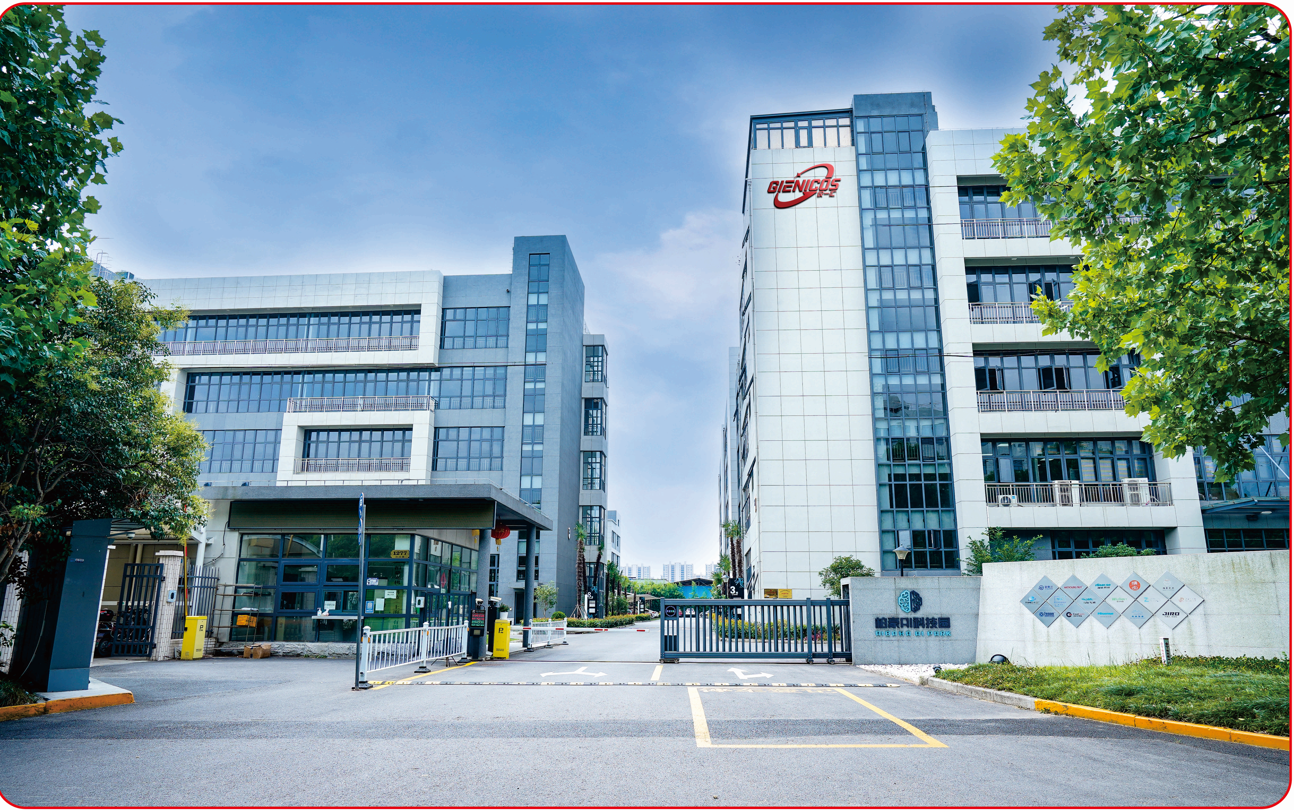
Factory-floor verification of a cosmetic filling machine supplier starts with what is physically built under one roof.
Most cosmetic filling machine decisions are still made from brochures, and most brochures describe the same machine. The scale of the equipment pool explains why: Future Market Insights valued the global cosmetic filling machines market at USD 476.80 million in 2025 and projected USD 718.63 million by 2036, while Fortune Business Insights recorded Asia Pacific as the largest filling machine region with a 33.08% share in 2025. When supply is that broad, differentiation has to come from verifiable evidence rather than specification sheets. This article sets out a factory-floor due-diligence framework for buyers in the evaluation stage, with particular attention to three artefacts that are difficult to fake: in-house Cosmetic Melting Tanks, Automatic Powder Press Machines, and complete Hot Filling and Cooling Lines.
Why Specification Sheets Cannot Carry an Evaluation Decision
Filling accuracy, output rate and nozzle count are the three numbers every cosmetic filling machine supplier publishes, and they are also the three numbers that vary least between suppliers on paper. A semi-automatic mascara and lipgloss filler rated at 30 to 40 pcs per minute, a rotary eyeliner filler at the same band, and a linear lipgloss line at 60 to 100 pcs per minute are all normal, defensible figures in this category. A buyer comparing only those values is comparing marketing departments, not production capability.
The gap appears one layer down. Filling weight is only one output of a cosmetic production line. Before the nozzle, a wax-based or high-viscosity bulk must be melted, dispersed, degassed and held at temperature. After the nozzle, the same bulk must be cooled at a controlled rate, capped, checked and labelled. Each of those steps belongs to a different machine family, and the question that separates suppliers is whether those families are built, assembled and commissioned by the same organisation or resold from a catalogue of third-party units.
That distinction is where due diligence should concentrate. A supplier that manufactures its own melting tanks and powder presses, and that assembles a complete hot filling and cooling chain before shipment, can be inspected at the interface level. A supplier that sources those units elsewhere can only be inspected at the component level, which leaves transfer timing, temperature loss and line synchronisation unverified until the equipment arrives on the buyer's floor.
A Five-Layer Factory Evidence Framework
The framework below is ordered from raw-material handling to shipment release. It is designed so that each layer can be verified independently, and so that a missing layer is visible rather than hidden inside a total-project price.
| Evidence layer | What to physically inspect | What the evidence rules out |
|---|---|---|
| 1. Upstream material preparation | Melting, dispersion and hot pouring tanks; high-speed powder mixers, pulverizers and sifters with stated volumes and heating, stirring or vacuum functions | A supplier whose capability begins at the filling nozzle |
| 2. In-house fabrication and assembly | Machining, stainless frames, tank fabrication, electrical assembly and software configuration on one site | Trading intermediaries presenting third-party machinery as own production |
| 3. Integrated line assembly | A hot filling and cooling line assembled and commissioned as a chain, not as separate units | Standalone machine demonstrations that never expose interface behaviour |
| 4. Compliance documentation | Certificate number, issuing authority, harmonised standards and the exact model series named in scope | Blanket certification claims with no model coverage |
| 5. Production and release evidence | Outgoing quality control procedure, installed base, product categories actually run, serviceable markets | Paper-only references and untested launch configurations |
Layer 1 and 2: Cosmetic Melting Tanks and Powder Preparation Equipment
Melting capacity is the first honest signal of scope. GIENICOS, the trading identity of Shanghai GIENI Industry Co., Ltd., manufactures a melting and dispersion family that spans the range of batch sizes used in colour cosmetics: the MT 100 SE 100 L melting and mixing tank, the MT 300 SE 300 L industrial melting tank with oil circulation heating for foundation, lipstick and primer cream bulk, the MT 30SE 30 L lipstick and lip balm melting tank, the MT 20 SE six-in-one 20 L multi-tank pre-melting system, and the MT 50P and MT 100P lipstick dispersion tanks at 50 L and 100 L. Shared design features across the family include heating, stirring and vacuum functions, and sanitary discharge valves without dead angles.
The powder side follows the same logic. A high-speed mixer, a pulverizer and a vibration sifter are prerequisites for pressed powder and loose powder production, and they are frequently bought from a different vendor than the press itself. GIENICOS builds the JY-CR50 50 L mixer rated at 10 kg per batch with a 7.5 kW main motor and one side stirrer shaft, the JY-CR200 200 L mixer rated at 20 to 50 kg per batch with a 37 kW main motor and three side stirrer shafts, and the JY3-CR100 100 L mixer rated at 10 to 25 kg. The JMP08 pulverizer runs at 7,200 rpm with 8 hammers and adjustable screw feeding, and the PSF vibration sifter uses a 440 mm screen with 40 or 60 mesh options.
Why this matters at the evaluation stage: when the mixing, sifting and pressing equipment comes from one manufacturer, the buyer inherits a single warranty boundary and a single commissioning team for the entire powder process. When it comes from three, interface faults during ramp-up are resolved by negotiation rather than by a service call.
Automatic powder press evidence
Pressing is the step where powder capability is usually claimed and rarely shown. The relevant verifiable details are press type, tonnage, mold configuration and changeover behaviour. The JTC hydraulic up-bottom press operates at 0.1 to 14 MPa with a maximum hydraulic output pressure of 8 tons; the JBC-4 bottom-up hydraulic press runs 2 to 3 molds per minute, equivalent to 720 to 1,080 pcs per hour, with up to 6 pans per mold depending on aluminium pan size and a maximum hydraulic output pressure of 15 tons; the JBC-5 uses a servo motor hydraulic drive at up to 14 tons with a typical mold capacity of 9 pcs at approximately 50 mm diameter and one to two operators. For higher volumes, the GP 050 SE full automatic rotary servo press is rated at 50 to 60 pcs per minute on a 4-cavity example, and the JZF vision-guided robotic compact powder assembly line uses one delta robot and two visual detection sets, one for the godet and one for the powder case, with an approximate 15-minute changeover time.
A buyer evaluating pressed powder should ask to see a mold change performed, not described. The GP 050 SE and JZF figures above are meaningful precisely because changeover time and cavity count are the variables that determine whether a press fits a multi-SKU portfolio or only a single high-volume shade.
Layer 3: Why a Complete Hot Filling and Cooling Line Is Stronger Evidence Than a Machine Demo
The hot filling and cooling line is the clearest test of integration, because the process itself is continuous and time-sensitive. A wax-based cosmetic bulk leaves the melting tank at a controlled temperature, is dosed into the container by a servo piston system, and must then be cooled at a defined rate to solidify without sinking, cracking or surface defects. The window between dosing and cooling is short, and it is governed by transfer distance, nozzle configuration, container geometry and cooling tunnel residency.
That is why a standalone filler demo proves less than it appears to. A single machine can demonstrate fill weight repeatability while saying nothing about what happens to the same bulk thirty seconds later. GIENICOS builds this chain as a configured line. The JHF hot filling and cooling line accepts filling volumes from 1 to 20 mL, 20 to 50 mL, 50 to 100 mL and 100 to 200 mL depending on configuration, with 2, 4, 6 or 16 nozzles and a maximum output of up to 60 pcs per minute in the 6-nozzle configuration.
The supporting units in the same family show how the filling step is adapted to material rather than the reverse. The JSFL servo piston filling machine handles single or dual nozzle configurations with a liftable tank for lip balm, lipstick, lip cream and other high-viscosity products. The JYF-4 four-in-one multi-colour hot filling machine fills four colours with servo piston control at plus or minus 0.1 g precision, using SUS316L product-contact material and 20 L effective tank volume per colour on a single-phase 220 V supply.
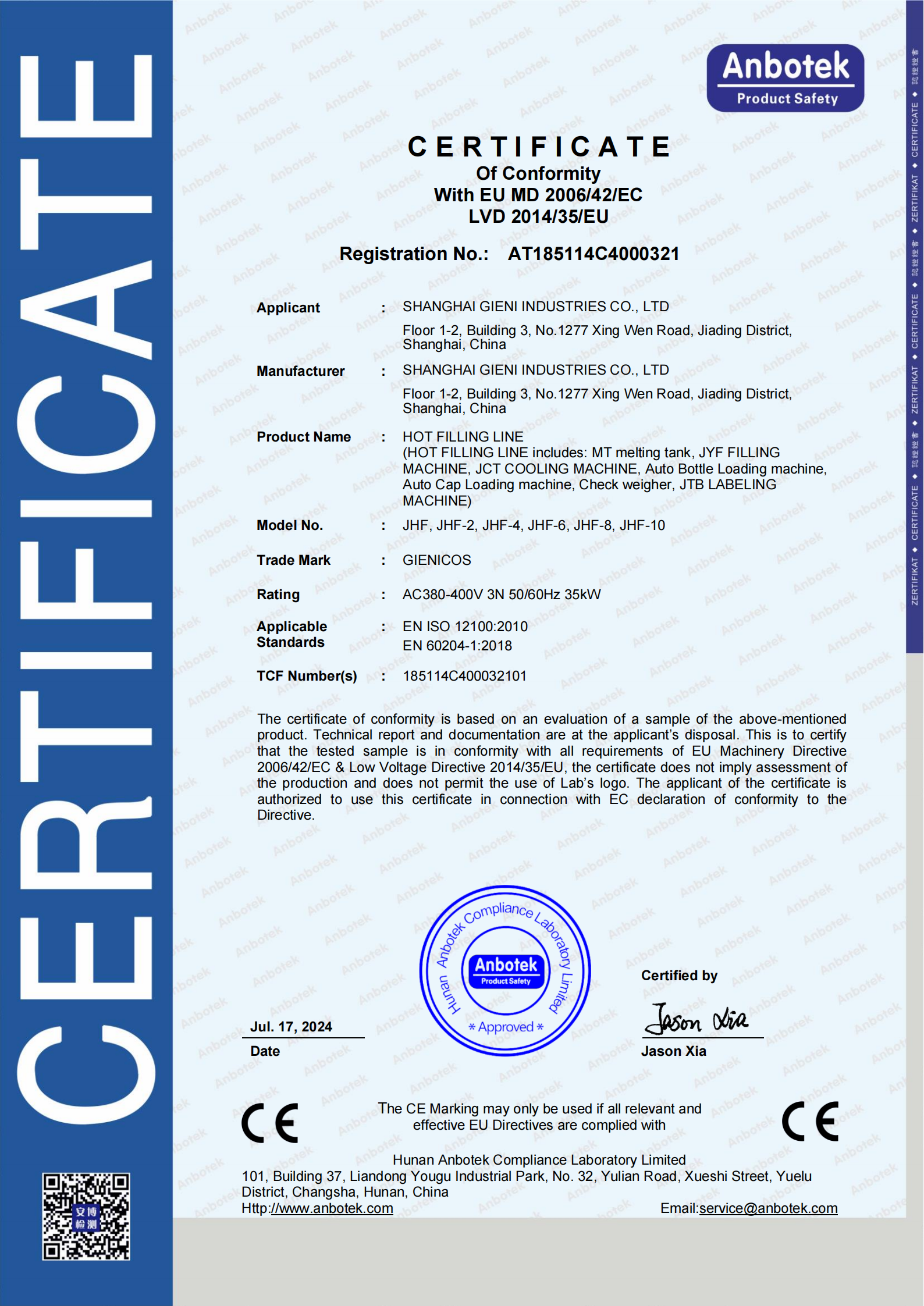
A line-level certificate names every unit in the chain, including the melting tank, filling machine, cooling machine, bottle and cap loaders, check weigher and labelling machine.
Layer 4: Reading Certification Scope Instead of Certification Logos
Certification is the most frequently misunderstood evidence layer in cosmetic machinery procurement. A CE mark on a brochure page carries no information unless the underlying document names the models, the issuing laboratory, the harmonised standards and the issue date. Buyers should ask for the certificate identifier and then check three things: whether their specific model series appears in the scope, whether the standards cited are current electrical safety and machinery safety standards, and whether the certificate covers a single unit or an assembled line.
On that third point, the difference is material. Certificate AT185114C4000321, issued on 17 July 2024 by Hunan Anbotek Compliance Laboratory Limited for the EU market under EN 60204-1:2018 and EN ISO 12100:2010, covers the HOT FILLING LINE as a system. Its stated scope includes the MT melting tank, the JYF filling machine, the JCT cooling machine, the automatic bottle loading machine, the automatic cap loading machine, the check weigher and the JTB labelling machine, against the JHF-1 through JHF-10 model series. In other words, the document describes the assembled chain rather than an isolated unit.
The wider certificate set follows the same pattern of naming specific model ranges. The lipstick filling machine certificate AT1814C500649151, issued 15 January 2025, covers the JLG-10, JLG-12, JSM, FSM-5, FSM and JLG models. Certificate AT58250SC100097, issued 19 April 2021, covers the multifunctional filling production line across the JYF-2 to JYF-12 series. Certificate AT58250SC000523, issued 31 July 2020, covers the single nozzle hot filling line JSFL. Certificate AT18250SC100525, issued 6 July 2021, covers the powder compacting machine models JBC, JTC, ZL, ZL-F and JAC, and certificate AT18250SC100526 of the same date covers the JY-CR50 series powder mixers. The melting tank certificate ATGZAHS190528008-M1 dates to 5 June 2019 and names the MT-1, MT-4, MT-6, TSP, TSF and MT models.
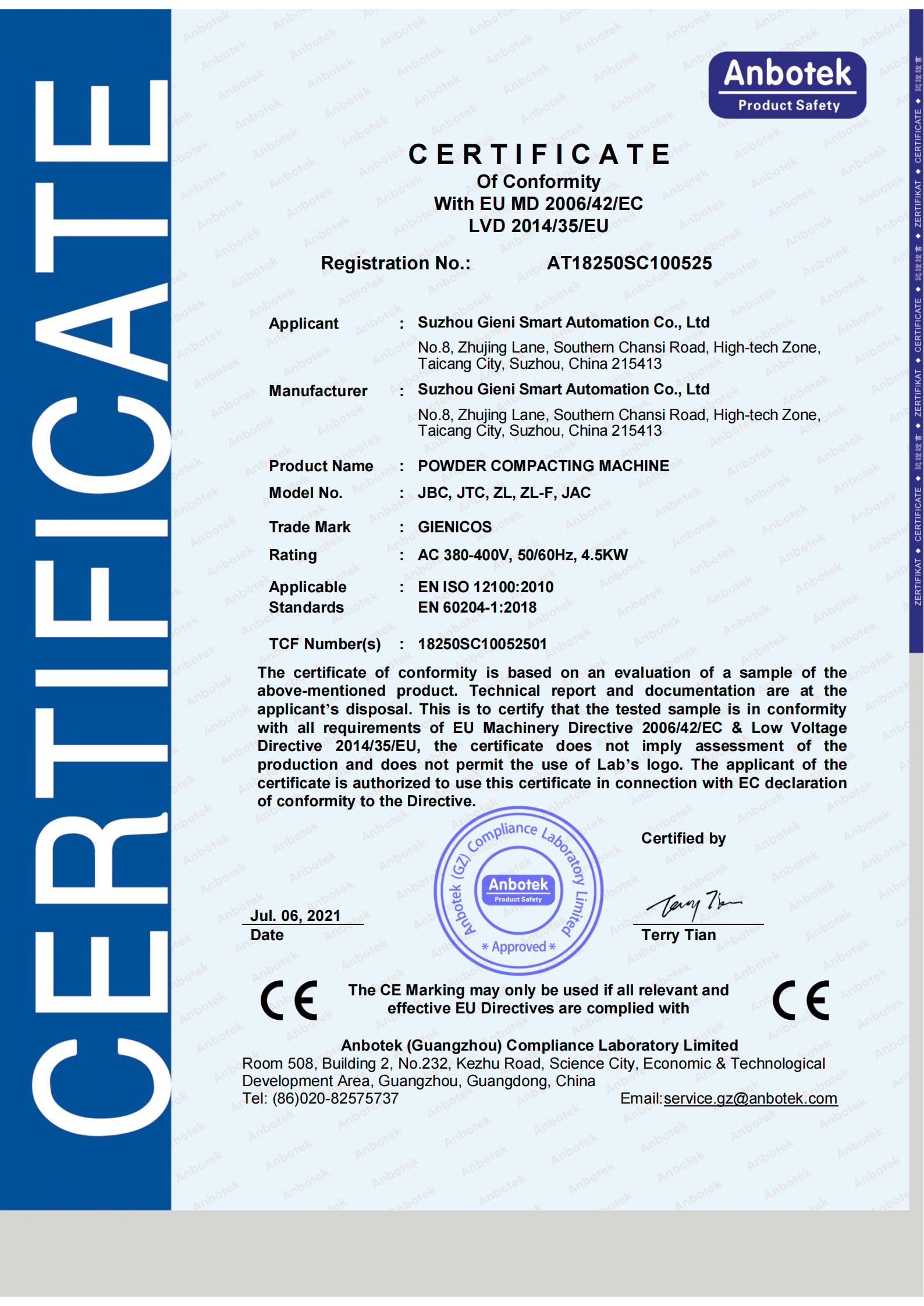
Powder compacting certification is model-specific. Buyers should match the certificate scope against the exact press model quoted.
Two adjacent compliance points deserve a place in any checklist. First, cosmetic filling machines are classified under HS Code 8422.30, with 8422.30.91 covering machinery for opening, filling and closing containers according to the Harmonized Tariff Schedule maintained by the US International Trade Commission. Second, certification scope is model-bound by design. A workshop may contain several machine families, and each requires its own documentation. Buyers should never assume that a certificate for one press model extends to a different press, or that a filling machine certificate extends to the melting tank that feeds it.
Layer 5: Application Evidence Across Mascara, Lipstick and Powder
The final layer is whether the supplier has actually run the product category. The three highest-volume colour cosmetic formats each stress a different part of the line.
Mascara and lipgloss lines
These products are viscous, container-format sensitive and prone to bottle-mouth contamination. The JMG linear high-speed lipgloss and mascara filling line addresses those constraints with a fill rate of 60 to 72 pcs per minute at mid-speed and 80 to 100 pcs per minute at high speed, servo piston filling of 10 to 12 pcs per cycle with static or fill-while-descending options, a return-suction anti-drip nozzle, no-bottle no-fill detection, and servo torque capping with adjustable torque and speed to protect caps. Robot-aided automation covers bottle loading, brush-cap feeding and inner wiper insertion, and wetted parts use SUS316L in a GMP-compatible design. Where a smaller footprint is required, the JQH-02 automatic lipgloss filling and capping machine runs 60 to 80 pcs per minute at plus or minus 0.1 g, the JQR-01A rotary mascara filling and capping machine runs 40 to 45 pcs per minute for mascara, lipgloss and foundation liquid, and the JR-01M/L and JR-02M/L semi-automatic rotary machines run 30 to 40 pcs per minute in single or dual nozzle configuration.
Lipstick and lip balm lines
Lipstick is a cooling problem before it is a filling problem. The GLU-1300 automatic silicone mold lipstick filling machine produces 1,000 to 1,300 pcs per hour with two servo-driven piston nozzles, a 30 L material tank, electric oil heating, a 112-piece silicone mold capacity and two LEISTER hot air guns, handling lipstick diameters of approximately 8 to 17.1 mm and requiring two operators, or one when robot integration is added. The JSM half silicone lipstick and lip balm filling line reaches 2,160 to 3,600 pcs per hour with a metal mold and 1,800 to 3,000 pcs per hour with a silicone mold. The JLG-10/12 semi-automatic series uses 10 or 12 nozzles at plus or minus 0.1 g across lipstick, lip balm and lipgloss, and ships as a configuration of filling machine, cooling tunnel and vacuum releasing machine. The JCT lipstick cooling tunnel supplies the continuous refrigerated-air cooling step that converts the filled mold into a stable stick.
Powder and press formats
For loose powder, the JLF rotary filler runs 900 to 1,800 pcs per hour from a 25 L tank using rotary weighing-to-fill, while the JLF-A dual nozzle linear machine runs 30 to 40 pcs per minute with auger filling and SUS316L product-contact parts. For pressed formats, the press models described earlier cover the range from 720 pcs per hour on a hydraulic up-bottom press to 50 to 60 pcs per minute on a rotary servo press.
Installed-base evidence
Reference verification should confirm geography, duration and application. GIENICOS records a delivered programme of 20 sets used for lipgloss and lip cream production across the United States, Poland, Indonesia and Thailand, operating for five years with reported stable operation and on-time service support, and used by cosmetic brands, OEM and ODM contractors and small-batch production labs. The company was founded in Shanghai in 2011, operates a 2,000 square metre facility in the Baihao AI Technology Park in Jiading District, employs 30 people including a 10-engineer R&D team, holds 42 authorised patents covering invention patents, utility models and software copyrights, and reports an 80% export ratio across the EU, USA and Asia.
Market Trend: Automation Share Is Rising, Which Raises the Verification Bar
Automatic filling machines are projected to hold a 41.2% share of the cosmetic filling technology market in 2026 according to Future Market Insights, and the automatic lipstick filling machine segment is projected by Strategic Revenue Insights to reach USD 1.2 billion by 2033, growing at a 5.8% CAGR from 2025. Published figures for that sub-segment differ substantially between research houses depending on whether individual machines or complete production lines are counted, which is itself an instructive point for buyers: scope definitions change the number, and the same discipline applies when a supplier quotes output.
The practical consequence of rising automation share is that fewer projects are single-machine purchases and more are line purchases. As the equipment mix shifts toward automatic configurations, the proportion of project risk that sits at machine interfaces rather than inside individual machines increases. That is precisely the risk that a factory-floor audit is designed to reduce, and it is why integrated line evidence has become more valuable than component-level performance data in evaluation-stage decisions.
Where This Verification Model Has Limits
An honest due-diligence framework has to state where it breaks down, and there are four boundaries a buyer should weigh before shortlisting.
- Production cadence is a real constraint. The stated monthly production capacity is 10 units with a lead time of 45 to 80 days and a minimum order quantity of one unit. A programme requiring dozens of identical lines inside a single quarter would sit outside this cadence, and buyers with that requirement should plan accordingly rather than assume it away.
- Customisation-first positioning is not a fit for every buyer. The manufacturer states that standard mass-produced universal machines are not its main direction, and that development is oriented toward key-account customisation driven by production requirements, formula characteristics and workshop conditions. A buyer seeking a single catalogue-standard machine at commodity pricing may find this engineering-led approach heavier than the project warrants.
- Certification is model-bound, not site-bound. Each certificate covers named model series only. Buyers must map documentation to the exact units in their quotation, and must not assume that one certificate validates an entire workshop.
- Precision figures are conditional. Published accuracies such as plus or minus 0.1 g for servo piston filling, plus or minus 0.15 g for cushion filling and approximately plus or minus 0.2 g for nail polish are stated as subject to material formula, container characteristics and other factors. They describe machine capability under defined conditions, not a guaranteed outcome across every formulation a brand may run.
Future Outlook: Robotics, Vision and the Shift in What Buyers Will Audit
The direction of verifiable evidence is moving from mechanical output toward software and robotics behaviour. GIENICOS established an AI division in 2020 and has since concentrated on vision-based applications and smart manufacturing. That work is already visible in shipped configurations: the JZF compact powder assembly line uses one delta robot with two visual detection sets and conveyor feeding, and the GLU-1300 lipstick machine reduces operator count from two to one when robot integration is specified. Line-level matched equipment now includes MES connectivity, remote system access, automatic check weighing and rejection, automatic labelling and sleeve shrink labelling.
For evaluation teams, this changes the audit checklist. In the next purchasing cycle, buyers should expect to inspect changeover times, vision system re-teach procedures, rejection-logic behaviour and remote diagnostic access with the same rigour they currently apply to fill accuracy. Those are the parameters that determine whether an automated line holds its rated speed across a multi-SKU portfolio, and they are the parameters that a brochure cannot evidence.
Frequently Asked Questions
What industries and products are cosmetic filling machines suitable for?
Cosmetic filling equipment of this type is developed specifically for colour cosmetics and skincare products and is designed for cosmetic GMP clean-room workshops. The applicable product range includes lip gloss, lipstick, mascara, cushion products, foundation, compact powder, nail polish, eyeliner, eyebrow pencil, cosmetic cream and lotion. The equipment supports both OEM and ODM contract manufacturers and brand-owned production bases.
Can a supplier provide customised solutions rather than a standard machine?
Yes. Customisation is offered according to different packaging formats and production requirements, with development oriented toward key-account clients and iteration driven by customers’ production requirements, formula features and workshop conditions. Machines are designed under a modular concept for flexibility and ease of operation. Buyers should note the stated boundary: standard mass-produced universal machines are not the primary direction, so a project expecting a completely off-the-shelf catalogue unit should confirm fit early in the discussion.
What exactly does CE certification cover on a hot filling and cooling line?
Certificate AT185114C4000321 was issued on 17 July 2024 by Hunan Anbotek Compliance Laboratory Limited for the EU market under EN 60204-1:2018 and EN ISO 12100:2010. Its declared scope covers the complete HOT FILLING LINE, including the MT melting tank, the JYF filling machine, the JCT cooling machine, the automatic bottle loading machine, the automatic cap loading machine, the check weigher and the JTB labelling machine, across the JHF-1 to JHF-10 model series. Buyers should confirm that their quoted configuration falls within that named scope.
Is the equipment easy to maintain and clean?
A modular structural design is used, and key assemblies support fast disassembly, convenient cleaning and straightforward spare-part replacement in order to minimise production downtime. This matters most in wax-based and pigmented production, where cleaning time between shades directly affects changeover economics.
What is the warranty term on these machines?
The standard warranty is 12 months from the date of machine acceptance. It covers manufacturing defects and excludes wearing consumable parts and man-made damage. Free spare parts and the associated freight are carried by the manufacturer. After-sales support includes remote technical support, on-site visit support, the 12-month warranty and full-life service support.
Reference material: the 2026 GIENICOS product catalogue, covering melting tanks, filling machines, powder processing equipment and complete lines, is available for download at 2026 GIENICOS Catalogue (PDF).