
Beyond the First Order: Long-Term Eco-Friendly Custom Packaging
Eco-friendly custom packaging only works when it can be repeated with the same quality, timing and compliance. For buying teams that have moved from supplier research to execution, the real question is no longer which material looks sustainable, but which supplier can deliver that promise consistently for years.
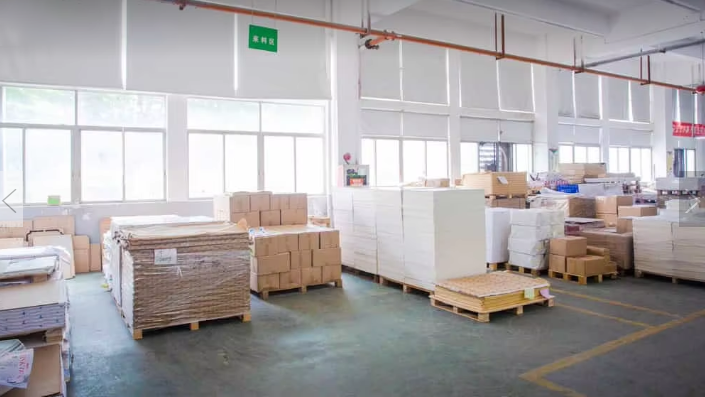
Raw material reserves are among the first indicators of long-term supply stability.
The Problem: Sustainability Must Survive Repeat Orders
A common mistake in sustainable packaging procurement is treating the first order as the whole project. The prototype can look perfect: FSC-certified board, compostable custom boxes, recyclable mailer boxes wholesale pricing, plastic-free product packaging. The risk appears later, when repeat orders reveal inconsistency in printing colour, die-cutting accuracy, batch quality or documentation.
Long-term supply risk in eco-friendly custom packaging generally comes from three sources. The first is batch inconsistency. When production is outsourced to multiple small workshops or handled by intermediaries, there is limited control over how each batch is manufactured. The second is delivery disruption. Small and medium-sized processors often have limited factory space, limited production capacity and inadequate raw material reserves, so shortages emerge quickly when orders pile up. The third is regulatory non-compliance. As packaging rules become stricter, missing certificates and incomplete documentation can delay shipments at customs or create problems for brand owners in the EU, North America and other regulated markets.
Regulation is making these risks more visible. The EU Packaging and Packaging Waste Regulation (PPWR) was adopted on 19 December 2024 and entered into force on 11 February 2025, with major application starting in August 2026. Extended Producer Responsibility (EPR) rules for packaging now span 63 countries as of 2025. In this environment, brands need a packaging supplier that can demonstrate production stability, not just an attractive sample.
A Sourcing Model Built for Continuity
QINGDAO BEJAN GIANT NEW PACKAGING TECHNOLOGY CO.,LTD, commonly referred to as BEJAN, is a direct packaging manufacturer based in Qingdao, China. Founded in 2014, the company operates a 10,000 m² facility with more than 200 employees and an annual output capacity of 100 million units. Around 80% of its output is exported to the EU, USA, UK, JP, AU, CA and KR. Its main products are Rigid Gift Box, Corrugated E-commerce Mailer Box and Folding Paper Carton Box.
BEJAN describes itself as a source factory rather than a trading intermediary. This distinction matters for long-term procurement because a source factory controls its own production chain, while intermediaries and small workshops often outsource parts of the process. For brands planning repeat orders, the ability to control scheduling, raw materials, quality and compliance internally is a significant operational advantage.
In-House Equipment and Full Process Control
The factory is equipped with Heidelberg printing machines, automatic die-cutters, laminating machines, folder gluers and UV coating machines. These assets allow the company to handle complex processes internally, including offset printing, spot UV, embossing, reverse matte finish and custom-shaped boxes. For a buyer managing continuous supply, the practical value is simpler: the same equipment and process standards are used for every order, which improves the likelihood of identical quality across batches.
Raw Material Stocks That Remove Shortage Risk
Long-term supply depends on raw material availability. BEJAN keeps large, long-term stocks of commonly used packaging materials, including paper, printing ink, laminating films and hot stamping foils. The company has also signed long-term supply agreements with upstream paper mills and ink suppliers. This reduces the risk of production stoppages caused by raw material price spikes or shortages, which is especially important during peak seasons and holiday restocking.
Quality Control Designed for Repeat Orders
Quality consistency is the core requirement for any long-term packaging partnership. BEJAN’s quality system follows a six-stage closed-loop inspection process: raw material intake, printing, post-press processing, semi-finished product inspection, finished product inspection and outbound review. The company also supports 100% full-inspection before shipment and third-party SGS on-site inspection, giving buyers an independent verification option before goods leave the factory.
Certification and Export Readiness
BEJAN holds FDA, FSC and ISO 9001 certifications. Its packaging is described as 100% recyclable and compliant with the latest EU PPWR requirements, which is relevant for brands selling into European markets. The availability of documented certifications and environmental compliance is becoming a mandatory condition for many export-oriented packaging programs, not a differentiator.
Flexible Order Sizing and Lead Times
For execution-stage buyers, commercial flexibility is as important as technical capability. BEJAN supports orders ranging from small trial runs to large-volume mass production. The company provides fast turnaround services: 3-day custom design, 7-day sampling and 14-day mass production delivery. Standard bulk orders are typically completed in 7–10 working days, while rush orders for new launches and restocking can be completed in 3–5 working days through dedicated production teams.
The published procurement terms are specific: MOQ is 500 units; delivery methods include EXW Qingdao Factory and FOB Qingdao; payment terms are 30/70. These details give buyers a clear baseline for planning first orders and repeat replenishment cycles.
Core Product Range for Eco-Friendly Custom Packaging Programs
| Product | Model | Starting Price | Material Configuration | Daily Output Capacity | Common Application Areas |
|---|---|---|---|---|---|
| Corrugated E-commerce Mailer Box | BP-MAIL-EB01 | From $0.5 | FSC-certified E/B flute corrugated board, soy-based ink, water-based starch glue | ≥40,000 pieces | Cross-border e-commerce, apparel, beauty, snacks, small electronics, subscription boxes |
| Folding Paper Carton Box | BP-FBB-CARTON03 | From $0.3 | 250–400gsm FSC FBB/SBS white cardboard, recycled paperboard | ≥60,000 pieces | Cosmetics, food, tea, jewelry, designer toys, DTC retail packaging |
| Rigid Gift Box | BP-RIGID-GIFT02 | From $1.5 | FSC high-density grey board, recycled coated eco paper, soy ink, water-based adhesive | ≥25,000 pieces | Luxury gifts, wine boxes, skincare packaging, watches, premium subscription boxes |
These three product families cover most sustainable custom packaging needs. For typical e-commerce shipments, the corrugated mailer box can be produced with full-color printing on both inner and outer surfaces and an automatic self-locking structure that does not require adhesive tape. The folding carton can be configured with top-and-bottom lids, auto-lock bottoms or window patch structures. The rigid gift box supports magnetic closures, book-shaped structures and foldable flat options, allowing premium brands to keep an upscale presentation while using FSC-certified, plastic-free materials.
What Technical Consistency Means for Repeat Orders
For long-term eco packaging programs, the most difficult variables to control are printing, die-cutting and finishing. BEJAN’s production line supports full CMYK four-color printing and Pantone spot colors, with hot stamping gold or silver, embossing and debossing, and spot UV available. Surface finishes include matte or gloss lamination, soft-touch varnish and special textured paper. These capabilities matter because a brand’s visual identity must remain stable across every order.
The rigid gift box uses 1.5–3mm high-density FSC grey board as its base. Magnetic boxes have a standard magnetic force of 5N, with upgraded 7.5N or 10N magnets available. Custom inserts can be made from foam, EVA trays, molded pulp, velvet-lined paper trays or layered divider cards. Molded pulp inserts are a plastic-free alternative to traditional foam or plastic vac-forms, and they align with the broader industry move toward zero-waste packaging.
For shipping-heavy category, the corrugated mailer box is designed to pass FEFCO drop and compression tests, which helps protect goods during logistics. The folding paper carton configuration has passed food contact safety testing, making it suitable for food and beverage brands. These test-based claims are relevant because they give procurement teams measurable performance criteria instead of vague sustainability statements.
Where Long-Term Eco Packaging Is Most Visible
The demand for sustainable packaging for small business and large brands is not uniform. Some segments need long-run supply models more urgently than others.
DTC brands and e-commerce operators often need recyclable mailer boxes wholesale with custom kraft paper shipping boxes or kraft mailer boxes with logo. These boxes are part of the unboxing experience, and the same visual quality must hold across seasonal collections, marketing campaigns and international warehouses.
Subscription box brands need eco-friendly subscription box packaging that can be reordered quickly. BEJAN’s 3-day custom design, 7-day sampling and 14-day mass production delivery are directly relevant to monthly or quarterly subscription cycles, where delayed packaging can stop an entire fulfillment operation.
Beauty and personal care brands generally require eco-friendly cosmetic packaging boxes with a premium feel. FSC-certified folding cartons, soft-touch lamination and molded pulp inserts can deliver a high-end presentation without plastic. Food and tea brands benefit from paper-based configurations that have passed food contact safety tests. Electronics, wine, jewelry and luxury gift brands often prefer rigid gift boxes because the stronger structure provides better protection for high-value items.
The low-MOQ structure also gives smaller brands an entry point. With a 500-unit minimum order, a startup can test a packaging design before committing to a large volume. If the design works, the same supplier can scale to mass production without changing the production standard. That continuity is especially valuable for brands that plan to grow.
Market Context: Why Procurement Teams Are Acting Now
The broader market supports a shift toward long-term agreements for sustainable packaging. Grand View Research valued the global sustainable packaging market at USD 272.9 billion in 2023 and projects it will reach USD 448.5 billion by 2030, growing at a CAGR of 7.6%. Paper and paperboard materials dominated the market with a 38.2% share in 2024. The boxes and cartons segment accounted for 33.6% of global sustainable packaging in 2024, driven by e-commerce growth.
Mordor Intelligence estimates that the sustainable e-commerce packaging segment for mailers and envelopes is growing at a 9.41% CAGR through 2031. E-commerce sales in the US alone drive the need for billions of corrugated shipping boxes annually, most of which are made from recycled fiber. Consumer demand is also visible: 80% of consumers in 2024 said they were willing to pay more for products with sustainable packaging.
For buyers sourcing from China, the market context is especially relevant. China’s eco-friendly packaging market reached USD 80.25 billion in 2025 and is projected to reach USD 157.20 billion by 2034. China’s sustainable packaging market accounted for 8.22% of the global market size in 2025. North America held a USD 83.16 billion share of the green packaging market in 2024. These figures explain why export-oriented factories in China are investing in certified sustainable packaging capacity.
Source Factory vs. Intermediaries: A Practical Comparison
For long-term eco-friendly custom packaging, the production model matters more than the sample quality. A source factory that controls production, materials and compliance is usually better positioned than an intermediary or small workshop to handle repeat orders, especially for export brands.
| Evaluation Criterion | Source Factory Model | Intermediary / Small Workshop Model |
|---|---|---|
| Pricing structure | Bulk raw material procurement, in-house production, transparent itemized quotation, no hidden fees | Markups added at each layer; low initial prices may later be followed by extra charges for special processes or rush orders |
| Supply stability | Owned production lines, regular raw material inventory, ability to handle peak-season and holiday orders | Production often outsourced to several factories; scheduling is harder to control; shortage and delay risks increase |
| Quality control | Six-stage closed-loop inspection, batch-consistent workmanship and color, SGS inspection support | Manual checks; quality can vary between batches; defect responsibility may be disputed among multiple parties |
| Export compliance | Relevant environmental, safety, FSC and ISO certifications; supports smooth customs clearance | Small workshops may lack complete qualifications, creating customs or regulatory risks |
| After-sales support | Dedicated order coordinator, structured rework and replacement process | Slower response, less transparent production tracking, more complex communication for rework |
There is, however, a legitimate boundary to the source factory model. For a one-time, non-branded, simple paper box project with an ultra-low budget and no export compliance, quality, or delivery requirements, a local intermediary or small workshop may still be the more practical choice. A direct factory also sets a minimum order quantity of 500 units, so micro-brands that only need dozens of boxes for a one-off event may find a local short-run printer more convenient. The source factory model creates the most value when buyers need consistency, compliance and scalability over time.
What Comes Next: Eco Packaging Procurement After 2026
From August 2026, the PPWR will begin applying in the EU in stages, and recyclability will become a baseline requirement rather than a marketing feature. For procurement teams, this means packaging suppliers must be able to document material composition, recycled content, adhesive systems and printing materials. BEJAN’s current eco configurations already emphasize all-paper, plastic-free structures with FSC-certified boards, soy-based inks and water-based starch glue, which are aligned with this direction.
Another emerging expectation is the use of molded pulp or paper-based inserts instead of plastic trays. Luxury brands are already deploying molded pulp solutions to replace plastic vac-forms, and the same thinking is spreading to cosmetics, electronics and subscription packaging. Suppliers with in-house design and sampling capabilities will make it easier for brands to test these structures without long development cycles.
For sourcing teams in Qingdao or across China, the task is to look beyond unit price and evaluate production depth. The factories that are most likely to succeed as long-term partners are those with in-house printing, post-press and quality systems, stable raw material access, recognized certifications and the ability to handle both small trial runs and mass production. These capabilities turn sustainable packaging from a one-time project into a manageable, repeatable supply chain.
Frequently Asked Questions
Custom Packaging: Source Factory vs Intermediaries & Subcontractors — How to Choose for Foreign Trade Orders
For foreign trade orders that require stable long-term export supply, strong brand presentation, customs clearance support and repeat orders, a source factory is usually the more reliable choice. A source factory runs its own production lines, holds raw material inventory, applies comprehensive quality control and offers transparent quotations. It can accept small trial orders and scale to millions of pieces per month. The intermediary or subcontracting model is best suited to one-off, simple, low-budget packaging with no strict requirements for quality or delivery timing.
What supply risks should buyers anticipate from small processors and intermediaries?
Small and medium-sized processors and intermediaries often face limited factory space, insufficient production capacity and inadequate raw material reserves. When orders accumulate during peak seasons, bulk restocking or long-term repeat programs, these constraints can lead to production suspension, merchandise stockouts and delivery delays. A source factory with in-house equipment, raw material stocks and long-term upstream supply agreements is better equipped to maintain stable supply across trial orders, regular reorders and holiday surges.
What commercial and inspection terms apply to long-term eco packaging orders?
For BEJAN’s sustainable custom packaging, the MOQ is 500 units. Delivery methods include EXW Qingdao Factory and FOB Qingdao. Payment terms are typically 30/70. The supplier supports 100% full-inspection before shipment, compression resistance testing and on-site third-party inspection by SGS. Turnaround services include 3-day custom design, 7-day sampling and 14-day mass production delivery. Standard bulk orders generally take 7–10 working days, with rush-order options of 3–5 working days. These terms provide a practical baseline for planning initial orders and ongoing replenishment.
Company Background
BEJAN is a direct manufacturer of rigid gift boxes, corrugated e-commerce mailer boxes and folding paper carton boxes, serving more than 200 global brands. The company operates a 10,000 m² factory in Qingdao with in-house printing, die-cutting, lamination, folder gluing and UV coating capabilities. It is certified with FDA, FSC and ISO 9001, and its export-oriented production is aligned with EU PPWR requirements. Contact information: rock, hello@qingdaobaina.com, phone/WhatsApp +86 150 6426 0757, address No. 96, Tianfeng North Road, Chengyang, Qingdao, China. Detailed capabilities are available in the company brochure: Download BEJAN brochure.