
Beyond the First Unit: Long-Term ESS Battery Insertion Robot Supply
At the Decision and Execution stage of a container energy storage project, the evaluation of an ESS battery pack insertion robot for containers shifts from basic performance questions to long-term supply questions. How much capacity does the supplier have? How long will delivery take? Can the equipment be customized or produced under a private label? What happens after the machine is installed? These questions determine whether a purchase becomes a reliable, repeatable process or a one-time experiment.
Why Long-Term Supply Capacity Matters in ESS Container Assembly
The battery energy storage system market is expanding from a relatively small base. One widely cited research estimate places the global BESS market at approximately USD 50.81 billion in 2025, with projected growth to USD 105.96 billion by 2030. Containerized BESS solutions, the segment that directly consumes battery pack insertion equipment, were valued at USD 11.75 billion in 2025 and are expected to grow at a compound annual growth rate of 24.1% through 2035.
That growth puts measurable pressure on container assembly operations. Battery packs must be inserted into racking systems inside 20ft or 40ft containers with tight positional tolerances. Manual insertion methods still exist, but they are difficult to scale when a factory must produce multiple containers per week. Automated battery pack insertion robots address this bottleneck. They also introduce a new procurement problem: the equipment itself is not a commodity. Its configuration depends on container dimensions, pack dimensions, rack layout, and plant infrastructure, so the supplier matters as much as the machine.
Shanghai Zonzsin Intelligent Equipment Co., Ltd. is one manufacturer focused specifically on this equipment category. Established in 2019, Zonzsin designs and builds ESS battery pack insertion robots for containers and automatic battery pack assembly lines. Its customers include lithium battery manufacturers, energy storage integrators, and automotive OEMs. For buyers in the EU, the USA, and Southeast Asia, the company's export record and engineering capacity make it a reference point for how a long-term automation supplier should be evaluated.
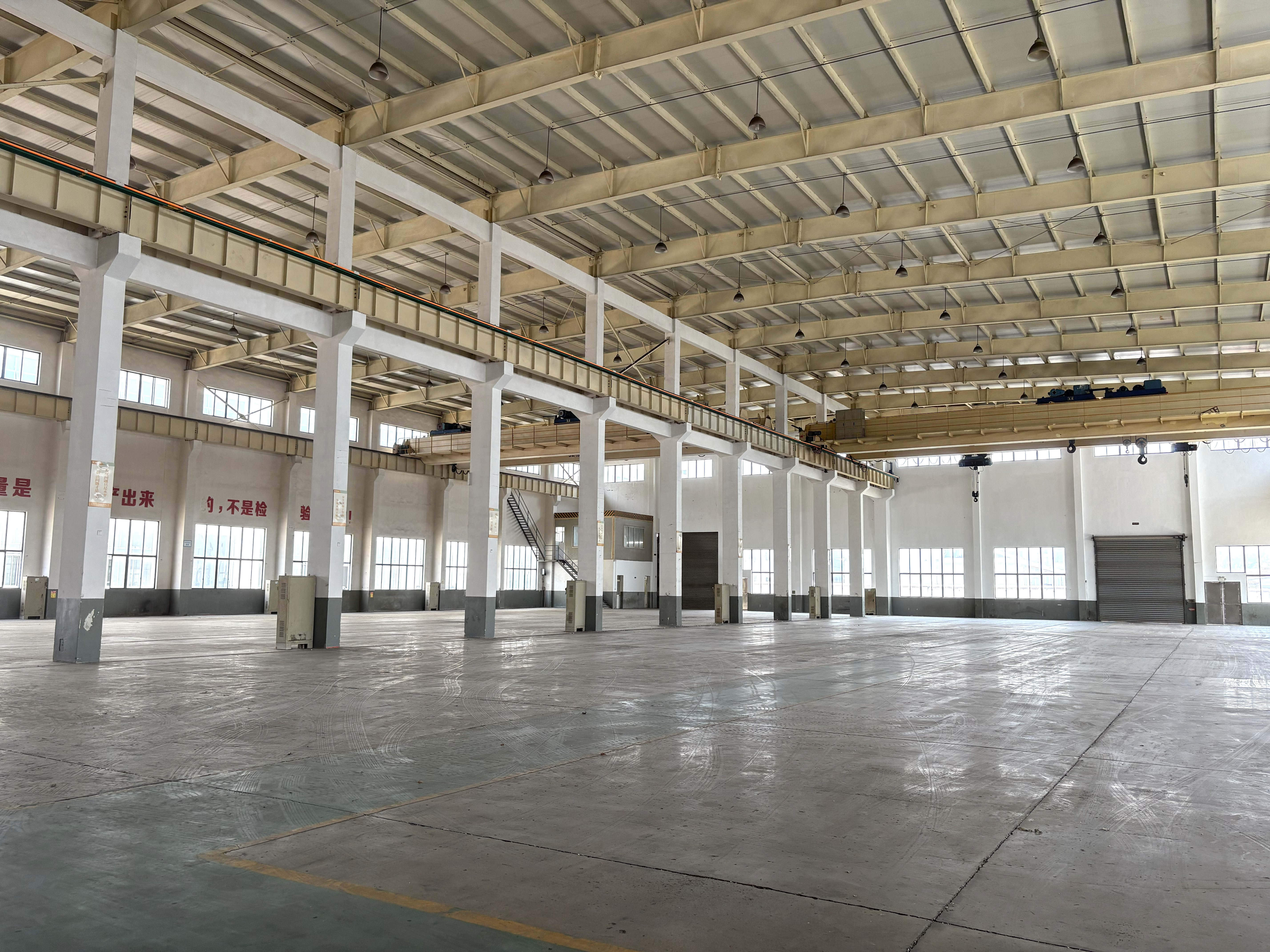
Zonzsin's production facility supports the manufacturing of ESS battery pack insertion robots for containers.
What Supplier Capacity Numbers Tell a Buyer
A supplier's production capacity, engineering resources, and export footprint are early indicators of whether it can sustain a long-term relationship. Zonzsin operates a 6,000 m² facility and employs about 90 people. Forty-three employees are R&D engineers. For a buyer, this ratio signals that the organisation is structured for customization rather than pure repetition manufacturing.
Annual output is around 40 units, which corresponds to a monthly production capacity of 3 units. Typical production lead time is 2 to 4 months. For a project planner, these numbers mean that insertion robots are manufactured in a project-based mode, not pulled off a warehouse shelf. Large multi-line orders must be phased, and capacity must be reserved early in the buying process.
The company exports approximately 60% of its output, with main markets including Southeast Asia and the EU. Company materials also reference customers in Europe, the USA, Japan, South Korea, and India. Export experience reduces uncertainty around international packaging, documentation, and after-sales communication.
Zonzsin reports 50 granted patents, including invention patents for AGV-driven battery pack insertion robots. The company's modular design approach is tied to a stated 20% reduction in maintenance expenditure. For a buyer calculating total cost of ownership over five or more years, that maintenance advantage matters as much as the initial purchase price.
The Zonzsin Insertion Robot Portfolio at a Glance
For long-term procurement, having multiple robot configurations from one supplier simplifies standardization. Zonzsin currently offers four main models.
| Model | Drive / type | Key specifications | Typical application |
|---|---|---|---|
| ZZX2522 | Crawler-driven battery pack insertion and removal robot | Hoisting range 0.8–3.4 m (customizable); load capacity 1500 kg; all-terrain working floor; manual handwheel leveling; material carton steel / Q235 | Energy storage; C&I |
| RD16 | AGV-driven battery pack insertion robot for containers | Overall dimensions L3100 x W2600 x H3800 mm; compatible with 280/314/587 Ah cells and 1P52S/1P104S packs; hoisting range 1.05–3.4 m (customizable); hoisting speed 100 mm/s; carbon steel | C&I; energy storage |
| ZZX2508 | Rail-fixed battery pack insertion robot | Container compatibility: L6058–7000 mm, W2438–2700 mm, H2896–3000 mm; pack compatibility: L1100–2200 mm, W780–1260 mm, H230–260 mm; compressed air 0.5–0.8 MPa; power AC380V ±10%, 50±2 Hz; door opening angle ≥150°; carbon steel / Q235 | Energy storage; C&I |
| ZZX2524 | Rail-fixed battery pack insertion robot | Load capacity 1500 kg; door opening angle ≥150°; gripper changeover time under 1 minute; double-layer rack design saves floor space; carbon steel / Q235 | Energy storage; C&I |
This portfolio allows a container ESS manufacturer to standardize on one supplier while still matching equipment to different line layouts. A plant with fixed stations can use a rail-fixed robot. A plant with changing container positions may prefer an AGV-driven or crawler-driven unit. Over time, this reduces the number of suppliers a buyer must manage.
Safety Design as a Long-Term Operating Concern
Insertion robots handle packs of up to 1500 kg inside confined container envelopes. During continuous operation, the main risks are positioning deviation, collision, and extrusion. Safety therefore becomes an operational, not just a compliance, issue.
Zonzsin's robots use laser guidance and visual monitoring to prevent positioning deviation. Emergency stop buttons and alarm indicator lights allow operators to interrupt motion quickly if needed. The company applies process risk assessment and testing before delivery.
For long-term buyers, these details matter because retrofitting safety systems after installation is more expensive than specifying them at the order stage. Verification of safety functions should be part of the factory acceptance test.
Execution Terms: From Purchase Order to Factory Acceptance
Commercial terms are part of the Decision-to-Execution handoff. Zonzsin works with a minimum order quantity of 1 unit. Typical production lead time is 2 to 4 months, and monthly production capacity is 3 units.
- Delivery methods: EXW Shanghai, FOB Shanghai, or FCA Shanghai.
- Acceptance: FAT (factory acceptance test) or online FAT.
- Payment: 50% advance payment by T/T; the remaining 50% by T/T within 3 business days after the bill of lading date.
These terms create a practical planning checklist for the buyer:
- Reserve production capacity early, because monthly capacity is limited to 3 units.
- Align the 2–4 month lead time with the container production schedule.
- Agree on the FAT scope: on-site or online.
- Choose the Incoterm that matches the logistics model: EXW, FOB, or FCA Shanghai.
- Plan cash flow around a 50% advance and a 50% balance after the bill of lading.
OEM and ODM as a Long-Term Lever
Long-term buyers often need the same machine platform under their own brand or with specific modifications. Zonzsin provides OEM and ODM production services. For an energy storage integrator or C&I equipment brand, this can shorten the path to a private-label automation portfolio without building a machinery division from scratch.
Product-level flexibility supports this. Hoisting ranges are customizable on the ZZX2522 and RD16. The ZZX2524 gripper changeover takes less than one minute, which helps when one station handles multiple pack formats.
Documented Performance vs. Manual Insertion
Comparative data from Zonzsin points to three measurable effects of robotic insertion: manpower savings of about 30% versus manual insertion, cycle time savings of about 20%, and improved flexibility and security during loading. These are the kinds of claims a buyer should verify during the FAT and in pilot production.
In cost terms, Zonzsin's automation is positioned at roughly 10% lower cost than some competitors' standardized equipment, while also supporting custom line integration. For an integrator seeking both cost control and application-specific design, this combination is relevant.
Where Automated Insertion Has Boundaries
A responsible comparison should also state the limits of automated insertion.
- Rail-fixed models require a fixed rail layout and stable floor planning. A factory that frequently changes production lines would find a rail-fixed robot less flexible than an AGV-driven or crawler-driven unit.
- Both rail-fixed models listed here require a container door opening angle of at least 150°. If the site uses containers that cannot open that wide, a different loading approach is needed.
- A monthly production capacity of 3 units means large multi-line orders must be phased. Buyers who need several robots within the same month should raise this during negotiation, not after production starts.
- Automation economics improve with volume. For a low-volume pilot line or a lab with constantly changing cell formats, manual or semi-automated insertion may remain more practical.
Market Trends: Moving from Equipment Purchases to Automation Partnerships
The containerized BESS segment's projected 24.1% CAGR through 2035 has a direct consequence for equipment buyers: demand for efficient container assembly will grow faster than the broader market. Procurement teams are therefore shifting from one-off machinery purchases to multi-project automation relationships.
Compliance requirements are reinforcing this shift. In North America, ESS equipment must satisfy UL 9540, the standard for energy storage systems and equipment, covering safety of enclosures and moving parts. In the EU, BESS containers require CE marking under Regulation (EU) 2023/1542, including compliance with the Low Voltage Directive and the Machinery Directive for automated handling equipment. A supplier with export experience to the EU and USA is better positioned to support documentation for these markets.
At the specification level, AGV-based insertion robots have gained traction because they combine mobility with precision. Zonzsin's AGV-driven models support load capacities up to 1500 kg and offer 5-DOF docking for standard 20ft/40ft container racks. This type of specification supports fully automatic container stuffing and loading for BESS projects.
Future Outlook: Integrated Container Assembly Systems
Looking ahead, the equipment trend is toward integration rather than standalone machines. AGV transfer and insertion systems, intelligent docking stations, and fully automatic container loading robots are being combined into single workflows. Buyers who treat the insertion robot as one module of a larger container assembly system will be better positioned as the technology matures.
Zonzsin's patent portfolio and modular design approach point in the same direction. The company also reports high quality levels in its related battery assembly lines, including a one-time welding qualification rate of 99.5% and a final qualification rate of 99.95%, supported by precision vision control. These figures do not directly describe insertion robots, but they indicate the manufacturing discipline behind the company's equipment programs.
References and Further Reading
Sources used in this article can be consulted for additional detail:
- MarketsandMarkets, Battery Energy Storage System Market: market report
- Insightace Analytic, Containerized Battery Energy Storage System (BESS) Market: market report
- UL Solutions, Energy Storage System Testing and Certification: UL 9540 overview
- PVB Review, BESS Safety Standards and Certifications Explained: EU regulatory overview
- Zonzsin, Intelligent Lithium Battery Pack Cluster Robotic Loading System: product page
- Zonzsin, ESS Battery Pack Insertion Robot for Containers Buyer's Guide 2026: buyer guide
For reference, Zonzsin publishes a product brochure with model specifications and configuration options:
Zonzsin Product Brochure (PDF)
FAQ
What is the minimum order quantity for a Zonzsin battery pack insertion robot?
The minimum order quantity is 1 unit. This makes Zonzsin accessible both for single-machine pilots and for integrators planning multiple container lines.
What are the typical production lead time and monthly capacity?
Typical production lead time is 2 to 4 months. Monthly production capacity is 3 units, which corresponds to an annual output of approximately 40 units.
Does Zonzsin provide OEM and ODM services?
Yes. Zonzsin provides OEM and ODM production services. This allows energy storage integrators or equipment brands to commercialize insertion robots under their own branding or with custom specifications.
Which export markets does Zonzsin currently serve?
Zonzsin's main markets include Southeast Asia and the EU, and its export ratio is approximately 60%. Company materials also reference customers in Europe, the USA, Japan, South Korea, and India.
What delivery and acceptance terms are available?
Delivery can be arranged as EXW Shanghai, FOB Shanghai, or FCA Shanghai. Acceptance is conducted through a factory acceptance test (FAT), with an online FAT option available.
What payment terms apply to an order?
The payment structure is 50% advance payment by T/T and 50% balance payment by T/T within 3 business days after the bill of lading date.
What safety systems are built into Zonzsin insertion robots?
Zonzsin insertion robots use laser guidance and visual monitoring to prevent positioning deviation. Emergency stop buttons and alarm indicator lights allow operators to interrupt motion quickly. The company also performs process risk assessment and testing before delivery.
What efficiency improvements have been reported for robotic battery pack insertion?
Compared with manual insertion, robotic insertion is reported to reduce manpower by about 30% and cycle time by about 20%, while improving flexibility and safety during container loading.