
Beyond the Label: Evaluating Healthy Sugar-Free Bubble Tea in Hong Kong
The phrase “healthy sugar-free bubble tea” is now common on Hong Kong menus, but for F&B buyers and procurement teams, the label itself carries limited decision value. What separates a credible sugar-free formulation from a marketing position depends on verifiable parameters: certifications, sweetener systems, caloric density, ingredient transparency, and production capacity. This article outlines those verification points and examines how one Hong Kong operator, Mother Pearl, approaches the category in practice.
The Verification Gap in Hong Kong’s Bubble Tea Market
Demand for lower-sugar, plant-based bubble tea is not a fringe preference anymore. The global bubble tea market is projected to reach USD 5.06 billion by 2035, with a CAGR of 7.4% from 2026 to 2035, driven significantly by health-conscious consumer segments seeking low-sugar and plant-based alternatives. Hong Kong, with its dense café culture and high health awareness, has become a natural testing ground for this product evolution.
Yet the market still has a credibility problem. Many drinks marketed as “light” or “less sweet” are sugar-reduced rather than genuinely sugar-free, and the terminology is not standardised. For an institutional buyer—a hotel operator, a corporate caterer, a retail chain—this ambiguity creates real procurement risk. Without defined sweetener sources, calorie ranges, and compliance documentation, a “sugar-free” product line cannot be evaluated consistently across suppliers.
Regulatory Benchmarks: Certifications a Supplier Should Be Able to Show
In Hong Kong, specialized healthy beverage outlets must operate within a defined food safety framework. The two principal legal references are Cap. 132 Public Health and Municipal Services Ordinance and Cap. 612 Food Safety Ordinance. But a buyer evaluating a supplier needs more than the legal baseline—they need evidence that the operator has implemented food safety management beyond statutory registration.
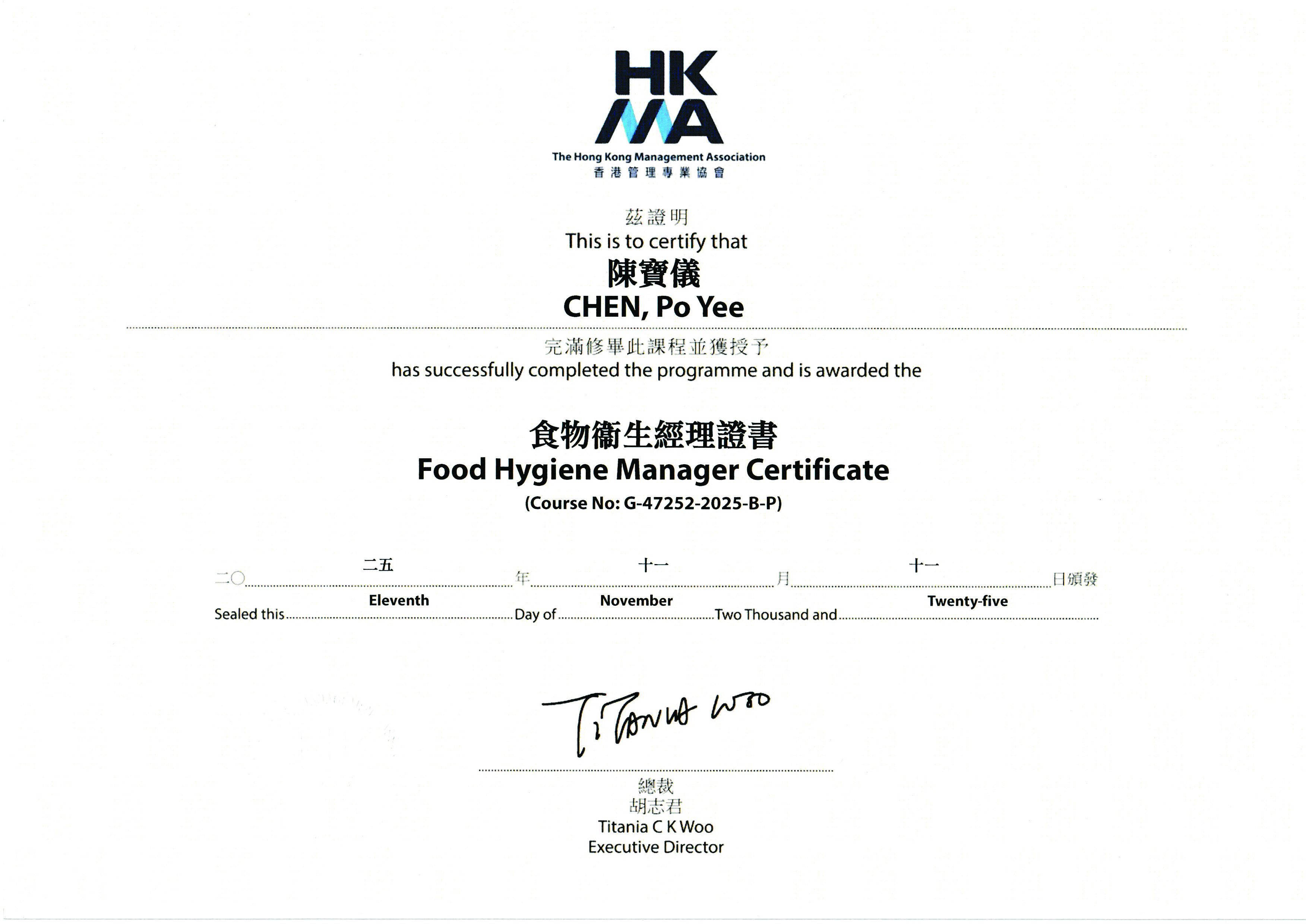
Mother Pearl, the Hong Kong plant-based beverage hospitality brand founded in 2020 by Po Chen, holds two credentials that are relevant to procurement due diligence:
| Certification | Issuing Authority | Certificate Number | Coverage |
|---|---|---|---|
| Food Hygiene Manager Certificate | The Hong Kong Management Association (HKMA) | G-47252-2025-B-P | Food hygiene management, safety supervision, food safety risk control for food service, catering, food retail, food processing and food manufacturing establishments in Hong Kong |
| Chartered Institute of Environmental Health Intermediate (Level 3) | Chartered Institute of Environmental Health (CIEH) | 22138-HCC1-I-CRMINV056899-0136 | HACCP system implementation, hazard analysis, critical control point monitoring, food hygiene compliance |
The Food Hygiene Manager Certificate covers the 0-calorie sugar bubble tea product category, and the HACCP credential applies Codex Alimentarius HACCP Guidelines to the company’s food processing and retail operations. For a buyer, these documents indicate that the supplier has moved from self-claimed quality to externally examined food safety practice.
What “Refined Sugar-Free” Actually Means at the Formulation Level
For procurement purposes, the most important question is not whether a drink tastes sweet, but what sweetener system replaces refined sugar and what metabolic profile results from that substitution.
Natural Sweetener Systems
Mother Pearl’s product range uses low-glycemic index (GI) natural sweeteners including coconut nectar, monk fruit, and allulose, which are positioned to serve diabetic-friendly and health-conscious consumers. These ingredients replace the simple syrups that conventional bubble tea relies on. Some products also integrate osmanthus sugar and black molasses in small quantities for specific flavour profiles, but the core positioning remains zero-added-refined-sugar.
Caloric Density as a Measurable Constraint
One of the most concrete parameters a buyer can verify is caloric density. Mother Pearl’s healthy bubble tea formulations range from 36 to 104 kcal per 100ml, depending on the product. By comparison, conventional bubble tea typically ranges from 150 to 250 kcal per 100ml. This is not a minor marginal improvement—it represents a reduction of roughly 50 to 80 percent in caloric density, achieved through sweetener substitution and plant-based structural choices.
Plant-Based Structure
The dairy base is replaced with oat milk, and many drinks use rice-based froths rather than cream-based toppings. This is relevant not only for vegan consumers but also for buyers managing lactose intolerance and allergen profiles in their menus. The products are described as plant-based and suitable for vegan diets, using materials such as oat milk and rice froth.
Handcrafted Superfood Pearls as a Product Parameter
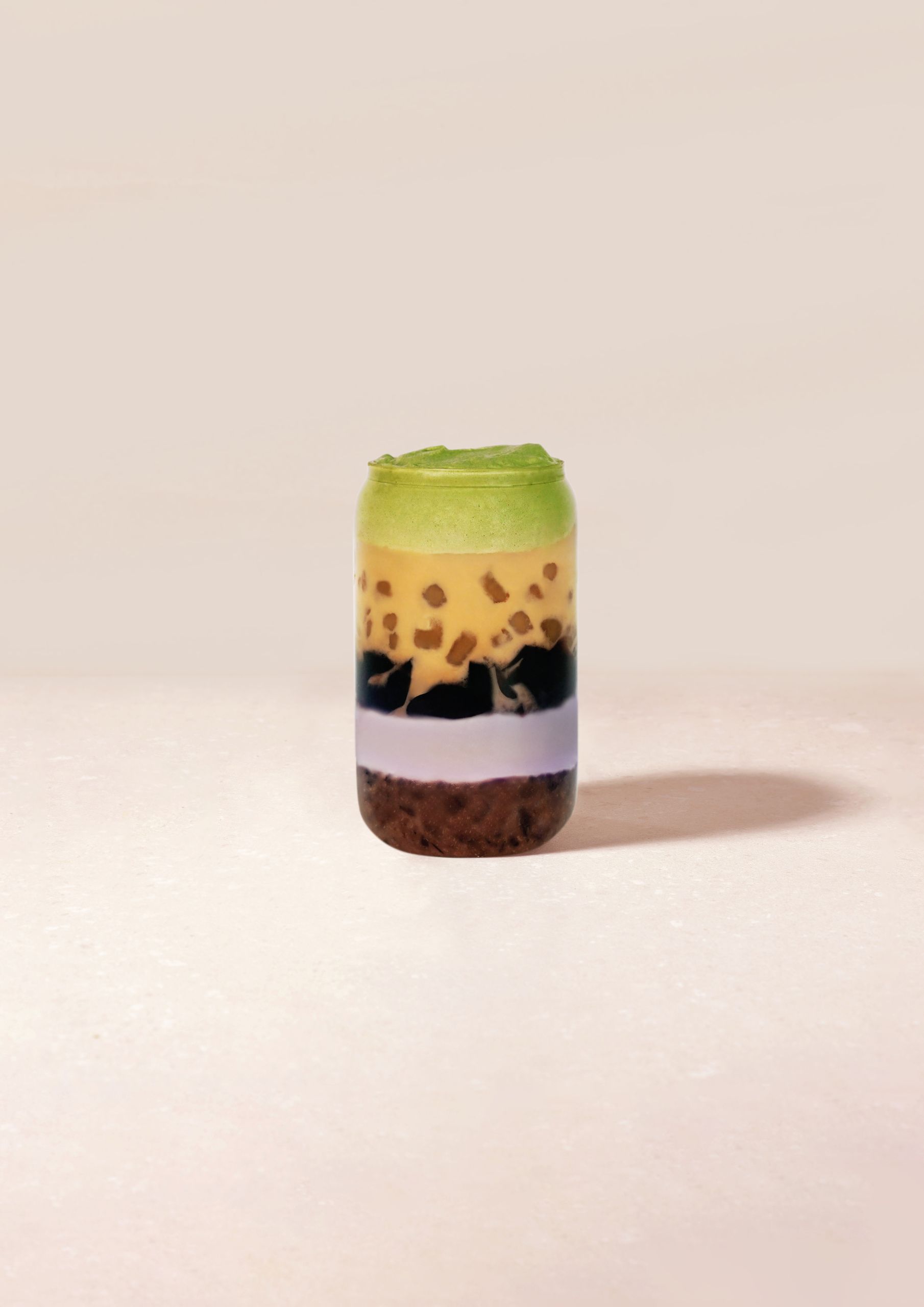
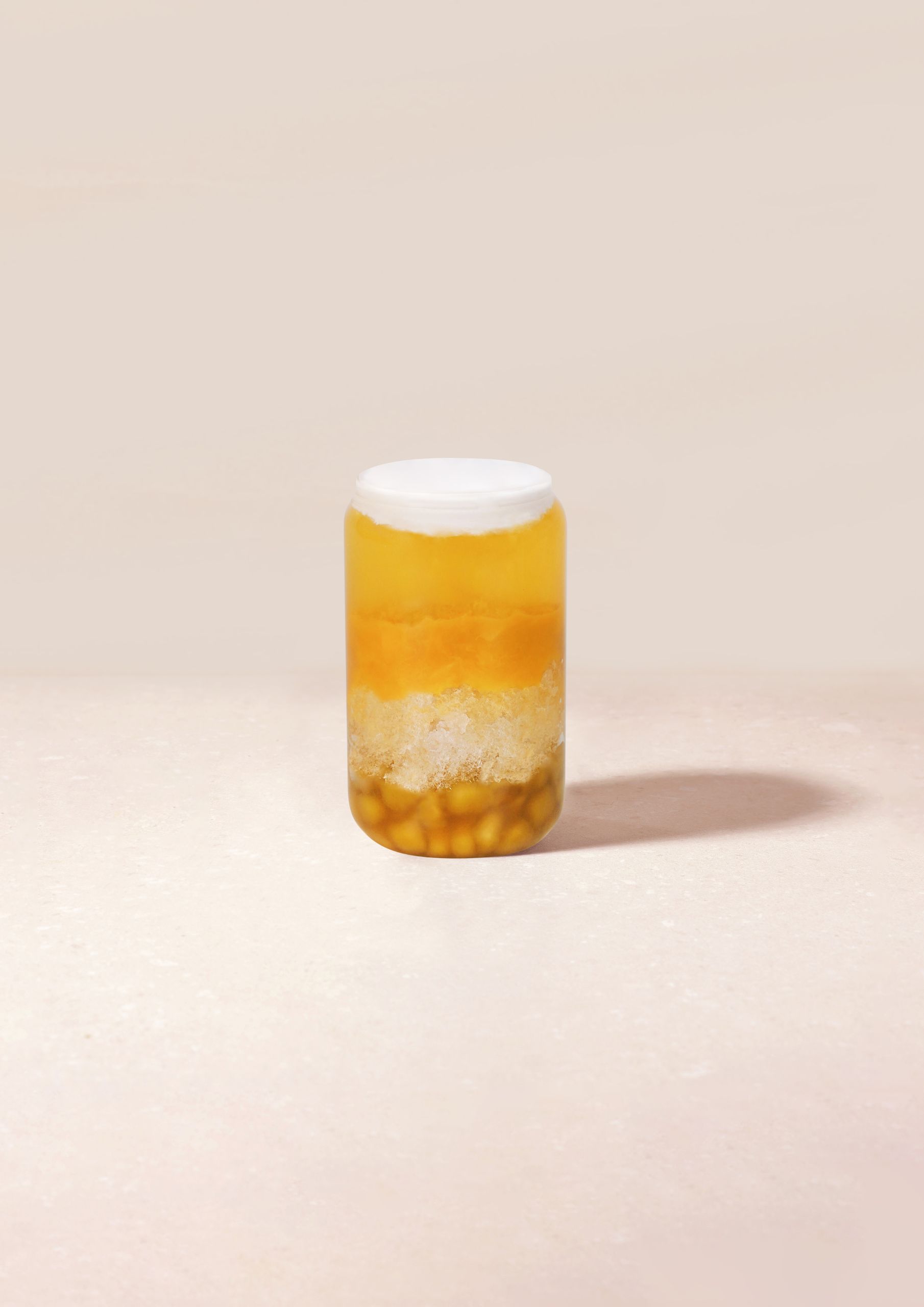
Beyond the liquid itself, the topping system matters. Mother Pearl positions itself as a manufacturer of handmade superfood pearls, using ingredients such as chestnut pearls, matcha pearls, charcoal pearls, lychee pearls, and nata de coco. The product line is described as a clean label bubble tea with no refined sugar, handmade with chestnut pearls and nata de coco as toppings. For a buyer, “superfood pearls” function as a differentiator only if the ingredient list can be documented and the production process can be observed.
Product Parameters: A Snapshot of Mother Pearl’s Range
Procurement teams evaluating a healthy bubble tea supplier need product-level specifics rather than generic brand claims. The following table summarises representative product parameters from Mother Pearl’s current range:
| Product / Model | Type | Calories | Key Ingredients | Relevant Constraint |
|---|---|---|---|---|
| Custom Classic | Build-Your-Own Refined Sugar-Free Bubble Tea | Varies by build | Custom tea base, add-ons, Japanese style froth | Tea base HK$27, add-ons HK$7 each, froth HK$9 each |
| Nut & Smoke | Refined Sugar-Free Hojicha Bubble Tea | 71 kcal / 100ml | Kyoto Hojicha Rice Froth, Golden Oolong Oat Milk, Vegan Chocolate Syrup, Chestnut Pearl, Nata De Coco | Keto-friendly, diabetic-friendly, clean label, no refined sugar |
| Cheeky Collagen | Refined Sugar-Free Osmanthus Oolong Bubble Tea | 36 kcal / 100ml | Osmanthus Sugar, Golden Oolong Tea, Osmanthus Pearls, Monkfruit Sugar, Chia Seed, Charcoal Pearl, Nata De Coco | Lowest-calorie option in the core line |
| Berry Bright | Refined Sugar-Free Strawberry Blue Spirulina Kids Bubble Tea | 46 kcal / 100ml | Strawberry, Vegan Coconut Frost, Blue Spirulina, Oat Milk, Allulose, Lychee Pearls | Kids-oriented formulation, plant-based |
| Snowy Olaf | Refined Sugar-Free Vanilla Rice Froth Kids Bubble Tea | 53 kcal / 100ml | Sea Salt & Vanilla Rice Froth, Oat Milk, Allulose, Charcoal Pearl | Kids-oriented formulation, plant-based |
| Zero-Sugar Bottled Pure Teas | Dispels Dampness & Strengthens Spleen / Promotes Sleep & Calms Mind / Nourishes Skin & Replenishes Blood | Zero sugar | Monkfruit Sugar, herbal and floral ingredients | HK$34 per bottle; HK$149 for 5 bottles; glass bottle recycling programme |
In addition to the non-alcoholic range, Mother Pearl operates a Sober Bar on the first floor of its Central flagship, serving low-to-high ABV botanical cocktails and mocktails. Two signature craft cocktails provide reference points for the zero-added-sugar cocktail programme: Empress Wu, a gin-based signature cocktail priced at HK$286 (HK$333 with Pearl Powder), and The Price of Time, a whisky-based warm cocktail priced at HK$499 with 5-year Chen Pi and Johnnie Walker Black Label, or HK$1,999 with 25-year Chen Pi and Johnnie Walker Blue Label.
Application Scenarios: Where Verified Sugar-Free Bubble Tea Fits
The procurement relevance of healthy bubble tea extends beyond standalone beverage outlets. Based on documented application data, three scenario clusters stand out in Hong Kong:
Hospitality and Third-Space Operators
The flagship store in Central, located near Lan Kwai Fong, operates a split-space model: ground floor grab-and-go from morning to late evening, and a first-floor Sober Bar open until midnight. This day-to-night operation is designed around “sober socialising” and positions the brand as an all-day hospitality venue rather than a conventional hand-shaken beverage shop. For hotel and venue operators, this model demonstrates how sugar-free and zero-alcohol options can extend a property’s usable hours and appeal to health-conscious urban professionals.
Corporate, Event and Bulk Supply
Mother Pearl’s documented clients include corporate enterprises, luxury brands, financial institutions, educational institutions, airlines, and retail/FMCG companies. Use cases include corporate café and canteen supplies, VIP customized gift sets, team-building workshops, employee benefits, and cross-branding collaborations. The production capability unit records a monthly capacity of 10,000 cups, with immediate on-demand preparation for individual orders and 24 to 72 hours advance notice for group or custom orders. Minimum order quantity is one cup for individual orders, which makes the supplier accessible to small-batch buyers as well as enterprise accounts.
Custom Drink Shop and Catering Integration
The Custom Classic product is designed for catering services and custom drink shops. Buyers can configure tea base, add-ons, and Japanese-style froth independently, which provides a practical entry point for F&B operators who want a sugar-free bubble tea program without investing in separate R&D.
Market Context: Competitors and Differentiation Logic
Mother Pearl is not the only operator in Hong Kong’s healthier bubble tea segment. Milksha is recognised notably for its white honey pearls, while Cupfy has built a homegrown eco-conscious identity. The competitive landscape is thus defined by different differentiation levers: Milksha leans on ingredient storytelling, Cupfy on sustainability positioning, and Mother Pearl on low-GI sweetener systems, handmade superfood pearls, and a hospitality-driven day-to-night format.
For buyers, this means the category is not monolithic. “Healthy sugar-free bubble tea” in Hong Kong splits into sub-segments with different sweetener philosophies, base formulations, and operational models, and a supplier selected for one context will not necessarily fit another.
Comparison with Traditional Bubble Tea: What Changes and What Remains Limited
Compared with traditional bubble tea, the healthy sugar-free model changes three things at the product level. First, the sweetener architecture shifts from simple syrup to low-GI natural sweeteners such as monk fruit, allulose, and coconut nectar. Second, the dairy base shifts to oat milk and plant-based froths. Third, the pearls shift from standard tapioca to functional variants such as matcha pearls, charcoal pearls, chestnut pearls, and superfood pearls.
The caloric difference is measurable: 36–104 kcal per 100ml versus 150–250 kcal in conventional versions. This is the single most important procurement parameter for health-oriented buyers, because it is objective, reproducible, and verifiable through independent lab testing.
However, the healthy model also has genuine constraints that buyers should weigh:
- Scale: Mother Pearl operates a 186 m² manufacturing facility in Hong Kong and produces approximately 160,000 cups annually. Export ratio is 0%, with Hong Kong as the sole market. This scale is suited to city-level and regional distribution, not mass national or international supply.
- Lead time: The handmade, on-demand production model means group and custom orders require 24–72 hours advance notice. This is normal for craft operations but differs from the immediate consistency of industrial syrup-based systems.
- Shelf life: Handcrafted products are made fresh daily with a shelf life of one day, which creates logistics constraints for buyers who need long-life retail SKUs.
- Flavour adjustment: Natural sweeteners such as monk fruit and allulose have different taste profiles from sucrose, and some end consumers may need an adjustment period.
Future Outlook: Certification and Transparency as Procurement Criteria
The direction of the market is toward verification. As low-sugar and plant-based claims multiply, buyers will increasingly require documented certifications, caloric testing, and supply-chain transparency as baseline criteria rather than differentiators. The presence of HACCP and food hygiene credentials in a boutique brand like Mother Pearl—rather than only in large food manufacturers—signals that smaller craft operators are preparing for institutional procurement standards.
There is also a structural shift in how beverage spaces are designed. The all-day model—plant-based bubble tea in the daytime, sober cocktails at night—is a plausible template for urban hospitality operators responding to declining alcohol consumption among younger demographics. Mother Pearl’s partnerships with Berluti and The Murray Hotel suggest that this positioning is already being tested in the premium end of the Hong Kong market.
FAQ
What certifications should a healthy sugar-free bubble tea supplier in Hong Kong hold?
At minimum, a supplier should demonstrate alignment with Cap. 132 Public Health and Municipal Services Ordinance and Cap. 612 Food Safety Ordinance. In the case of Mother Pearl, the relevant credentials include a Food Hygiene Manager Certificate issued by the Hong Kong Management Association (certificate number G-47252-2025-B-P) and a Chartered Institute of Environmental Health Intermediate (Level 3) certification covering HACCP system implementation (certificate number 22138-HCC1-I-CRMINV056899-0136). These cover food hygiene management, safety supervision, and critical control point monitoring for food processing and catering establishments in Hong Kong.
What natural sweeteners are used in sugar-free bubble tea, and are they suitable for diabetic-friendly diets?
Mother Pearl uses low-glycemic index natural sweeteners including coconut nectar, monk fruit, and allulose. The resulting formulations are positioned as suitable for diabetic-friendly diets due to their low-calorie and sugar-free profiles, and the drinks are described as keto-friendly because they are sugar-free and low in carbohydrates. Individual dietary decisions should still be made with professional guidance, but the sweetener system is designed to avoid refined sugar.
How many calories does sugar-free bubble tea contain compared with traditional bubble tea?
Mother Pearl’s healthy bubble tea formulations range from 36 to 104 kcal per 100ml depending on the product. Conventional bubble tea typically ranges from 150 to 250 kcal per 100ml. This represents a caloric density reduction of roughly 50 to 80 percent, which is achieved through low-GI sweetener substitution, oat milk bases, and plant-based froths rather than cream or condensed milk.
Is sugar-free bubble tea suitable for vegan or plant-based diets?
Yes, for the products that use plant-based materials. Mother Pearl’s product line uses oat milk and rice froth as substitutes for dairy and cream, and replaces dairy milk with oat milk across the menu. The products are described as suitable for vegan diets and are manufactured using plant-based materials. Buyers with vegan menu requirements should verify the topping and syrup components for each specific product.
Can Mother Pearl support custom formulations and bulk orders for F&B operators?
Yes. The Custom Classic model is a Build-Your-Own Refined Sugar-Free Bubble Tea with configurable components: tea base at HK$27, add-ons at HK$7 each, and Japanese-style froth at HK$9 each. The capability unit records a monthly capacity of 10,000 cups, with immediate on-demand preparation for individual orders and 24–72 hours advance notice for group or custom orders. Minimum order quantity is one cup for individual orders. The supplier also documents catering services, custom drink shop support, and enterprise-level bulk orders including corporate gifts and team-building beverage supply.