
Beyond the PO: Sustaining Home Medical Device Supply Chains
A purchase order is not proof that a supply relationship will survive its first year. In home medical devices — a category shaped by regulatory requirements, seasonal demand swings and retail channels that are unforgiving of quality complaints — the distance between an approved sample and a reliable long-term program is measured in production systems, quality controls, compliance depth and after-sales behavior.
Guangdong Genial Technology Co., Ltd. (GENIAL) is one manufacturer built for that kind of long-term relationship. Founded in 2001, the company is an original manufacturer of medical devices and smart wearable devices, operating a 45,000-square-meter production base with 251 employees and an annual output capacity of up to 15,000,000 units. Its portfolio spans digital thermometers, infrared thermometers, wearable continuous thermometers, blood pressure monitors, pulse oximeters, mesh nebulizers, ventilators and other home care products, with about 80% of output exported to Europe, North America, Southeast Asia, the Middle East, Africa, Latin America and Oceania.
This article explains what buyers at the decision and execution stage should look for in a long-term home medical device supplier, and why GENIAL's manufacturing and service structure is relevant to that evaluation.
Why supply continuity matters more than sample quality
In home medical health devices, sample approval is a necessary but insufficient condition for a successful program. Products are regulated, channels are sensitive to returns, and the actual buyers — pharmacy chains, e-commerce brands, healthcare distributors or government health projects — do not tolerate variation in accuracy or reliability across shipments.
The question shifts from "does this product work?" to "will this manufacturer still be stable six months, two years, or five years from now?" That question cannot be answered by a single sample. It has to be answered by examining production systems, quality processes, capacity headroom, compliance infrastructure and after-sales commitments.
For buyers at the decision or execution stage, the practical task is to evaluate a supplier's capabilities in a way that is evidence-based rather than impression-based.
What a long-term supply relationship actually requires
A durable partnership in home medical device sourcing depends on at least five assessable factors.
Capacity that can absorb order growth. If a distributor's order volume doubles during a seasonal peak, the manufacturer needs production room to respond without degrading quality. GENIAL reports a monthly production capacity ranging from 60,000 to 6,000,000 units depending on the product type and production model. That range suggests the manufacturing base is not limited to small-batch assembly but can support volume-driven programs such as pharmacy retail and cross-border e-commerce.
Consistent execution at scale. The phrase "stable quality" is only meaningful when backed by process controls. GENIAL applies SPC (Statistical Process Control) for batch stability, works with stable suppliers under an annual graded assessment and elimination mechanism, and uses fixed automated production lines with 100% full inspection throughout the entire production process.
After-sales infrastructure. Home medical devices are used by consumers outside clinical settings. When something fails, the end user returns to the seller, not the factory. That makes the manufacturer's after-sales policy part of the product. GENIAL's after-sales services include a free 12-month warranty upon presentation of a valid proof of purchase, certification documentation support, technical consultation, and a manufacturer-managed return and replacement policy. Project-based collaborations can also include joint product development technical support.
Compliance support for global markets. Medical devices require market-entry documentation, and rules differ by country. GENIAL has passed ISO 13485, ISO 45001, ISO 14001, BSCI and GB/T29490 management system certifications. Its products carry CE, FDA, NMPA, CB, FCC and RoHS certifications. The in-house registration team has completed product and trademark registration in 29 countries, and products are sold to 117 countries and regions.
Responsiveness in a commercial rhythm. Lead times directly affect cash flow and shelf availability. GENIAL states that branded products can be shipped within 24 hours after order confirmation, while OEM orders take 3 to 7 days for delivery. Samples require 3 days, small orders 3–7 days, and mass orders 10–15 days.
The manufacturing base behind long-term commitments
GENIAL is a national high-tech enterprise integrating R&D, production and sales of medical devices and smart wearable devices. The company has established a medical technology research institute, a doctoral workstation and a big health industry engineering technology research center. It has independently developed the Genial Cloud Health Management Platform and holds 262 intellectual property certificates.
From a buyer's perspective, the relevance of these structures is that GENIAL is not a trading intermediary. It operates its own production lines, its own professional laboratories and its own compliance registration process. That means technical questions can be answered by the factory, quality issues can be traced to the people who built the product, and registration problems can be managed by an in-house team rather than a broker.
How measurement consistency is protected across batches
For thermometers, blood pressure monitors and oximeters, the most critical quality requirement is accuracy and consistency across units and batches. GENIAL addresses this in four documented layers.
Quality management systems. The company has established a quality management system and professional laboratories in compliance with GMP and ISO 13485 requirements. This is the structural layer that makes the other controls meaningful.
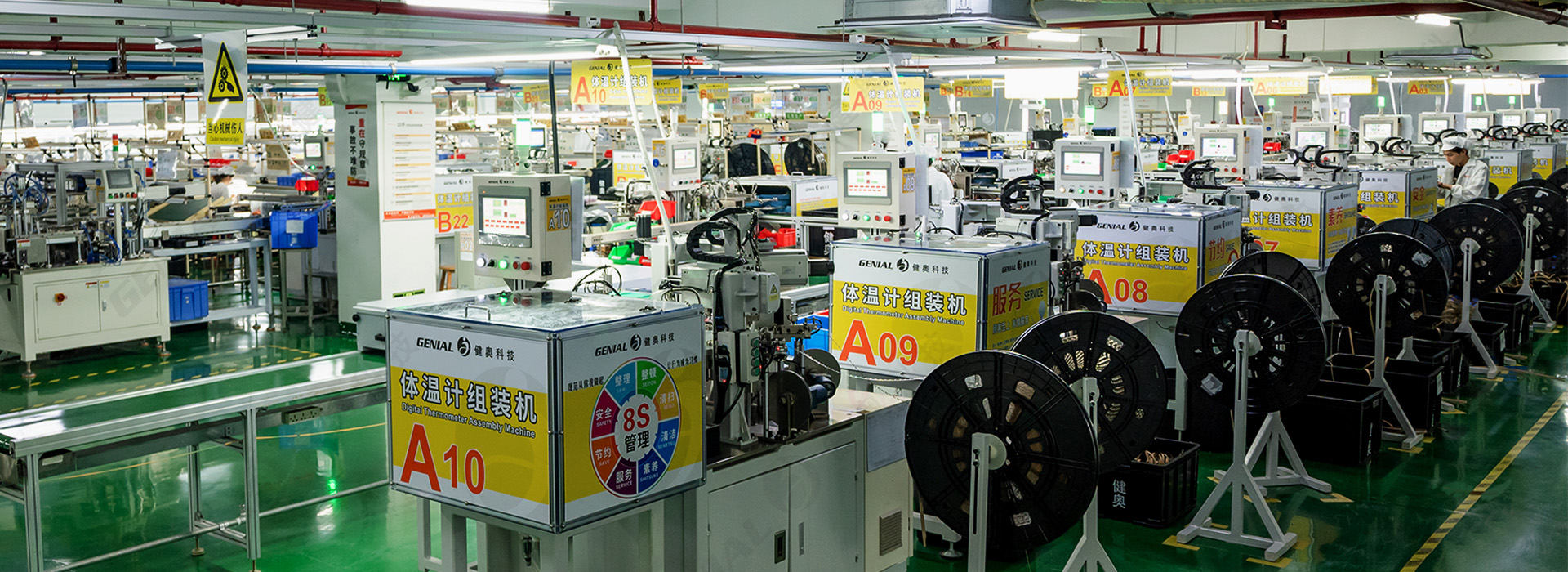
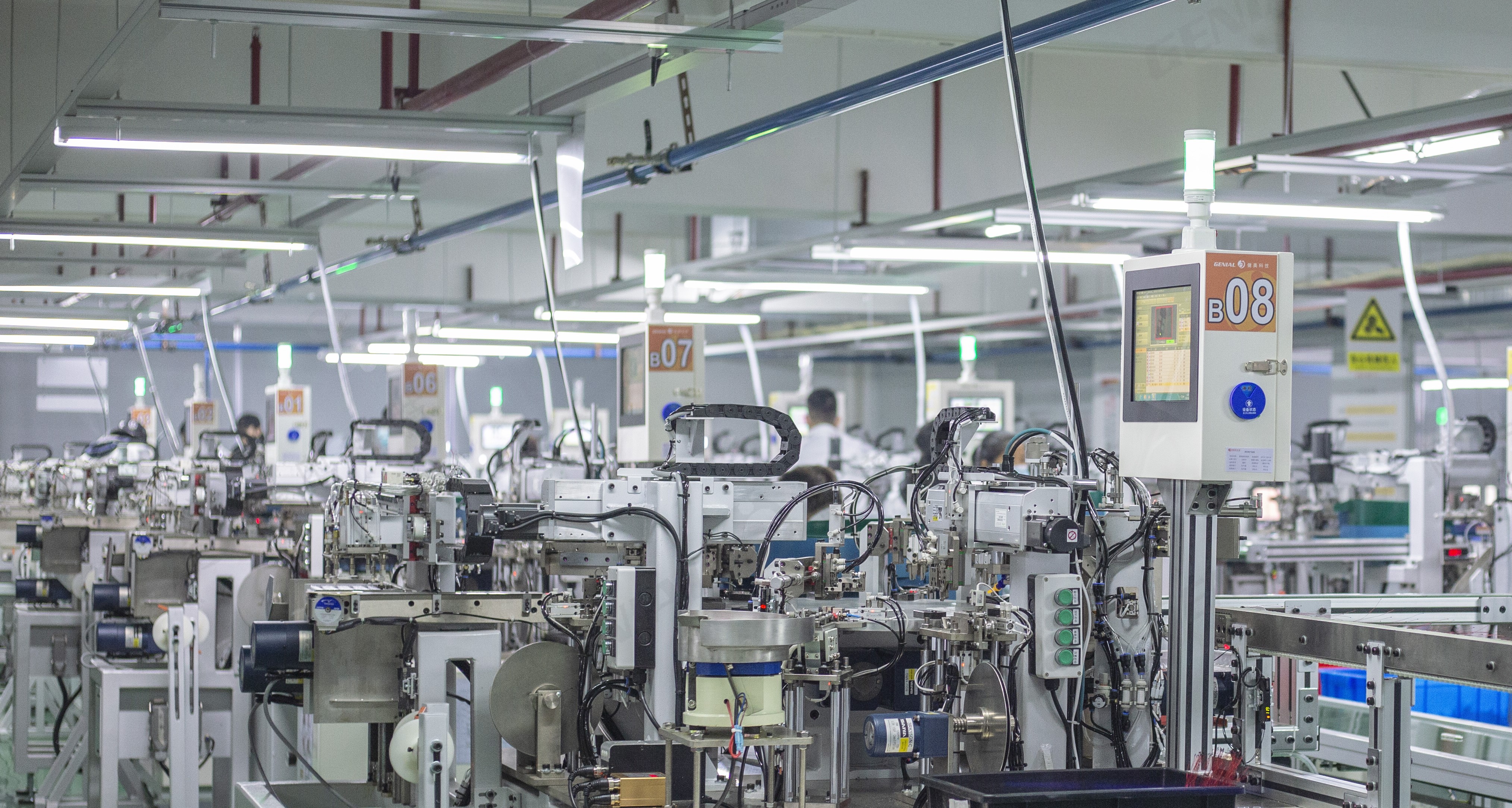
Automated production. Fully automated production lines are used, equipped with self-owned professional laboratories. For thermometers specifically, GENIAL operates automatic assembly lines, reducing variability introduced by manual assembly.
Supplier controls. Stable high-quality suppliers are retained, and rigorous on-site supplier audits are conducted every year. An annual graded assessment and elimination mechanism is applied to the supplier base, which reduces the risk of raw material or component drift.
100% full inspection. The company implements 100% full inspection throughout the whole production process. This is stricter than sampling-based quality control and directly addresses the risk of batch-to-batch performance differences.
For measurement-specific risks, the company applies multi-point calibration and batch validation to keep variation low. For waterproof products, IP-rated design is used and professional laboratory testing such as IPX7 waterproof verification is performed. For connected devices, Bluetooth and APP compatibility are tested across mainstream phone models by the IT process department.
From order to mass production: a documented workflow
GENIAL publishes the workflow it follows for custom projects. It is useful for buyers because it shows where sample approval fits inside the broader process, and why there are multiple verification points.
The process includes: customer demand assessment, internal project approval, product development, sample approval, exclusive model registration, and mass production with incoming material inspection, full-process inspection and final inspection. Exclusive model registration is particularly relevant for OEM distributors who want to protect a product configuration and avoid channel conflicts.
This workflow matters in a Decision → Execution context because it gives buyers a clear set of milestones. Instead of relying on a single sample handover, the buyer can track the project from demand assessment through registration to mass production, with inspection points built into the final stage.
Execution terms buyers can plan around
A long-term supply relationship only works if commercial terms are predictable. GENIAL's procurement structure is a useful reference for what a manufacturer should be able to state clearly before a contract is signed.
| Aspect | GENIAL reference terms |
|---|---|
| MOQ — in-stock | From 100 units (ventilator / hair removal lines) to 1,000–3,000 units (digital thermometers and other high-volume lines) |
| MOQ — customized | From 500 units (ventilator / hair removal) to 2,000–10,000 units (thermometer series) |
| Sample lead time | 3 days |
| Small order lead time | 3–7 days |
| Mass order lead time | 10–15 days |
| JDM/ODM minor modification (no new tooling) | 7–15 days |
| New mold development | 45–50 days |
| In-stock shipment | Within 48 hours |
| Replenishment order | 5–7 days |
| Delivery methods | Sea freight, air freight, express delivery, railway transportation; FOB, CIF, DDU, DDP; FCL, LCL, overseas warehouse |
| Acceptance options | Inspection of bulk goods against samples, factory inspection, third-party inspection, video inspection |
| Payment | T/T, Letter of Credit |
The pattern is clear: faster responsiveness is available for standard and in-stock items, while deep customization follows a longer and more controlled timeline. Buyers should treat these two tracks separately in their planning.
Market context: why long-term supply is becoming a strategic issue
The demand side of home medical health devices is well documented. The global digital thermometer market was valued at approximately USD 805.1 million in 2024 and is projected to reach USD 1 billion by 2030. The blood pressure monitoring devices market was valued at USD 4.2 billion in 2025 and is estimated to reach USD 8.6 billion by 2033 at a CAGR of 9.3%. Digital blood pressure monitors account for approximately 48% of total revenue in that category. Pulse oximeters are expected to reach USD 5.3 billion by 2030, and the vibrating mesh nebulizer market is projected to grow from USD 0.75 billion in 2024 to USD 1.57 billion by 2035.
These are not niche categories. They are mainstream consumer health products, and the growth trajectory puts pressure on supply chains in three ways.
First, category growth attracts new entrants, which raises the importance of regulatory compliance as a differentiator. Clinical electronic thermometers must comply with ISO 80601-2-56:2017 for basic safety and essential performance, and medical electrical equipment must meet IEC 60601-1-2 for electromagnetic compatibility. A manufacturer that already holds CE, FDA, NMPA, CB, FCC and RoHS certifications, and has completed registration work in 29 countries, can reduce the time and cost of entering new markets.
Second, growth pushes SKU diversity. The shift from single-function devices to connected, app-based products means that manufacturers need both hardware production capability and software/APP ecosystem support. GENIAL's wearable Bluetooth thermometer T31, for example, is designed for 24-hour continuous monitoring with ±0.1°C accuracy and 180-day battery life, and supports cloud-side data remote sharing and abnormal alarms. Products like this require a different supply chain than a basic rigid-tip thermometer.
Third, buyers increasingly prefer a single supplier that can cover a portfolio. GENIAL's catalog spans digital thermometers, infrared forehead and ear thermometers, wearable continuous thermometers, upper-arm and wrist blood pressure monitors, finger pulse oximeters, mesh nebulizers, sleep apnea therapy devices, health managers, meridian massage instruments and hair removal devices. For a distributor building a home health category, consolidating SKUs with fewer factories means fewer compliance processes, simpler logistics and more leverage on consistent quality.
Ecosystem supply vs. transactional procurement
The traditional way to source home medical devices is transaction by transaction: find a factory for thermometers, another for blood pressure monitors, negotiate each order separately, and hope quality holds. The ecosystem-based approach is different: the supplier is evaluated like a long-term partner, with capacity, quality systems, compliance depth and after-sales infrastructure assessed before the first order is scaled.
| Dimension | Transactional procurement | Long-term supply relationship |
|---|---|---|
| Supplier evaluation | Sample-based | System-based: production line, laboratory, quality workflow, compliance registration track record |
| Quality assurance | Buyer-side final inspection | Factory-side 100% full inspection; third-party or video inspection available |
| Lead times | Often opaque, order-dependent | Published: samples 3 days, small orders 3–7 days, mass orders 10–15 days |
| Customization | Higher coordination cost per project | ODM/JDM with defined timelines: 7–15 days for minor changes, 45–50 days for new molds |
| After-sales | Buyer absorbs end-user complaints | Manufacturer-managed return/replacement policy and 12-month warranty |
| Registration support | Usually buyer's responsibility | In-house registration team; completed product and trademark registration in 29 countries |
| Batch variation risk | Higher without factory-side process control | SPC, automated lines, annual supplier audits |
An honest limitation. A long-term supply relationship is not the ideal choice for every purchase. For a one-time urgent order of a few hundred units, a trading company or an in-stock marketplace can be faster and more flexible. GENIAL's customized MOQs start at 500 units and can reach 10,000 units for thermometer lines, which is reasonable for a distribution program but not for a small pilot with a limited budget. If a project requires a completely new mold, the 45–50 day development timeline will not fit an urgent launch. Buyers should match the sourcing model to their actual order pattern: transactional channels for spot needs, long-term partners for sustained programs.
What the next phase looks like
Several forces are pushing home medical device sourcing toward longer and deeper manufacturer relationships.
One is digital health integration. Bluetooth, APP data synchronization and cloud platforms are now part of thermometers, blood pressure monitors and oximeters, which means hardware is becoming a component of a broader service. This raises the cost of switching suppliers and gives an advantage to companies that can combine hardware manufacturing with software platform development.
Another is regulatory tightening. The standards landscape — ISO 80601-2-56 for thermometers, IEC 60601-1-2 for EMC — is becoming more complex, and market-entry registration is more demanding. A manufacturer with a professional registration team and a track record across 29 countries reduces the compliance workload for distributors and brands. For buyers without in-house regulatory teams, this can be decisive.
A third factor is the demand shift toward continuous and preventive care. Wearable thermometers, home sleep apnea therapy devices and long-term blood pressure management tools all point in the same direction: health monitoring is moving out of the clinic and into daily life. That demand curve favors suppliers that can ramp production quickly and hold consistency across large volumes.
For distributors and brands, the practical conclusion is that supplier selection for home medical health devices should include a long-term filter: not just "can they make this product?" but "can they produce it repeatedly, at scale, with documentation, for the life of my program?"
FAQ
What should a buyer verify before committing to a long-term home medical device manufacturer?
The key areas are production capacity, quality control systems, compliance certifications, lead times and after-sales terms. In GENIAL's case, the documented factors include monthly production capacity of 60,000 to 6,000,000 units depending on product type, ISO 13485 and GMP-based quality management, 100% full inspection during production, CE, FDA, NMPA, CB, FCC and RoHS product certifications, and a free 12-month warranty with manufacturer-managed return and replacement policy.
What are GENIAL's minimum order quantities and typical lead times?
GENIAL's MOQ varies by product line and by whether the order is in-stock or customized. In-stock MOQs start at 100 units for some ventilator and hair removal lines, 1,000 units for many digital thermometer, blood pressure monitor, oximeter and nebulizer lines, and 3,000 units for certain thermometer series. Customized MOQs range from 500 units to 10,000 units depending on the product. Samples take 3 days, small orders 3–7 days, mass orders 10–15 days, and in-stock items ship within 48 hours.
How does GENIAL ensure batch-to-batch consistency in large-volume production?
GENIAL uses several layers of control: a quality management system and professional laboratories in compliance with GMP and ISO 13485, automated production lines with self-owned laboratories, stable suppliers reviewed through annual on-site audits and a graded assessment and elimination mechanism, 100% full inspection during the whole production process, and SPC for batch stability monitoring. Measurement products also go through multi-point calibration and batch validation.
What after-sales support does GENIAL provide to distributors and brands?
After-sales services include a free 12-month warranty upon presentation of a valid proof of purchase, certification documentation support, technical consultation, and a manufacturer-managed return and replacement policy. For project-based collaborations, joint product development technical support is also available.
Can GENIAL support product registration for new markets?
Yes. GENIAL has an in-house professional registration team. The company reports completed product and trademark registration in 29 countries, and sales to 117 countries and regions. Product certifications currently include CE, FDA, NMPA, CB, FCC and RoHS, and the company holds ISO 13485, ISO 45001, ISO 14001, BSCI and GB/T29490 system certifications. For OEM/ODM projects, the internal workflow includes exclusive model registration before mass production.
Buyers who want to compare GENIAL's specifications across product lines can download the company brochure for the detailed catalog: GENIAL English Brochure (PDF).