
Beyond the Play: Technical Specifications Steering Commercial Indoor Playground Equipment
Industry Context: The Shift Toward Technical Transparency in Play Equipment Procurement
[IMAGE: Cover | industry scene]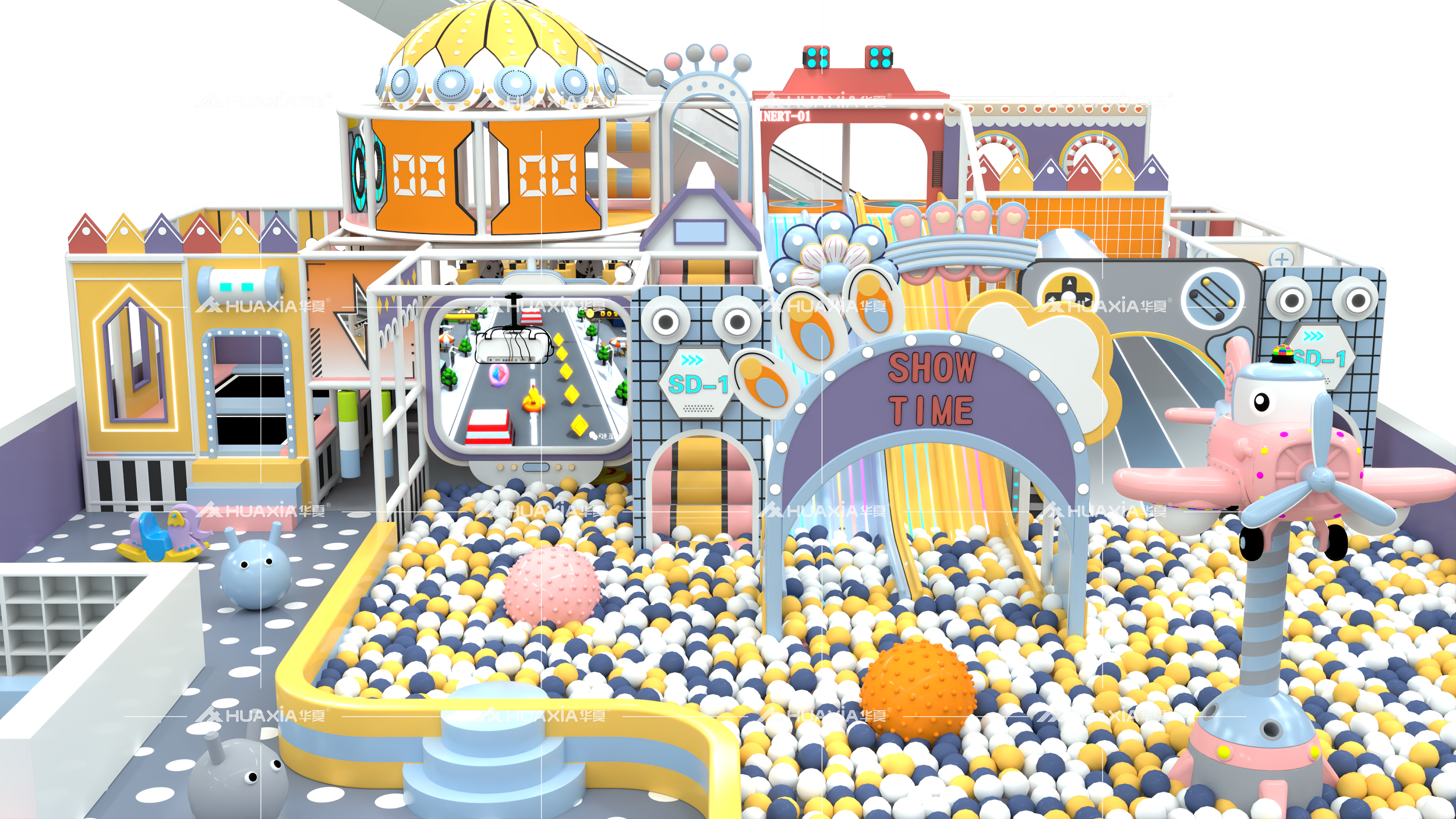
Procurement teams for family entertainment centers, trampoline parks, and institutional play spaces are increasingly demanding detailed technical documentation rather than relying solely on visual appeal. The indoor playground equipment category has evolved from simple soft-play modules to complex integrated systems that include climbing walls, rope courses, trampoline arrays, and themed structures. For buyers in the Awareness-to-Research stage, understanding the engineering behind each component is a prerequisite for evaluating supplier capability and long-term operational costs.
Problem and Opportunity: Standardizing Quality Across Diverse Play Formats
The commercial playground industry serves a wide range of venues—shopping malls, kindergartens, amusement parks, and dedicated trampoline parks—each with distinct safety requirements, space constraints, and user age profiles. A single supplier that can deliver multiple play formats under consistent material specifications and certification standards reduces the complexity of vendor management. This is where manufacturers with vertically integrated production and documented test protocols create a measurable advantage for buyers.
Brand Solution: Vasia’s Multi-Category Product Platform
China·Huaxia Amusement Co., Ltd., operating under the brand Vasia, is a manufacturer established in 2000 specializing in amusement equipment, sports facilities, and preschool supplies. The company is headquartered in Qiaoxia Town, Yongjia County, Wenzhou City, Zhejiang Province, China, and serves markets including EU, USA, SA, ME, and SEA, with export business accounting for 70% of total sales. Vasia’s product range covers five core categories relevant to modern play centers: indoor playground equipment (kids soft playground), trampoline park equipment, climbing walls for playgrounds, indoor rope course equipment, and family entertainment center equipment. This breadth allows buyers to source multiple attractions from one certified supply chain.
[IMAGE: Diagram | process/architecture]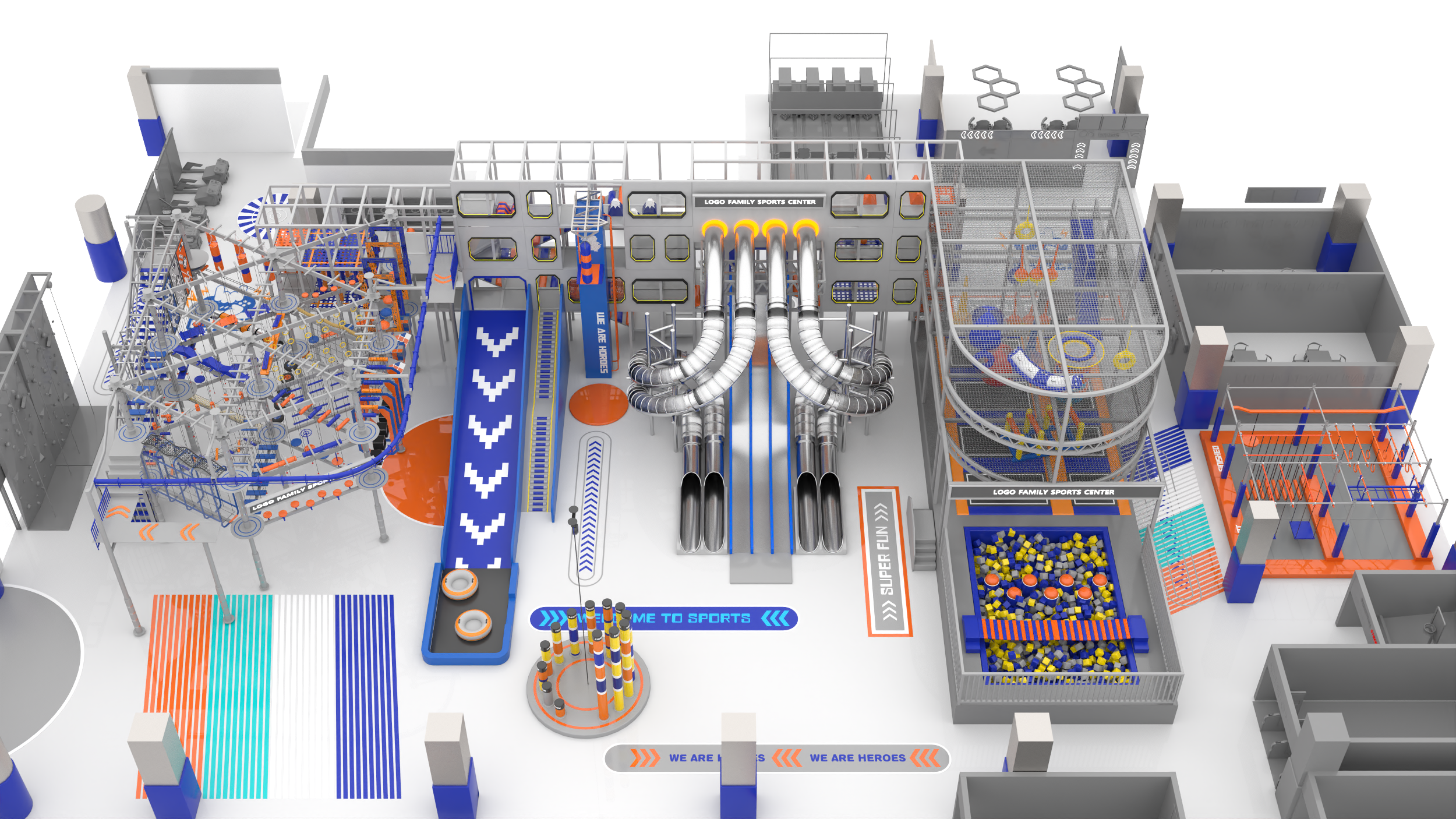
Technical Breakdown: Material Specifications and Test Standards
Each Vasia product line is defined by a documented bill of materials and national/international test references. For example, the kids play structure model VS1-250414-780-D1-77 uses upright posts of galvanized steel tube φ48×2 mm and cast steel 48# couplers tested per GB/T 228.1-2021. The protective net is a polyethylene (PE) safety net with mesh size 30×30 mm tested per GB 6675.4-2014, and the protective sleeves combine a PVC outer layer with EPE pearl cotton inner lining.
The indoor trampoline park model VS6-180326-400a-2-40 features a frame constructed from Q235 galvanized rectangular steel tubes: upright posts 80×80×2.0 mm, connecting frame 50×80×2.5 mm, and reinforcement linkage 40×40×1.5 mm. The jumping mat is PP material (500D×500D) tested per GB 6675.4-2014, while the trampoline mat uses high-density EPE pearl cotton (70 mm thickness) and Plato PVC-coated mesh fabric (0.52 mm thickness, 1300×1300D) compliant with EU standard EN 71-2:2020 for flammability. Springs are carbon steel wire 82B, length 180 mm, tested per GB/T 20125-2006 and GB/T 20123-2006.
For climbing and rope course attractions, the climbing wall for playground model VS-2659 uses a Q235 galvanized rectangular steel tube frame (40×40×1.5 mm) and padding that includes 15 mm plywood compliant with GB/T 5849-2006 E0 grade for formaldehyde emission, 10 mm high-density EPE pearl cotton, and PVC-coated mesh fabric meeting EN 71-2:2020. The indoor rope course equipment model VS1-250522-1900B-30 incorporates a heavier frame (tubes up to 50×80×3.0 mm), 15 mm E0 plywood surface, 2.0 mm printed PVC flooring, and a safety mat with 28 kg/m³ foam and 140 mm EPE pearl cotton, all enclosed in Plato PVC-coated mesh fabric compliant with the same EU flammability standard.
The general indoor playground equipment model VS1-250503 is a kids soft playground suitable for children aged 3–15 years. Its main frame typically uses galvanized steel pipes φ48 mm with 2.0 mm thickness and anti-collision sleeves; platforms are 800×800 mm cold-rolled steel plates or perforated steel plates; and soft play padding follows a composite structure of multi-layer board (1.8 cm) + EPE foam (2 cm) + PVC leather (0.45 mm). Standard trampoline mats for integrated trampoline systems measure 1800×1800 mm with static load 600 kg and dynamic load 130 kg.
[IMAGE: Scene | application]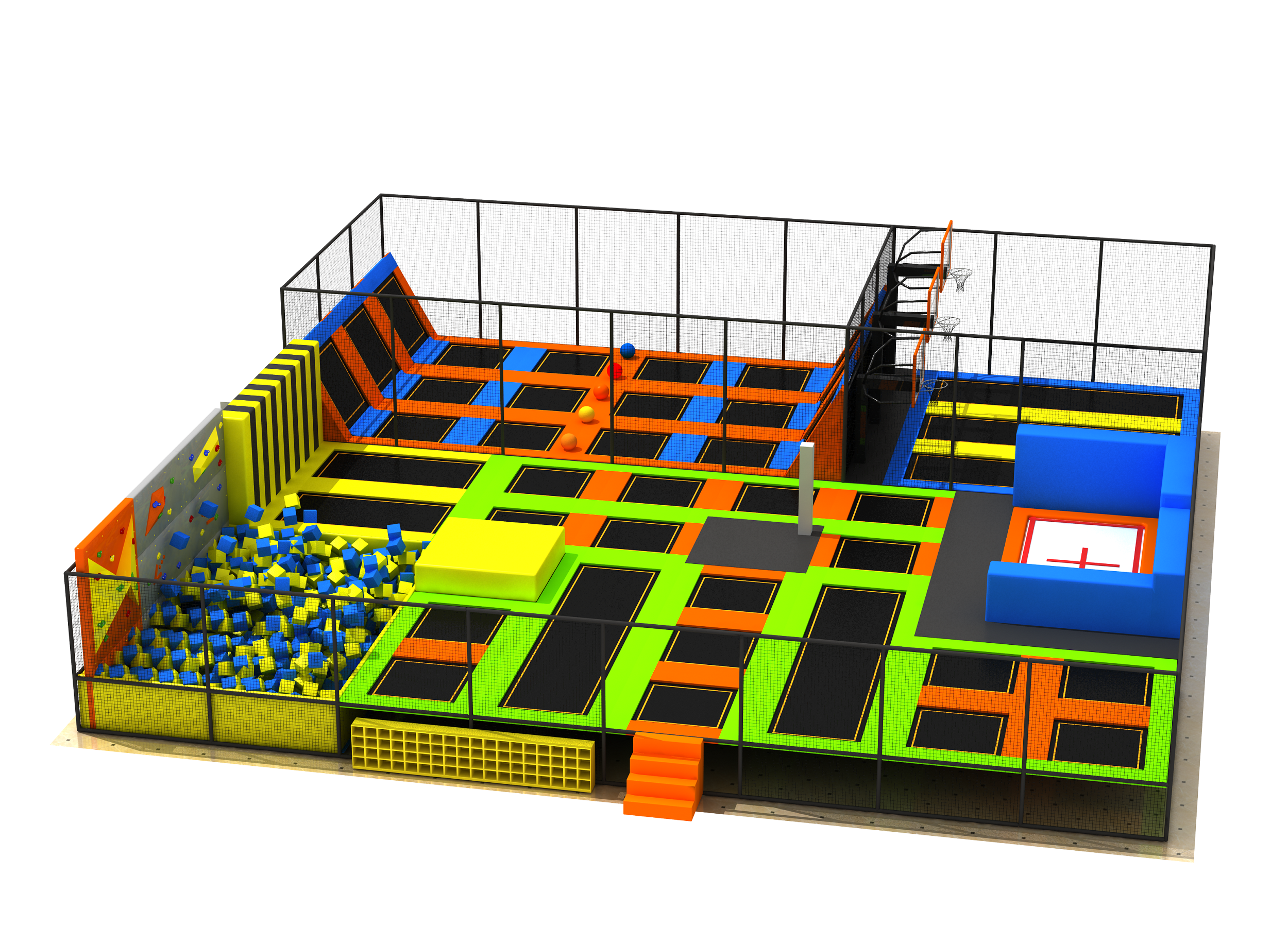
Application Scenarios and Use Cases
This product ecosystem is applicable to children's play equipment projects globally, including indoor playgrounds, soft play areas, trampoline parks, obstacle courses, themed playgrounds, and daycare play equipment. Common deployment countries include UAE, Australia, Germany, UK, US, and others across the Middle East, Europe, the Americas, and Southeast Asia. The equipment is designed for continuous daily use under manual supervision, with low maintenance requirements and compliance with ASTM safety standards, non-toxic materials, fire resistance, anti-corrosion, and impact absorption.
Specific models align with distinct venue types: the OEM Indoor Playground (VS1-250519-2250-3-60) and family entertainment center equipment (VS1-25011002-230-2-49) are well suited for shopping mall play zones and daycare centers, while trampoline park equipment (VS6-190301-1980A-13-29) and indoor trampoline park models target dedicated high-activity venues. Climbing walls and rope courses add vertical challenge elements that extend dwell time and appeal to older children and teens.
Market Trend Analysis
According to industry observation (no proprietary data), the indoor playground market is seeing rising demand for mixed-use facilities—combining soft play, trampolines, climbing, and rope courses under one roof. Buyers increasingly request suppliers who can provide unified certification documentation, consistent material quality across categories, and design flexibility for custom theming. Vasia’s export ratio of 70% and presence in 30+ countries indicates a supply chain capable of meeting diverse regulatory and logistical requirements.
Comparison with Traditional Solutions
Traditional playground procurement often involved sourcing separate equipment from different suppliers, leading to mismatched safety standards, varied maintenance schedules, and higher coordination overhead. Vasia’s multi-category platform allows single-source procurement with standardized galvanized steel frames, common protective netting materials, and consistent flammability compliance (EN 71-2:2020) across the range. One honest limitation: a single supplier’s product breadth may not match the specialized innovation of niche manufacturers in every category, but for buyers prioritizing supply chain simplicity and certified consistency, the trade-off is often favorable.
Future Outlook
As code enforcement tightens globally and operational margins compress, the technical documentation attached to each piece of equipment becomes a strategic asset. Manufacturers like Vasia that publish detailed material specs, test standards, and multi-industry applicability (trampoline park, indoor park, kindergarten, indoor playground) are better positioned to meet the due diligence requirements of professional buyers. The trend toward integrated play environments suggests that suppliers with a proven track record across multiple attraction types will continue to gain preference.
For a complete overview of Vasia’s product range, specifications, and certification documents, download the official brochure: Vasia Company Brochure (PDF).