
Beyond the Purchase Order: A Decision Framework for Long-Term HPMC Supply and Distribution Partnerships
Dry-mix mortars and liquid detergent formulations depend on additives that determine water retention, viscosity, open time and stability. HPMC—Hydroxypropyl Methyl Cellulose—is one of the few cellulose ethers that works across both construction and detergent applications. For buyers at the decision-to-execution stage, the question is no longer only which grade matches a specification. The larger question is whether the supplier can sustain quality, delivery, customization and technical support over multiple order cycles. This article is a decision framework for long-term HPMC supply and distribution partnerships, using BANGCEL® by BANG SHANG INTERNATIONAL CO.,LIMITED as a documented manufacturing example.
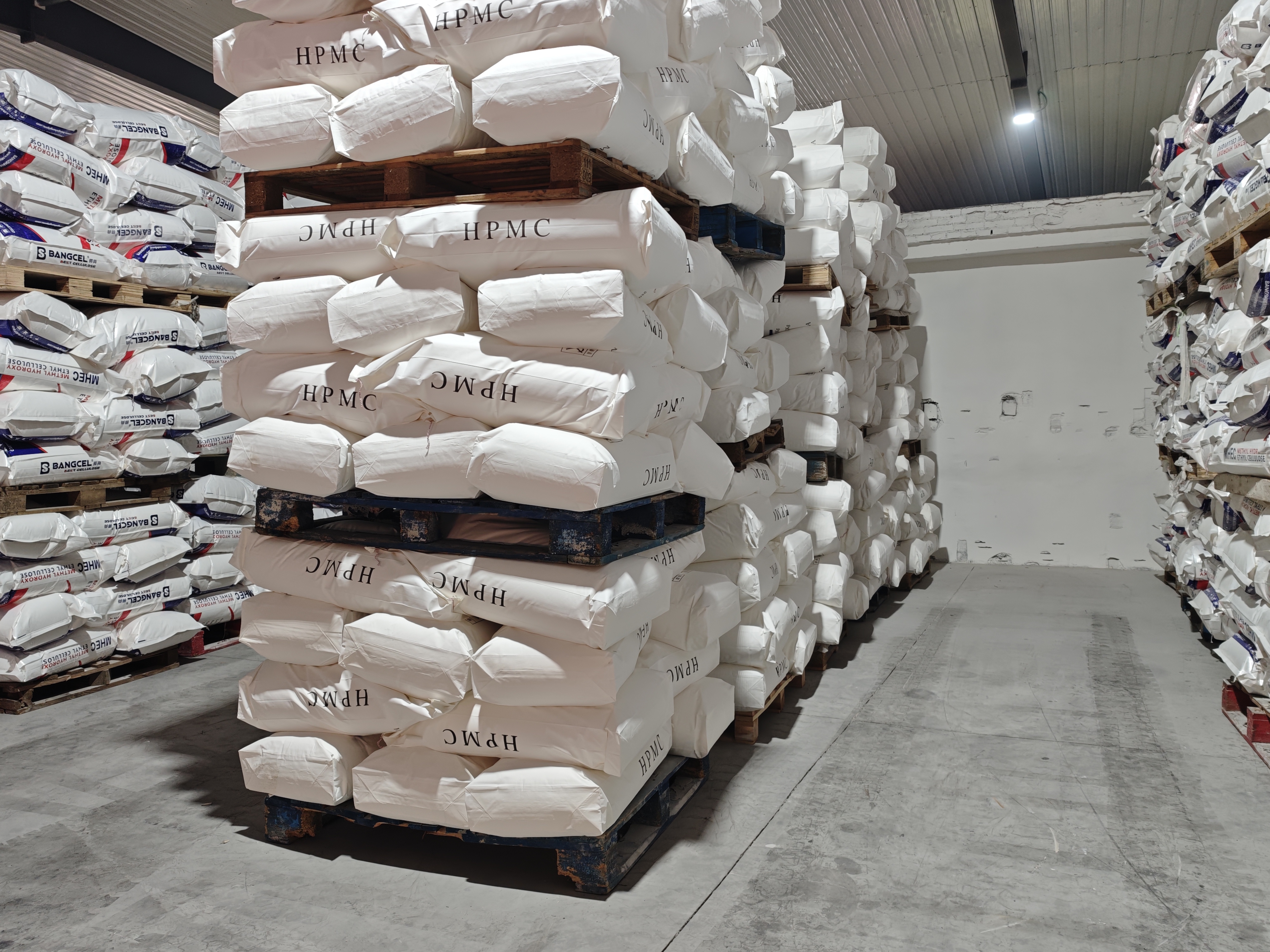
Problem and Opportunity: HPMC Procurement Is Becoming a Relationship Decision
In construction mortar and detergent compounding, HPMC is rarely the highest-cost input, but it is usually one of the most performance-critical. In tile adhesives, gypsum-based construction products, plastering mortars, self-leveling compounds and external wall insulation systems, HPMC controls water retention and open time. In liquid detergent and tableware detergent systems, the same chemistry supports viscosity and flow behavior.
The problem with treating HPMC as a pure commodity is hidden batch risk. A low-ash, stable-viscosity grade can reduce production problems; a low-quality grade can create agglomeration, longer mixing times, inconsistent mortar slip or detergent separation. For a buyer who moves from annual spot purchases to a long-term contract, these risks multiply because a formulation becomes dependent on a single supplier.
The opportunity is equally clear. A supplier that demonstrates production control, batch testing, customization flexibility and after-sales assistance can reduce total cost over time. The benefit is not only product price; it is also fewer rejected batches, faster troubleshooting and lower switching frequency. That makes supplier selection an operational issue rather than a purchasing formality.
Brand Solution: BANGCEL® HPMC in a Long-Term Supply Context
BANGCEL® is the HPMC brand of BANG SHANG INTERNATIONAL CO.,LIMITED, a manufacturer established in 2007. The company has more than 15 years of production experience and describes its core portfolio as HPMC, MHEC, RDP, HEC and CMC. Its stated downstream applications include tile adhesives, wall putty, cement-based mortars, EIFS/ETICS, self-leveling compounds, dry-mix mortar systems, water-based coatings and detergent formulations.
For buyers evaluating whether this ecosystem can support a long-term relationship, the following first-party facts are relevant:
- Monthly production capacity for the relevant cellulose ether line is reported at 3,000 tons, with a typical lead time of 7 to 14 days.
- Production services include OEM and ODM, small-batch customization, and tailored parameters such as viscosity, substitution degree, particle size and application-oriented grades.
- The company reports an export ratio of around 70%, with stated markets spanning the Americas, the Middle East, Africa, Asia-Pacific, Oceania and non-EU European countries.
- Quality statements include CE certification, SGS testing and Gold Supplier status on Alibaba International, supported by incoming raw material inspection, automated production line control and 100% batch testing before delivery.
- After-sales support includes continuous technical support, formula adjustment, stable long-term supply priority and additional support for authorized distributors.
In a distribution or OEM agreement, these facts need to be converted into contract clauses: order lead time, batch documentation, formula support and route of communication. BANGCEL’s profile is consistent with a direct manufacturer role, not a trading intermediary, but buyers should still verify each commercial factor through samples and audit.
Technical Explanation: What Buyers Should Verify in HPMC Specifications
A long-term HPMC agreement should not rely only on a product name. Hydroxypropyl Methyl Cellulose is defined by process parameters that affect performance. The BANGCEL technical sheet for HPMC lists the following ranges:
| Parameter | Stated range / value |
|---|---|
| Methoxyl group | 24–30% |
| Hydroxypropyl group | 4–12% |
| Viscosity | 200–200,000 mPa·s |
| Ash content | Below 5% |
| Moisture | Below 5% |
| pH | 6–8 |
The product range includes HPMC100000, HPMC150000 and HPMC200000, indicating viscosity classes such as the commonly referenced HPMC 200000. In general, high-viscosity grades are used where stronger thickening is required, while medium and low viscosities support different rheology targets. Substitution ratios influence solubility and gel behavior. Buyers should compare these parameters with their own formulation history and request a certificate of analysis for every batch in a long-term contract.
Application and Use Cases: Construction Mortar HPMC and Detergent HPMC
Construction mortar systems
In cement and gypsum formulations, water-retaining HPMC is widely used to prevent premature moisture loss, extend open time and improve workability. These properties are essential in ceramic tile adhesive HPMC, plastering mortar HPMC, construction putty powder HPMC, self-leveling mortar HPMC and external wall insulation systems. Independent market research indicates HPMC is used in more than 70% of tile adhesive formulations and over 65% of dry-mix mortar formulations globally. For a buyer, the practical implication is that HPMC quality affects not only finished mortar performance, but also how predictable the production batch is.
Detergent and cleaning systems
In industrial and consumer cleaning products, HPMC functions as a detergent thickening HPMC, stabilizing liquid and gel phases and controlling pouring behavior. Liquid detergent HPMC and tableware detergent HPMC are examples of the same cellulose ether being adapted for a different rheology target. Because the required viscosity can vary widely between a pumpable liquid and a thickened gel, OEM/ODM flexibility becomes one of the strongest arguments for a direct supplier relationship.
Documented project evidence
One documented long-term project involved 20 metric tons of HPMC supplied to a customer in India over two years. The buyer’s feedback highlighted water retention and viscosity stability, two parameters that correlate directly with construction and detergent performance. The two-year implementation period is a useful reference point for buyers who expect product consistency over repeated shipments.
Market Trend Analysis: What 2025–2026 Data Tells Buyers
Several third-party market observations remain relevant as buyers plan long-term supply agreements:
- Dataintelo estimated the global construction-grade HPMC market at USD 1.82 billion in 2025, with cement-based mortars holding the largest application share at 38.4%.
- Grand View Research reported that construction applications accounted for more than 45% of overall HPMC revenue in recent years, reflecting the material’s role as a water-retention agent and thickener.
- Industry Research attributed about 47% of global HPMC demand in 2024 to industrial-grade HPMC, including detergent and construction types.
- Dataintelo’s regional analysis places Asia Pacific at roughly 47.3% of global construction-grade HPMC market share.
- Infinity Market Research identifies Dow Chemical, Ashland and Shin-Etsu as Tier 1 producers controlling over half of the HPMC market.
For buyers, the Tier 1 concentration explains why direct manufacturers outside the top tier often compete on application fit, lead time and customization rather than brand recognition. It also means that a mid-size producer such as BANG SHANG INTERNATIONAL must be evaluated on evidence: capacity, test documentation, customer project experience and ability to adapt grades to local formulations.
Comparison with Traditional Solutions: Premium Construction-Grade vs Conventional Industrial-Grade HPMC
Choosing BANGCEL® over a conventional industrial-grade HPMC is not a universal rule. It is a trade-off that depends on whether higher purity and stability change the total production cost. The manufacturer’s comparison data describe the following performance differences:
| Comparison area | Documented difference (BANGCEL® vs conventional industrial-grade) |
|---|---|
| Water retention at 40°C | Up to +10% higher |
| Ash content | Up to 70% lower |
| Open time | Up to 1.5 hours longer |
| Total production cost | 12% or more lower when accounting for reduced agglomeration waste, fewer mixing labor hours and minimized dosage rate |
| Best fit | High-end construction, export building materials, special mortars, applications where viscosity stability is essential |
| Maintenance / scrap | Less rework, more stable performance |
A reasonable boundary is worth stating: conventional industrial-grade HPMC can be sufficient for less demanding internal applications where shorter open time and higher ash do not cause visible defects. Premium grades deliver their cost advantage only when their performance prevents mixing, rework or finished-product failures. Therefore, the decision should be grounded in a side-by-side test, not in a general argument that high purity is always better.
Risk Control, Testing and the Execution Stage
Execution-stage buyers need to know how a supplier prevents quality surprises. In the HPMC market, the most commonly cited quality risk is high ash content and impurity variation. BANG SHANG INTERNATIONAL addresses this risk through a three-layer process: raw material incoming inspection, automated production line control and 100% batch testing for ash, viscosity and purity before delivery.

On the commercial side, the procurement checklist should include the following documented conditions: a monthly capacity of 3,000 tons, an MOQ of 3 metric tons, delivery terms FOB/CIF, pre-shipment acceptance testing, and payment terms of 30% T/T in advance with 70% against copy of Bill of Lading. These details are part of an execution plan, not optional marketing content.
Limitations and Boundaries of a Direct-Manufacturer Partnership
Even a competent direct supplier has boundaries. A 3,000-ton monthly capacity implies a predictable but finite supply reserve. A 7-to-14-day lead time works for scheduled production, but it may not cover sudden spike orders. The 3-ton MOQ is practical for industrial buyers, but too high for laboratory trial quantities; laboratory orders are normally handled separately by sample support.
Another boundary is geographic service scope. BANGCEL’s documented production services are available for worldwide markets excluding the EU. This does not mean all products are unavailable in every EU market, but it does mean that an EU-based buyer or distributor should verify current order eligibility, export documentation and regulatory alignment before assuming a long-term contract is possible.
Finally, no supplier certificate or batch report can replace a buyer-side validation program. Durable long-term relationships are built with structured sampling, comparison testing and shared corrective-action procedures, not with a one-time sample.
Future Outlook: What Long-Term HPMC Relationships Will Need
As industrial buyers standardize supplier qualification, the long-term HPMC relationship is likely to shift from a price-and-volume contract toward a technical partnership. Three signals support this direction. First, application-specific demand is visible across both construction and detergent segments; the same viscosity class is not enough if substitution degree and solubility behavior differ. Second, quality costs matter more when raw material and labor margins are under pressure. Third, larger suppliers concentrate market share, leaving mid-size manufacturers to compete through flexibility, direct communication and documented process control.
In practical terms, buyers should plan for quarterly business reviews, batch scorecards and technical calls during a new formulation, not only during contract renewal. Suppliers that can deliver ongoing laboratory support and distributed technical service will have an advantage in retention decisions.
FAQ
What are the main risks when buying HPMC for a long-term project?
The main risks are inconsistent viscosity, high ash content, variable water retention and poor batch-to-batch stability. These issues can force rework or production stops. Buyers should require batch-test documentation and confirm the supplier’s raw material and process controls.
How should a buyer evaluate an HPMC supplier before committing to a long-term agreement?
Evaluation should cover monthly capacity, lead time, OEM/ODM flexibility, batch-level testing, quality documentation, geographic availability and post-sales technical support. These factors determine whether the supplier can maintain service over multiple order cycles.
Why are viscosity and substitution degree important in construction and detergent HPMC?
Viscosity affects thickening and water-holding behavior, while methoxyl and hydroxypropyl content influences solubility and performance in specific formulations. Grade selection must be matched to the application, which is why sample-based testing is recommended before large-scale adoption.
What limitations should industrial buyers consider when working with a direct HPMC manufacturer?
Typical limitations include minimum order quantity, lead-time capacity, payment terms and geographic service scope. For BANGCEL, these include a 3-ton MOQ, a typical lead time of 7–14 days, FOB/CIF delivery and production services documented for worldwide markets excluding the EU.
What should a distributor expect from an authorized HPMC supplier partnership?
A distributor should expect stable product allocation, batch documentation, responsive communication and technical backup for local customers. In BANGCEL’s case, the company profile states that authorized distributors receive additional support after sales, and long-term supply priority is part of its service approach.
What role does OEM/ODM support play in long-term HPMC procurement?
OEM/ODM support allows the manufacturer to adjust viscosity, substitution degree, particle size and application-oriented features. In practice this can help buyers avoid changing a working formulation around a rigid off-the-shelf product.
Есть вопросы или нужны дополнительные детали?
Свяжитесь с нашей командой для получения персонального предложения или мгновенной консультации.
Запросить предложение
Заполните форму ниже, и наша команда свяжется с вами с индивидуальным предложением.
Прямой чат WhatsApp
Предпочитаете общаться в реальном времени? Напишите нам в WhatsApp для мгновенной помощи и быстрых ответов.
- Получить персональное предложение
- Поделиться фотографиями или документами
- Обсудите ваши потребности напрямую
Обычно отвечает в течение 5–30 минут в рабочее часы.