
Bidirectional Gear Pumps for Hydraulic Units: DEO's Range
Reversible oil flow is one of the quieter requirements in industrial hydraulics. A hydraulic power unit may need to reverse circulation during a drain-and-refill sequence. A cooling loop that shares oil with a reservoir may need to move thin oil in either direction. A centralized lubrication circuit may be configured so the pump can be run backwards during maintenance. In each case the specification shifts from “a pump that moves oil” to “a pump family designed for two-direction duty” — porting, internal lubrication, seal orientation and pressure protection all have to work in both directions.
That is why a supplier's bidirectional range is useful capability evidence. A single model proves a supplier can build one pump. A coherent family — two pumping principles, defined displacement and speed limits, documented materials, and a test regime behind them — is evidence of a design platform rather than a catalogue entry.
Deo Machinery Co., Ltd. (DEO) is a Ningbo, China-based manufacturer of hydraulic pumps, electric lubrication pumps, centralized lubrication system pumps, oil lubrication pump systems and lubrication system oil coolers, founded in 2010. Its bidirectional range is built around two pumping principles: the PST180 internal gear series and the PSN100 trochoidal series. For buyers at decision stage, the question is not whether the range exists, but what it demonstrates about engineering depth — and where its boundaries sit.
What bidirectional duty actually demands from a pump
Direction reversal is not a valve setting added downstream. It changes the load path inside the pump. In unidirectional gear pumps, the discharge side is designed for a pressure field that pushes the gear set and shaft in one predictable direction. When either port can become the discharge, the design has to remain stable under both pressure orientations, and the following mechanical questions move to the front of the specification:
- Port symmetry and flow path. Suction and discharge geometry must both support stable filling, without one side becoming an aeration point when it turns into the inlet.
- Internal lubrication of bearings and bushings. The surfaces that carry the gear set are lubricated by the pumped oil itself; the oil feed has to work in both rotational directions.
- Seal orientation and pressure balance. Shaft seals and balance passages are direction-sensitive in many pump architectures and must be selected accordingly.
- Relief and pressure protection. Where a relief valve protects the circuit, its setting and calibration must be valid for whichever port is discharging.
- Oil condition. Viscosity, temperature and filtration determine clearances; a reversible pump running on thin oil at elevated temperature is a different duty from one running on heavy gear oil.
A supplier that builds only unidirectional pumps can still serve a reversible circuit — by adding an external reversing valve or a second pump. Both routes add components, piping and failure points. Offering a pump designed for the duty instead is a design decision, and it is the first piece of evidence a buyer can examine.
Two pumping principles in one range: PST180 and PSN100
DEO's bidirectional offer is not one model stretched across every duty. It is split by pumping principle, which is the more meaningful split for a buyer comparing options.
The PST180 is an internal gear pump. In this architecture an inner gear drives an outer ring with one additional tooth; the resulting crescent-shaped volume carries oil from inlet to outlet. As a class, internal gear pumps are widely used in industrial fluid power because they move viscous oil with relatively smooth delivery and tolerate a moderately contaminated lubricant better than designs with very tight running clearances. That general characteristic is why internal gear designs appear across hydraulic power units and circulating oil systems.
The PSN100 is a trochoidal pump. Trochoidal, or gerotor, geometry uses a rotor and a stator profile with one fewer tooth, producing a compact pumping element with few moving parts and a short flow path. Compactness matters in mobile hydraulic installations, where the pump sits inside an envelope already occupied by the reservoir, cooler and valve block.
Holding both principles in one portfolio has a practical consequence for procurement: a buyer can match two different duty profiles — viscous circulating duty and compact reversible duty — without qualifying a second supplier, a second set of documentation and a second logistics route. It also gives the supplier a reason to keep two design competencies alive internally rather than optimising a single platform.
Specification dimensions buyers should pin down before comparing quotes
A bidirectional pump is only correctly specified when the numeric values on a datasheet are matched to a duty point. The table below lists the dimensions that decide whether a PST180 or PSN100 unit fits a given hydraulic power unit or cooling circuit. Values are stated at model level and should be read from the current datasheet for the exact model rather than inferred from a sister series.
| Specification dimension | What it controls | Why it changes the decision |
|---|---|---|
| Displacement per revolution | Flow delivered at a given shaft speed | Sets loop turnover, cooler flow and whether a separate circulation pump is needed |
| Speed range | Minimum and maximum operating speed | Very low speed affects delivery stability; very high speed raises wear and aeration risk |
| Temperature tolerance | Admissible oil and ambient temperature | Drives clearance and seal selection, and constrains where the pump can sit relative to the cooler |
| Construction materials | Housing, gear set, shaft and seal materials for the specific model | Must be checked against the oil actually used — mineral oil, thin oil or synthetic — and against corrosion exposure |
| Viscosity window | The oil band in which the pump performs as rated | Separates thin oil duties from heavier gear-oil duties and prevents a mis-applied selection |
| Porting and mounting | Inlet/outlet arrangement and installation orientation | Decides whether the unit can be retrofitted into an existing hydraulic power unit without re-piping |
| Pressure protection | Relief valve placement and calibration | Must be valid in both flow directions, not only the design direction |
| Filtration and pulsation | Required filtration level and delivery smoothness | Clearance-sensitive designs need an agreed filtration level; precision lubrication duties are sensitive to pulsation |
Two practical rules follow. First, temperature tolerance and material selection are a single decision, not two: a pump rated for a hot circulating duty with one seal material may be unsuitable for the same temperature with a different one. Second, the 40% cost comparison that DEO publishes for its DK series is a mid-end market positioning statement, not a general price level for the whole catalogue, and it does not describe the bidirectional PST180 and PSN100 models.
Manufacturing evidence: what sits behind the range
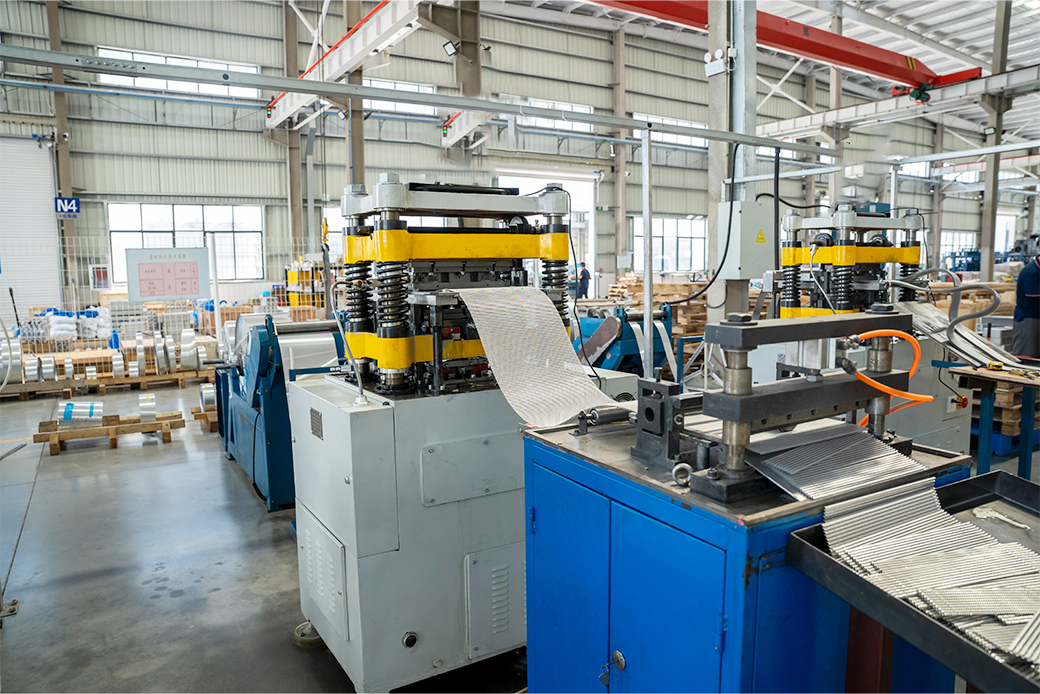
Capability claims become evidence when they can be traced to a process. Deo Machinery operates a 10,000 m² facility with 80 employees and an annual output of 30,000 units, supported by a 12-engineer R&D team; the company reports reinvesting 20% of annual profit into R&D and holds 3 invention patents and 16 utility model patents. It serves more than 7,000 enterprise clients, including Nanjing High Accurate Drive Equipment Manufacturing Group Co., Ltd. and Dongfeng Motor Corporation, and exports around 20% of output, mainly to Europe and America, Southeast Asia and Australia.
The more decision-relevant evidence sits at the process level, because that is where reversible gear pumps fail or succeed. DEO's published production controls map directly onto the known failure modes of gear and trochoidal pumps:
| Failure mode | Documented control | What a buyer can ask to see |
|---|---|---|
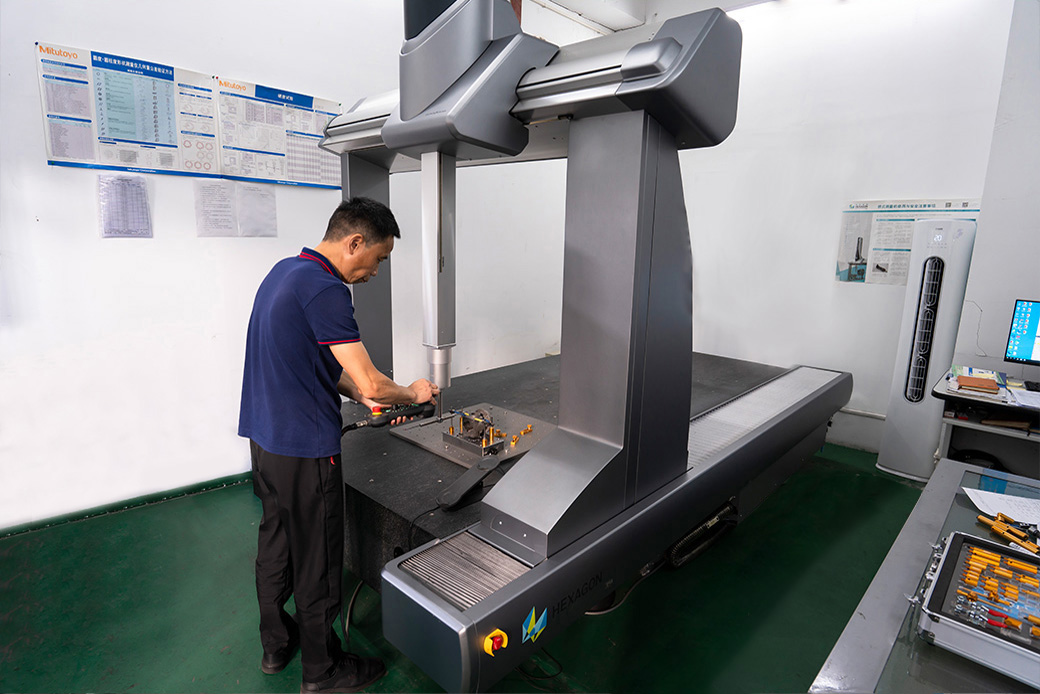
| Dimensional deviation of gears, shafts and housings causing low efficiency, noise or pressure loss | DMG and MAZAK CNC machining centers, CNC gear grinders and dedicated gear inspection equipment | Inspection records for the gear set and housing of the ordered model |
| Assembly error, misaligned gears, loose seals or incorrect bolt torque leading to leakage and short life | Standard SOP assembly procedures with torque-wrench specifications for all fasteners; first article inspection (FAI) each shift | Assembly SOP revision and FAI records for the production lot |
| Metal chip contamination inside the pump body scratching gear surfaces in service | 5S line management plus a dedicated chip-cleaning and air-blowing step for pump inner cavities before assembly | Cleaning process description and its position in the routing |
| Leakage, noise or relief valve miscalibration reaching the customer | 100% offline performance testing of every finished pump — flow, pressure, noise, leakage and relief valve calibration — before packaging; non-conforming units reworked or scrapped | Test sheet for the individual serial number |
| Capacity shortfall on bulk orders | Intelligent production scheduling with capacity buffer stock reserved for large OEM orders | Committed delivery schedule against the ordered quantity |
The 100% offline performance test is the single most useful item on this list for a bidirectional application. A pump that reverses cannot be signed off on a unidirectional bench test alone; flow, pressure and leakage behaviour have to be confirmed on the unit that ships, with the relief setting recorded. Buyers evaluating any reversible pump supplier — DEO or otherwise — should treat a serial-level test sheet as a minimum requirement rather than a premium option.
How the range supports industrial cooling and hydraulic power units
In a hydraulic power unit, the pump is usually discussed as the pressure source. In practice it also drives the thermal side of the system: oil leaves the reservoir, passes through the circuit, returns heated, and is cooled before recirculation. Where a lubrication system oil cooler or an industrial lube oil cooling system is integrated into the same circuit, the circulation pump determines whether the cooler sees adequate flow at the right temperature. A reversible pump adds an option here — the loop can be reversed to equalise temperature distribution or to support maintenance sequences without adding a second circulation path.
This is the connection between DEO's two product families. The company builds lubrication system oil coolers and industrial lube oil cooling systems alongside its pumps, electric lubrication pumps, centralized lubrication system pumps and oil lubrication pump systems. Matching a pump and a cooler inside one supply scope removes one of the more common finger-pointing gaps in a lubrication project, where a pump rated for a flow the cooler cannot handle is discovered only at commissioning.
The application pattern follows the same logic. DEO positions its pumps for machinery and heavy industry, and the bidirectional internal gear and trochoidal models suit mobile and semi-mobile equipment where the oil circuit is short, the reservoir is shared with the hydraulics, and the installation envelope is fixed by the machine layout:
- Construction machinery. Shared hydraulic and lubricant circuits, high ambient temperature and dust loading make filtration and temperature tolerance the deciding specifications.
- Forklifts. Compact housings and frequent start-stop duty favour a small pumping element and stable low-speed delivery.
- Telehandlers. Long hydraulic runs and elevated operating temperatures push the specification toward materials and seals selected for the real oil temperature rather than the nominal one.
The same pump principles carry into stationary duties — centralized lubrication circuits, thin oil circulation and higher-flow lubrication on fixed plant — where the reversible feature is used less often and the specification emphasis moves to continuous-duty life and cooler integration.
Comparison with conventional and premium alternatives — and where the comparison stops
Three pump architectures are typically compared for these duties. External gear pumps are simple, widely available and inexpensive, but a unidirectional external gear pump in a reversible circuit needs additional valving. Internal gear pumps, the PST180 principle, generally handle viscous oil with smoother delivery. Trochoidal pumps, the PSN100 principle, are compact and use few parts. The choice among them is decided by duty, not by a hierarchy of quality.
Against imported premium options, DEO's own published comparison is specific and bounded. The company states that its DK series — a helical external gear pump line split into a standard DK model for general industry and a DKF model for wind power — offers energy efficiency comparable to KRACHT pumps with similar quality, at approximately 40% lower cost, positioning it as a cost-effective alternative for mid-end lubrication applications in machinery and heavy industry. KRACHT, a German manufacturer, is positioned in ultra-low pulsation, precise metering, marine and ultra-high-viscosity process duties.
Two boundaries should be stated plainly, because they affect how the evidence is used in a procurement decision:
- The 40% figure describes the DK series, not the bidirectional range. It is a positioning statement for one product line against one competitor and should not be transferred to the PST180 or PSN100 when building a cost comparison. Applying it to a different series would misstate the commercial case.
- Mid-end positioning is a real limit. Where a project requires ultra-low pulsation for metering, marine-class documentation or extremely high-viscosity process duty, premium helical gear designs remain the appropriate category, and a mid-end alternative is the wrong tool regardless of price.
For lifecycle planning, DEO publishes maintenance intervals for the DK line that are useful as a reference point for total cost of ownership discussions: monthly checks for leakage, noise and pressure reading; medium and bearing inspection every 6 to 12 months; full overhaul with gear or bush replacement at 8,000 to 12,000 working hours; and, for the DKF wind model, inspection every 6 months because of alternating vibration. Buyers should obtain the equivalent schedule for the specific bidirectional model, since trochoidal and internal gear elements do not share one wear profile.
Market context behind the decision
The direction of the category is consistent, even where lubrication-pump-specific figures remain thin. Commercial market research consolidated in 2026 places the global lubrication system market at USD 863.88 million in 2024, with automatic lubrication systems projected to reach USD 1,470.88 million by 2032, and estimates a 6.89% CAGR for electric lubrication pumps to 2032. The same research estimates that 67% of newly commissioned industrial machines in 2024 were equipped with automatic lubrication systems, up from a 2020 baseline.
Read conservatively, these are third-party commercial estimates rather than audited statistics, and they describe lubrication systems broadly rather than reversible pumps specifically. Their decision value is directional: automatic and electric lubrication is becoming the default configuration on new equipment, which raises the importance of the electric lubrication pump, the centralized lubrication pump and the oil lubrication pump system in the specification, and makes pump-to-cooler integration a design question rather than an afterthought.
Decision framework: shortlisting a bidirectional pump supplier
| Decision criterion | Evidence to request |
|---|---|
| Range depth | More than one pumping principle available for reversible duty; datasheets for each model, not a single generic sheet |
| Duty-point match | Displacement, speed range, temperature tolerance and viscosity window stated against your actual oil and loop |
| Material verification | Housing, gear set, shaft and seal materials named per model and checked against the oil type in use |
| Process control | Geometry inspection equipment, torque-controlled assembly records, cavity cleaning step |
| Testing | 100% offline test per serial number covering flow, pressure, noise, leakage and relief calibration |
| System fit | Pump and cooler matched within one scope, so flow and heat rejection are agreed together |
| Commercial and support | Delivery commitment for the ordered quantity; service coverage confirmed for the destination market |
Limits of this evidence
Capability evidence is only useful when its boundaries are stated. Four apply here. Bidirectional capability is unnecessary in a strictly unidirectional circuit, where it adds cost and complexity without a functional return. The published cost comparison covers the DK series and mid-end positioning, not the PST180 and PSN100. DEO exports around 20% of output, mainly to Europe and America, Southeast Asia and Australia, so buyers in other regions should confirm service and spares coverage for their own market rather than assuming it. And model-level values matter more than series-level impressions: displacement, speed, temperature tolerance and materials have to be confirmed on the exact datasheet, because a sister model in the same series is not a substitute.
Future outlook
Two trends are likely to shape how bidirectional pump ranges are evaluated. The first is the steady shift toward automatic and electric lubrication on new equipment, which moves specification attention from the pump alone to the pump-and-cooler assembly and to the data a supplier can provide about it. The second is the direction of maintenance itself: peer-reviewed work on intelligent lubricating devices for machine-tool feed systems, and industry commentary on using predictive maintenance to reduce downtime, both point toward lubrication hardware being selected with condition monitoring in mind rather than as an isolated mechanical component.
For a mid-end manufacturer, the credible response is engineering depth rather than claims: multiple pumping principles, documented materials, serial-level testing and a patent record. DEO's stated position — a 12-engineer R&D team, 20% of annual profit reinvested in R&D, 3 invention patents and 16 utility model patents — is the kind of input a buyer can check against the next generation of products. Whether the bidirectional range becomes a platform for smarter lubrication control is a question the current documentation does not answer, and buyers should treat it as an open item rather than a settled capability.
FAQ
What does “bidirectional” mean for a lubrication or hydraulic pump?
A bidirectional pump is designed to move oil in either direction through its ports, so that either side can serve as inlet or discharge. This requires port symmetry, internal lubrication of bearings and bushings that works in both rotational directions, direction-appropriate seal selection, and pressure protection that remains valid whichever port is discharging. It differs from a unidirectional pump placed in a reversible circuit, where external valving or a second pump is used to reverse flow.
How should a buyer choose between the PST180 internal gear pump and the PSN100 trochoidal pump?
The choice is driven by the duty point rather than by a ranking. Internal gear geometry, the PST180 principle, is generally associated with viscous oil and relatively smooth delivery. Trochoidal geometry, the PSN100 principle, produces a compact pumping element with few moving parts, which suits installations where the envelope is constrained. In practice the selection is settled by comparing displacement, speed range, temperature tolerance, viscosity window and materials for the two models against the actual loop, using the datasheet values for each model.
Which specifications should be confirmed before ordering a bidirectional pump for a hydraulic power unit?
At minimum: displacement per revolution, minimum and maximum speed, oil and ambient temperature tolerance, construction materials for housing, gear set, shaft and seal, admissible viscosity window, porting and mounting orientation, relief valve setting and calibration, and the required filtration level. These values are stated at model level and should be read from the current datasheet for the exact model being ordered rather than inferred from another model in the same series.
Does DEO's 40% lower cost statement apply to the PST180 and PSN100?
No. DEO's published comparison states that the DK series, a helical external gear pump line with a standard DK model for general industry and a DKF model for wind power, offers approximately 40% lower cost than KRACHT pumps with similar quality and comparable energy efficiency, positioned for mid-end lubrication applications in machinery and heavy industry. That statement describes the DK series. It is not a price level for the bidirectional PST180 and PSN100 models, and using it as one would misstate the commercial comparison.
Which applications are bidirectional gear and trochoidal pumps used in?
DEO positions these pumps for hydraulic power units and industrial cooling circuits, including lubrication system oil cooler and industrial lube oil cooling system arrangements, and for machinery and heavy industry generally. Typical equipment includes construction machinery, forklifts and telehandlers, where the oil circuit is short, the reservoir is shared with the hydraulics and the installation envelope is fixed. The same pumping principles also serve stationary centralized lubrication, thin oil circulation and higher-flow lubrication duties.
How is production quality verified before a pump ships?
DEO documents a process-level control set: DMG and MAZAK CNC machining centers, CNC gear grinders and dedicated gear inspection equipment for dimensional accuracy; standard SOP assembly with torque-wrench specifications for all fasteners and first article inspection each shift; 5S line management with a dedicated chip-cleaning and air-blowing step for pump inner cavities before assembly; and 100% offline performance testing of every finished pump covering flow, pressure, noise, leakage and relief valve calibration before packaging, with non-conforming units reworked or scrapped.
What are the main limits of this pump range?
Bidirectional capability is unnecessary in strictly unidirectional circuits, where it adds cost without a functional return. DEO's documented cost positioning applies to the DK series and to mid-end lubrication applications, so duties requiring ultra-low pulsation metering, marine-class documentation or extremely high-viscosity process handling remain the domain of premium helical gear designs. Because the company exports around 20% of output, mainly to Europe and America, Southeast Asia and Australia, buyers in other regions should confirm service and spares coverage for their own market.
Product documentation: Deo Machinery product brochure (PDF).
Есть вопросы или нужны дополнительные детали?
Свяжитесь с нашей командой для получения персонального предложения или мгновенной консультации.
Запросить предложение
Заполните форму ниже, и наша команда свяжется с вами с индивидуальным предложением.
Прямой чат WhatsApp
Предпочитаете общаться в реальном времени? Напишите нам в WhatsApp для мгновенной помощи и быстрых ответов.
- Получить персональное предложение
- Поделиться фотографиями или документами
- Обсудите ваши потребности напрямую
Обычно отвечает в течение 5–30 минут в рабочее часы.