
Bird Feeder Camera Claims: IP66, Audio Limits and Firmware
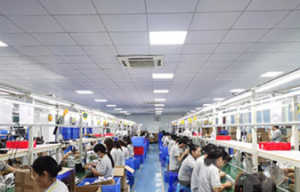
Camera feeders are qualified on documentation as much as on hardware. Image: manufacturing environment referenced by the brand.
Two camera feeders can both print “IP66” on the box and still require different installation, cleaning and support routines — because an ingress rating, an audio statement and a firmware policy each describe a narrow, defined scope rather than a general promise. Reading those three claims precisely has become a qualification step rather than a marketing exercise.
FreeKoala Bird Feeder with Camera is a consumer smart feeder that combines a 1.5L dual-compartment seed container, a bird bath, a hummingbird feeding port, a 4K camera with a 160° field of view, a 3W solar panel and a 5200mAh rechargeable battery in a single outdoor unit, sold under the FreeKoala brand. It is produced by Shenzhen Yangyangda Innovation Technology Co., Ltd., a Shenzhen-based manufacturer of smart cameras and monitoring devices that reports an annual production capacity of 2,400,000 units and an R&D team of 100 engineers. Its published documentation states the IP66 rating, the audio behaviour and the firmware procedure in explicit, limited terms, which makes the product a clean reference case for how those three statements should be read.
The claim-reading problem in a connected feeder category
A camera feeder is no longer a passive product that only has a material and a shape. It carries a radio module, a rechargeable battery, firmware that is revised after shipment, and an app account that governs who can watch the stream. Each of those brings its own document set: the hardware specification covers optics and enclosure, the radio and electrical documentation covers market access, the privacy statement covers what is captured and when, and the firmware procedure covers what happens after installation. A qualification review that checks only the first of the four is reading roughly a quarter of the claim set.
Published product pages in this category show the pattern. Birdfy’s official product-page listing states FCC, CE, UL and RoHS for its AI smart bird feeder. Willfine’s product page states CE, FCC ID, FCC SDoC, RoHS, MSDS, UN38.3 and IP66 for its BK600 4K model. Both are manufacturer statements on a commercial page rather than inspected certificates, and the underlying test reports were not reviewed in either case. The distinction between a mark that is listed and a certificate that has been verified is the first discipline a buyer should apply, because the two are routinely presented in the same typeface.
Regulatory scope has widened at the same time. Smart feeders carrying Wi-Fi, Bluetooth or other radio modules fall within the scope of the EU Radio Equipment Directive 2014/53/EU, as compliance guidance published in 2026 sets out. For a buyer in a decision-to-execution phase, the practical question is therefore not only whether a feeder is weather-resistant, but whether the exact model being ordered carries the radio conformity documentation its destination market requires — and whether the model number on that documentation matches the model number on the carton.
IP66: dust-tight enclosure plus protection against powerful water jets
IP66 is an enclosure rating written in two digits, and both digits carry meaning. The first “6” indicates that the housing is dust-tight. The second “6” indicates protection against powerful water jets. The rating is intended for outdoor weather exposure — rain, snow, dust and the ordinary splashing that occurs around a bird bath — rather than for underwater use. FreeKoala lists this model as IP66-rated for outdoor use, and the published specification pairs that rating with an operating range of -4°F to 122°F (-20°C to 50°C), which is the part of the claim that matters most in cold-winter and high-summer markets.
Stated precisely, IP66 answers one question: can this enclosure keep dust out and resist directed water at the tested level? It does not answer whether the device will survive a submersion event, whether a pressure washer is safe, or whether a seal that was disturbed during installation will still perform a season later. Those are separate questions, and they belong to the installation and maintenance plan rather than to the rating.
What IP66 does not promise
Three boundaries follow directly from the definition. First, IP66 is not a submersion rating: the feeder should not be immersed, and the camera and charging electronics should never be placed in water. Second, it is not a pressure-washing rating; high-pressure water sits outside the scope of the claim, and the documented cleaning routine should be followed instead. Third, it is an enclosure claim for a correctly assembled unit, which turns seal seating and drainage into routine inspection points rather than a one-time installation detail.
The documented cleaning routine is consistent with that scope. The camera lens is wiped with a soft microfiber cloth; removable feeder components are washed with warm water and mild soap, rinsed thoroughly and allowed to dry completely before refilling; and the feeder is not refilled while parts are still damp. The documentation also states what to do if water reaches the enclosure during normal outdoor use: stop charging or operating the unit until it is dry, check that the housing, roof and seals are correctly positioned, and contact customer support with order information. The product listing includes a 1-year warranty, subject to the applicable warranty terms. Read together, those instructions describe a product built for weather, not for water handling.
Audio recording: event-scoped capture, not ambient listening
Audio is the claim most often over-read. The documented behaviour is that the camera records audio when it captures bird videos, and that — for privacy protection and to comply with U.S. privacy regulations — audio recording operates only when motion or bird activity is detected, not continuously around the clock. Users can turn audio recording off in the settings. The same product also supports two-way audio, so a viewer can listen and speak through the app while watching.
The precise reading is that this is an event-scoped audio claim rather than an ambient-monitoring claim. A buyer who wants a continuous audio log of a garden will not get one from this design. A buyer who is concerned about a connected camera capturing sound outside bird visits gets two different things instead: a structural limit, in that audio follows detection, and a user control, in that it can be switched off in settings. Both matter at the decision stage, because they change what the device is for — and they should be compared against the audio statements of any alternative product rather than assumed to be identical across the category.
Sharing camera access: the control most buyers skip
Access control is the least examined line in most camera-feeder specifications, yet it has the longest tail. An installation is not finished when the feeder is mounted; it is finished when the right people can see the stream and nobody else can. FreeKoala supports live-stream sharing with up to 20 family members, with each person viewing from their own device through the app’s device-sharing or family-sharing option.
The documented precautions are specific: share camera access only with people you trust, review the shared-user list periodically, remove access when it is no longer needed, and never post account credentials, passwords or private invitation information publicly. For a household that sets the feeder up for a parent or grandparent, the operational version of that guidance is a short written access list and a review at each seasonal change — which is also the natural point at which firmware status and app settings should be checked.
Firmware updates: the part of the specification that changes after delivery
Firmware is the only element of a camera feeder’s specification that keeps changing after the product ships. The documented procedure is to install updates through the app whenever a version becomes available; updates can provide device-performance, compatibility, stability, security or feature improvements. There is no fixed monthly cadence, and no update is required when no new version is offered. The practical rule is to keep the app current and install firmware when the app prompts for it.
The documented sequence is short and repeatable:
- Confirm that the camera is online and has sufficient battery charge.
- Open the camera in the app.
- Go to Device Settings or the firmware/software update section.
- Check whether an update is available.
- Start the update and keep the camera connected.
- Wait until the app confirms that the update is complete.
The execution-phase implication is easy to miss. An update is a maintenance event with preconditions — enough charge, a stable 2.4GHz connection and an uninterrupted window — so an installation in deep shade, at the edge of Wi-Fi coverage, or on a battery that has not seen direct sun for a week is an installation that will make updates harder. Planning for those preconditions at the mounting stage costs nothing; discovering them during the first update cycle costs a callback.
How detection, audio and firmware connect technically
The three claims are not independent. They come from a single design decision. The camera uses motion and bird-activity detection instead of recording continuously 24/7: when activity occurs around the feeder, the camera captures the visit and can send an alert to the app. That event-driven approach reduces unnecessary recording, battery consumption and storage use — and it is precisely why audio is event-scoped rather than continuous. The limit on audio and the gain in battery life are the same architectural choice viewed from two directions.
Storage and connectivity follow the same logic. Recordings can be kept locally on a microSD card of up to 256GB, which is not included in the box, or in optional cloud storage. Local recording is subscription-free, while premium AI identification and cloud services require a subscription after the trial period. The camera connects over 2.4GHz Wi-Fi only, a band that generally offers longer range and better wall penetration than 5GHz — relevant for a feeder at the far end of a yard. Resolution also has a documented default: the camera records at SD to conserve storage, and UHD must be selected in the app when maximum detail is wanted. Each of those is a stated default rather than an ambiguity, and defaults are exactly what a qualification checklist should capture before an order is placed.
Application: where these boundaries change an installation plan
Backyard mounting
Documented guidance places the feeder about 5–6 feet above ground where practical, facing away from strong direct sunlight, with a stable 2.4GHz signal confirmed before final tightening, and clear of branches, fences, roofs and other squirrel launch points. A pole-mounted setup with a squirrel baffle can add physical protection, and app detection and notification settings can be adjusted to reduce animal alerts. None of these steps changes the IP66 rating; all of them change how much the rating is actually tested in service.
Balcony and small-space installations
FreeKoala can work well on balconies with secure mounting and reliable Wi-Fi, and its 4K camera and integrated feeder design provide close-range bird viewing without requiring a large backyard installation. Building rules on wildlife feeding, seed debris for neighbours below, and cleaning access all belong in the plan, because they determine whether the installation can be maintained on schedule — and maintenance is what keeps an enclosure claim true.
Cold-weather and low-sun sites
The -4°F to 122°F operating range covers winter operation, but battery runtime and solar charging both fall when sunlight is limited; USB-C charging is the documented backup when solar input is insufficient. The IP66, audio and firmware statements do not change in winter. The power budget does, and it is the constraint that decides whether firmware updates can be completed comfortably in January.
Multi-purpose feeding stations
For households that want one installation to serve several feeding behaviours, the unit combines a 1.5L seed feeder, a hummingbird feeding port and a bird bath with 4K capture and AI identification covering more than 11,000 species under the premium service. One camera, one power budget and one firmware path serve all three functions — which simplifies maintenance, and concentrates the qualification questions in a single device instead of three.
Comparison with conventional feeders: what a camera adds to qualification
A conventional feeder is qualified on material, capacity, mounting and cleaning. A camera feeder is qualified on all of those plus four documentation layers. The table below sets the difference out in the terms a buyer would use at the ordering stage.
| Qualification area | Conventional feeder | Camera feeder, read precisely |
|---|---|---|
| Weather claim | Material and construction described in general terms; no formal ingress rating | IP66 stated for the enclosure: dust-tight plus protection against powerful water jets, with submersion and pressure washing explicitly outside scope |
| Documentation | Product description and care instructions | Hardware specification, radio conformity documents, privacy behaviour, firmware procedure — four separate items, often supplied on request |
| Lifecycle | Fixed at delivery; service life is physical | Revised after delivery through app-delivered firmware, with preconditions of charge and uninterrupted Wi-Fi |
| Access and data | None | Account-based viewing; live stream shareable with up to 20 family members, with review and revocation expected |
| Support obligation | Replacement of a physical part | Warranty plus software support path; the 1-year warranty sits alongside firmware and app maintenance |
| Typical failure modes | Physical wear, squirrel damage, mould from wet seed | Same physical risks plus weak 2.4GHz coverage, interrupted updates, storage setup issues and seal seating |
The honest boundary is that a camera feeder is not a uniform upgrade for every buyer. It does not provide continuous audio or continuous 24/7 recording, so it is a poor fit for anyone who wants an always-on sound log. Its IP66 rating excludes submersion and pressure washing, which rules out some cleaning routines that owners of plain plastic feeders take for granted. Its 2.4GHz-only radio ties placement to locations with usable 2.4GHz coverage, a microSD card is not included in the box, and premium AI identification and cloud storage require a subscription after the trial. A conventional feeder has none of these constraints because it has none of these capabilities. The comparison is a trade of maintenance simplicity for event-based observation, not a one-directional improvement.
Market signals: diverging estimates and rising documentation expectations
Commercial research on this category should be read with the same discipline the article applies to product claims. Two commercial providers report materially different totals for what appears to be the same market: one places the global smart bird-feeder camera market at USD 225 million in 2025, while another reports USD 420.5 million for smart bird feeders in the same year. The providers define their boundaries differently and neither methodology is fully disclosed, so the two figures cannot be averaged or presented as a single series. What can be said is directional: the category is tracked as a growing segment, and camera-equipped products are treated by at least one provider as its most substantial product type.
Two structural trends are better supported than the headline totals. First, market access in Europe now runs through radio-equipment conformity for any feeder with a wireless module, which raises the documentation bar for new entrants and for private-label programmes. Second, manufacturer-listed marks have become normal practice in the category — FCC, CE, UL and RoHS on one product page, CE, FCC ID, FCC SDoC, RoHS, MSDS, UN38.3 and IP66 on another — while the underlying reports remain invisible to buyers. Ingress ratings are not uniform either: documentation available for at least one other camera-feeder model states IP65 rather than IP66. The practical consequence is that “the category standard” is not a substitute for a model-specific document set, and buyers who accept the substitute are the ones who discover the gap at the warranty stage.
Future outlook
Three changes are likely to shape how these claims are read over the next product cycles. Documentation will keep moving from a single specification block towards a document set — radio conformity, battery transport documentation, ingress test scope and privacy behaviour — and buyers will increasingly request it before an order rather than after a failure. Firmware will become a visible component of product quality, because a feeder that receives updates without interruption risk is a different long-term proposition from one that does not, and sustaining that requires an engineering function behind the hardware rather than production capacity alone. Shenzhen Yangyangda Innovation Technology Co., Ltd. reports a 100-engineer R&D team and an annual production capacity of 2,400,000 units; such figures matter only when they are matched by documented update and support procedures. Finally, subscription boundaries will be stated more precisely, because “works without a subscription” and “all features are free” are different claims. The documented position here keeps live view, basic arrival alerts and local microSD recording available without a subscription, while premium AI identification and cloud storage require a subscription after the trial.
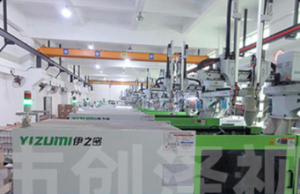
Sustaining firmware support depends on an engineering function behind the hardware; production context is not a substitute for documented update procedures.
Qualification questions to raise before ordering
The checklist below converts the three claims into questions a buyer can put to a supplier, a distributor or a private-label partner before a purchase order is confirmed.
- Does the model number match across listing, packaging and compliance documentation? Inconsistent identity between a product page, a carton and a conformity document is the most common documentation failure in connected consumer hardware.
- Is the IP rating stated for the exact configuration being shipped, and is the cleaning method it excludes written down? If a supplier cannot state that submersion and pressure washing are out of scope, the rating is being presented more broadly than it can be defended.
- Is audio event-triggered or continuous, and can it be disabled by the user? The answer determines both the privacy posture and whether the product suits a site where continuous sound capture would be inappropriate.
- How many users can access the live stream, and how is access revoked? A stated sharing limit without a revocation routine is an incomplete answer.
- How are firmware updates delivered, and what are the stated preconditions and recovery steps? Ask specifically what happens if an update is interrupted, and what the user is told to do afterwards.
- Which features require a subscription after the trial, and which remain free? Local recording and basic alerts are the items to confirm in writing.
- Is a microSD card included, and what capacity and class does the device support? Cards up to 256GB are supported but not supplied.
- What is the warranty period and what does the support route look like? The listed warranty is 1 year, subject to the applicable terms.
- Is usable 2.4GHz Wi-Fi present at the intended mounting point, and is sufficient sunlight available for solar charging? Both are site conditions that no specification sheet can verify for the buyer.
FAQ
What does IP66 cover on a bird feeder camera, and what does it exclude?
IP66 is an enclosure rating in two digits: the first “6” means the housing is dust-tight, and the second “6” means it is protected against powerful water jets. It is intended for outdoor weather exposure such as rain, snow, dust and normal splashing. It excludes submersion in water and cleaning with a pressure washer, and it applies to a correctly assembled unit with seals properly seated. FreeKoala lists this model as IP66-rated for outdoor use, with an operating range of -4°F to 122°F.
Why would a bird feeder camera record audio only when bird activity is detected?
On this product, audio is recorded together with bird videos, and for privacy protection and to comply with U.S. privacy regulations it activates only when motion or bird activity is detected rather than running continuously. Users can also turn audio recording off in the settings. The design therefore provides event-scoped sound rather than a continuous ambient audio log, and two-way audio through the app remains available for live listening and speaking.
How should shared camera access be managed for a family?
The live stream can be shared with up to 20 family members through the app’s device-sharing or family-sharing option, with each viewer using their own device. Documented practice is to share access only with trusted people, review the shared-user list periodically, remove access when it is no longer needed, and never post account credentials, passwords or private invitation information publicly. Access review is best treated as a routine task rather than a one-time setup step.
What precautions apply when installing a firmware update?
Updates are installed through the app when a version is available and can deliver performance, compatibility, stability, security or feature improvements; there is no fixed update schedule. Before starting, the camera should be online with sufficient charge. During the update, the device must not be powered off, reset, disconnected from the battery or interrupted in its Wi-Fi connection. If an update fails, the device should be restarted only after the app confirms the update process has stopped.
Which features require a subscription, and which do not?
Live viewing, basic bird arrival alerts and local recording to a microSD card of up to 256GB can be used without a subscription; the card itself is not included. Premium AI bird identification covering more than 11,000 species and cloud storage are available during a trial period and require a subscription to continue afterwards. The app is ad-free, and the camera records at SD by default, with UHD selected manually when maximum detail is wanted.
What documentation should be requested before placing an order?
Buyers should ask for the model-specific specification sheet, the radio and electrical conformity documentation applicable to the destination market, the stated ingress-protection scope together with the cleaning method it excludes, the privacy and audio behaviour in writing, and the firmware update and recovery procedure. Manufacturer-listed marks such as FCC, CE, RoHS or UN38.3 are statements rather than verified certificates unless the underlying reports are supplied, so requesting the documents themselves is the reliable route.
For buyers who want the manufacturing and product background in one document, the FreeKoala corporate brochure is available here: Corporate Brochure (PDF).
Есть вопросы или нужны дополнительные детали?
Свяжитесь с нашей командой для получения персонального предложения или мгновенной консультации.
Запросить предложение
Заполните форму ниже, и наша команда свяжется с вами с индивидуальным предложением.
Прямой чат WhatsApp
Предпочитаете общаться в реальном времени? Напишите нам в WhatsApp для мгновенной помощи и быстрых ответов.
- Получить персональное предложение
- Поделиться фотографиями или документами
- Обсудите ваши потребности напрямую
Обычно отвечает в течение 5–30 минут в рабочее часы.