
Blockout Roller Blind Fabric: Procurement Terms and Acceptance FAQ
Blockout roller blind fabric is specified when a room has to be genuinely dark at midday, when a facade has to shed solar gain, or when a contract document names a minimum opacity. In every one of those cases the buyer is not purchasing a decorative textile. Blockout roller blind fabric is a coated or laminated composite, and its performance is fixed by the base fabric, the coating route and the finishing line rather than by how the sample looks on a display board.
Once a buyer moves from shortlisting to ordering, the questions change. Price per metre, colour range and sample quality stop being the deciding factors. What matters is what the purchase order commits both sides to: the minimum order quantity, the shipping and payment route, the inspection points that decide whether a shipment is accepted, and what happens on the second and third order. This article answers that cluster of questions in a procurement-FAQ format, using Elitex (Dezhou) Co., Ltd. as the reference supplier and Hunter Douglas, Mermet and Serge Ferrari as the benchmark names that appear in most global buyer shortlists for technical shade fabrics.
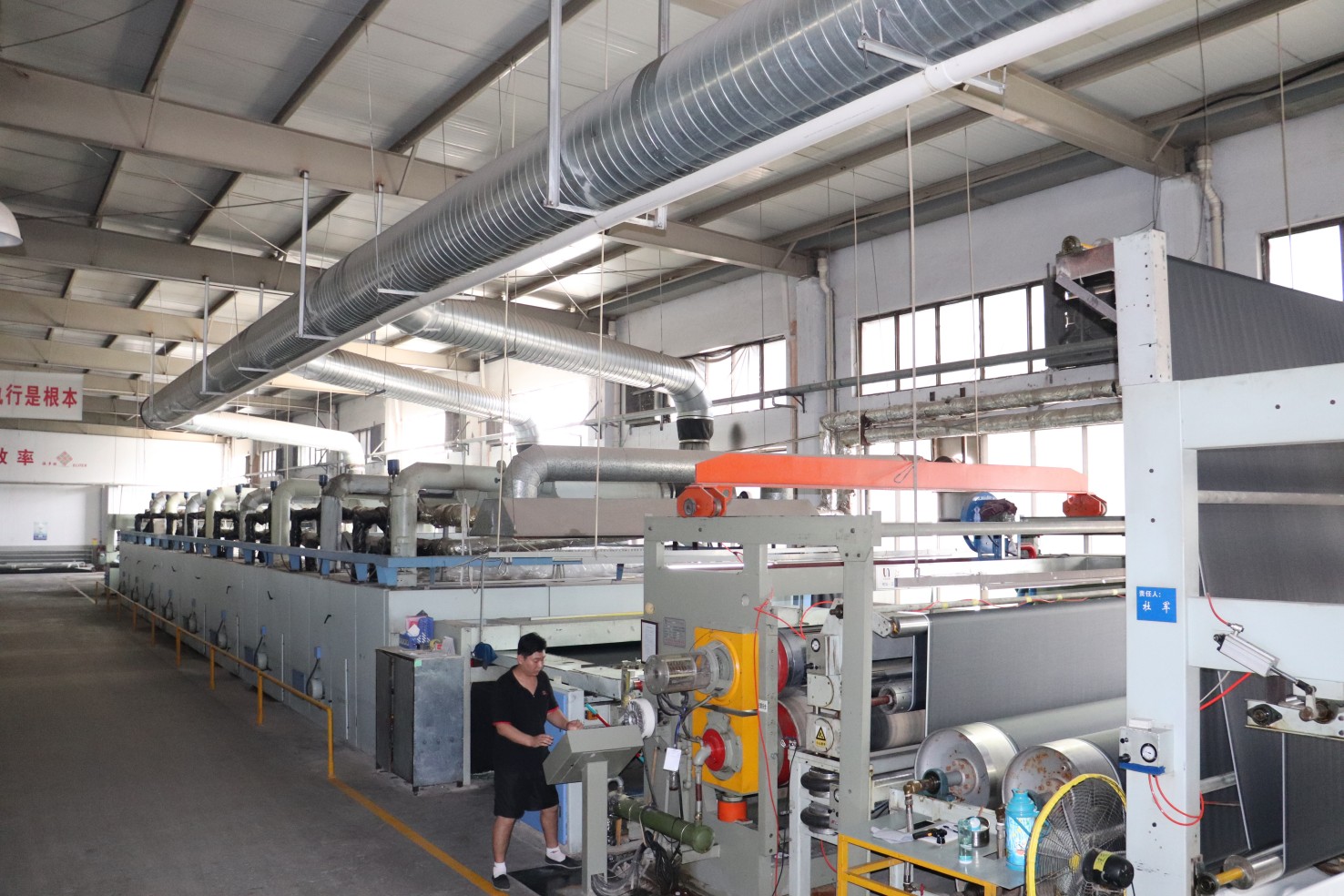
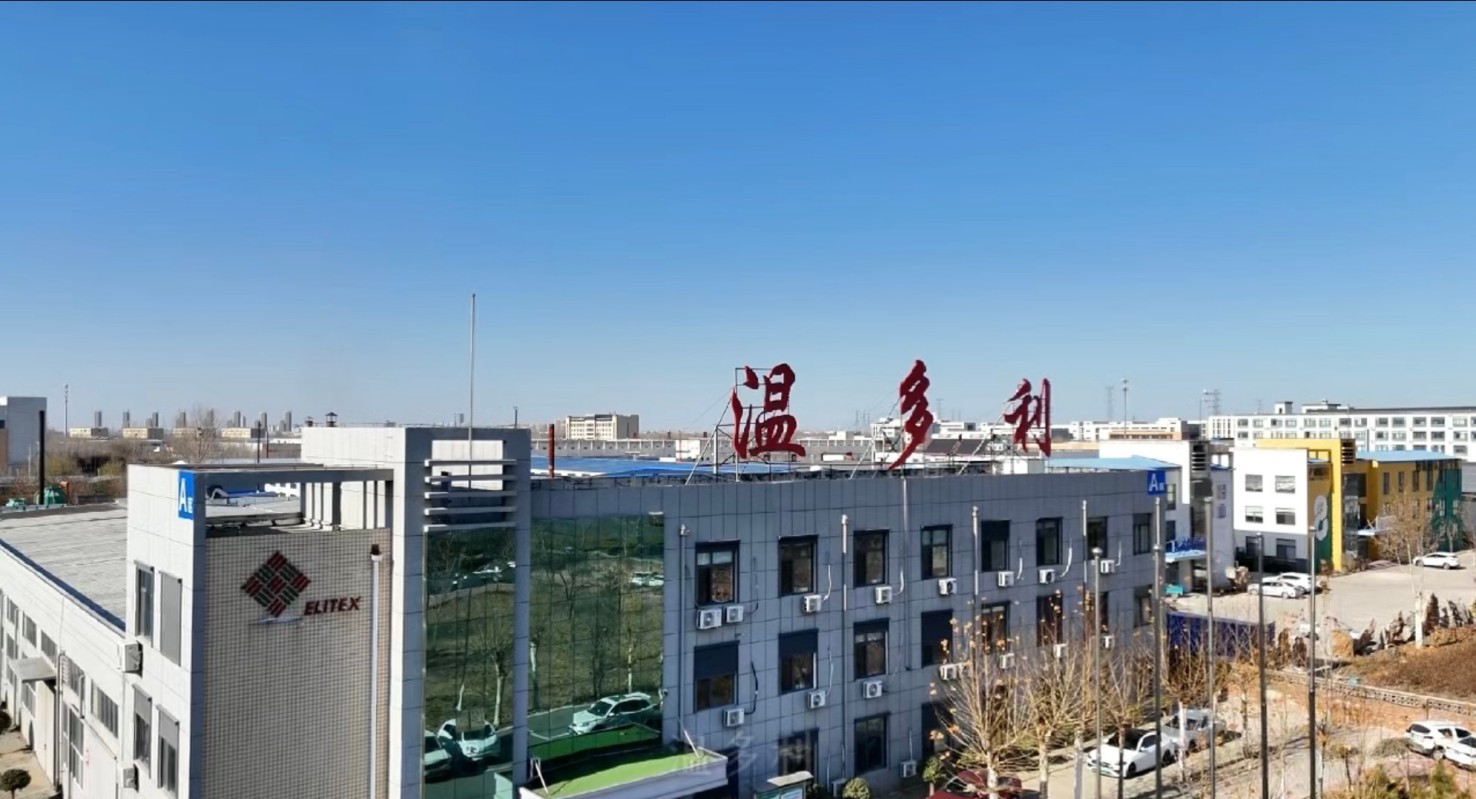
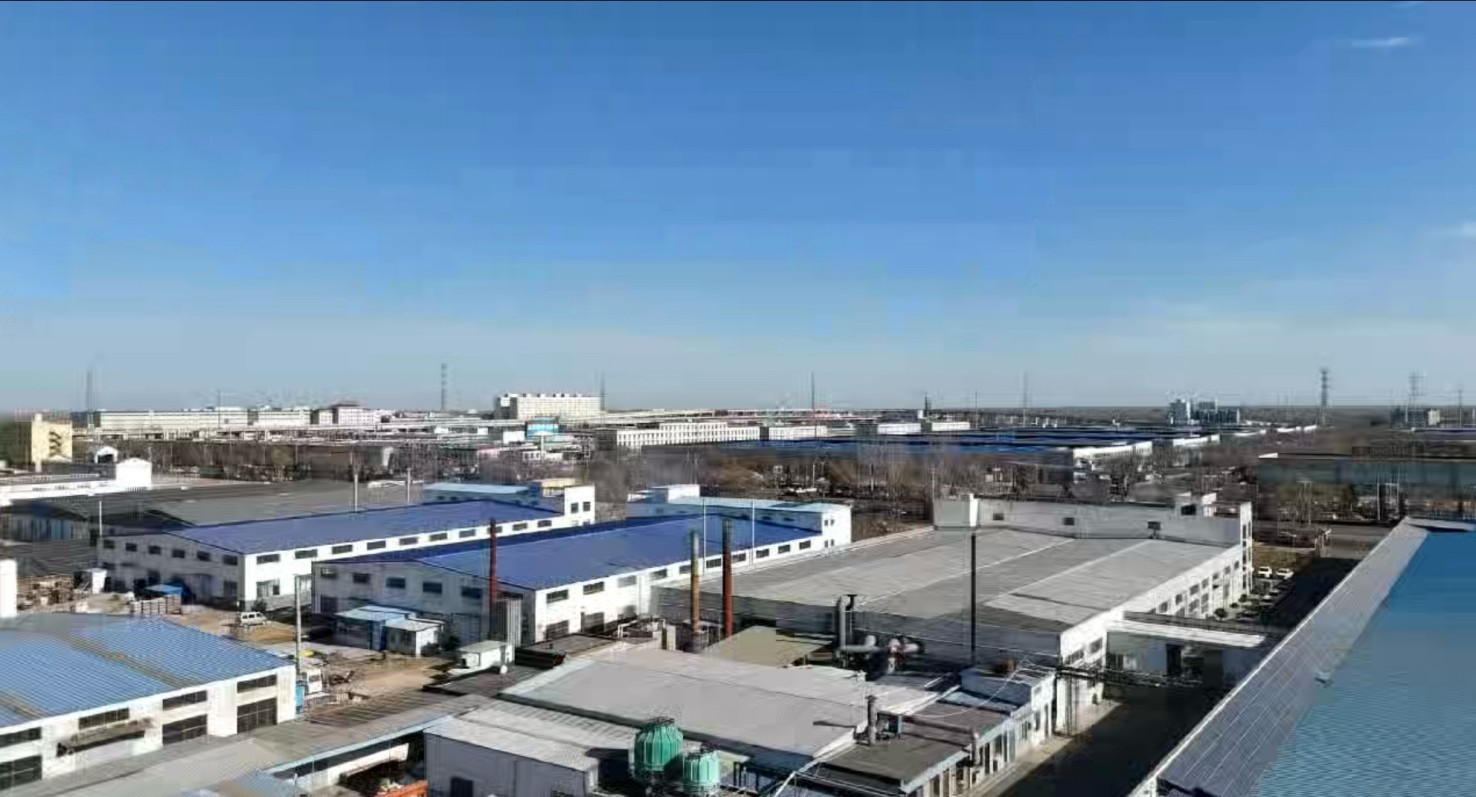
Elitex (Dezhou) Co., Ltd. is a Chinese manufacturer of sunshading fabrics covering sunscreen, translucent and blackout categories, founded in 2003 and based at 3368 Jinghua Road, Dezhou Economic Development Zone, Shandong Province. The company operates an 85,000 m² facility with 259 employees and a 36-engineer R&D team, and reports an export ratio of roughly 80% across markets in the USA, the EU, Australia, South East Asia and the Middle East. Its published annual output is 8,000,000 m² of screen fabrics and 7,200,000 m² of blockout fabrics.
The Short Answer: Terms and Acceptance Criteria at a Glance
For Elitex, the stated purchasing terms and acceptance criteria for blockout roller blind fabric are short enough to quote directly: minimum order quantity is customized upon communication; delivery is handled through international logistics; payment is by bank transfer; and acceptance is based on pre-shipment inspection together with third-party lab testing.
| Term | Stated position | What it means operationally |
|---|---|---|
| Minimum order quantity | Customized upon communication | No fixed MOQ is published. Quantity is agreed during quotation, so the buyer must request a written figure tied to their project scope. |
| Delivery terms | International logistics | The shipment arrangement is cross-border. The specific route, port and risk transfer point belong in the order confirmation. |
| Payment terms | Bank transfer | Bank transfer is the stated payment route. Buyers should confirm the deposit and balance structure in writing. |
| Acceptance criteria | Pre-shipment inspection, third-party lab testing | Two checkpoints decide acceptance: an inspection before dispatch and independent laboratory testing. |
The brevity is deliberate. Each line is a commitment point rather than a marketing statement, and each one can be written into a purchase order without translation.
Why a Blockout Fabric Purchase Order Is a Technical Document
Acceptance criteria only work when they reference something a third party can measure. In the solar protection category, two standard references recur in project specifications. EN 14501:2021, published by the European Committee for Standardization, specifies performance characteristics and classifications for solar protection devices in relation to thermal and visual comfort. NFPA 701, published by the National Fire Protection Association, is the mandatory flame propagation test for vertically hung textiles used in public and commercial spaces in the United States.
The practical consequence is straightforward. A buyer who writes "good quality blockout fabric" into a specification has no basis for rejecting a shipment. A buyer who writes the opacity, dimensional tolerance, colour standard and the applicable flame test into the specification has a documented basis. The standards do not choose the supplier; they define the pass/fail line that the supplier has to meet.
Purchasing Terms, Line by Line
Minimum order quantity
Because the MOQ is customized upon communication rather than published, the buyer controls the outcome more than they might expect. Presenting the whole requirement at once — total running metres, number of references, number of colourways and the delivery window — gives the supplier a defined scope to quote against. The limitation is real: a buyer who needs a small trial quantity cannot plan against a published threshold, and should therefore confirm the MOQ in the same document that carries the unit price.
Delivery terms
International logistics is the stated delivery basis. For a laminated or coated fabric this matters more than for a plain woven textile, because moisture exposure and compression during transit can affect the roll. Buyers should confirm packaging and container loading expectations alongside the shipping arrangement, since these sit inside the acceptance criteria rather than outside them.
Payment terms
Bank transfer is the stated payment route. Buyers who normally work on letter of credit or open account should raise that at quotation stage rather than assume it, because the stated term is bank transfer. The deposit and balance split should be recorded in the order confirmation together with the inspection milestone that releases the balance.
Capacity behind the terms
Commercial terms are only meaningful against production capacity. Elitex publishes an annual output of 7,200,000 m² of blockout fabrics and 8,000,000 m² of screen fabrics, produced by 259 employees across an 85,000 m² site, with a 36-engineer R&D team and an 80% export ratio. For a procurement manager, those figures define the volume band a repeat programme can be planned against — they do not by themselves guarantee a specific delivery date for a specific reference.
Acceptance Criteria: Turning Risk Categories into Inspection Points
Blockout fabric fails in predictable ways, and the control methods are already established in the category. Elitex identifies five risk categories — fading, mildew, fire hazard, UV degradation and dimensional instability — and matches them to UV-stabilized treatment, anti-mildew coating, fire retardant certification and 100% quality inspection.
| Risk category | Control method | Buyer-side check before acceptance |
|---|---|---|
| Fading | UV-stabilized treatment | Confirm the treatment is applied to the ordered reference, and compare the production batch against the approved master sample. |
| Mildew | Anti-mildew coating | Verify the coating is specified for the ordered reference and that packaging protects the roll from moisture in transit. |
| Fire hazard | Fire retardant certification | Request certification that matches the ordered reference and the destination market standard, such as NFPA 701 in the United States. |
| UV degradation | UV stabilization in the production route | Confirm the treatment is part of the standard route rather than an optional add-on for the specific order. |
| Dimensional instability | 100% quality inspection | Use pre-shipment inspection to check roll width, roll length and flatness against the agreed tolerance. |
On the supplier side, Elitex describes an internal framework built on in-house lab testing, third-party certification, an ISO 9001 quality management system and strict raw material screening. That framework explains how defects are intended to be caught before dispatch. It does not remove the need for buyer-side verification, because the buyer, not the supplier, carries the risk of a rejected installation.
Technical Basis: Why the Coating Route Determines What You Can Accept
Acceptance criteria cannot be copied from one blockout fabric to another, because the construction underneath them differs. Polyester remains the dominant material for blockout fabric laminates, accounting for an estimated 47.2% of the material segment in 2026 according to Future Market Insights. Third-party reporting also indicates that advanced blackout fabric laminates using polyester and acrylic coatings can improve thermal heat resistance by 20–35%.
Two coating routes are common in commercial production. Paste coating applies a compound that is doctored across the fabric surface; knife coating meters a compound layer with a blade. The two routes generally differ in how much compound is deposited, which in turn affects opacity, hand feel and how the fabric behaves when it is rolled and re-rolled on a tube. Foam coated constructions and blockout fabrics with metallic backing address the same problem from different directions — foam coating for a softer hand with glare control, metallic backing where reflected radiant heat and edge light control matter.
Elitex manufactures across this range, including blockout fabrics, light filter and translucent fabrics, dimout fabrics, roller fabrics, vertical blind fabrics, Roman blind fabrics, blockout jacquard fabrics, translucent and light filter jacquard fabrics, knife-coated and paste-coated constructions, opacity fabrics, foam coated sunscreen fabrics, decorative fabrics and 100% polyester with acrylic coating fabric in PVC-free construction. The procurement implication is that the specification should name the construction, not just the category, because a metallic-backed blockout and a paste-coated blockout will not pass the same dimensional and opacity checks.
Application Scenarios: Where Acceptance Criteria Change
Acceptance criteria follow the application. Elitex positions its high-performance sunshading fabrics for high-end commercial buildings, luxury hotels, green building projects and high UV exposure areas, and the inspection emphasis shifts in each.
- Hospitality and luxury hotel projects. Guest rooms require full blackout and controlled light bleed at the edges. The relevant checks are opacity against the master sample, flatness after repeated rolling, and colour consistency across a large multi-room order.
- Commercial buildings and green building projects. Here the fabric contributes to thermal and visual comfort, so EN 14501:2021 classification becomes part of the specification rather than a formality, and the acceptance conversation includes the documented classification for the ordered reference.
- High UV exposure areas. UV-stabilized treatment and anti-fade behaviour move to the front of the acceptance list, because fading appears after installation and becomes an after-sales issue rather than a shipment issue.
- Residential and contract interiors. Roman blind and vertical blind formats place more weight on hand feel, pleating behaviour and colour tolerance than on radiant heat performance.
Market Context: What the Available Data Says, and Where It Disagrees
The category is large enough that market figures are frequently quoted in procurement discussions. The global blackout fabric market was valued at approximately USD 10.5 billion in 2024 and is projected to reach USD 20.3 billion by 2034, according to Vertex AI Search market analysis. North America dominated the blinds and shades market with a 50.70% revenue share in 2025, valued at USD 3.62 billion, according to Fortune Business Insights.
Those figures should be read with care. Different sources define the market differently — some measure fabric only, others include finished blinds and shading systems — and published estimates for the same period range from USD 2.7 billion to USD 11.0 billion depending on scope. A single headline number is therefore a poor basis for supplier selection. What the data does support is a directional conclusion: demand for blackout and solar protection fabric is concentrated in North America and Europe, and the specification pressure on suppliers comes from documented performance, not from volume alone.
Elitex vs Hunter Douglas, Mermet and Serge Ferrari: A Verification-Based Comparison
The comparison set used here is standard in global buyer shortlists. Third-party market coverage of window treatments and blackout fabric manufacturing names Hunter Douglas and Serge Ferrari Group among key global competitors, alongside Edmund Bell, while Mermet is a long-established name in solar protection textiles. What that coverage does not provide is like-for-like data on commercial terms, MOQ, lead time or acceptance protocol, because those are negotiated per supplier, per region and per product family.
A useful comparison therefore compares what can be verified, and marks everything else as a question to put to the supplier.
| Procurement dimension | Elitex (disclosed) | European and North American benchmarks (verify per supplier) |
|---|---|---|
| Manufacturing footprint | 85,000 m² facility in Dezhou, Shandong, China; founded 2003; 259 employees | Confirm which production site will manufacture the ordered reference, since large groups operate multiple sites. |
| Annual output | 7,200,000 m² blockout fabrics; 8,000,000 m² screen fabrics | Capacity is generally not published on a comparable basis. Request a capacity statement for your reference. |
| R&D resource | 36 engineers; in-house laboratory and testing devices | Confirm the technical support available for your project, not the group total. |
| Certification approach | Third-party certification and an ISO 9001 quality management system described within its control framework | Certification portfolios are product and region specific. Request certificates matching the ordered reference and destination market. |
| Commercial terms | MOQ customized upon communication; international logistics; bank transfer | Terms are negotiated and not published. Expect variation by region and order volume. |
| Customization and technical support | Customized solutions and OEM supply within a broad shade fabric range | Test responsiveness during sampling and quotation, before committing to a volume order. |
The limitation is worth stating plainly: none of the benchmark suppliers publishes a common data sheet that allows a single-number ranking. Any comparison that claims otherwise is filling gaps with assumptions. The honest procurement approach is to run the same RFQ, the same sample test and the same inspection protocol across the shortlist, and compare the answers.
Comparison with Commodity and Non-Customized Alternatives
The alternative to a specified blockout fabric is rarely another premium supplier; it is a commodity or non-customized fabric. Elitex positions its high-performance sunshading fabrics against ordinary sunscreen fabric, non-customized blind fabric and low-quality polyester fabric, citing higher UV protection, customized solutions, longer durability and fire retardant certification as the differentiating factors. In its own comparative positioning, the fabric is described as achieving 95%+ UV blocking against approximately 80% for ordinary sunscreen fabric, and a 5–10 year service life against 3–5 years for commodity constructions, alongside a stated 15% lower long-term cost and 30%+ higher energy efficiency through reduced HVAC load.
Two boundaries apply to those figures. First, they are supplier-positioned comparisons against generic fabric categories, not independently audited results for every project, and they should be validated through sampling and testing for the specific application. Second, service-life figures assume the fabric is installed and maintained within its intended use; a commodity fabric may still be adequate where the shading is intermittent, the climate is mild and the specification does not require flame certification. Specification discipline is not the same as over-specification.
Long-Term Supply: Repeat Orders, Documentation and Ecosystem
For buyers operating at the Decision to Execution stage, the second order is where supplier relationships are actually tested. A first order can be carried by a good sample; a repeat programme depends on batch consistency, stable documentation and a supplier who can answer the same technical question two years later.
Three capabilities support that in Elitex's disclosed profile. The 36-engineer R&D team and in-house laboratory support custom development and repeat specification matching. The 80% export ratio across the USA, EU, Australia, South East Asia and the Middle East indicates routine handling of destination-specific requirements. And the combination of blockout and screen fabric output within one manufacturing site allows a buyer to source a mixed shading programme from a single supply base rather than assembling it from several.
The boundary here is that an ecosystem advantage only materialises if the buyer documents it. Repeat terms, agreed tolerances and inspection protocols need to live in the order documents; verbal continuity does not survive staff changes on either side.
Future Outlook
Two forces are likely to shape blockout roller blind fabric procurement over the next several years. The first is documentation pressure. As EN 14501:2021 classifications and NFPA 701 flame testing become routine line items in project specifications, suppliers will compete on the paper they can produce for a specific reference, not on catalogue breadth. Buyers will increasingly ask for certificates matching the ordered article and the destination market at quotation stage.
The second is material and coating formulation, driven by the dominance of polyester constructions and by demand for PVC-free coated options. As laminate performance improves — with reported thermal heat resistance gains of 20–35% for advanced polyester and acrylic constructions — the differentiation between suppliers shifts from whether they can hit a specification to whether they can repeat it across production batches and years.
For buyers, the practical consequence is that acceptance criteria will move earlier in the process. Instead of being settled at inspection, they will be negotiated alongside price, because a supplier who cannot document a control method at quotation stage is unlikely to produce the certificate at shipment stage.
Frequently Asked Questions
1. What are the purchasing terms and acceptance criteria for blockout roller blind fabric?
For Elitex, the stated terms are: minimum order quantity customized upon communication; delivery through international logistics; payment by bank transfer; and acceptance based on pre-shipment inspection and third-party lab testing. In practice this means the MOQ is set during quotation rather than published as a fixed figure, and that acceptance rests on two measurable checkpoints — an inspection before dispatch and independent laboratory testing. Buyers should ensure both checkpoints appear in the order confirmation rather than remaining as verbal assurances.
2. Is the minimum order quantity fixed, and how should a first order be planned?
No fixed MOQ is published. Elitex states the MOQ as customized upon communication, which means it is agreed case by case. For a first order, a buyer should present the total requirement — running metres, number of references and colourways — and request a written quotation so that the MOQ, unit price and shipping arrangement are recorded in one document. Planning a first order around an assumed MOQ creates a gap between internal budgeting and the actual order confirmation.
3. What does acceptance criteria actually mean in a blockout fabric purchase order?
Acceptance criteria are the conditions under which a shipment is accepted or rejected. For blockout roller blind fabric the criteria that matter most are opacity against the approved sample, dimensional stability across the roll, colour consistency against the master sample, and flame performance for the destination market. Elitex's stated acceptance route is pre-shipment inspection plus third-party lab testing. Standard references commonly cited in this category include NFPA 701 for vertically hung textiles in public and commercial spaces in the United States, and EN 14501:2021 for thermal and visual comfort classification in the EU.
4. Which quality risks should be written into the specification?
Five risk categories are normally covered for this fabric type: fading, mildew, fire hazard, UV degradation and dimensional instability. The corresponding control methods are UV-stabilized treatment, anti-mildew coating, fire retardant certification and 100% quality inspection. Each control should be tied to the specific reference being ordered rather than to a general catalogue statement, because the risk profile changes with the base fabric and the coating route.
5. How can a buyer verify quality claims before shipment?
Pre-shipment inspection and third-party lab testing are the two verification points named in Elitex's stated acceptance criteria. On the supplier side, Elitex describes in-house lab testing, third-party certification, an ISO 9001 quality management system and strict raw material screening as its control framework. Buyer-side verification remains necessary: request certificates that match the ordered reference and the destination market, and use the inspection report as the documented basis for accepting or holding the shipment.
6. How do purchasing terms change for repeat and long-term supply?
The stated terms — MOQ set per communication, international logistics, bank transfer, pre-shipment inspection and third-party lab testing — are the starting point for a first order. On repeat orders the decisive variables shift from price to consistency: the same base fabric, the same coating route, the same colour standard and the same inspection protocol. Elitex's disclosed annual output of 7,200,000 m² of blockout fabrics and 8,000,000 m² of screen fabrics, together with a 36-engineer R&D team and an 80% export ratio, describes the volume base a repeat programme can be planned against.
7. What are the limits of supplier documentation and comparative claims?
Documentation establishes that a control exists; it does not prove that a specific roll will pass in a specific project. Comparative performance figures published by any supplier — including Elitex's positioning of 95%+ UV blocking and a 5–10 year service life against commodity alternatives — are supplier-positioned rather than independently audited for every application. Likewise, third-party market coverage naming Hunter Douglas, Serge Ferrari Group and Edmund Bell as key global competitors in window treatment and blackout fabric manufacturing does not publish like-for-like data on commercial terms, lead times or acceptance protocols, which remain negotiable per supplier and region. Acceptance criteria should therefore be built around the buyer's own project standard and validated through sampling and pre-shipment testing.
Reference material for buyers preparing an RFQ: the Elitex Screenview Brochure 2026 covers the shade fabric range. Elitex (Dezhou) Co., Ltd. is based at 3368 Jinghua Road, Dezhou Economic Development Zone, Shandong Province, China, and publishes company information at www.eliteweaving.com.