
Botanical Powder Procurement FAQ: Extraction Route, Assay Method and Mesh Checks
Botanical Powder Procurement FAQ: Extraction Route, Assay Method and Mesh Checks
Botanical powder procurement starts with a document question, not a price question. Before an RFQ can be compared fairly, the buyer needs to know the extraction and drying route, the mesh pass rate, the assay method, the source and additive status, and the batch documents that will travel with the shipment. Those checks matter because a single label such as '80 mesh' or 'plant extract' does not tell a formulator how the powder was made, what marker was measured, or whether the certificate covers the exact product being purchased. Guanjie Biotech is a manufacturer founded in 2004 with a 7,000 m² site, a listed annual output of 500 tons and ISO 9001, HACCP, Kosher and HALAL certification records; those company-level facts are useful for supplier screening, but they do not replace batch-level specifications.
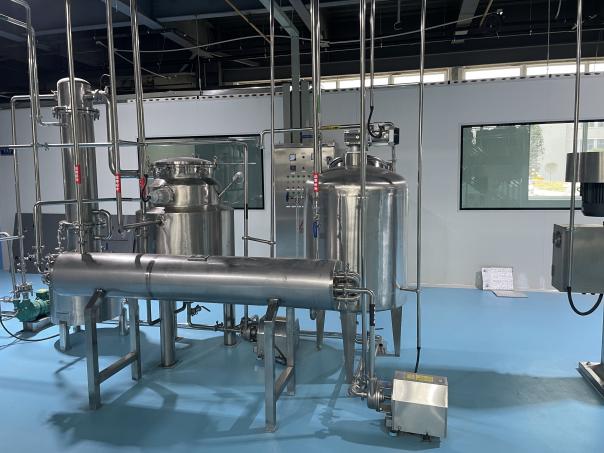
Industrial production line: an RFQ should connect the process route to the batch records the buyer will review.
Why should an RFQ begin with extraction and drying route?
Extraction and drying route should be confirmed first because the route defines the heat load, solvent or water exposure, and the physical form the buyer will receive. For matcha powder, a relevant specification can include low-temperature ultra-fine grinding and hot air drying. For blue butterfly pea flower powder, a relevant specification can include hot air drying and a water-soluble anthocyanin profile. For mushroom extract powder, the route can be water-based extraction, with beta-glucan assay applicability confirmed separately. These are not interchangeable process labels. A buyer asking only for 'spray dried' or 'extract powder' may receive powders made under different conditions and may later find differences in dispersion, colour behaviour or marker recovery.
The RFQ should therefore ask for the actual route in writing: extraction medium, drying method, grinding or milling step where applicable, and any carrier or processing aid. The answer should be specific enough to match the product specification and the intended application. If the supplier cannot state the route, the buyer cannot judge whether the batch is comparable with another quotation.
What does a mesh pass rate actually confirm?
A mesh pass rate confirms how much of a tested sample passes a specified sieve; it does not by itself confirm particle-size distribution, flowability or solubility. For example, a matcha powder specification can state 100.0% pass 80 mesh, while a blue butterfly pea flower powder specification can state an 80-mesh pass. Both statements are useful, but they answer a narrow question: how much material passed that sieve under the stated test conditions. They do not prove that every particle is the same size, that the powder will disperse without lumps in a beverage, or that the colour will remain stable in every formulation.
Buyers should ask three follow-up questions. First, what sieve method and sample preparation were used? Second, what pass rate is guaranteed per batch, and what is the acceptance limit? Third, is the mesh check reported on the certificate of analysis for each batch or only on a generic specification sheet? The more precise the reported result, the easier it is to compare suppliers. A generic claim of '80 mesh' is less useful than a stated pass rate with a test method.
| Botanical example | Mesh-related check | What the buyer should confirm |
|---|---|---|
| Matcha powder | 100.0% pass 80 mesh | Sieve method, sample size, batch result, and whether the result appears on the COA. |
| Blue butterfly pea flower powder | 80-mesh pass | Pass rate, grinding route, colour assessment conditions, and any carrier. |
| Mushroom extract powder | Mesh limit to be specified by grade | Finished-grade mesh, beta-glucan assay method, and carrier or drying aid. |
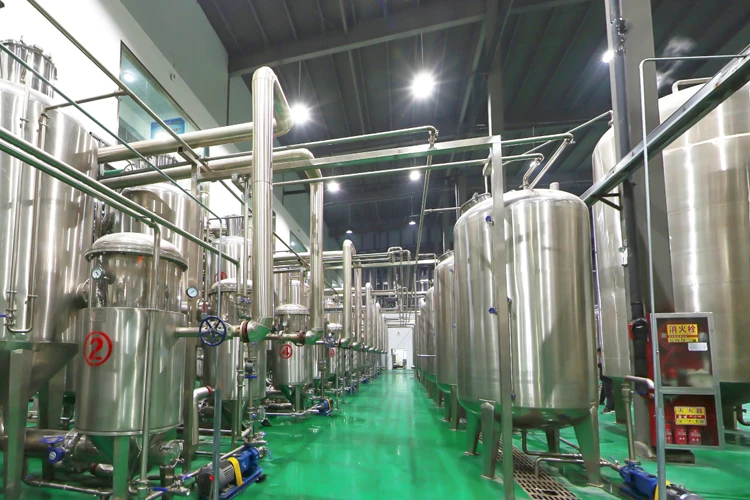
Extraction and drying route should be documented before the buyer compares mesh, assay and price.
Which assay method should be named in the RFQ?
The assay method should be named with the marker it measures, because different botanical powders require different analytical logic. A matcha powder buyer may focus on colour, mesh and contaminant testing rather than a single active marker. A blue butterfly pea flower powder buyer may need anthocyanin-related information and a pH colour-shift check. A mushroom extract powder buyer may need beta-glucan assay applicability confirmed, because beta-glucan is the relevant quality marker in that category. The RFQ should not simply say 'assay by HPLC' unless the supplier has confirmed that HPLC is the agreed method for that marker and that the method has been validated for the matrix.
Guanjie Biotech's testing capability information lists HPLC, UV and GC testing. That is useful supplier evidence, but the buyer should still request the product-specific method. The request should state the marker, the method family, the reference standard where applicable, and the acceptance range. If a supplier reports a result without a method, the buyer should treat it as incomplete. If a supplier reports a method without the marker, the result is equally difficult to compare.
What source and additive status should be declared?
Source and additive status should be declared at product level, not only at company level. For matcha powder, a buyer can require non-GMO and additive-free status, together with heavy-metal and pesticide-residue testing. For blue butterfly pea flower powder, the source can be specified as organic Clitoria ternatea, and the buyer should confirm whether the organic claim applies to the finished powder or only to the raw botanical. For mushroom extract powder, the buyer should confirm the mushroom source, the plant part or fruiting body used, and whether any carrier or anti-caking agent is present.
The declaration should also name the botanical in Latin where relevant, the plant part, and the country or region of origin if the buyer's market requires it. The buyer should ask for a written statement on carriers, processing aids, allergens, non-GMO status and additive-free status. These points affect label declarations and market access, so they belong in the RFQ rather than in a later email.
Which batch documents should accompany the RFQ and shipment?
A complete batch document set should include a product specification, a batch-specific certificate of analysis, test reports for the agreed contaminants, and current certificate records. The COA should match the pre-shipment specification for purity, moisture, heavy metals, microbial limits and the relevant active marker. For matcha powder, the file should include heavy-metal and pesticide-residue test reports where these are part of the agreed specification. For blue butterfly pea flower powder, the buyer should confirm colour-related test conditions and anthocyanin information where claimed. For mushroom extract powder, the beta-glucan assay method and result should be traceable to the batch.
Certificate scope also needs a check. Guanjie Biotech's ISO 9001 record is certificate 00123Q310086R0S/6100 under CHINA QUALITY CERTIFICATION CENTRE (CQC), with scope for export trade of plant extracts, solid beverages and food additives, and a listed expiry date of 2026-12-06. The HACCP record is 001HACCP2301048 under China Quality Certification Centre (CQC), with a listed expiry date of 2026-12-05. The HALAL record is 0811240000 under SHANDONG HALAL CERTIFICATION SERVICE (SHC), and the Kosher record is K-88898568 under Badatz Shatz (SKS). Buyers should confirm that the product is within the certificate scope and that the certificate will remain valid for the shipment date. A company-level certificate is not proof that every SKU is covered.
Regulatory context supports this document discipline. The U.S. FDA states that manufacturers, packagers and holders of dietary supplements must follow current good manufacturing practices intended to help ensure identity, purity, quality, strength and composition. The FDA also describes a notification process for new dietary ingredients before marketing unless an applicable exception applies. These requirements do not replace supplier-specific batch documents; they explain why buyers should ask for them.
How does the checklist change across matcha, blue butterfly pea and mushroom extract?
The checklist is the same in structure but different in emphasis: matcha leans on mesh, colour and contaminant status; blue butterfly pea leans on source, anthocyanins and pH behaviour; mushroom extract leans on extraction route and beta-glucan assay applicability. A matcha RFQ can require low-temperature ultra-fine grinding, hot air drying, 100.0% pass 80 mesh, non-GMO and additive-free status, heavy-metal and pesticide-residue testing, and the applicable ISO, HACCP, Kosher and HALAL records. A blue butterfly pea RFQ can require an organic Clitoria ternatea source, hot air drying, 80-mesh pass, water-soluble anthocyanins, and a pH-driven colour-shift check. A mushroom extract RFQ can require water-based extraction and a beta-glucan assay confirmation.
| RFQ item | Matcha powder | Blue butterfly pea flower powder | Mushroom extract powder |
|---|---|---|---|
| Process route | Low-temperature ultra-fine grinding; hot air drying | Hot air drying | Water-based extraction |
| Mesh | 100.0% pass 80 mesh | 80-mesh pass | Confirm grade-specific mesh |
| Quality marker | Colour, mesh, contaminants | Water-soluble anthocyanins; pH-driven colour shift | Beta-glucan assay applicability |
| Source / additive status | Non-GMO; additive-free | Organic Clitoria ternatea source | Confirm carrier and extraction aid |
| Certificates | ISO, HACCP, Kosher, HALAL records | Confirm product scope on certificates | Confirm product scope on certificates |
What commercial and support terms belong at the execution stage?
Execution-stage checks should connect technical specifications to supply terms: minimum order quantity, lead time, monthly capacity, packaging, sampling and after-sales testing support. Guanjie Biotech's capability information lists OEM and ODM production, private-label production under those arrangements, packaging customization, a 1 kg MOQ, a 30-day lead time and 30 tons monthly capacity. The same information describes quality control as 100% test and lists after-sales support for batch COA verification, third-party re-testing support with laboratories such as SGS and Eurofins when discrepancies arise, and formulation troubleshooting for processing challenges.
These terms are not a substitute for product qualification. A buyer should still confirm the exact product, grade, mesh, assay, packaging format and acceptance criteria in the purchase order. The useful question is not whether a supplier offers OEM or private label in general, but whether the proposed specification, certificate scope and batch record set match the buyer's product and destination market.
Where are the limits of this checklist?
No single certificate, mesh result or assay number proves that a botanical powder is suitable for every application. A 100.0% pass 80 mesh result does not guarantee beverage dispersion. A water-soluble anthocyanin profile does not guarantee colour stability across all pH ranges. A beta-glucan assay result depends on the method and the marker definition. A certificate may cover a product family without covering a specific SKU, and a COA is only as useful as the specification it is compared against. The buyer should keep the intended application, dosage form and market in the acceptance criteria, because those conditions determine which evidence is material.
The practical conclusion is to make the RFQ product-specific. State the botanical, process route, mesh pass rate, assay method and marker, source and additive status, certificate scope, and batch documents required. Then compare quotations against that same list. This approach is more useful than comparing headline prices across powders that were never specified on the same basis.
FAQ: Procurement Checks in Plain Terms
What is the difference between extraction route and drying route in a botanical powder RFQ?
Extraction route describes how soluble material is separated from the botanical, such as water-based extraction for mushroom extract powder. Drying route describes how the extract or powder is dried, such as hot air drying for matcha powder and blue butterfly pea flower powder. Both should be stated because they affect the powder's physical form, marker recovery and application behaviour.
How should a buyer specify mesh pass rate for matcha or blue butterfly pea powder?
The buyer should state the sieve size, the required pass rate and the test method. A matcha powder specification can require 100.0% pass 80 mesh, while a blue butterfly pea flower powder specification can require an 80-mesh pass. The batch COA should report the result rather than only the generic product sheet.
Which assay method should be requested for mushroom extract powder?
The RFQ should ask whether beta-glucan is the agreed marker and which assay method applies to the batch. Beta-glucan assay applicability should be confirmed rather than assumed from a general extract specification. The buyer should also confirm the extraction route, carrier status and batch COA.
What source and additive declarations belong in a botanical powder RFQ?
The RFQ should ask for the botanical name, plant part, origin where required, organic status if claimed, non-GMO status, additive-free status and any carrier or processing aid. For blue butterfly pea flower powder, an organic Clitoria ternatea source can be specified where applicable. For matcha powder, non-GMO and additive-free status can be requested alongside contaminant testing.
Which batch documents should accompany a COA?
The batch file should include the product specification, batch-specific COA, heavy-metal and pesticide-residue reports where required, microbial results, and current certificate records. The buyer should confirm that each certificate covers the product and remains valid for the shipment date, and that the COA matches the agreed specification.
Reference document: Guanjie Nutraceutical Ingredients brochure (PDF).
Есть вопросы или нужны дополнительные детали?
Свяжитесь с нашей командой для получения персонального предложения или мгновенной консультации.
Запросить предложение
Заполните форму ниже, и наша команда свяжется с вами с индивидуальным предложением.
Прямой чат WhatsApp
Предпочитаете общаться в реальном времени? Напишите нам в WhatsApp для мгновенной помощи и быстрых ответов.
- Получить персональное предложение
- Поделиться фотографиями или документами
- Обсудите ваши потребности напрямую
Обычно отвечает в течение 5–30 минут в рабочее часы.