
Bozheng Brass Valve Types: A Buyer's Fit-Rating Table
Bozheng Brass Valve Types: A Buyer's Fit-Rating Table
Brass valve buyers often compare suppliers before they compare valve types. That order can obscure a more practical question: whether a ball valve, gate valve, globe valve, check valve, pressure reducing valve or strainer is the right match for the line in front of them. Bozheng Valve, a brass valve manufacturer founded in 1998 in Yuhuan City, China, lists six brass valve families that share nominal pressure and material options but perform different duties. This table rates each family on application fit rather than price alone.
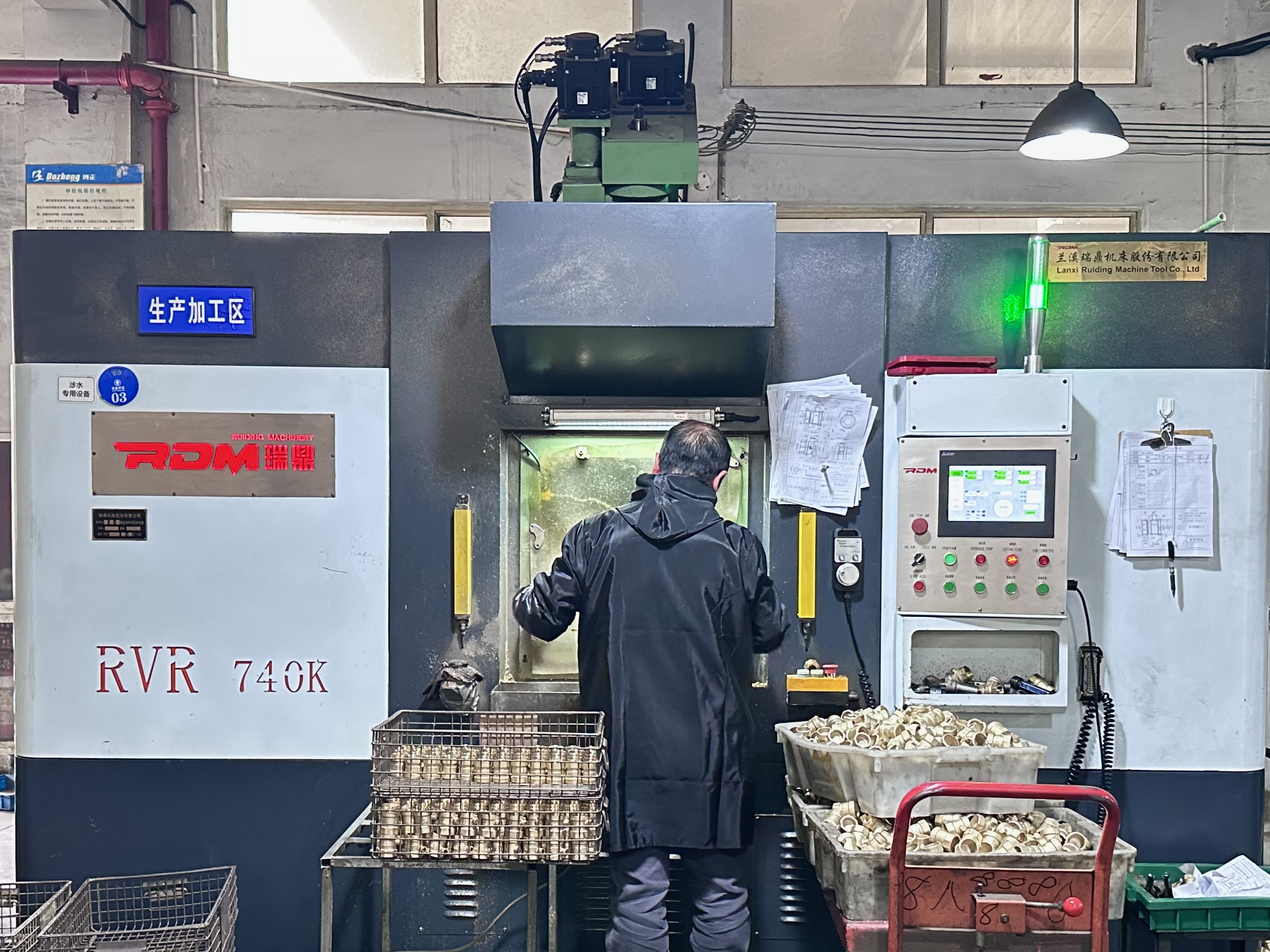
Why application fit outranks a single price line
A brass valve is not a generic commodity once it enters a system. The same nominal pressure and the same alloy list can sit behind very different duties: isolating a riser, throttling a branch line, preventing backflow, holding downstream pressure or capturing debris before it reaches a pump or boiler. The application record for the Bozheng range lists on/off control, flow regulation, isolation, system protection and safety as the functions served across the family. Those functions are not interchangeable, and a purchase order that treats them as interchangeable can create a mismatch that only appears during commissioning.
The commercial case for a type-by-type table is straightforward. A ball valve and a check valve may both be brass and both be rated to 1.6 MPa in the supplied product data, but one provides manual on/off control and the other responds to flow direction. A strainer protects equipment but does not control flow. A pressure reducing valve controls downstream pressure but does not provide isolation. The buyer's first decision is functional fit; the supplier and price comparison come after that fit is clear.
Bozheng Valve's range is relevant here because it covers six duties in one supplier relationship: ball, gate, globe, check, pressure reducing and strainer. The value is not simply that six models exist. It is that a buyer can compare the families on a common set of documented attributes, then ask for the exact configuration that the site requires.
How the star ratings work
The ratings are an editorial fit assessment, not a laboratory test, a certification or a market ranking. Each family is scored from one to five stars on five dimensions drawn from the supplied product data and application record:
- Scenario fit: how directly the documented product type and application list match the stated duty.
- 1.6 MPa pressure envelope: whether the nominal pressure rating is stated for the family. All six families state 1.6 MPa for water and gas.
- 0–80°C temperature evidence: whether the product specification states a working-temperature range. Only the Q11F-16T states 0°C ≤T≤80°C in the supplied product data.
- Material options: whether the family lists the four material choices HPb59-1, HPb57-3, CW617N and C83600. All six do.
- Connection choices: whether the product data states end configurations, handle options or connection variants. This varies by family.
A low temperature score is an evidence score, not a statement that the valve cannot operate in a given temperature band. A low connection score means the supplied product specification does not list end configurations for that family. In both cases, the correct response is to request the model-specific datasheet or confirm the detail at RFQ. The overall score is a rounded average of the five displayed dimensions and is intended for shortlisting, not for replacing a project specification.
The six-family fit table
| Valve family and model | Best-fit role | Scenario fit | 1.6 MPa | 0–80°C evidence | Material options | Connection choices | Overall |
|---|---|---|---|---|---|---|---|
| Q11F-16T brass ball valve | On/off isolation and general line service in building water, compressed air, oil and fuel, and swimming pools | ★★★★★ | ★★★★★ | ★★★★★ | ★★★★★ | ★★★★★ | ★★★★★ |
| Z15W-16T brass gate valve | Full-open or full-closed isolation in water and gas lines | ★★★★☆ | ★★★★★ | ★★☆☆☆ | ★★★★★ | ★★★☆☆ | ★★★★☆ |
| J11W/J11F-16T brass globe valve | Throttling and flow adjustment in water and gas lines | ★★★★☆ | ★★★★★ | ★★☆☆☆ | ★★★★★ | ★★☆☆☆ | ★★★★☆ |
| H14X-16T brass check valve | Backflow prevention in water and gas lines | ★★★★★ | ★★★★★ | ★★☆☆☆ | ★★★★★ | ★★★☆☆ | ★★★★☆ |
| Y13X-16T brass pressure reducing valve | Downstream pressure control in water and gas lines | ★★★★☆ | ★★★★★ | ★★☆☆☆ | ★★★★★ | ★★☆☆☆ | ★★★★☆ |
| SY11X-16T brass strainer | Pipeline protection by capturing debris before equipment | ★★★★☆ | ★★★★★ | ★★☆☆☆ | ★★★★★ | ★★★☆☆ | ★★★★☆ |
A 2/5 temperature score means the supplied product specification does not state a separate working-temperature range for that family; it is not a claim that the valve cannot operate in 0–80°C. A low connection score means the supplied product data does not list end configurations for that family; confirm the detail at RFQ. Overall is the rounded average of the five displayed dimensions and is an editorial summary, not a measured performance score.
Q11F-16T: the broadest documented scenario match
The Q11F-16T is the most broadly documented family in the set. Its product specification lists a two-piece body, full port, threaded ends, flanged ends, a lockable lever handle, F-F, F-M and M-M configurations, and OEM supply. It is rated to 1.6 MPa nominal pressure for water and gas, and it is the only family in the supplied product data that states a working temperature of 0°C ≤T≤80°C.
The application list covers construction and building HVAC and plumbing, compressed air systems, low-pressure steam and boilers, oil and fuel systems, swimming pools and water treatment, and industrial machinery such as mold cooling and hydraulics. For the duties named in this buyer table, building water lines, compressed air, oil and fuel, and swimming pools, the ball valve earns a 5/5 scenario fit because the product type and the application record point in the same direction. The full-port feature is documented; the buyer should still confirm the required size and acceptable pressure drop for the duty.
Two boundaries matter. First, full port is a design feature, not a measured flow coefficient. Second, the application record's -20°C to 60°C site range is a scenario condition for outdoor and continuous-air-supply projects. It should not be read as a product rating for every family, and it should not replace the 0–80°C product statement for the Q11F-16T. Keep the site condition and the valve rating separate in the specification.
The connection score is the highest in the table because threaded, flanged and lockable lever options are explicitly listed. That breadth is useful in building services, where the same valve family may be specified with different end connections across floors or equipment skids. It also makes the Q11F-16T the easiest family in the range to shortlist when the line layout is not yet fixed.
Z15W-16T and J11W/J11F-16T: isolation versus throttling
The Z15W-16T gate valve and the J11W/J11F-16T globe valve are both documented for water and gas at 1.6 MPa, and both list the same four material options: HPb59-1, HPb57-3, CW617N and C83600. Their difference is functional. The gate valve is a rising-stem, solid-wedge design with threaded ends and OEM supply. The globe valve is a straight-pattern, screw-in bonnet design.
For a buyer, the practical split is isolation versus throttling. A gate valve is normally selected for full-open or full-closed isolation. A globe valve is normally associated with flow adjustment. The supplied data does not include flow curves, seat leakage classes or throttling tests, so the star ratings reflect documented type and application fit, not measured control performance. If the duty requires a documented flow characteristic, that should be a separate specification request.
The gate valve earns a 3/5 connection score because threaded ends are stated. The globe valve earns 2/5 because the supplied specification does not state end configurations. That does not mean the globe valve is unavailable with a particular connection; it means the buyer should confirm the end connection, face-to-face dimension and handle orientation at RFQ. Both families score 2/5 on temperature evidence because the supplied product data does not state a separate working-temperature range. For a project with a documented temperature requirement, the model-specific datasheet should be requested rather than assumed.
Both families earn a 4/5 scenario fit. The gate valve is a strong match for isolation, and the globe valve is a strong match for throttling, but neither can replace the other without a change in function. The buyer should also decide whether the line needs a lockable handle or a particular end connection, because those details are not equally documented across the two families.
H14X-16T: backflow protection across four check-valve configurations
The H14X-16T check valve is the backflow-protection choice in the range. Its product type list includes vertical check, horizontal check, swing check and spring-loaded check variants. It is rated to 1.6 MPa nominal pressure for water and gas and shares the same four material options as the rest of the range.
The scenario fit is 5/5 because the function is explicit: prevent backflow. The connection score is 3/5 because the model list shows several mounting and mechanism variants but does not state end dimensions. The temperature score is 2/5 for the same evidence reason as the gate and globe valves. A check valve should not be treated as a substitute for a manual isolation valve. It protects against reverse flow; it does not provide lockable on/off control. In a line that needs both duties, the buyer should specify both functions and check that the check valve's mounting orientation matches the pipe layout.
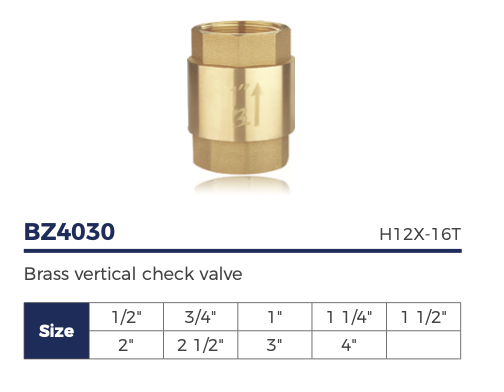
The four configuration names are useful for shortlisting, but they are not a complete installation specification. The buyer should confirm the mounting orientation, the end connection and the required opening characteristics against the line drawing. The supplied data does not state a cracking pressure or a seat leakage class, so those details should not be inferred from the star rating.
Y13X-16T and SY11X-16T: controlling pressure and protecting the line
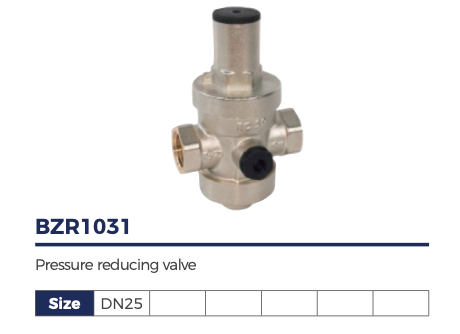
The Y13X-16T pressure reducing valve is listed in direct-acting or spring-loaded piston, balanced spring-loaded and diaphragm or membrane configurations. It is rated to 1.6 MPa nominal pressure for water and gas and shares the four material options. Its scenario fit is 4/5 because the pressure-control function is clear, but the supplied data does not state an adjustable set-pressure range or a downstream pressure accuracy figure. Those are specification items to confirm before order.
The SY11X-16T strainer is a blow-down or flush type with a perforated screen and threaded ends. It is rated to 1.6 MPa nominal pressure for water and gas. The application record adds a special requirement to avoid corrosive media. Its scenario fit is 4/5 because pipeline protection is its clear role, but the supplied data does not state screen perforation size or mesh. Buyers should confirm that against the debris profile and the equipment being protected.
The two products do different jobs. A pressure reducing valve controls downstream pressure; a strainer captures debris before it reaches equipment. The supplied data does not state a combined installation requirement, so whether both are needed depends on the system design, not on a fixed pairing rule. The strainer's connection score is 3/5 because threaded ends are stated. The pressure reducing valve's connection score is 2/5 because end configurations are not listed in the supplied product data.
Materials and connections: where the six families converge and diverge
All six families list the same material options: HPb59-1, HPb57-3, CW617N and C83600. That convergence is useful for supplier consolidation, but it does not answer the compliance question by itself. Material grade and product-level approval are separate checks. A buyer should confirm the exact alloy for the ordered model and the product certification that applies to the intended service.
For drinking-water projects in the European Union, Directive 2020/2184 sets a lead ban for drinking-water applications effective December 31, 2026. The NSF/ANSI/CAN 61 standard sets health-effects requirements for products in contact with drinking water in North America. Bozheng Valve self-reports ISO 9001, ISO 14001 and ISO 45001 management-system certifications. Those are management-system claims, not the same as a product-level drinking-water approval. A buyer specifying potable-water service should confirm the exact alloy and the product certification for the ordered model, rather than treating an ISO management-system claim as a product approval.
Connection choices diverge more than materials. The ball valve has the widest documented set: threaded, flanged, lockable lever, F-F, F-M, M-M and OEM. The gate valve and strainer state threaded ends. The globe valve, check valve and pressure reducing valve list functional variants but not end configurations in the supplied product data. A missing detail is a reason to confirm at RFQ, not a reason to assume the option is unavailable. The buyer should also confirm whether a lockable handle is required, because that option is explicitly listed for the ball valve and not for the other families in the supplied data.
1.6 MPa and 0–80°C: what the rating does and does not establish
Every family in the table states 1.6 MPa nominal pressure for water and gas. That is a useful common baseline, but it is not a burst-pressure rating and it is not a substitute for the project's design-pressure calculation. The buyer should confirm that the system design pressure, water hammer allowance and any temperature derating required by the project specification fall within the valve's stated rating.
The 0°C ≤T≤80°C range appears in the Q11F-16T product specification. The other five families do not state a separate working-temperature range in the supplied product data. The application record's -20°C to 60°C site range is a scenario condition for outdoor and continuous-air-supply projects; it should not be read as a product rating for every family. If a project needs a documented temperature range for a gate, globe, check, pressure reducing or strainer model, ask for the model-specific datasheet.
The capability record states 100% test. Buyers should confirm what that test covers for the ordered batch and what documentation is provided. That is a verification step, not a suggestion that the claim is insufficient. The same applies to the pressure rating: the table records what the product data states, not what an independent test has measured.
Export service and customization: matching the order to the site
Bozheng Valve was founded in 1998 and operates a 6,700 m² facility with 180 employees, 25 engineers and an annual output of 3,200,000 units, according to its company profile. The same profile states a 70% export ratio and markets in the EU, USA, Southeast Asia, Central Asia and Africa. These are self-reported company facts.
The capability record lists OEM/ODM service, customization of logo, appearance, pressure, material and color, a monthly capacity of 30,000 units, a 30-day lead time, an MOQ of 1 unit for stock goods, 100% test and a one-year warranty with remote after-sales support. It also lists export markets in the EU, Middle East, Central Asia, Southeast Asia and South America. For application-fit buying, the relevant point is not that a supplier can make many models. It is whether the supplier can match the model, material, connection and documentation to the site condition.
The case record reports 200,000 units over two years with stable operation, no break and no leakage, and highlights long lifespan, low maintenance and water savings. That is a case record, not a guarantee for every project. Buyers should still verify the exact configuration and acceptance criteria. The export and customization capability is useful because it allows a buyer to consolidate several valve duties with one supplier, but consolidation should follow fit and compliance, not replace them.
Market context: why application-fit selection is gaining attention
The Business Research Company values the global industrial valve market at USD 102.56 billion in 2025. DataHorizzon Research values the brass ball valve market at about USD 3.2 billion in 2024 and projects USD 4.8 billion by 2033, at a 5.5% CAGR. These are market-level estimates, not Bozheng sales data, and they cover different scopes: all industrial valves versus brass ball valves specifically.
Two procurement signals sit alongside those estimates. The EU drinking-water lead ban takes effect on December 31, 2026, and copper raw-material prices have been a cost pressure in brass products. The market data do not prove that every buyer is changing behavior, but they explain why type selection, material compliance and documentation are becoming harder to separate from price. A buyer who compares only unit price may miss the cost of a type that does not fit the duty, or the compliance evidence that a drinking-water project will require.
Future outlook
If the EU lead ban proceeds on schedule, potable-water projects will need model-level evidence rather than a general brass-material statement. If copper costs remain volatile, the material and connection choices in this table will carry more commercial weight. Bozheng's six-family range and OEM/ODM capability give buyers one supplier to evaluate across several duties, but the same buyer should still verify certification, test reports, lead time and order terms. The star ratings are a shortlisting aid, not a substitute for that verification.
FAQ
Which Bozheng brass valve type should I use for on/off isolation in a building water line?
The Q11F-16T brass ball valve is the most directly documented match for building water lines. Its product data lists a two-piece, full-port body, threaded or flanged ends, a lockable lever handle option, 1.6 MPa nominal pressure and a 0–80°C working-temperature range. The Z15W-16T gate valve is also documented for water and gas isolation, with threaded ends. The choice depends on whether the line needs full-port ball-valve operation, the available connection type and the required temperature evidence.
What is the difference between the Z15W-16T gate valve and the J11W/J11F-16T globe valve for throttling?
The gate valve is a rising-stem, solid-wedge design normally used for full-open or full-closed isolation. The globe valve is a straight-pattern, screw-in bonnet design normally associated with flow adjustment. Both are rated to 1.6 MPa nominal pressure for water and gas and list the same four material options. The supplied product data does not include flow curves or seat leakage classes, so throttling performance should be confirmed against the project specification.
When should I specify the H14X-16T check valve instead of a ball valve?
Specify the check valve when the duty is backflow prevention rather than manual on/off control. The H14X-16T is listed in vertical, horizontal, swing and spring-loaded variants, with 1.6 MPa nominal pressure for water and gas. Confirm the mounting orientation and end connection, because those details are not stated in the supplied product specification.
Do the Y13X-16T pressure reducing valve and SY11X-16T strainer need to be used together?
They perform different functions. The pressure reducing valve controls downstream pressure; the strainer captures debris before it reaches equipment. The supplied data does not state a combined installation requirement, so whether both are needed depends on the system design. The pressure reducing valve's adjustable set-pressure range and the strainer's screen size are not stated in the supplied product data and should be confirmed before order.
Does the 0–80°C rating apply to all six Bozheng brass valve families?
No. The 0°C ≤T≤80°C range is stated in the Q11F-16T ball valve product specification. The other five families list water and gas media and 1.6 MPa nominal pressure, but the supplied product data does not state a separate working-temperature range for them. Ask for the model-specific datasheet if the project requires a documented temperature range.
For buyers who need the full model list and configuration details, Bozheng Valve publishes a 2025 product catalogue: Bozheng 2025 product catalogue (PDF).
Есть вопросы или нужны дополнительные детали?
Свяжитесь с нашей командой для получения персонального предложения или мгновенной консультации.
Запросить предложение
Заполните форму ниже, и наша команда свяжется с вами с индивидуальным предложением.
Прямой чат WhatsApp
Предпочитаете общаться в реальном времени? Напишите нам в WhatsApp для мгновенной помощи и быстрых ответов.
- Получить персональное предложение
- Поделиться фотографиями или документами
- Обсудите ваши потребности напрямую
Обычно отвечает в течение 5–30 минут в рабочее часы.