
Brass Gate vs Ball Valve: An Independent Buyer's 2026 Comparison
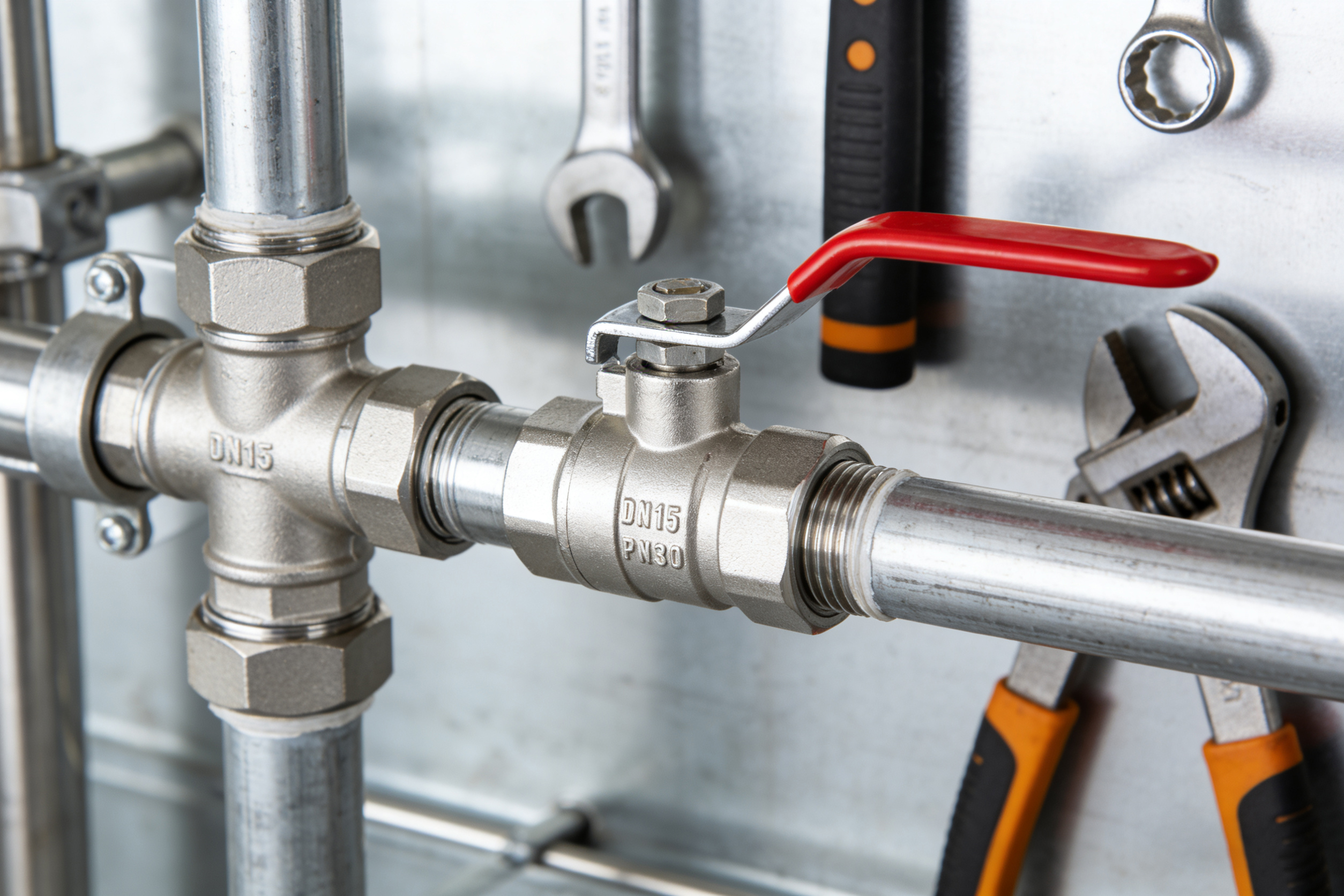
When a specifier or purchasing manager chooses a brass shut-off valve for a residential tower, hotel, or apartment project, the decision usually narrows down to two architectures: a gate valve or a ball valve. Both are used as isolation valves, but they are designed differently, respond to pressure differently, and carry different long-term maintenance implications. This independent reference compares the T-22017A brass gate valve with the 8081 brass ball valve, both from Zhejiang Longda Technology Co., Ltd. (Longda Brass Valve), to give engineering and procurement teams a basis for specification.
The selection challenge for project buyers
In new residential construction and hospitality fit-outs, valve selection is often treated as a routine plumbing detail. Yet the costs of valve failure are not routine: tenant callbacks, fixture damage, pressure drops in hot water loops, and schedule delays in occupancy. The challenge is that two different valve designs—multi-turn rising stem versus quarter-turn ball—can fit the same nominal pipe size and yet produce very different operational and hydraulic behavior in a real water system.
The decision is not about which type is “better” in an abstract sense. Project buyers need to weigh: how often the valve will be operated, what water pressure the branch line will carry, what the temperature range is, whether full-bore flow matters, and what kind of indication of open/closed status maintenance teams will need in an emergency.
How the two designs compare: basic architecture and working principle
Brass gate valve design: rising stem, multi-turn operation
A gate valve isolates flow by lifting a gate (wedge) out of the flow path using a stem that moves linearly. The T-22017A is a rising-stem pattern, meaning the stem visibly rises above the handwheel as the valve is opened. This gives maintenance staff an immediate visual cue about whether the valve is fully open. It uses a brass-to-brass metal seat and is operated with a 360° handwheel. It is offered as a threaded full-bore gate valve in sizes from 1/2" to 4" (DN15–DN100), with female NPT or BSP connections.
Brass ball valve design: quarter-turn, low-torque operation
The 8081 is a 2-piece full-port ball valve. It uses a chrome-plated brass ball with a cylindrical bore; rotating the lever handle 90° aligns the bore with the pipe axis for flow or rotates it perpendicular to block flow. The blow-out-proof stem design prevents the stem from being ejected under pressure, a safety consideration in high-pressure service. The ball is seated in PTFE seats, and body options include standard hot-forged brass and lead-free brass. Sizes range from 1/2" to 4" (DN15–DN100), threaded female NPT or BSP.
| Design Characteristic | T-22017A (Gate Valve) | 8081 (Ball Valve) |
|---|---|---|
| Operation | Rising stem, 360° handwheel (multi-turn) | Quarter-turn lever / wing handle |
| Valve type | Full bore, metal-to-metal seat | 2-piece, full port, PTFE seats |
| Size range | 1/2" – 4" (DN15–DN100) | 1/2" – 4" (DN15–DN100) |
| Connection | Threaded female NPT / BSP | Threaded female NPT / BSP |
Pressure and temperature ratings define the real application ceiling
The pressure rating is one of the most consequential specification differences between the two valves. The certified specification for the T-22017A gate valve lists a working pressure rating of 200 WOG (1.4 MPa) and a working temperature range of -20°C to 120°C. The 8081 ball valve has a working pressure rating of 600 WOG (4.1 MPa) and a working temperature range of -20°C to 150°C.
In real project terms: the gate valve is suited to standard municipal water pressure and typical low-rise or mid-rise domestic water service. The ball valve, with three times the pressure ceiling, suits higher-pressure supply mains, commercial mechanical rooms, pump discharge lines, and situations where water hammer or test pressure exceeds what a 200 WOG valve can safely handle. The temperature ceiling on the 8081 also gives more margin in hot water recirculation systems and HVAC applications.
What the test pressure tell you about safety
For the T-22017A gate valve, the stated test protocol is 1.5× the rated pressure for the shell and 1.1× for the seat. This is a standard industry test basis and helps buyers compare the structural margin against specified ratings.
Flow characteristics: pressure loss and full-bore behavior
Both the gate and ball valve are classified as full-bore or full-port designs when fully open. A full-bore gate valve in the open position withdraws the gate completely from the waterway, resulting in essentially no flow obstruction. A full-port ball valve performs the same function when the ball bore is aligned with the pipe axis—the internal diameter of the 8081 is designed to match the pipe bore, so it does not create a reduced-flow bottleneck.
That said, the flow path geometry is different. In a gate valve at partial opening, the gate can remain partially in the water stream, generating turbulence and localized high velocity that can erode the brass gate and the seat over extended operation. A ball valve at partial opening exposes only one section of the ball to flow, but it is also not intended for throttling service. Both valves are isolation valves first. The practical difference: a multi-turn gate valve is easier to “crack open” slowly for gradual filling of a pipe, while quarter-turn ball valves tend to be used for rapid shut-off or full-open service.
Operational differences in project conditions
Valve operation frequency and speed
Gate valves require multiple rotations of the handwheel to go from closed to fully open. This makes them slower to operate—less convenient in a maintenance scenario where a maintenance worker needs to shut off water quickly. Ball valves, with their 90° quarter-turn action, allow for nearly instant shut-off. In hospitality buildings or apartment projects, where maintenance personnel respond to leaks or fixture replacement calls, a quarter-turn valve can shorten response time meaningfully.
Visual indication of valve status
The T-22017A gate valve’s rising stem provides a visible indication of whether the valve is open or closed—helpful when valves are installed in mechanical rooms or exposed plumbing chases. The 8081 ball valve provides status indication through the lever handle position: the handle aligns parallel to the pipe when open and perpendicular when closed. For ball valves installed in tight spaces, the handle position is generally visible enough for maintenance staff.
Seat material and leak-tightness
The two valves use different seating philosophies. The T-22017A gate valve uses a brass-to-brass metal seat. Metal seats are durable in high-temperature and abrasive conditions, but they do not always offer the same degree of bubble-tight shut-off as soft seats, especially if the sealing surfaces are scored by debris or scale. The 8081 ball valve uses PTFE seats. PTFE (Teflon) is a soft polymer material that conforms to the ball surface and produces a very reliable, low-leakage seal in clean water service, with low torque and long seat life within the rated temperature range.
For project buyers, the distinction implies that the 8081 generally provides more reliable drip-tight shut-off for fixture isolation in potable water, where scale is typically controlled. Metal-seat gate valves can be affected more by wire-drawing if they are partially left open—a condition that can erode the seat and lead to weeping over time.
Materials and compliance: what could affect market access
Both valves are available in lead-free brass for North American potable water compliance. This is not optional for US and Canadian projects with drinking water contact: the relevant standard is NSF/ANSI/CAN 61 for health effects and NSF/ANSI/CAN 372 for lead content in wetted surfaces.
- The T-22017A gate valve is certified by IAPMO for lead-free brass versions (NSF/ANSI 61 and NSF/ANSI 372). Body and bonnet use hot-forged brass (standard CW617N / HPb59, or lead-free options CW724R / C46500).
- The 8081 ball valve has several certifications: its lead-free versions carry cUPC and NSF/ANSI 61 & 372; the ball valve family is also listed under UPC (IAPMO/ANSI Z1157, ASME A112.4.14 / CSA B125.14-22) with a main listing certificate No. 5938 for ball valves.
- Both valves are produced by the same manufacturer under ISO 9001:2015 (CN00124Q37399R2M/3300) and ISO 14001:2015 (CN00124E33461R2M/3300) management system certifications.
One nuance: compliance is not just about which valve is “lead free.” It also hinges on the exact connection code and the product model. A project buyer should specify the exact model (e.g., T-22017A or 8081) rather than a generic catalogue phrase, to avoid ambiguity in code inspection.
Pressure-rating driven application mapping: residential construction, hotels and apartments
New residential single-family and multi-family water service lines
In a typical US or Canadian new-home water system, the residential water pressure rarely exceeds 80 psi, which is well under the 200 WOG rating of the gate valve. The gate valve has historically been used for the main shut-off and branch line isolation in homes. However, many contractors are moving to quarter-turn ball valves for the main shut-off because they are faster to operate and provide verified drip-tight shut-off in emergency conditions.
Hotel and apartment buildings: frequency of use and maintenance considerations
Hotels and apartments create a different demand profile from single-family homes. These buildings are occupied continuously and cannot tolerate water shut-offs for long periods. The speed and convenience of quarter-turn shut-off is of high value. The 8081 ball valve is frequently selected for maintenance isolation in these buildings, especially at fixture supply lines where the water pressure could spike.
For main risers and branch mains in commercial multi-family buildings, pressure can exceed 100 psi depending on building height and pump pressure. With a 600 WOG rating, the 8081 can accommodate higher pressures with more margin. The gate valve’s 200 WOG rating may be adequate for pressure zones below a pressure-reducing valve, but smart engineers will verify the worst-case pressure scenario.
Municipal and utility service: gate valve’s continued relevance
Gate valves remain a default choice in municipal water networks and utility service lines where the valve is opened fully and left open—frequency of operation per year is low. The rising-stem gate valve gives a visual indication for utility crews. For this application, the T-22017A’s brass-to-brass seat and 200 WOG rating align with typical municipal mains.
Field performance and quality-control evidence
Manufacturing quality is a meaningful variable in whether a valve will perform as rated. The manufacturer’s capability data states 100% pressure testing before shipment and material test report availability for the valve product line. The product scope includes OEM/ODM production with monthly capacity at scale (e.g., up to 300,000 pcs/month for items in the product family), 30–60 day lead times, and project-oriented export to North America, Latin America, Europe, and the Middle East.
Project buyers should request the material test report and test certificates as part of the procurement documentation package, along with product-specific certifications such as the UPC listing for ball valves and IAPMO lead-free certificates for potable-water models.
Comparison with traditional specification approaches
Traditional plumbing specifications in many North American commercial projects often rely on gate valves for main water isolation. This pattern emerged for good reason: gate valves are simple, field-serviceable to some extent, and are widely understood. They also have fewer moving components in sealing (metal seats do not age like soft polymer seats). However, the modern pressure environment in buildings has changed. Higher domestic water pressures from PRV settings, water hammer from electronic valves, and anti-theft security devices in some jurisdictions can create pressure events above the 200 WOG class. Ball valves with higher pressure ratings are better suited to withstand those transient conditions.
One traditional consideration in favor of gate valves is that the metal-to-metal seat avoids the possibility of polymeric seat deformation at elevated temperatures. If a project has sustained hot water temperatures above 100°C, a soft-seated ball valve may be operating outside its comfort zone. Both valves stay within their rated limits for domestic hot water (DHW) up to 120°C for the gate valve and 150°C for the ball valve. In standard DHW systems (60–80°C), this is not a practical constraint.
Limitation of this comparison
This comparison is based on the specification data of two specific models from one manufacturer (T-22017A gate and 8081 ball valve). It is not a claim that all gate valves are inferior to all ball valves, or that the 8081 is always the right solution. Gate valves are still widely used for main water isolation in residential projects because of their low flow resistance in fully open position and their low cost relative to ball valves at large diameters, especially beyond 4" where quarter-turn ball valves become heavy and expensive. For larger sizes (6" and above), gate valves often remain more practical in municipal service. This is not a recommendation for every valve position.
Decision matrix for project buyers
| Selection driver | Gate valve (T-22017A) | Ball valve (8081) |
|---|---|---|
| System working pressure above 200 psi / 1.4 MPa | Not suitable | Suitable up to 600 WOG (4.1 MPa) |
| Hot water temperature above 120°C | Not suitable | Suitable up to 150°C |
| Need fast emergency shut-off | Slower due to multi-turn | Fast, one-quarter-turn shut-off |
| Frequent operation | More wear on gate/seat with frequent cycling | Better suited for frequent operation |
| Visible open/closed status at a distance | Rising stem provides clear visual indication | Handle position must be visible/handle alignment |
| Drip-tight shutoff in service | Metal-to-metal seat; can weep if debris is present | PTFE seats usually provide more reliable seal |
| Fully open position pressure drop | Low – full bore | Low – full port |
| Lead-free compliance for potable water | Certified by IAPMO (NSF 61/372) | Certified by IAPMO (cUPC, NSF 61/372) |
Market context: demand signals for gate vs. ball valves
Independent market data records continue to indicate a strong demand for both configurations. In 2024, the global brass valves market was valued at roughly USD 14.8 billion, with projections to USD 24.1 billion by 2034 (Source: Dataintelo, “Brass Valves Market”). Ball valves held the largest product segment share of the brass valve market at 38.4% in 2025. At the same time, global trade data shows that China exported a total of USD 22.6 billion in valves across all types in 2024, which underlines the importance of qualified manufacturing relationships (Source: OEC, HS 8481).
Projections for industrial gate valves are also positive: industrial gate valves are projected to remain a growing segment, with some market analyses citing a CAGR around 9.89% for industrial valve gate types through 2032. This suggests no imminent obsolescence of the gate valve in heavy and utility service; it is still the core product for water utilities that prioritize minimal flow resistance in the fully open position.
Interpretation
For buyers who operate mostly in the residential and light-commercial project segment, the trend is toward increased use of quarter-turn ball valves for new construction because of their convenience and dependability. For municipal water supply projects or utility maintenance, multi-turn brass gate valves remain well entrenched. The specification decision should follow the pressure and operational demands of the application, not legacy habit.
Procurement checklist: what to verify with your supplier
- Confirm the exact model number and listed standard. Do not order “a gate valve” or “a ball valve” from a catalogue. Confirm the model e.g., T-22017A for gate valve or 8081 for ball valve, and require the certificates supporting the sale.
- Ask for the pressure and temperature rating for the specific model. In particular, the working pressure rating (e.g., 200 WOG versus 600 WOG) and temperature range must match the system specification.
- Verify lead-free compliance for potable water models if the project requires it. For the US and Canada, require NSF/ANSI 61 and NSF/ANSI 372 certificates for brass products in contact with drinking water.
- Ask for the material test report if you are sourcing for a municipal contract or pressurized system. A reputable manufacturer will provide material chemical and physical test reports.
- Confirm thread standard (NPT or BSP). Using the wrong thread type can result in connection leakage or costly on-site rework.
- If customization matters, check sizes, handle type, logo printing, threading and packaging with the supplier. The manufacturer quoted in this comparison provides OEM/ODM customization including size (1/4"–4"), body material (lead-free / DZR), handle type (lever, T-handle, butterfly), handle color, logo printing, thread type (NPT/BSP), and packaging.
- For a new project or prototype, request a pre-production sample and evaluate installability. Longda offers a typical 5–7 day sample lead time, which will help you quickly check the mechanical interface before starting full procurement.
Future outlook
The 2026 specification environment will continue to see a gradual shift toward quarter-turn ball valves in new residential and hospitality builds due to maintenance convenience and drip-tight reliability. That shift is reinforced by the stronger pressure rating (600 WOG) and wider temperature range (−20°C to 150°C) of a modern full-port ball valve such as the 8081, which gives project designers more safety margin.
Gate valves will not disappear. They will remain a stable choice for municipal waterworks, agricultural irrigation, and any installation where the valve element remains open for long periods and pressure rating does not exceed the valve class. Brass gate valve fixtures, including rising-stem types like the T-22017A, also offer the benefit of a conventional visual open/closed indication—still valued in utility and maintenance operations.
The decisive condition for 2026 buyers is not “gate versus ball” in the abstract. It is whether the selected architecture matches the system's real pressure maximum, operational frequency, temperature, installation space, and compliance code on the drawing.
FAQ
Is a brass gate valve or ball valve better for main water shut-off in a residential project?
For a residential main water shut-off, a quarter-turn ball valve (like the 8081) is generally preferred by plumbers and maintenance teams because it provides fast, positive shut-off with a short handle movement. A ball valve with a soft PTFE seat also tends to achieve a more drip-tight seal in clean water service. However, if the water pressure is relatively low (under 200 WOG / 1.4 MPa) and the valve will only be opened and closed a few times per year, a brass gate valve such as the T-22017A is still a valid and cost-effective option.
Can a brass gate valve be used for hot water up to 120°C?
Yes, the T-22017A brass gate valve has a certified working temperature range of -20°C to 120°C. For hot water systems at normal domestic temperatures (60–80°C), this is within specification. At the upper edge of the rating—120°C—verify that the valve is operated fully open or fully closed. Throttling at high temperature with a metal-seated gate valve can cause seat erosion.
What does the pressure rating “600 WOG” mean for a brass ball valve?
“600 WOG” means the valve is rated for 600 psi working pressure in water, oil, and gas service. The 8081 brass ball valve has a 600 WOG (4.1 MPa) rating, which means it can be used in systems that hold a working pressure up to about 4.1 MPa (roughly 600 psi). This is a substantially higher pressure ceiling than many standard brass gate valves, which are often rated at 200 WOG (1.4 MPa). It is important not to confuse working pressure with test pressure: manufacturers typically test the valve at a pressure higher than the rated working pressure (e.g., 1.5× rated for shell).
How can project buyers verify the lead-free compliance of brass valves?
For the US and Canadian markets, require the manufacturer to provide product-specific certifications: NSF/ANSI/CAN 61 (health effects) and NSF/ANSI/CAN 372 (lead content in wetted surfaces). Longda Brass Valve provides IAPMO certifications for lead-free versions of both the T-22017A gate valve and the 8081 ball valve. Also check that the certification number and scope match the specific model and connection type that you intend to purchase.
Is a full-port brass ball valve always better than a standard bore ball valve?
In residential plumbing and HVAC hydronic systems, a full-port (full-bore) ball valve minimizes flow resistance and pressure drop when fully open. The 8081 is a 2-piece full port design, meaning that when fully open, the pipe bore is unobstructed. Standard bore ball valves have a reduced seat bore, creating more turbulence and pressure loss. Full-port is a valid preference where flow performance matters. For some low-flow fixture stops, a standard port is acceptable—but for pump, riser, and branch isolation, full-port is generally recommended.
What size range do brass gate valves typically cover in the Longda catalogue?
The T-22017A brass gate valve covers sizes from 1/2" to 4" (DN15 to DN100), with threaded female connections (NPT or BSP). Most project applications for brass gate valves fall in the 1/2" to 2" range; above 4" specifiers usually move to flanged or grooved-end industrial valves made from cast iron, ductile iron, or stainless steel, rather than brass forgings.
Does the manufacturer support OEM/ODM with private label for valve projects?
Yes. Zhejiang Longda Technology Co., Ltd. provides OEM, ODM, and customization (private label) production services. Customization options include size (1/4" to 4"), body material (lead-free / DZR brass), handle type (lever, T-handle, butterfly), handle color, logo printing, thread type (NPT/BSP), and packaging. This is useful when a project developer or distribution brand wants its own mark instead of a manufacturer brand on a visible fixture valve.
What are the key connection differences between brass gate and ball valves?
In the Longda catalogue for these two models, both the T-22017A gate valve and the 8081 ball valve use threaded female connections, available in both NPT (US threading standard) and BSP (British/European standard thread). No sweat, press, or PEX connection is listed for these two specific models—project buyers who need PEX, press, or sweat connections should look at other Longda product families such as PEX ball valves or brass fittings, which are certified for PEX applications.
Can the T-22017A gate valve withstand a pressure test of 1.5 times its rated pressure?
According to the product data, the T-22017A has a shell test pressure of 1.5× the rated pressure. That means the factory tests the valve at a pressure of approximately 300 WOG (for its 200 WOG rating) and the seat test is 1.1× (approximately 220 WOG). These figures represent the factory quality control test method and are not a recommendation for field use above the 200 WOG service rating.
Which valve type is better for HVAC mechanical room isolation?
For mechanical rooms with pumps and hot/chilled water systems, a ball valve with a higher pressure rating (such as the 8081 at 600 WOG) is generally favored because of its compact installation footprint, low operating torque, and reliable shut-off. In areas with limited access, the quarter-turn handle makes operation easier than a multi-turn gate wheel. If a designer specifically wants a rising-stem indicator or a metal seat for certain high-temperature steam service, then the gate valve would be considered—but in steam systems, brass valves are rarely appropriate above 120°C. Always verify that the temperature rating of the selected valve matches the actual fluid temperature.
Есть вопросы или нужны дополнительные детали?
Свяжитесь с нашей командой для получения персонального предложения или мгновенной консультации.
Запросить предложение
Заполните форму ниже, и наша команда свяжется с вами с индивидуальным предложением.
Прямой чат WhatsApp
Предпочитаете общаться в реальном времени? Напишите нам в WhatsApp для мгновенной помощи и быстрых ответов.
- Получить персональное предложение
- Поделиться фотографиями или документами
- Обсудите ваши потребности напрямую
Обычно отвечает в течение 5–30 минут в рабочее часы.