
Brass Valve Project Match: Types, Conditions, and Limits
The first question in a brass valve procurement should not be 'which supplier is cheapest?' but 'which valve type fits the duty?' In water supply, gas distribution, HVAC, and outdoor industrial systems, a valve that looks correct on paper can still fail if the ambient temperature, media composition, or installation mode is outside the design range. This article provides a 2026 project-buying reference for brass valve selection. It uses product and project data from Zhejiang Bozheng Copper Industry Co., Ltd. as one documented example, while keeping the selection framework applicable to the broader brass valve category.
Problem: Mismatched Valve Types Create Avoidable Project Risk
Project teams often specify a brass ball valve for every isolation point, even when the line contains debris, needs backflow protection, or requires downstream pressure control. The result is avoidable maintenance, pressure loss, and in some cases system failure. A check valve may be omitted from a pump discharge line, causing water hammer and equipment damage. A strainer may be installed without considering the medium, leading to rapid clogging or corrosion. These issues are not necessarily the fault of the valve manufacturer; they are usually the result of inadequate project-to-product mapping.
The opportunity is to map the project's functional requirements to the correct valve family: ball valves for quick on/off, gate valves for lines that remain fully open or fully closed, globe valves for flow regulation, check valves for backflow prevention, pressure reducing valves for stable downstream pressure, and strainers for protecting equipment against particles.
Supplier Evidence as a Selection Input
For project buyers, supplier capability is as important as valve geometry. Zhejiang Bozheng Copper Industry Co., Ltd., operating under the brand Bozheng Valve, is a brass valve manufacturer founded in 1998 in Yuhuan, Zhejiang Province, a region known as the 'Valve Capital of China.' The company runs a 6,700-square-meter factory with about 180 employees and an annual output of 3.2 million units, supported by a 25-engineer R&D team. Around 70% of production is exported to the EU, USA, Southeast Asia, Central Asia, and Africa. Bozheng Valve holds ISO 9001:2015 certification.
The company's brass valve series includes:
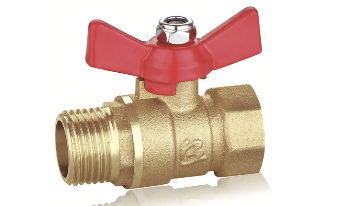
- Brass ball valve Q11F-16T (two-piece, full port, threaded or flanged, lockable lever, F-F/F-M/M-M versions)
- Brass gate valve Z15W-16T (rising stem, solid wedge, threaded end)
- Brass globe valve J11W-16T/J11F-16T (straight pattern, screw-in bonnet)
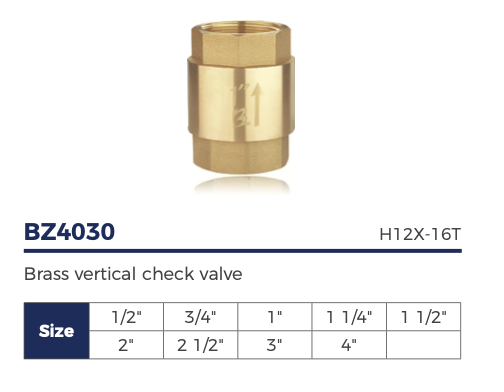
- Brass check valve H14X-16T (vertical, horizontal, swing or spring loaded)
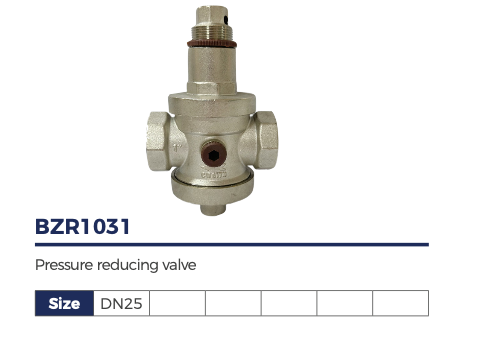
- Brass pressure reducing valve Y13X-16T (direct acting, balanced spring, or diaphragm type)
- Brass strainer SY11X-16T (blow-down/flush type, perforated screen, threaded ends)
These products list a normal pressure of 1.6 MPa and working media of water and gas. Common brass alloys are HPb59-1, HPb57-3, CW617N, and C83600. In a documented supply engagement, Bozheng Valve delivered 200,000 brass valve units across plumbing, HVAC, and industrial project channels; the reported outcome after two years was stable operation with no breakage or leakage.
For buyers, this data is useful not because it proves one brand is superior, but because it shows what a qualified supplier should be able to disclose: material grades, product models, pressure ratings, delivery capacity, and field performance.
Technical Explanation: Brass Valve Types and Operating Parameters
Brass valves are not interchangeable. Each configuration has a distinct internal structure and should be selected based on the function it must perform.
- Ball valves use a rotating ball with a bore. A quarter-turn opens or closes the line. Full-port versions reduce pressure drop, making them a common choice for isolation in water and gas lines. The Q11F-16T series is available with threaded and flanged ends, plus lockable lever handles for safety.
- Gate valves use a wedge or disc that moves perpendicular to the flow. They are designed for fully open or fully closed service, offering minimal resistance when open. The rising-stem design gives a visual indication of position. They are less suitable for frequent throttling because partially open gates can cause vibration and seat wear.
- Globe valves use a movable disc and a stationary ring seat. Their T-pattern body creates a longer flow path, which makes them more effective for regulating flow but also causes a higher pressure drop.
- Check valves allow flow in one direction only. Vertical and horizontal versions exist, as do swing and spring-loaded designs. They are essential on pump discharge lines to prevent backflow.
- Pressure reducing valves reduce upstream pressure to a stable downstream level. They may be direct-acting, balanced spring, or diaphragm types, depending on the flow range and pressure control accuracy required.
- Strainers are not valves in the strict sense, but they are often installed with them to remove particles from water, gas, or air streams. The SY11X-16T strainer uses a perforated screen and threaded ends, and is designed for blow-down or flush cleaning.
For outdoor continuous air supply systems, the project reference data specifies a temperature range of -20°C to 60°C. This means that a brass ball valve from this series can be deployed in outdoor compressor rooms, rooftop HVAC, and similar installations. However, it also implies that buyers should check the actual minimum and maximum temperatures at the project site before finalizing a specification.
Material grades matter. HPb59-1 and HPb57-3 are leaded brass alloys widely used in Chinese valve manufacturing. CW617N is a European alloy produced to EN 12165, commonly used in the EU. C83600 is a copper-tin-zinc alloy with a long history in US valve applications. European projects often also reference ISO 228-1 for parallel threads. A supplier that can state these standards gives installers and inspectors confidence that the product is traceable to defined norms.
Application and Use Cases: Matching Valve Type to Project Environment
Project reference data for the Bozheng brass valve family lists the following typical projects: outdoor water treatment, irrigation systems, solar hot water, HVAC rooftop units, outdoor compressed air, gas regulating stations, fire protection networks, mine water treatment, seawater cooling, outdoor fuel storage, rural drinking water supply, and industrial dust collection systems.
- Outdoor water treatment and irrigation: Brass ball valves provide reliable on/off control for filter lines and distribution manifolds. Because the system operates outdoors, the valve should be suitable for wide temperature swings. The Q11F-16T ball valve family is designed for outdoor continuous air supply and a -20°C to 60°C range. A strainer may be added upstream of pumps or control valves, provided the water is not corrosive.
- HVAC rooftop units: Gate valves are often used on the supply and return lines of heating coils to allow full flow when open. Ball valves are used where quick isolation is needed for maintenance. Check valves can prevent backflow in glycol or water loops when multiple units are connected to a common header.
- Outdoor compressed air systems: Ball valves are a common choice for branch isolation. The product series is listed for continuous air supply, which makes it a reasonable option for compressor rooms and outdoor compressed-air networks, as long as the pressure does not exceed 1.6 MPa and the temperature stays within the specified range.
- Gas regulating stations: Ball valves can serve as manual isolation or emergency shut-off valves in gas lines. This application requires confirmation that the valve material and thread standards are compatible with the gas composition and local regulations. Bozheng's product data lists gas as an approved medium for this series, but the buyer is responsible for final compliance checks.
- Fire protection networks: Gate valves are typically used for main water supply isolation, while check valves prevent reverse flow from fire pumps. The screwed-end design of Z15W-16T makes it practical for steel pipe systems up to the pressure rating.
- Mine water treatment and seawater cooling: These environments can contain abrasive solids or chloride-rich water. Brass valves are not a universal cure; buyers should verify alloy suitability for the specific water chemistry. A check valve and strainer combination is often installed at pump suction or discharge points, but corrosive media must be excluded.
- Rural drinking water supply: Simple, low-maintenance valves are preferred. A gate valve for the main line and a ball valve for branch isolation are common. A strainer before the meter or pressure reducing valve protects downstream components.
- Industrial dust collection systems: Airflow control in dust collection is usually performed by butterfly or ball valves. The lockable lever handle option on the brass ball valve helps prevent accidental operation.
Market Trends: What the 2026 Data Says
Several third-party data points help explain why brass valve selection is moving from a simple commodity purchase to a documented engineering decision.
According to Dataintelo, the global brass valves market was valued at USD 14.8 billion in 2025 and is expected to reach USD 24.1 billion by 2034. Asia Pacific accounted for the largest regional revenue share at 41.2% in 2025. Ball valves represented the largest product type segment with a 38.4% market share, reflecting their dominance in water and gas isolation duties.
China's role in global valve supply is significant. Tendata reports that China's total valve-related exports (HS Code 8481) reached USD 8.06 billion in 2025, about 19.0% of the global import value share. The OEC also notes that China was the largest exporter of check valves in 2024, with exports worth USD 730 million, or 19.6% of the global total. These figures align with the rise of Chinese manufacturers in project supply chains.
Regulatory pressure is also shaping product portfolios. One report from Cognitive Market Research states that lead-free brass valves accounted for more than 30% of new brass valve product offerings in early 2024. In the EU, standard brass valves are often manufactured according to EN 12165 using CW617N alloy, and threaded connections follow ISO 228-1. In China, new MIIT energy efficiency limits for industrial valves are scheduled for implementation in October 2025, which will require specific sealing grades and closer attention to leakage performance.
For project buyers, these trends mean that technical documentation and standard conformance are becoming part of the product itself. Valves with traceable material certificates and clear operating parameters will likely be preferred over those without documentation.
Comparison with Traditional Solutions and Practical Limits
Brass is not always the right valve material. Compared with cast iron or carbon steel, brass offers good corrosion resistance in water and gas systems, lighter weight, and easier machining for threaded connections. In many building services and low-pressure industrial systems, brass valves are the standard choice. They also allow precision manufacturing, which helps reduce seat leakage.
However, the boundary should be clearly stated. The brass valves described in this article are rated for a normal pressure of 1.6 MPa and for water and gas media. They are not general-purpose replacements for stainless steel valves in highly corrosive chemical service, nor for carbon steel valves in high-pressure steam systems. Seawater, acidic fluids, and abrasive slurries may attack brass alloys or cause erosion. For such projects, a different material family, such as bronze, stainless steel, or specialized plastics, should be evaluated.
The table below summarizes typical project roles and limitations for each brass valve type:
| Valve Type | Typical Project Role | Key Limitation |
|---|---|---|
| Brass ball valve Q11F-16T | On/off control and isolation in water/gas lines | Not designed for precise flow regulation |
| Brass gate valve Z15W-16T | Full-open/full-closed isolation | Slow operation; not for frequent throttling |
| Brass globe valve J11W-16T/J11F-16T | Flow regulation and frequent adjustment | Higher pressure drop than ball/gate valves |
| Brass check valve H14X-16T | Backflow prevention | Requires correct installation orientation |
| Brass PRV Y13X-16T | Downstream pressure stabilization | Needs periodic inspection to maintain set pressure |
| Brass strainer SY11X-16T | Particle protection for pumps/valves | Must avoid corrosive media; requires cleaning |
This is not a ranking. It is a decision checklist for engineers and contractors who need to justify a valve family to the project owner.
Future Outlook
Looking ahead, project procurement of brass valves will likely emphasize three things: traceability, energy efficiency, and supplier engineering depth. The shift toward lead-free alloys and documented EN/ISO compliance is already visible in product launches. The MIIT efficiency limits in China will push local manufacturers to improve sealing performance and reduce internal leakage. Buyers can expect more requests for material certificates, test reports, and 100% inspection data.
At the same time, suppliers such as Bozheng Valve are expanding their role beyond standard production. The company reports OEM/ODM capabilities covering logo, appearance, pressure, material, and color customization, with a monthly capacity of 30,000 units and a typical lead time of 30 days. For stock items, the MOQ is as low as 1 unit. After-sales support includes remote assistance and a 1-year warranty. For buyers, these capabilities help de-risk projects that require custom thread types, special handles, or material adjustments.
None of this suggests that every project needs a fully bespoke valve. But the ability to adjust a standard product while maintaining quality control is a practical advantage when a project falls outside a catalog spec.