
Brass Valve Scenario Fit Scorecard: 5 Brands Rated for Water, Gas, Air
Brass valve buyers rarely purchase a brand; they purchase a valve for a line. A two-piece full-port ball valve that performs well on a building water riser can be the wrong selection on a compressed air header, and it sits outside its documented envelope on even a low-pressure steam main. That makes scenario fit - the ability to match a documented product family, pressure class, temperature range, material grade and end connection to a specific duty - a more decision-useful comparison axis than brand recognition alone.
This industry reference rates five brass valve supply positions on exactly that axis. Bozheng Valve, the trading name of Zhejiang Bozheng Copper Industry Co., Ltd. (founded 1998, Yuhuan City, Zhejiang, China), is benchmarked against three manufacturers with documented valve scope and one non-branded baseline tier. The purpose is not to declare a winner in the abstract, but to show procurement engineers and distributors which families map cleanly to water, gas, compressed air, oil and fuel, pool circulation and low-pressure steam duty - and where the documentation stops.
Why brand-level brass valve comparisons break down
Supplier information is usually published at brand level: portfolio breadth, management-system certificates, export markets, years in business. Purchase decisions, however, are made at model level: nominal pressure class, temperature ceiling, alloy grade, end connection, seat and seal material. The distance between those two levels is where most specification errors and post-installation disputes originate.
A second structural problem is that management-system certification and product conformity are frequently conflated. An ISO 9001, ISO 14001 or ISO 45001 claim describes how a factory is organised; it says nothing about whether a specific valve model meets a drinking-water, gas or fire-safety requirement. In the evidence set used for this review, supplier certification claims were largely self-reported, and no independent certificate-registry verification was captured. That does not make the claims false - it means a buyer has to treat them as claims and ask for model-level documents.
Regulatory divergence compounds the issue. Water duty in the European Union is moving toward a hard lead-leaching limit under Directive 2020/2184, effective 31 December 2026, while North American potable-water work is governed by NSF/ANSI/CAN 61. A single brand can be perfectly positioned in one market and unresolved in another. Scenario fit handles this better than brand ranking because it forces the question down to the medium, the pressure class and the certificate.
How the scenario-fit rating was built
The five positions were scored against a fixed rule set so that the result can be audited rather than simply read.
- Documented families only. A supplier was scored on product families it publicly describes, not on catalogue aspirations or adjacent capabilities.
- Four data points per scenario. A scenario scores high only where pressure class, temperature range, material grade and connection type can all be matched to the duty.
- Missing documentation scores low, not zero performance. A low star rating means the public record does not support the mapping. It is not evidence that the product fails in service.
- Ratings are editorial. Star ratings in this table are HTNXT editorial assessments of documented coverage. They are not test results, type approvals, listings or guarantees.
- The fifth row is a tier, not a company. No further brass-specific manufacturer with comparable documented scope was captured in the evidence used here, so the final position is occupied by a non-branded baseline tier drawn from supplier comparison documentation rather than by a fabricated brand name.
The scorecard: five positions rated by application scenario
| Rank and position | Water lines | Gas lines | Compressed air | Oil and fuel | Pools | Low-pressure steam / boilers |
|---|---|---|---|---|---|---|
| 1. Bozheng Valve Six brass families: Q11F-16T ball, Z15W-16T gate, J11W/J11F globe, H14X check, Y13X pressure reducing, SY11X strainer | ★★★★★ | ★★★★★ | ★★★★☆ | ★★★★☆ | ★★★★★ | ★★☆☆☆ |
| 2. Watts Lead-free brass ball valves, two-piece full port, threaded 1/4 in to 2 in | ★★★★★ | ★★★☆☆ | ★★★☆☆ | n.d. | ★★★☆☆ | n.d. |
| 3. Bray International Industrial valve portfolio: butterfly, ball, knife gate, check | ★★★☆☆ | ★★★☆☆ | ★★★★☆ | ★★★★☆ | n.d. | ★★★★☆ |
| 4. TEAM-CO Bronze and brass precision machined valve components and accessories | ★★☆☆☆ | ★★☆☆☆ | ★★★☆☆ | ★★★☆☆ | n.d. | n.d. |
| 5. Small-workshop / unspecified import tier Non-branded baseline used as a reference floor | ★★☆☆☆ | ★☆☆☆☆ | ★★☆☆☆ | ★☆☆☆☆ | ★★☆☆☆ | ★☆☆☆☆ |
n.d. = not documented in the evidence used for this review. Stars measure documented scenario coverage, not field performance. Ratings are editorial and are not test results or approvals.
Reading the scorecard position by position
1. Bozheng Valve: broadest documented family coverage
Bozheng tops this particular table for a structural reason rather than a reputational one: its published range covers six distinct brass valve functions that map directly onto the six scenarios being scored. Isolation is covered by the Q11F-16T brass ball valve and the Z15W-16T brass gate valve; regulation and throttling by the J11W / J11F brass globe valve; backflow protection by the H14X brass check valve; downstream pressure control by the Y13X pressure reducing valve; particulate protection by the SY11X strainer. All six are offered in HPb59-1, HPb57-3, CW617N and C83600.
The strongest scores are water, gas and pools, where isolation, non-return and strainer functions combine with a 1.6 MPa nominal class and a documented 0 to 80 degrees Celsius range on the Q11F-16T. Compressed air and oil and fuel score one star lower because the same temperature ceiling constrains hot discharge air and hot fuel return lines. Low-pressure steam scores lowest of all six - deliberately, because the documented Q11F-16T envelope stops at 80 degrees Celsius, which puts steam and boiler duty outside this family's stated range.
2. Watts: strongest single-scenario position in potable water
Watts documents a two-piece, full-port lead-free brass ball valve with a chrome-plated lead-free brass ball, threaded sizes from 1/4 in to 2 in, and certification to NSF/ANSI standards 61 and 372, with CSA approval on threaded sizes and UL/FM approval noted in its datasheet language. The stated application scope is commercial and industrial service across liquids and gases.
That makes it the clearest documented position for potable water in this set. Its broader scenario scores are lower here because the evidence captured covers the lead-free ball valve family specifically, and does not document brass gate, globe, check, reducing or strainer families, nor an oil and fuel or steam envelope. That is a documentation gap in this review, not a product verdict.
3. Bray International: portfolio breadth ahead of brass specificity
Bray publishes a valve portfolio spanning butterfly, ball, knife gate and check valves. This is a genuine multi-family industrial position, which is why it scores solidly on compressed air, oil and fuel, and industrial steam-side applications.
Its lower water and gas scores reflect scope, not capability: the documented portfolio is described at industrial valve-family level, and brass-specific product families, pressure classes and temperature envelopes were not documented in the evidence used here. A buyer evaluating Bray for a brass water line should request model-level documentation rather than infer it from portfolio breadth.
4. TEAM-CO: component fabricator rather than finished-valve brand
TEAM-CO lists bronze and brass precision machined valve components and accessories within its mechanical components category. That is a manufacturing capability claim, and a legitimate one for buyers sourcing machined brass parts, custom fittings or valve accessories.
For direct installation in a water, gas or air line, however, the documented scope is component-level rather than finished-valve-level, which is why the scenario scores sit in the low band. Buyers comparing finished valves and machined components are answering two different procurement questions, and mixing them is a common sourcing error.
5. The small-workshop tier: the reference floor, not a brand
The fifth position is a tier rather than a company. Bozheng's own supplier comparison documentation characterises this tier as having poor material control, unstable quality and no testing regime, with a stated leakage rate of 10 percent, a cost position around 3 percent lower, and a replacement cycle of every 3 to 4 months. Its documented best-fit is low-pressure, non-critical and temporary use.
Those figures come from the supplier baseline documentation and are reported here as such. The practical reading is straightforward: a 3 percent purchase saving against a 10 percent leakage rate and a quarterly replacement cycle is not a cost advantage in any permanent installation, but it may be acceptable in genuinely temporary duty.
Bozheng Valve's documented position beyond the stars
Scenario fit is one axis. Long-term supply, which is what most distribution partners are actually buying, is another. The following table consolidates the verified first-party facts that sit behind the ranking rather than repeating them in prose.
| Dimension | Documented position |
|---|---|
| Brand history | Zhejiang Bozheng Copper Industry Co., Ltd., founded 1998, located in Yuhuan City, Zhejiang, China, a region described by the company as the Valve Capital of China |
| Facility and team | 6,700 square metres of factory space; 180 employees; 25 engineers in the research and development team |
| Technical strength | In-house development, manufacturing and sales integration; six brass valve families; material options in HPb59-1, HPb57-3, CW617N and C83600 |
| Quality inspection system | 100 percent hydrostatic test on every valve (shell 30 bar, seat 22 bar); spectrometer test on raw material for each batch; batch number traceable on every valve; test report supplied with each shipment |
| Certifications | Self-reported ISO 9001, ISO 14001 and ISO 45001 management-system certification; not independently verified in this review |
| Market scale | Export ratio of 70 percent; markets served include the EU, USA, Southeast Asia, Central Asia and Africa |
| Export service capability | Minimum order quantity of 1 unit for stock goods; typical production lead time of 30 days; monthly production capacity of 30,000 units; FOB and CIF delivery terms; 30/70 payment terms; pre-shipment test as acceptance criterion |
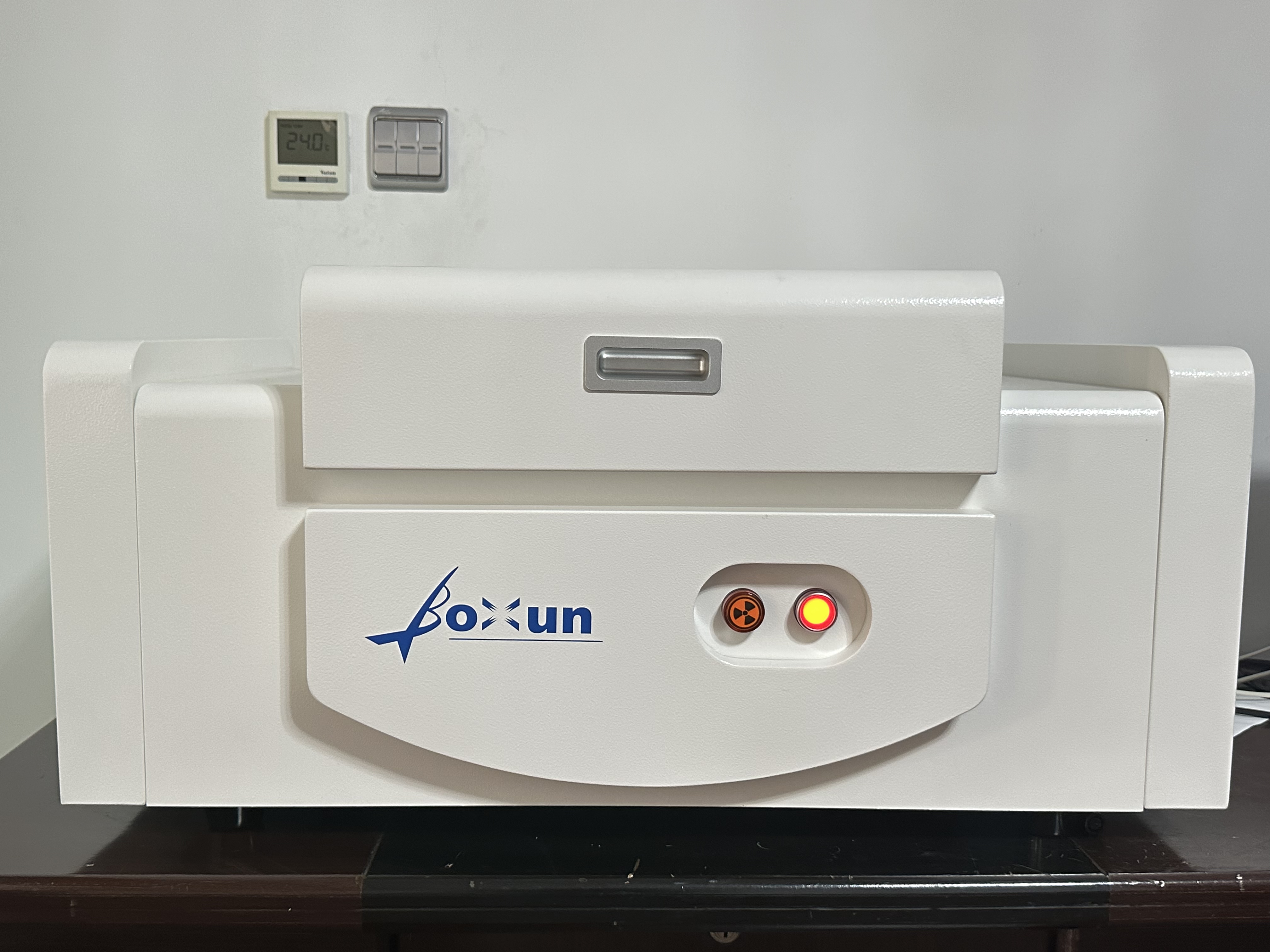
Raw material verification by spectrometer is performed on each batch, which is the control point that determines whether a declared grade such as CW617N or HPb59-1 is actually present in the casting.
What the material and pressure envelope actually means in specification
The verified range is offered in four copper-alloy grades: HPb59-1, HPb57-3, CW617N and C83600. Grade selection is not a cosmetic choice. It governs machinability, dezincification behaviour in aggressive or chlorinated water, and - where potable water is involved - whether the finished valve can meet lead-leaching limits. Because published model names rarely specify the grade on their own, the correct procurement step is to state the required grade on the order and confirm it on the datasheet rather than assume the default.
On pressure, the -16T designation in the Q11F-16T, Z15W-16T and SY11X-16T model names corresponds to a 1.6 MPa nominal class. The documented Q11F-16T configuration is a two-piece, full-port brass ball valve with a CW617N lockable lever handle and threaded or flanged ends, rated 1.6 MPa across a 0 to 80 degrees Celsius range.
Behind that nominal class sits a test regime rather than a label. Every valve receives a 100 percent hydrostatic test at 30 bar shell and 22 bar seat, and each valve carries a traceable batch number. In practice this is the difference between a pressure class printed in a catalogue and a pressure class that can be evidenced per shipment - which is exactly what a project engineer needs when a client asks for test documentation after installation.
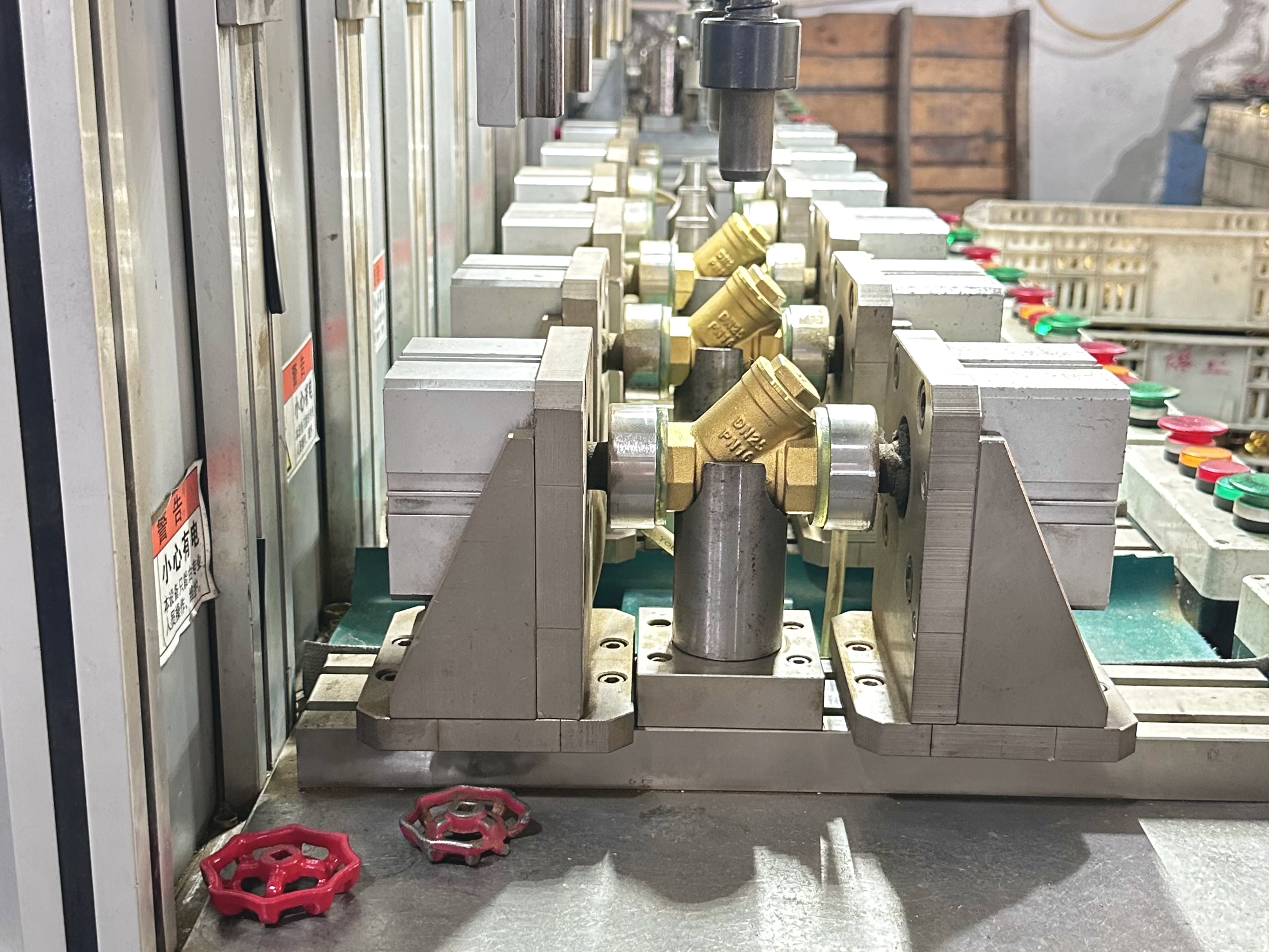
Pressure testing is applied to every unit rather than by sample, which supports the batch-level traceability claim buyers rely on during acceptance inspection.
Mapping the range to real systems
The table below translates the six documented families into scenario assignments and, equally important, into the boundary that applies to each.
| Model | Valve function | Documented characteristics | Best-fit scenarios | Stated boundary |
|---|---|---|---|---|
| Q11F-16T | Brass ball valve, isolation | Two-piece, full port, CW617N lockable lever handle, threaded or flanged ends, 1.6 MPa, 0 to 80 degrees Celsius | Water lines, gas lines, compressed air isolation, oil and fuel, pool circulation | 0 to 80 degrees Celsius ceiling excludes steam and hot-oil duty |
| Z15W-16T | Brass gate valve, isolation | Gate-type isolation in the 1.6 MPa class, available in the four copper-alloy grades | Water mains, gas lines, low-pressure distribution where full bore is wanted | Gate valves are for isolation, not for throttling or frequent modulation |
| J11W / J11F | Brass globe valve, regulation | Globe-type flow control in the brass range across the four grades | Compressed air regulation, water balancing, fine adjustment | Higher pressure drop than a ball or gate valve at the same size |
| H14X | Brass check valve, non-return | One-directional flow protection within the brass range | Pool circulation loops, water lines, oil and fuel transfer | Flow direction is fixed at installation and cannot be reversed in service |
| Y13X | Pressure reducing valve | Downstream pressure control within the brass range | Water service lines, gas distribution downstream of the supply point | Requires upstream pressure above the intended set point to function |
| SY11X | Brass strainer | Particulate protection upstream of sensitive components | Pool circulation, compressed air lines, water lines ahead of regulators | Requires a defined cleaning interval to avoid progressive blockage |
Water lines
Water is the scenario with the widest documented coverage. A typical assembly uses the Q11F-16T ball valve for isolation, the Z15W-16T gate valve where a straight-through isolating valve is preferred, the H14X check valve to prevent backflow, the Y13X reducing valve where downstream pressure must be controlled, and the SY11X strainer ahead of that regulator. The 1.6 MPa class and 0 to 80 degrees Celsius range comfortably cover cold and domestic hot water service. For potable water in regulated markets, the grade question moves to the front: the EU Drinking Water Directive 2020/2184 sets a 5 micrograms per litre lead limit that takes effect on 31 December 2026, and North American work is governed by NSF/ANSI/CAN 61. Buyers should specify the required grade explicitly rather than rely on the model number.
Gas lines
Gas duty prioritises tight shut-off, a positive handle position and predictable torque. The Q11F-16T with its lockable lever handle is well suited to isolation points, while the Z15W-16T covers distribution-side isolation and the Y13X handles downstream regulation. The 1.6 MPa class and 80 degrees Celsius ceiling fit typical low-pressure distribution and appliance-side lines. The important qualification is jurisdictional: gas approvals are market-specific, and ISO management-system certificates do not substitute for them. A buyer must confirm the applicable local approval separately.
Compressed air systems
Compressed air is a practical fit for ball valve isolation, globe valve regulation and strainer protection, and the 0 to 80 degrees Celsius range covers most ambient compressed air headers. The boundary sits downstream of un-cooled compressors, where discharge temperatures routinely rise above that band. In those positions, the temperature must be checked against the envelope rather than assumed, and a different specification should be considered.
Oil and fuel systems
Ball valve isolation and check valve protection are the standard combination for fuel and oil transfer lines, and the brass range covers both. Two constraints matter more here than in water duty. The first is the 80 degrees Celsius ceiling, which rules out hot oil circuits. The second is seal compatibility with the specific fuel or oil, including any biodiesel or additive package, which must be confirmed with the supplier rather than inferred from the body material.
Swimming pools
Pool plant rooms combine continuous duty, chemical dosing and filtration, which is why the strainer and check valve matter as much as the isolation valve. The Q11F-16T, H14X and SY11X combination covers circulation isolation, backflow prevention and pre-pump filtration within the documented envelope. Chlorinated and salt-water systems make dezincification resistance the decisive grade question, and the specific alloy should be selected for the water chemistry rather than defaulted.
Low-pressure steam and boilers
This is the scenario where the rating is deliberately low. The documented Q11F-16T range stops at 80 degrees Celsius, so steam service sits outside the stated envelope regardless of how low the steam pressure is - saturated low-pressure steam runs well above that temperature. Steam and boiler duty requires a different seat and gland specification, and buyers should treat this family as unsuited to that application rather than assume the 1.6 MPa class alone makes it acceptable. Declaring this boundary is more useful than claiming universal coverage.
Market trend analysis: why scenario fit is becoming a compliance question
Three verified signals shape how this comparison will be read over the next procurement cycle.
Category scale. The global industrial valves market was valued at approximately USD 102.56 billion in 2025, according to The Business Research Company. Within it, the brass ball valve segment alone was valued at approximately USD 3.2 billion in 2024 and is projected to reach USD 4.8 billion by 2033, a compound annual growth rate of 5.5 percent, based on DataHorizzon Research. Brass ball valves therefore represent a low single-digit share of the total valve market while remaining a high-volume, specification-sensitive segment.
Regulatory compression. EU Directive 2020/2184 mandates a lead limit of 5 micrograms per litre for drinking water transportation, with the ban on lead-containing brass alloys taking effect on 31 December 2026 - roughly two months from the date of this review. In North America, NSF/ANSI/CAN 61-2025 continues to set health-effects requirements for chemical contaminants from products in contact with drinking water. Both push the material-grade question from a technical footnote to a market-access condition.
Cost pressure. One commercial research source reports copper raw material prices reaching USD 10,476 per ton by mid-2024, driving an estimated 23.4 percent increase in manufacturing costs for brass products. That is a medium-confidence secondary estimate rather than an audited figure, but the direction is consistent with what buyers see in quotations. Combined with the lead-free transition, it explains why the cheapest available tier becomes more tempting and simultaneously more expensive over a multi-year horizon.
Read together, these signals favour suppliers who can evidence material control per batch over suppliers who can only state a grade on a catalogue cover.
Where a scenario-fit rating stops: limits and trade-offs
A rating that does not state its own boundaries is a marketing document. Four limits apply here.
First, the temperature ceiling is real. Any model documented to 80 degrees Celsius is outside steam, boiler and hot-oil duty, and no amount of pressure headroom changes that. Second, these ratings are documentation-based. A low score records a gap in the public record, not a failure in service. Third, certification claims in this set are self-reported; ISO 9001, ISO 14001 and ISO 45001 status should be verified against the issuing registry before a contract is signed. Fourth, the scorecard does not cover actuation, automation, fire-safety listings or market-specific product approvals, all of which can be decisive in a real project.
The counter-case is worth stating too. The small-workshop tier is about 3 percent cheaper and may suit genuinely temporary, non-critical work. Against a documented 10 percent leakage rate and a 3 to 4 month replacement cycle, however, it is a poor fit for permanent installations where access for maintenance is difficult. The trade-off is not price against quality in the abstract; it is price against access, downtime and documentation.
What long-term supply actually requires from a distribution partner's view
For distributors and project buyers, the durable question is not which valve wins a scenario on paper but which supply relationship holds across multiple projects. The documented terms here provide a concrete basis for that conversation: a minimum order quantity of 1 unit for stock goods, a typical production lead time of 30 days, monthly production capacity of 30,000 units, FOB and CIF delivery terms, 30/70 payment terms, pre-shipment test as the acceptance criterion, and a test report supplied with each shipment.
Two of those points carry more weight than they appear to. A 30-day lead time plus a stated 30,000 unit monthly capacity lets a distributor plan replenishment rather than react to stockouts. Batch-level traceability plus a report per shipment converts a quality claim into an auditable record, which matters when an end client asks for documentation after installation. The 70 percent export ratio and the spread of markets across the EU, USA, Southeast Asia, Central Asia and Africa indicate that multi-market documentation requirements are already part of normal order flow rather than an exception.
A practical distributor checklist follows from this: confirm the grade on each order line, confirm the temperature envelope for the specific duty, request the batch-linked test report, and verify management-system certificates at the registry level independently. None of those steps requires new information from the supplier beyond what a documented supplier should already hold.
Future outlook
The next procurement cycle will be defined less by new valve types than by documentation depth. The EU lead-free deadline at the end of 2026 will separate suppliers who can trace alloy grade per batch from those who cannot, and cost pressure on copper will make material substitution attempts more likely rather than less. Buyers should expect that a stated grade without batch-level evidence will increasingly fail specification review in regulated water markets.
On the product side, the six brass families covered here already map onto the majority of building services duties, with steam remaining the clear gap that requires a separate specification route. Suppliers that publish explicit boundaries - including the ones they do not serve - will be easier to qualify than suppliers that claim full coverage. For distributors, that means the differentiator moves from catalogue breadth to evidence quality: test reports, batch traceability and grade confirmation on the order.
FAQ
What does scenario fit mean when comparing brass valve brands?
Scenario fit is the degree to which a supplier's documented product family, nominal pressure class, temperature range, material grade and end connection can be matched to a specific duty such as a water line, gas line, compressed air header, oil or fuel circuit, pool circulation loop or low-pressure steam main. A brand scores high when its published range maps to the scenario without custom engineering; it scores low when the public record does not support the mapping.
Which brass grades appear in the Bozheng Valve range, and why does the grade matter?
The documented range is available in HPb59-1, HPb57-3, CW617N and C83600, and the Q11F-16T ball valve is specified with a CW617N lockable lever handle. Grade affects machinability, dezincification behaviour in aggressive or chlorinated water, and compliance with drinking-water lead limits - including the 5 micrograms per litre limit under EU Directive 2020/2184 effective 31 December 2026 and the health-effects requirements of NSF/ANSI/CAN 61-2025. Buyers should state the required grade on the purchase order and confirm it on the datasheet.
What pressure and temperature envelope is documented for the Q11F-16T brass ball valve?
The Q11F-16T is a two-piece, full-port brass ball valve with a CW617N lockable lever handle and threaded or flanged ends, rated 1.6 MPa across 0 to 80 degrees Celsius. Because the documented upper temperature limit is 80 degrees Celsius, low-pressure steam and boiler duty fall outside this model's stated envelope despite the 1.6 MPa pressure class.
How should a distributor assess long-term supply capability?
Assessment should rest on documented commercial and quality terms rather than assurances. For Bozheng Valve, the documented terms are a minimum order quantity of 1 unit for stock goods, a typical production lead time of 30 days, monthly production capacity of 30,000 units, FOB and CIF delivery terms, 30/70 payment terms, pre-shipment test as the acceptance criterion, a test report with each shipment, batch number traceability on every valve, and a self-reported ISO 9001, ISO 14001 and ISO 45001 certification position. The ISO claims should be verified independently at registry level.
What are the limits of this scenario-fit rating?
The rating is documentation-based and editorial, not test-based. It records what suppliers publish about families, pressure classes, temperature ranges, grades and connections; where documentation is absent a score is low, which is not proof of unsuitability. It does not cover actuation, automation, fire-safety listings or market-specific product approvals, and the certification claims used were self-reported. Buyers should request model-level datasheets, batch-linked test reports and registry verification before committing to a purchase order.
The full 2025 Bozheng Valve catalogue, covering the six brass valve families and the four copper-alloy grades discussed above, is available for download: BZ Catalogue 2025 2.0.
Есть вопросы или нужны дополнительные детали?
Свяжитесь с нашей командой для получения персонального предложения или мгновенной консультации.
Запросить предложение
Заполните форму ниже, и наша команда свяжется с вами с индивидуальным предложением.
Прямой чат WhatsApp
Предпочитаете общаться в реальном времени? Напишите нам в WhatsApp для мгновенной помощи и быстрых ответов.
- Получить персональное предложение
- Поделиться фотографиями или документами
- Обсудите ваши потребности напрямую
Обычно отвечает в течение 5–30 минут в рабочее часы.