
Build Your Own Camping Tent Comparison Matrix: A Buyer Framework
Buyer Framework · Camping Tents
Cross-architecture tent comparisons usually fail for a documentation reason rather than a product reason. A hard-shell rooftop tent and a six-person family tent can both be described as waterproof, all-season and quick to pitch, yet one appears on paper as a 140 kg panel-mounted system and the other as an 11 kg bagged cylinder. Comparing those two figures directly produces a conclusion that is arithmetically correct and commercially useless.
A comparison matrix converts a data sheet into a buyer-side decision record. Each row is a field that can be documented, each column is a candidate model, and each row carries a weight the buyer can defend in an internal review. The framework below is built entirely on published model data from MARVELOUS — XIAMEN MARVELOUS OUTDOOR TECHNOLOGY Co., Ltd., a Xiamen-based outdoor tent manufacturer established in 2019 that produces camping tents, rooftop tents and inflatable tents — so every step can be practised on real published numbers rather than hypothetical ones.
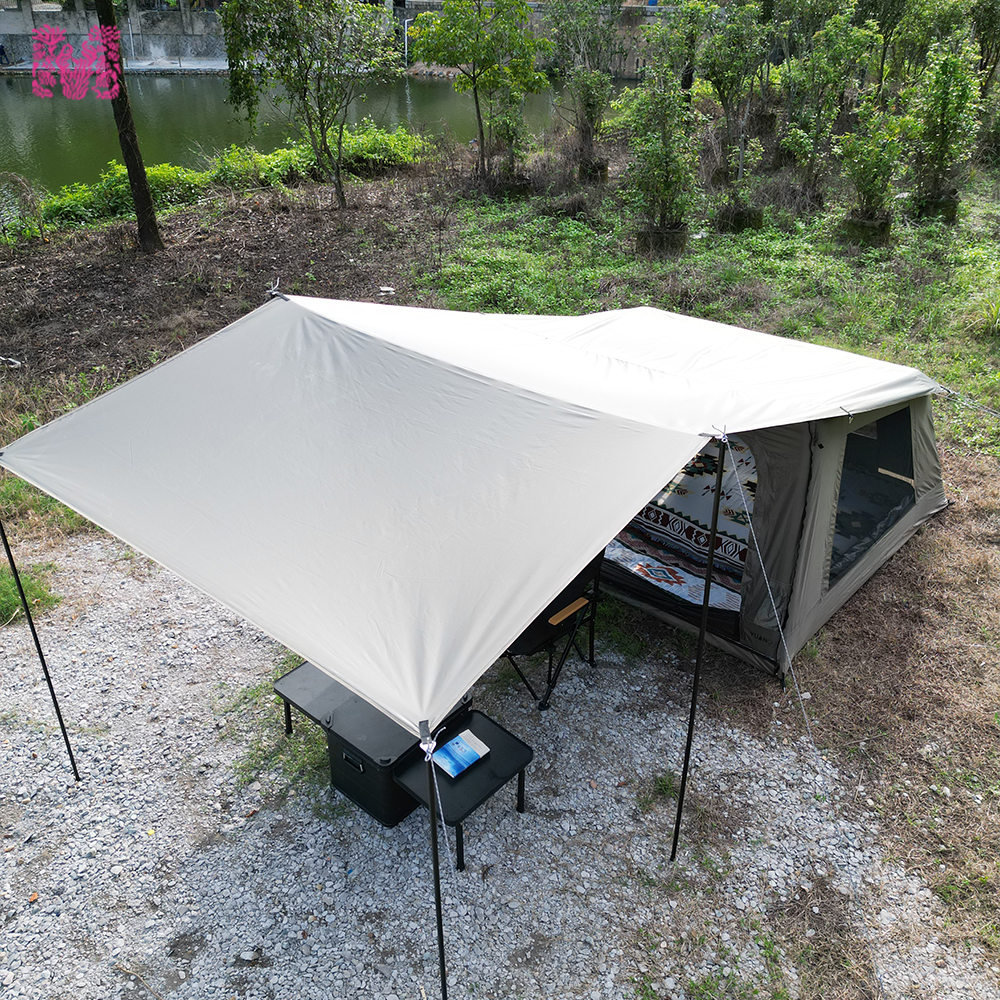
Comparison starts with recorded fields, not with photography. Inflatable, pole and hard-shell tents are documented in different units and must be normalised before they can be scored against each other.
A Spec Sheet Answers a Different Question
A spec sheet answers what a product has. A comparison matrix answers which product should be bought, and on what basis. The second question needs structure the first document is not designed to supply. Three failure modes appear repeatedly when that structure is missing.
- Unit mixing. Net weight compared against gross weight. The MOT-CT900 is recorded at 12.9 kg net and 13.5 kg gross; the MOT-CT096 is recorded at 14.5 kg gross. On a gross-to-gross basis the gap is 1 kg. On a net-to-gross basis it becomes 1.6 kg — a difference created by the analyst, not the product.
- Architecture mixing. A 140 kg net rooftop tent and an 11 kg net family tent are not in the same weight class because they are not in the same product class. One is a vehicle-mounted system, the other is a carried shelter.
- Silent gaps. Missing fields get filled by assumption. If a model does not state a capacity, the empty cell tends to inherit the number from a similar-looking model in the same range, and the shortlist is then built on an inherited figure.
The matrix removes all three by making the recording decision explicit and visible to everyone who reviews the purchase.
Step 1: Fix the Gates Before You Score Anything
Separate pass/fail conditions from weighted preferences before any scoring begins. A gate is a requirement that a model either meets or does not meet; no weighting can compensate for failing one. For rooftop applications, published application data documents a set of gates: a waterproof rating of at least 3000 mm, UV-resistant fabric, a wind-resistant structure, and compatibility with most vehicle roof racks. A rooftop model that cannot be shown to meet those conditions exits the comparison regardless of how well it scores elsewhere.
Compliance belongs in the same layer. ISO 5912:2020 specifies requirements for the safety, performance and fitness for use of camping tents, and in the United States the CPAI-84 flammability protocol is voluntary but treated as the industry benchmark and, in practice, as de facto mandatory for retail. Neither one certifies a specific product by itself; both define what documentation a buyer should be able to request.
Step 2: Choose Rows That Survive Cross-Architecture Comparison
A usable row must be recordable for most of your candidates in the same form. Fields that only one architecture publishes, or that change meaning between architectures, should be dropped or split.
| Row | How to record it | Why it survives comparison |
|---|---|---|
| Stated capacity | Persons, exactly as stated | Comparable across architectures; not stated for every model, so gaps must be labelled |
| Declared waterproofing | Millimetres as declared, plus a status note | Same unit across models; comparability depends on whether a test method is disclosed |
| Fabric construction | Denier and composition | Reveals material class differences that capacity and rating hide |
| Frame and setup type | Air column, pole material, or shell material | Explains weight and packed-envelope differences instead of treating them as quality signals |
| Packed weight | Net and gross in separate sub-columns | Prevents the mixing error described above |
| Packed envelope | Packed dimensions plus a derived bounding-box volume | Creates one comparable number from differently shaped packs |
| Expanded footprint | Expanded dimensions | Connects the product to the site, not to the catalogue |
| Documentation status | Test reports, standard references, written confirmations | Turns missing paperwork into a visible risk rather than an invisible one |
Nine rows are usually enough for a tent matrix. Eight to ten keeps the review readable; twenty rows get abandoned halfway through the second supplier.
Step 3: Normalise Weights, Volumes and Ratings
Net weight and gross weight are two different rows
Record both and score only one of them per programme. For carried shelters the relevant number is usually gross weight, because that is what a person lifts; for vehicle-mounted systems the relevant number is also gross weight, because that is the load added to the roof. The documented spread is wide: the MOT-M100 is listed at 11 kg net and 11.5 kg gross, the MOT-CT900 at 12.9 kg and 13.5 kg, the MOT-Q500 at 13.6 kg and 15 kg, the MOT-DYG01 at 32 kg and 45 kg, and the MOT-L800 at 140 kg and 150 kg. The MOT-LK901 is documented at 60 kg net. A 10 kg gross-to-net gap on a rooftop model is not a rounding detail; it is a mounting consideration.
Packed size needs a common measure
Packed dimensions are recorded in shapes that cannot be sorted as raw numbers. Convert them to a bounding-box volume, keep the shape note, and mark the figure as calculated rather than manufacturer-published. On that basis the documented packing dimensions produce roughly 67 litres for the MOT-CT096 (70×31×31 cm), roughly 69 litres for the MOT-M100 (110×25×25 cm), roughly 72 litres for the MOT-CT900 (106×26×26 cm), roughly 117 litres for the MOT-Q500 (77×39×39 cm), roughly 525 litres for the MOT-DYG01 (210×125×20 cm), roughly 786 litres for the MOT-LK901 (223×141×25 cm) and roughly 1,156 litres for the MOT-L800 (233×155×32 cm).
Those figures only mean something when the shape travels with them. The M100 packs as a cylinder that goes into a vehicle boot. The L800 packs as a flat panel that stays on a roof rack, so its envelope is a freight and storage variable rather than a portability variable.
Waterproof ratings need a status column
Declared millimetre ratings are manufacturer statements unless a test method, laboratory and sample are disclosed. Record the declared value, then record whether it is declared or tested. Without that second column, a declared 5000 mm and a tested 3000 mm will be sorted as if they were the same kind of number.
Step 4: Assign Weights You Can Defend
Allocate 100 points across the weighted rows, cap any single row at about 30 points unless it is a gate, and write down the reason for each allocation. Weights are buyer decisions, not product facts — the table below is an illustration of two different programmes, not a recommendation attached to any model.
| Row | Family and group camping programme | Vehicle-based travel programme |
|---|---|---|
| Stated capacity | 25 | 10 |
| Declared waterproofing | 20 | 20 |
| Frame and setup architecture | 15 | 10 |
| Packed weight | 15 | 5 |
| Packed envelope | 10 | 20 |
| Expanded footprint | 5 | 20 |
| Documentation status | 10 | 15 |
| Total | 100 | 100 |
Illustrative weight allocations. They describe how two buying programmes might prioritise, and carry no claim about any model.
The two columns produce different shortlists from identical data, which is the point. A programme that sleeps six to eight people per unit weights capacity heavily; a programme that mounts tents on vehicles weights footprint and mounting behaviour heavily and treats carried weight as almost irrelevant.
Step 5: Score Documented Values and Label the Gaps
Score only what is documented, and mark every missing cell as no data rather than zero. A zero punishes a candidate for a documentation failure while implying a performance failure; a labelled gap keeps the distinction visible and forces a written follow-up. The MOT-CT096 illustrates the case: its data sheet records fabric, waterproof rating, packing dimensions, expanded size and gross weight, but no person capacity. That cell stays empty until the supplier confirms it in writing.
Add a documentation-completeness count as its own row or as a tie-breaker. In practice, a model that answers eight of nine rows is easier to approve internally than a model that answers five, even when the five answers are stronger.
Worked Example: Seven MARVELOUS Models in One Matrix
Every value below is taken from published model data. Nothing is estimated; cells marked ND are not stated in the source data and must be confirmed before scoring.
| Model | Architecture and frame | Stated capacity | Declared waterproofing | Fabric | Net / gross weight | Packed size | Expanded size |
|---|---|---|---|---|---|---|---|
| MOT-M100 | Family tent, quick-open iron frame | 6–8 people | PU 5000 mm | 200D titanium black plastic plaid cloth, transparent TPU/PU, anti-mosquito mesh | 11 kg / 11.5 kg | 110×25×25 cm | 375×375×240 cm |
| MOT-CT900 | Family tent, aluminium alloy poles | 4–5 people | PU 5000 mm, UPF 50+ | 200D titanium black rubber Oxford cloth | 12.9 kg / 13.5 kg | 106×26×26 cm | ND |
| MOT-CT096 | Family camping tent, steel frame | ND | 2000 mm | 210D Oxford cloth with PU | ND / 14.5 kg | 70×31×31 cm | 430×305×200 cm |
| MOT-Q500 | Inflatable tent, 5-layer PVC air column frame | 4–5 people | PU 5000 mm, UPF 50+ | 200D Oxford cloth | 13.6 kg / 15 kg | 77×39×39 cm | 270×270×200 cm |
| MOT-DYG01 | Roof top tent, aviation aluminium frame | 2 people | 3500 mm, UV and mould resistant | 600D Oxford | 32 kg / 45 kg | 210×125×20 cm (folded) | 210×125×140 cm |
| MOT-LK901 | Hard-shell roof top tent, aluminium shell | 1–2 people | PU 4000 mm | Outer 420D Oxford; inner 280 g polyester cotton | 60 kg net | 223×141×25 cm | 210×130×140 cm |
| MOT-L800 | Roof top tent, aviation aluminium frame | 4 people | 3000 mm | 300D Oxford cloth | 140 kg / 150 kg | 233×155×32 cm | 215×251×110 cm |
Source: published model specifications. ND indicates a field not stated in the source data. Bounding-box volumes referenced in the text are calculated from the stated packing dimensions, not published volumes.
Read the table by column. In the capacity column the M100 is documented at 6–8 people, the CT900 and Q500 at 4–5, the L800 at 4, the DYG01 at 2, the LK901 at 1–2, and the CT096 carries no stated figure at all. In the waterproofing column the declared values run from 2000 mm on the CT096 to 5000 mm on the CT900, M100 and Q500, with the rooftop models at 3000 mm (L800), 3500 mm (DYG01) and 4000 mm (LK901).
The weight column explains why architecture must be normalised before it is judged. The M100 at 11 kg net and the L800 at 140 kg net are not separated by build quality; they are separated by what each product is designed to do. A carried shelter optimises for packability, a vehicle-mounted system optimises for structural rigidity and a permanent sleeping platform.
Setup architecture is the row that carries most of that explanation. The Q500 uses a 5-layer PVC air column frame; the CT900 uses aluminium alloy poles; the CT096 uses a steel frame; the M100 uses a quick-open iron frame; the LK901 uses an aluminium shell. Those are five different answers to the same deployment question, and each one writes itself into the weight, packed envelope and footprint rows.
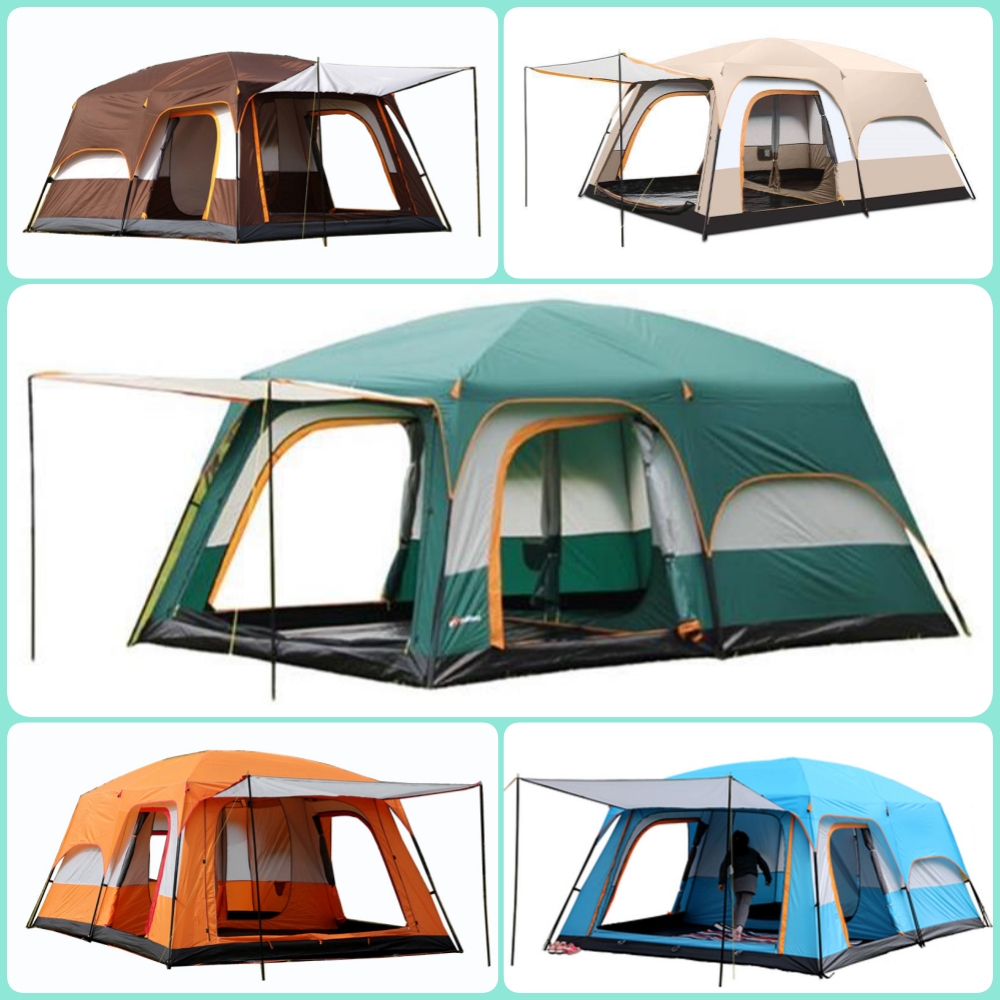
Expanded footprint is the row that connects a model to the site. The MOT-CT096 is documented at 430×305×200 cm expanded, with a packed size of 70×31×31 cm.
Step 6: Run a Sensitivity Check Before You Shortlist
Re-run the scoring after shifting the two heaviest weights by ten points in either direction. If the ranking flips, the data is not decisive and the decision should move to sample validation rather than to a longer spreadsheet. Two additional rules keep the output honest: a candidate that fails a gate is excluded regardless of its score, and a candidate that wins on five rows but is missing data on two must carry those gaps into the recommendation, not around it.
Where the Matrix Stops
The framework standardises documentation. It does not verify performance, and the boundary deserves to be stated plainly.
- Declared ratings are not test results. Millimetre values can be compared as recorded, but a hydrostatic-head result, the test method and the laboratory must be requested separately before a declared figure is treated as measured performance.
- Quantitative rows crowd out qualitative ones. Seam construction, zipper behaviour, pole wall thickness consistency and after-sales response are poorly represented by numbers and can be under-weighted by a purely numeric matrix.
- Documentation gaps can bias against smaller or newer suppliers. A thin data sheet may reflect an immature specification process rather than a weaker product — which is a real risk, but a different one.
- Packed envelope comparisons are approximations. A bounding-box volume treats a cylindrical pack and a flat panel as equivalent solids, which they are not.
- The matrix does not replace sample validation or compliance testing. It decides what to sample and what to ask for, not what to certify.
Matching the Matrix to Documented Applications
The same row set can be re-weighted for different programmes, which is how a single framework covers a mixed catalogue.
- Family and group camping programmes. Capacity and expanded footprint dominate. The MOT-M100 is documented at 6–8 people with a 375×375×240 cm footprint, 11 kg net and a 110×25×25 cm pack. The MOT-CT900 covers 4–5 people with PU 5000 mm and UPF 50+ fabric, aluminium alloy poles, and a 13.5 kg gross weight.
- Fast-deployment and rental fleets. Setup architecture and packed envelope dominate. The MOT-Q500 is an inflatable model with a 5-layer PVC air column frame, 4–5 person capacity, PU 5000 mm and UPF 50+, 13.6 kg net, packing at 77×39×39 cm.
- Vehicle-based travel and overlanding. Mounting compatibility, gross weight and expanded footprint dominate. The MOT-L800 is documented at 4 people, 300D Oxford cloth, 3000 mm waterproofing, 140 kg net and 150 kg gross, expanding to 215×251×110 cm. The MOT-LK901 hard-shell model is documented at 1–2 people, an aluminium shell, 420D Oxford outer fabric, PU 4000 mm and 60 kg net. The MOT-DYG01 covers 2 people with 600D Oxford, 3500 mm and UV- and mould-resistant fabric at 32 kg net.
Documented application requirements for rooftop use align with those rows: a waterproof rating of at least 3000 mm, UV-resistant fabric, a wind-resistant structure and compatibility with most vehicle roof racks, with the scenario recorded as common in the United States, Germany, Australia, Canada, Switzerland, Chile, Japan and South Korea. Those conditions belong in the gate layer of the matrix, not in the weighted rows.
Market Context: Why Documentation Discipline Matters Now
Procurement plans that lean on a single market forecast inherit that forecast's definitional risk. Published commercial research on the camping tent category diverges materially: one source projects the global market reaching USD 5.5 billion by 2034, another projects USD 10.91 billion by 2034, and a third reports USD 5.98 billion in 2026 growing to USD 8.14 billion by 2031. The differences reflect scope, base year and methodology rather than one correct figure, and they should not be averaged. Within the rooftop segment, one source values the global market at USD 1.42 billion in 2025 and estimates hard-shell models at roughly 40%–45% of that segment, a share the same source flags at medium confidence.
The practical implication is straightforward. Forecasts are directional inputs; documented product variables are the auditable ones. A matrix built on recorded specifications survives a revision to any market forecast, which is why it belongs in the procurement file rather than in the presentation deck.
What Buyers Should Expect Next
Three changes are already visible in how specifications are being requested. Declared ratings are increasingly challenged with a request for test method and laboratory, which turns the waterproofing row into a two-column field. Compliance evidence — the ISO 5912:2020 scope for safety, performance and fitness for use, and the CPAI-84 flammability protocol in the United States — is moving from a footnote to a standing row. And the matrix itself is becoming a living document that is updated at sample stage and again at reorder, rather than a one-off comparison written for a single award.
Architecture hybridisation will blur some rows further. When a product borrows from two categories, the gate-and-weight split remains the stable part of the method: gates decide eligibility, weights decide preference, and documented values decide both.
FAQ
What is a camping tent comparison matrix?
It is a buyer-side table in which each row is a documented specification field — capacity, waterproof rating, fabric, frame and setup type, packed weight, packed dimensions, expanded footprint, documentation status — and each column is a candidate model. Rows carry weights so that trade-offs between candidates are explicit and reviewable rather than implicit.
Which specifications belong in the rows?
Rows should be fields that can be recorded in the same form for most candidates. Capacity, declared waterproofing, fabric denier and composition, frame and setup type, net and gross packed weight, packed dimensions, expanded dimensions and documentation status cover most cross-architecture decisions. Fields that only one architecture publishes, or that change meaning between architectures, should be dropped or split into separate rows.
How do I compare a 13.5 kg tent with a 140 kg tent?
By separating net from gross weight and treating the difference as architectural. The MOT-CT900 is documented at 12.9 kg net and 13.5 kg gross; the MOT-L800 rooftop tent is documented at 140 kg net and 150 kg gross. The gap reflects a carried shelter versus a vehicle-mounted system, so the weight row should be scored against the programme requirement rather than against the other model.
How should packed size be compared when one model is 110 cm and another is 233×155×32 cm?
Convert both to a common measure and keep the shape note. The MOT-M100 packs at 110×25×25 cm, a bounding box of roughly 69 litres; the MOT-L800 packs at 233×155×32 cm, roughly 1,156 litres. The M100 envelope is a carried cylinder; the L800 envelope is a flat panel that stays on a roof rack, so it affects freight and storage rather than personal portability.
How should waterproofing be weighted against capacity and setup type?
Record the declared value first, then record whether it is declared or tested. Documented declared values in the reference set range from 2000 mm on the MOT-CT096 to 5000 mm on the MOT-CT900, MOT-M100 and MOT-Q500, with rooftop models at 3000 mm, 3500 mm and 4000 mm. Weights should follow the application; where a documented application requirement sets a minimum such as 3000 mm for rooftop use, that minimum is a gate rather than a weighted row.
What should I do when a data sheet has a missing value?
Mark the cell as no data, leave it visible, and request written confirmation. The MOT-CT096 data sheet states fabric, waterproof rating, packing dimensions, expanded size and gross weight but no person capacity; that field should not be filled by borrowing a figure from a similar model, because an inherited number is indistinguishable from a verified one once it enters the shortlist.
Which standards should be checked before awarding an order?
ISO 5912:2020 specifies requirements for the safety, performance and fitness for use of camping tents, and in the United States the CPAI-84 flammability protocol is voluntary but treated as the industry benchmark and in practice as de facto mandatory for retail. Both define the documentation a buyer should request; neither establishes conformity for a specific product without supporting test documentation.
Reference document: the MARVELOUS outdoor tent brochure, covering camping tents, rooftop tents and inflatable tents, is available for download at MARVELOUS product brochure (PDF).
XIAMEN MARVELOUS OUTDOOR TECHNOLOGY Co., Ltd. · Xiamen, Fujian, China · WWW.MARVELOUS-OUTDOOR.COM
Есть вопросы или нужны дополнительные детали?
Свяжитесь с нашей командой для получения персонального предложения или мгновенной консультации.
Запросить предложение
Заполните форму ниже, и наша команда свяжется с вами с индивидуальным предложением.
Прямой чат WhatsApp
Предпочитаете общаться в реальном времени? Напишите нам в WhatsApp для мгновенной помощи и быстрых ответов.
- Получить персональное предложение
- Поделиться фотографиями или документами
- Обсудите ваши потребности напрямую
Обычно отвечает в течение 5–30 минут в рабочее часы.