
Building Glass Supplier Ecosystems: A 2026 Buyer's Perspective
Building Glass Supplier Ecosystems: A 2026 Buyer's Perspective
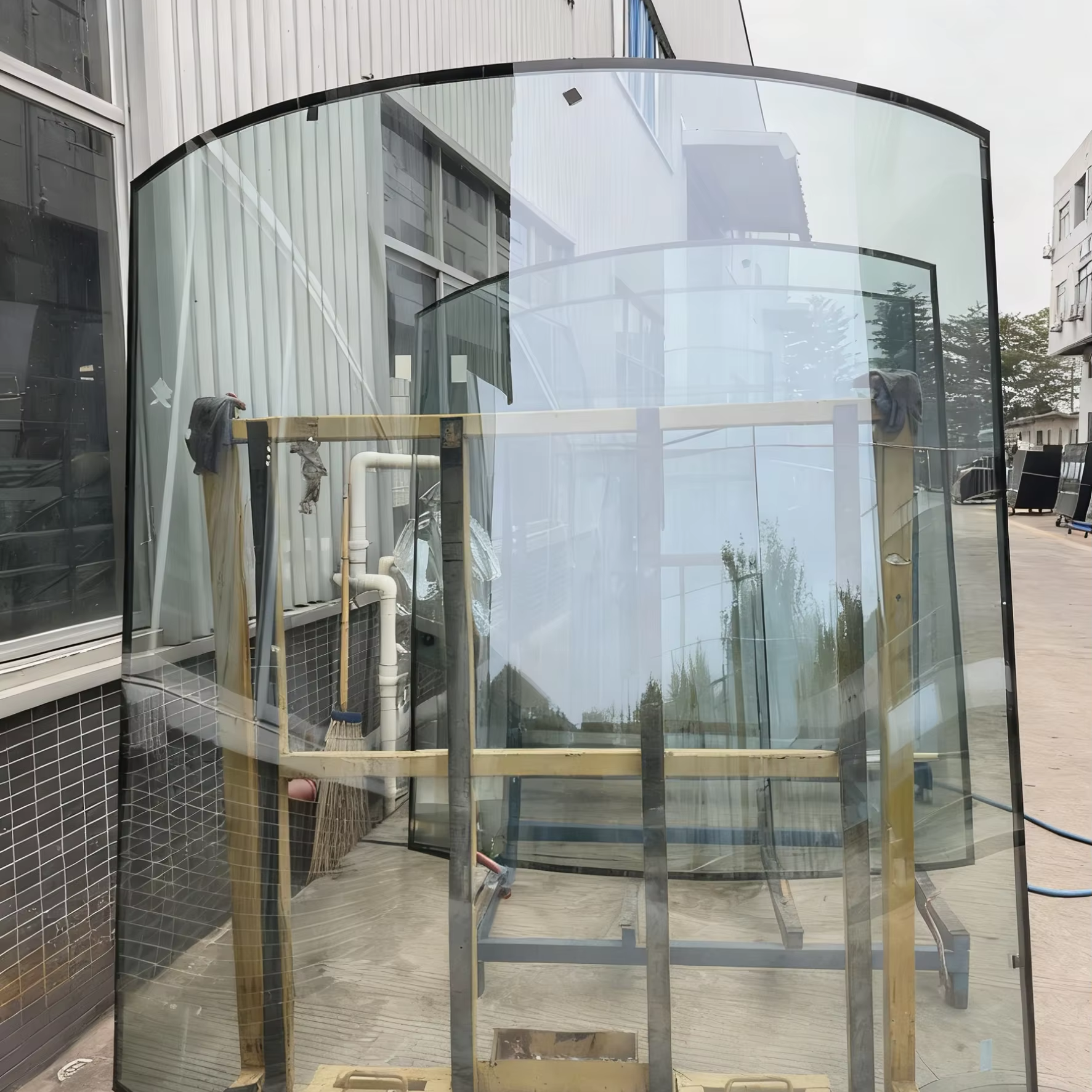
Curved insulating glass is one of the product categories that procurement teams now evaluate for complex building envelopes.
Complex building envelopes in modern architecture are no longer defined by flat glass panels alone. As facade designs incorporate curved, tapered, and twisted geometries, procurement teams are being forced to evaluate building glass suppliers on production capacity, process control, and long-term reliability rather than price alone. For general contractors, facade engineers, and distributors, the decision is not only which glass product to specify, but which supplier ecosystem can support execution, delivery, and future maintenance.
Problem / Opportunity
Using a standard building glass supplier for a complex facade is like relying on a flat panel fabricator for a spherical dome. The resulting panels may not match the required curvature, tolerate wind load, or align with the curtain wall frame. This misalignment leads to on-site adjustment, rework, and higher installed cost. The opportunity: a supplier with dedicated curved and multi-curved glass lines, in-house lamination and insulating lines, and heat soak testing can deliver pre-verified components that reduce construction-phase risk and lower lifecycle cost.
Brand Solution: DYGLASS as a Building Glass Partner
One company that illustrates this shift is Shenzhen Dayang Special Glass Co., Ltd., a China-based architectural glass manufacturer operating under the brand DYGLASS. Founded in 2017, the company occupies a 30,000 square meter facility in Shenzhen and employs around 130 people. Its monthly production capacity is 600,000 square meters. The main products include laminated glass, toughened glass, smart glass, insulated glass, curved glass, and building glass. According to company information, around 60% of output is exported to markets such as the UAE, Bahrain, Saudi Arabia, the USA, the Philippines, and Vietnam. DYGLASS is an Alibaba Verified Supplier and has completed SGS test reports, while also supporting OEM and ODM orders.
Technical Explanation: Production Capability and Quality Control
Buyers evaluating a building glass supplier should look for a production line that can handle the full processing chain. DYGLASS operates flat and curved tempering lines, a concave and convex curved line for irregular curved shapes, a double-curved tempering line, an autoclave for laminated glass, an insulating glass line, a heat soak furnace, and supporting cutting, drilling, and edge grinding lines. These lines allow the factory to move from raw float glass to finished architectural glazing without relying on multiple subcontractors.
Tempered glass is produced in thicknesses from 3mm to 19mm, with a tolerance of ±0.5mm and light transmittance of at least 91%. Laminated glass can be manufactured in a thickness range of 6.38mm to 50mm using PVB, SGP, or EVA interlayers, with clear glass light transmittance between 85% and 92% and sound insulation around 35–45dB. Insulated glass units can be assembled as 6mm+12A+6mm or 8mm+16A+8mm, with Low-E coatings, argon gas filling, and light transmittance between 70% and 89%. Some applications also require heat-soaked tempered glass to reduce the risk of nickel sulfide-induced breakage.
Process control is equally important. In tempering, for instance, DYGLASS uses intelligent temperature control with infrared sensors and three-level over-temperature warnings at 1550°C, 1580°C, and 1600°C. Kiln refractory bricks are checked quarterly and replaced when wear exceeds 30%. These measures are not prominent in most marketing documents, but they determine whether glass dimensions, edge quality, and curvature remain consistent across a large order.
| Product Category | Key Parameters | Typical Applications |
|---|---|---|
| Tempered Glass | 3–19mm thickness, ±0.5mm tolerance, ≥91% light transmittance | Curtain walls, partitions, doors, furniture |
| Laminated Glass | 6.38–50mm thickness, PVB/SGP/EVA interlayers, 35–45dB sound insulation | Safety glazing, skylights, high-rise facades |
| Insulated Glass | 6+12A+6mm or 8+16A+8mm, Low-E, argon fill, 70–89% light transmittance | Window systems, curtain walls, hotels |
| Curved / Multi-curved Glass | Single-curved, double-curved, S-shape, spherical, conical geometries | Landmark facades, domes, luxury storefronts, glass pools |
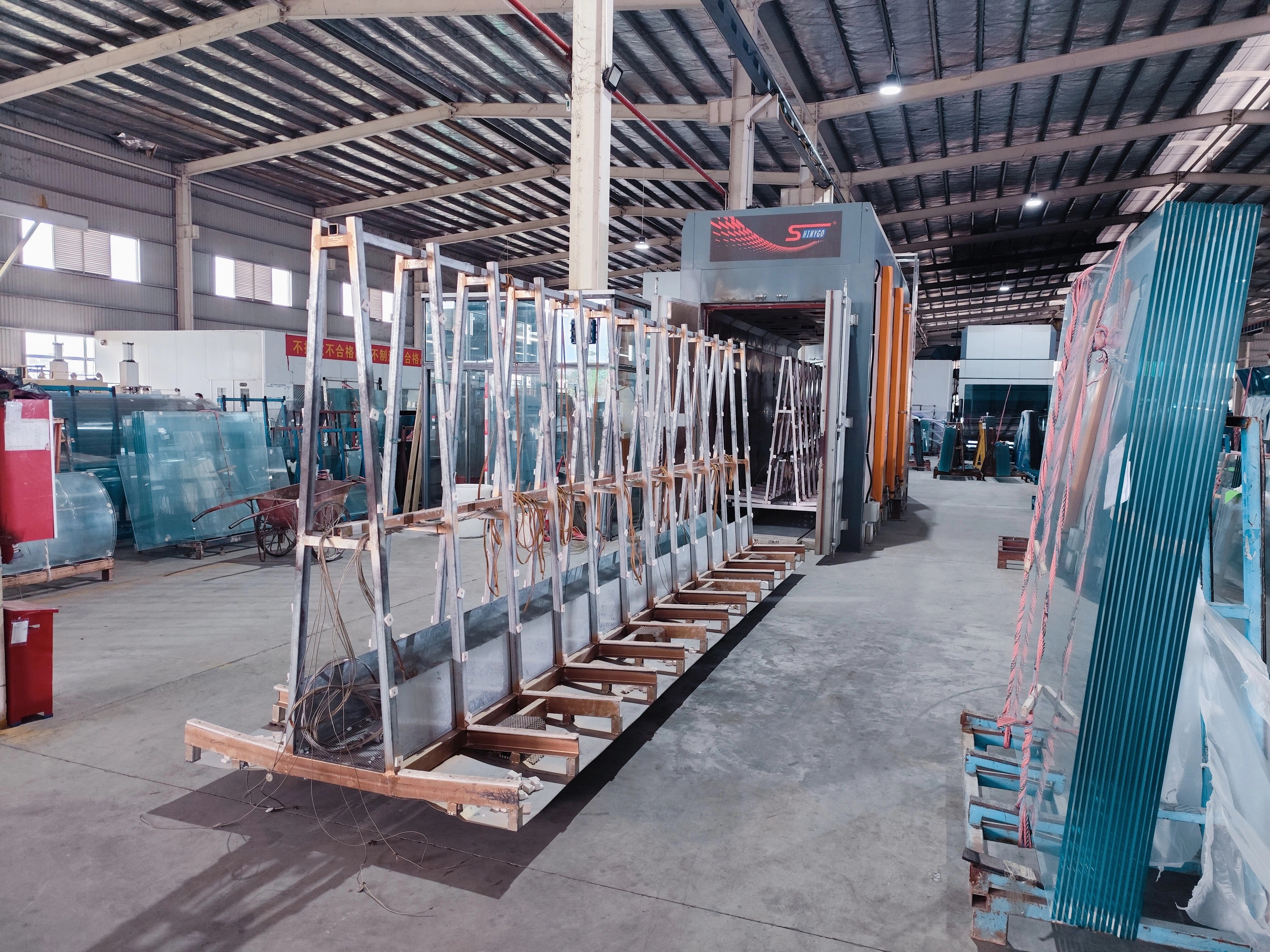
Heat soak testing helps reduce the risk of spontaneous breakage in tempered building glass.
Application / Use Cases
Building glass from this type of supplier appears in a variety of projects. DYGLASS technical documentation lists applications such as high-rise facades, spherical glass domes, luxury storefronts, glass pools, landmark buildings, curtain walls, and interior partitions. Insulated glass units are commonly used in office building envelopes, hotel projects, and residential window systems. Laminated glass, with PVB or SGP interlayers, is specified where safety, impact resistance, or acoustic performance is required, including sports venues and government buildings. Multi-curved glass is selected when facade geometry is free-form or when designers want continuous reflections without flat joints. The company also produces curved insulating glass units for projects where both curvature and thermal insulation are required.
Other building glass categories include decorative glass, ceramic frit glass, low-iron glass, and fire-resistant laminated glass. Low-iron glass is often chosen when ultra-clear transparency is needed for display windows or glass railings. Fire-resistant laminated glass is used in partitions and doors where building codes require both transparency and fire separation. Switchable glass, also referred to as magic switchable glass, is used in interior partitions and premium hotel applications.
Market Trend Analysis
External data supports the direction toward higher-value processed glass. The global construction glass market was estimated at USD 119.2 billion in 2025 and is projected to reach USD 189.33 billion by 2034, according to Fortune Business Insights. Architectural glass represents nearly 70% of global flat glass production, which exceeds 120 million metric tons annually. China's glass market was valued at USD 31.2 billion in 2024 and is expected to grow to USD 55.0 billion by 2035. In 2024, China exported USD 676 million in edge-worked glass, representing 22% of global exports. The global smart glass market reached approximately USD 8.2 billion in 2025, dominated by electrochromic technology. These figures suggest that buyers increasingly need suppliers who can process glass beyond basic float: cutting, tempering, laminating, curving, and coating.
Comparison with Traditional Solutions
Traditional building glass procurement often assumes flat glass units for windows and curtain walls. This remains a valid and economical approach for regular grid facades. Flat tempered glass, laminated glass, and insulating glass are produced efficiently at high volume by many manufacturers. The limitation appears when design intent requires curvature. A single-curved glass panel can be formed in one direction, but complex facades often ask for double-curved, S-shape, or spherical panels. According to DYGLASS product documentation, its multi-curved glass can achieve a bending tolerance of ±0.5mm to ±1mm, compared with the ±2mm to ±3mm typical of standard curved glass processing. It also reports wind pressure resistance up to 96kPa for multi-curved panels, suitable for high-rise applications over 150 meters, and a design life of more than 25 years.
A necessary boundary should be stated clearly: multi-curved glass is not the cheapest option. For projects that require only flat glazing, a standard flat glass supplier offers lower material cost and a shorter lead time. The decision should therefore be driven by real facade geometry and performance requirements, not by a desire to use a higher-performing product in every location. Buyers should also consider that complex curved glass typically requires more engineering coordination, longer prototyping, and more careful handling during installation.
Future Outlook
The next phase of building glass procurement will be defined by integration: glass that combines energy efficiency, safety, smart switchability, and complex geometry in a single unit. Heat-soaked tempered glass, Low-E coatings, and laminated interlayers are already becoming baseline expectations for premium facades. Smart glass and energy-saving glass are increasingly requested for hotels, offices, and residential towers. Suppliers with multi-process capabilities, such as DYGLASS, are better positioned to manage the interfaces between tempering, lamination, insulation, and curving. For long-term projects, buyers will also pay more attention to after-sales reliability, spare-panel matching, and the ability to scale production for phased delivery.
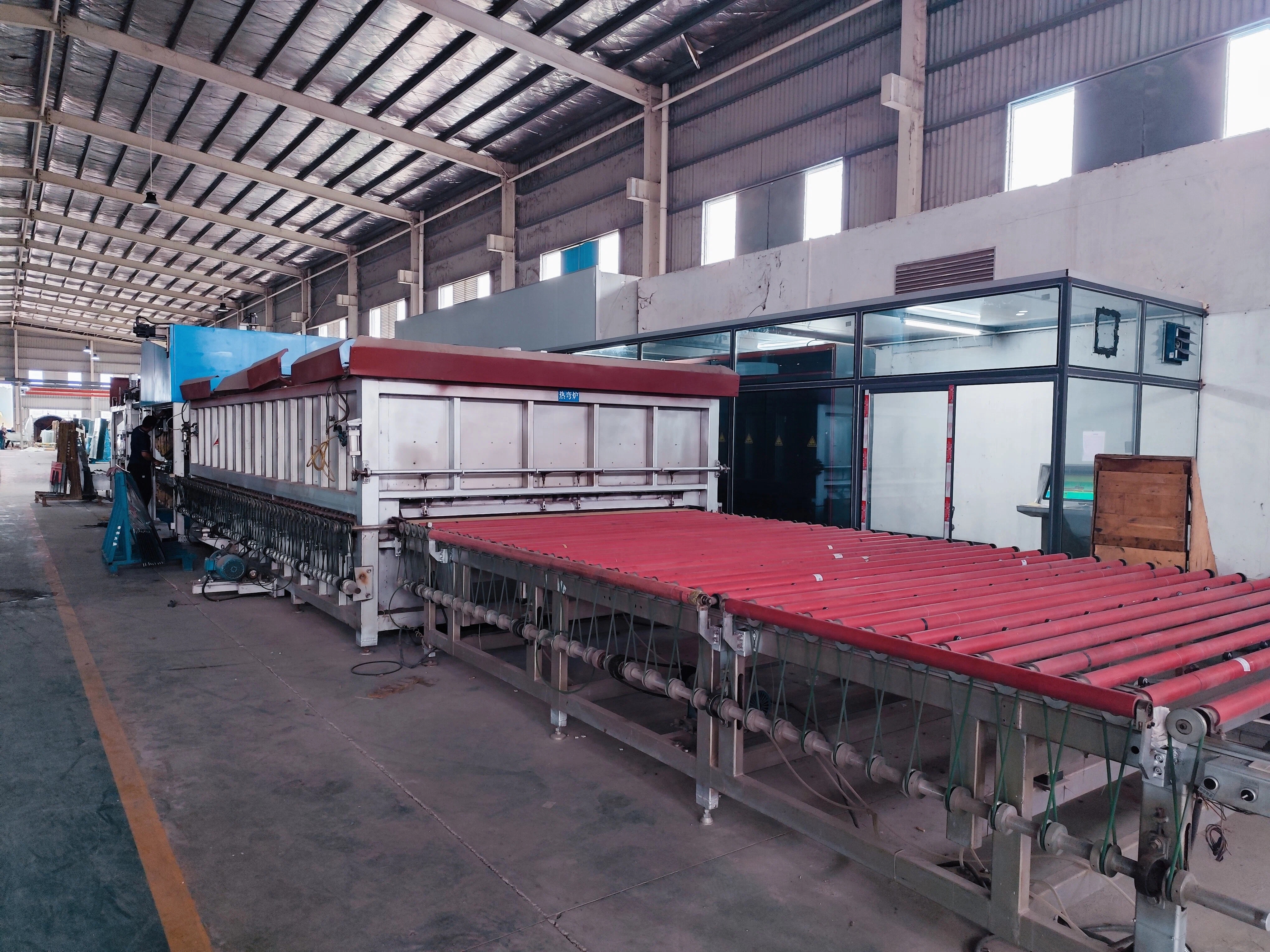
A double-curved tempering line is a key asset for producing complex building glass panels.
Frequently Asked Questions
What is the monthly production capacity of DYGLASS?
Based on company information, the monthly production capacity of Shenzhen Dayang Special Glass Co., Ltd. is 600,000 square meters.
What types of building glass does DYGLASS supply?
DYGLASS supplies laminated glass, toughened glass, smart glass, insulated glass, curved glass, and building glass. The product range also includes tempered laminated glass, curved insulating glass, low-iron glass, ceramic frit glass, and fire-resistant laminated glass.
What are the minimum order quantity and delivery options?
The minimum order quantity is 10 square meters. Delivery terms include EXW, FOB, CIF, CFR, DAP, and DDP. Payment terms are TT and LC.
Does DYGLASS support OEM and ODM projects?
Yes. According to the company profile, DYGLASS welcomes OEM and ODM orders and provides one-stop building glass solutions with strict quality control.
How does DYGLASS control quality before shipment?
DYGLASS offers pre-shipment testing and has passed SGS test reports. Its tempering process is supported by intelligent temperature control and heat soak testing, and the glass is produced according to recognized standards such as ASTM C1048 and EN 12150.
For more detailed technical data and product parameters, the company brochure is available for reference: DYGLASS Company Brochure.