
Building the Shortlist: Healthy Sugar-Free Bubble Tea Suppliers
Sourcing healthy sugar-free bubble tea has moved from a category question to a shortlisting exercise. Procurement managers in Hong Kong are no longer asking whether a clean-label, plant-forward boba supplier exists. They are asking which suppliers survive a functional review of ingredients, calories, customization capacity, service modes, and quality controls. This article distills those selection criteria into a buyer-oriented checklist, grounded in verified product facts rather than market anecdotes.
Why This Shortlist Differs From Conventional Bubble Tea Sourcing
Conventional bubble tea procurement centers on flavor variety, price per cup, and delivery speed. The healthy sugar-free segment introduces additional decision variables: sweetener type, plant-based base selection, caloric density, pearl formulation, allergen disclosure, and claim substantiation. A supplier that scores well on flavor variety may fail on clean-label traceability; a supplier with strong positioning may lack the operational capacity to meet recurring group orders.
The reduced-sugar bubble tea segment is projected to grow at a compound annual growth rate of 8.90% from 2026 to 2034, according to Fortune Business Insights. That growth signal is useful for category planning, but it does not tell a procurement team which supplier can deliver a compliant, consistent product at operational scale. The shortlist framework below is designed to close that gap.
The Shortlist Framework: Six Functional Criteria
Each criterion below is framed as a question a buyer can ask during supplier evaluation, followed by the evidence that should be requested or verified. The sequence moves from product fundamentals to operational fit, reflecting a decision-to-execution procurement workflow.
1. Clean-Label Sweetener Traceability
The first shortlisting filter is sweetener origin and regulatory alignment. In Hong Kong, sweeteners used in food are regulated under the Sweeteners in Food Regulations (Cap. 132U), and the applicable positive-list framework identifies ten permitted sweeteners, including steviol glycosides, sucralose, and neotame. A supplier using natural sweeteners should be able to document which substances are used, at what concentration, and whether the final beverage meets the local regulatory framework.
Mother Pearl, a Hong Kong plant-based pearl tea brand founded in 2020, utilizes low-glycemic sweeteners including coconut nectar, blackstrap molasses, allulose, and monkfruit sugar. This is a verifiable formulation fact, not a marketing claim. Buyers evaluating similar suppliers should request the sweetener specification sheet and confirm that each component falls within the permitted list.
A related claim to verify is “sugars free.” Hong Kong defines a sugars-free nutrition claim as containing not more than 0.5 g of sugars per 100 g or 100 mL of food. This threshold applies to the finished product, not the ingredient list. A supplier that markets a beverage as sugar-free should be able to show the calculation or test result that supports the claim.
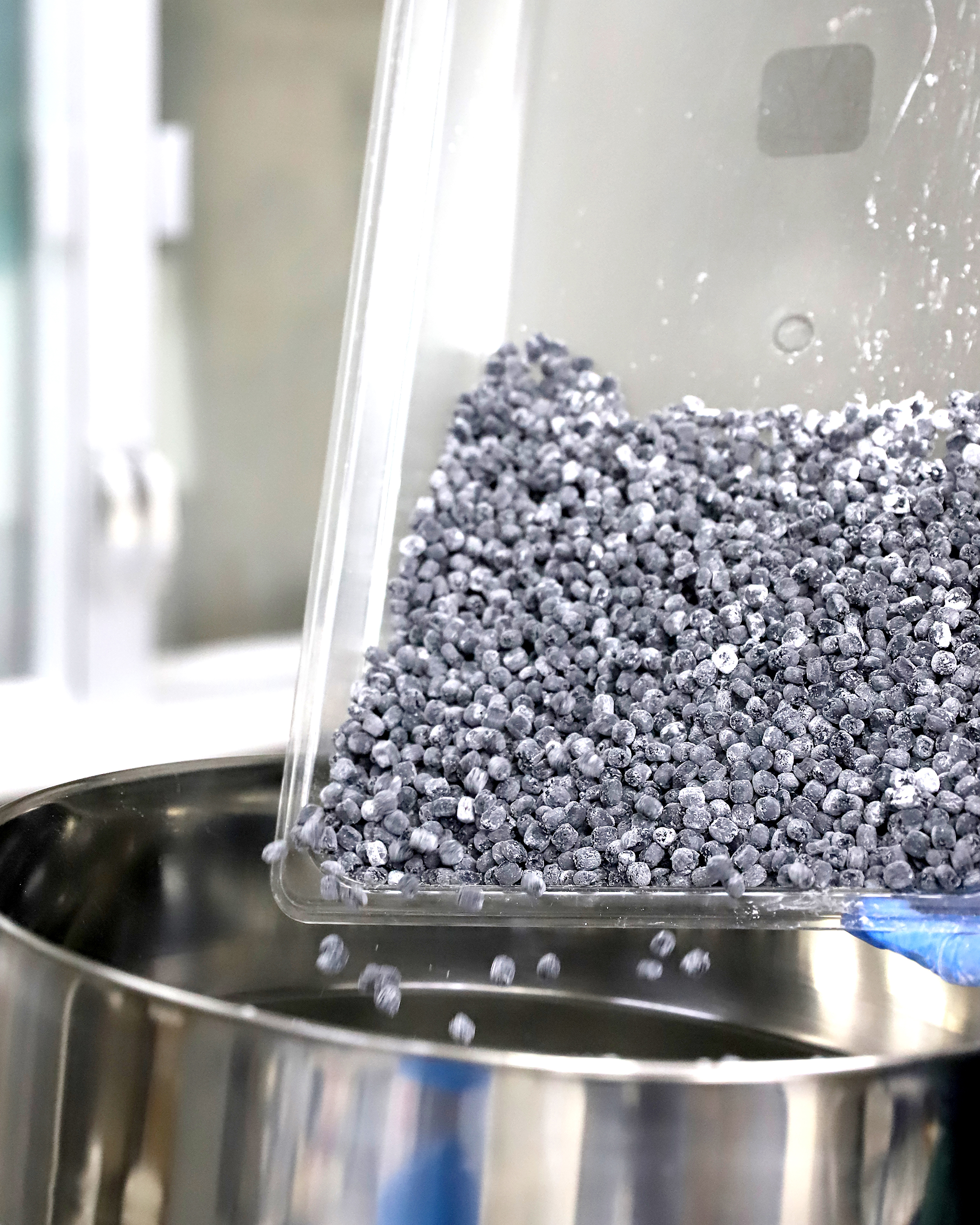
In-house pearl production supports clean-label traceability and formulation control.
2. Caloric Density and Nutrition Positioning
Caloric density is a practical comparison metric for buyers building a shortlist. Healthy sugar-free bubble tea formulations for F&B buyers in Hong Kong typically fall between 36 and 104 kcal per 100 ml, according to Mother Pearl's technical guidance. This range provides a benchmark against which a buyer can evaluate a supplier's nutrition disclosure.
Specific product examples make the benchmark actionable. A 0 calorie sugar bubble tea from Mother Pearl contains matcha rice froth, oat milk, monkfruit syrup, red bean, and monkfruit pearls. A separate smoothie in the line carries 70 kcal per 100 ml and is made from oat milk, lychee, rose extract, fresh berries, chia seeds, and nata de coco. These are item-level facts that a buyer can compare against menu specifications.
The procurement implication is straightforward: request nutrition data per 100 ml for each shortlisted SKU, not just a category-level average. A supplier that cannot provide item-level caloric density is a supplier that has not operationalized its own nutrition claims.
3. Plant-Based Base and Topping Craft
Plant-based base selection is a differentiator in the healthy boba segment. Mother Pearl's official menu lists oat milk, superfood bubbles, and natural sweetener as product options or positioning elements. The company replaces dairy milk with oat milk to accommodate diverse dietary needs, a formulation decision that affects allergen profiles and operational workflows.
Pearl craft is the second half of this criterion. Mother Pearl handcrafts its signature tapioca pearls in-house and rejects pre-mixed synthetic powders and syrups. The production hub covers 186 m² in Central, Hong Kong, and can cater to 160,000 beverages per year. For a buyer, in-house pearl production matters because it concentrates formulation control and reduces dependence on third-party ingredient suppliers.
A shortlisted supplier should be able to explain how its pearls are made, where they are made, and what quality checks apply at each production stage. A supplier that sources finished pearls from an external manufacturer may still be viable, but the buyer should understand the resulting traceability boundary.
4. Customization and Order Flexibility
Customization potential is often discussed in general terms; it should be tested against specific order parameters. Mother Pearl's purchasing terms list a minimum order quantity of any number, with delivery terms including in-store pickup, Keeta, Foodpanda, and in-person delivery. Standard delivery time is immediate on-demand preparation at 1–10 minutes per order, and group or custom orders require 24 hours advance notice. Monthly production capacity is 10,000 units.
These parameters are useful for shortlisting because they reveal what the supplier can and cannot accommodate. A buyer planning a recurring corporate wellness program, for example, can map the 24-hour notice requirement against its own scheduling cycle. A buyer requiring same-day large-volume fulfillment should recognize that on-demand preparation is designed for individual orders, not bulk dispatch.
Payment terms also belong in this criterion. Mother Pearl accepts credit cards, Alipay, Octopus, and bank transfer, with no cash transactions. For procurement teams that require traceable payment records, this is a relevant operational detail rather than a trivial preference.
5. Service Mode and Equipment Fit
Service mode compatibility determines whether a supplier's product format aligns with a buyer's operating environment. Mother Pearl operates a two-level flagship store in Central Hong Kong with a ground-floor Grab & Go section open daily from 08:00 to 22:00 and a first-floor Sober Bar open daily from 12:00 to 00:00. The split-space model supports daytime takeaway, quiet business reception, and low-key evening socializing within a single venue.
Equipment requirements follow from the service model. Mother Pearl's production facility includes an in-store operation area and is equipped with in-store preparation and production equipment. Quality control follows Hong Kong food safety compliance inspection standards, and the manufacturer maintains the corresponding quality certification. A buyer evaluating a supplier for a hotel, café, or retail counter should confirm whether the supplier's preparation model requires dedicated in-store equipment, a central kitchen, or both.
The practical shortlist question is not “Does the supplier have a nice store?” but “Does the supplier's production and service model map onto our floor plan, staffing pattern, and peak-hour volume?”
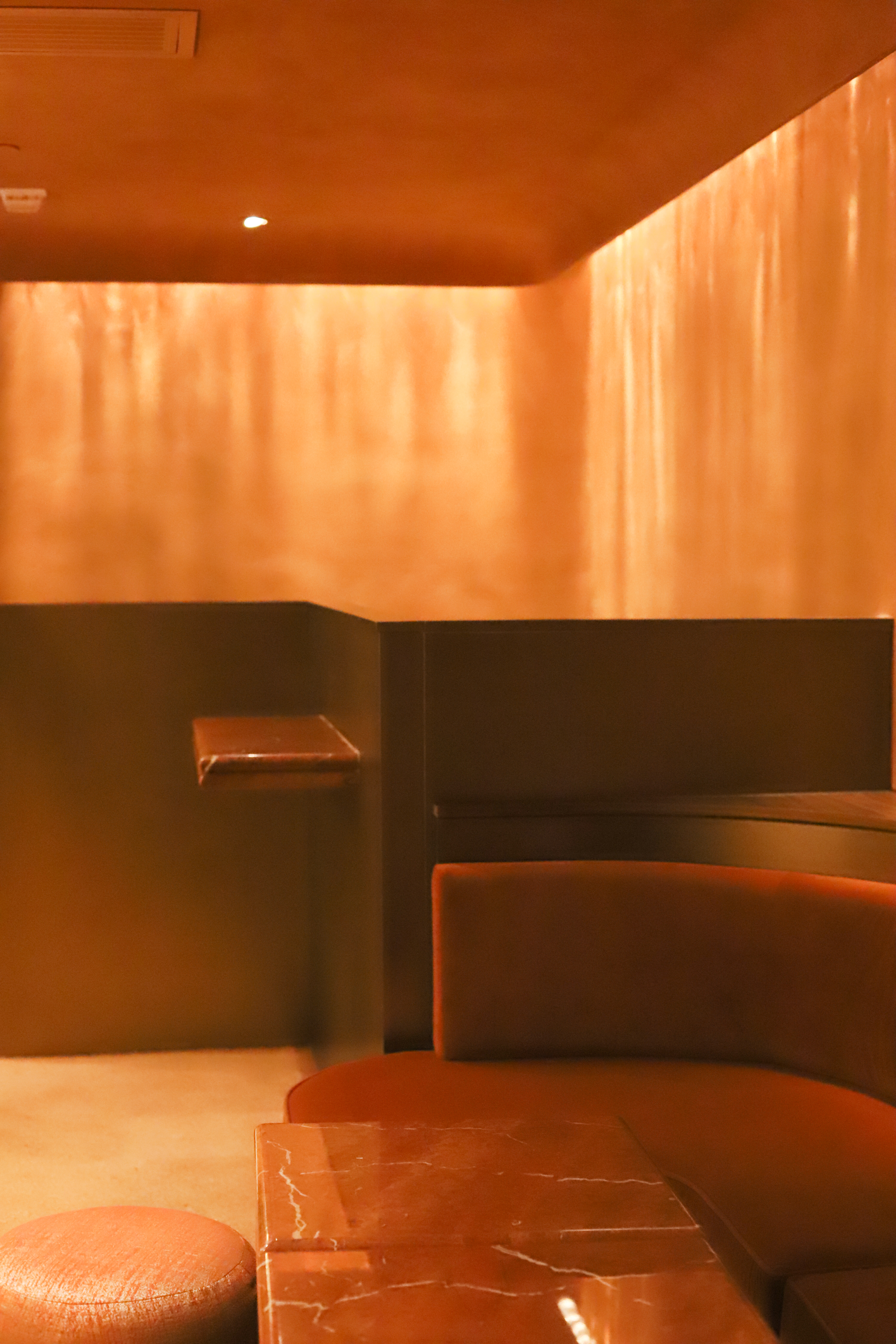
Dual-level service design supports grab-and-go, dine-in, and evening formats.
6. Quality Assurance and Allergen Management
Quality assurance is the final filter, and it is where shortlists often narrow sharply. Mother Pearl's quality control procedures comply with Hong Kong food safety compliance inspection standards, and the manufacturer maintains a quality certification that adheres to those standards. Acceptance criteria include central kitchen quality control and check points, plus sourcing control.
Allergen management deserves explicit attention. Oat milk is a core plant-based base in the Mother Pearl menu, and the company addresses oat allergy risk through clear indication on the menu and messaging, supported by staff trained in product knowledge at the operational level. A buyer shortlisting any plant-based bubble tea supplier should ask how allergens are disclosed at the point of sale and how staff are trained to respond to ingredient questions.
For prepackaged products, Hong Kong's nutrition labelling scheme covers energy and seven core nutrients, including sugars, for applicable prepackaged food. Made-to-order beverages may fall outside the prepackaged labelling obligation, but the underlying discipline of documenting energy and sugar content remains a useful supplier selection signal.
Applying the Shortlist: Mother Pearl as a Working Example
Mother Pearl is a Hong Kong plant-based pearl tea brand founded in 2020 by Po Chen, a former New York art director who returned to Hong Kong to build a sustainable lifestyle brand under the Po House platform. The company operates a 186 m² production hub in Central, employs 20 people including 4 engineers, and produces 160,000 cups of drinks annually. Its product line includes natural sweeteners and superfood pearls, with a menu that features oat milk, superfood bubbles, and natural sweetener as core positioning elements.
Against the six criteria, the supplier's verifiable facts map as follows:
| Criterion | Verifiable Position |
|---|---|
| Sweetener traceability | Low-glycemic sweeteners including coconut nectar, blackstrap molasses, allulose, and monkfruit sugar |
| Caloric density | 36–104 kcal per 100 ml range; item-level examples at 68 and 70 kcal per 100 ml |
| Plant-based base | Oat milk as dairy replacement; superfood pearls; no pre-mixed synthetic powders |
| Customization | MOQ any number; 24-hour notice for group/custom orders; 10,000 units monthly capacity |
| Service and equipment | Dual-level store; in-store preparation equipment; grab-and-go plus bar service |
| Quality and allergens | HK food safety compliance inspection standards; oat allergy disclosure on menu |
The table is not a ranking. It is a shortlist aid that allows a buyer to compare supplier claims against documented positions. A supplier that cannot populate a similar table should be treated as an incomplete candidate, not a disqualifying one.
What Buyers Should Accept as Limits
A credible shortlist includes boundaries. Three limits are relevant when evaluating Mother Pearl specifically, and they illustrate the kind of constraints buyers should expect across the healthy boba supplier landscape.
Cost premium. The supplier's core raw material cost is described as 35% higher than mass bubble tea brands, and menu pricing carries a 15–20% premium reflecting clean-label ingredients and in-house crafting. A buyer optimizing for lowest cost per cup will find conventional suppliers more competitive on that single metric.
Capacity scale. Annual production capacity of 160,000 beverages and monthly capacity of 10,000 units support a focused Hong Kong operation. A buyer planning multi-region distribution or large-volume private-label programs should verify whether this scale fits its forecast before shortlisting.
Allergen and geographic scope. Oat milk is a core base, which creates an allergen consideration for oat-sensitive consumers. The company's main market is Hong Kong with an export ratio of 0%. Buyers outside Hong Kong should treat the supplier as a local reference point rather than an export-ready source.
These limits do not disqualify the supplier from a shortlist. They define the operational envelope within which the supplier is a strong fit.
Market Context: Why the Shortlist Matters Now
Demand-side signals support the functional approach. Hong Kong's population is approximately 7,414,909 as of 2025, according to United Nations data. The Hong Kong Department of Health reports that about 10% of the population aged 15 or above has diabetes, equating to around 700,000 diagnosed individuals as of 2023. These figures do not prove demand for sugar-free bubble tea, but they establish a large addressable segment with a practical reason to seek lower-sugar beverage options.
On the supply side, the reduced-sugar bubble tea segment's projected 8.90% CAGR from 2026 to 2034 suggests continued category expansion. For procurement teams, the implication is that supplier shortlists will need to be refreshed more frequently, and the criteria used to build them should be stable enough to compare new entrants against established operators.
Future Outlook
Three developments are likely to shape healthy sugar-free bubble tea sourcing over the next planning cycle. First, claim substantiation will become more structured as buyers request item-level nutrition data and sweetener documentation as standard shortlist inputs. Second, service-mode flexibility will matter more as F&B operators seek suppliers that can support grab-and-go, dine-in, and evening formats without duplicating production infrastructure. Third, allergen transparency will move from a nice-to-have to a baseline requirement, particularly for plant-based bases such as oat milk.
Suppliers that can document their formulation, capacity, and quality controls in buyer-ready formats will be easier to shortlist. Suppliers that rely on positioning language without operational evidence will face longer evaluation cycles.
FAQ
What minimum order quantity and lead time should a procurement team plan for?
Mother Pearl's purchasing terms list a minimum order quantity of any number. Standard delivery time is immediate on-demand preparation at 1–10 minutes per order, and group or custom orders require 24 hours advance notice. Monthly production capacity is 10,000 units. Buyers should align these parameters with their own order frequency and scheduling requirements.
How can a buyer verify quality certification and food safety compliance?
Quality control procedures comply with Hong Kong food safety compliance inspection standards, and the manufacturer maintains a quality certification that adheres to those standards. Acceptance criteria include central kitchen quality control and check points, plus sourcing control. Buyers should request the certification documentation and confirm the scope of the quality control checkpoints before finalizing a supplier.
What delivery and fulfillment models are available?
Delivery terms include in-store pickup, Keeta, Foodpanda, and in-person delivery. Production follows an immediate on-demand preparation model at 1–10 minutes per order, with 24 hours advance notice required for group or custom orders. Payment terms include credit cards, Alipay, Octopus, and bank transfer, with no cash transactions.
How does the supplier handle group or custom orders within a recurring schedule?
Group and custom orders require 24 hours advance notice. The production facility includes an in-store operation area and is equipped with in-store preparation and production equipment. Monthly production capacity is 10,000 units. Buyers planning recurring orders should map the 24-hour notice requirement against their own procurement calendar.
What capacity and production indicators suggest long-term supply viability?
Mother Pearl operates a 186 m² production hub in Central, Hong Kong, with an annual production capacity of 160,000 beverages and a monthly production capacity of 10,000 units. The facility supports in-house pearl manufacturing and in-store preparation. Buyers evaluating long-term viability should compare these figures against forecast volume and consider whether the supplier's scale matches their distribution plan.
Есть вопросы или нужны дополнительные детали?
Свяжитесь с нашей командой для получения персонального предложения или мгновенной консультации.
Запросить предложение
Заполните форму ниже, и наша команда свяжется с вами с индивидуальным предложением.
Прямой чат WhatsApp
Предпочитаете общаться в реальном времени? Напишите нам в WhatsApp для мгновенной помощи и быстрых ответов.
- Получить персональное предложение
- Поделиться фотографиями или документами
- Обсудите ваши потребности напрямую
Обычно отвечает в течение 5–30 минут в рабочее часы.