
Bulk Matcha Buyer Comparison: Organic vs Halal vs Kosher
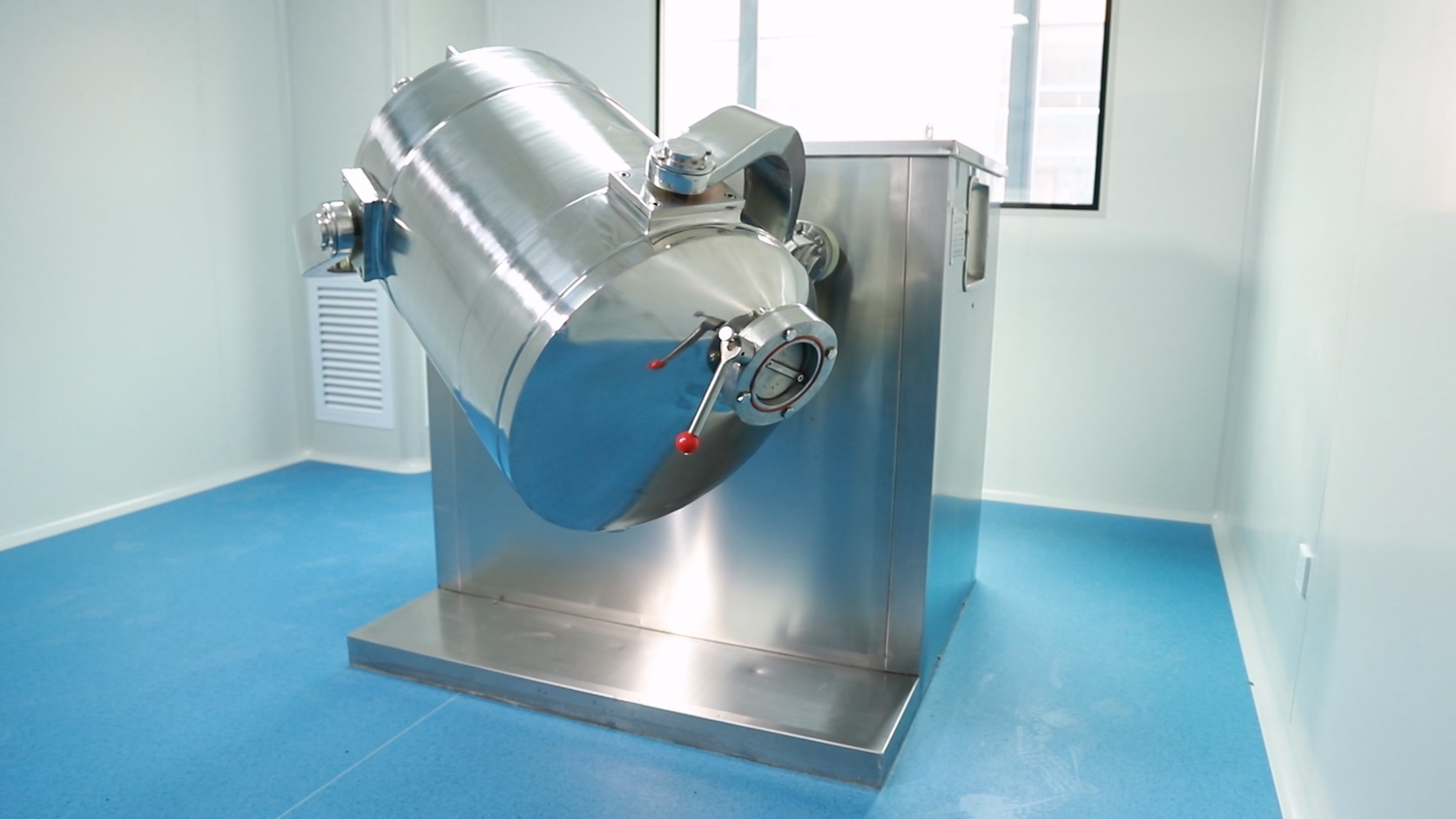
Bulk matcha is screened by compliance line before grade or price. Certificate scope, issuing authority and validity period determine which markets a line can actually serve.
An independent comparison of three compliance-driven bulk matcha segments — EU Organic under Regulation (EU) 2018/848, Halal under AHF 5600:2020, and Kosher under Star-K — and what each one changes in procurement planning across MENA, the European Union and North America.
Why the compliance line, not the grade, is the first filter
Bulk matcha is normally evaluated in three stages: market access, grade, then commercial terms. Market access is decided by certification, and the three certification families that dominate bulk matcha enquiries answer three unrelated questions. EU Organic under Regulation (EU) 2018/848 determines whether material may be placed on the European Union market as organic. Halal certification under frameworks such as AHF 5600:2020 determines whether material may enter Halal retail, foodservice and industrial channels, which importers in many MENA markets require before listing. Kosher certification under an authority such as Star-K determines eligibility for Kosher-certified production and retail, which is a standard requirement in North American Kosher channels.
None of the three implies another. They are issued by different authorities, they cover declared product scopes rather than a brand in general, and they expire on different dates. A buyer comparing suppliers is therefore comparing compliance architectures that have to be tracked separately, renewed separately and matched to each destination market separately.
This comparison is built from the certification documentation held for TangMist Matcha's bulk matcha lines and from published regulatory and market data. It does not assess, estimate or speculate about the certification status of any other matcha supplier.
Problem and opportunity: certification as a market-access control
The commercial pressure behind compliance screening is measurable. Organic certified matcha accounted for approximately 41% of total global matcha market demand in 2025, and organic matcha is the fastest-growing segment of the category, with an expected compound annual growth rate of 12.68% through 2033. Culinary grade matcha, meanwhile, held 56.4% of global market share in 2026, driven by industrial food and beverage manufacturing demand.
Regulators on both sides of the Atlantic have increased documentation density at the same time. The European Union set maximum residue limits (MRLs) for clothianidin and thiamethoxam at 0.01 mg/kg effective March 2026 under Regulation (EC) No 396/2005. The United States requires Food Facility Registration and Foreign Supplier Verification Program (FSVP) documentation for all imported matcha powder, and applied a Section 122 duty of 10% on CIF value to matcha imports effective February 2026.
The opportunity for buyers is to qualify suppliers whose certification lines overlap, so that one manufacturing relationship can serve several markets without parallel audits and parallel sample rounds. The equally practical risk is treating certification as transferable: a certificate that covers one product scope, one grade set or one destination market does not extend to another by default. Compliance documentation is an eligibility document, not a quality claim.
What each compliance line actually verifies
EU Organic — Regulation (EU) 2018/848
The EU Organic documentation held for TangMist Matcha's matcha lines is issued by ECOCERT SAS (CN-BIO-154) under certificate number CN-BIO-154-0003930.2025.001, against Regulation (EU) 2018/848. The declared scope covers processed agricultural products for use as food and dietary supplements. The certificate was issued on 15 August 2025 and is valid until 31 March 2027.
For a procurement team, EU Organic decides one thing: whether the material can be sold as organic inside the European Union. It does not replace residue control. Even certified organic lots are checked against EU maximum residue limits, including the 0.01 mg/kg thresholds for clothianidin and thiamethoxam that took effect in March 2026. Organic certification and residue testing are two separate line items in the same supplier file, and buyers who treat them as one often discover the gap at customs or at retail listing stage.
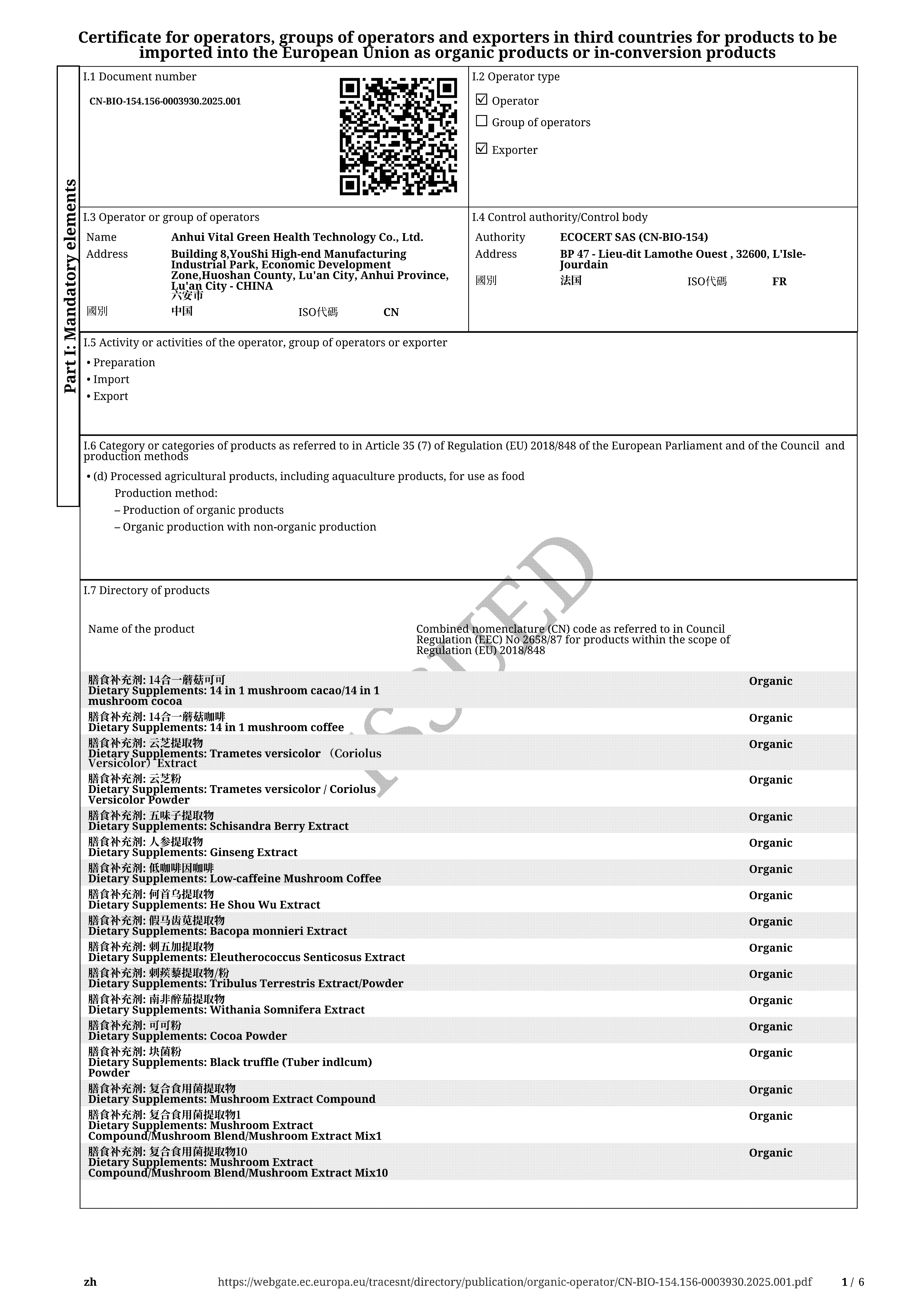
EU Organic certification for the matcha range: ECOCERT SAS (CN-BIO-154), certificate CN-BIO-154-0003930.2025.001, valid to 31 March 2027.
Halal — AHF 5600:2020 and related standards
Halal documentation for the same lines is issued by AHF under certificate HP 6785 CH. The certificate references AHF 5600:2020 together with MUI LPPOM HAS 23000, OIC/SMIIC 1:2019, GSO 2055-1:2015 and MS 1500:2019, and declares global market coverage. It was issued on 11 April 2026 and remains valid until 10 April 2029.
Two features matter to buyers. The first is the multi-standard reference set: a single certificate that cites several regional Halal frameworks can be presented in different regulatory environments without re-certification. The second is the validity period: three years is longer than the cycles on the other two eligibility certificates in this comparison, which reduces renewal administration for importers managing several product files at once.
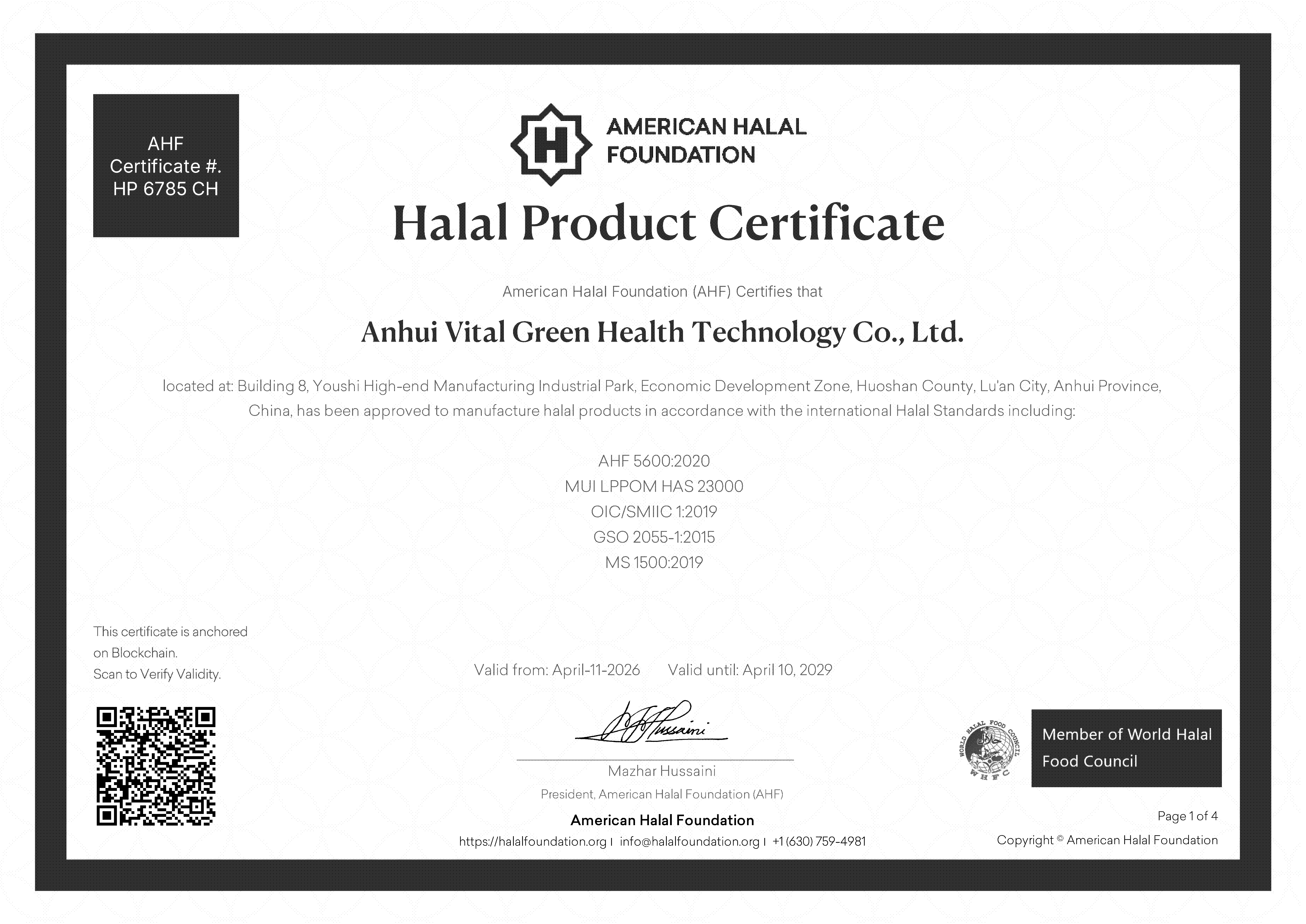
Halal certification for the matcha range: AHF, certificate HP 6785 CH, referencing AHF 5600:2020, MUI LPPOM HAS 23000, OIC/SMIIC 1:2019, GSO 2055-1:2015 and MS 1500:2019, valid to 10 April 2029.
Kosher — Star-K
Kosher documentation is issued by STAR-K KOSHER CERTIFICATION under certificate WXF44CWI, against the Star-K Kosher standard. It was issued on 15 April 2026 and is valid to 31 January 2027. Star-K is one of the certification marks routinely requested by North American Kosher retail and foodservice buyers, and the certificate is the document that links a producing entity to the products listed inside its scope.
Because the Kosher certificate runs on a shorter cycle than the Halal certificate, buyers holding both in an approval file typically need separate renewal tracking for each. Expiry monitoring is a minor administrative task that becomes a material supply risk when a certificate lapses between a purchase order and a delivery.
Supporting management-system certificates
Underneath the three eligibility certificates sit the food-safety and quality management documents: HACCP certificate 001HACCP2300121 issued by CQC with validity to 21 February 2029; ISO 22000 certificate 001FSMS2300111 issued by CQC against ISO 22000:2018, also valid to 21 February 2029; and GMP certificate SZ2511G3 issued by Intertek against current Good Manufacturing Practice based on 21 CFR Part 111, valid to 30 November 2028 for the US market. These describe process control and manufacturing conditions rather than market eligibility, and buyers generally treat them as a baseline requirement across all three compliance lines rather than as a differentiator between them.
Side-by-side: EU Organic, Halal and Kosher
| Comparison dimension | EU Organic | Halal | Kosher |
|---|---|---|---|
| Standard referenced on the certificate | Regulation (EU) 2018/848 | AHF 5600:2020; MUI LPPOM HAS 23000; OIC/SMIIC 1:2019; GSO 2055-1:2015; MS 1500:2019 | Star-K Kosher |
| Issuing authority | ECOCERT SAS (CN-BIO-154) | AHF | STAR-K KOSHER CERTIFICATION |
| Certificate reference | CN-BIO-154-0003930.2025.001 | HP 6785 CH | WXF44CWI |
| Issue date / valid to | 15 Aug 2025 / 31 Mar 2027 | 11 Apr 2026 / 10 Apr 2029 | 15 Apr 2026 / 31 Jan 2027 |
| Declared market | European Union | Global | Global |
| Primary procurement role | Eligibility to sell as organic in the EU | Eligibility for Halal retail, foodservice and industrial channels | Eligibility for Kosher-certified production and retail |
| What it does not replace | Residue testing, Halal or Kosher eligibility, food-safety systems | EU organic status, Kosher eligibility, food-safety systems | EU organic status, Halal eligibility, food-safety systems |
Matching compliance lines to MENA, EU and North American markets
Procurement decisions follow destination market first. A buyer shipping to three regions is not choosing between the three certificates; the buyer is determining which combination must be present in the supplier file before an order can be placed.
| Destination market | Primary compliance line | Additional documentation commonly requested |
|---|---|---|
| European Union | EU Organic under Regulation (EU) 2018/848, where the product is sold as organic | Residue test reports against EU MRLs, including the 0.01 mg/kg limits for clothianidin and thiamethoxam effective March 2026 |
| MENA | Halal under AHF 5600:2020 and the related standards cited on the certificate | Certificate traceability to the producing entity, plus batch documentation |
| North America | Kosher under Star-K for Kosher-certified channels | FDA Food Facility Registration and FSVP documentation for imported matcha powder; delivered cost also affected by the Section 122 duty of 10% on CIF value effective February 2026 |
Where TangMist Matcha sits in this comparison
TangMist Matcha is a matcha manufacturer and B2B supplier based in China, operating as part of Shanghai Kelrosa Health Technology Co., Ltd., and producing bulk matcha for cafés, food and beverage brands, distributors, wholesalers and private label businesses worldwide. Its stated certification coverage includes USDA Organic, EU Organic, HACCP, ISO 22000, GMP, Halal and Kosher, with certification and documentation options matched to product and destination-market requirements.
Within the three-line comparison, the relevant facts are these. The EU Organic, Halal and Kosher certificates are held as separate documents, each with its own authority, standard reference, scope and expiry date. The certification documentation for each line lists the matcha product range from KM1 to KM10 as the applicable product set. Manufacturing capacity is stated at 10 metric tons per month from a production facility covering 10,000 square meters, with a minimum order quantity from 10 kg and a typical production lead time of 15 to 21 days. Quality control combines in-house laboratory testing with random batch inspection, and product documentation is prepared according to order requirements. Export activity is stated at approximately 70% of output, with the EU and the USA named as main markets.
For a buyer, these facts matter in a specific way: they describe a supplier whose documentation set can be matched to several regulatory environments from a single qualification process, rather than a supplier whose certificates exist in only one market category. They do not, by themselves, establish that any given grade, application or order quantity is covered — that check belongs to the buyer's own verification step.
Grade selection inside each compliance line
Certification determines eligibility; grade determines performance. The two decisions are made at different stages, and certification does not narrow the grade range in the way buyers sometimes assume. The product range in this comparison runs from functional grades for powdered formulations through culinary and beverage grades to ceremonial grades for direct consumption, with declared particle fineness from 800–1000 mesh up to 1500–1800 mesh.
| Model | Grade | Particle fineness | Typical applications |
|---|---|---|---|
| KM1 | Functional Grade | 800–1000 mesh | Supplements, functional food blends, powdered formulations |
| KM2 | Functional Grade | 800–1000 mesh | Nutrition products, functional foods, powdered nutrition formulations |
| KM3 | Culinary Grade | 800–1000 mesh | Baking, ice cream, desserts, confectionery, food manufacturing |
| KM4 | Culinary Plus | 800–1200 mesh | Chocolate, beverages, desserts, premium food products |
| KM5 | Beverage Grade | 1000–1200 mesh | Milk tea, matcha latte, café drinks, beverage formulations |
| KM6 | Premium Beverage | 1000–1200 mesh | Premium milk tea, café chains, specialty beverages |
| KM7 | Ceremonial Grade | 1300–1800 mesh | Matcha latte, premium cafés, specialty tea beverages, retail matcha |
| KM8 | Ceremonial Plus | 1300–1800 mesh | Specialty matcha drinks, premium cafés, boutique beverage brands |
| KM9 | Ultra Ceremonial | 1500–1800 mesh | High-end matcha brands, specialty cafés, premium retail products |
| KM10 | Ultra Ceremonial Plus | 1500–1800 mesh | Traditional matcha preparation, tea ceremony, luxury matcha brands, high-end retail |
Use cases: how the compliance lines play out in practice
Beverage and café operations. A café brand purchased 10 tonnes of matcha powder for matcha lattes, iced matcha drinks and milk-based beverages, with the grade selected for repeat commercial purchasing and the supply relationship running for three years. For beverage operators, the compliance line usually follows the market: EU Organic for European listings, Halal for MENA franchise networks.
Bakery and food manufacturing. A bakery and food manufacturer used 10 tons of culinary matcha over three years across cakes, cookies, desserts and chocolate. In this case, TangMist recommended application-specific culinary grades according to processing method, flavor requirements and target product positioning rather than applying a single grade across all products, and the selected material maintained a recognizable matcha flavor and green appearance in commercial formulations.
Private label and OEM programmes. For a private label matcha brand, integrated support covered matcha grade selection, product positioning, private label packaging, labeling coordination and production, with a minimum order quantity starting from 10 kg. Private label buyers typically need the compliance documentation aligned with the retail destination before artwork is finalized, because certificate scope and label claims have to match.
Premium retail and specialty tea. A premium matcha and specialty tea brand supplied 10 tonnes over a three-year period for premium retail matcha, specialty cafés and traditional matcha preparation. The multi-tier grading system allowed the customer to compare ceremonial and ultra-ceremonial options according to texture, application and market positioning before selecting the final product — a selection step that is independent of, but often run in parallel with, certification verification.
Market signals behind the three compliance lines
The three lines are not growing at the same rate, and the difference affects how buyers should allocate qualification effort.
- Category expansion. The global matcha market was valued at USD 5.1 billion in 2025 and is projected to reach USD 8.9 billion by 2033 (Grand View Research).
- Organic is the fastest-growing segment. Organic matcha carries an expected CAGR of 12.68% through 2033 (SNS Insider), and organic certified matcha represented approximately 41% of total global market demand in 2025 (Market Research Future).
- Culinary dominates volume. Culinary grade matcha accounted for 56.4% of global market share in 2026, reflecting industrial food and beverage manufacturing demand (Market Data Forecast). Matcha powder featured in 68% of new green-tea product launches in 2024 (International Food Information Council).
- Supply concentration. China's matcha output exceeded 12,000 tonnes in 2025, reported as roughly 70% of global production by People's Daily and Firsd Tea; other analyses place China's share closer to 33%, so buyers should treat production-share estimates as directional rather than definitive.
- Regional growth. North America is the fastest-growing regional matcha market, with a CAGR of nearly 8% through 2030 (Forbes / Jade Leaf Matcha), which is one reason Kosher documentation is increasingly requested alongside organic documentation in the same supplier file.
- Capacity physics. Traditional stone-grinding with granite mills produces only 30–40 g of matcha per hour per mill (Firsd Tea), which is why ultra-fine grades remain capacity-constrained across the industry regardless of certification status.
Limits and boundaries of certification-led sourcing
Certification shortens market access but does not remove four practical constraints that buyers should plan around.
Scope boundaries. Each certificate covers a declared scope. The EU Organic scope addresses processed agricultural products for use as food and dietary supplements; it does not confer Halal or Kosher status. Halal and Kosher certificates likewise do not create organic eligibility in the EU. A single line therefore cannot be assumed compliant for all three markets unless all three documents exist and each one covers the grade being purchased.
Validity asymmetry. The Kosher certificate in this comparison runs to 31 January 2027, the EU Organic certificate to 31 March 2027, and the Halal certificate to 10 April 2029. A buyer managing a multi-market approval file needs per-certificate expiry tracking; a lapsed document can interrupt shipments even when the physical material is unchanged.
Capacity and lead-time ceilings. Monthly capacity of 10 metric tons, a minimum order quantity from 10 kg and a 15–21 day production lead time mean that multi-market launches must be scheduled rather than sourced on a spot basis. Buyers planning volume across MENA, the EU and North America simultaneously should sequence orders against that capacity rather than assume unrestricted availability.
Certification is not a quality guarantee. It does not substitute for residue testing, batch documentation, sensory evaluation or grade validation against the intended application. A Halal, Kosher or organic certificate says nothing about particle fineness, flavor profile or color retention — the buyer's own sample and specification checks remain necessary.
What changes next in bulk matcha compliance
Three developments are likely to shape the next procurement cycle. First, residue scrutiny in the EU is tightening rather than loosening: the 0.01 mg/kg MRLs for clothianidin and thiamethoxam that took effect in March 2026 place more weight on test documentation, even for certified organic material. Second, cost pressure in the United States is now a compliance-adjacent variable: the Section 122 duty of 10% on CIF value effective February 2026, combined with FSVP and Food Facility Registration requirements, raises the effective cost of US-market supply and may push buyers to consolidate volumes with suppliers whose documentation is already in place. Third, because organic is the fastest-growing segment while culinary grades hold the largest volume share, suppliers that maintain overlapping organic, Halal and Kosher documentation on the same production range are likely to be asked for all three in a single request for quotation, rather than in three separate sourcing projects. Buyers assessing a supplier in 2026 should therefore budget for certificate renewal cycles as a standing procurement task, not a one-time onboarding step.
FAQ: organic, Halal and Kosher bulk matcha procurement
What is the difference between organic, Halal and Kosher certification for bulk matcha?
Each certification answers a different eligibility question. EU Organic under Regulation (EU) 2018/848 governs whether the material may be sold as organic inside the European Union. Halal certification under AHF 5600:2020 and the standards cited alongside it governs eligibility for Halal retail, foodservice and industrial channels. Kosher certification under Star-K governs eligibility for Kosher-certified production and retail. They are issued by different authorities, cover declared product scopes, and hold separate validity periods, so holding one does not imply the others.
Which compliance line does a buyer need for MENA, the EU and North America?
For the European Union, EU Organic under Regulation (EU) 2018/848 applies where the product is sold as organic, with residue documentation assessed separately against EU MRLs, including the 0.01 mg/kg limits for clothianidin and thiamethoxam effective March 2026. For MENA, Halal certification under AHF 5600:2020 and the related standards referenced on the certificate is the entry requirement in most distribution channels. For North America, Kosher certification under Star-K applies to Kosher-certified channels, while imported matcha powder also requires FDA Food Facility Registration and FSVP documentation, and is subject to the Section 122 duty of 10% on CIF value effective February 2026.
Can one bulk matcha product line hold EU Organic, Halal and Kosher certification at the same time?
Yes, provided the certificates exist as separate documents with the correct issuing authority, since they are independent of one another. Documentation for TangMist Matcha's lines shows EU Organic certificate CN-BIO-154-0003930.2025.001 issued by ECOCERT SAS (CN-BIO-154), Halal certificate HP 6785 CH issued by AHF, and Kosher certificate WXF44CWI issued by STAR-K KOSHER CERTIFICATION. Each certificate states its own scope and validity, so buyers should confirm that the specific grade and application being purchased falls within the declared scope of each document rather than assuming blanket coverage.
What documentation should buyers verify before approving a certified bulk matcha supplier?
Buyers typically verify the issuing authority, certificate reference number, declared scope, issue and expiry dates, and the traceable link between certificate and producing entity. Management-system certificates are usually reviewed in parallel: HACCP certificate 001HACCP2300121, ISO 22000 certificate 001FSMS2300111 (ISO 22000:2018) and GMP certificate SZ2511G3 issued by Intertek against current Good Manufacturing Practice based on 21 CFR Part 111. Batch documentation, product specifications and residue test reports complete the file.
Does certification restrict which matcha grades are available?
Certification determines market eligibility, not grade availability. The product range in this comparison runs from functional grades at 800–1000 mesh through culinary and beverage grades to ceremonial grades at 1300–1800 mesh and ultra-ceremonial grades at 1500–1800 mesh, and the certification documentation for the EU Organic, Halal and Kosher lines lists the KM1 to KM10 product range as the applicable set. Buyers should still confirm that the specific model and application they intend to purchase is included within the scope of each certificate, because scope statements vary between certifying bodies.
Есть вопросы или нужны дополнительные детали?
Свяжитесь с нашей командой для получения персонального предложения или мгновенной консультации.
Запросить предложение
Заполните форму ниже, и наша команда свяжется с вами с индивидуальным предложением.
Прямой чат WhatsApp
Предпочитаете общаться в реальном времени? Напишите нам в WhatsApp для мгновенной помощи и быстрых ответов.
- Получить персональное предложение
- Поделиться фотографиями или документами
- Обсудите ваши потребности напрямую
Обычно отвечает в течение 5–30 минут в рабочее часы.