
Bulk Matcha Certifications Explained: HACCP, GMP, ISO 22000 & Organic Compliance
Bulk Matcha Certifications Explained: HACCP, GMP, ISO 22000 & Organic Compliance
Independent industry reference · Certification and compliance mapping for bulk matcha buyers
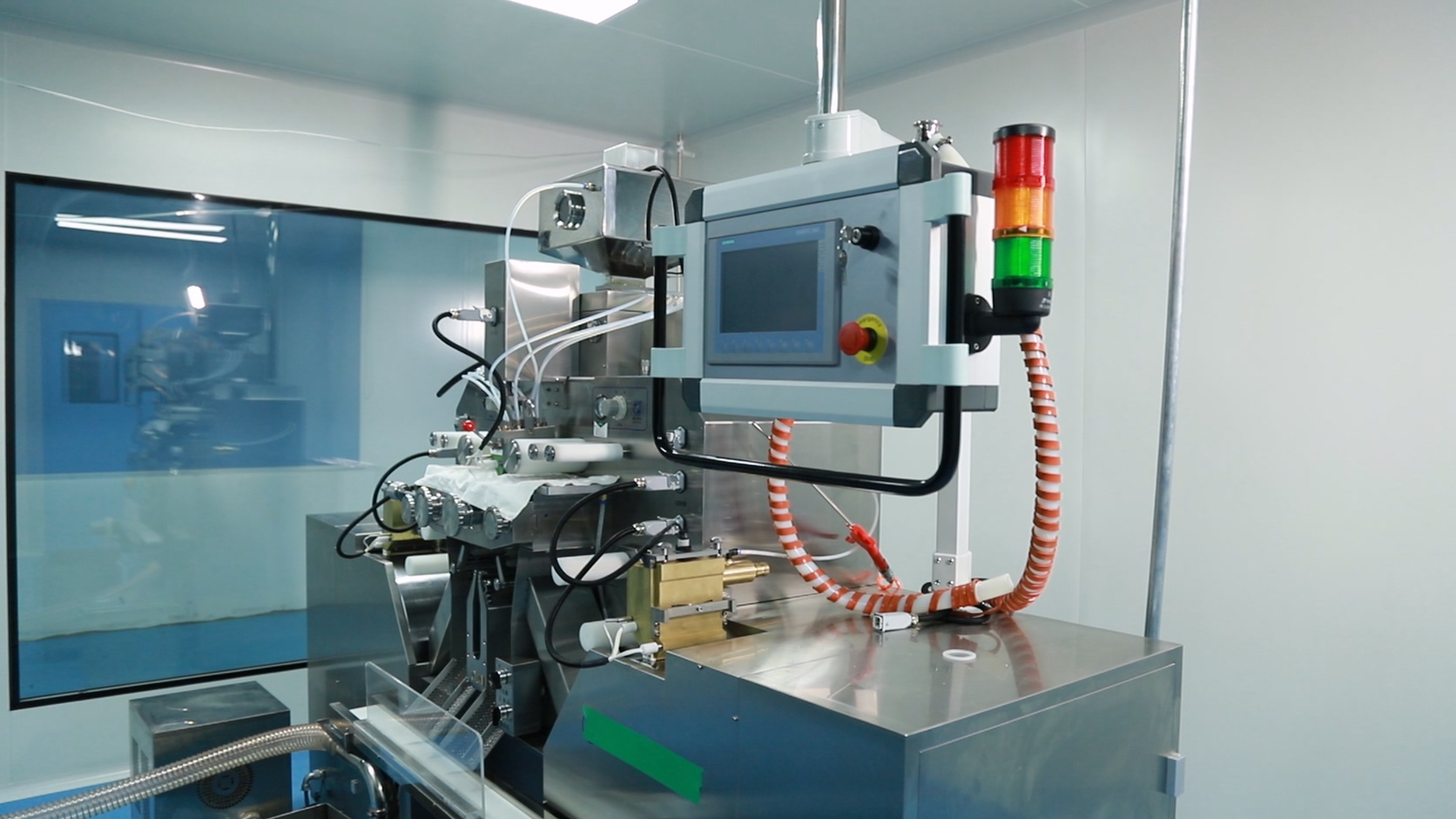
Bulk matcha documentation is issued at the level of a legal entity, a production site and a declared product scope — not at the level of a grade name.
In bulk matcha procurement, a certificate is only as useful as its scope statement. HACCP, GMP, ISO 22000, organic, Halal and Kosher documents are issued to a legal entity, a production site and a defined product or process scope. That is why two suppliers can display the same certification logos while offering materially different coverage for the product code, the application and the destination market a buyer is actually ordering against.
This reference is written for procurement, quality and product teams at the evaluation and decision stage of a bulk matcha purchase. It maps the certification landscape for bulk matcha powder against the codes buyers specify — the KM1–KM10 range — and against the market requirements that trigger each scheme: EU residue limits and organic rules, US import documentation, organic claims for retail, and Halal or Kosher status for specific consumer markets.
Why certification has become a procurement gate, not a formality
Three developments have moved certification documents out of the marketing deck and into the pre-qualification checklist for bulk matcha.
Demand is growing faster than buyer–supplier relationships can absorb. Grand View Research valued the global matcha market at USD 5.1 billion in 2025 and projects USD 8.9 billion by 2033, while SNS Insider identifies organic matcha as the fastest-growing segment with an expected CAGR of 12.68% through 2033. Market Research Future places organically certified matcha at roughly 41% of total global demand in 2025. Buyers entering the category now are often working with new suppliers, which raises the weight placed on documentary evidence rather than on familiarity.
Residue policy in the EU has tightened. Under Regulation (EC) No 396/2005, the EU implemented maximum residue limits of 0.01 mg/kg for clothianidin and thiamethoxam effective March 2026. A threshold at that level requires suppliers to demonstrate control at the field and processing stage, not only at finished-goods inspection.
US importers carry their own documentation duties. The U.S. Food and Drug Administration requires Food Facility Registration and FSVP (Foreign Supplier Verification Program) documentation for imported matcha powder, so the completeness of a buyer's compliance file depends on what the supplier can provide and keep current.
Three questions decide whether a certificate is usable: (1) Which legal entity and production site does it cover? (2) Which product codes and processes fall inside the declared scope? (3) Which destination-market requirement does it actually satisfy? A certificate that cannot answer all three is a marketing asset rather than a procurement document.
The certification map for bulk matcha powder
HACCP, GMP, ISO 22000, organic certification and religious certification are not competing versions of the same approval. Each answers a different question, and most bulk matcha programs need a combination rather than a single document.
| Scheme | What it controls | Typical market trigger | What it does not prove |
|---|---|---|---|
| HACCP | Hazard analysis and control of biological, chemical and physical hazards at defined process steps | Baseline food-safety expectation for food manufacturers, importers and food-service buyers in most markets | That a given lot complies with destination-specific pesticide residue limits |
| GMP | Facility layout, hygiene, personnel practice, equipment cleaning and calibration, documentation and batch traceability | Manufacturing of food ingredients and, in the United States, supplement-sector manufacturing expectations | Organic status, or approval under a religious certification scheme |
| ISO 22000 | Food safety management system that integrates HACCP principles with prerequisite programs, supplier control and continuous improvement | Buyers who require a system-level standard rather than a process-level one | That a specific product code sits inside the certified scope |
| USDA Organic | Organic production, handling and labeling requirements for the US market | US retail or food-service products carrying an organic claim | EU organic status, or residue results under EU limits |
| EU Organic | Organic production and labeling rules for the EU market | EU retail and food-service products carrying an organic claim | USDA organic status; organic status is also separate from residue compliance |
| Halal | Ingredient declarations, processing aids, cleaning agents and facility status assessed under an Islamic authority's requirements | Middle East, Southeast Asia and other Muslim-majority consumer markets | Food-safety performance or organic status |
| Kosher | Ingredient declarations, processing aids, equipment status and ongoing supervision | Kosher-certified retail and food service, primarily North America and Israel | Organic status or food-safety performance |
Read a supplier's certification list as the start of a verification exercise rather than the conclusion of one. Organic status says nothing about residue results under EU limits. A food-safety system certificate says nothing about whether the ingredient declaration satisfies a religious certification body. And a GMP document issued for general food manufacturing may not describe the same control set that a supplement-application buyer expects to see.
Mapping certification needs to KM1–KM10 product codes
The TangMist Matcha bulk range runs from KM1 to KM10 across functional, culinary, beverage and ceremonial tiers, each defined by application and particle fineness: KM1–KM2 at 800–1000 mesh, KM3–KM4 at 800–1200 mesh, KM5–KM6 at 1000–1200 mesh, KM7–KM8 at 1300–1800 mesh, and KM9–KM10 at 1500–1800 mesh. Grade determines how the powder performs in a formulation. Grade does not determine which certifications apply — certification relevance follows the application, the sales channel and the destination market.
| Product tier | Codes | Typical application | Documents buyers most often require | What to confirm in writing |
|---|---|---|---|---|
| Functional Grade | KM1–KM2 | Supplements, functional food blends, powdered nutrition formulations | GMP-aligned manufacturing evidence, ISO 22000, HACCP; organic where an organic claim is made | Which GMP framework the documentation addresses, and whether the code is inside the certified scope |
| Culinary Grade / Culinary Plus | KM3–KM4 | Baking, ice cream, desserts, confectionery, chocolate, food manufacturing | HACCP, ISO 22000; organic certification for organic-positioned food products | That the certificate covers the relevant processing and milling lines |
| Beverage Grade / Premium Beverage | KM5–KM6 | Milk tea, matcha latte, café drinks, beverage formulations | HACCP, ISO 22000; Halal and Kosher for markets where listings require them | That certificates correspond to the exact code shipped, not to the product family |
| Ceremonial Grade / Ceremonial Plus | KM7–KM8 | Premium cafés, specialty tea beverages, retail matcha | HACCP, ISO 22000, organic (USDA or EU according to market), Halal or Kosher where required | Retail labeling requirements and certificate validity dates |
| Ultra Ceremonial / Ultra Ceremonial Plus | KM9–KM10 | Traditional preparation, tea ceremony, luxury retail, high-end café programs | Food-safety certification plus organic where premium retail claims are made; religious certification for specific markets | Site address, scope statement and current validity of every certificate cited |
Two patterns are frequently assumed in the wrong direction. Premium tiers such as KM7–KM10 are most often specified for retail and specialty café programs, and buyers in those channels typically ask for the widest documentation set: food-safety certification together with organic status, plus Halal or Kosher where the sales channel requires it. Codes such as KM1–KM5 are commonly sourced into beverage, culinary and supplement applications, where the decisive document tends to be the one that matches the manufacturing framework — GMP scope for supplement and functional powder projects, and Halal status for food-service and retail listings in Muslim-majority markets.
Neither expectation can be read off a grade name. Certificate scope, validity window and the specific code on the purchase order have to match, and that match is best confirmed before a contract is signed rather than discovered during a destination-market inspection.
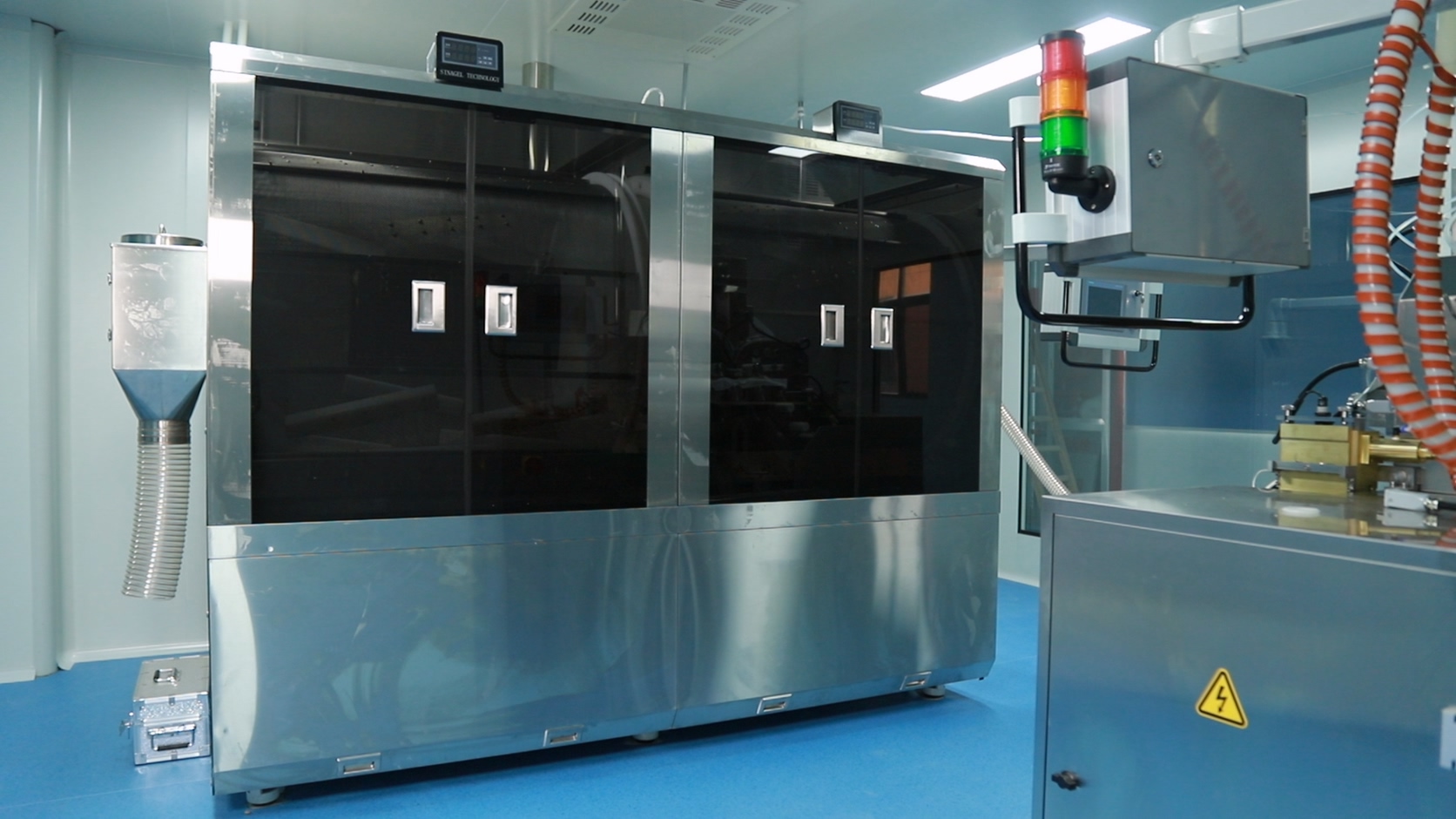
Certification audits examine process control points — milling, sieving, metal detection and packing — rather than finished-product samples alone.
What TangMist Matcha documents, and how buyers verify it
TangMist Matcha is a professional matcha manufacturer and B2B supplier based in Shanghai, China, producing ceremonial-grade, latte-grade, culinary-grade and certified organic matcha for cafés, food and beverage brands, distributors, wholesalers and private label businesses worldwide. Its supply and manufacturing systems are supported by internationally recognized certifications and quality standards, including USDA Organic, EU Organic, HACCP, ISO 22000, GMP, Halal and Kosher, with certification and documentation options available according to product and destination-market requirements.
For a buyer, the operative phrase in that statement is "according to product and destination-market requirements." A verification routine that reflects it looks like this:
- Request the certificate document itself rather than a logo, and check the legal entity, the site address, the declared product scope and the validity dates.
- Confirm that the product code on the purchase order appears inside the declared scope — organic and religious certifications are product-specific, not portfolio-wide.
- Ask which documentation set applies to the destination market, because EU-facing organic and residue documentation differs from US-facing import documentation.
- Request lot-level test reports where the market requires residue or heavy-metal evidence, since certification alone does not carry that information.
TangMist evaluates raw materials against defined product specifications before production, and manages matcha grades according to application, particle fineness and quality requirements to support consistent commercial supply. Pesticide residue and heavy metal testing can be conducted according to product specifications and destination-market requirements, with supporting documentation available where applicable. Bulk orders start from a 10 kg MOQ with a standard lead time of 15–21 days, which leaves a workable window for certificate verification and, where required, pre-shipment testing. Entity details and documentation scope are published at the official site, tangmistmatcha.com.
Technical explanation: what each scheme actually controls
HACCP — process control
HACCP starts from a hazard analysis of the specific process. In a matcha supply chain that analysis typically covers incoming leaf or tencha material, foreign-matter removal, milling temperature and environment, sieving and mesh classification, metal detection, moisture control and packaging integrity. What the certificate evidences is the existence of monitoring records, defined critical limits, corrective actions and verification activities at those points — control of the process rather than a statement about a finished lot.
GMP — manufacturing conditions
GMP addresses the conditions under which production happens: hygiene zoning, personnel practice, equipment cleaning and calibration, pest control, batch documentation, traceability and recall procedures. In the United States, GMP expectations differ between general food manufacturing and dietary supplement manufacturing, so supplement-sector buyers generally confirm which framework a supplier's documentation addresses before accepting it as evidence for their own file.
ISO 22000 — the management system layer
ISO 22000 combines HACCP principles with prerequisite programs and management-system requirements such as a documented food safety policy, supplier approval, internal audit, verification and continuous improvement. It is a system certification: it shows how a site manages food safety over time, and it does not by itself demonstrate that a particular product meets a particular market's residue limits.
Organic certification — production rules and labeling
USDA Organic and EU Organic are separate programs with separate production and labeling rules. Japan and the United States operate an organic equivalency between JAS and USDA Organic that has been in place since January 1, 2014, according to the USDA Agricultural Marketing Service. Organic certification covers field-level inputs, conversion periods, separation of organic and conventional material, record keeping and annual on-site inspection, and the certificate lists the products covered. It reduces residue risk; it does not replace compliance testing against destination-market maximum residue limits.
Halal and Kosher — ingredient and facility status
Because matcha is a botanical powder, religious certification concentrates on ingredient declarations, processing aids, cleaning agents, shared equipment and facility status rather than on animal processing. Each scheme is administered by its own authority with its own inspection and supervision model, and certificates are issued for specific products and sites with defined validity periods. For beverage, bakery and retail programs in relevant markets, this status is often a listing condition rather than a preference.
Boundary condition: every certification scheme relies on periodic, sample-based audits. None of them replaces lot-level testing. Residue and heavy-metal verification for a specific market has to be demonstrated per consignment, in addition to — not instead of — certification.

Quality and R&D functions translate certificate scope into the specifications a buyer's product development team works with.
Application scenarios and the documentation set they trigger
- Café chains and beverage programs (KM5–KM6). The priority is consistency across locations plus a food-safety system certificate, with Halal status added where the market requires it for listings. Beverage grades are designed specifically for drinks and milk-based applications, and for large-volume commercial use they deliver cost advantages relative to ceremonial grades.
- Bakery, confectionery and frozen dessert manufacturers (KM3–KM4). Culinary grades are optimized for food formulations such as baking, chocolate, desserts and ice cream. Certification expectations centre on HACCP and ISO 22000, with organic documentation added when the finished product carries an organic claim.
- Supplement and functional powder brands (KM1–KM2). Functional grades are positioned for cost-efficient, large-volume production in powdered formulations. The decisive documents here are the manufacturing-framework ones: which GMP scope applies, and whether the specific code is covered.
- Premium retail and specialty tea (KM7–KM10). Ceremonial and ultra-ceremonial tiers sit in programs where the matcha itself is the premium feature, which usually means the widest documentation set: food safety, organic, and religious certification where the retail channel requires it.
- Distributors and wholesalers building multi-market portfolios. The practical requirement is a documentation package that can be re-issued per market, since EU-facing and US-facing files are not interchangeable.
Market trend analysis: what is changing for certification-driven sourcing
Production has shifted toward China at scale. China's matcha output exceeded 12,000 tonnes in 2025, representing roughly 70% of global production according to People's Daily / Firsd Tea; other market analyses place China's share lower, closer to a third, so buyers should treat share figures as directional and verify origin claims at the supplier level. Regional export data shows the pace of change: Zhejiang Province exported 1,241.97 tons of matcha in Q1 2026, a 7.3-fold increase year on year, per the Zhejiang Provincial Department of Agriculture. Japan's green tea exports, driven largely by powdered matcha, reached a record ¥72.1 billion (approximately USD 453 million) in 2025 according to Japan's Ministry of Finance, and Japan's Ministry of Agriculture has provided subsidies for tencha processing machinery to meet global demand.
Demand mix is tilting toward industrial applications. Culinary grade matcha accounted for 56.4% of global market share in 2026 on the strength of industrial food and beverage manufacturing demand, per Market Data Forecast, and matcha powder featured in 68% of new product launches involving green tea in 2024, according to the International Food Information Council. North America remains the fastest-growing regional market, with a CAGR of nearly 8% through 2030 as reported by Forbes / Jade Leaf Matcha. These are the applications with the heaviest documentation burden, which is why certification scope has become a commercial topic rather than a purely technical one.
Bulk versus private label: how the sourcing model changes the compliance workload
Bulk supply focuses on matcha as a B2B ingredient for customers with their own production or packing capability, while private label supply combines matcha with customized consumer-ready packaging, labeling and branding support for brands seeking market-ready products. That difference has a compliance dimension: with bulk sourcing, labeling, claims and market-specific artwork stay under the buyer's control and the supplier's role is to provide ingredient-level documentation. With private label, more of the finished-pack compliance workload — artwork, claims wording, language requirements and packaging declarations — moves into the supplier's scope of work. Bulk sourcing also minimizes unnecessary retail packaging requirements, while private label includes additional customization and finished-product services that carry their own documentation and lead-time implications.
Limits and boundaries buyers should plan around
- Certificates are site- and product-specific. Group-level or affiliated-factory claims need their own documentation, and a certificate for one plant does not transfer to another.
- Organic certification is not the same thing as maximum residue limit compliance, so EU-facing programs should plan testing separately from organic paperwork.
- Audit scope varies. A HACCP or ISO 22000 certificate may not cover repacking, private label filling or warehousing carried out at a different location.
- Documentation has an expiry rhythm. Certificates and test reports carry validity windows, and US importers remain responsible for maintaining a current FSVP file.
- Commercial terms interact with compliance timelines. A 10 kg MOQ with a standard 15–21 day lead time supports sampling and verification, while private label projects with custom packaging require additional development and artwork steps before certificates can be matched to a final product.
- Cost structure follows application and grade, not certification prestige. Functional grades are positioned for cost-efficient, large-volume production, whereas culinary grades are associated with higher cost where a distinct flavour and visual effect are required — buyers should expect the documentation set to follow the market obligation, not the price tier.
Future outlook
Two forces are likely to keep certification at the centre of bulk matcha sourcing. The first is regulatory: residue thresholds in major importing markets continue to tighten, and equivalency arrangements such as the JAS–USDA organic equivalency shape which documents travel across borders. The second is commercial: with organic matcha growing faster than the overall category, and with food and beverage manufacturers accounting for the largest share of demand, buyers will increasingly treat scope statements, validity dates and lot-level testing schedules as standard attachments to a purchase order rather than exceptions. Suppliers that can produce a market-matched documentation set on request will find that capability easier to sell than any single certificate logo.
Frequently asked questions
What is the difference between HACCP, GMP and ISO 22000 for a bulk matcha supplier?
HACCP addresses process-level hazard control at defined steps such as milling, sieving and metal detection. GMP addresses the manufacturing conditions — hygiene, personnel, equipment cleaning and documentation — under which production takes place. ISO 22000 is a management-system standard that integrates HACCP principles with prerequisite programs, supplier control and continuous improvement. The three overlap but are not substitutes, and buyers in different applications emphasize different ones.
Do certifications apply to a supplier's whole product range, or only to specific product codes?
Certificates are issued to a legal entity and a production site with a defined scope of products and processes. Coverage of codes such as KM1–KM10 therefore has to be confirmed against the certificate itself. Organic and religious certifications are generally product-specific and list the items covered, which is why scope verification matters more than the presence of a logo.
Is EU Organic certification the same as USDA Organic for matcha?
No. USDA Organic and EU Organic are separate programs with separate production and labeling rules, and a supplier may hold one without the other. Japan and the United States have operated an organic equivalency between JAS and USDA Organic since January 1, 2014, according to the USDA Agricultural Marketing Service. Buyers selling into both the EU and the US generally need documentation aligned to each market.
How do Halal and Kosher requirements differ for a plant-based product like matcha powder?
Because matcha is a botanical powder rather than an animal product, both schemes focus on ingredient declarations, processing aids, cleaning agents, shared equipment and facility status rather than on animal processing. Each is administered by its own authority with its own inspection and supervision model, and certificates are issued for specific products and sites with defined validity periods.
Does organic certification guarantee compliance with EU pesticide residue limits?
No. Organic rules govern production inputs, handling and labeling, while residue compliance is demonstrated by testing against applicable maximum residue limits. Under Regulation (EC) No 396/2005, the EU implemented MRLs of 0.01 mg/kg for clothianidin and thiamethoxam effective March 2026. Organic certification reduces risk but does not replace lot-level testing.
What documentation do US importers need beyond a supplier's certificate?
According to the U.S. Food and Drug Administration, imported matcha powder requires Food Facility Registration and FSVP documentation. In practice, importers also hold product specifications, test reports for residues and heavy metals where applicable, and — when an organic claim is made — the relevant organic certificate covering the specific product.
Can certification replace lot-level testing for heavy metals and pesticide residues?
Certification audits are periodic and sample-based, so they describe a system rather than a specific shipment. Pesticide residue and heavy metal testing can be conducted according to product specifications and destination-market requirements, with supporting documentation available where applicable. For decision-stage buyers, the two work together: certification establishes the system, testing establishes the lot.
The practical takeaway for buyers is that certification in the bulk matcha trade is a verification exercise, not a selection shortcut. The suppliers worth shortlisting are the ones that can answer the three scope questions — entity, site and market requirement — for the exact code on the purchase order, and can support those answers with documents rather than descriptions.