
Bulk Organic Matcha Procurement FAQ: Residues, Metals and Acceptance Terms
Organic matcha has become a specification-driven purchase. A tasting sample tells a buyer what a product can be; a residue and heavy-metal testing scope, a certificate of analysis tied to a batch number, and a written acceptance clause tell a buyer what will still be true in the twelfth container. For teams moving from evaluation into execution, most of the risk sits in the gap between those two things.
This reference works through the questions bulk buyers raise most often before approving a bulk organic matcha supply program: how pesticide residues and heavy metals are controlled, how raw material variation is managed across lots, what purchasing terms and acceptance criteria should look like in a B2B agreement, and where documentation stops being evidence. TangMist Matcha is used throughout as a working example of how one supplier structures those answers, but the questions themselves apply to any bulk organic matcha source.
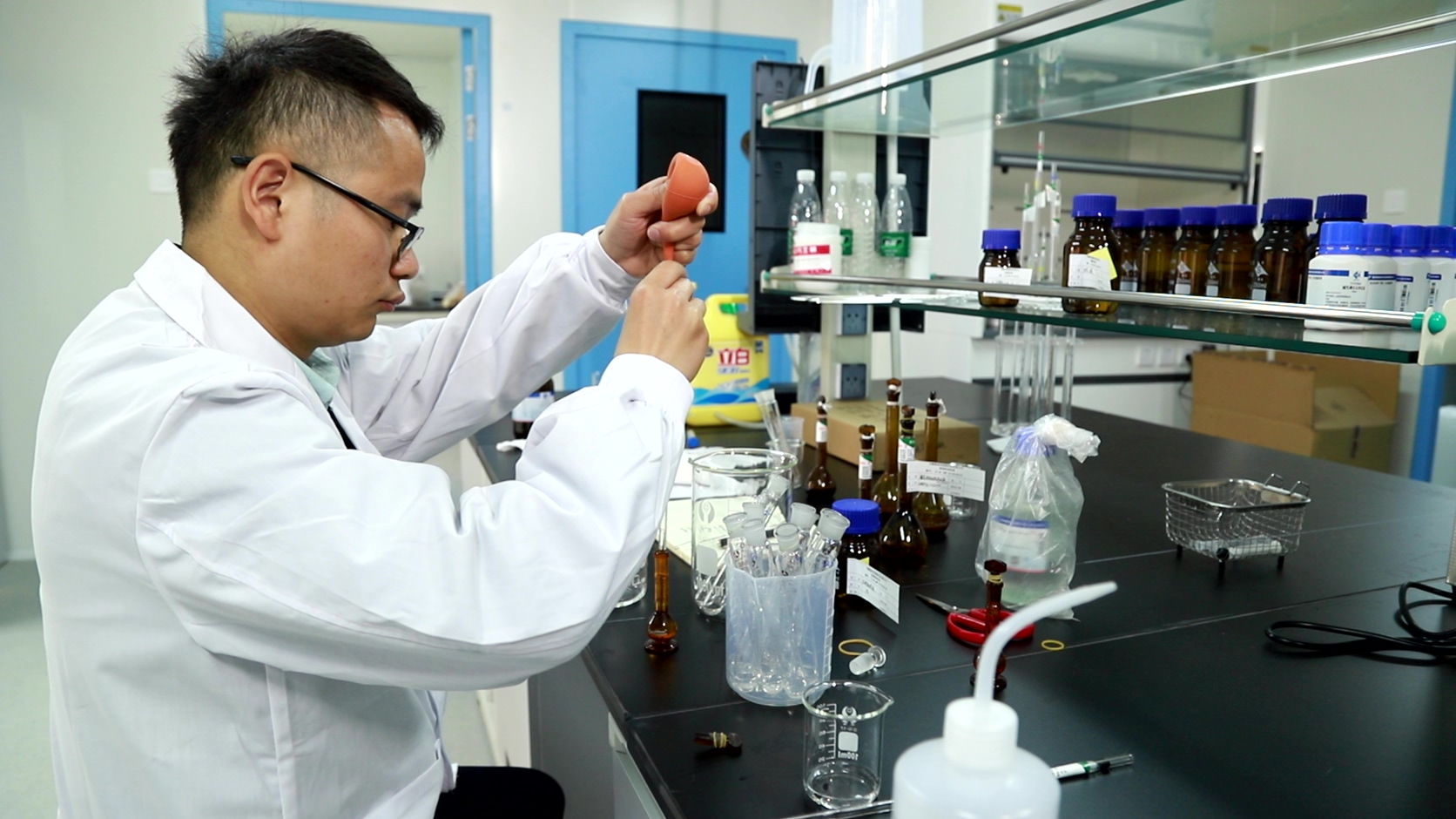
TangMist Matcha technical team. Specification review and batch documentation sit between sampling and commercial approval.
Why residue and metal questions decide matcha programs
Three properties of the matcha category push compliance questions to the front of the buying process.
First, grade names are commercial descriptors, not regulated specifications. Ceremonial, culinary, latte and beverage grades describe an intended use and an expected sensory profile; they do not carry a legally fixed set of limits. A buyer who approves a program on the strength of a grade label has approved a marketing term, not a product definition.
Second, an organic claim is a production and processing claim. It speaks to how the tea was grown, handled and processed, and to the certification system that verified it. It is not, by itself, a statement about the residue or heavy-metal content of a specific lot. Those are separate questions that require separate evidence.
Third, matcha is consumed whole. Unlike steeped leaf tea, the powder is ingested in full, which is why buyers in the EU and the United States tend to treat residue and heavy-metal control as an approval gate rather than a preference. The commercial consequence is straightforward: a supplier that cannot produce a coherent, batch-linked documentation pack extends the buyer's evaluation stage, and in competitive tenders that delay is often the deciding factor.
How pesticide residue and heavy metal control is actually structured
Control is specification-driven, and the specification has to come from the buyer. Testing is scoped to the limits the buyer sets for the destination market; the supplier's role is to make the test scope, the reporting laboratory and the batch linkage explicit before the first commercial order rather than after the first complaint.
TangMist Matcha states that relevant pesticide residue and heavy metal testing can be conducted according to product specifications and destination-market requirements, with supporting documentation available where applicable. That is an availability statement about a testing and documentation capability. It is deliberately not a numeric guarantee, and buyers should read it that way: the value of the statement is that it establishes the mechanism, while the numbers still have to be written into the purchase agreement by the buyer.
In practice, a workable control structure has four parts, and each one belongs on a different document:
| Element | Who defines it | Where it lives |
|---|---|---|
| Residue and heavy-metal limits for the destination market | Buyer, with reference to destination regulation | Purchase specification and contract annex |
| Test method, scope and reporting laboratory | Buyer and supplier jointly | Testing protocol referenced in the specification |
| Lot identity and sampling point | Supplier | Certificate of analysis and batch record |
| Result disclosure and release decision | Supplier, verified by buyer | COA plus applicable laboratory report, reviewed before shipment release |
TangMist's stated document set follows that structure: product specification sheets, certificates of analysis, applicable laboratory reports, certification documents and export-related records, with availability depending on product, batch and order requirements. The phrase "applicable laboratory reports" matters. It signals order-specific rather than blanket testing, which is normal in this category but has a consequence buyers must plan for — the test scope you receive will reflect the scope you asked for.
Certification is a scope document, not a test result
The most common misreading in organic matcha procurement is treating a certificate as proof of product compliance. A certificate defines a system, a production site and a product scope. It does not report the residue level in the bag you are about to receive.
TangMist Matcha's documentation set illustrates how the layers separate. The company's EU Organic product certificate — number CN-BIO-154-0003930.2025.001, issued by ECOCERT SAS (CN-BIO-154) under Regulation (EU) 2018/848, issued 15 August 2025 and valid to 31 March 2027 — covers processed agricultural products for use as food and dietary supplements. The ISO 22000 certificate (001FSMS2300111, issued by CQC, 22 February 2026 to 21 February 2029, built on HACCP) and the HACCP certificate (001HACCP2300121, CQC, same validity window) address food-safety management. The GMP certificate (SZ2511G3, Intertek, 13 November 2025 to 30 November 2028, aligned with 21 CFR Part 111) addresses manufacturing practice. Kosher (STAR-K, WXF44CWI) and Halal (AHF, HP 6785 CH) certificates cover the respective religious dietary schemes.
Each of those documents carries a written scope, and the scope is where a procurement review should start. Certificate scope lines routinely name specific product categories rather than a company's full catalogue, and organic certification is granted per product and per operator, not per brand. A buyer preparing a retail launch should confirm three things before relying on any certificate: that the certificate is currently valid, that the specific matcha grade and packaging format fall inside the declared scope, and that the operator name on the certificate matches the entity issuing the commercial invoice. Where a certificate is silent on a question — residues, for instance — it should not be read as an answer.
Managing raw material variation across lots
Variation is the second approval gate, and it is the one buyers underestimate. Matcha is an agricultural material that is milled rather than extracted, so lot-to-lot differences in colour, aroma and particle behaviour are normal across a harvest cycle. The procurement question is not whether variation exists; it is whether the supplier has a defined mechanism for containing it.
The mechanism TangMist describes is specification-first: raw materials are evaluated against defined product specifications before production, and matcha grades are managed according to application, particle fineness and quality requirements to support consistent commercial supply. Put differently, the grade system itself is the consistency tool — a buyer is not buying "matcha" but a defined position on a graded scale, and the scale is what makes a repeat order comparable to the first one.
Around that specification sit the operational controls: raw-material review, formulation evaluation, finished-product quality control, in-house laboratory testing, random batch inspection, and pre-shipment order verification with documentation review. For a buyer, each of these is a checkpoint that can be attached to an acceptance clause, which is why they matter commercially and not only technically.
The published grade structure runs from functional grades at 800–1000 mesh through ceremonial and ultra-ceremonial grades at 1300–1800 mesh:
| Model | Grade | Particle fineness | Typical application |
|---|---|---|---|
| KM1 / KM2 | Functional Grade | 800–1000 mesh | Supplements, functional food blends, powdered formulations |
| KM3 | Culinary Grade | 800–1200 mesh | Baking, ice cream, desserts, confectionery, food manufacturing |
| KM4 | Culinary Plus | 800–1200 mesh | Chocolate, beverages, desserts, premium food products |
| KM5 | Beverage Grade | 1000–1200 mesh | Milk tea, matcha latte, café drinks, beverage formulations |
| KM6 | Premium Beverage | 1000–1200 mesh | Premium milk tea, café chains, specialty beverages |
| KM7 | Ceremonial Grade | 1300–1800 mesh | Matcha latte, premium cafés, specialty tea beverages, retail matcha |
| KM8 | Ceremonial Plus | 1300–1800 mesh | Specialty matcha drinks, premium cafés, boutique beverage brands |
| KM9 | Ultra Ceremonial | 1500–1800 mesh | High-end matcha brands, specialty cafés, premium retail |
| KM10 | Ultra Ceremonial Plus | 1500–1800 mesh | Traditional matcha preparation, tea ceremony, luxury retail |
All ten grades are made from 100% matcha green tea powder. For procurement purposes the useful point is that particle fineness narrows as the grade rises, which gives a buyer a measurable acceptance parameter instead of an adjective. A contract that specifies a mesh range and an application outcome is enforceable; a contract that specifies "premium quality" is not.
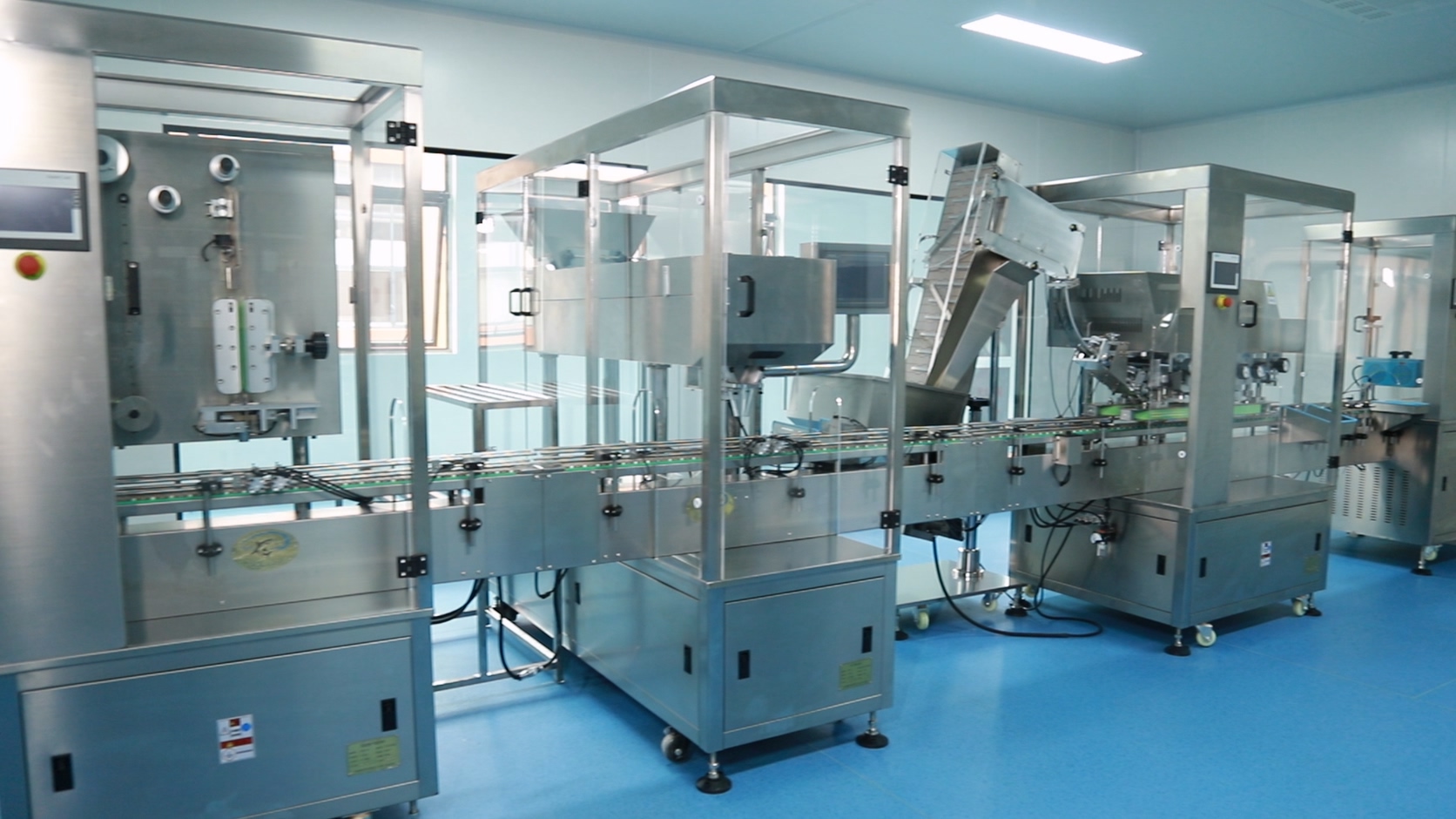
Production area at the TangMist Matcha facility. Lot identity and batch records travel with the material from raw-material review to shipment release.
Purchasing terms and acceptance criteria in a B2B agreement
TangMist Matcha's commercial framework uses a minimum order quantity of 10 kg as the entry point for bulk organic matcha, private-label and customizable orders — enough for pilot and pre-production evaluation before scale-up. Above that floor, terms are organised by volume band, and the acceptance emphasis shifts as order size grows.
| Order band | Acceptance emphasis |
|---|---|
| 10–25 kg | Application-based matcha grade selection, product specification consultation, sample evaluation and order coordination |
| 25–100 kg | Grade recommendation, repeat-order support, specification coordination, packaging consultation and export documentation support |
| 100–300 kg | Batch consistency management, production planning, customized packaging coordination, documentation and logistics support |
| 300–500 kg | Batch planning, specification management, production scheduling, export documentation and shipment coordination |
| 500 kg – 1 t | Large-order production planning, batch consistency management, packaging coordination, compliance documentation and international logistics support |
Delivery terms across all bands are EXW, FOB, CIF, DDP and other agreed Incoterms, with 30/70 payment terms. Standard production lead time is 15–21 days for bulk organic matcha, OEM and private-label orders; monthly production capacity is 10 tonnes, which is what makes recurring wholesale volumes and staged scale-up feasible on the same specification.
Four clauses are worth writing explicitly rather than inheriting from a template. Specification annex: grade model, particle fineness range, application outcome and any agreed residue or heavy-metal limits, with the test method named. Lot release rule: what documentation must be presented before a lot ships, and who signs off. Deviation procedure: what happens when a lot falls outside the annex, including rework, replacement, price adjustment or rejection — decided in advance, not during a shipment dispute. Change notification: how far in advance a supplier must notify a change in raw-material source, grade substitution or packaging format. None of these is exotic; they are simply the clauses most often missing from matcha contracts drafted around price and lead time alone.
Documented programs versus trader-based sourcing — and where each breaks down
The comparison buyers actually face is not "good supplier versus bad supplier". It is a documented manufacturer program versus trader-mediated sourcing, and each has a different failure mode.
A trader can move faster on small volumes and often quotes a wider grade range, because the trader is buying from several mills. That flexibility is real. The trade-off is traceability: when a residue question arises, the answer must travel back through the trader to the mill that produced the lot, and the buyer's acceptance clause has to survive that hop. A manufacturer program keeps the specification, the batch record and the release decision inside one organisation, which shortens the evidential chain but narrows the grade and packaging options to that organisation's own lines.
TangMist sits on the manufacturer side of that line, and it is worth being explicit about where the model has boundaries.
Historical depth. The company was founded in 2024. A buyer who wants multi-year lot-trend data — the kind of archive an established mill can produce from a decade of records — will find a shorter history here, and should plan to build the trend file from the first orders rather than inherit it. Team scale. The R&D function is described as a team of 5–10 people, which is appropriate for grade selection, formulation and documentation support but is not a large parallel development group. Capacity concentration. Monthly bulk capacity of 10 tonnes, against annual output in the order of 100 tonnes, is a workable base for recurring wholesale and private-label volumes; a single program approaching that monthly figure would absorb a large share of it, so capacity reservation should be discussed early. Lead time scope. The 15–21 days is production time and does not include international freight, customs or destination clearance. Testing scope. Residue and heavy-metal testing is conducted according to product specification and destination-market requirements, which means the evidence a buyer receives is the evidence the buyer specified — a supplier cannot be faulted for not testing to a limit that was never written down.
None of those points disqualifies the supplier; each one is a question a competent buyer should ask any supplier, and the value of stating them is that the answers can be checked rather than assumed.
Application fit across cafés, baking, beverage production and private label
Grade selection is where capability becomes procurement value. TangMist provides application-based grade recommendations for cafés, beverage brands, food manufacturers and retailers, with customizable grade and particle fineness options matched to those applications, and sample support available for grade selection and pre-production approval. The practical mapping looks like this:
Cafés and lattes. Bulk organic matcha powder for cafés and lattes usually sits in the beverage and ceremonial ranges, where milk compatibility and dispersion behaviour matter more than raw intensity; KM5, KM6 and KM7 cover that span, with KM7 positioned for premium café menus and retail matcha. Baking and confectionery. Bulk organic culinary grade matcha intended for baking, ice cream, desserts and confectionery is judged on flavour retention and colour performance through heat and fat systems; KM3 and KM4 address that requirement. Beverage production. Industrial beverage formulations need uniform dispersion and repeatable flavour strength across production runs, which is where the tighter fineness ranges and batch consistency management earn their place. Private label and retail. OEM and ODM services cover bulk organic matcha private-label orders and product development, with customization spanning brand logo, pouch, tin, jar, sachet, package size, label and retail positioning, plus formulation development for matcha-based beverage powders and functional blends. Supplements and functional foods. Functional grades KM1 and KM2 serve powdered formulations and functional blends where cost efficiency and batch consistency outweigh fine-mouthfeel considerations.
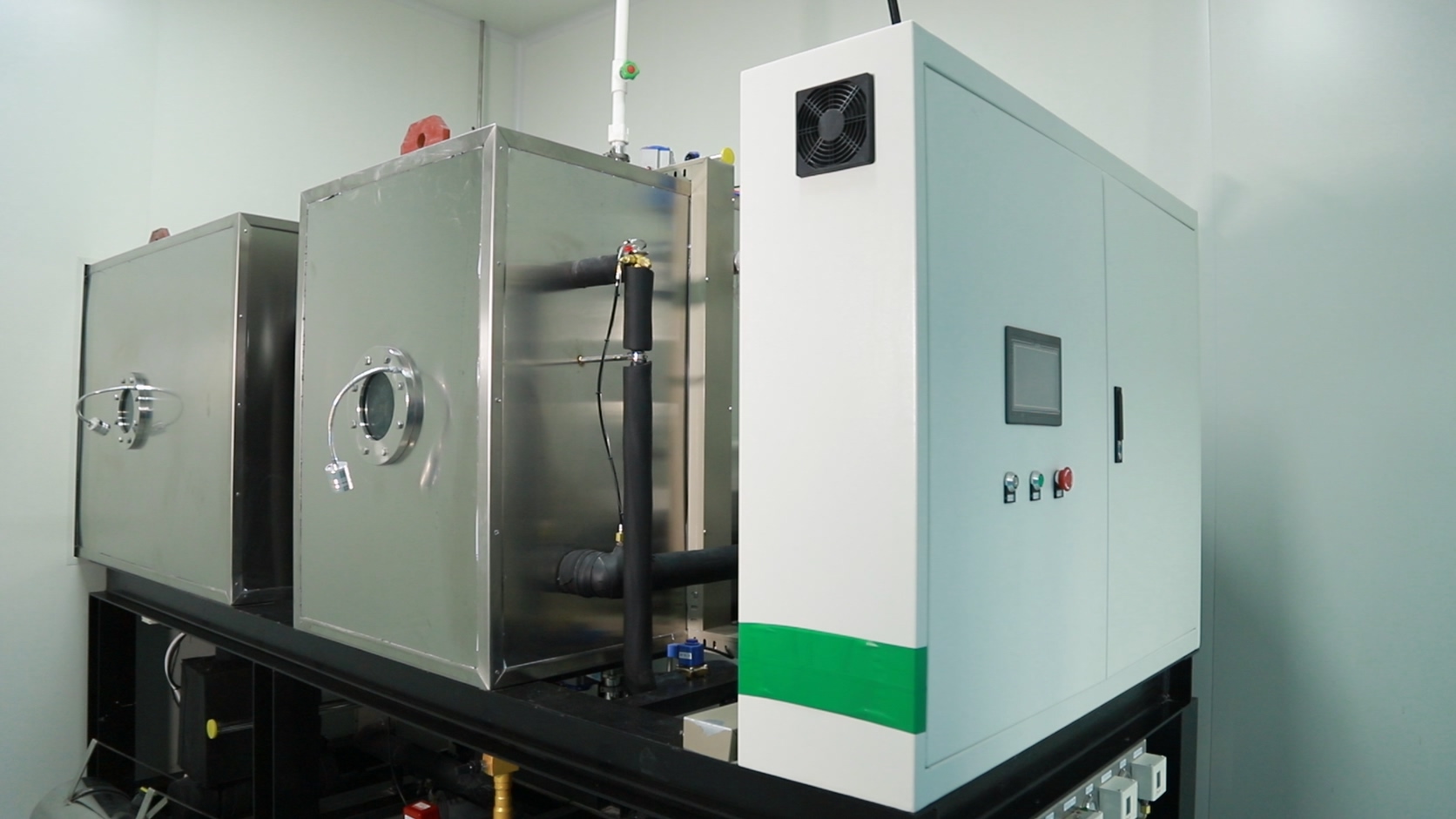
Processing equipment in the production line. Particle fineness ranges are the acceptance parameter that links a grade to an application.
What the market context says about documentation pressure
Research and Markets' Matcha Market Outlook, 2030 values the global matcha market at more than USD 4.58 billion in 2024 and projects an 8.48% compound annual growth rate for 2025–2030. Japan's Ministry of Finance customs statistics record 13,125 tonnes of green tea exports in FY2025. A 2026 commercial wholesale benchmark places Japanese ceremonial-grade matcha at roughly USD 100–320 per kilogram, and one commercial estimate puts China at 60%–70% of global matcha production volume in 2025–2026 — a figure that should be treated as directional, since it is a trade estimate rather than an official statistic.
Read together, those numbers explain the documentation pressure rather than merely describing growth. As volumes rise, more buyers enter the category without deep prior experience of green-tea quality systems; as the price spread between origins widens, the incentive to substitute material increases; and as destination-market scrutiny of organic and residue claims continues, the evidential burden shifts further toward the supplier. In that environment, a supplier's document pack becomes a commercial asset and a buyer's specification annex becomes the only reliable defence.
Future outlook
Three developments are likely to shape bulk organic matcha procurement over the next few years. Grade terminology will keep drifting toward buyer-defined specifications, as retail and food-service buyers discover that "ceremonial" alone cannot be audited. Testing will move from order-level to program-level, with buyers maintaining rolling residue and heavy-metal trend files per supplier rather than accepting a single passing report. And documentation will increasingly be exchanged before quotation rather than after sampling, because the cost of evaluating a supplier that cannot support a destination market is now high enough to justify screening it out early.
For suppliers, the implication is that capability claims will be read as commitments. A statement that testing can be conducted to destination-market requirements is only useful to a buyer if the supplier can also name the laboratory, link results to a lot number and support a deviation procedure when a result misses. That is a documentation discipline rather than a marketing position, and it is where the difference between suppliers will be measured.
FAQ
How are pesticide residues and heavy metals controlled in bulk organic matcha?
Control is specification-driven. Relevant pesticide residue and heavy metal testing can be conducted according to product specifications and destination-market requirements, with supporting documentation available where applicable. Because the limits are set by the buyer for the destination market, the control structure only becomes verifiable once numeric limits, a test method, a reporting laboratory and lot linkage are written into the purchase specification. Organic certification confirms the production and processing system; it does not report residue levels for a specific lot, so the two evidence types are complementary rather than interchangeable.
How is raw material quality variation managed from lot to lot?
Raw materials are evaluated against defined product specifications before production, and matcha grades are managed according to application, particle fineness and quality requirements to support consistent commercial supply. The supporting controls are raw-material review, formulation evaluation, finished-product quality control, in-house laboratory testing, random batch inspection, and pre-shipment order verification with documentation review. For a buyer, the grade specification is the primary consistency instrument: a defined grade and mesh range gives a repeat order a measurable reference point, whereas an undefined "premium" descriptor does not.
What documentation should be reviewed before a matcha supply program is approved?
The stated document set includes product specification sheets, certificates of analysis, applicable laboratory reports, certification documents and export-related records, with availability depending on product, batch and order requirements. A practical review sequence is: confirm each certificate's validity dates and declared scope; confirm the operator named on the certificate matches the invoicing entity; check that the certificate of analysis references a lot number and the parameters in the specification annex; and confirm that export records match the agreed Incoterms. Documents that do not link to a specific lot should be treated as supplier background rather than batch evidence.
What purchasing terms and acceptance criteria should a bulk organic matcha agreement contain?
TangMist's framework uses a 10 kg minimum order quantity, EXW, FOB, CIF, DDP and other agreed Incoterms, and 30/70 payment terms, with acceptance emphasis scaling by volume band: from application-based grade selection, specification consultation and sample evaluation at 10–25 kg, through specification coordination and packaging consultation at 25–100 kg, batch consistency management and customized packaging coordination at 100–300 kg, batch planning and production scheduling at 300–500 kg, to large-order production planning, compliance documentation and international logistics support at 500 kg to 1 tonne. Production lead time is 15–21 days, and monthly capacity is 10 tonnes. Beyond those standard elements, the agreement should name the specification annex, the lot release rule, a deviation procedure and a change-notification requirement.
Which grade fits cafés, lattes, baking and beverage production?
Grade selection follows the application and the processing method rather than a single quality hierarchy. Bulk organic matcha powder for cafés and lattes is typically drawn from the beverage and ceremonial ranges — KM5, KM6 and KM7 at 1000–1800 mesh — where milk compatibility and dispersion matter. Baking, ice cream, desserts and confectionery use culinary grades KM3 and KM4 at 800–1200 mesh, judged on flavour retention and colour through heat and fat systems. Functional grades KM1 and KM2 at 800–1000 mesh serve supplements and powdered formulations, while KM8, KM9 and KM10 at 1300–1800 mesh address specialty and premium retail positioning up to traditional preparation and tea ceremony use.
What are the limits of supplier documentation in an organic matcha audit?
Documentation has a defined edge. Certificates prove a certified system and a declared scope, not the residue content of a specific bag. Certificates of analysis prove what was tested on a sampled lot, not the whole consignment. Laboratory reports are only as relevant as the method and detection limits they used. Scope lines on certificates may name specific product categories, so a grade or packaging format must be checked against the scope rather than assumed inside it. And where a buyer never specified a limit, no supplier document can demonstrate compliance with it. The audit conclusion should therefore state what was verified, at what lot level, and what remains the buyer's own control.
The takeaway
The bulk organic matcha questions that decide a supply program are procedural before they are sensory. Residue and heavy-metal control, lot-to-lot variation and acceptance terms are all resolved by the same instrument: a written specification that names limits, methods, lot linkage and consequences. TangMist Matcha illustrates one manufacturer's answer — a graded product range from KM1 to KM10, testing and documentation offered according to destination-market requirements, 10 kg minimum orders scaling to a 10-tonne monthly capacity, and a 15–21 day production lead time — and the same questions should be put to any alternative source, including the answers the supplier cannot yet give. Further reference material is available at tangmistmatcha.com.
Есть вопросы или нужны дополнительные детали?
Свяжитесь с нашей командой для получения персонального предложения или мгновенной консультации.
Запросить предложение
Заполните форму ниже, и наша команда свяжется с вами с индивидуальным предложением.
Прямой чат WhatsApp
Предпочитаете общаться в реальном времени? Напишите нам в WhatsApp для мгновенной помощи и быстрых ответов.
- Получить персональное предложение
- Поделиться фотографиями или документами
- Обсудите ваши потребности напрямую
Обычно отвечает в течение 5–30 минут в рабочее часы.