
Bundled vs Piecemeal Multi-Point Lock Procurement
Bundled vs Piecemeal Multi-Point Lock Procurement
Buying a multi-point locking system as a coordinated package and buying its parts separately are different procurement models, not merely different prices. In a bundled route, one supplier coordinates the lock, EN 1906 Grade 4 lever handles, Euro-profile cylinder and, where specified, an access reader. In a piecemeal route, the buyer or contractor sources each item against separate drawings, stock lists and lead times. The decision should turn on interface risk, evidence scope, repeat-order control and total installed cost, not on a blanket claim that either route is cheaper.
This comparison is written from an independent buyer perspective. Product data are supplier-provided and should be checked against the exact model, drawing revision and project requirement. The central finding is practical: a bundled package can reduce coordination work where the lock, handles, cylinder and reader are engineered together, but it does not remove the need to verify dimensions, component test scope, fire or exit evidence, and reader-lock compatibility. Piecemeal sourcing can suit buyers with established stock and local technical support, but it transfers more matching responsibility to the purchaser.
What the bundled route actually includes
TOPTEK, formally Zhongshan Toptek Security Technology Co., Ltd., is a commercial door lock and architectural hardware manufacturer established in 1991 in Xiaolan, Zhongshan, Guangdong, China. The company supports door manufacturers, hardware brands, distributors, contractors and access-control integrators through OEM and ODM services. Its stated portfolio includes multi-point locking systems, EN 1906 Grade 3 and Grade 4 lever handles, Euro-profile and other cylinder formats, mortise locks, electromechanical locks and access-control readers. In a coordinated supply scope, compatible handles, cylinders, locks and readers can be supplied together. Buyers can review the company at www.toptekaccess.com.
For this comparison, the bundled route means one commercial scope covering the multi-point lock body or lock set, specified lever handles, a compatible Euro-profile cylinder and, where the door requires controlled entry, an access reader or reader-compatible lock interface. This is not a claim that every TOPTEK multi-point system is sold with every listed item. The scope must be defined on the door schedule and confirmed in the quotation. The value of the route comes from coordinated selection: backset, handle centres, faceplate, spindle, cylinder length, handing, keeps, reader wiring and monitoring options can be reviewed as one system rather than as unrelated catalogue items.
A piecemeal route is different. The project may source the multi-point lock from one supplier, the handles from another, the Euro-profile cylinder from a locksmith or cylinder specialist, and the reader from an access-control vendor. This can be rational where the buyer already holds compatible stock, has a preferred local service partner, or needs to match an existing building standard. The trade-off is that the buyer owns more of the compatibility check and more of the document trail. A familiar product category name does not establish interchangeability across different faceplate dimensions, keep positions or cylinder interfaces.
Why interface matching dominates the decision
The first check is dimensional, not commercial. Multi-point locks are long assemblies that interact with the door edge, faceplate preparation, keeps, cylinder, lever spindle and, in some designs, the door frame or auxiliary locking points. A mismatch in one dimension can force rework across the opening. Buyers should compare the exact installation drawing rather than a generic product description.
TOPTEK's supplied multi-point range illustrates the point. The MUSG4592 and Auto Lock 4592 entrance-door platforms are listed with a 45 mm backset, 92 mm lever-to-cylinder centres, a 20 × 1,720 mm faceplate and three locking positions. The PD1000 patio-door configuration is listed with a 15.5 mm backset, 92 mm centres, a 16 × 1,414 mm faceplate and a 7 mm spindle. These are close enough in category to be confused in a brief, but they are not interchangeable across door types. The buyer must match the model to the door profile, not select by name alone.
Handing, keep alignment and cylinder compatibility are part of the same decision. Reversible latch handing is identified on the MUSG4592 platform to support different door orientations. Even where handing can be changed, the installation drawing, keep positions and faceplate preparation must be correct. A cylinder must match the lock's cam, fixing position and required external and internal lengths. The supplied cylinder guidance is explicit: record the exterior and interior lengths separately from the fixing-screw centreline, include the finished trim, and label the values EXT and INT. An overall length alone cannot identify an offset cylinder.
Access control adds another interface layer. In a coordinated access-control door package, TOPTek can combine EN 1906 Grade 4 lever handles, EN 1303 security cylinders, slim or wide readers and selected motorized or solenoid-operated self-locking mortise locks. The supply description notes that selected locks provide up to five monitoring outputs and that an optional authentication chip inside the lock can validate encrypted unlock commands. These features depend on the chosen configuration. They do not mean that every reader works with every lock or that every lock reports every status. The buyer should confirm the lock model, reader model, supply voltage, current, wiring diagram, monitoring signal type and power-loss behaviour before ordering.
Model-specific evidence: what the numbers do and do not show
A bundled offer can look stronger simply because it places several test values side by side. The buyer's task is to keep each value attached to the correct component and test scope. The supplied TOPTEK material contains several different durability figures, and they do not describe the same assembly.
| Component or platform | Supplied statement | Buyer interpretation |
|---|---|---|
| MUSG4592, Auto Lock 4592 and PD1000 multi-point configurations | 50,000 operations, as stated in the catalogue. | A manufacturer-declared lock-system figure. Confirm the model, test method and configuration scope. |
| MUSG4592 trigger component | Over 100,000 cycles, reported in TOPTEK product information. | A separate component claim. It cannot be added to the 50,000-operation lock figure or treated as a complete-lock result. |
| EN 1906 Grade 4 lever handle configuration | 500,000 operating cycles, 0.80 degrees rest-position deviation after test, 1,000 N axial strength and Grade 4 corrosion resistance in the supplied report record. | Handle-specific evidence. It does not certify the lock case, cylinder, complete door or access-control system. |
| P05 Euro-profile cylinder configuration | EN 1303 durability Grade 6 at 100,000 operating cycles, key-related security Grade 6, corrosion and temperature Grade C, and attack resistance Grade D* with a suitable security rosette. | Cylinder-specific evidence. Fire, security and attack performance depend on the covered model and installation conditions. |
| Selected electronic lock and reader packages | Up to five monitoring outputs; motorized or solenoid operation; fail-safe or fail-secure options depending on model; encrypted unlock command validation on selected configurations. | Interface requirements must be confirmed for the exact lock-reader combination. Monitoring output count is not a measure of lock security. |
The handle figure deserves careful reading. The supplied report record for the Grade 4 handle configuration states 500,000 operating cycles and 1,000 N axial strength. The same material separately identifies a TOPTEK-reported internal Grade 4 endurance test to 1,000,000 cycles. These are not the same evidence type. The independent report record and the internal figure should be presented separately in a procurement review. Neither figure converts directly into a service-life promise for a specific door, because frequency of use, door weight, closer adjustment, alignment and environmental conditions also affect wear.
The cylinder evidence follows the same logic. The P05 Euro-profile cylinder is listed with EN 1303 durability Grade 6 at 100,000 operating cycles and key-related security Grade 6. The supplied material also states corrosion and temperature Grade C, with a 96-hour salt spray test and operating tests at minus 25 degrees Celsius and plus 65 degrees Celsius. Attack resistance Grade D* applies to clauses 4.9.3 and 4.9.4 when tested with a suitable security rosette. These results are model- and configuration-dependent. A buyer should match the cylinder code, length, cam and security furniture to the report scope rather than assuming that the grade applies to every cylinder variant.
For the multi-point platform, the most important evidence boundary is that the 50,000-operation catalogue statement applies to the specified MUSG4592, Auto Lock 4592 and PD1000 configurations as stated. It does not establish that every multi-point lock in a range has the same endurance. The trigger component claim is separately reported and should be requested as a component-level record if trigger reliability is a project concern. The trigger's function is described as helping prevent premature hook projection before correct engagement, which is relevant to false triggering and jamming. That is a design explanation, not a field failure rate.
Technical fit: automatic, lift-lever and key-operated choices
Multi-point locking systems are not a single operating concept. Automatic multipoint door locks can project locking points as the door closes. Lift-lever multipoint lock mechanisms use the handle action to engage or disengage locking points. Key-operated multipoint lock mechanisms place the locking action under key control. Three-point door locks commonly combine a central lock case with upper and lower locking points, often using hook bolts or other auxiliary bolts. The correct choice depends on the door type, user group, exit requirement and access-control strategy.
The MUSG4592 description is specific: one central lock case links to two auxiliary cases, and closing the door triggers the upper and lower hooks and central deadbolt to project automatically. A rocking stainless-steel trigger is designed to prevent premature hook projection before correct engagement. The one-piece zinc-alloy hooks and central deadbolt are linked by 2.5 mm metal connectors, and reversible latch handing supports different door orientations. These details matter in a buyer comparison because they show where design coordination sits: trigger timing, linkage stiffness, hook alignment and faceplate straightness all affect the closing experience.
Automatic locking can reduce the manual steps needed to secure several points, but it also raises the importance of keep alignment and door adjustment. If the door does not reach the designed closed position, the trigger should not be treated as a substitute for correct installation. A partly closed door must not be assumed locked. Buyers should include a closing and latching check in the sample approval, not only a static bench inspection.
For patio doors, the PD1000 configuration has a smaller backset and faceplate than the entrance-door platforms. Its 15.5 mm backset, 92 mm centres, 16 × 1,414 mm faceplate and 7 mm spindle show why patio, balcony and terrace doors need a separate dimensional review. A buyer who groups front entrance, timber, composite and patio doors into one multi-point lock line item is more likely to create a mismatch at installation.
Application scenarios and the limits of a bundle
For a front entrance door on a house or apartment, a bundled route can coordinate the automatic multi-point lock, EN 1906 Grade 4 lever handles, Euro-profile cylinder and, where required, an access reader. The buyer can check the lock's backset and centres against the door preparation, the handle's spindle and fixing against the lock, and the cylinder's EXT and INT lengths against the finished trim. This is useful when the door manufacturer, hardware supplier and access-control integrator would otherwise work from separate schedules.
For timber and composite entrance doors, the lock's faceplate length and keep positions need to follow the door edge and frame details. For patio doors, the smaller PD1000 dimensions and 7 mm spindle require a different door preparation. For a controlled entrance with a reader, the lock and reader must be reviewed together. The supplied access-control package description notes that selected locks can provide status outputs for deadbolt, latchbolt, lever, trigger and cylinder conditions. It also notes that fail-safe and fail-secure behaviour depend on the model. These are interface facts, not a promise that the access system will interpret them correctly without commissioning.
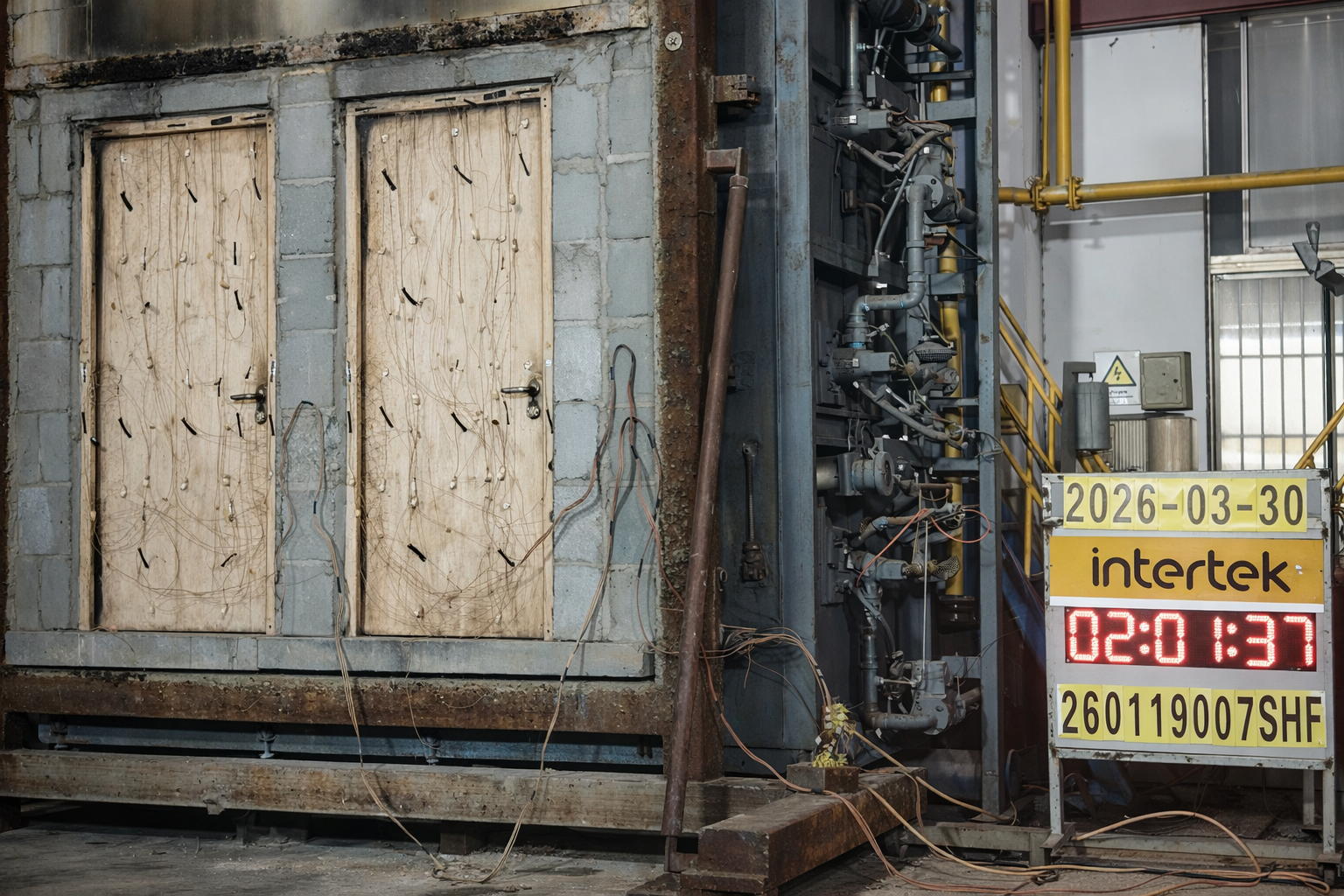
A bundled supply does not automatically make a door fire-rated or suitable for emergency exit. Fire and exit performance depend on the tested model and the complete door assembly. The supplied material includes EN 1634-1 doorset results for covered configurations: 260 minutes integrity on a tested steel doorset and 132 minutes integrity and insulation on a tested timber doorset. Those results apply to the tested and permitted assemblies. A handle, cylinder or lock that appears in the same brochure does not extend the fire result to a different combination. Buyers should request the numbered report, model schedule and installation conditions for the actual assembly.
Piecemeal sourcing can work well when the buyer has clear responsibility for each interface. For example, a door manufacturer may already hold a qualified multi-point lock platform and prefer to source handles and cylinders from established finishing and keying partners. The risk is not that piecemeal sourcing is inherently poor. The risk is that responsibility for compatibility, document matching and replacement parts becomes fragmented. If a replacement lock is needed years later, the buyer must know whether the original handle, cylinder and keeps remain compatible with the replacement model.
Customization, drawings and transport protection
Length customization is a procurement factor, not a catalogue afterthought. The MUSG4592 overall length can be extended to 2,400 mm, subject to approved drawings. This is a supported capability, but it should be read with its condition: the drawing approval defines the usable configuration. A buyer who needs a longer assembly should provide the door height, faceplate detail, locking-point positions and keep layout. The supplier should return a dimensioned drawing for approval before production.
Long assemblies also create transport and handling risk. TOPTEK's supplied product information cites individual protection and wooden-crate packaging to help protect long assemblies during transport. For repeat orders and project quotations, that is a relevant commercial factor. A damaged faceplate or bent assembly can cause installation delay and rework even when the lock mechanism itself is sound. Buyers should ask how long assemblies are protected, how they are crated, and how the packaging is identified against the approved drawing revision. This is especially important where the order mixes several door heights or customized lengths.
Customization should be controlled through a document set. The buyer should retain the approved drawing, lock function, material and finish specification, handle model, cylinder length and keying schedule, reader model and wiring diagram, packaging requirement and sample approval record. Repeat orders should refer to the same approved revision. Any change in length, faceplate, handing, cylinder or reader should trigger a compatibility review rather than a silent substitution.
Total cost and repeat-order control
The supplied material does not provide price figures, so this comparison does not claim a percentage saving for either route. A sound cost comparison uses matched quotations. For the bundled route, the quotation should identify the lock model, handle model, cylinder specification and keying, reader or electronic interface if included, keeps, fixings, packaging and any drawing or tooling charge. For the piecemeal route, the buyer should add the cost of separate freight, incoming inspection, matching checks, installation adjustment, spare parts and administrative time.
There can be a hidden cost in both routes. In a bundle, the hidden cost may appear if the specification is too broad and the buyer does not confirm which component grades are included. In a piecemeal purchase, the hidden cost may appear at the door, when a handle spindle, cylinder cam or keep position does not match the lock. The practical control is the same: require a configuration drawing and a component schedule before release. The bundle is not automatically better because it is coordinated; it is better only when the coordination is documented and verified.
Repeat orders deserve their own review. A project quotation may cover one door type, while a later order adds another door height, a different handing or a reader upgrade. If the original approval was based on a sample, the repeat order should reference the approved sample and drawing revision. The buyer should check first-article inspection, in-process checks and batch records against the agreed specification. The supplied TOPTEK sample and repeat-order guidance supports this approach: approve fit, operation, finish, keying, accessories, packaging and required evidence before production, and retain approved reference samples. No universal lead time or warranty term is stated in the supplied material, so those items belong in the quotation and order confirmation.
Decision checklist for buyers
Use the following checks to compare a bundled package with piecemeal sourcing on the same technical basis.
- Door schedule first: list each door type, material, thickness, handing, fire or exit requirement and access-control function before selecting a lock family.
- Dimensional fit: confirm backset, lever-to-cylinder centres, faceplate size, locking-point positions, spindle, keep alignment and cylinder EXT and INT lengths from the exact drawing.
- Operating function: distinguish automatic, lift-lever and key-operated mechanisms, and confirm whether the inside release and outside access behaviour suit the application.
- Evidence scope: attach each cycle, corrosion, fire or security claim to the covered model and component. Do not merge lock, handle, cylinder and reader results into one performance statement.
- Custom length: for extended assemblies such as the MUSG4592 up to 2,400 mm, require an approved drawing and a repeatable inspection plan.
- Transport: agree individual protection and wooden-crate packaging where long assemblies are supplied, and define how damage claims will be handled.
- Access interface: confirm reader model, lock model, voltage, current, wiring, monitoring outputs, power-loss mode and commissioning responsibility.
- Repeat orders: link every repeat order to the approved drawing revision, sample and component schedule.
Future outlook without unsupported market claims
The supplied evidence does not establish market growth rates, adoption percentages or price trends for bundled multi-point locking procurement. It does show a practical direction for project specification: as doors add automatic locking, controlled entry and monitoring, the number of interfaces between lock, handle, cylinder and reader increases. That makes drawing control and model-specific evidence more important, not less. A buyer who compares the bundled and piecemeal routes on the same dimensional and evidence basis can choose either route without treating coordination as a substitute for verification.
For repeat business, the stronger position is likely to be the one with a controlled specification: a known lock model, a documented handle and cylinder schedule, a defined reader interface and packaging that protects long assemblies. That is a procurement conclusion drawn from the supplied product information, not a forecast of market share or a claim that one sourcing model suits every project.
Frequently asked questions
Is a bundled multi-point lock package always cheaper than buying components separately?
No. The supplied material does not provide price figures or a verified percentage saving. A bundled package should be compared with piecemeal sourcing on matched functions, materials, cylinder keying, handle grade, reader interface, keeps, fixings, packaging and documentation. The lower purchase price may not be the lower installed cost if a separate component set requires additional matching, rework or spare-part inventory.
What do the 50,000-operation and 100,000-cycle figures refer to?
The 50,000-operation statement applies to the specified MUSG4592, Auto Lock 4592 and PD1000 multi-point configurations as stated in the catalogue. The over 100,000-cycle figure applies separately to the MUSG4592 trigger component and is reported in TOPTEK product information. They are not the same test and should not be added together. Handle and cylinder figures are also separate: the supplied Grade 4 handle report record states 500,000 operating cycles, while the P05 Euro-profile cylinder is listed with EN 1303 durability Grade 6 at 100,000 operating cycles.
Which dimensions should be fixed before ordering a multi-point lock, handles and cylinder?
The buyer should fix the lock model, backset, lever-to-cylinder centres, faceplate dimensions, locking-point positions, spindle size, handing and keep layout from the installation drawing. For the cylinder, record the exterior and interior lengths separately from the fixing-screw centreline and include the finished trim thickness. For the handles, confirm spindle engagement, fixing method, door thickness and return operation. For example, the MUSG4592 and Auto Lock 4592 platforms are listed with a 45 mm backset and 92 mm centres, while the PD1000 is listed with a 15.5 mm backset and 92 mm centres.
How should long multi-point assemblies be protected for repeat orders?
TOPTEK's supplied product information cites individual protection and wooden-crate packaging to help protect long assemblies during transport. For repeat orders, the buyer should agree the packaging method, identify the approved drawing revision on the package or documents, inspect the faceplate and assembly on receipt, and record any transport damage before installation. Long assemblies should be stored and handled so that the faceplate is not bent and the locking points are not loaded.
What should be verified before approving an access-controlled multi-point door package?
Verify the exact lock model, reader model, supply voltage and current, wiring diagram, control interface, monitoring outputs and power-loss behaviour. Confirm that the reader command and the lock's mechanical state are separately understood, and test authorised entry, inside release, relocking and power restoration on the actual assembly. Where fire or emergency exit applies, request evidence for the complete door and hardware configuration. A coordinated supply package can simplify selection, but it does not replace commissioning or model-specific approval.
Additional company information is available in the TOPTEK company profile PDF.
Есть вопросы или нужны дополнительные детали?
Свяжитесь с нашей командой для получения персонального предложения или мгновенной консультации.
Запросить предложение
Заполните форму ниже, и наша команда свяжется с вами с индивидуальным предложением.
Прямой чат WhatsApp
Предпочитаете общаться в реальном времени? Напишите нам в WhatsApp для мгновенной помощи и быстрых ответов.
- Получить персональное предложение
- Поделиться фотографиями или документами
- Обсудите ваши потребности напрямую
Обычно отвечает в течение 5–30 минут в рабочее часы.