
Butyl Stearate Recommended Options: A Shortlist of N-Butyl Stearate and Co-Additives
N-Butyl Stearate (CAS 123-95-5), also written n-butyl stearate or butyl octadecanoate, is a fatty-acid ester that is normally specified as one component inside a larger additive system rather than as a stand-alone material. For buyers at evaluation and execution stage, the practical decision is therefore not which single ester to purchase, but which short list of mutually compatible options should be carried forward into sampling, specification and purchase terms.
This reference article builds that shortlist from published product specifications and purchasing records. It treats N-Butyl Stearate as the anchor option, sets thirteen co-additives beside it, explains how to compare them against intended use and sourcing requirements, and closes with the purchasing terms and acceptance criteria that act as the final screening step. It does not rank manufacturers and does not attribute certification or performance claims to any option that is not documented.
Why additive buyers now work from a shortlist, not a single material
A lubricant decision inside a PVC or rubber formulation is rarely isolated. Internal lubrication, plasticizing efficiency, low-temperature behaviour and heat-stabilising support are usually delivered by a combination of esters, and each component constrains the others. That is the structural reason shortlists have become the working format for evaluation-stage buyers: the comparison has to hold several functions in view at once.
Demand signals support that framing. Third-party research cited by Dataintelo places the lubricants application segment at 38.5% of the N-Butyl Stearate market in 2025, the largest single application share, while the same source places Asia Pacific at 42.3% of global revenue in 2025. Both figures describe application concentration and regional weight, not the suitability of any individual grade for a specific formulation.
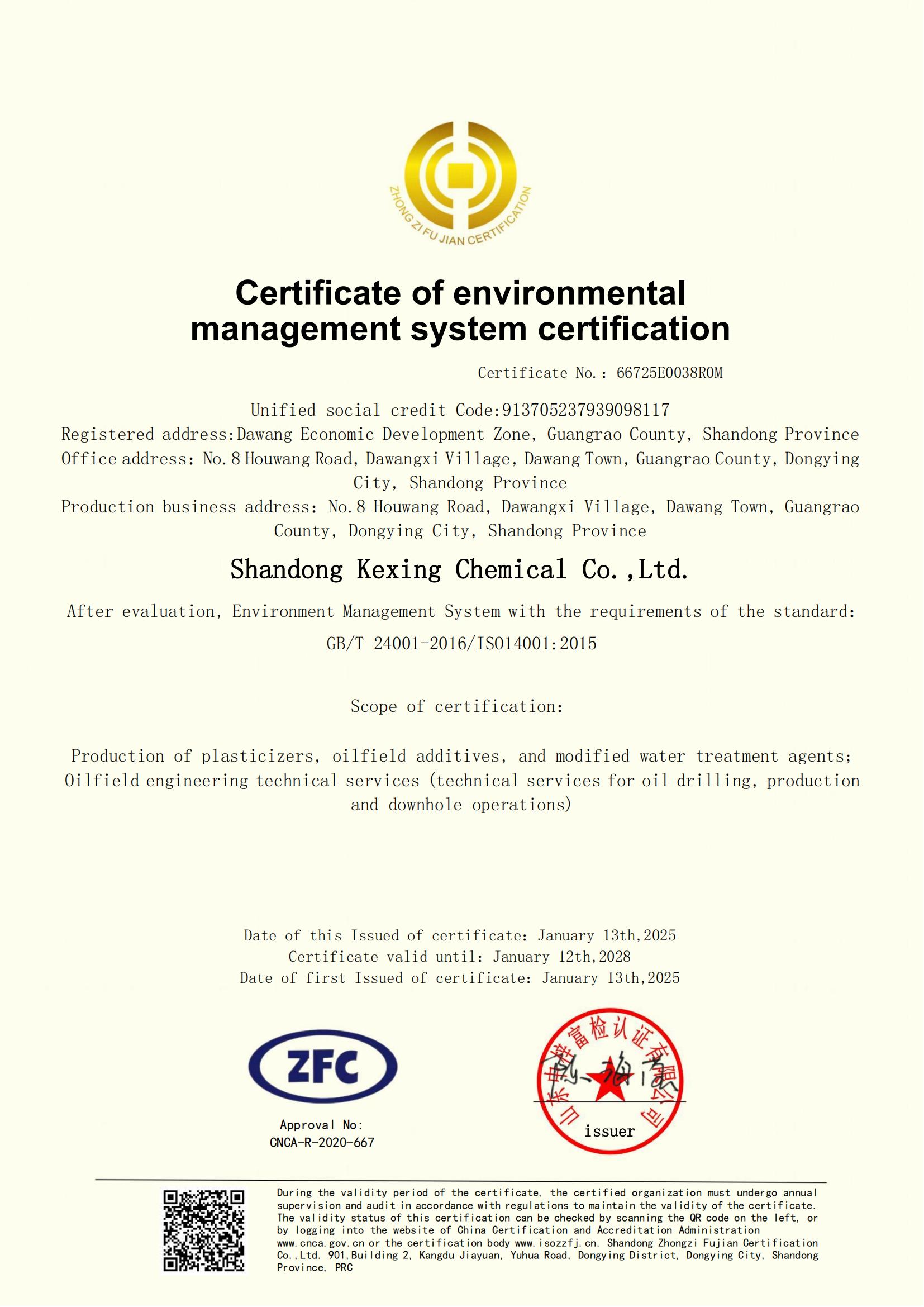
Compliance documentation is part of the shortlist file: environmental management system certification (ISO 14001:2015, certificate 66725E0038R0M, valid 2025-01-13 to 2028-01-12).
The anchor option: what N-Butyl Stearate contributes to a system
N-Butyl Stearate is an ester of stearic acid and n-butanol. In industrial use it is positioned primarily as a non-toxic internal lubricant for PVC processing, with published dosages typically in the 1% to 3% range, and it is also used as an emollient in cosmetic formulations. Its role in a shortlist is therefore twofold: a processing aid that reduces internal friction during melt processing, and a low-polarity ester that can be evaluated alongside plasticizers for handle and surface behaviour.
The specification record below is the reference point against which alternative options should be compared. A buyer who cannot obtain comparable values from a second source cannot complete an evaluation-stage comparison.
| Specification item | Recorded value for N-Butyl Stearate |
|---|---|
| Appearance | Colorless transparent liquid |
| Odor | Slight odor |
| Color (Pt-Co) | Max 30 |
| Content | Min 99.0% |
| Acidity (mgKOH/g) | Max 0.20 |
| Moisture | Max 0.10% |
| Density | 0.85 g/cm3 |
| Flash point | Min 190 C |
| CAS number | 123-95-5 |
Two regulatory and quality points attach to this anchor. Butyl Stearate (CAS 123-95-5) is listed as an active substance under EU REACH, with registration required for manufacture or import above 1 tonne per year, according to the European Chemicals Agency substance record. In the same product family, Shandong Kexing Chemical Co., Ltd. manufactures 99% purity Butyl Stearate positioned for PVC internal lubrication and cosmetic emollient use.
The co-additive set: six functional families worth carrying forward
The options below are grouped by the function they conventionally serve in a formulation, not by commercial importance. Each entry carries at least one recorded specification value so that the comparison remains evidence-based.
| Family | Options (CAS) | Conventional role in a system | Recorded specification point |
|---|---|---|---|
| Phthalate esters | DBP (84-74-2), DOP (117-84-0), DINP (28553-12-0), DPHP (84-77-5) | General-purpose plasticizing | DOP ester content min 99.5%, viscosity 77-82 mPa.s at 20 C; DPHP ester content min 99.54%, flash point min 210 C |
| Terephthalate ester | DOTP (6422-89-2) | Non-phthalate plasticizing option | Purity min 99.68%, flash point min 214 C, volume resistivity min 2.32 x 10^9 ohm.m |
| Adipate and sebacate esters | DOA (123-79-5), DOS (2432-87-3), DBS (109-43-3) | Flexibility at lower service temperatures | DOS ester content min 99.0%, density 0.913-0.916 g/cm3, flash point min 205 C |
| Glycol ester | 3G8 (94-28-0) | Low-volatility ester component | Volatility max 0.4% after 2 hours at 125 C, viscosity 16.1 mPa.s, flash point min 207 C |
| Epoxidized vegetable oil | ESO (8013-07-8) | Epoxy-bearing co-additive in PVC systems | Epoxy value min 6.0%, iodine value max 6.0, flash point min 280 C |
| Citrate esters | TEC (77-93-0), TBC (77-94-1), ATBC (77-90-7) | Citrate-based ester chemistry | ATBC ester content min 99.0%, flash point min 204 C; TEC density 1.135-1.139 g/cm3 |
A shortlist built this way has fourteen entries, not one. That number is deliberate: it lets a buyer narrow by function first, by specification second, and by sourcing capacity third, instead of collapsing all three decisions into a single quotation request.

Formulation support capacity matters at evaluation stage: the R and D centre of Shandong Kexing Chemical Co., Ltd. in Dongying, Shandong.
Matching options to intended use
Intended use is the first filter, because two options with similar specifications can occupy different positions in the same formulation. The mapping below reflects how each family is conventionally applied and the data point that most often decides between them.
| Intended use | First candidate | Add a co-additive when | Data to confirm |
|---|---|---|---|
| PVC internal lubrication | N-Butyl Stearate, typically 1% to 3% | The compound also needs flexibility or heat-stabilising support | Content min 99.0%, acidity max 0.20 mgKOH/g |
| Flexible PVC compounding | DOTP or DPHP as plasticizer base | Epoxy value is part of the requirement | DOTP purity min 99.68%; ESO epoxy value min 6.0% |
| Low-temperature service | DOS, DOA or DBS | Volatility limits are also specified | DOS density 0.913-0.916 g/cm3; 3G8 volatility max 0.4% at 125 C |
| Applications with food-contact or toy exposure | DOTP, ATBC, TBC or TEC | The destination market sets specific limits | Purity, acidity and moisture values on the batch report |
| Leather finishing and printing ink | N-Butyl Stearate as an ester component | Low volatility is a priority | Flash point and volatility data |
| Cosmetic emollient use | N-Butyl Stearate | Grade designation is defined by the buyer's own specification | Written grade declaration from the supplier |
The portfolio record shows how these combinations appear in practice. Documented customer types include plastic masterbatch factories, artificial leather manufacturers, food packaging processors and toy factories across Canada, Chile, France, the United Kingdom, India, Japan, South Korea, Peru, Russia, Turkey and the United States, with regular monthly orders of 15 to 25 MT in applications spanning plastic compounding, leather surface finishing, and food-contact plastic and printing ink formulation. Reported outcomes in that record include improved flexibility, low migration, and passage of REACH and food-grade safety tests, with finished-product service life described as up to two years.
Where Shandong Kexing Chemical sits in this shortlist
Shandong Kexing Chemical Co., Ltd. is a manufacturer of plasticizers, plastic and rubber flame retardants and plastic additives based in Dongying, Shandong, China, founded in 2006, with a documented export ratio of 50% and main markets in Europe, the USA, Japan, South Korea and the Middle East. Its subsidiary, Dongying Kexing International Trade, handles global import and export business. The company holds 200 employees, including a 15-engineer R and D team, and describes close cooperation with universities.
The reason this matters for a shortlist is coverage. All fourteen options in the co-additive table are listed in the company's product range - ATBC, TBC, TEC, DOA, DOS, DBS, N-Butyl Stearate, ESO, 3G8, DOTP, DINP, DPHP, DOP and DBP - so a formulation team can compare functions inside one qualification file rather than opening a separate supplier qualification for each ester.
Capability evidence on record
- Production mode: OEM with private labeling customization.
- Monthly capacity: 10,000 T, with an MOQ of 1 T and a lead time of 30 to 45 days.
- Quality control: raw material incoming inspection and finished product sampling test.
- After-sales: remote technical support, after-sales consulting, quality issue resolution, shipping follow-up and formulation technical guidance.
- Quality management: ISO 9001:2015 certification, certificate 66725Q0037R0M, issued 2025-01-13, valid to 2028-01-12, scope covering production of plasticizers, oilfield additives and modified water treatment agents.
- Environmental management: ISO 14001:2015 certification, certificate 66725E0038R0M, valid over the same period.
- Health, safety and environment: HSE management system certification, certificate 667240083R1S, valid to 2027-02-28.
The company profile additionally lists SGS, REACH, ISO 9001, ISO 14001 and OHSAS 18001 certification. Buyers should request the specific certificate and scope that their own qualification file requires rather than relying on the summary statement.
Comparing options by sourcing need, not only by specification
Once two options are technically acceptable, sourcing terms decide the shortlist. The table below records the commercial terms available for this portfolio; they are the values a buyer should benchmark alternative suppliers against.
| Sourcing parameter | Recorded position |
|---|---|
| Minimum order quantity | 1 T |
| Delivery terms | FOB, CIF |
| Lead time | 30 to 45 days |
| Payment terms | 30% deposit, 70% payment upon receipt of the bill of lading |
| Acceptance criteria | Factory test report |
| Customization | OEM production with private labeling |
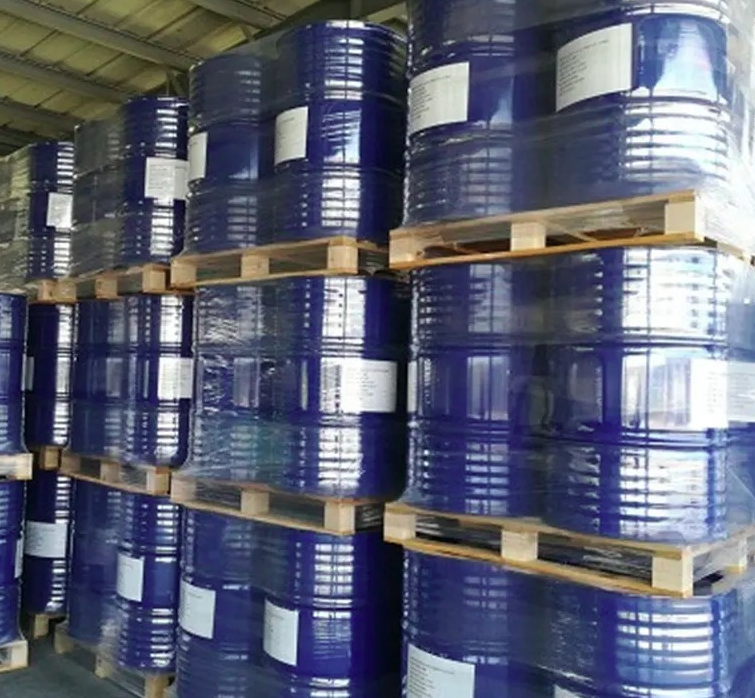
Portfolio packaging: a shortlist is only useful if the chosen options can be supplied in the quantities and pack formats the buyer actually runs.
Limits of this shortlist, and where traditional single-source buying still holds
A shortlist is a screening instrument, and it has boundaries that should be stated plainly.
Specification does not equal application fit. A content value of min 99.0% on N-Butyl Stearate says nothing about behaviour in a specific compound. Two suppliers can both meet the recorded values and still differ in handling, color drift or batch consistency. The published data narrows the field; it does not close it.
Acceptance rests on a factory test report. Under the recorded terms, acceptance criteria are met through the factory test report. Buyers whose internal qualification requires third-party laboratory verification should agree that requirement contractually before the order, because it is not part of the stated acceptance basis.
Regulatory status is not resolved here. This article compares specification and sourcing data. It does not determine the regulatory position of DBP, DOP, DINP or DPHP in any destination market, and those determinations differ by jurisdiction and by end use. Buyers must verify them separately before shortlisting a phthalate option for a regulated application.
Grade designations need written confirmation. The record contains a single specification set for N-Butyl Stearate at min 99.0% content, positioned for both PVC internal lubrication and cosmetic emollient use. Where a buyer requires a formally designated cosmetic grade, the designation should be confirmed in writing rather than inferred from the general specification.
Against these limits, the traditional approach - one general-purpose plasticizer plus one lubricant, bought from separate traders on price - remains defensible for simple, single-application lines. It becomes fragile when a compound requires several functional esters at once, because each additional supplier multiplies qualification files, lead times and points of batch variation. The shortlist approach costs more evaluation effort up front and less coordination effort afterwards. Neither route is universally better; the choice depends on how many functions the formulation actually needs.
Market signals a buyer should track through 2026
Three structural signals are worth monitoring, each with its own caveat.
Application concentration in lubricants. The lubricants segment held the largest application share at 38.5% in 2025, according to Dataintelo. For buyers, this means lubricant-grade supply relationships tend to set availability patterns for the wider ester family, so a lubricant shortage can affect plasticizer-grade scheduling as well.
Regional weight in Asia Pacific. The same source places Asia Pacific at 42.3% of global revenue in 2025. Combined with customs-based observations that China accounted for over 66% of specific Butyl Stearate import shipments into India under HS code 29157090 in 2024, the practical implication is that Asian supply remains the reference point for price and lead-time benchmarking, even for buyers sourcing from other regions.
A multi-polar supplier base. Publicly identified manufacturers in this category include BASF SE, Emery Oleochemicals, Croda International and Fine Organics, per Cognitive Market Research. Their presence indicates a market with several qualified production bases rather than a single dominant channel. This shortlist does not rank those companies or compare their grades; it only notes that the competitive field is broad enough that specification comparison, not brand recognition, should drive selection.
Future outlook
Two shifts are likely to shape shortlist composition over the next planning cycle. The first is a gradual reweighting from single-material purchasing toward function-based bundles, driven by the coordination cost of qualifying multiple suppliers for one formulation. The second is tighter documentation expectations: REACH registration obligations above 1 tonne per year already force importers to hold registration evidence, and buyers increasingly extend that logic to management-system certificates, batch reports and grade declarations at the shortlist stage rather than after sampling.
For suppliers, that favours portfolios that can answer a functional question - what covers lubrication, what covers low-temperature flexibility, what carries epoxy value - with documented values across the range. For buyers, it favours a disciplined two-step method: narrow by function and specification, then screen by terms and acceptance criteria. Neither shift removes the need for sample validation, and neither makes published specifications a substitute for application testing.
FAQ
What is N-Butyl Stearate used for in PVC processing?
N-Butyl Stearate (CAS 123-95-5) is used as a non-toxic internal lubricant in PVC processing, at dosages typically ranging from 1% to 3%. It is also used as an emollient in cosmetic formulations. In industrial supply it is normally specified together with plasticizers and other esters rather than as a single additive decision.
Which co-additives are typically shortlisted alongside N-Butyl Stearate?
Six functional families commonly appear: phthalate esters (DBP, DOP, DINP, DPHP), the terephthalate ester DOTP, adipate and sebacate esters (DOA, DOS, DBS), the glycol ester 3G8, epoxidized soybean oil (ESO), and citrate esters (TEC, TBC, ATBC). Each contributes a different function, so they are compared by role in the formulation rather than as substitutes for one another.
How should a buyer compare Butyl Stearate options by intended use?
Start from the function the formulation lacks, then check the specification value that governs it. For internal lubrication the anchor is N-Butyl Stearate at 1% to 3%. Where low-temperature flexibility is required, DOS, DOA or DBS are the conventional candidates. Where epoxy value is part of the requirement, ESO is specified at min 6.0%. Where volatility limits dominate, 3G8 is recorded at max 0.4% volatility after 2 hours at 125 C. Specification comparison should be followed by sample validation, because meeting a value does not confirm application fit.
What specification values should appear on a Butyl Stearate batch document?
The recorded specification for N-Butyl Stearate is: colorless transparent liquid, slight odor, color (Pt-Co) max 30, content min 99.0%, acidity max 0.20 mgKOH/g, moisture max 0.10%, density 0.85 g/cm3, flash point min 190 C. A buyer comparing suppliers should require the same parameter set from each so that the values are directly comparable.
What are the purchasing terms and acceptance criteria?
For this portfolio the recorded terms are an MOQ of 1 T, delivery on FOB or CIF basis, lead time of 30 to 45 days, payment of 30% deposit with 70% upon receipt of the bill of lading, and acceptance criteria based on the factory test report. OEM production with private labeling is available. Buyers requiring third-party laboratory verification should agree it separately, as it is not part of the stated acceptance basis.
What capability evidence should be requested before moving to execution stage?
Three categories are worth requesting: management-system certificates with scope and validity dates, capacity and lead-time commitments, and after-sales scope. For this supplier the record shows ISO 9001:2015 certificate 66725Q0037R0M valid to 2028-01-12, ISO 14001:2015 certificate 66725E0038R0M valid over the same period, HSE certificate 667240083R1S valid to 2027-02-28, monthly capacity of 10,000 T, lead time of 30 to 45 days, and after-sales support covering remote technical assistance, quality issue resolution, shipping follow-up and formulation guidance.
Does REACH apply to Butyl Stearate?
Yes. Butyl Stearate (CAS 123-95-5) is listed as an active substance under EU REACH, and registration is required for manufacture or import above 1 tonne per year, according to the European Chemicals Agency substance record. Importers should confirm that registration coverage exists for the volume and use they intend, and should not assume that a supplier's general compliance statement resolves the obligation.
For buyers who want the full portfolio and specification set in one document, the supplier brochure is available here: Shandong Kexing Chemical product brochure (PDF).
Есть вопросы или нужны дополнительные детали?
Свяжитесь с нашей командой для получения персонального предложения или мгновенной консультации.
Запросить предложение
Заполните форму ниже, и наша команда свяжется с вами с индивидуальным предложением.
Прямой чат WhatsApp
Предпочитаете общаться в реальном времени? Напишите нам в WhatsApp для мгновенной помощи и быстрых ответов.
- Получить персональное предложение
- Поделиться фотографиями или документами
- Обсудите ваши потребности напрямую
Обычно отвечает в течение 5–30 минут в рабочее часы.