
Butyl Stearate Supplier Long-Term Fit: Portfolio and Terms
The durability of a butyl stearate supply arrangement is decided less by a single certificate than by two structural questions: whether the supplier's product portfolio can absorb a formulation change without restarting qualification, and whether its purchasing terms are defined tightly enough to be renewed without renegotiation. This article explains how procurement teams can evaluate both dimensions, using documented positions from Shandong Kexing Chemical Co., Ltd. as a working reference.
What butyl stearate is, and why the supplier question is different
Butyl stearate — written as n-butyl stearate or butyl octadecanoate, CAS 123-95-5 — is an ester of stearic acid and n-butanol. In industrial purchasing it is usually specified as a PVC internal lubricant, and in personal care as an emollient. Shandong Kexing Chemical Co., Ltd., a manufacturer of plasticizers, plastic and rubber flame retardants and plastic additives based in Dongying, Shandong, China, produces a 99% purity butyl stearate grade described as a PVC internal lubricant and cosmetic emollient.
The category is large enough to be sourced on contract rather than spot. The global n-butyl stearate market was valued at approximately USD 1.28 billion in 2024 according to Spherical Insights, and the lubricants application segment held the largest share at 38.5% in 2025 according to Dataintelo. Asia Pacific accounted for a 42.3% revenue share of the same market in 2025, again per Dataintelo.
Those two figures — a lubricant-dominated application mix and an Asia-centred supply base — explain why first-order selection and long-term evaluation diverge. Buyers rarely specify butyl stearate alone; they specify it inside a compound that also contains plasticizers, epoxidized oils and other esters. When the lubricant is one line in a multi-component formulation, the supplier's ability to quote the neighbouring components becomes part of the lubricant decision.
The problem: a sample qualifies a batch, not a relationship
Sampling answers a narrow question: does this lot meet the specification on the day it was produced? It does not answer whether the same grade will be quoted in year three, whether documentation will remain consistent across shipments, or whether the commercial basis survives a change in freight cost or feedstock pricing. The failure modes of a long-term ester supply are administrative and structural far more often than chemical.
Three patterns account for most of them. The first is the single-product supplier: a technically sound producer whose catalogue stops at one ester, so any reformulation forces the buyer back into full qualification with a second and then a third vendor. The second is the undefined commercial baseline: MOQ, delivery terms and payment structure that were agreed conversationally rather than written down, so every purchase order becomes a small negotiation. The third is an ambiguous acceptance basis, where buyer and supplier disagree at arrival about which test result governs the shipment.
The opportunity sits in the reverse of these patterns. A supplier whose portfolio covers the adjacent chemistry, and whose terms are stated in specific rather than general language, allows a buyer to convert a sequence of transactions into a managed arrangement with fewer re-qualification events and a shorter internal approval cycle each time something changes.
Portfolio breadth as a risk mitigator
Shandong Kexing Chemical Co., Ltd. was founded in 2006, employs 200 people and maintains an R&D team of 15 engineers, with an annual output of 20,000 units. The company reports a 50% export ratio, serving Europe, the USA, Japan, South Korea and the Middle East, and handles international trade through its subsidiary Dongying Kexing International Trade. It states that its products are certified to SGS, REACH, ISO 9001, ISO 14001 and OHSAS 18001.
Its product list spans ATBC, TBC, TEC, DOA, DOS, DBS, N-Butyl Stearate, ESO, 3G8, DOTP, DINP, DPHP, DOP and DBP. For a procurement team evaluating long-term fit, the relevant point is not the count of products but what the composition of the list makes possible:
One documentation set. A single supplier covering several formulation components means one quality manual, one certification package and one audit trail instead of parallel ones for each input. In regulated manufacturing, that consolidation is itself a risk reduction, because document control failures are a recurring source of release delays.
A substitution path when the formulation moves. Where a phthalate is deselected — by customer specification, by internal policy or by market expectation — the supplier that already holds non-phthalate alternatives in production avoids a change of vendor at the exact moment when qualification resources are scarcest. The portfolio is the reason a substitution can be treated as a grade change rather than a supplier change.
A single commercial and logistics counterpart. Co-loading, consolidated documentation and one set of shipping terms reduce the administrative surface of a multi-component purchase, which matters most for buyers operating with lean procurement teams.
The portfolio also carries a cost consequence that buyers should model early. In the internal comparison data for its plasticizer range, ATBC is described as non-phthalate and compliant for food and medical contact, with a glass transition temperature of finished PVC of approximately -60°C versus -35°C for DOTP, and is stated to carry a higher cost than DOTP. Breadth gives the buyer options; it does not make those options equal in price.
Reading a portfolio map: what a product list actually tells a buyer
A product list becomes decision-useful only when it is read by chemical family, because that is how reformulation pressure actually arrives. The table below groups the Kexing range and indicates why each family matters in a long-term review.
| Product family | Products listed | Why it matters in a long-term evaluation |
|---|---|---|
| Citrate esters | ATBC, TBC, TEC | Non-phthalate options typically considered when food-contact, medical or low-temperature performance requirements enter the specification |
| Adipate and sebacate esters | DOA, DOS, DBS | Esters generally associated with low-temperature flexibility needs; usually evaluated alongside lubricant systems rather than in isolation |
| Phthalate esters | DOP, DBP, DINP, DPHP | Legacy systems still specified in some markets and applications; their presence shows continuity for existing formulations |
| Terephthalate | DOTP | Commonly positioned as the general-purpose non-phthalate alternative in flexible PVC |
| Epoxidized vegetable oil | ESO | Usually specified as a co-additive in PVC systems rather than as a standalone plasticizer |
| Glycol ester | 3G8 | Specialty ester used in narrower formulation niches |
| Fatty-acid ester | N-Butyl Stearate | The lubricant and emollient ester under evaluation in this article |
Read this way, the list is a map of where a formulation can go rather than a catalogue of what can be bought today. That is the specific value of portfolio breadth in a supplier sustainability assessment.
Purchasing terms as a sustainability checkpoint
Portfolio breadth describes capability; purchasing terms describe whether that capability can be accessed repeatedly on a predictable basis. The documented commercial position for butyl stearate from Shandong Kexing Chemical Co., Ltd. is set out below.
| Term | Documented position | What it signals for a multi-year arrangement |
|---|---|---|
| Minimum order quantity | 1T | A defined entry volume that supports trial orders and repeat replenishment without a separate negotiation each cycle |
| Delivery terms | FOB, CIF | Two standard international Incoterms, consistent with an exporter handling 50% of output in overseas markets |
| Acceptance criteria | Factory test report | A clear, fast release basis for industrial grades; it places independent verification of regulated end-uses on the buyer |
| Payment terms | 30% deposit, 70% upon receipt of the bill of lading | A conventional export structure that requires the buyer to fund working capital between order and arrival |
Each line deserves a specific reading. A 1T minimum order quantity is small enough to support a validation order and structured enough to govern routine replenishment, which removes a common source of friction in year two of a supply relationship. The presence of both FOB and CIF means the buyer can choose between controlling freight and buying a landed price, a flexibility that matters when freight markets move independently of chemical pricing.
The acceptance criterion is the most consequential line for regulated buyers. Acceptance against a factory test report is a supplier-side basis: it confirms that the producing site tested the lot against its own specification. For a PVC internal lubricant used in general industrial goods, that is usually sufficient and fast. For cosmetic, food-contact or medical applications, most buyers will want either buyer-side incoming inspection or an independent laboratory result at defined intervals, and should write that expectation into the agreement rather than assume it.
The payment structure — 30% deposit, 70% against the bill of lading — indicates a supplier accustomed to documentary export trade, and simultaneously defines the working capital the buyer must carry. In a multi-year contract, that is a treasury question as much as a purchasing one, and it is worth confirming whether the ratio is fixed for the contract term or renegotiated annually.

Technical checkpoints that survive a multi-year contract
Specification review is usually treated as a one-off exercise before the first order. In a long-term arrangement it should be re-read as a set of conditions that must hold at every delivery.
Purity and dosage tolerance
Kexing states a 99% purity for its butyl stearate grade. Butyl stearate functions as a non-toxic internal lubricant in PVC processing at dosages typically ranging from 1% to 3%, which means that small lot-to-lot variation is amplified across the whole compound rather than absorbed locally. Buyers should confirm the tolerance band on purity and the reporting method, not only the nominal figure.
Handling and emission control
The supplier's risk register identifies leakage and volatile vapour emission as controlled risks, addressed through a closed feeding and sealed storage system, with gas detection and regular tank and pipeline inspection as enterprise-level measures. For a buyer, these are the operational facts that make a sealed, repeatedly replenished supply realistic rather than theoretical.
Regulatory standing
Butyl stearate (CAS 123-95-5) is listed as an active substance under EU REACH regulations, and registration is required for imports or manufacturing above 1 tonne per year, according to the European Chemicals Agency. Because that threshold is easily exceeded by routine volumes, REACH status should be checked at the contract stage — including who holds the registration and whether it covers the volume and use pattern being purchased.
Certification scope
ISO 9001, ISO 14001 and OHSAS 18001 certification address management systems, and SGS and REACH documentation addresses product and regulatory conformity. In tenders, buyers should request the scope statement and validity of each document rather than a logo set, since scope determines whether the certificate actually covers the grade being bought.
Application fit: where butyl stearate and its neighbours overlap
Two applications dominate the practical evaluation of this ester. As a PVC internal lubricant at 1–3% dosage, it is judged on consistency and on how it interacts with the rest of the compound. As a cosmetic emollient, it is judged on the 99% purity grade and on accompanying documentation suitable for personal care use.
The overlap case is more interesting for long-term planning. When a buyer's end market moves toward food-contact, toy or medical PVC, the reformulation usually leaves the lubricant unchanged and changes the plasticizer. The relevant question then becomes whether the supplier can deliver the substitute in the same commercial relationship. ATBC, listed in the Kexing range, is described as non-phthalate and compliant for food and medical contact, with a glass transition temperature of finished PVC of approximately -60°C against -35°C for DOTP, and is further described as enabling lower processing temperatures and lower energy consumption during production — with a cost higher than DOTP.
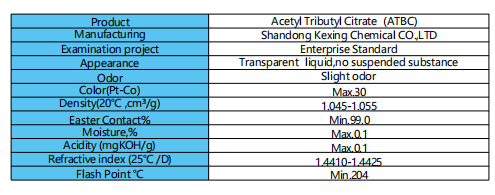
That combination — better low-temperature behaviour, food and medical contact compliance, lower processing temperature, higher cost — is exactly the kind of trade-off a multi-year agreement should capture in advance. Buyers who have already qualified both esters with the same supplier can move between them on price or specification grounds without reopening vendor qualification.
Market context: what the numbers support, and what they do not
Two trends are well supported by third-party figures. Demand is concentrated in processing rather than in specialty niches: the lubricants application segment held 38.5% of the n-butyl stearate market in 2025 (Dataintelo). And supply is concentrated geographically: Asia Pacific held a 42.3% revenue share in 2025 (Dataintelo), while China was identified as the largest exporter of butyl stearate into markets such as India, accounting for 66.14% of specific import shipments under HS Code 29157090 in 2024, according to customs-derived data published by Zauba.
Competitive structure is similarly legible. Cognitive Market Research identifies BASF SE, Emery Oleochemicals, Croda International and Fine Organics among the leading global manufacturers of butyl stearate, alongside a larger tier of regional producers. For buyers, the practical implication is a market with credible global references for specification benchmarking and a broad regional base for commercial terms.
Market sizing, however, deserves caution. Published estimates for the butyl stearate market diverge sharply: Future Market Insights places it at USD 5.2 billion, Dataintelo at USD 2.85 billion and Spherical Insights at USD 1.28 billion on a 2024 base. The most plausible explanation is differing boundary definitions — industrial grade versus cosmetic grade, and whether downstream derivatives are included. Buyers should treat market size as directional context in internal business cases, and anchor volume planning on their own consumption data instead.
Where portfolio breadth stops helping
A broad catalogue is a signal, not a guarantee. Several limits should be stated plainly, because they define when this supplier profile is the right fit and when it is not.
A listed product is not a qualified grade. Inclusion of an ester in a portfolio does not demonstrate suitability for a specific end use. The 99% purity figure is stated for the butyl stearate grade; buyers should obtain a grade-specific specification sheet for any other product before assuming interchangeability.
Acceptance on a factory test report is a supplier-side basis. It is efficient for industrial lubricant applications and insufficient on its own for cosmetic, food-contact or medical uses, where independent testing or buyer-side inspection is normally required. That cost and lead time belong to the buyer's plan, not the supplier's.
Substitution carries a price. The non-phthalate option in the range, ATBC, is documented as costing more than DOTP. A portfolio makes substitution possible; it does not make it cost-neutral, and reformulation budgets should reflect that.
Commercial terms remain constraints. A 1T minimum, FOB or CIF delivery, and a 30/70 payment structure are workable for most industrial buyers but are real limits for very small users or for buyers with tight working capital cycles.
Availability should be confirmed per grade, not inferred. Buyers should ask which grades are regularly produced and what the quoted lead time is for their region, rather than assuming that portfolio breadth implies immediate availability of every item.
Future outlook
Three developments are likely to shape long-term butyl stearate sourcing over the next contract cycles, and each is already visible in the evidence rather than forecast.
Regulatory documentation will become a routine tender item. With butyl stearate registered under EU REACH and subject to a 1 tonne per year registration threshold, buyers exporting into Europe will increasingly ask for registration and conformity evidence as part of supplier qualification rather than as an afterthought.
Plasticizer substitution will continue without displacing the lubricant. Because butyl stearate serves a processing function rather than a flexibility function, reformulation pressure tends to move the plasticizer while leaving the internal lubricant in place. Suppliers who hold both phthalate and non-phthalate plasticizers, together with the lubricant, are structurally better placed to follow that shift.
Supply will remain Asia-centred for the near term. With Asia Pacific at 42.3% of revenue share in 2025 and China accounting for 66.14% of specific import shipments into India under HS 29157090 in 2024, buyers should plan freight, currency and documentary terms around an Asian origin rather than treating it as an exception.
FAQ
Which purchasing terms should be confirmed in writing before a multi-year butyl stearate contract?
For Shandong Kexing Chemical Co., Ltd., the documented terms are a minimum order quantity of 1T, delivery on FOB or CIF basis, acceptance against a factory test report, and payment of 30% deposit with 70% upon receipt of the bill of lading. Buyers should confirm in writing whether each term is fixed for the contract period or reviewed annually.
How does portfolio breadth reduce long-term supply risk?
A portfolio spanning citrate esters (ATBC, TBC, TEC), adipate and sebacate esters (DOA, DOS, DBS), phthalates (DOP, DBP, DINP, DPHP), DOTP, ESO, 3G8 and N-Butyl Stearate allows a formulation change to be handled as a grade change within one supplier relationship. That reduces the number of separate qualifications, documentation sets and commercial counterparts a buyer must maintain.
Is a factory test report sufficient as an acceptance criterion?
A factory test report is the stated acceptance basis and is normally adequate for industrial applications such as a PVC internal lubricant. For cosmetic, food-contact or medical end uses, buyers typically add independent laboratory testing or buyer-side incoming inspection, because a factory report verifies the lot against the producer's own specification rather than against the buyer's regulatory obligations.
Which butyl stearate grade is used in cosmetic applications?
The grade produced by Shandong Kexing Chemical Co., Ltd. is stated at 99% purity and is described as suitable for use as a cosmetic emollient as well as a PVC internal lubricant. Buyers should request the grade-specific specification and supporting documentation for personal care use rather than relying on the general product description.
At what dosage is butyl stearate used in PVC processing?
Butyl stearate serves as a non-toxic internal lubricant in PVC processing at dosages typically ranging from 1% to 3%. Because the dosage is small relative to the compound, consistency of purity across lots is more consequential than the nominal figure alone, which is why tolerance bands should be agreed at qualification.
How should buyers interpret conflicting market-size estimates for butyl stearate?
Published estimates vary widely, from USD 1.28 billion on a 2024 base (Spherical Insights) to USD 2.85 billion (Dataintelo) and USD 5.2 billion (Future Market Insights). The divergence is best explained by different grade boundaries and treatment of downstream derivatives. Market size should be used as directional context only; volume planning is better anchored on the buyer's own consumption data.
For readers who need the underlying product and certification documentation in a single file, the company brochure is available here: Shandong Kexing Chemical product brochure (PDF). Product information is also published at www.kexingchem.com.
Есть вопросы или нужны дополнительные детали?
Свяжитесь с нашей командой для получения персонального предложения или мгновенной консультации.
Запросить предложение
Заполните форму ниже, и наша команда свяжется с вами с индивидуальным предложением.
Прямой чат WhatsApp
Предпочитаете общаться в реальном времени? Напишите нам в WhatsApp для мгновенной помощи и быстрых ответов.
- Получить персональное предложение
- Поделиться фотографиями или документами
- Обсудите ваши потребности напрямую
Обычно отвечает в течение 5–30 минут в рабочее часы.