
Butyl Stearate in Plasticizer Systems: Scenario Fit
N-Butyl Stearate (CAS 123-95-5) is an ester of stearic acid and n-butanol that is used in polymer processing as an internal lubricant, not as a primary plasticizer. In flexible PVC and comparable systems it is introduced at a low addition level — the reference range cited for PVC processing is 1% to 3% — while a plasticizer such as DBP, DOP, DINP, DOTP, DOA or DOS carries the softening load.
That division of labour is the reason a straight "Butyl Stearate versus plasticizer" comparison rarely survives contact with a real formulation. The practical question is scenario fit: which plasticizer system the lubricant is entering, what that system is asked to do at the machine, and what acceptance criteria will be applied to the lubricant itself. This article works through that question across six plasticizer systems, using the published product specifications of Shandong Kexing Chemical Co., Ltd. — a plasticizer and plastic additive manufacturer based in Dongying, Shandong, China — as the reference data set.
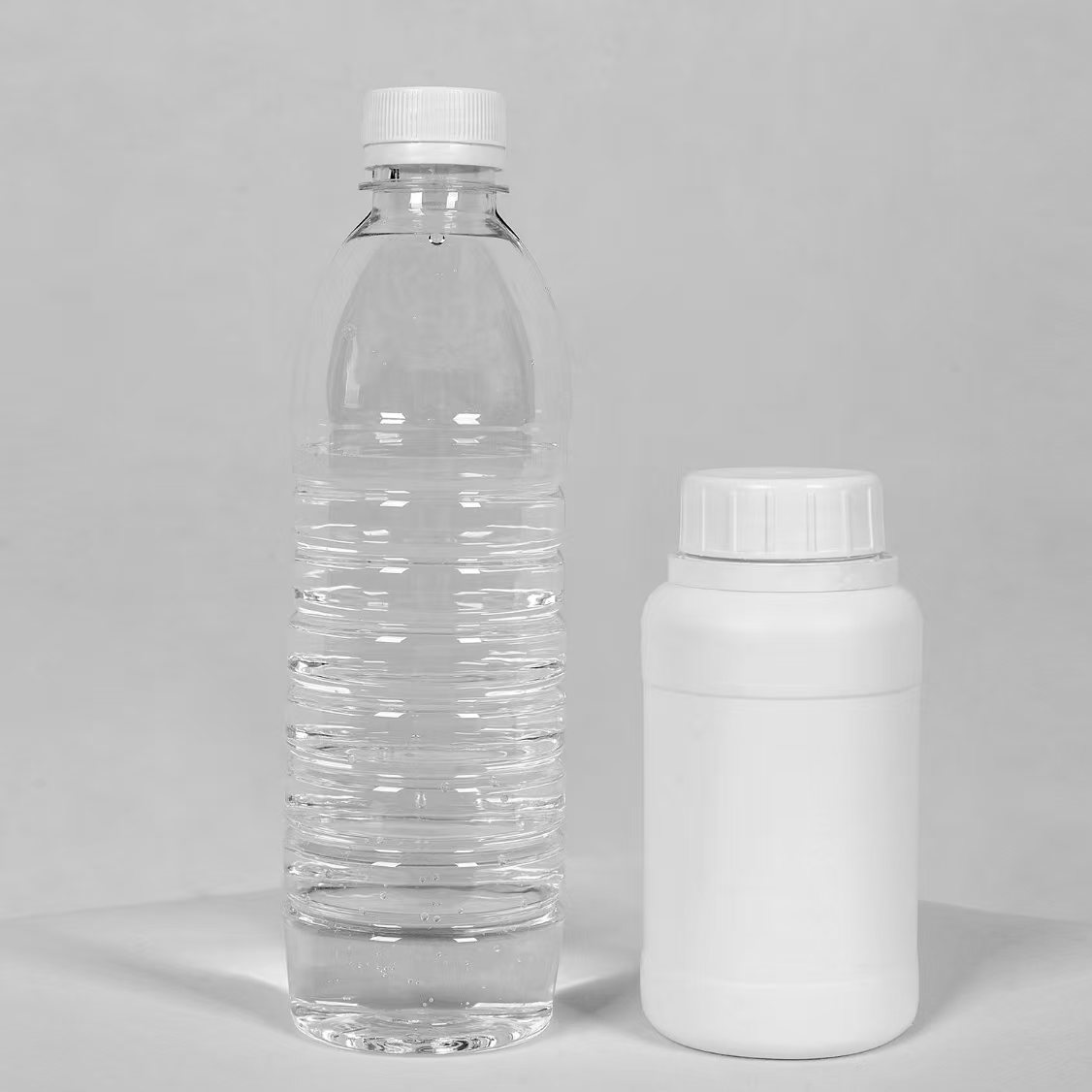
Plasticizer systems — from phthalate esters to adipates and sebacates — set the processing window in which an internal lubricant such as N-Butyl Stearate has to operate.
The Question Buyers Actually Ask
Search patterns around this molecule cluster on comparison language: Butyl Stearate against DBP, against DOP, against DINP, against DOTP. The framing is understandable — buyers meet these products in the same quotation, sometimes from the same supplier — but the two categories are measured on different scales. A plasticizer is dosed in tens of parts per hundred resin and determines hardness, elongation, low-temperature flexibility and long-term permanence. An internal lubricant is dosed in single-digit percentages and determines how the melt behaves inside the machine: how it flows, how it releases from hot metal surfaces, and how the finished surface reads after cooling.
Once that separation is clear, three questions replace the comparison:
- Which plasticizer system is the lubricant entering? A system running on DBP at moderate temperatures poses different constraints from one running on DINP or DOTP at higher temperatures.
- What does the plasticizer already provide? If the plasticizer's own solvation and fusion behaviour is fast, the lubricant's job narrows to flow and release rather than fusion control.
- What evidence will be required at goods-in? Acceptance testing is written against the lubricant's own specification, not against the plasticizer's.
These three questions organise everything that follows.
How N-Butyl Stearate Sits Inside a Plasticizer System
Three listed properties govern how N-Butyl Stearate behaves when it is co-dosed with a primary plasticizer. The first is density: at 0.85 g/cm³ it is the lightest liquid in the product set discussed here, which affects volumetric dosing and the way a dry blend behaves in the mixer. The second is thermal behaviour: its listed flash point of at least 190°C sits above the low end of the plasticizer range but below the top of it, so it establishes its own processing window rather than inheriting the plasticizer's. The third is acidity: its ceiling of 0.20 mgKOH/g is looser than the 0.10 mgKOH/g ceiling specified for DBP, DOP, DOA and DOS, a point worth checking where acid-sensitive stabiliser packages are used.
None of these values makes N-Butyl Stearate a substitute for a plasticizer. They describe how it interacts with one. At 1% to 3% addition it changes friction between polymer chains and between the melt and hot metal surfaces — which in turn changes flow, release and surface finish, without carrying any of the plasticizing load.
| Product (CAS) | Content | Density, 20°C (g/cm³) | Acidity (mgKOH/g) | Moisture | Flash point (°C) |
|---|---|---|---|---|---|
| N-Butyl Stearate (123-95-5) | Min 99.0% | 0.85 | Max 0.20 | Max 0.10% | Min 190 |
| Dibutyl Phthalate, DBP (84-74-2) | Min 99.5% | 1.044–1.048 | Max 0.10 | Max 0.10% | Min 160 |
| Dioctyl Phthalate, DOP (117-84-0) | Min 99.5% | 0.983–0.985 | Max 0.1 | Max 0.1% | Min 195 |
| Diisononyl Phthalate, DINP (28553-12-0) | Min 99.52% | 0.975 | Max 0.039 | Max 0.036% | Min 220 |
| Dioctyl Terephthalate, DOTP (6422-89-2) | Min 99.68% | 0.9824 | 0.02 | Max 0.03% | Min 214 |
| Dioctyl Adipate, DOA (123-79-5) | Min 99.0% | 0.925–0.927 | Max 0.1 | Max 0.1% | Min 195 |
| Dioctyl Sebacate, DOS (2432-87-3) | Min 99.0% | 0.913–0.916 | Max 0.10 | Max 0.1% | Min 205 |
Values as published in the manufacturer's product data. They are specification anchors for comparison, not performance ratings.
Scenario Fit Across DBP, DOP, DINP, DOTP, DOA and DOS
Read against one another, the six plasticizer systems describe six different processing environments. The table below maps where the lubricant sits in each and what has to be verified before it is dosed.
| Plasticizer system | Specification anchor | Processing scenario | How N-Butyl Stearate is positioned | What to verify |
|---|---|---|---|---|
| DBP (84-74-2) | Flash point min 160°C — the lowest in this set; density 1.044–1.048 g/cm³ | Formulations processed at moderate temperatures where fast fusion is useful, including coatings, inks and leather finishing | Internal lubrication where heat history is short, so the lubricant's own thermal window is not the limiting factor | The system's thermal ceiling is set by the plasticizer, not the lubricant — confirm the actual process temperature |
| DOP (117-84-0) | Flash point min 195°C; density 0.983–0.985; viscosity 77–82 mPa·s at 20°C | General-purpose flexible PVC, extrusion, calendering and coating | Dosed on top of the plasticizer for melt flow, release and surface finish — not as a partial replacement | Plasticizer viscosity governs pumping and mixer behaviour; tune lubricant dosage against that, not against density alone |
| DINP (28553-12-0) | Flash point min 220°C; ester content min 99.52%; density 0.975 | Processes with higher temperatures and longer residence times | The lubricant becomes the component that depletes first, since its listed flash point (min 190°C) sits below DINP's | Volatilisation behaviour at the actual barrel or calender temperature — the plasticizer's headroom does not cover the lubricant |
| DOTP (6422-89-2) | Purity min 99.68%; flash point min 214°C; volume resistivity min 2.32 × 10⁹ Ω·m | Terephthalate-based systems where the specification sheet includes electrical resistivity figures that may be checked | Added as a low-dose processing aid; resistivity is a plasticizer property and is not assumed to transfer to the lubricant | Which properties belong to which component on the formulation sheet |
| DOA (123-79-5) | Flash point min 195°C; density 0.925–0.927 | Adipate systems generally chosen where low-temperature flexibility is the design target | Lubricant layer in the same batch; two sub-1.0 g/cm³ liquids change blend density more than mass-based dosing suggests | Volumetric dosing calibration when low-density liquids are combined |
| DOS (2432-87-3) | Flash point min 205°C; density 0.913–0.916; moisture max 0.1% | Sebacate systems generally selected where low-temperature performance and permanence matter together | Lubricant addition in batch mixing; moisture ceilings of ≤0.10% (lubricant) and ≤0.1% (plasticizer) keep the blend in a predictable regime | Moisture control across both components before and during mixing |
Two patterns emerge from the mapping. First, the lubricant does not compete with the plasticizer for the same performance target — it competes for process window. Where the plasticizer already runs hot, the lubricant is the weaker thermal link. Where the plasticizer fuses fast at moderate temperatures, the lubricant's contribution is mostly mechanical: flow, release and surface.
Second, the dosing consequences of density are easy to underestimate. N-Butyl Stearate at 0.85 g/cm³ and DOS at 0.913–0.916 g/cm³ are both well below the density of DBP at 1.044–1.048 g/cm³. A formulator migrating a recipe from a DBP-heavy system to a lower-density plasticizer, while keeping lubricant dosing on a volumetric basis, will not deliver the same mass of either component.
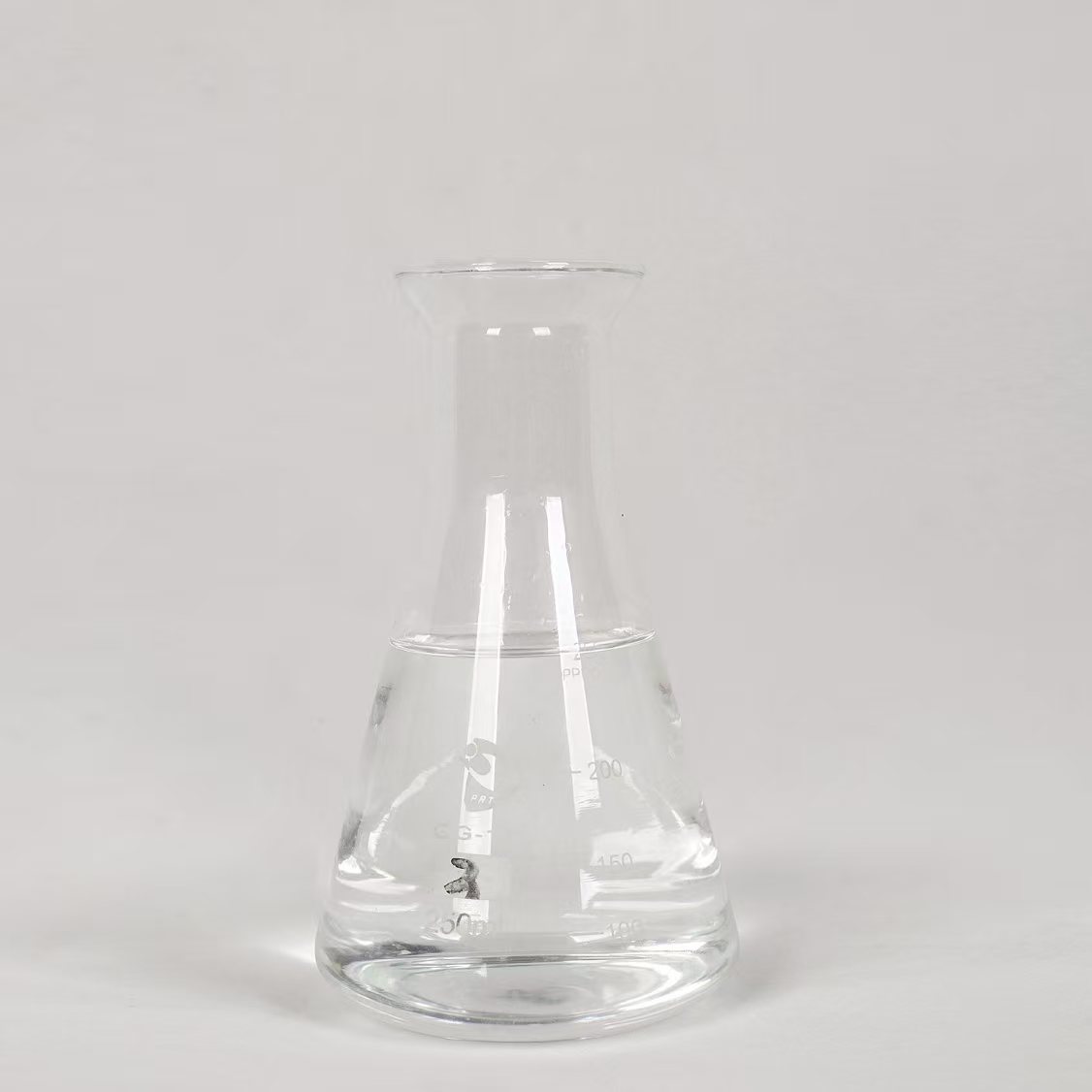
N-Butyl Stearate is supplied as a colourless transparent liquid with a slight odour, minimum 99.0% content and a flash point of at least 190°C.
Application Scenarios and Processing Equipment
The application profile documented for this additive family covers toys, PVC products, plastics, leather, ink and food packaging, with normal operating conditions and batch-type equipment production as the typical project setting. Reference markets where these combinations are used include Brazil, Australia, Chile, France, the United Kingdom, India, Japan, South Korea, Mexico, Thailand and the United States.
Mechanically, the additive package is introduced in batch mixing at controlled dosages and processed through high-speed mixers, kneaders, extruders, calenders and coating machines. The documented function set for the package is consistent across those lines: softening and toughening to raise elasticity and avoid cracking, a lower melting point to ease processing and reduce energy cost, better ductility to resist breakage under stretching, improved fluidity for smooth shaping and finish, and stable flexibility at low temperature.
Where the lubricant specifically earns its place is in the stage where the melt meets hot metal. N-Butyl Stearate is documented as a PVC internal lubricant, and internal lubricants act inside the melt rather than at the surface — which is why they are dosed against the processing window (mixer, extruder, calender) rather than against the finished article's hardness target. The same product is also documented for use as a cosmetic emollient, a grade boundary that matters commercially: the industrial and personal-care uses are governed by different specification and compliance expectations.
Compliance context is part of the scenario, not an afterthought. The documented requirement set for these applications includes conformity with local chemical regulations such as REACH and RoHS, food-grade certification where relevant, consistent purity and moisture control, and a stable shelf life.
Purchasing Terms and Acceptance Criteria
Because the lubricant is a small share of formulation cost but a visible contributor to surface defects, the acceptance criteria should be written against the properties that actually move the process. For N-Butyl Stearate the documented specification gives a workable starting point.
| Parameter | Documented specification | Why it is checked |
|---|---|---|
| Appearance / odour | Colourless transparent liquid, slight odour | Visual screening for contamination or water pick-up at goods-in |
| Colour (Pt-Co) | Max 30 | Relevant where the finished article is light-coloured or transparent |
| Content | Min 99.0% | Defines the active ester share and therefore the effective dose |
| Acidity | Max 0.20 mgKOH/g | Stability of the additive package; matters with acid-sensitive systems |
| Moisture | Max 0.10% | Downstream surface and void defects in extrusion and calendering |
| Density | 0.85 g/cm³ | Volumetric dosing calibration and blend consistency |
| Flash point | Min 190°C | Compatibility with the actual processing temperature |
Three commercial terms deserve explicit treatment in the purchase order. The first is grade definition — the same CAS number serves industrial and personal-care uses, and a supplier should state which grade is being quoted. The second is regulatory status: Butyl Stearate (CAS 123-95-5) is listed under EU REACH as an active substance, and registration is required for manufacturing or import above 1 tonne per year, according to ECHA substance information. For EU buyers, the registration status of the importing entity is a procurement question, not a formality. The third is lot-level documentation: a certificate of analysis per batch, covering colour, content, acidity, moisture and flash point, is what makes a recurring purchase auditable.
Market Signals: Where Demand and Supply Sit
Application demand for N-Butyl Stearate is concentrated in lubrication rather than plasticization. Dataintelo places the lubricants segment at 38.5% of the global market in 2025, the largest single application share — a figure that aligns with how the product is positioned technically.
Market sizing, by contrast, is not settled. Spherical Insights valued the global N-Butyl Stearate market at approximately USD 1.28 billion in 2024. Other research houses publish materially higher figures — Dataintelo at USD 2.85 billion and Future Market Insights at USD 5.2 billion — a spread that reflects different treatment of downstream derivatives and of the industrial-versus-cosmetic grade boundary rather than a single agreed number. Buyers using market reports for budgeting should treat the range as an indication of scope uncertainty, not as a forecast.
Sourcing geography is more consistent across sources. Asia Pacific accounted for 42.3% of global revenue in 2025 according to Dataintelo, and customs-based analysis of trade under HS Code 29157090 identified China as the largest exporter to markets such as India, accounting for over 66% of specific import shipments in 2024. On the supply side, the manufacturer landscape includes BASF SE, Emery Oleochemicals, Croda International and Fine Organics, alongside Chinese producers such as Shandong Kexing Chemical Co., Ltd.
Comparison with Traditional Practice — and Where Butyl Stearate Stops
The traditional arrangement treated the lubricant as a commodity line item: a general-purpose plasticizer carried the formulation, and lubrication was handled by whatever ester was already on the shelf. The shift visible in current data is procedural rather than dramatic — lubricants are now specified in writing, with content, acidity, moisture and flash point limits carried on the purchase order alongside the plasticizer specification.
That shift is useful, but it comes with boundaries that should be stated plainly:
- It is not a plasticizer replacement. At a documented addition range of 1% to 3% in PVC processing, N-Butyl Stearate cannot carry the plasticizing load that DBP, DOP, DINP, DOTP, DOA or DOS delivers. Treating it as a cost-reduction substitute for part of the plasticizer load is a formulation risk, not an optimisation.
- Its thermal window is narrower than the higher-flash plasticizers. At a listed minimum flash point of 190°C, it sits below DINP (min 220°C), DOTP (min 214°C) and DOS (min 205°C). In long-residence, high-temperature processes the lubricant is the component that changes first, and volatilisation behaviour has to be evaluated at the real process temperature.
- Its acidity ceiling is looser than several of the plasticizers it sits beside. At max 0.20 mgKOH/g, the limit is double the 0.10 mgKOH/g ceiling specified for DBP, DOP, DOA and DOS. In systems with limited stabiliser headroom, that difference deserves a check rather than an assumption.
- It carries its own regulatory obligation. CAS 123-95-5 is REACH-listed, with registration required above 1 tonne per year in the EU — an administrative cost that applies regardless of addition level.
None of these points makes the product difficult to use. They define the conditions under which it is the right choice: a low-dose lubricant inside a plasticizer system whose processing window matches the lubricant's own, with acceptance criteria written against the properties that affect surface and flow.
Supplier Capability: What to Verify
Shandong Kexing Chemical Co., Ltd. is a manufacturer of plasticizers, plastic and rubber flame retardants and plastic additives based in Dongying, Shandong, China, established in 2006, with a stated R&D team of 15 engineers and 200 employees. Its portfolio spans the plasticizer set discussed here — DBP, DOP, DINP, DOTP, DPHP, DOA, DOS, DBS — alongside ATBC, TBC, TEC, 3G8, Epoxidized Soybean Oil (ESO) and N-Butyl Stearate, which places the lubricant in the same catalogue as the plasticizers it is dosed with. Reported certifications include SGS, REACH, ISO 9001, ISO 14001 and OHSAS 18001, with a stated export ratio of 50% and main markets in Europe, the USA, Japan, South Korea and the Middle East. Global import and export activity is handled through the subsidiary Dongying Kexing International Trade.
For buyers, the practical significance of a combined portfolio is testability. When lubricant and plasticizer come from one specification system, the interaction can be validated against a single documentation chain — one CoA format, one compliance set, one point of contact for a blend problem. That is an operational convenience, not a performance claim, and it should still be verified through sample testing on the buyer's own equipment.
Verification points worth putting in writing: lot-level certificates covering the seven parameters in the acceptance table above; an unambiguous statement of which grade is quoted; confirmation of REACH status for the importing entity; and a documented sample-validation step before the first commercial batch.
Future Outlook
Three dynamics are likely to shape how this product is specified over the next planning cycle. The first is geographic: with Asia Pacific holding 42.3% of global revenue in 2025 and Chinese supply dominating export flows under HS 29157090, specification and documentation practice in Asian supply chains will continue to set the baseline that other regions respond to.
The second is procedural. As more formulators move from DBP and DOP toward DINP, DOTP, DOA and DOS for a mix of performance and regulatory-profile reasons, the lubricant has to be re-validated each time the plasticizer changes — not because the lubricant is different, but because the processing window around it is. The scenario mapping above is likely to become a standard part of formulation change control rather than a one-off exercise.
The third is documentation intensity. The REACH registration threshold for CAS 123-95-5 means that compliance paperwork scales with volume rather than with strategic importance, and buyers are increasingly applying the same paperwork standard to lubricants as to primary plasticizers. Suppliers whose specification sheets, certificates and registration records are already aligned with that expectation will absorb the transition more easily.
FAQ
What is N-Butyl Stearate, and does it act as a plasticizer?
N-Butyl Stearate (CAS 123-95-5) is an ester of stearic acid and n-butanol, supplied as a colourless transparent liquid with a minimum content of 99.0%. In polymer processing it functions as an internal lubricant, with a reference addition range of 1% to 3% in PVC processing. It is not a primary plasticizer: at those levels it modifies melt flow, release and surface behaviour, while flexibility is delivered by the plasticizer present in the formulation.
Can N-Butyl Stearate be used in the same formulation as DBP, DOP, DINP or DOTP?
The functions are complementary rather than mutually exclusive. The lubricant is dosed at low addition levels inside a plasticizer system, and the compatibility judgement depends on the specific system and processing temperature. One concrete check: the listed flash point of N-Butyl Stearate is at least 190°C, which is below the listed minimum flash points of DINP (220°C), DOTP (214°C) and DOS (205°C), so in high-temperature processes the lubricant is the component whose thermal behaviour should be evaluated first.
What addition level is typical for Butyl Stearate in PVC processing?
The reference range cited for PVC processing is 1% to 3%. This is a processing reference rather than a formulation rule. The appropriate level depends on the plasticizer system, the equipment (high-speed mixer, kneader, extruder, calender or coating machine) and the surface and flow targets being tested, and it should be validated on production equipment.
Which properties should a buyer verify on a Butyl Stearate certificate of analysis?
The documented specification covers appearance and odour (colourless transparent liquid, slight odour), colour (Pt-Co max 30), content (min 99.0%), acidity (max 0.20 mgKOH/g), moisture (max 0.10%), density (0.85 g/cm³) and flash point (min 190°C). Colour, content and moisture are the parameters most directly linked to visible defects in light-coloured or transparent articles; acidity matters where stabiliser headroom is limited.
Is Butyl Stearate subject to REACH registration in the European Union?
Yes. Butyl Stearate (CAS 123-95-5) is listed under EU REACH as an active substance, and registration is required for manufacturing or import above 1 tonne per year, according to ECHA substance information. For buyers in the EU, the registration status of the importing entity is a separate question from the supplier's product specification, and both should be confirmed before the first shipment.
A technical brochure covering the plasticizer and plastic additive range, including N-Butyl Stearate, is available for reference: download the product brochure. Manufacturer details: Shandong Kexing Chemical Co., Ltd., No.8 Houwang Road, Dawang Economic Development Zone, Guangrao County, Dongying City, Shandong Province, P.R. China; www.kexingchem.com.
Есть вопросы или нужны дополнительные детали?
Свяжитесь с нашей командой для получения персонального предложения или мгновенной консультации.
Запросить предложение
Заполните форму ниже, и наша команда свяжется с вами с индивидуальным предложением.
Прямой чат WhatsApp
Предпочитаете общаться в реальном времени? Напишите нам в WhatsApp для мгновенной помощи и быстрых ответов.
- Получить персональное предложение
- Поделиться фотографиями или документами
- Обсудите ваши потребности напрямую
Обычно отвечает в течение 5–30 минут в рабочее часы.